Idiopathic 
Thrombocytopenic Purpura 
(ITP) 
Dr yogendra vijay 
RESIDENT DOCTOR ,BLOOD TRANSEFUSION AND IMUNOHAEMATOLOGY 
SMS MEDICAL COLLAGE ,JAIPUR RAJASTHAN 
(druogendravijay23@gmail.com)
Idiopathic thrombocytopenic 
purpura (ITP), 
 immune thrombocytopenia, 
 primary immune thrombocytopenia, 
primary immune thrombocytopenic 
purpura 
 autoimmune thrombocytopenic 
purpura
 Idiopathic thrombocytopenic purpura is a blood 
disorder characterized by an abnormal decrease 
in the number of platelets in the blood. can 
result in easy bruising, bleeding gums and internal 
bleeding. 
 "Idiopathic" means the cause is unknown. 
 "Thrombocytopenia" means a decreased number 
of platelets in the blood. 
 "Purpura" refers to the purple discoloring of the 
skin, as with a bruise.
 There are two forms of ITP: 
 Acute thrombocytopenic purpura — This is most commonly seen in 
young children (2 to 6 years old). The symptoms may follow a viral 
illness, such as chickenpox. Acute ITP usually has a very sudden onset 
and the symptoms usually disappear in less than six months (often 
within a few weeks). The disorder usually does not recur. Acute ITP is 
the most common form of the disorder. 
 Chronic thrombocytopenic purpura — The onset of the disorder can 
happen at any age, and the symptoms can last a minimum of six months 
to several years. Adults have this form more often than children, but it 
does affect adolescents. Chronic ITP can recur often and requires 
continual follow-up care with a blood specialist .
pathophysiology 
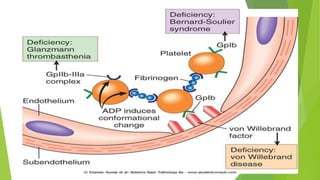
 In approximately 60 percent of cases, antibodies against platelets can be detected. 
 Most often these are membrane glycoproteins IIb-IIIa or Ib-IX, and are of the (IgG) 
type. 
 The coating of platelets with IgG renders them susceptible 
to opsonization and phagocytosis by splenic macrophages, as well by Kupffer cells in 
the liver 
 . The IgG autoantibodies are also thought to damage megakaryocytes, the precursor 
cells to platelets, 
 Recent research now indicates that impaired production of 
the hormone thrombopoietin, which is the stimulant for platelet production, may be a 
contributing factor to the reduction in circulating platelets. 
 The stimulus for auto-antibody production in ITP is probably abnormal T 
cell activity. Preliminary findings suggest that these T cells can be influenced by drugs 
that target B cells, such as rituximab.
In most cases, the cause of ITP is unknown and It is not 
contagious. 
 Often, the child may have had a virus or viral 
infection about three weeks before developing ITP. It 
is believed that the body, when making antibodies 
against a virus, "accidentally" also made an antibody 
that can stick to the platelet cells. The body 
recognizes any cells with antibodies as foreign cells 
and destroys them. That is why ITP is also referred to 
as immune thrombocytopenic purpura.
 The bone marrow responds to the low number of platelets and 
produces many more to send out to the body. in the bone marrow 
many young platelets that have been produced. However, the blood test 
results of the circulating blood would show a very low number of 
platelets. 
 The body is producing the cells normally, but the body is also 
destroying them. In most cases, other blood tests are normal except for 
the low number of platelets. ITP platelets usually survive only a few 
hours, in comparison to normal platelets which have a lifespan of 7 to 
10 days. 
 Platelets are essential for the formation of a blood clot. Blood clots 
consist of a mass of fibers and blood cells. Platelets travel to a damaged 
area and stick together to form a plug, whenever a person is cut, for 
example. If there are not enough platelets, a clot cannot be formed, 
resulting in more bleeding.
 Signs and symptoms 
 Normal platelet count is in the range of 150,000 to 450,000. In a child with ITP, the platelet 
count is generally less than 100,000. By the time significant bleeding occurs, the child may 
have a platelet count of less than 10,000. The lower the platelet count, the greater the risk 
of bleeding. 
 Because platelets help stop bleeding, the symptoms of ITP are related to increased 
bleeding. 
 Purpura - the purple color of the skin after blood has "leaked" under it. A bruise is blood 
under the skin. Children with ITP may have large bruises from no known trauma. Bruises 
can appear at the joints of elbows and knees just from movement. 
 Petechia - tiny red dots under the skin that are a result of very small bleeds. 
 Nose bleeds 
 Bleeding in the mouth and/or in and around the gums 
 Blood in the vomit, urine or stool 
 Bleeding in the head - this is the most dangerous symptom of ITP. Any head trauma that 
occurs when there are not enough platelets to stop the bleeding can be life threatening.
 Testing and diagnosis 
 The diagnosis of ITP is a process of exclusion. 
 First, it has to be determined that there are no blood abnormalities other than a low 
platelet count, and no physical signs other than bleeding. Then, secondary causes (5– 
10 percent of suspected ITP cases) should be excluded. 
 secondary causes include leukemia, 
 medications (e.g., quinine,heparin), 
 lupus erythematosus, 
 cirrhosis, 
 HIV, hepatitis C, congenital causes, antiphospholipid syndrome, von Willebrand 
factor deficiency, 
 Despite the destruction of platelets by splenic macrophages, the spleen is normally not 
enlarged. 
 In fact, an enlarged spleen should lead to a search for other possible causes for the 
thrombocytopenia. 
 Bleeding time is usually prolonged in ITP patients. a normal bleeding time does not 
exclude a platelet disorder.
 Bone marrow examination may be performed on patients over the age 
of 60 and those who do not respond to treatment, or when the diagnosis 
is in doubt. 
 On examination of the marrow, an increase in the production of 
megakaryocytes may be observed and may help in establishing a 
diagnosis 
 A complete blood count (CBC), which measures the size, number, and 
maturity of different blood cells 
 Additional blood and urine tests, which measure bleeding time and 
detect possible infections 
 Careful review of the child's medications 
 A bone marrow aspiration may be performed to look at child's 
production of platelets and to rule out any abnormal cells your child's 
bone marrow could be producing that could lower platelet counts.
Treatment- 
 Not all children with ITP require treatment. Many 
children spontaneously recover in about 2 to 4 day 
 Steroids, which help prevent bleeding by decreasing 
the rate of platelet destruction. Steroids, if effective, 
will result in an increase in platelet counts seen 
within two to three weeks. 
Initial treatment usually consists of the administration 
of corticosteroids, 
in urgent situations, infusions of 
dexamethasone or methylprednisolone may be used, 
while oral prednisone or prednisolone may suffice in 
less severe cases
Anti-D 
Another option, suitable for Rh-positive, non-splenectomized patients is 
intravenous administration of Rho(D) immune globulin [Human; Anti-D]. 
The mechanism of action of anti-D is not fully understood. However, following 
administration, anti-D-coated red blood cell complexes saturate Fcγ receptor sites 
on macrophages, resulting in preferential destruction of red blood cells (RBCs), 
therefore sparing antibody-coated platelets. 
Steroid-sparing agents 
Immunosuppresants such as mycophenolate mofetil and azathioprine 
vincristine, a chemotherapy agent,and vinca alkaloid, has significant side-effects 
and To be used with caution, especially in children. 
Intravenous immunoglobulin (IVIg) may be infused in some cases. it is costly and 
produces improvement that generally lasts less than a month.
Thrombopoietin receptor agonists 
- are pharmaceutical agents that stimulate platelet production in the bone 
marrow. Two such products are currently available: 
•Romiplostim (trade name Nplate) is a thrombopoiesis stimulating Fc-peptide 
fusion protein that is administered by subcutaneous injection. 
• romiplostim is effective in treating chronic ITP, especially in relapsed 
post-splenectomy patients. 
•Eltrombopag (trade name Promacta ) is an orally-administered agent with 
an effect similar to that of romiplostim. It too has been demonstrated to 
increase platelet counts and decrease bleeding in a dose-dependent 
manner. 
Side effects of thrombopoietin receptor agonists include headache, joint 
or muscle pain, dizziness, nausea or vomiting, and an increased risk of 
blood clots.
Surgery 
Splenectomy may be considered, as platelets which have been bound by 
antibodies are taken up by macrophages in the spleen . 
The procedure is potentially risky in ITP cases due to the increased 
possibility of significant bleeding during surgery. 
Platelet transfusion 
Platelet transfusion alone is normally not recommended except in an 
emergency, and is usually unsuccessful in producing a long-term platelet 
count increase. This is because the underlying autoimmune mechanism 
that is destroying the patient's platelets will also destroy donor platelets. 
H. pylori eradication 
In adults, particularly those living in areas with a high prevalence , 
identification and treatment of this infection has been shown to improve 
platelet counts in a third of patients.
Experimental and novel agents 
•Dapsone is an anti-infective sulfone drug. In recent 
years, Dapsone has also proved helpful in treating 
lupus, rheumatoid arthritis and used as second-line 
treatment for ITP. The exact mechanism by which 
Dapsone assists in ITP is unclear. 
•The off-label use of rituximab, a chimeric monoclonal 
antibody against the B cell surface antigen CD20, has 
been shown in preliminary studies to be an effective 
alternative to splenectomy in some patients. 
•Promising results have been reported with kinase 
inhibitor tamatinib fosdium
thanks

idiopathic thrombocytopinic purpura

  • 1.
    Idiopathic Thrombocytopenic Purpura (ITP) Dr yogendra vijay RESIDENT DOCTOR ,BLOOD TRANSEFUSION AND IMUNOHAEMATOLOGY SMS MEDICAL COLLAGE ,JAIPUR RAJASTHAN (druogendravijay23@gmail.com)
  • 2.
    Idiopathic thrombocytopenic purpura(ITP),  immune thrombocytopenia,  primary immune thrombocytopenia, primary immune thrombocytopenic purpura  autoimmune thrombocytopenic purpura
  • 3.
     Idiopathic thrombocytopenicpurpura is a blood disorder characterized by an abnormal decrease in the number of platelets in the blood. can result in easy bruising, bleeding gums and internal bleeding.  "Idiopathic" means the cause is unknown.  "Thrombocytopenia" means a decreased number of platelets in the blood.  "Purpura" refers to the purple discoloring of the skin, as with a bruise.
  • 4.
     There aretwo forms of ITP:  Acute thrombocytopenic purpura — This is most commonly seen in young children (2 to 6 years old). The symptoms may follow a viral illness, such as chickenpox. Acute ITP usually has a very sudden onset and the symptoms usually disappear in less than six months (often within a few weeks). The disorder usually does not recur. Acute ITP is the most common form of the disorder.  Chronic thrombocytopenic purpura — The onset of the disorder can happen at any age, and the symptoms can last a minimum of six months to several years. Adults have this form more often than children, but it does affect adolescents. Chronic ITP can recur often and requires continual follow-up care with a blood specialist .
  • 5.
    pathophysiology  Inapproximately 60 percent of cases, antibodies against platelets can be detected.  Most often these are membrane glycoproteins IIb-IIIa or Ib-IX, and are of the (IgG) type.  The coating of platelets with IgG renders them susceptible to opsonization and phagocytosis by splenic macrophages, as well by Kupffer cells in the liver  . The IgG autoantibodies are also thought to damage megakaryocytes, the precursor cells to platelets,  Recent research now indicates that impaired production of the hormone thrombopoietin, which is the stimulant for platelet production, may be a contributing factor to the reduction in circulating platelets.  The stimulus for auto-antibody production in ITP is probably abnormal T cell activity. Preliminary findings suggest that these T cells can be influenced by drugs that target B cells, such as rituximab.
  • 7.
    In most cases,the cause of ITP is unknown and It is not contagious.  Often, the child may have had a virus or viral infection about three weeks before developing ITP. It is believed that the body, when making antibodies against a virus, "accidentally" also made an antibody that can stick to the platelet cells. The body recognizes any cells with antibodies as foreign cells and destroys them. That is why ITP is also referred to as immune thrombocytopenic purpura.
  • 8.
     The bonemarrow responds to the low number of platelets and produces many more to send out to the body. in the bone marrow many young platelets that have been produced. However, the blood test results of the circulating blood would show a very low number of platelets.  The body is producing the cells normally, but the body is also destroying them. In most cases, other blood tests are normal except for the low number of platelets. ITP platelets usually survive only a few hours, in comparison to normal platelets which have a lifespan of 7 to 10 days.  Platelets are essential for the formation of a blood clot. Blood clots consist of a mass of fibers and blood cells. Platelets travel to a damaged area and stick together to form a plug, whenever a person is cut, for example. If there are not enough platelets, a clot cannot be formed, resulting in more bleeding.
  • 9.
     Signs andsymptoms  Normal platelet count is in the range of 150,000 to 450,000. In a child with ITP, the platelet count is generally less than 100,000. By the time significant bleeding occurs, the child may have a platelet count of less than 10,000. The lower the platelet count, the greater the risk of bleeding.  Because platelets help stop bleeding, the symptoms of ITP are related to increased bleeding.  Purpura - the purple color of the skin after blood has "leaked" under it. A bruise is blood under the skin. Children with ITP may have large bruises from no known trauma. Bruises can appear at the joints of elbows and knees just from movement.  Petechia - tiny red dots under the skin that are a result of very small bleeds.  Nose bleeds  Bleeding in the mouth and/or in and around the gums  Blood in the vomit, urine or stool  Bleeding in the head - this is the most dangerous symptom of ITP. Any head trauma that occurs when there are not enough platelets to stop the bleeding can be life threatening.
  • 10.
     Testing anddiagnosis  The diagnosis of ITP is a process of exclusion.  First, it has to be determined that there are no blood abnormalities other than a low platelet count, and no physical signs other than bleeding. Then, secondary causes (5– 10 percent of suspected ITP cases) should be excluded.  secondary causes include leukemia,  medications (e.g., quinine,heparin),  lupus erythematosus,  cirrhosis,  HIV, hepatitis C, congenital causes, antiphospholipid syndrome, von Willebrand factor deficiency,  Despite the destruction of platelets by splenic macrophages, the spleen is normally not enlarged.  In fact, an enlarged spleen should lead to a search for other possible causes for the thrombocytopenia.  Bleeding time is usually prolonged in ITP patients. a normal bleeding time does not exclude a platelet disorder.
  • 11.
     Bone marrowexamination may be performed on patients over the age of 60 and those who do not respond to treatment, or when the diagnosis is in doubt.  On examination of the marrow, an increase in the production of megakaryocytes may be observed and may help in establishing a diagnosis  A complete blood count (CBC), which measures the size, number, and maturity of different blood cells  Additional blood and urine tests, which measure bleeding time and detect possible infections  Careful review of the child's medications  A bone marrow aspiration may be performed to look at child's production of platelets and to rule out any abnormal cells your child's bone marrow could be producing that could lower platelet counts.
  • 12.
    Treatment-  Notall children with ITP require treatment. Many children spontaneously recover in about 2 to 4 day  Steroids, which help prevent bleeding by decreasing the rate of platelet destruction. Steroids, if effective, will result in an increase in platelet counts seen within two to three weeks. Initial treatment usually consists of the administration of corticosteroids, in urgent situations, infusions of dexamethasone or methylprednisolone may be used, while oral prednisone or prednisolone may suffice in less severe cases
  • 13.
    Anti-D Another option,suitable for Rh-positive, non-splenectomized patients is intravenous administration of Rho(D) immune globulin [Human; Anti-D]. The mechanism of action of anti-D is not fully understood. However, following administration, anti-D-coated red blood cell complexes saturate Fcγ receptor sites on macrophages, resulting in preferential destruction of red blood cells (RBCs), therefore sparing antibody-coated platelets. Steroid-sparing agents Immunosuppresants such as mycophenolate mofetil and azathioprine vincristine, a chemotherapy agent,and vinca alkaloid, has significant side-effects and To be used with caution, especially in children. Intravenous immunoglobulin (IVIg) may be infused in some cases. it is costly and produces improvement that generally lasts less than a month.
  • 14.
    Thrombopoietin receptor agonists - are pharmaceutical agents that stimulate platelet production in the bone marrow. Two such products are currently available: •Romiplostim (trade name Nplate) is a thrombopoiesis stimulating Fc-peptide fusion protein that is administered by subcutaneous injection. • romiplostim is effective in treating chronic ITP, especially in relapsed post-splenectomy patients. •Eltrombopag (trade name Promacta ) is an orally-administered agent with an effect similar to that of romiplostim. It too has been demonstrated to increase platelet counts and decrease bleeding in a dose-dependent manner. Side effects of thrombopoietin receptor agonists include headache, joint or muscle pain, dizziness, nausea or vomiting, and an increased risk of blood clots.
  • 15.
    Surgery Splenectomy maybe considered, as platelets which have been bound by antibodies are taken up by macrophages in the spleen . The procedure is potentially risky in ITP cases due to the increased possibility of significant bleeding during surgery. Platelet transfusion Platelet transfusion alone is normally not recommended except in an emergency, and is usually unsuccessful in producing a long-term platelet count increase. This is because the underlying autoimmune mechanism that is destroying the patient's platelets will also destroy donor platelets. H. pylori eradication In adults, particularly those living in areas with a high prevalence , identification and treatment of this infection has been shown to improve platelet counts in a third of patients.
  • 16.
    Experimental and novelagents •Dapsone is an anti-infective sulfone drug. In recent years, Dapsone has also proved helpful in treating lupus, rheumatoid arthritis and used as second-line treatment for ITP. The exact mechanism by which Dapsone assists in ITP is unclear. •The off-label use of rituximab, a chimeric monoclonal antibody against the B cell surface antigen CD20, has been shown in preliminary studies to be an effective alternative to splenectomy in some patients. •Promising results have been reported with kinase inhibitor tamatinib fosdium
  • 17.