ICT AND CONSTRUCTIVISM
Course: Educational media and technology Course coordinator: Mr. Kilala, E Seminar group:  1, Monday 1200 – 1300 hrs Participants Asheri , Nehemia   2008/1533 Kangwe, Yohana R  2008/1502 Ntauka,  John J  2008/1387 Mganga, Edgar  2008/1353 Ringi, Mashaka  2008/0130 Yonazi, Thobias  2008/1429
Concepts of Key terms -ICT -Constructivism Background of ICT Types of ICT Linkage of ICT to Constructivism Applicability of ICT and Constructivism in Tanzania Education Settings Importance of ICT and Constructivism in Tanzania Education Settings Challenges facing ICT and Constructivism  in Tanzanian Context Recommendation Conclusion
ICT as a diverse set of technological tools and resources used to communicate, and to create, disseminate, store, and manage information (Tinio, 2000). These technology includes computers, the internet, broadcasting technologies (Radios and Television), and Telephony. Constructivism theory views learning as a process in which individuals construct meaning basing on prior knowledge and experience (Carnoy, 2001).  Experience enables individuals to build mental schemas, which in turn provide meaning and organization to subsequence.
ICT advanced in Tanzania since the end of 20 th  century It led to multiple emergence of content, computing, telecommunication and broadcasting They brought changes in the areas particularly in knowledge management and human resources management.
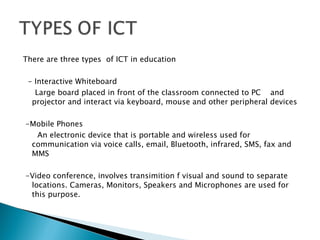
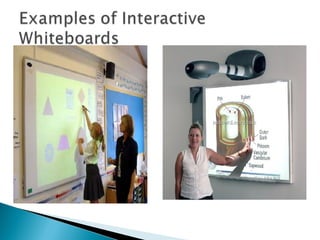
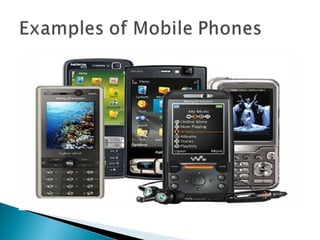
There are three types  of ICT in education - Interactive Whiteboard Large board placed in front of the classroom connected to PC  and projector and interact via keyboard, mouse and other peripheral devices  -Mobile Phones An electronic device that is portable and wireless used for communication via voice calls, email, Bluetooth, infrared, SMS, fax and MMS -Video conference, involves transimition f visual and sound to separate locations. Cameras, Monitors, Speakers and Microphones are used for this purpose.


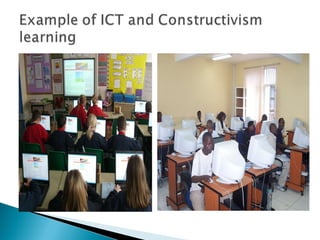
Generates new ways of teaching and learning through computers It constitutes a shift from Teacher centered to Learner centered pedagogy It decreases memorization and rote learning It increases critical thinking for learners
ICT encourages activities in small groups of learners, also the pace of these activities are determined by learners. ICT encourages interaction and cooperation among students, teachers and expertise regardless of where they are. ICT enhances integrative learning, that is transforming theories to practice. ICT encourages evaluative learning through enhancement of students directives and diagnostics.
The use of ICT in Tanzania education is minimal  Mostly used in private schools due to availabity of hardware, software, funds, ICT housing and experts Minimal use in government schools, due to lack of funds, hardware and software, poor infrastructures  Highly used in higher learning institutions.
 
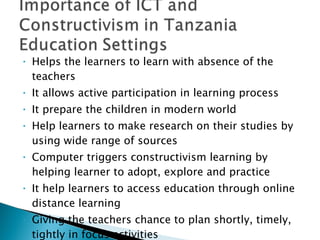
Helps the learners to learn with absence of the teachers It allows active participation in learning process It prepare the children in modern world Help learners to make research on their studies by using wide range of sources Computer triggers constructivism learning by helping learner to adopt, explore and practice It help learners to access education through online distance learning Giving the teachers chance to plan shortly, timely, tightly in focus activities
Shortage of well - qualified professional of ICT Expensiveness of the ICT  devices Opportunity for training are mostly limited to few urban center Shortage of infrastructures for example electricity, internet connection and ICT housing. Syllabus is out of date with respect to the evolution of technology. For example there is no current version of ICT syllabus, existing syllabus was updated in 1997 Poor implementation of government policy Tanzania lacks cheaper and highly capacity connection to the global network.
The government should invest more in ICT and education should start from lower level to higher level.  Also infrastructures should be constructed and improved so as to trigger global interaction. Government should train more qualified trainers, subsiding the ICT devices and software so that all people can access the global network. Conclusively,  the ICT with constructivism is a very useful for the betterment of education matters in Tanzania because it allows access to remote sources of information, training and removing the sense of isolation, also it leads to learner centered environment.
http://en.wikipedia.org/wiki/Information_and_communication_technologies  Retrieved 27th January 2011 at 1400 hrs http://www.ictliteracy.info/ Retrieved 27th January 2011 at 1500 hrs http://www.learnerstogether.net/role-of-ict-in-constructivist-teaching-of-thinking-skills/15 Retrieved 28th January 2011 at 1900 hrs http://www.bucks.edu/IDlab/Beyond_constructivism.pdf Retrieved 28th January 2011 at 2000 hrs http://lrnlab.edfac.usyd.edu.au/undergrad/ict-integration-resources/resources/integrating-ict-into-teaching-and-learning-examples-of-good-practice/constructivism Retrieved 2nd February 2011 at 2200 hrs

ict and constructivism

  • 1.
  • 2.
    Course: Educational mediaand technology Course coordinator: Mr. Kilala, E Seminar group: 1, Monday 1200 – 1300 hrs Participants Asheri , Nehemia 2008/1533 Kangwe, Yohana R 2008/1502 Ntauka, John J 2008/1387 Mganga, Edgar 2008/1353 Ringi, Mashaka 2008/0130 Yonazi, Thobias 2008/1429
  • 3.
    Concepts of Keyterms -ICT -Constructivism Background of ICT Types of ICT Linkage of ICT to Constructivism Applicability of ICT and Constructivism in Tanzania Education Settings Importance of ICT and Constructivism in Tanzania Education Settings Challenges facing ICT and Constructivism in Tanzanian Context Recommendation Conclusion
  • 4.
    ICT as adiverse set of technological tools and resources used to communicate, and to create, disseminate, store, and manage information (Tinio, 2000). These technology includes computers, the internet, broadcasting technologies (Radios and Television), and Telephony. Constructivism theory views learning as a process in which individuals construct meaning basing on prior knowledge and experience (Carnoy, 2001). Experience enables individuals to build mental schemas, which in turn provide meaning and organization to subsequence.
  • 5.
    ICT advanced inTanzania since the end of 20 th century It led to multiple emergence of content, computing, telecommunication and broadcasting They brought changes in the areas particularly in knowledge management and human resources management.
  • 6.
    There are threetypes of ICT in education - Interactive Whiteboard Large board placed in front of the classroom connected to PC and projector and interact via keyboard, mouse and other peripheral devices -Mobile Phones An electronic device that is portable and wireless used for communication via voice calls, email, Bluetooth, infrared, SMS, fax and MMS -Video conference, involves transimition f visual and sound to separate locations. Cameras, Monitors, Speakers and Microphones are used for this purpose.
  • 7.
  • 8.
  • 9.
  • 10.
    Generates new waysof teaching and learning through computers It constitutes a shift from Teacher centered to Learner centered pedagogy It decreases memorization and rote learning It increases critical thinking for learners
  • 11.
    ICT encourages activitiesin small groups of learners, also the pace of these activities are determined by learners. ICT encourages interaction and cooperation among students, teachers and expertise regardless of where they are. ICT enhances integrative learning, that is transforming theories to practice. ICT encourages evaluative learning through enhancement of students directives and diagnostics.
  • 12.
    The use ofICT in Tanzania education is minimal Mostly used in private schools due to availabity of hardware, software, funds, ICT housing and experts Minimal use in government schools, due to lack of funds, hardware and software, poor infrastructures Highly used in higher learning institutions.
  • 13.
  • 14.
    Helps the learnersto learn with absence of the teachers It allows active participation in learning process It prepare the children in modern world Help learners to make research on their studies by using wide range of sources Computer triggers constructivism learning by helping learner to adopt, explore and practice It help learners to access education through online distance learning Giving the teachers chance to plan shortly, timely, tightly in focus activities
  • 15.
    Shortage of well- qualified professional of ICT Expensiveness of the ICT devices Opportunity for training are mostly limited to few urban center Shortage of infrastructures for example electricity, internet connection and ICT housing. Syllabus is out of date with respect to the evolution of technology. For example there is no current version of ICT syllabus, existing syllabus was updated in 1997 Poor implementation of government policy Tanzania lacks cheaper and highly capacity connection to the global network.
  • 16.
    The government shouldinvest more in ICT and education should start from lower level to higher level. Also infrastructures should be constructed and improved so as to trigger global interaction. Government should train more qualified trainers, subsiding the ICT devices and software so that all people can access the global network. Conclusively, the ICT with constructivism is a very useful for the betterment of education matters in Tanzania because it allows access to remote sources of information, training and removing the sense of isolation, also it leads to learner centered environment.
  • 17.
    http://en.wikipedia.org/wiki/Information_and_communication_technologies Retrieved27th January 2011 at 1400 hrs http://www.ictliteracy.info/ Retrieved 27th January 2011 at 1500 hrs http://www.learnerstogether.net/role-of-ict-in-constructivist-teaching-of-thinking-skills/15 Retrieved 28th January 2011 at 1900 hrs http://www.bucks.edu/IDlab/Beyond_constructivism.pdf Retrieved 28th January 2011 at 2000 hrs http://lrnlab.edfac.usyd.edu.au/undergrad/ict-integration-resources/resources/integrating-ict-into-teaching-and-learning-examples-of-good-practice/constructivism Retrieved 2nd February 2011 at 2200 hrs