The Evolution of International Taxation
2 Decades of High -Tech Restructuring
Gary Howlett
Global Tax Director
Kaspersky Lab
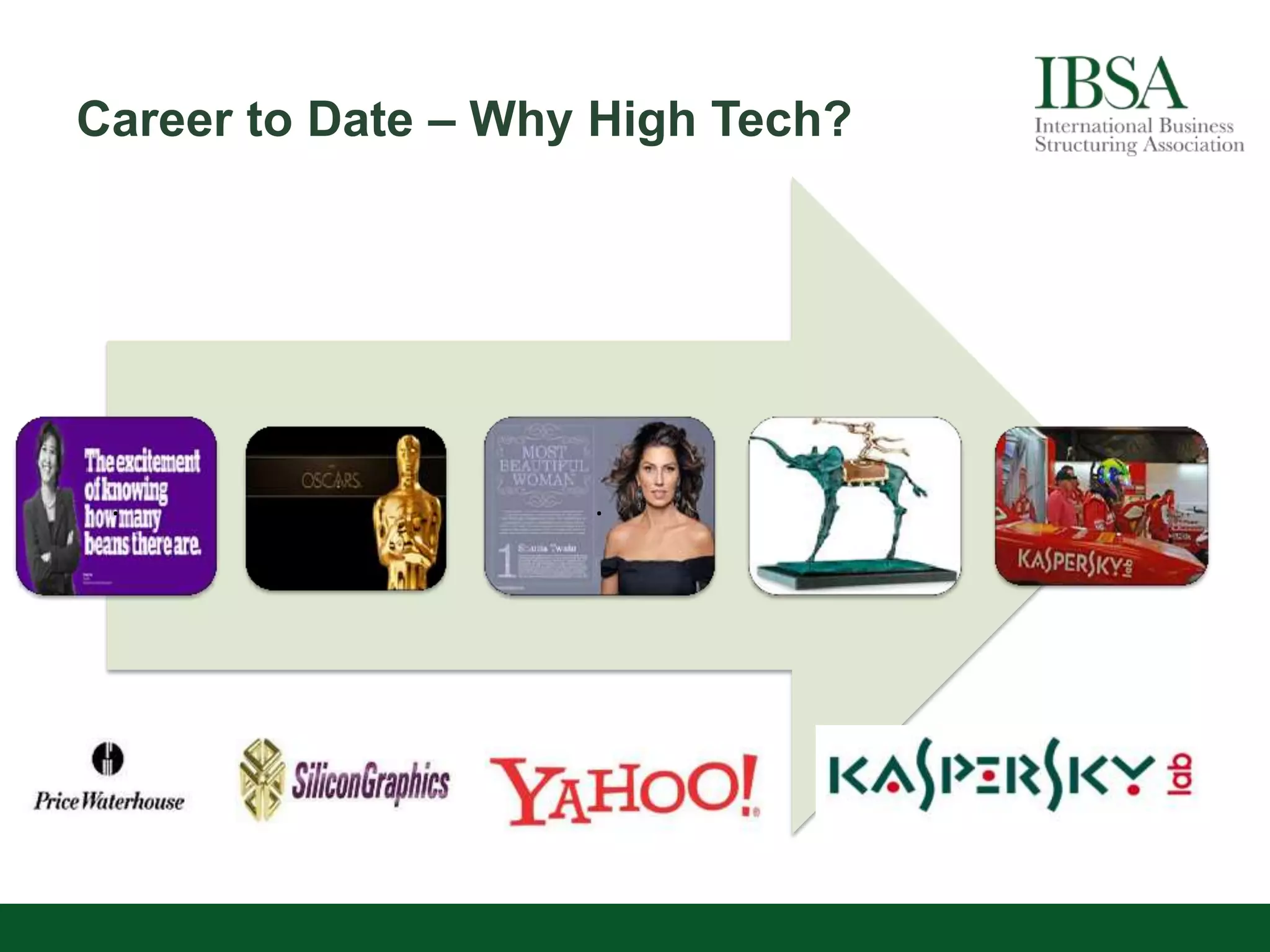
Career to Date – Why High Tech?
. . .
How to ensure consistency with
overall business strategy
Globalisation in the last 20 years has resulted in the majority of multi-
nationals moving to functional management structures and away from a
local MD managing all functions in a country. This change created an
opportunity to relocate regional/global functions to tax efficient locations.
Business substance at the Principal Company has always been important but
BEPS will make this increasingly key to sustaining any tax advantages &
possibly still will not be sufficient.
Any significant business
restructuring should be done
primarily for commercial
reasons although tax
consequences can make a
material difference to the
cost/benefit analysis
Supply chain restructuring drivers include:
• Inventory management
• Reduction of intercompany transactions
• Management of trade receivables
What are the challenges of designing
a tax efficient supply chain structure?
 Obtain the appropriate resources
 Ensure Board/Executive management buy-in and have the Business
responsible for operational aspects of the project
 Obtain a realistic project budget
 IT requirements – systems changes?
 Recommend dedicated project manager(s)
 Ensure feasibility study identifies key issues
 Have a realistic risk assessment of possible issues
 Be prepared to change the “strawman” structure if necessary
 Ensure any key assumptions are agreed by Executive Management
 Consider exit provisions when negotiating tax rulings
 Consider tax claw-back clauses / WHT on repatriation of profits
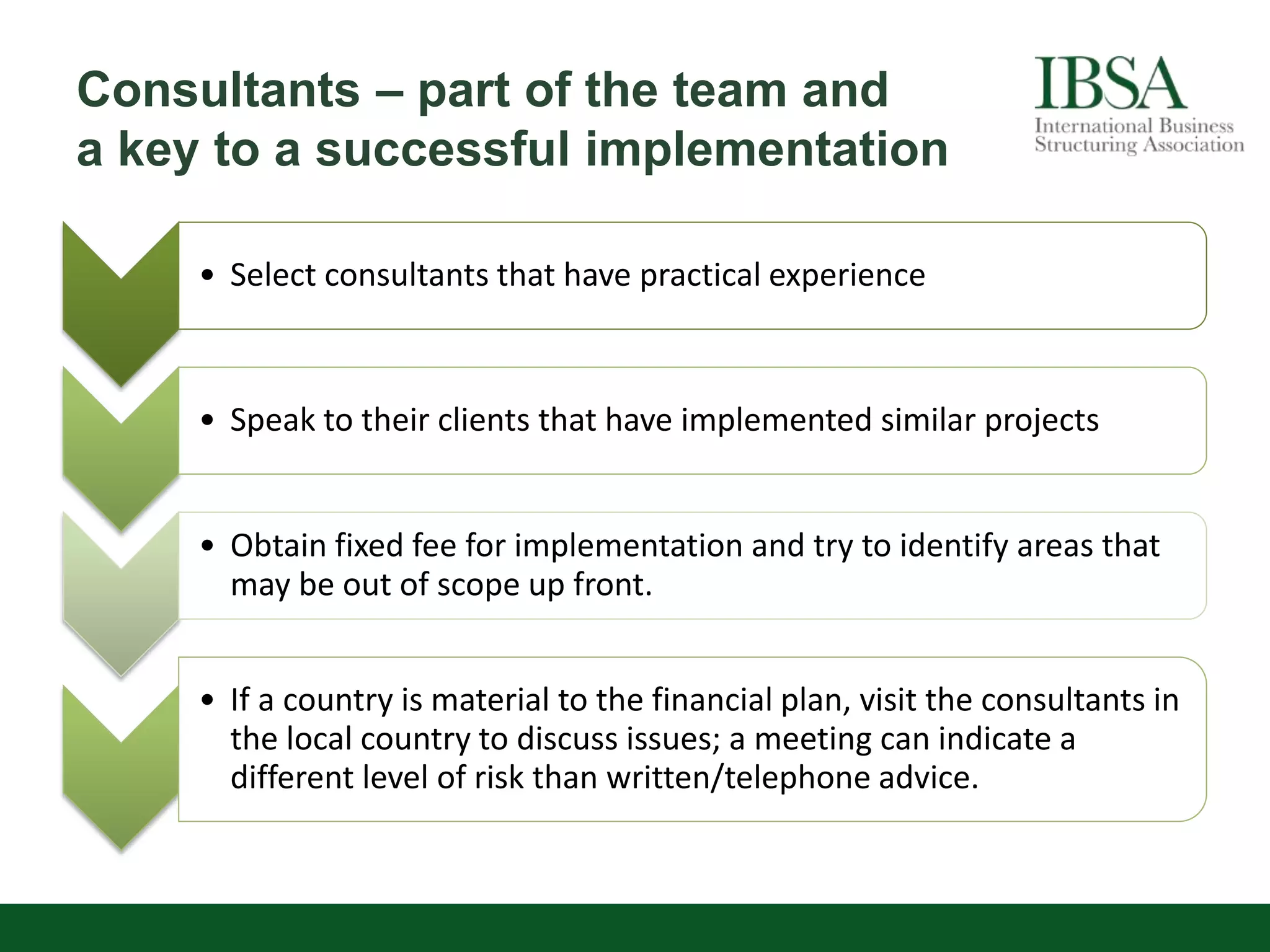
Consultants – part of the team and
a key to a successful implementation
• Select consultants that have practical experience
• Speak to their clients that have implemented similar projects
• Obtain fixed fee for implementation and try to identify areas that
may be out of scope up front.
• If a country is material to the financial plan, visit the consultants in
the local country to discuss issues; a meeting can indicate a
different level of risk than written/telephone advice.
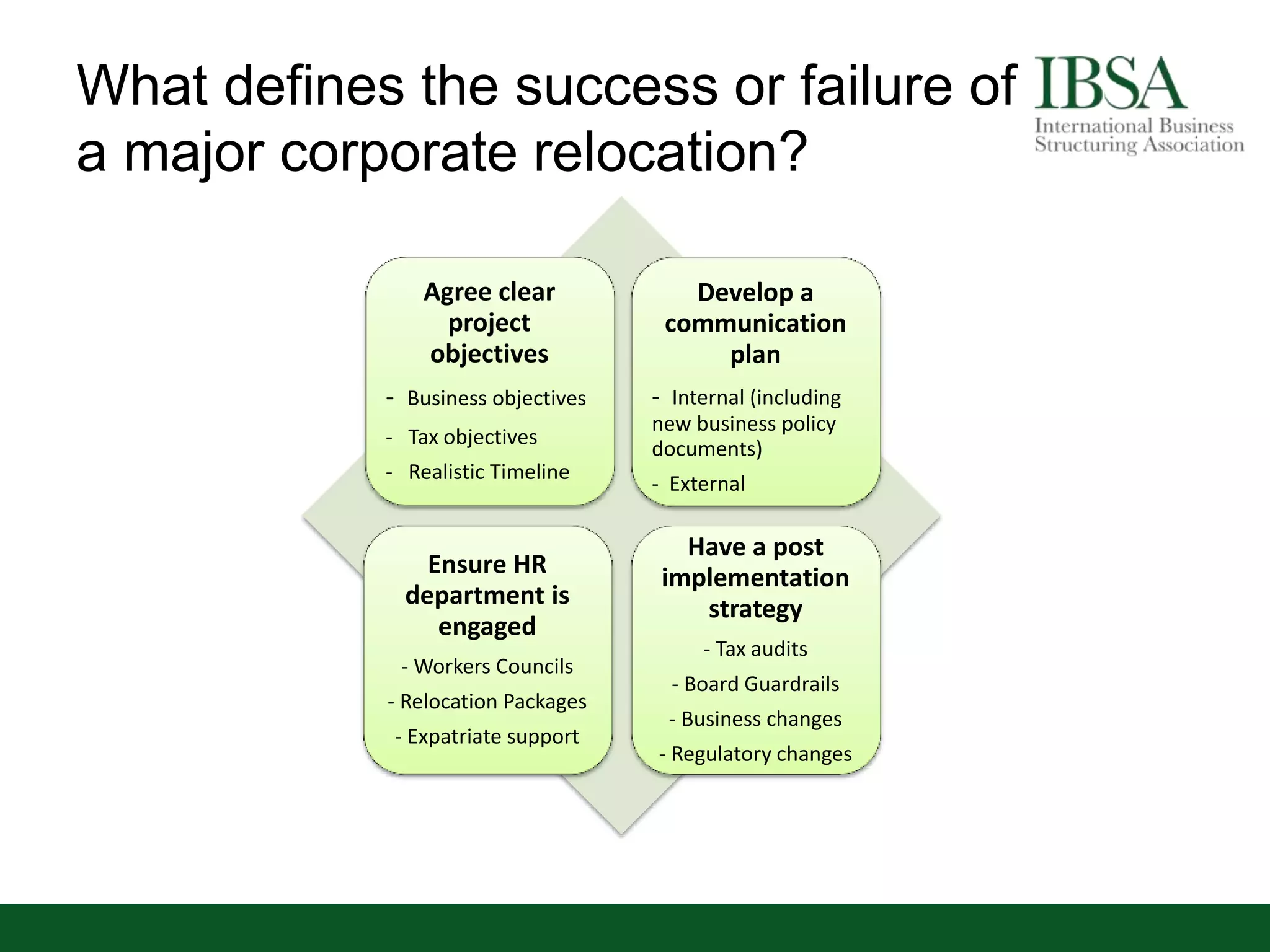
What defines the success or failure of
a major corporate relocation?
Agree clear
project
objectives
- Business objectives
- Tax objectives
- Realistic Timeline
Develop a
communication
plan
- Internal (including
new business policy
documents)
- External
Ensure HR
department is
engaged
- Workers Councils
- Relocation Packages
- Expatriate support
Have a post
implementation
strategy
- Tax audits
- Board Guardrails
- Business changes
- Regulatory changes
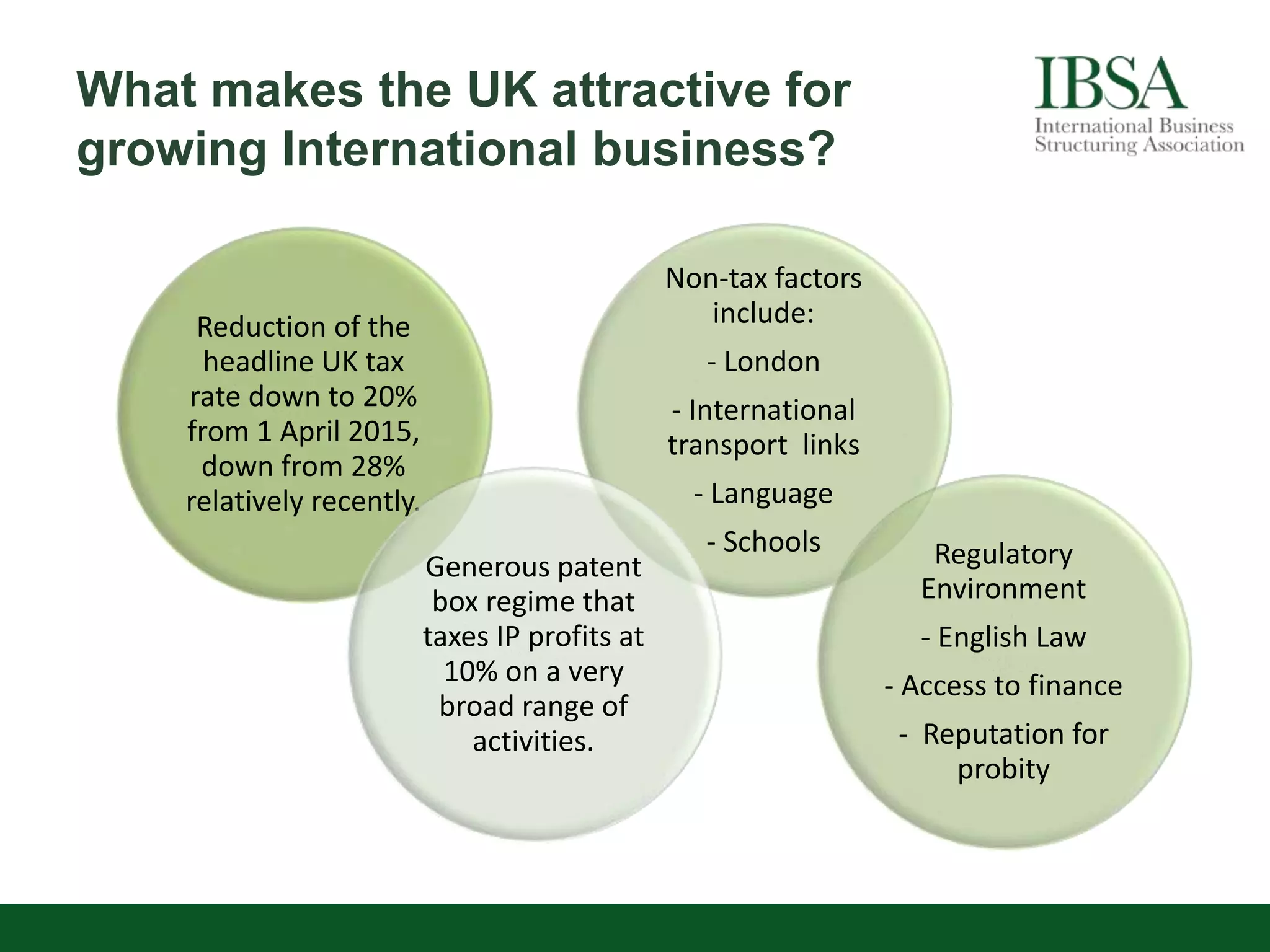
What makes the UK attractive for
growing International business?
Reduction of the
headline UK tax
rate down to 20%
from 1 April 2015,
down from 28%
relatively recently.
Non-tax factors
include:
- London
- International
transport links
- Language
- Schools
Generous patent
box regime that
taxes IP profits at
10% on a very
broad range of
activities.
Regulatory
Environment
- English Law
- Access to finance
- Reputation for
probity
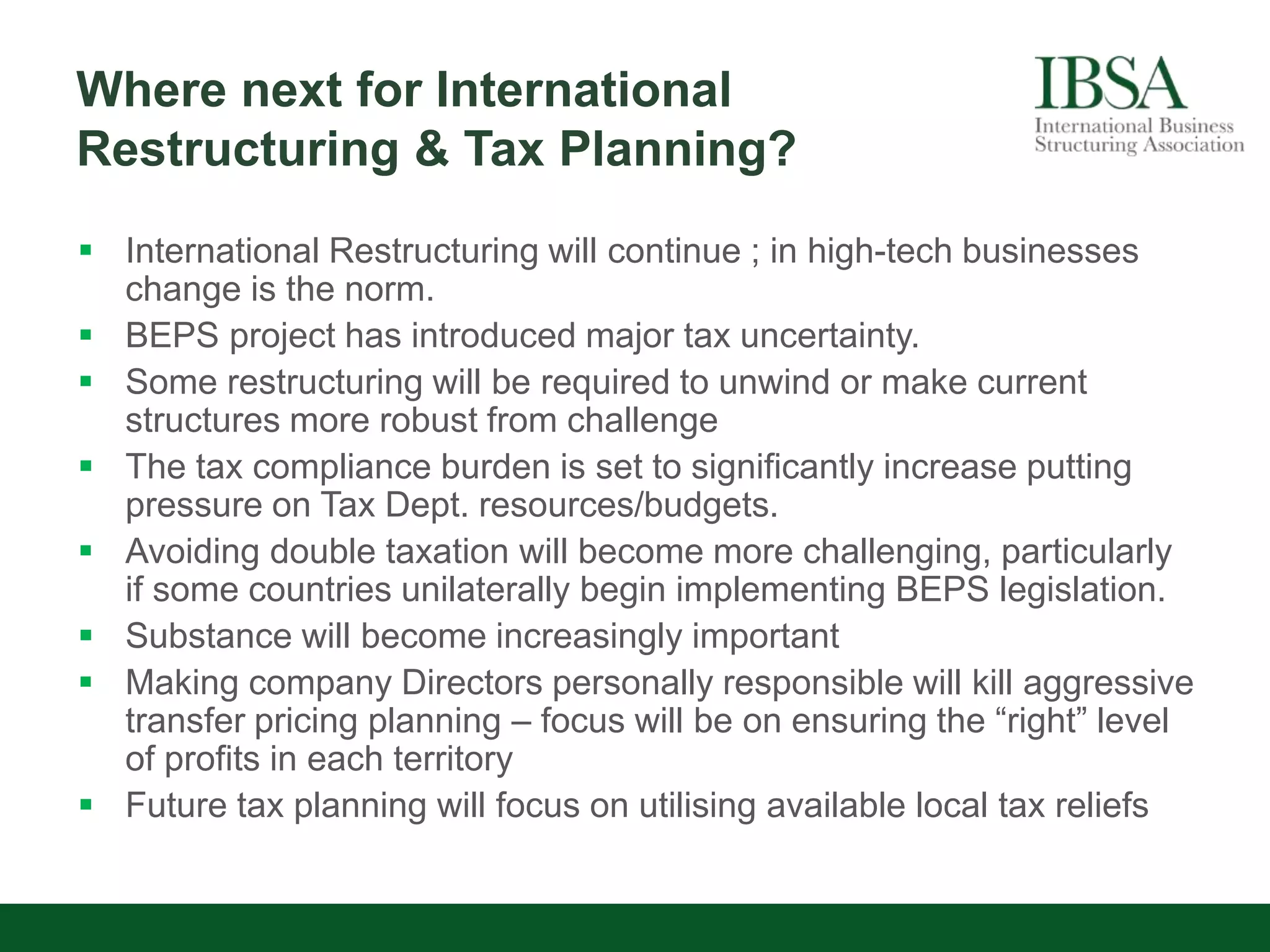
Where next for International
Restructuring & Tax Planning?
 International Restructuring will continue ; in high-tech businesses
change is the norm.
 BEPS project has introduced major tax uncertainty.
 Some restructuring will be required to unwind or make current
structures more robust from challenge
 The tax compliance burden is set to significantly increase putting
pressure on Tax Dept. resources/budgets.
 Avoiding double taxation will become more challenging, particularly
if some countries unilaterally begin implementing BEPS legislation.
 Substance will become increasingly important
 Making company Directors personally responsible will kill aggressive
transfer pricing planning – focus will be on ensuring the “right” level
of profits in each territory
 Future tax planning will focus on utilising available local tax reliefs

The Evolution of International Taxation: Two Decades in Hi-Tech - Gary Howlett, Global Tax Director, Kaspersky Lab

  • 1.
    The Evolution ofInternational Taxation 2 Decades of High -Tech Restructuring Gary Howlett Global Tax Director Kaspersky Lab
  • 2.
    Career to Date– Why High Tech? . . .
  • 3.
    How to ensureconsistency with overall business strategy Globalisation in the last 20 years has resulted in the majority of multi- nationals moving to functional management structures and away from a local MD managing all functions in a country. This change created an opportunity to relocate regional/global functions to tax efficient locations. Business substance at the Principal Company has always been important but BEPS will make this increasingly key to sustaining any tax advantages & possibly still will not be sufficient. Any significant business restructuring should be done primarily for commercial reasons although tax consequences can make a material difference to the cost/benefit analysis Supply chain restructuring drivers include: • Inventory management • Reduction of intercompany transactions • Management of trade receivables
  • 4.
    What are thechallenges of designing a tax efficient supply chain structure?  Obtain the appropriate resources  Ensure Board/Executive management buy-in and have the Business responsible for operational aspects of the project  Obtain a realistic project budget  IT requirements – systems changes?  Recommend dedicated project manager(s)  Ensure feasibility study identifies key issues  Have a realistic risk assessment of possible issues  Be prepared to change the “strawman” structure if necessary  Ensure any key assumptions are agreed by Executive Management  Consider exit provisions when negotiating tax rulings  Consider tax claw-back clauses / WHT on repatriation of profits
  • 5.
    Consultants – partof the team and a key to a successful implementation • Select consultants that have practical experience • Speak to their clients that have implemented similar projects • Obtain fixed fee for implementation and try to identify areas that may be out of scope up front. • If a country is material to the financial plan, visit the consultants in the local country to discuss issues; a meeting can indicate a different level of risk than written/telephone advice.
  • 6.
    What defines thesuccess or failure of a major corporate relocation? Agree clear project objectives - Business objectives - Tax objectives - Realistic Timeline Develop a communication plan - Internal (including new business policy documents) - External Ensure HR department is engaged - Workers Councils - Relocation Packages - Expatriate support Have a post implementation strategy - Tax audits - Board Guardrails - Business changes - Regulatory changes
  • 7.
    What makes theUK attractive for growing International business? Reduction of the headline UK tax rate down to 20% from 1 April 2015, down from 28% relatively recently. Non-tax factors include: - London - International transport links - Language - Schools Generous patent box regime that taxes IP profits at 10% on a very broad range of activities. Regulatory Environment - English Law - Access to finance - Reputation for probity
  • 8.
    Where next forInternational Restructuring & Tax Planning?  International Restructuring will continue ; in high-tech businesses change is the norm.  BEPS project has introduced major tax uncertainty.  Some restructuring will be required to unwind or make current structures more robust from challenge  The tax compliance burden is set to significantly increase putting pressure on Tax Dept. resources/budgets.  Avoiding double taxation will become more challenging, particularly if some countries unilaterally begin implementing BEPS legislation.  Substance will become increasingly important  Making company Directors personally responsible will kill aggressive transfer pricing planning – focus will be on ensuring the “right” level of profits in each territory  Future tax planning will focus on utilising available local tax reliefs