Agenda

        Purpose

        Scope

        Approach and Methodology

        A. The Outsourcing Market

        B. Management Practices

        Participants
Purpose   of The State of Canadian Outsourcing: Update 2009


   The 2009 update to the Centre for Outsourcing Research &
       Education’s (CORE) State of Canadian Outsourcing report
       released in early 2008 provides:

      Trends in the Canadian outsourcing market and outsourcing
       management practices;

      Data on new outsourcing transactions, add-ons to existing
       transactions, and renewals for the 18 months between June
       2007 and November 2008;

      Data on close to 100 new transactions reported in last 18
       months, of which we obtained TCV data on 40 transactions with
       a total TCV of $2 billion.
Scope of The State of Canadian Outsourcing: Update 2009

  The State of Canadian Outsourcing: Update 2009:

      includes outsourcing across all industry sectors, and covers the 10-
       year period 1998-2008

      focuses on the larger end of the outsourcing market (outsourcing
       transactions with a total contract value in excess of $1 million)

      includes publicly reported outsourcing transactions and outsourcing
       transactions reported to us through our primary data gathering


  The quantitative data in this report is indicative of the size and scope of
  the outsourcing market in Canada, but should not be seen as definitive.
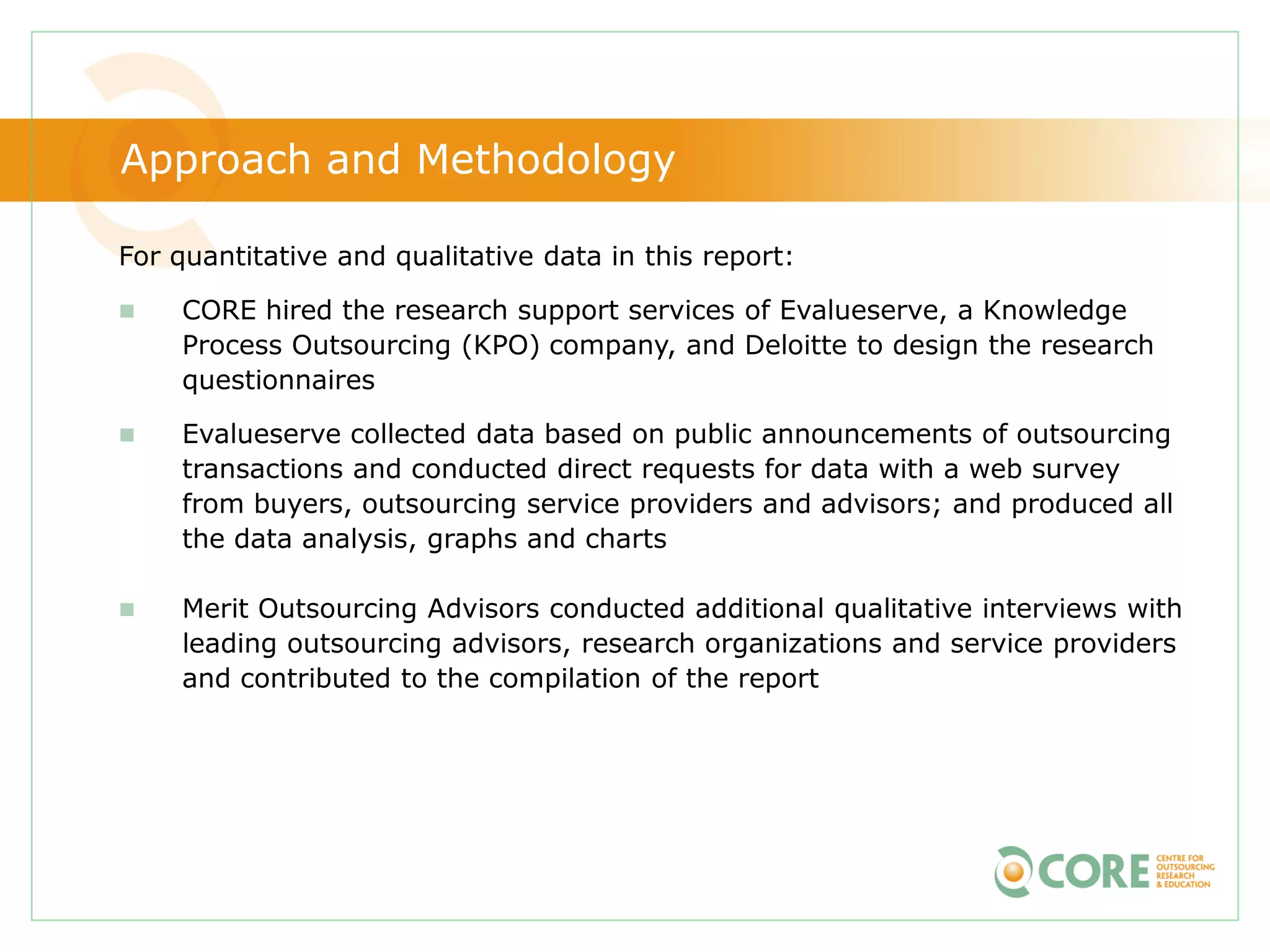
Approach and Methodology

For quantitative and qualitative data in this report:

   CORE hired the research support services of Evalueserve, a Knowledge
    Process Outsourcing (KPO) company, and Deloitte to design the research
    questionnaires

   Evalueserve collected data based on public announcements of outsourcing
    transactions and conducted direct requests for data with a web survey
    from buyers, outsourcing service providers and advisors; and produced all
    the data analysis, graphs and charts

   Merit Outsourcing Advisors conducted additional qualitative interviews with
    leading outsourcing advisors, research organizations and service providers
    and contributed to the compilation of the report
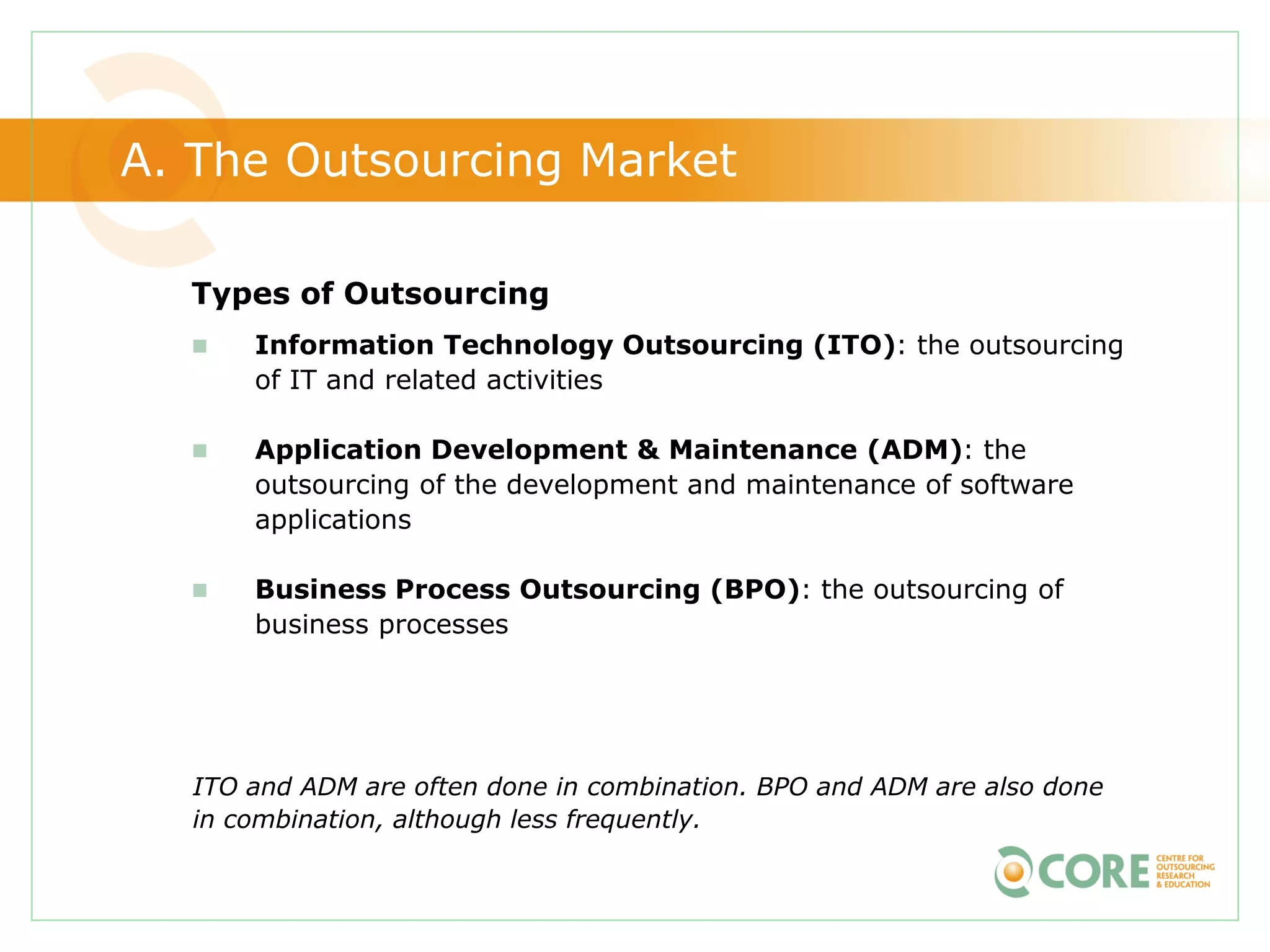
A. The Outsourcing Market

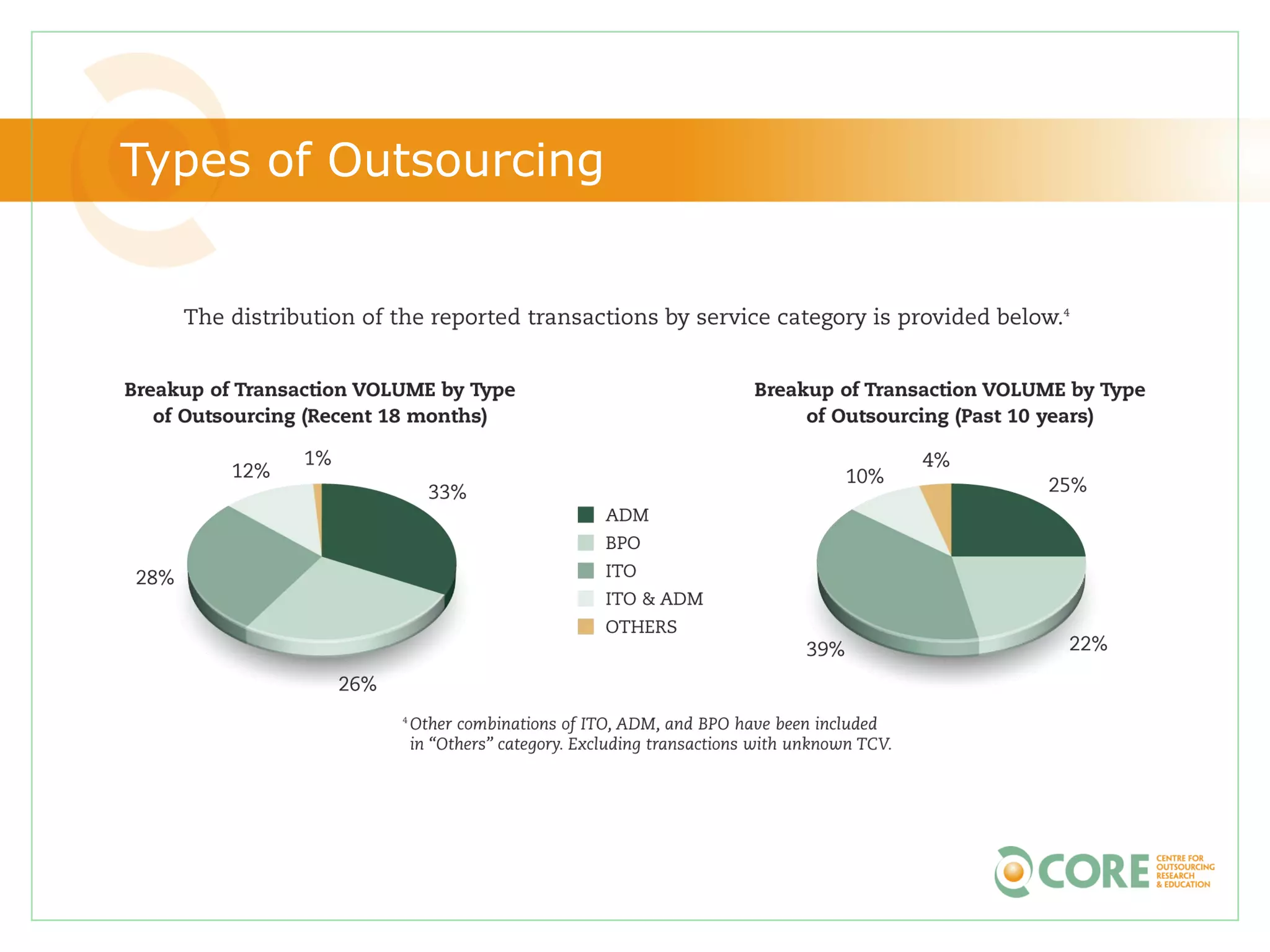
  Types of Outsourcing
     Information Technology Outsourcing (ITO): the outsourcing
      of IT and related activities

     Application Development & Maintenance (ADM): the
      outsourcing of the development and maintenance of software
      applications

     Business Process Outsourcing (BPO): the outsourcing of
      business processes


  ITO and ADM are often done in combination. BPO and ADM are also done
  in combination, although less frequently.
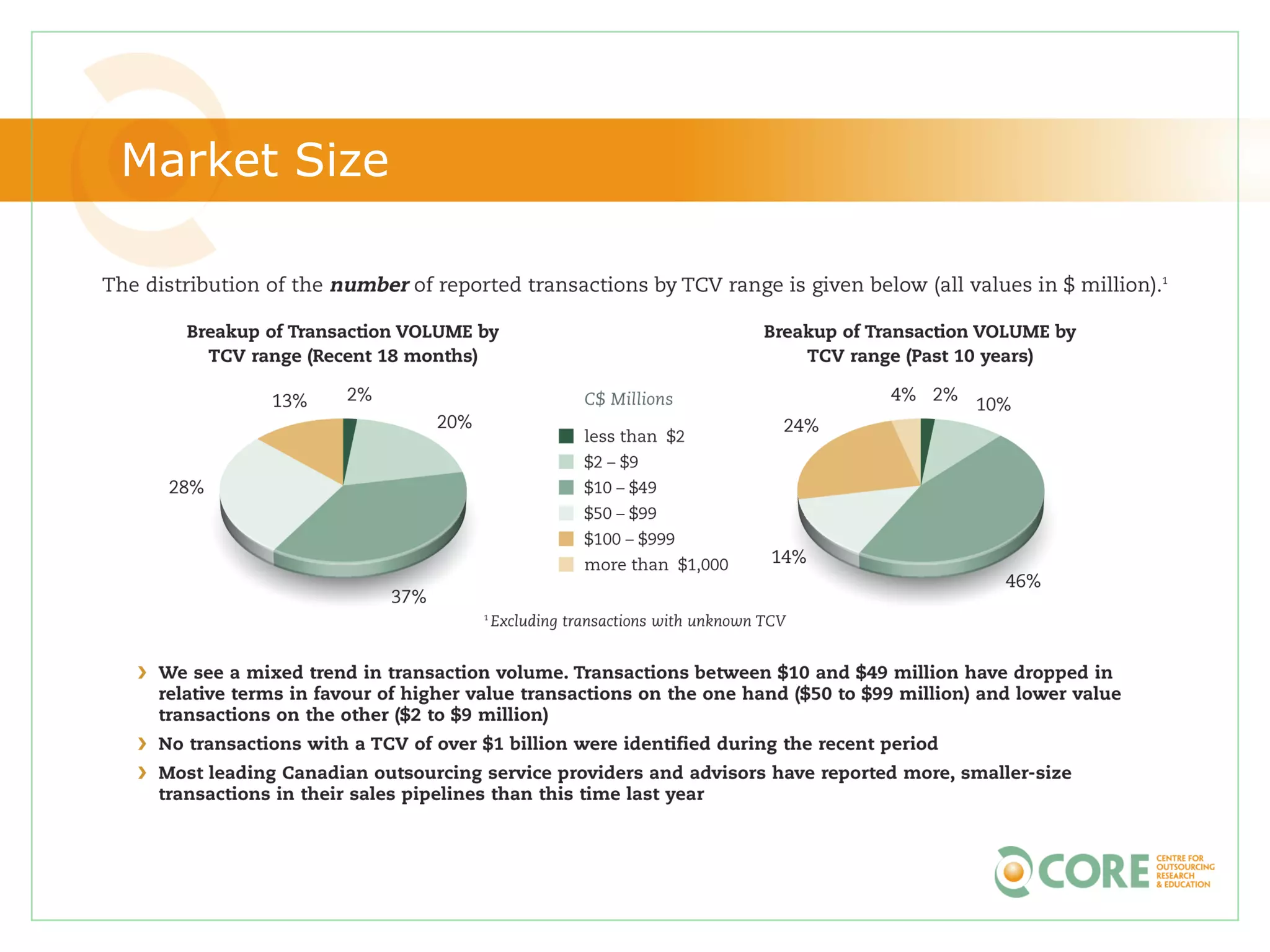
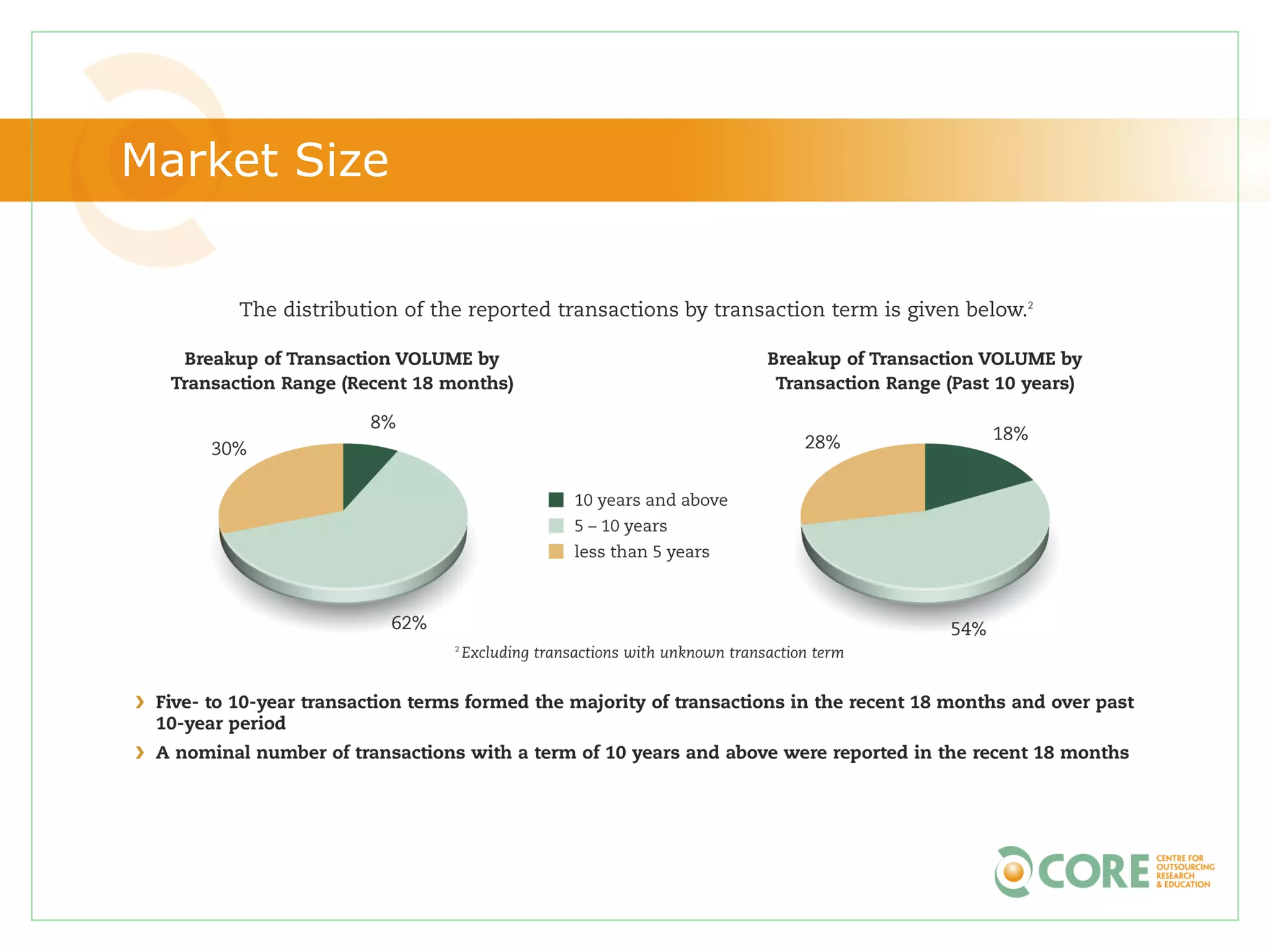
Market Size
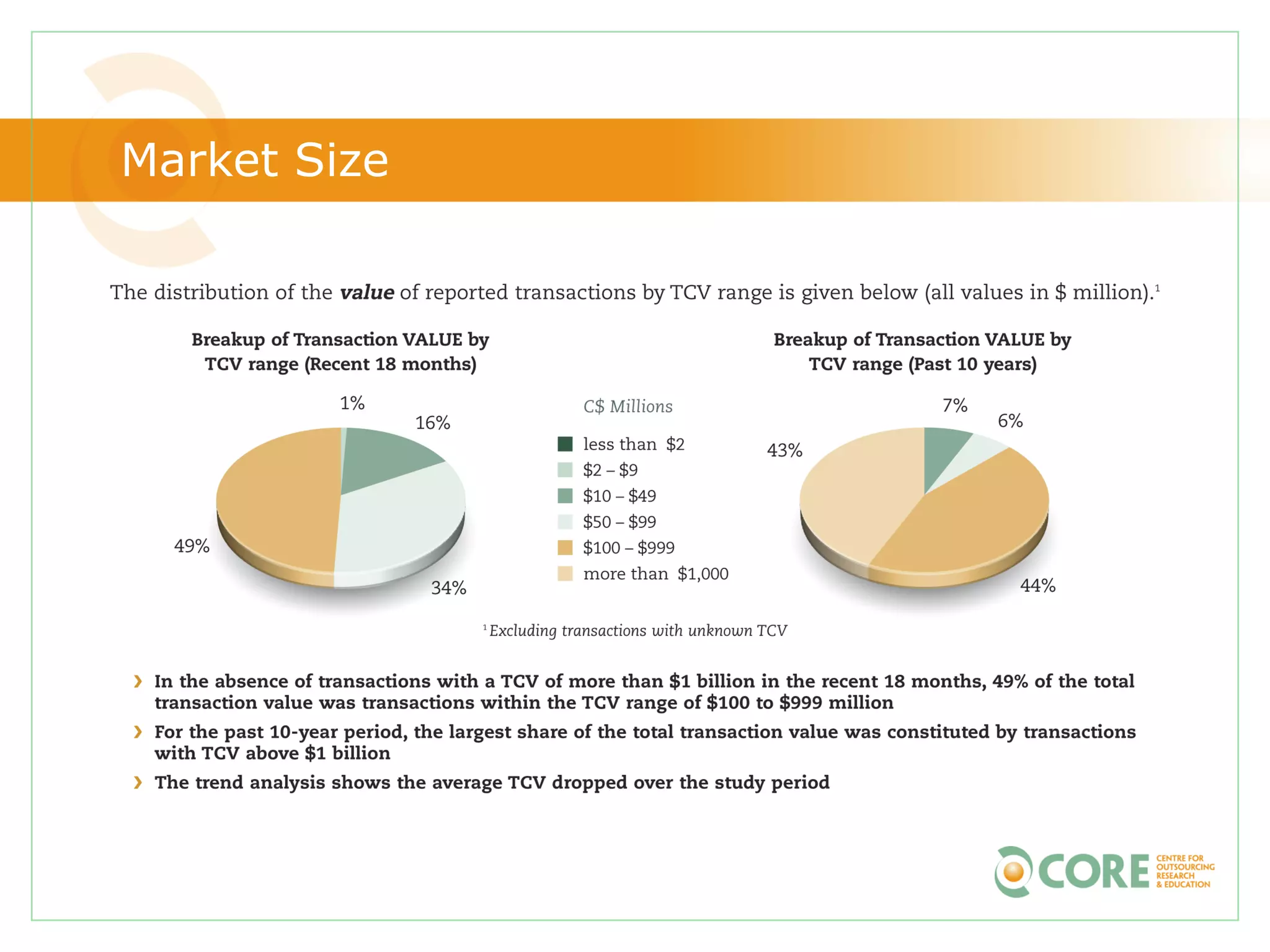
Market Size
Market Size
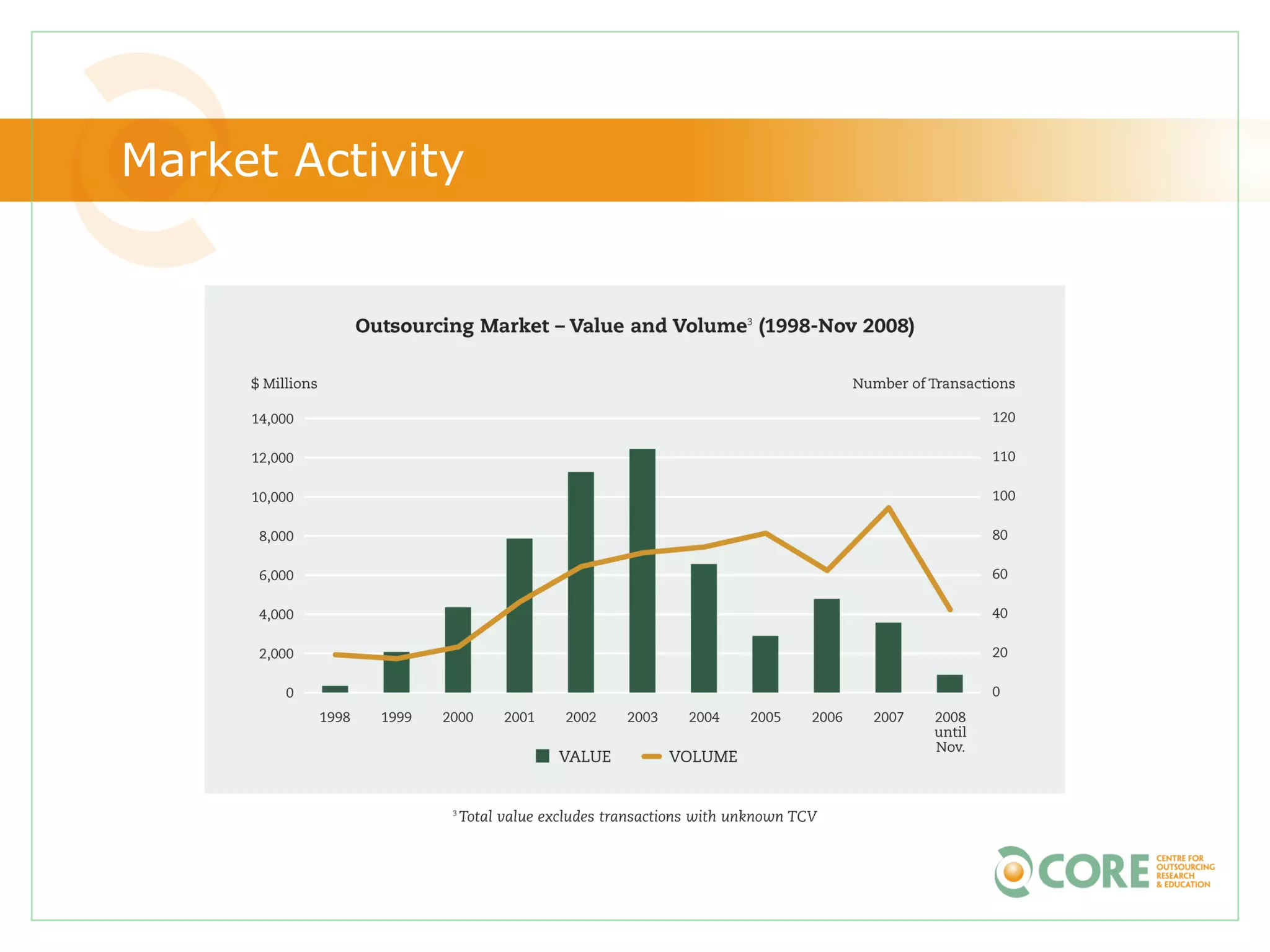
Market Activity
Types of Outsourcing
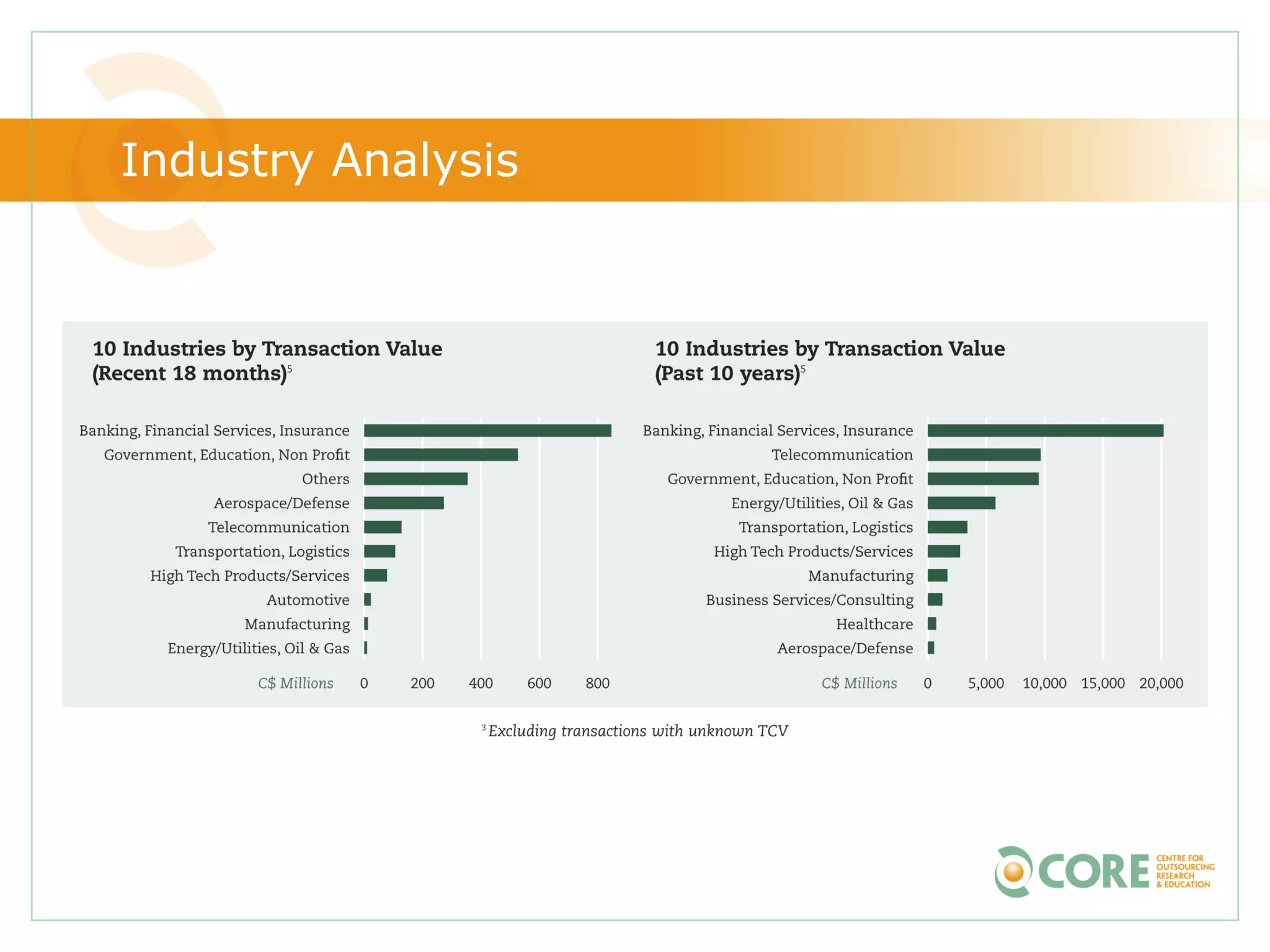
Industry Analysis
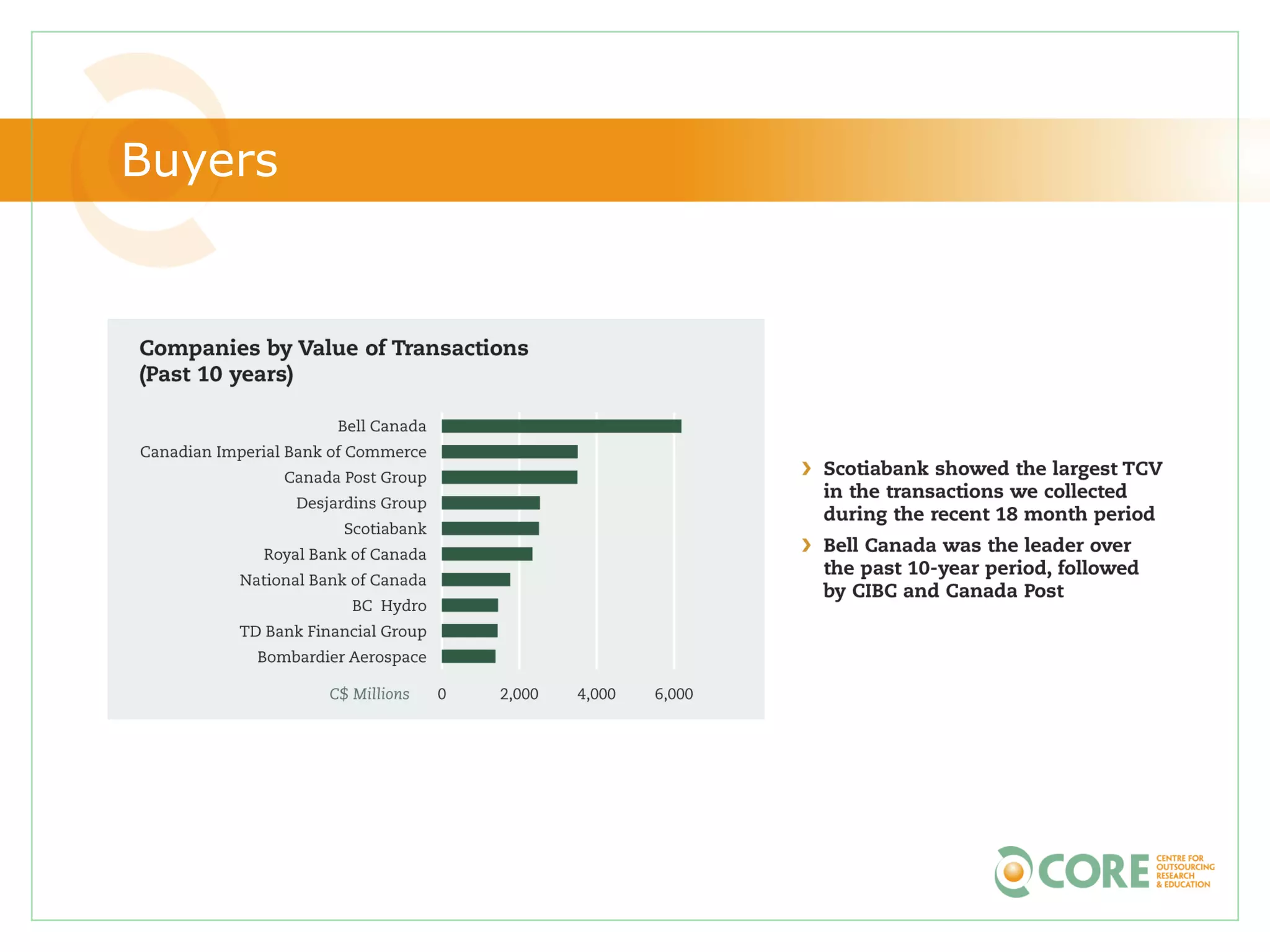
Buyers
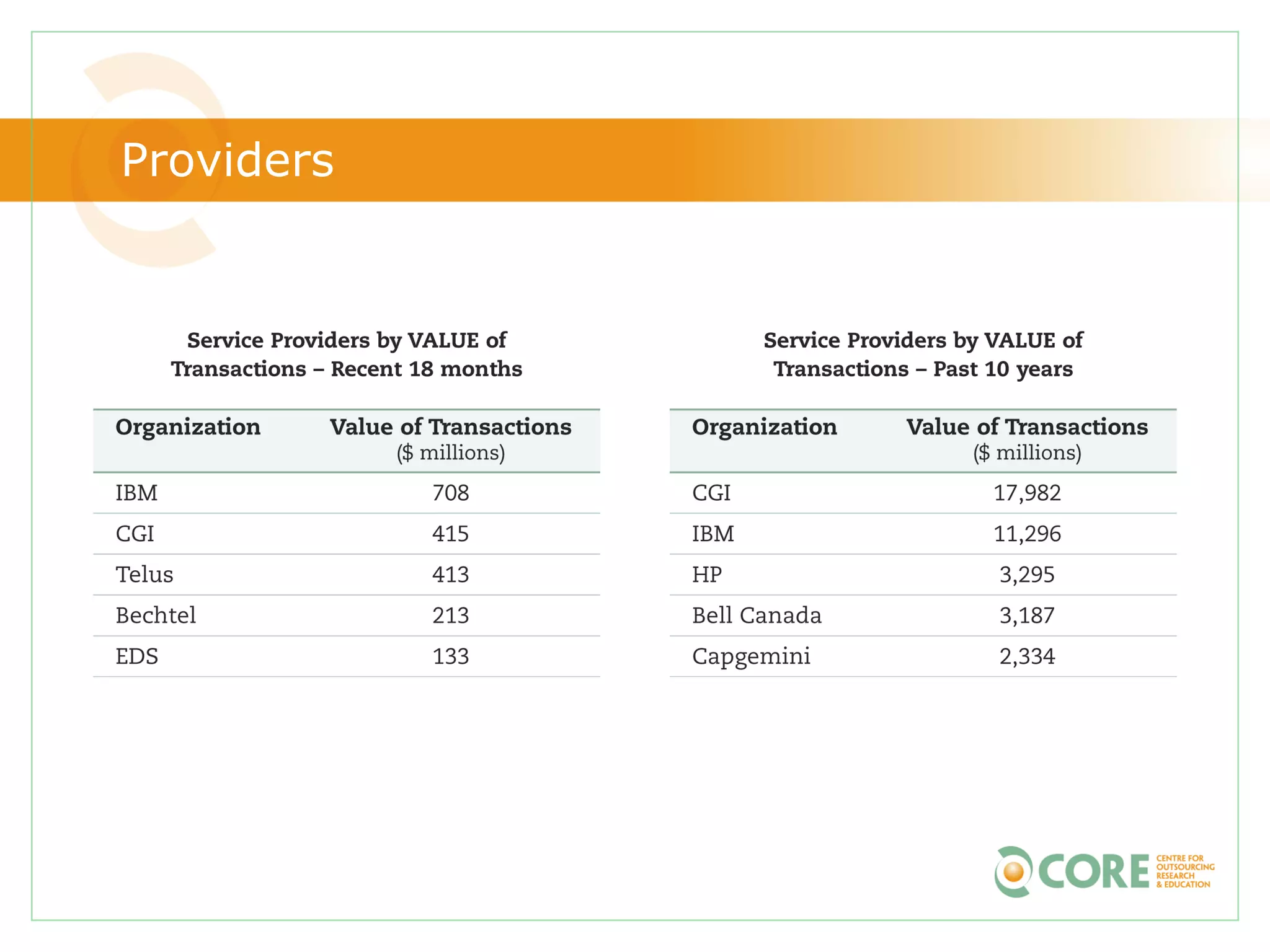
Providers
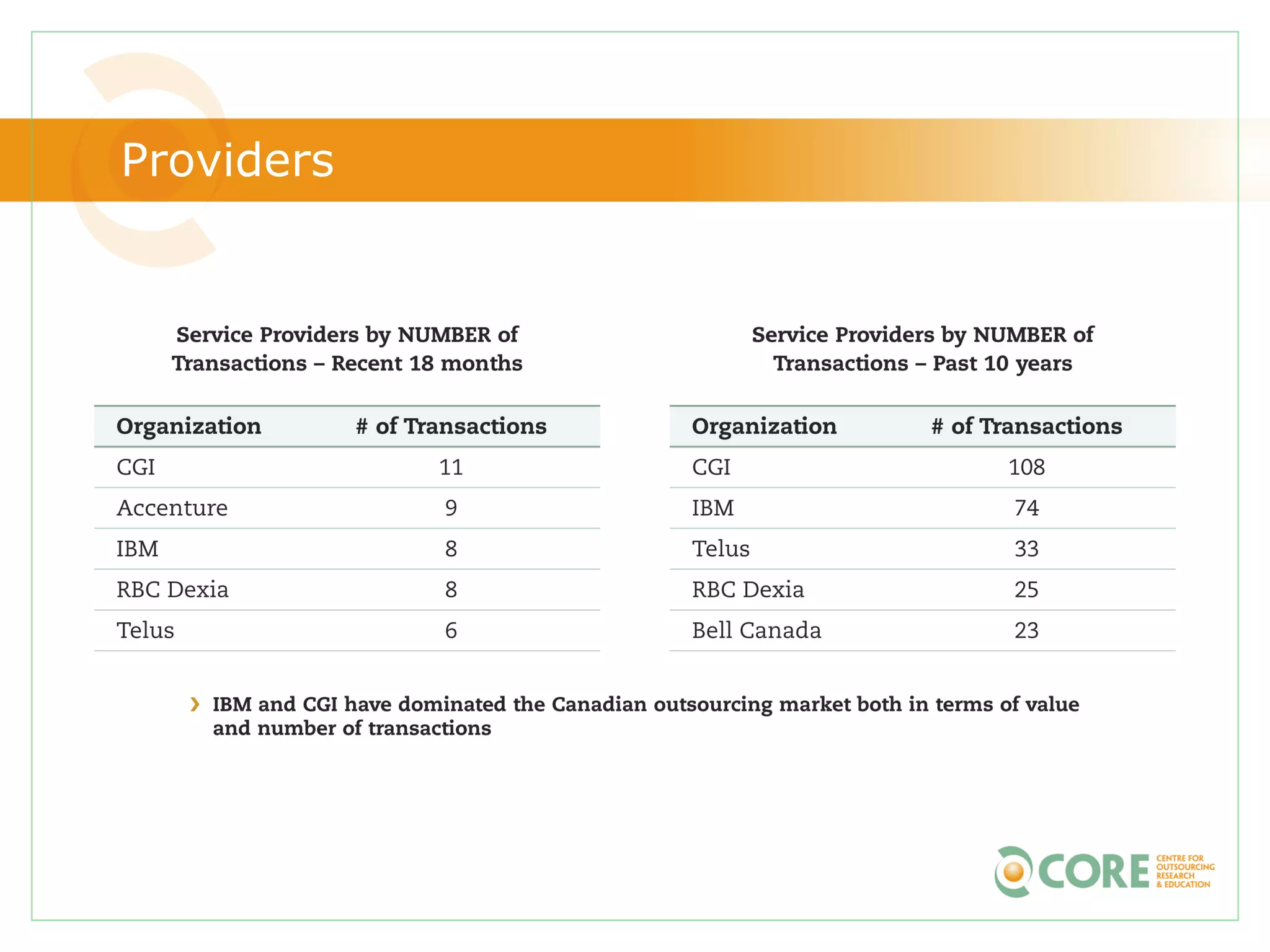
Providers
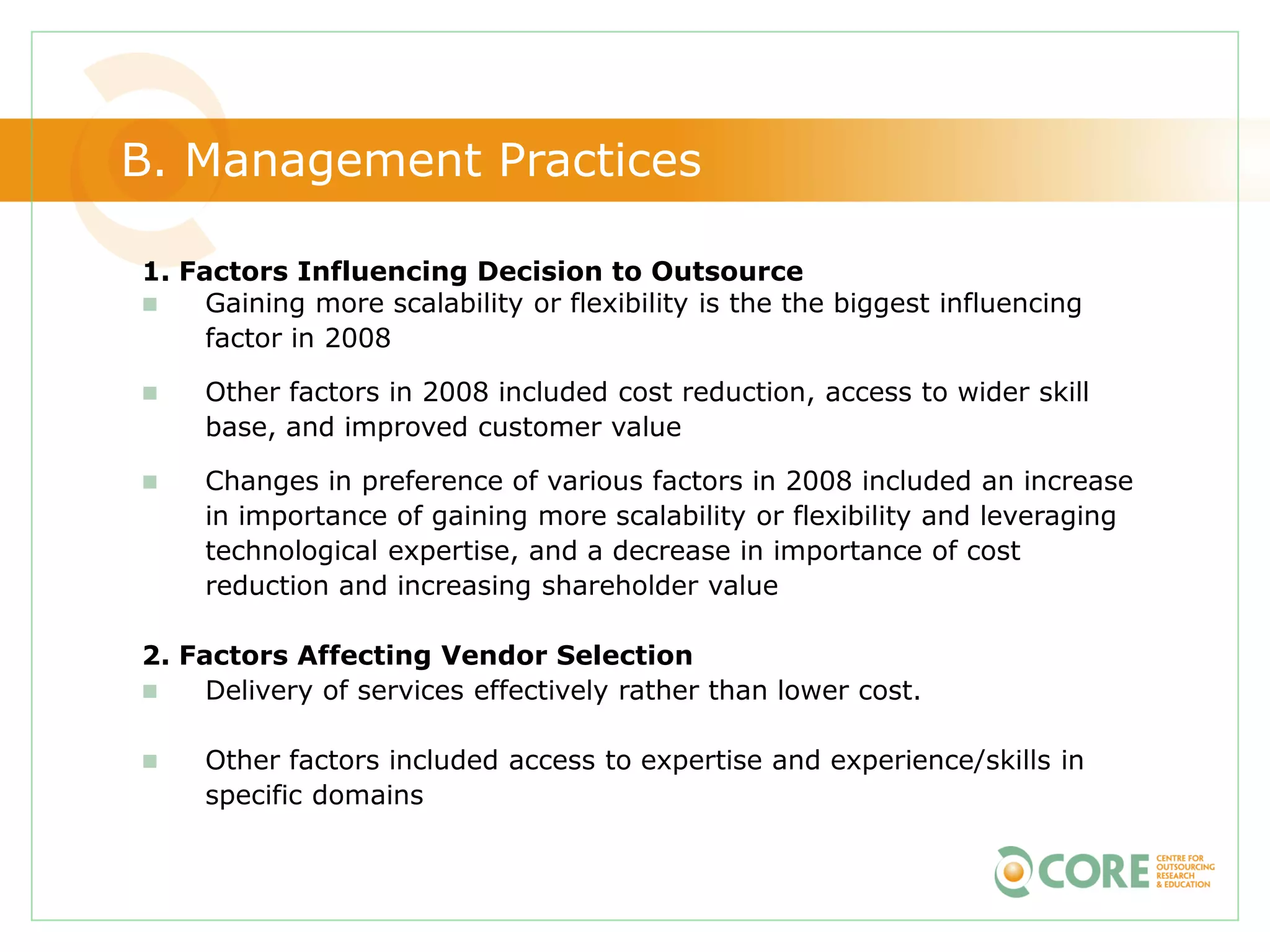
B. Management Practices

1. Factors Influencing Decision to Outsource
    Gaining more scalability or flexibility is the the biggest influencing
     factor in 2008

    Other factors in 2008 included cost reduction, access to wider skill
     base, and improved customer value

    Changes in preference of various factors in 2008 included an increase
     in importance of gaining more scalability or flexibility and leveraging
     technological expertise, and a decrease in importance of cost
     reduction and increasing shareholder value

2. Factors Affecting Vendor Selection
    Delivery of services effectively rather than lower cost.

    Other factors included access to expertise and experience/skills in
     specific domains
Management Practices


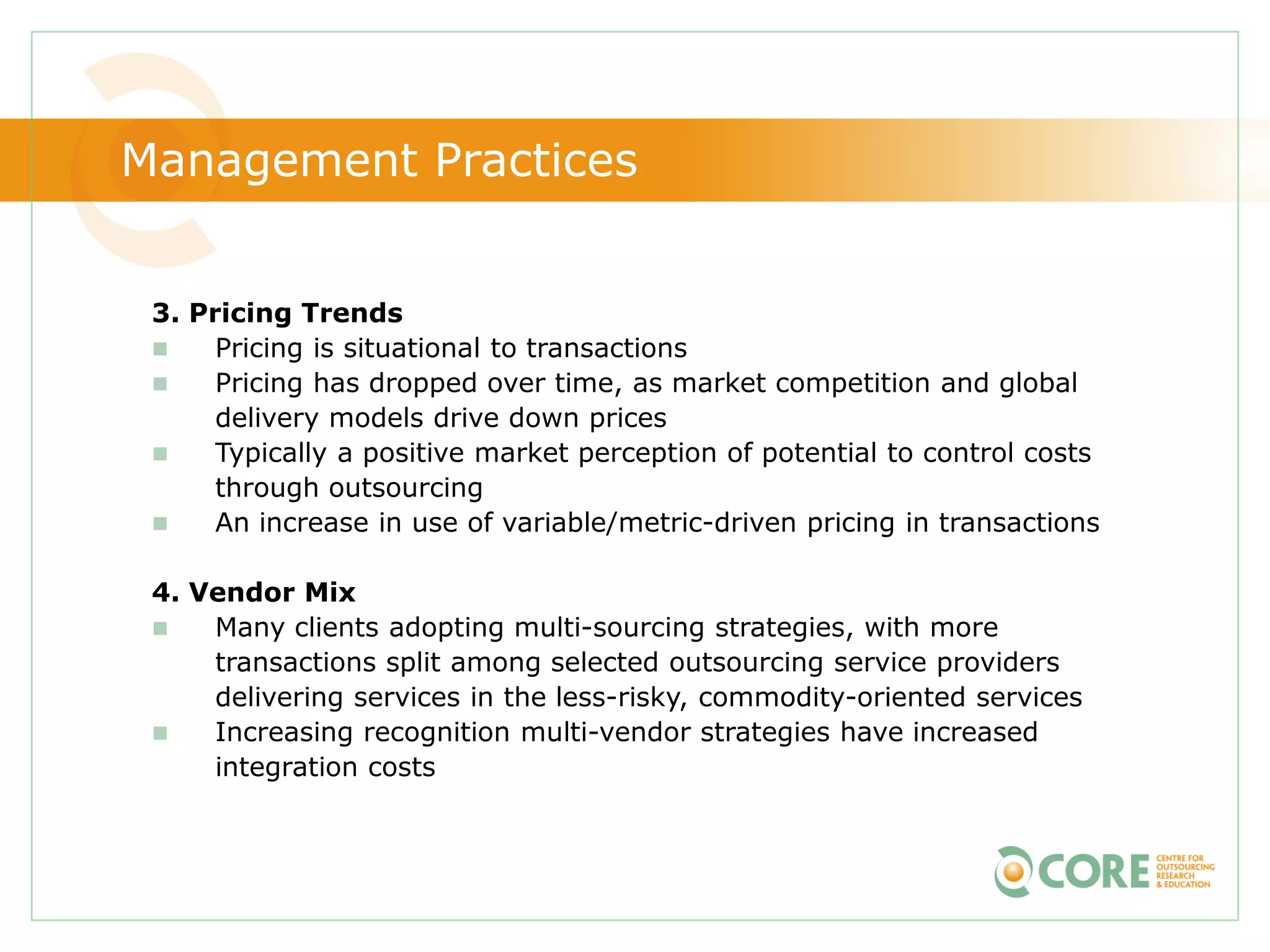
 3. Pricing Trends
     Pricing is situational to transactions
     Pricing has dropped over time, as market competition and global
      delivery models drive down prices
     Typically a positive market perception of potential to control costs
      through outsourcing
     An increase in use of variable/metric-driven pricing in transactions

 4. Vendor Mix
    Many clients adopting multi-sourcing strategies, with more
     transactions split among selected outsourcing service providers
     delivering services in the less-risky, commodity-oriented services
    Increasing recognition multi-vendor strategies have increased
     integration costs
Management Practices
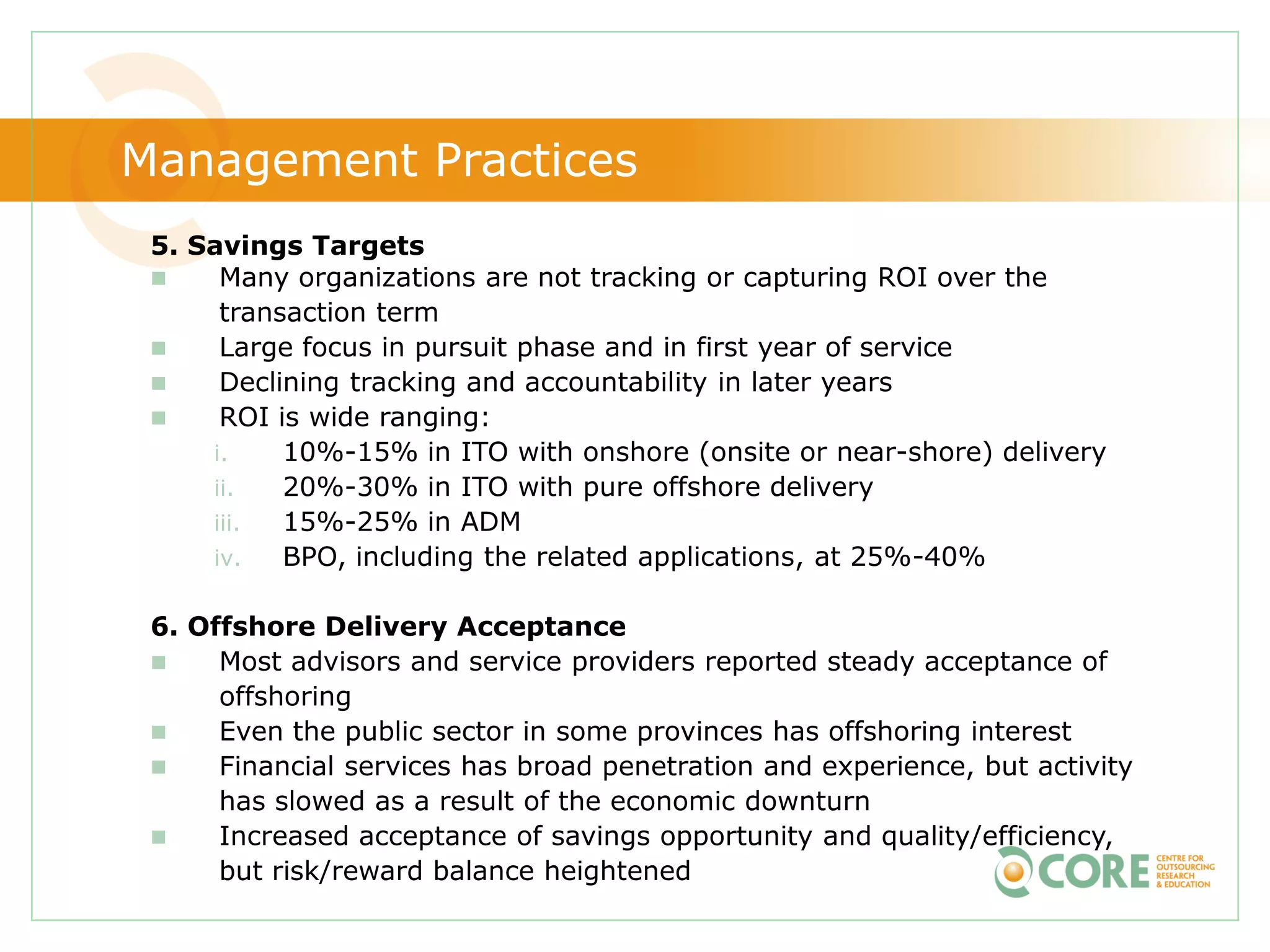
 5. Savings Targets
     Many organizations are not tracking or capturing ROI over the
      transaction term
     Large focus in pursuit phase and in first year of service
     Declining tracking and accountability in later years
     ROI is wide ranging:
     i.    10%-15% in ITO with onshore (onsite or near-shore) delivery
     ii.   20%-30% in ITO with pure offshore delivery
     iii.  15%-25% in ADM
     iv.   BPO, including the related applications, at 25%-40%

 6. Offshore Delivery Acceptance
     Most advisors and service providers reported steady acceptance of
      offshoring
     Even the public sector in some provinces has offshoring interest
     Financial services has broad penetration and experience, but activity
      has slowed as a result of the economic downturn
     Increased acceptance of savings opportunity and quality/efficiency,
      but risk/reward balance heightened
Management Practices
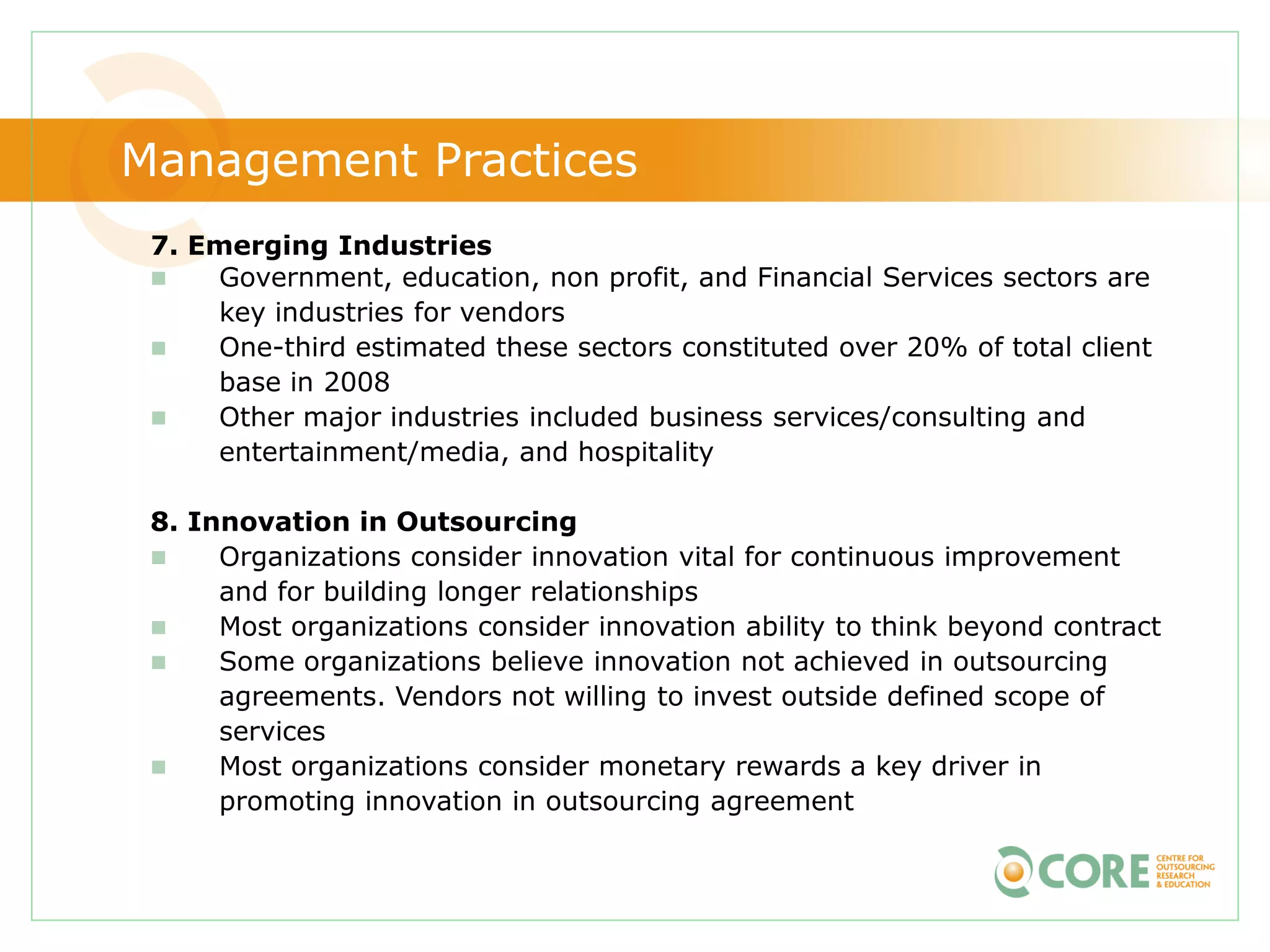
 7. Emerging Industries
    Government, education, non profit, and Financial Services sectors are
     key industries for vendors
    One-third estimated these sectors constituted over 20% of total client
     base in 2008
    Other major industries included business services/consulting and
     entertainment/media, and hospitality

 8. Innovation in Outsourcing
     Organizations consider innovation vital for continuous improvement
      and for building longer relationships
     Most organizations consider innovation ability to think beyond contract
     Some organizations believe innovation not achieved in outsourcing
      agreements. Vendors not willing to invest outside defined scope of
      services
     Most organizations consider monetary rewards a key driver in
      promoting innovation in outsourcing agreement
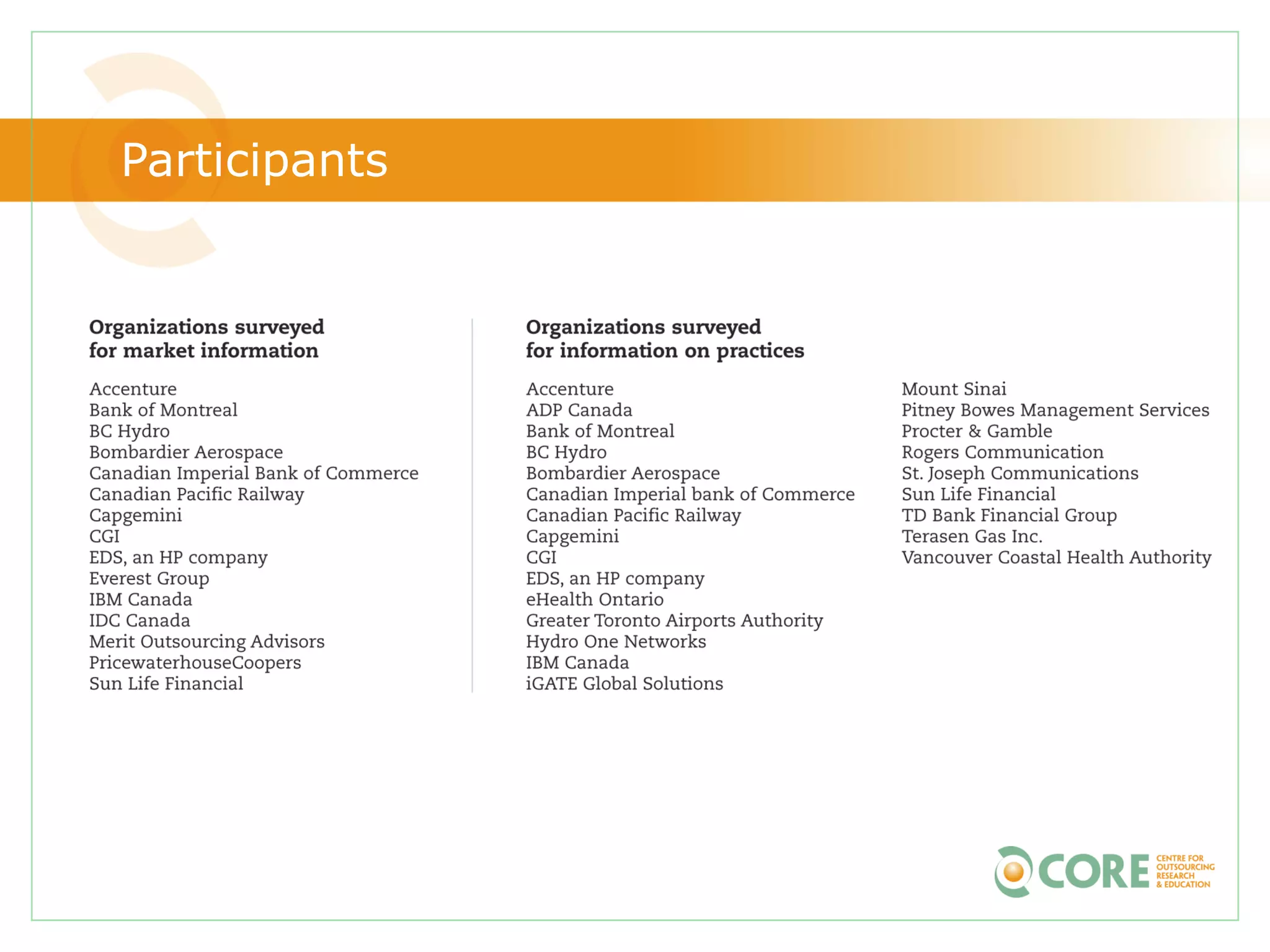
Participants

State Of Outsourcing 2009, Core Research

  • 2.
    Agenda  Purpose  Scope  Approach and Methodology  A. The Outsourcing Market  B. Management Practices  Participants
  • 3.
    Purpose of The State of Canadian Outsourcing: Update 2009 The 2009 update to the Centre for Outsourcing Research & Education’s (CORE) State of Canadian Outsourcing report released in early 2008 provides:  Trends in the Canadian outsourcing market and outsourcing management practices;  Data on new outsourcing transactions, add-ons to existing transactions, and renewals for the 18 months between June 2007 and November 2008;  Data on close to 100 new transactions reported in last 18 months, of which we obtained TCV data on 40 transactions with a total TCV of $2 billion.
  • 4.
    Scope of TheState of Canadian Outsourcing: Update 2009 The State of Canadian Outsourcing: Update 2009:  includes outsourcing across all industry sectors, and covers the 10- year period 1998-2008  focuses on the larger end of the outsourcing market (outsourcing transactions with a total contract value in excess of $1 million)  includes publicly reported outsourcing transactions and outsourcing transactions reported to us through our primary data gathering The quantitative data in this report is indicative of the size and scope of the outsourcing market in Canada, but should not be seen as definitive.
  • 5.
    Approach and Methodology Forquantitative and qualitative data in this report:  CORE hired the research support services of Evalueserve, a Knowledge Process Outsourcing (KPO) company, and Deloitte to design the research questionnaires  Evalueserve collected data based on public announcements of outsourcing transactions and conducted direct requests for data with a web survey from buyers, outsourcing service providers and advisors; and produced all the data analysis, graphs and charts  Merit Outsourcing Advisors conducted additional qualitative interviews with leading outsourcing advisors, research organizations and service providers and contributed to the compilation of the report
  • 6.
    A. The OutsourcingMarket Types of Outsourcing  Information Technology Outsourcing (ITO): the outsourcing of IT and related activities  Application Development & Maintenance (ADM): the outsourcing of the development and maintenance of software applications  Business Process Outsourcing (BPO): the outsourcing of business processes ITO and ADM are often done in combination. BPO and ADM are also done in combination, although less frequently.
  • 7.
  • 8.
  • 9.
  • 10.
  • 11.
  • 12.
  • 13.
  • 14.
  • 15.
  • 16.
    B. Management Practices 1.Factors Influencing Decision to Outsource  Gaining more scalability or flexibility is the the biggest influencing factor in 2008  Other factors in 2008 included cost reduction, access to wider skill base, and improved customer value  Changes in preference of various factors in 2008 included an increase in importance of gaining more scalability or flexibility and leveraging technological expertise, and a decrease in importance of cost reduction and increasing shareholder value 2. Factors Affecting Vendor Selection  Delivery of services effectively rather than lower cost.  Other factors included access to expertise and experience/skills in specific domains
  • 17.
    Management Practices 3.Pricing Trends  Pricing is situational to transactions  Pricing has dropped over time, as market competition and global delivery models drive down prices  Typically a positive market perception of potential to control costs through outsourcing  An increase in use of variable/metric-driven pricing in transactions 4. Vendor Mix  Many clients adopting multi-sourcing strategies, with more transactions split among selected outsourcing service providers delivering services in the less-risky, commodity-oriented services  Increasing recognition multi-vendor strategies have increased integration costs
  • 18.
    Management Practices 5.Savings Targets  Many organizations are not tracking or capturing ROI over the transaction term  Large focus in pursuit phase and in first year of service  Declining tracking and accountability in later years  ROI is wide ranging: i. 10%-15% in ITO with onshore (onsite or near-shore) delivery ii. 20%-30% in ITO with pure offshore delivery iii. 15%-25% in ADM iv. BPO, including the related applications, at 25%-40% 6. Offshore Delivery Acceptance  Most advisors and service providers reported steady acceptance of offshoring  Even the public sector in some provinces has offshoring interest  Financial services has broad penetration and experience, but activity has slowed as a result of the economic downturn  Increased acceptance of savings opportunity and quality/efficiency, but risk/reward balance heightened
  • 19.
    Management Practices 7.Emerging Industries  Government, education, non profit, and Financial Services sectors are key industries for vendors  One-third estimated these sectors constituted over 20% of total client base in 2008  Other major industries included business services/consulting and entertainment/media, and hospitality 8. Innovation in Outsourcing  Organizations consider innovation vital for continuous improvement and for building longer relationships  Most organizations consider innovation ability to think beyond contract  Some organizations believe innovation not achieved in outsourcing agreements. Vendors not willing to invest outside defined scope of services  Most organizations consider monetary rewards a key driver in promoting innovation in outsourcing agreement
  • 20.