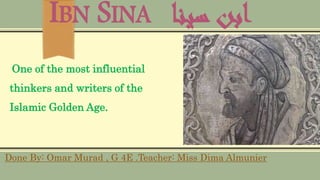
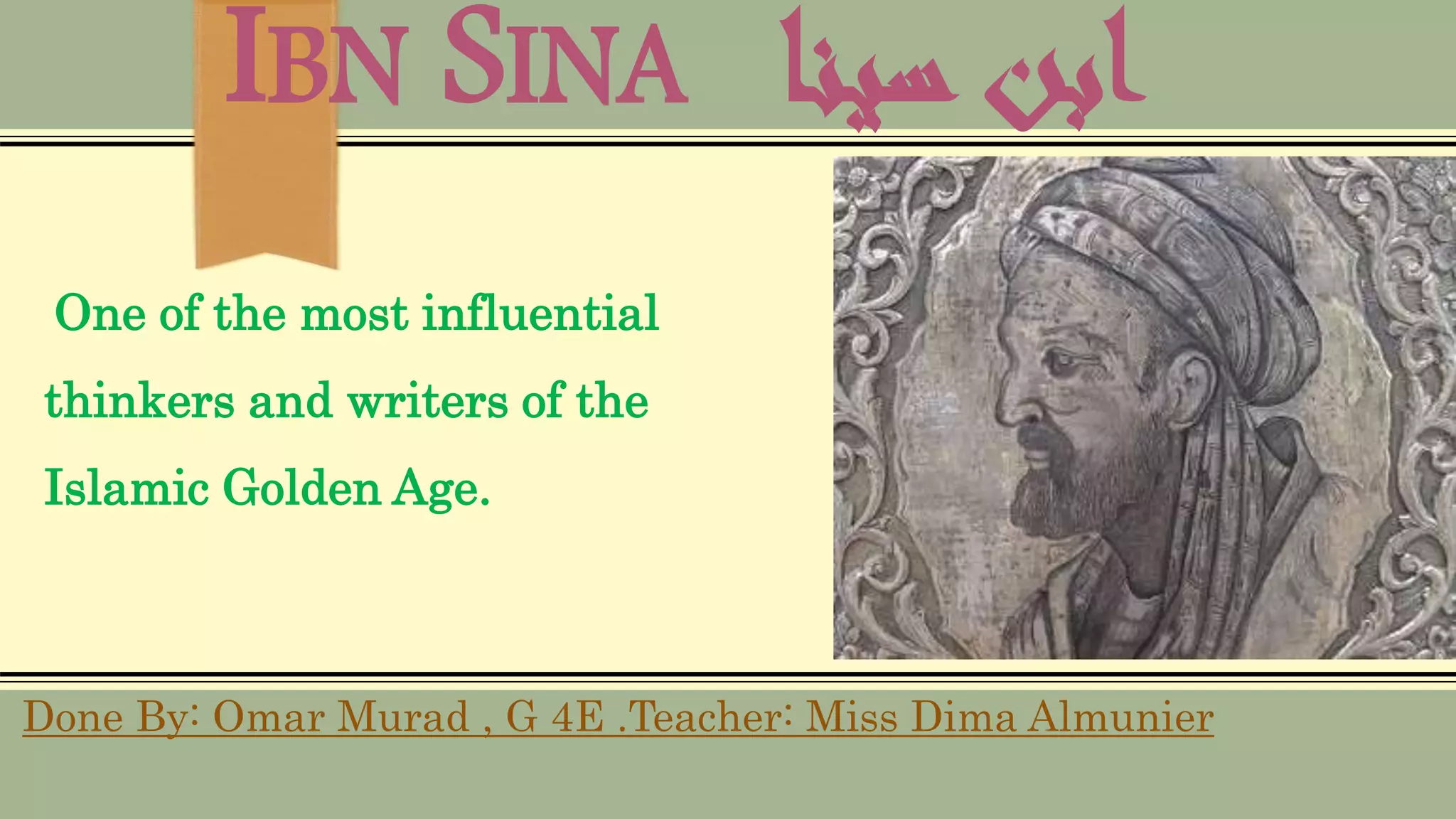
‫سينا‬ ‫ابن‬IBN SINA
One of the most influential
thinkers and writers of the
Islamic Golden Age.
Done By: Omar Murad , G 4E .Teacher: Miss Dima Almunier
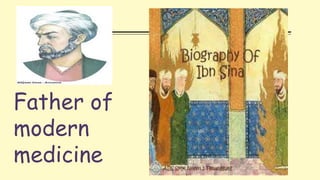
Father of
modern
medicine
Name and birth
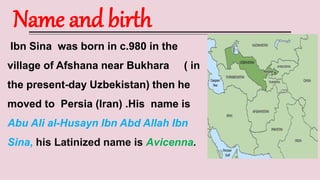
Ibn Sina was born in c.980 in the
village of Afshana near Bukhara ( in
the present-day Uzbekistan) then he
moved to Persia (Iran) .His name is
Abu Ali al-Husayn Ibn Abd Allah Ibn
Sina, his Latinized name is Avicenna.
Education
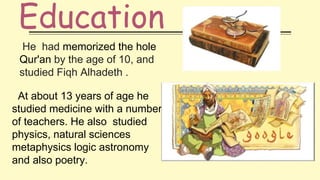
He had memorized the hole
Qur'an by the age of 10, and
studied Fiqh Alhadeth .
At about 13 years of age he
studied medicine with a number
of teachers. He also studied
physics, natural sciences
metaphysics logic astronomy
and also poetry.
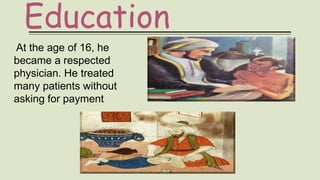
At the age of 16, he
became a respected
physician. He treated
many patients without
asking for payment
Education
Education
At Age of 18, he treated
successfully Nuh ibn Mansur
the Sultan of Bukhara, so he
permitted him to use his library
,which was one of the best in
the medieval world. The library
assisted him in his
philosophical self-education.
His Contributions
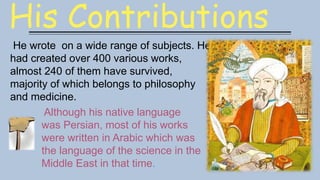
He wrote on a wide range of subjects. He
had created over 400 various works,
almost 240 of them have survived,
majority of which belongs to philosophy
and medicine.
Although his native language
was Persian, most of his works
were written in Arabic which was
the language of the science in the
Middle East in that time.
Books
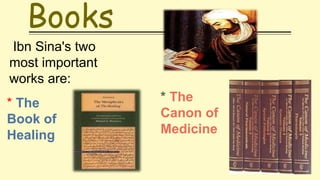
Ibn Sina's two
most important
works are:
* The
Canon of
Medicine
* The
Book of
Healing
Canon of Medicine
One of the most significant books in the
history of medicine.
It became a standard medical text at
many medieval universities till 18th
century. In 1973, it was reprinted in
New York, and it is still used till now in
a form of traditional medicine practiced
in India.
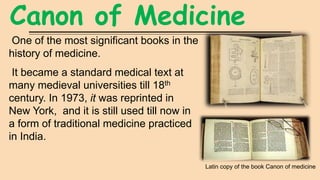
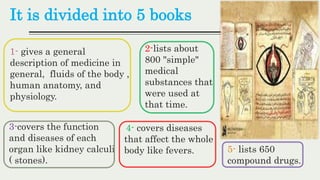
Latin copy of the book Canon of medicine
It is divided into 5 books
1- gives a general
description of medicine in
general, fluids of the body ,
human anatomy, and
physiology.
2-lists about
800 "simple"
medical
substances that
were used at
that time.
3-covers the function
and diseases of each
organ like kidney calculi
( stones).
4- covers diseases
that affect the whole
body like fevers. 5- lists 650
compound drugs.
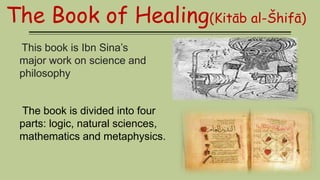
The Book of Healing(Kitāb al-Šhifā)
This book is Ibn Sina’s
major work on science and
philosophy
The book is divided into four
parts: logic, natural sciences,
mathematics and metaphysics.
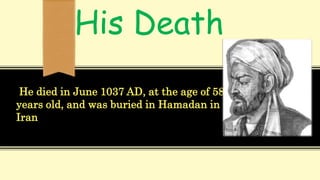
He died in June 1037 AD, at the age of 58
years old, and was buried in Hamadan in
Iran.
His Death

Ibn Sina

  • 1.
    ‫سينا‬ ‫ابن‬IBN SINA Oneof the most influential thinkers and writers of the Islamic Golden Age. Done By: Omar Murad , G 4E .Teacher: Miss Dima Almunier
  • 2.
  • 3.
    Name and birth IbnSina was born in c.980 in the village of Afshana near Bukhara ( in the present-day Uzbekistan) then he moved to Persia (Iran) .His name is Abu Ali al-Husayn Ibn Abd Allah Ibn Sina, his Latinized name is Avicenna.
  • 4.
    Education He had memorizedthe hole Qur'an by the age of 10, and studied Fiqh Alhadeth . At about 13 years of age he studied medicine with a number of teachers. He also studied physics, natural sciences metaphysics logic astronomy and also poetry.
  • 5.
    At the ageof 16, he became a respected physician. He treated many patients without asking for payment Education
  • 6.
    Education At Age of18, he treated successfully Nuh ibn Mansur the Sultan of Bukhara, so he permitted him to use his library ,which was one of the best in the medieval world. The library assisted him in his philosophical self-education.
  • 7.
    His Contributions He wroteon a wide range of subjects. He had created over 400 various works, almost 240 of them have survived, majority of which belongs to philosophy and medicine. Although his native language was Persian, most of his works were written in Arabic which was the language of the science in the Middle East in that time.
  • 8.
    Books Ibn Sina's two mostimportant works are: * The Canon of Medicine * The Book of Healing
  • 9.
    Canon of Medicine Oneof the most significant books in the history of medicine. It became a standard medical text at many medieval universities till 18th century. In 1973, it was reprinted in New York, and it is still used till now in a form of traditional medicine practiced in India. Latin copy of the book Canon of medicine
  • 10.
    It is dividedinto 5 books 1- gives a general description of medicine in general, fluids of the body , human anatomy, and physiology. 2-lists about 800 "simple" medical substances that were used at that time. 3-covers the function and diseases of each organ like kidney calculi ( stones). 4- covers diseases that affect the whole body like fevers. 5- lists 650 compound drugs.
  • 11.
    The Book ofHealing(Kitāb al-Šhifā) This book is Ibn Sina’s major work on science and philosophy The book is divided into four parts: logic, natural sciences, mathematics and metaphysics.
  • 12.
    He died inJune 1037 AD, at the age of 58 years old, and was buried in Hamadan in Iran. His Death

Editor's Notes

  • #2 NOTE: To change the image on this slide, select the picture and delete it. Then click the Pictures icon in the placeholder to insert your own image.