Carlos Cardini May
 Principles
 Studies supporting principles
 Research methods used in CLA
 Limitations of research methods
 How to overcome limitations
 Ethical considerations in research methods
 Schema theory
 Memory Models
 How biological factors affect memory
 How do social or cultural factors affect memory
 Reliability of memory
 Technology used to investigate memory
 Technology used to investigate language
 Cognitive and biological interaction
 Memory and emotions – flashbulb memory
1) Human beings are information processors
and that mental representations guide
behaviour.
2) Mental processes can and should be studied
scientifically.
3) Social and cultural factors affect cognitive
processes.
 Information input to the mind set it via
bottom-top processing (from the sensory
system).
 Stereotypes may guide behaviour (Social
Identity Theory)
 Reconstructive nature of memories – false
memories.
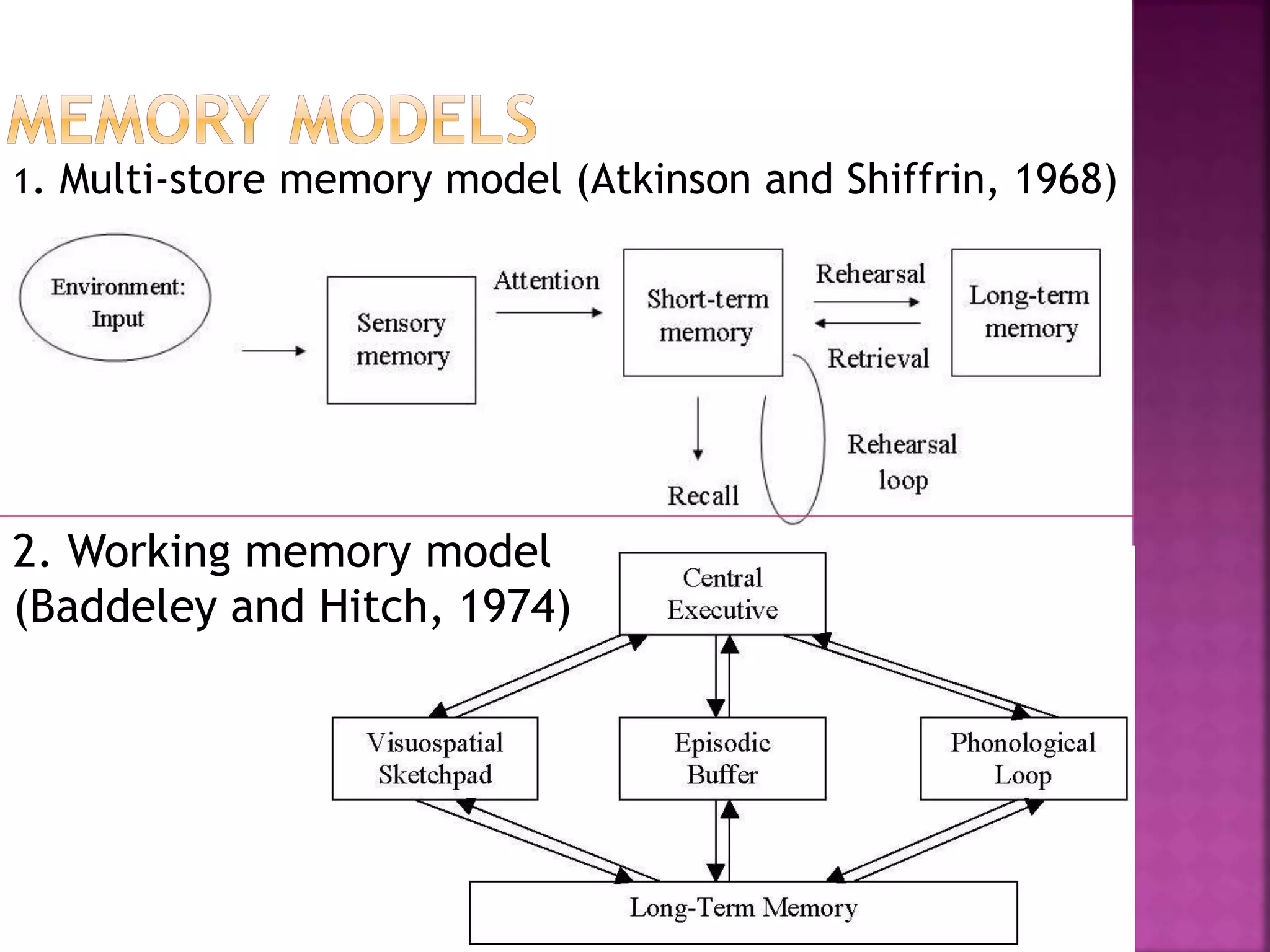
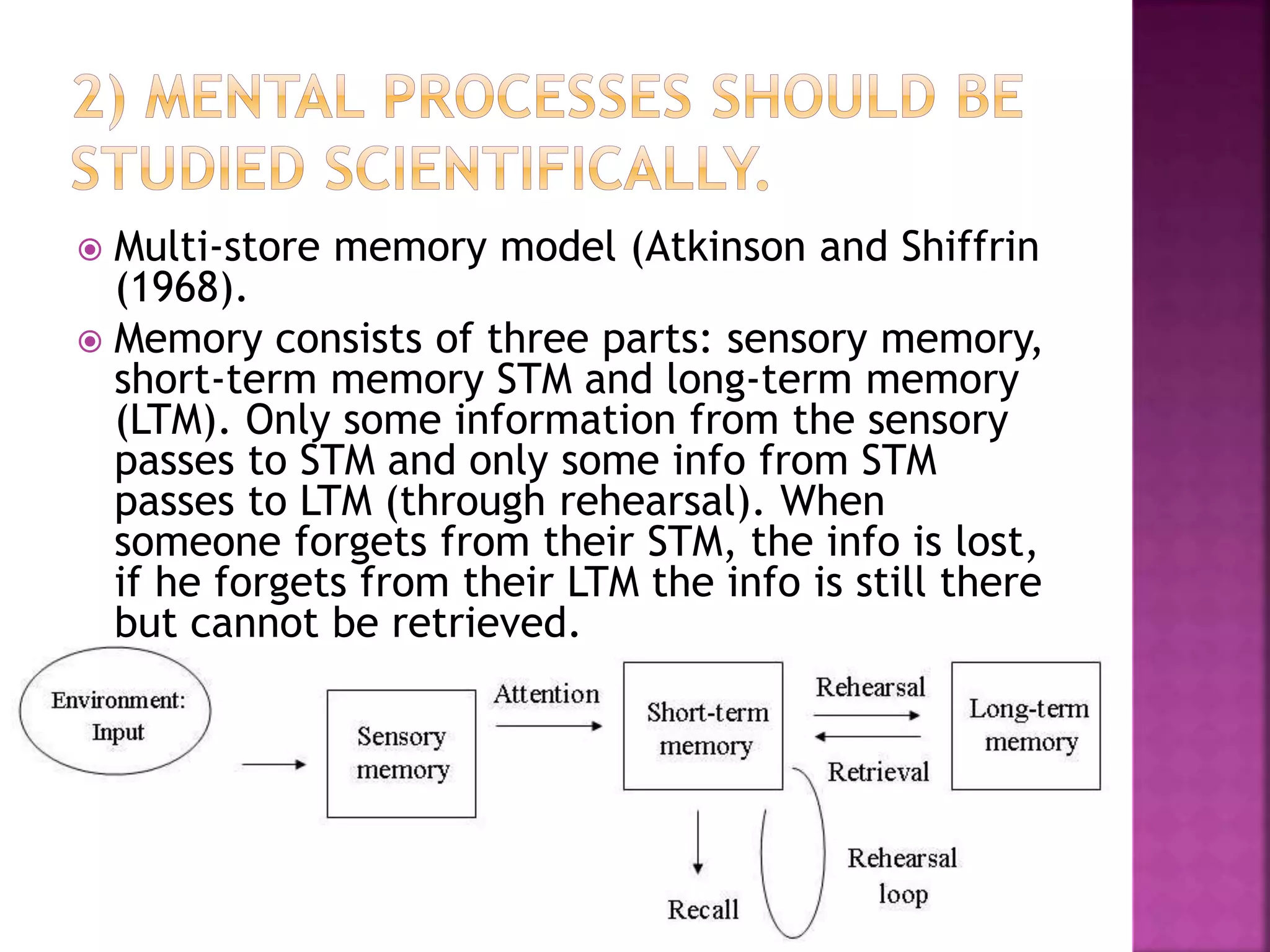
 Multi-store memory model (Atkinson and Shiffrin
(1968).
 Memory consists of three parts: sensory memory,
short-term memory STM and long-term memory
(LTM). Only some information from the sensory
passes to STM and only some info from STM
passes to LTM (through rehearsal). When
someone forgets from their STM, the info is lost,
if he forgets from their LTM the info is still there
but cannot be retrieved.
 Factors such as religion, cultural tradition,
beliefs and morals affect memory
 Schema theory by Bartlett (1932)
 Bartlett found that English participants
altered culturally unfamiliar words into
culturally familiar ones [schemas] (i.e.
substituting canoe for boat).
 Since cognitive psychologists study intangible
processes, research methods in this branch
are limited to experiments and case studies.
 Experiments: laboratory experiment, natural
experiment and field experiment. See Loftus
& Palmer (1974), Frencha & Richards (1993),
etc. -> lab experiment.
 Case studies: See H.M. (1996), Curtiss (1981),
Shallice & Warrington (1974).
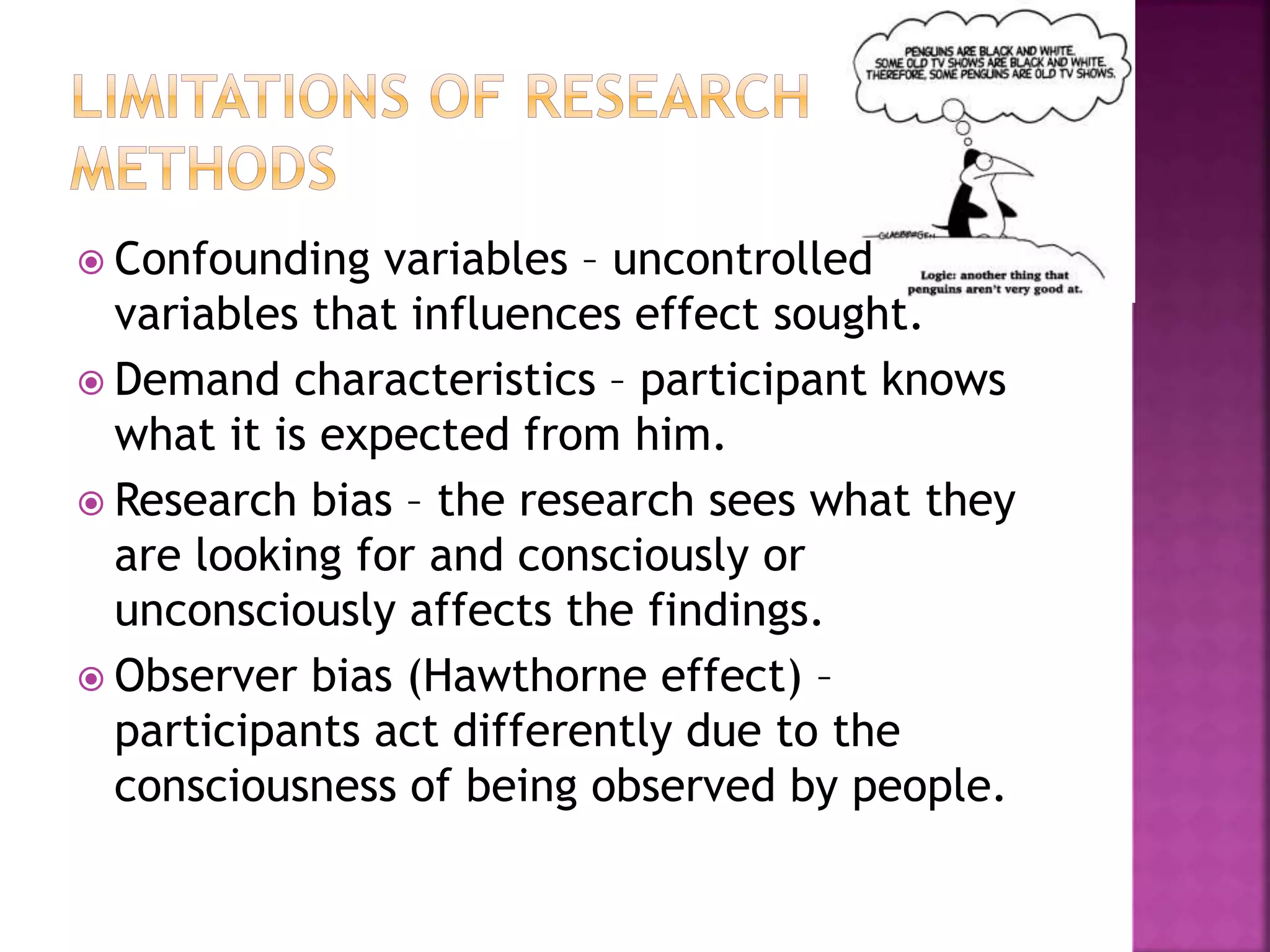
 Confounding variables – uncontrolled
variables that influences effect sought.
 Demand characteristics – participant knows
what it is expected from him.
 Research bias – the research sees what they
are looking for and consciously or
unconsciously affects the findings.
 Observer bias (Hawthorne effect) –
participants act differently due to the
consciousness of being observed by people.
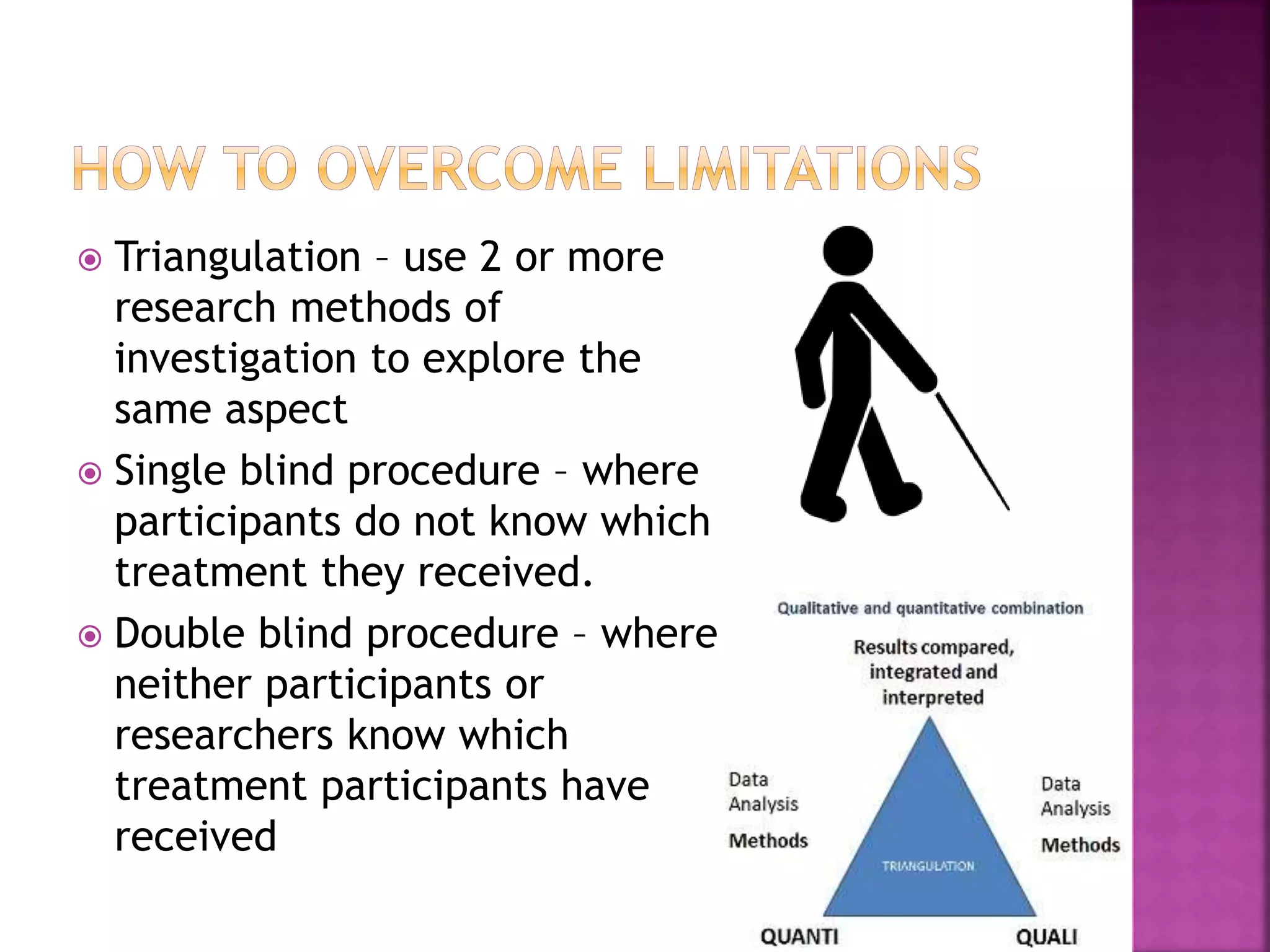
 Triangulation – use 2 or more
research methods of
investigation to explore the
same aspect
 Single blind procedure – where
participants do not know which
treatment they received.
 Double blind procedure – where
neither participants or
researchers know which
treatment participants have
received
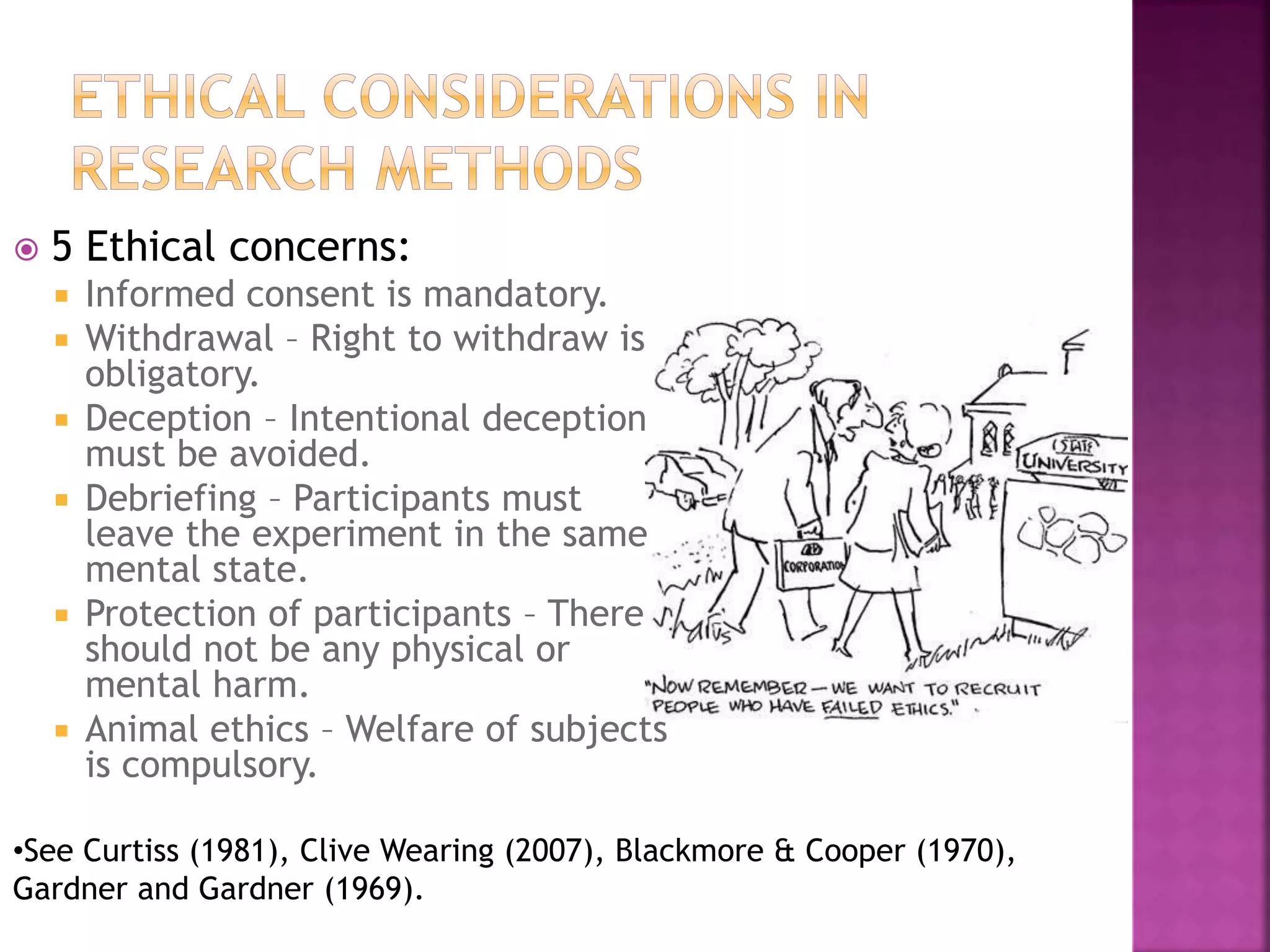
 5 Ethical concerns:
 Informed consent is mandatory.
 Withdrawal – Right to withdraw is
obligatory.
 Deception – Intentional deception
must be avoided.
 Debriefing – Participants must
leave the experiment in the same
mental state.
 Protection of participants – There
should not be any physical or
mental harm.
 Animal ethics – Welfare of subjects
is compulsory.
•See Curtiss (1981), Clive Wearing (2007), Blackmore & Cooper (1970),
Gardner and Gardner (1969).
 Curtiss (1981) investigated the sensitive
period hypothesis using Genie who was
discovered with no apparent language skills
at the age of 13.
 Ethical concerns:
 Participant protection: Once the study was
concluded, Genie was left to live in an adult foster
home. She might experienced mental distress due to
dramatic change in environment.
 Consent: Genie could not be fully informed or give
consent due to mental restrictions.
 Withdrawal: Genie would not be able to express
desire of withdraw
 Debriefing: Genie was not debriefed and ended up
living in an adult foster home.
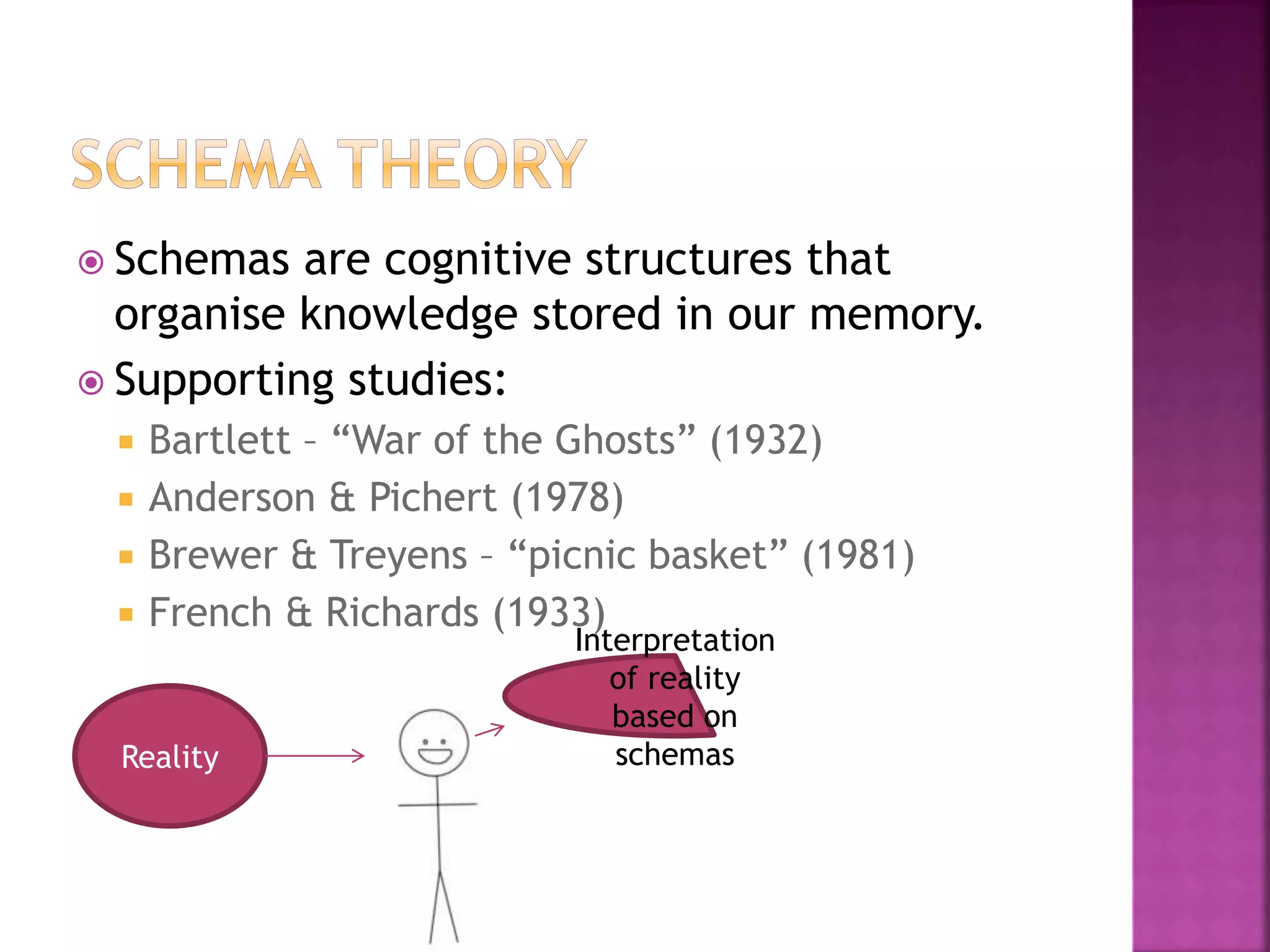
 Schemas are cognitive structures that
organise knowledge stored in our memory.
 Supporting studies:
 Bartlett – “War of the Ghosts” (1932)
 Anderson & Pichert (1978)
 Brewer & Treyens – “picnic basket” (1981)
 French & Richards (1933)
Reality
Interpretation
of reality
based on
schemas
 Aim: Determine how social and cultural factors influence
schemas.
 Procedure: Participants of an English background. He
tested their memory of a story using a) serial reproduction
and b) repeated reproduction -> a) a participant read the
story and reproduce it on paper, another participant reads
it and reproduces the reproduction; this followed for six or
seven participants. b) the same participant reproduces the
story six or seven times from their own previous
reproductions. These reproductions occurred over several
intervals from 15 minutes to as long as several years.
 Results: As number of reproductions increased, the story
became shorter and there were more changes to the story
(i.e. canoes became boats). Alterations occurred with
culturally unfamiliar things which turned them into
culturally familiar and acceptable (rationalisation).
 Conclusion: Memory is very inaccurate. People use their
own schemas to understand the world.
 Brewer and Treyens (1981) found that, when
shown an office with stereotypical and unusual
objects, participants only recalled things of a
typical office but not the wine or picnic basket.
 Frencha and Richards (1933) found that when
told participants that they had to draw a clock
from memory, participants tended to alter
unusual things (the number four written looked
like this on the clock “IIII” but participants
changed it to “IV”. Participants that were asked
to simply draw it did not altered such details -
>link to misleading questions, Loftus and
Palmer (1974).
1. Multi-store memory model (Atkinson and Shiffrin, 1968)
2. Working memory model
(Baddeley and Hitch, 1974)
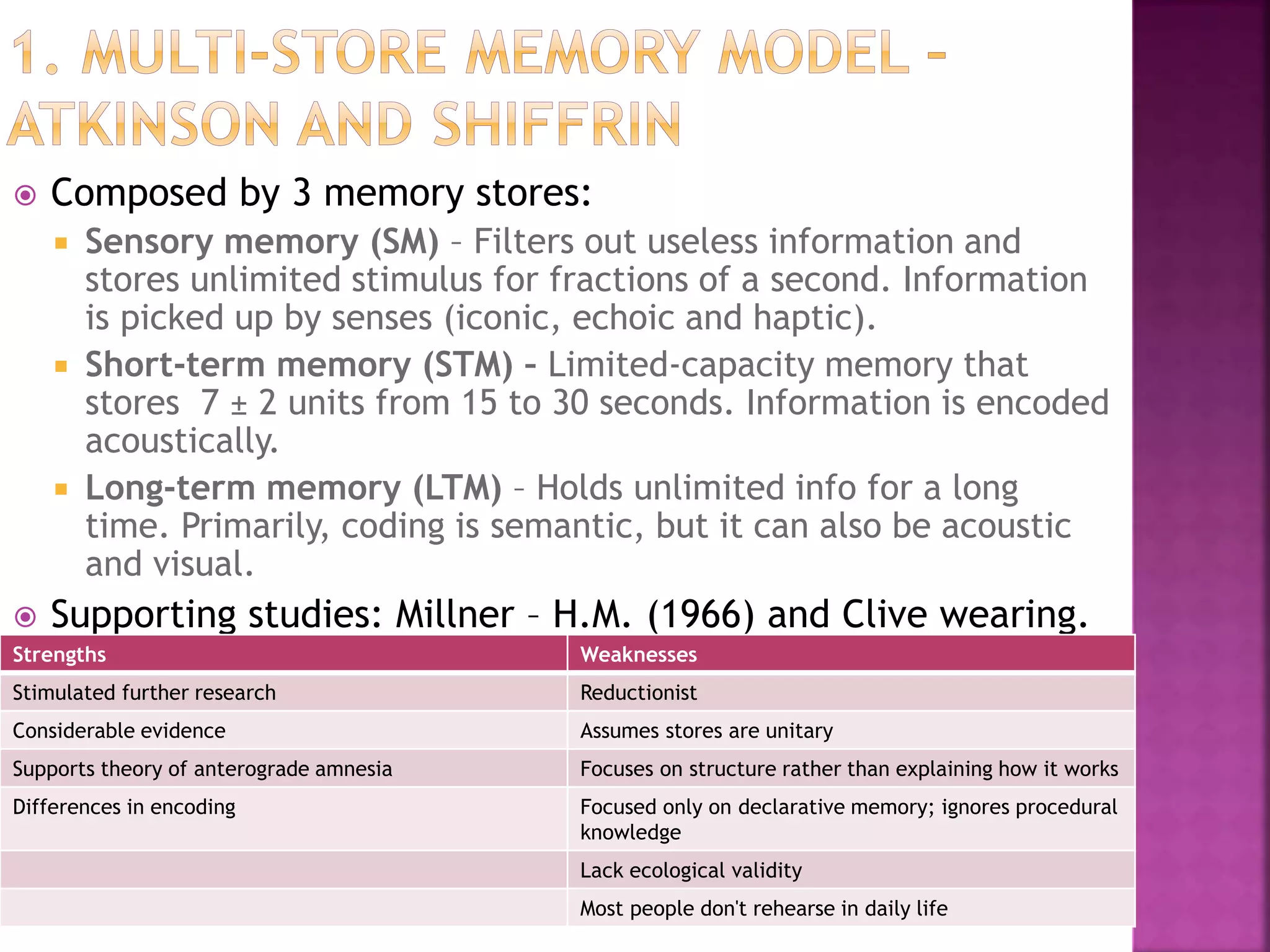
 Composed by 3 memory stores:
 Sensory memory (SM) – Filters out useless information and
stores unlimited stimulus for fractions of a second. Information
is picked up by senses (iconic, echoic and haptic).
 Short-term memory (STM) – Limited-capacity memory that
stores 7 ± 2 units from 15 to 30 seconds. Information is encoded
acoustically.
 Long-term memory (LTM) – Holds unlimited info for a long
time. Primarily, coding is semantic, but it can also be acoustic
and visual.
 Supporting studies: Millner – H.M. (1966) and Clive wearing.
Strengths Weaknesses
Stimulated further research Reductionist
Considerable evidence Assumes stores are unitary
Supports theory of anterograde amnesia Focuses on structure rather than explaining how it works
Differences in encoding Focused only on declarative memory; ignores procedural
knowledge
Lack ecological validity
Most people don't rehearse in daily life
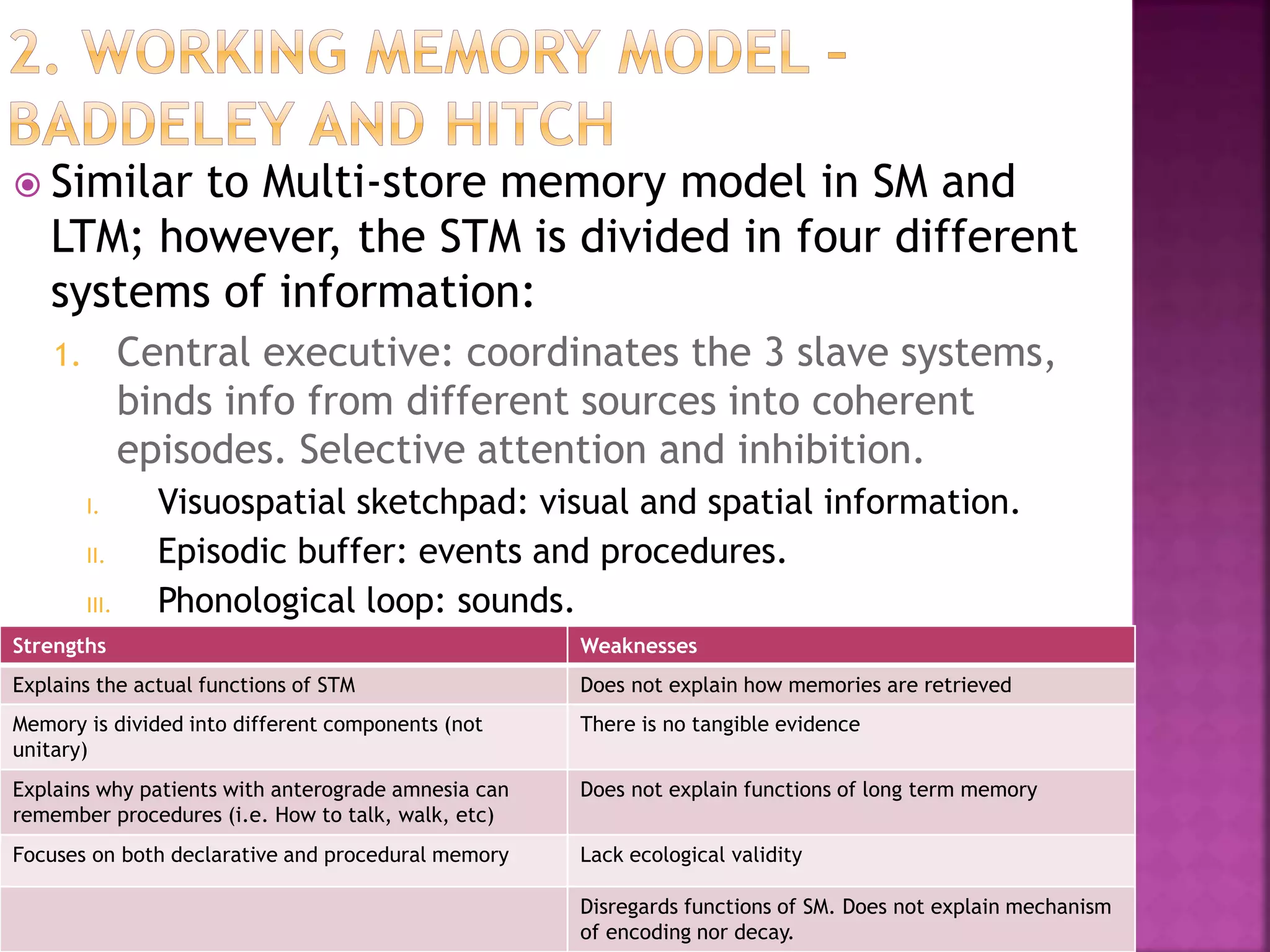
 Similar to Multi-store memory model in SM and
LTM; however, the STM is divided in four different
systems of information:
1. Central executive: coordinates the 3 slave systems,
binds info from different sources into coherent
episodes. Selective attention and inhibition.
I. Visuospatial sketchpad: visual and spatial information.
II. Episodic buffer: events and procedures.
III. Phonological loop: sounds.
Strengths Weaknesses
Explains the actual functions of STM Does not explain how memories are retrieved
Memory is divided into different components (not
unitary)
There is no tangible evidence
Explains why patients with anterograde amnesia can
remember procedures (i.e. How to talk, walk, etc)
Does not explain functions of long term memory
Focuses on both declarative and procedural memory Lack ecological validity
Disregards functions of SM. Does not explain mechanism
of encoding nor decay.
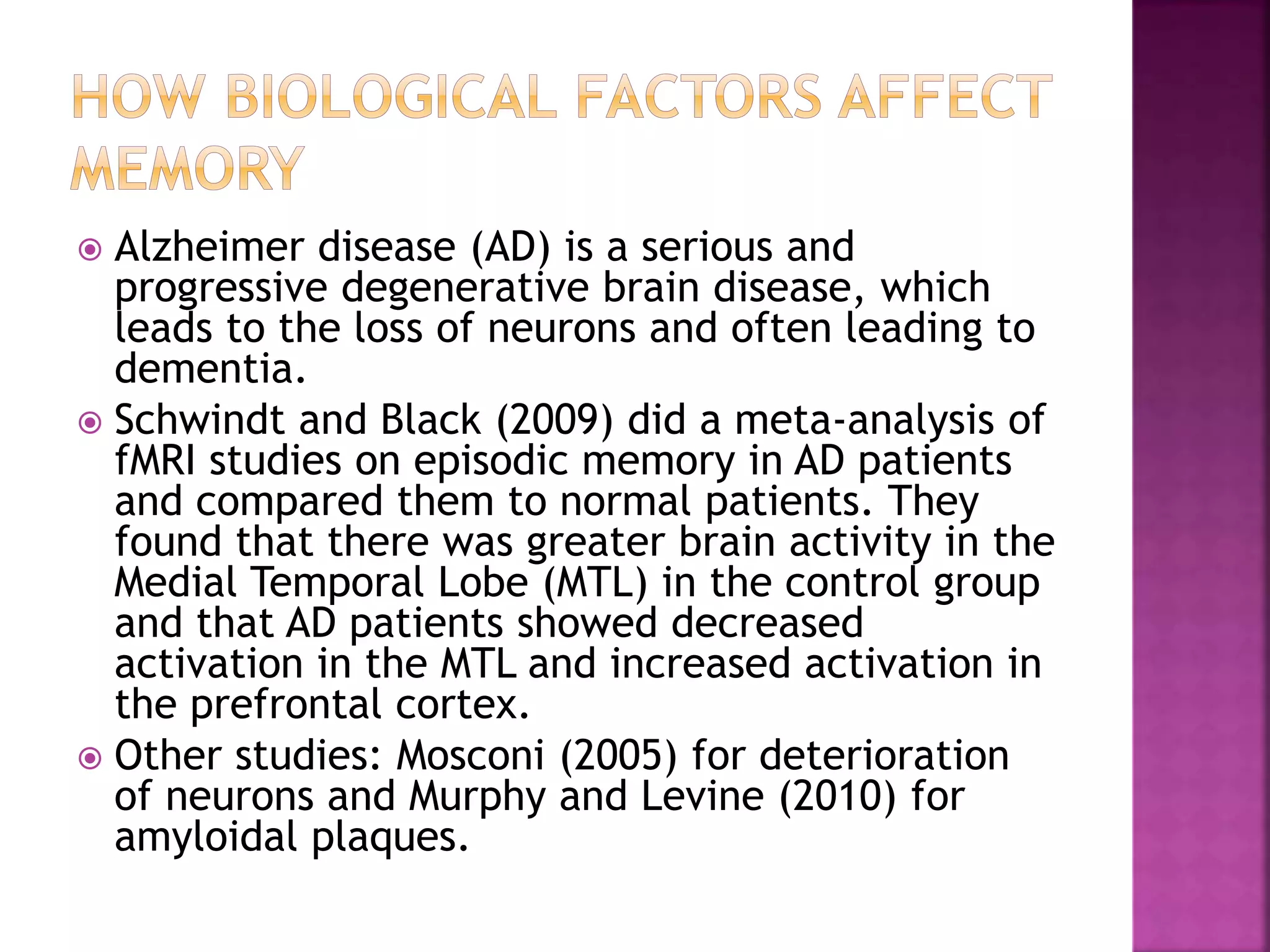
 Alzheimer disease (AD) is a serious and
progressive degenerative brain disease, which
leads to the loss of neurons and often leading to
dementia.
 Schwindt and Black (2009) did a meta-analysis of
fMRI studies on episodic memory in AD patients
and compared them to normal patients. They
found that there was greater brain activity in the
Medial Temporal Lobe (MTL) in the control group
and that AD patients showed decreased
activation in the MTL and increased activation in
the prefrontal cortex.
 Other studies: Mosconi (2005) for deterioration
of neurons and Murphy and Levine (2010) for
amyloidal plaques.
 Cole and Scriber (1974) compared non-schooled
children from the Kpelle tribe in Liberia with US
school children and found that Kpelle children did not
improve their free recall after the age of 10 in the
same way as US children; after 15 trials they only
remembered 2 more items. When items were
presented as a story, Kpelle children had equally
good recall.
 Wang (2004) compared Chinese and European
American children remembered events. Americans
remembered events as longer, with more detail and
an emotional focus; they tended to focus on
themselves. Chinese provided less detailed and less
emotional accounts; they focused on daily routines
and society rather than themselves.
 Bodenhausen (1998) studied negative stereotypes held by some
Americans about people of Spanish origin. Participants were
“jurors” and were told that the defendant was called Carlos
Ramirez or Robert Johnson. He found that, with the exact same
pieces of evidence, Ramirez’s group rated him more guilty than
Johnson’s group. Participants recalled evidence which fitted the
stereotype and ignored evidenced that was against it.
 Buckhout (1974) studied participants who saw a picture of an
altercation between a white man and a black man; the white man
is holding a razor threatening the black man, after seeing the
picture, 50% of participants remembered seeing the black man
holding a razor.
 Howard and Rothbart (1980) found that people have better recall
for facts that they are critical of out-group members than facts
that are favourable: negative memory bias.
 Duncan (1976): White participants were shown a heated discussion
between two males until one shoved the other (2 white, 1 white &
black and 2 black). Participants classified the shoving of the black
man as violent, especially if he shoved a white man.
 Loftus and Palmer (1974).
 Aim: To determine how leading questions may alter memories.
 Procedure: Participants were shown films of car accidents, after each
clip, participants were divided into groups and given a questionnaire
asking to give account of the accident by answering certain questions
including the critical question “How fast were the cars going when they
___”. The verb in the critical question was changed to smashed/
collided/ hit/ bumped/ contacted for each group.
 Results: The more severe-sounding verb produced higher speed
estimates.
 Conclusion: Misleading questions may alter memories.
Strengths Limitations
Supported by schema theory Culturally bias
Supported by WMM and MSMM Lacks ecological validity
Uses multiple participants and recreated event across
the years in USA and Europe
Not applicable to participants that lack driving
knowledge
Supported by further studies (ie. Loftus: [1975], anxiety
[1979], consistency of misleading questions, etc. Pickel
weapon focus [1998]).
If participants know it is real life, they have a better
recall (Foster et al, 1994). People who experienced
genuine robberies remember more accurately
(Christianson and Hubinette, 1993).
Researcher and observer bias
Witness show more accuracy if their decision is not
forced upon choices (Koriat and Goldsmith, 1996)
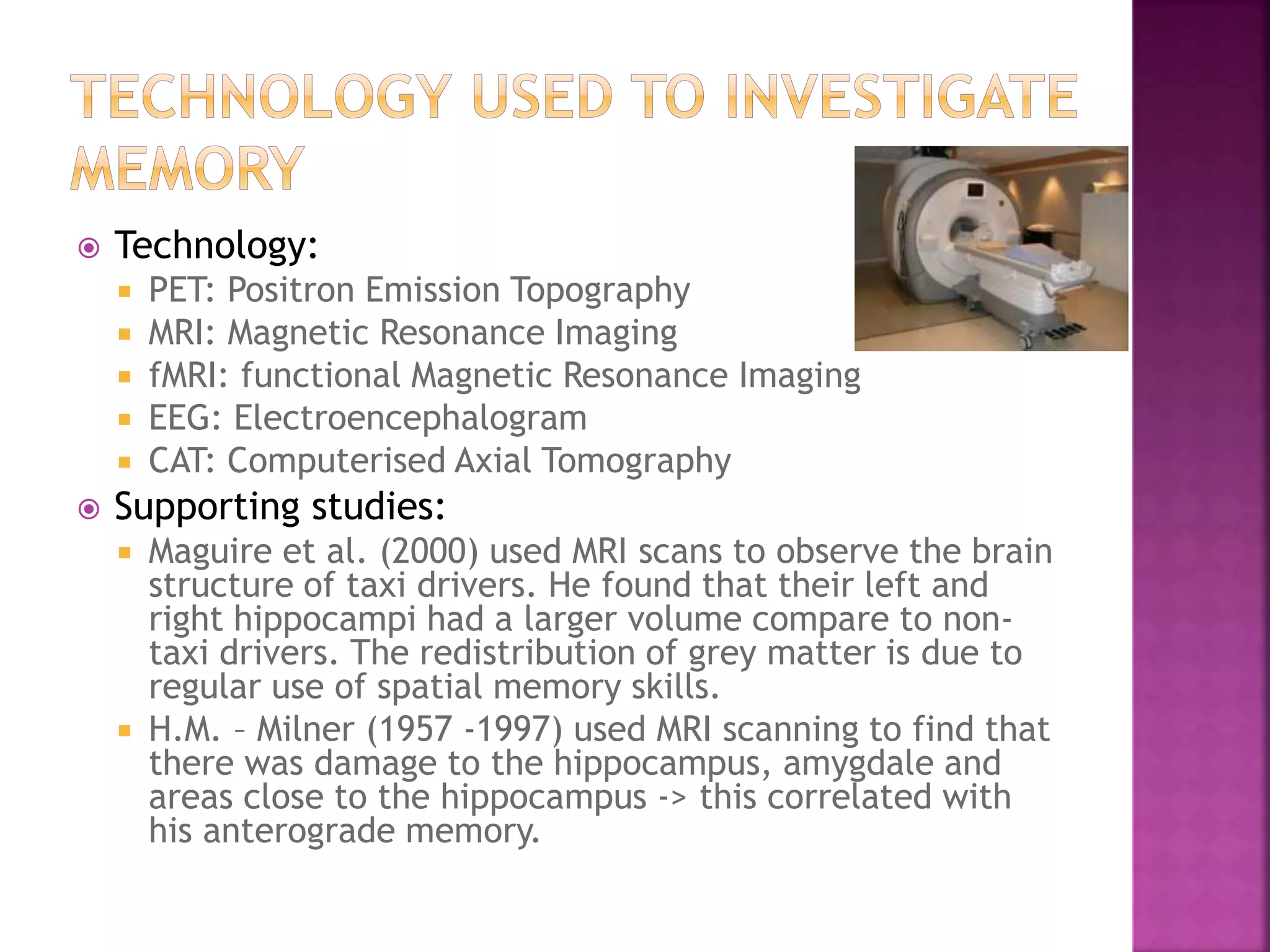
 Technology:
 PET: Positron Emission Topography
 MRI: Magnetic Resonance Imaging
 fMRI: functional Magnetic Resonance Imaging
 EEG: Electroencephalogram
 CAT: Computerised Axial Tomography
 Supporting studies:
 Maguire et al. (2000) used MRI scans to observe the brain
structure of taxi drivers. He found that their left and
right hippocampi had a larger volume compare to non-
taxi drivers. The redistribution of grey matter is due to
regular use of spatial memory skills.
 H.M. – Milner (1957 -1997) used MRI scanning to find that
there was damage to the hippocampus, amygdale and
areas close to the hippocampus -> this correlated with
his anterograde memory.
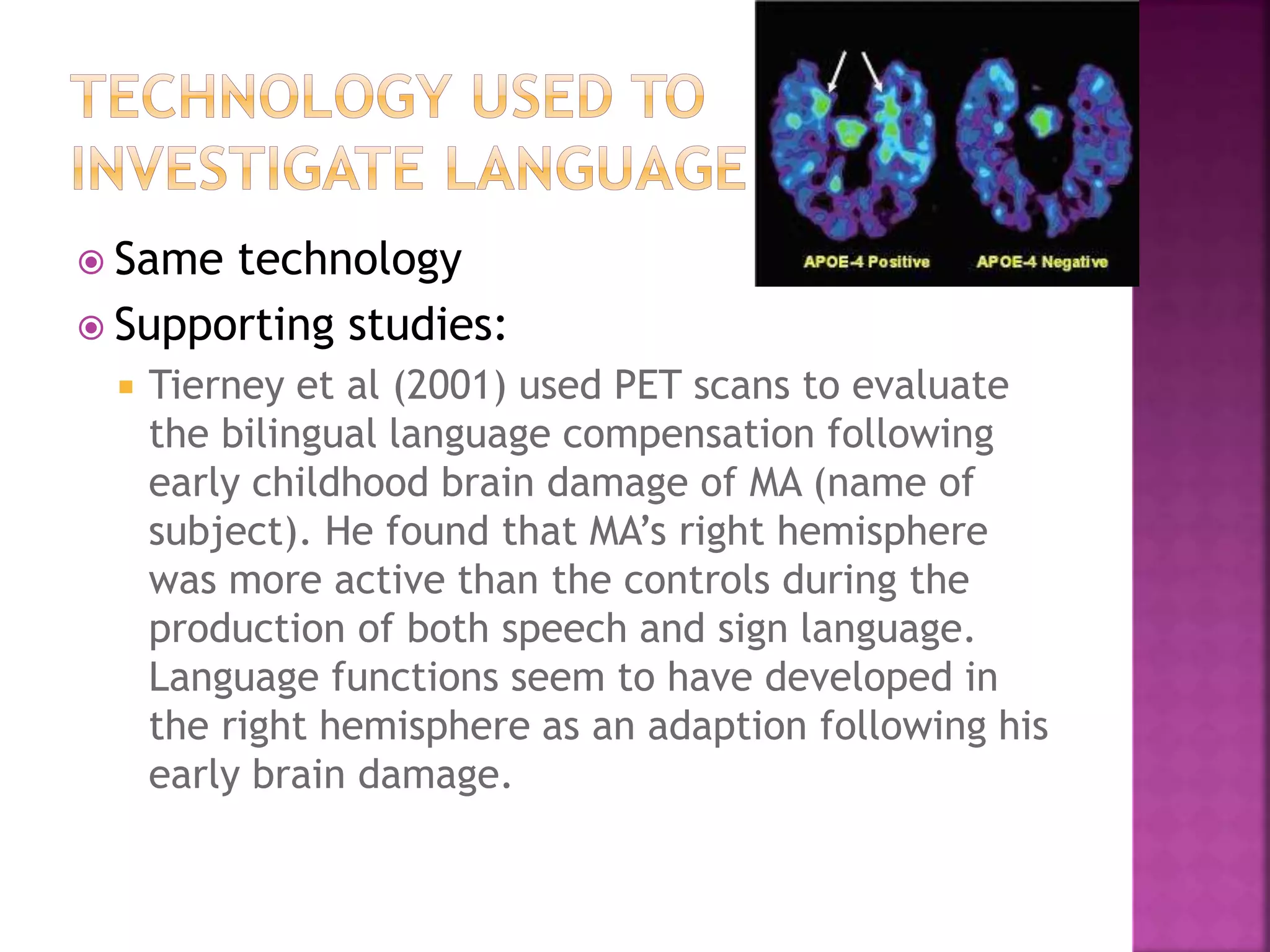
 Same technology
 Supporting studies:
 Tierney et al (2001) used PET scans to evaluate
the bilingual language compensation following
early childhood brain damage of MA (name of
subject). He found that MA’s right hemisphere
was more active than the controls during the
production of both speech and sign language.
Language functions seem to have developed in
the right hemisphere as an adaption following his
early brain damage.
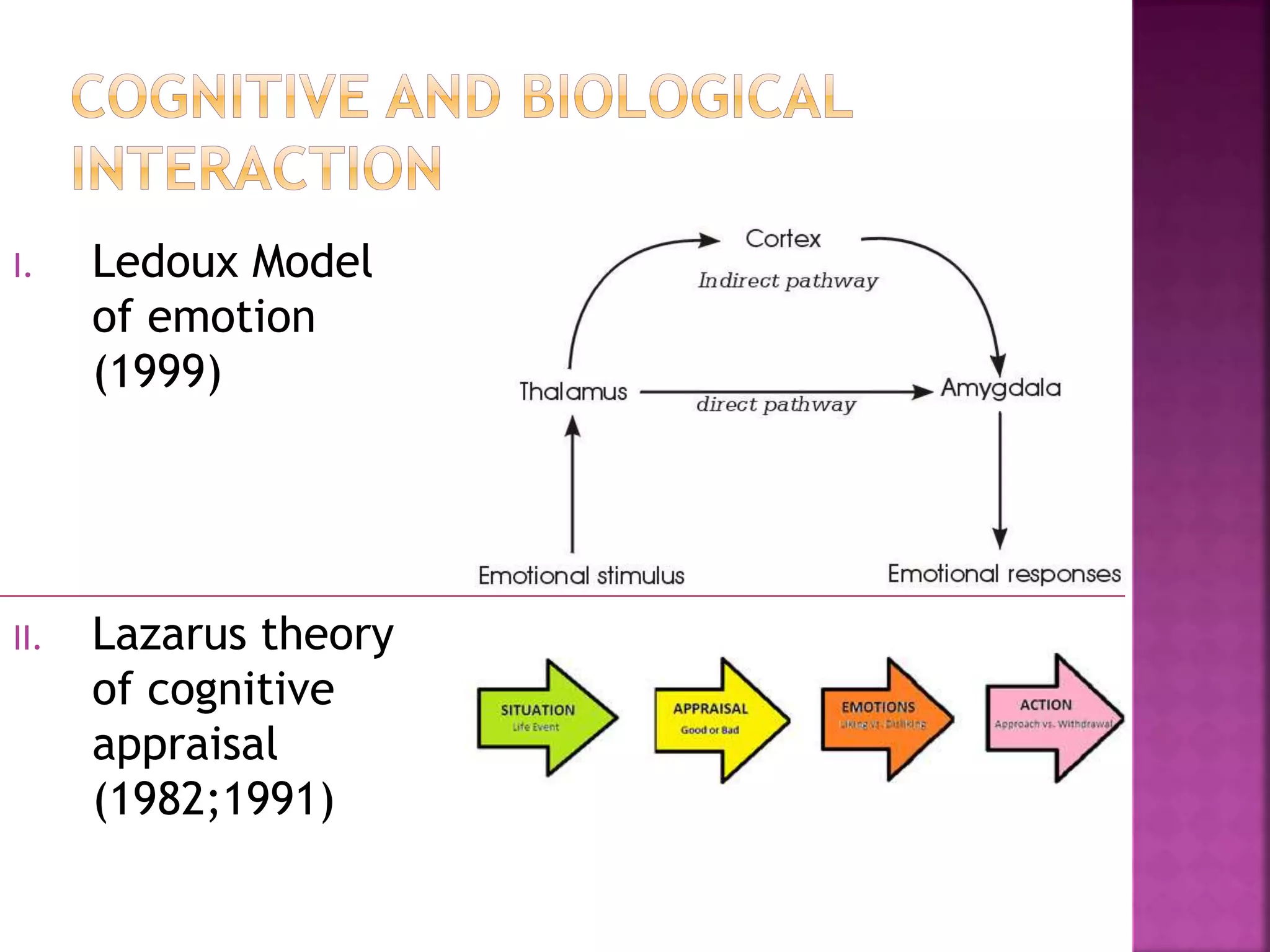
I. Ledoux Model
of emotion
(1999)
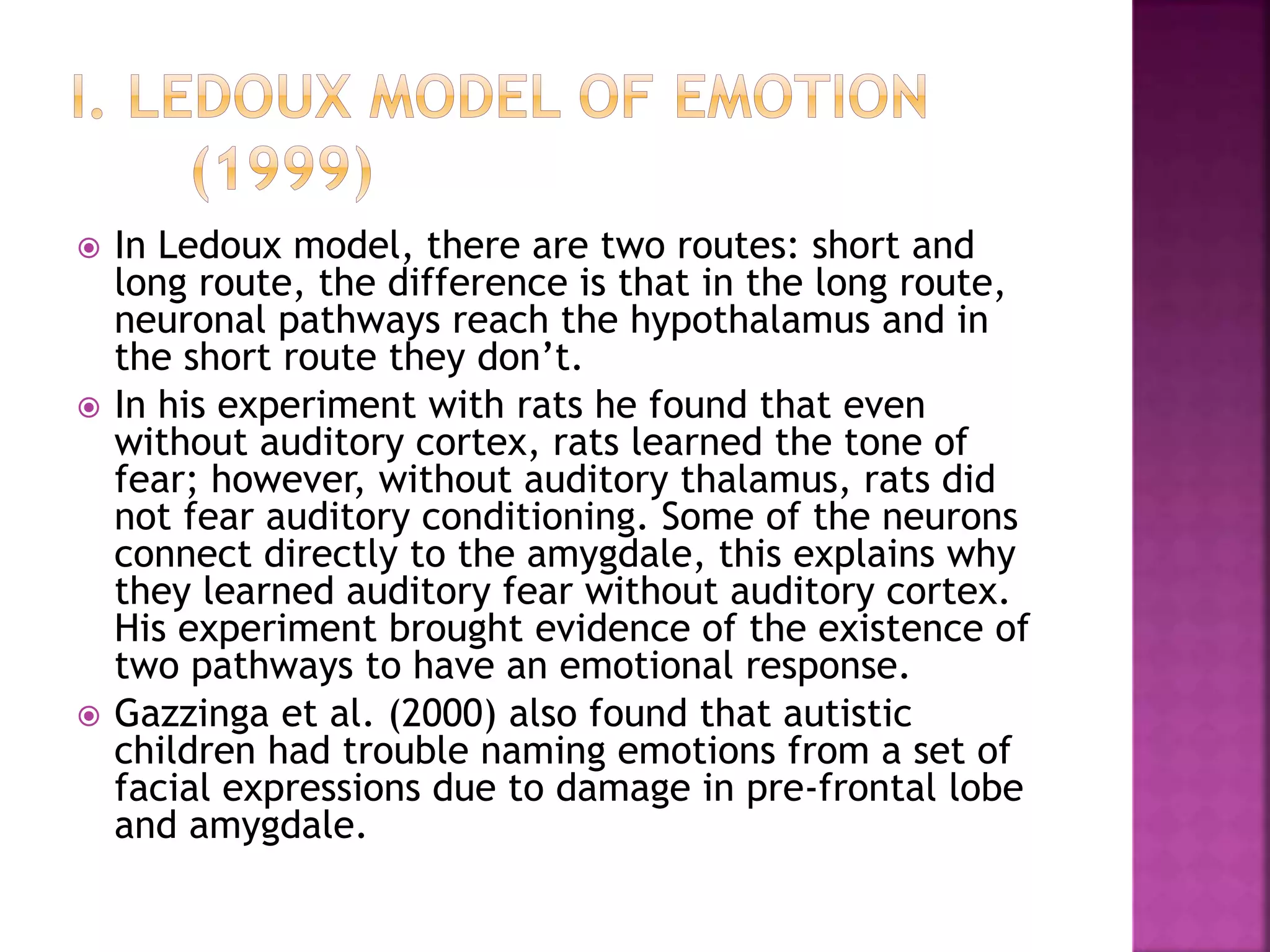
II. Lazarus theory
of cognitive
appraisal
(1982;1991)
 In Ledoux model, there are two routes: short and
long route, the difference is that in the long route,
neuronal pathways reach the hypothalamus and in
the short route they don’t.
 In his experiment with rats he found that even
without auditory cortex, rats learned the tone of
fear; however, without auditory thalamus, rats did
not fear auditory conditioning. Some of the neurons
connect directly to the amygdale, this explains why
they learned auditory fear without auditory cortex.
His experiment brought evidence of the existence of
two pathways to have an emotional response.
 Gazzinga et al. (2000) also found that autistic
children had trouble naming emotions from a set of
facial expressions due to damage in pre-frontal lobe
and amygdale.
 This theory states that emotion is based on the evaluation
of a situation: positive evaluations will lead to positive
emotions and negative evaluations will lead to negative
emotions.
 Speisman et al (1964) demonstrated that influence on
appraisal influences emotional experiences. He showed
participants a stressful film about unpleasant genital
surgery accompanied by one of the following soundtracks:
trauma (emphasised pain experienced), denial
(emphasised boys anticipation of entering manhood),
intellectualisation (soundtrack ignored emotional aspects)
and silence (control group). He measured galvanic skin
response, measured electrical conductivity of skin and
indicator of autonomic arousal and heart rate. He found
that the most traumatic soundtrack resulted in more
negative emotions and that intellectualisation and silence
resulted in lowest levels of emotion. The music influenced
the appraisal.
 Brown and Kulik (1977) found that JFK’s
assassination in 1963 led to the most flashbulb
memories of American participants (90% of
participants)
 Conway et al (1994) conducted a similar
experiment and found that 86% of UK
participants and 29% ok non-UK participants had
flashbulb memory regarding Margaret Thatcher
resignation.
 Sheingold and Terry (1982) found that
individuals tend to have FBM for highly
emotional events (i.e. the birth of a sibling) for
a long time.
 Cahill and McGaugh (1998) proposed that FBM
occurs as a release of hormones during times of
high emotions; this arousal helps the animal or
human respond to the situation (survival
behaviour) and remember how to respond in the
future (lucid memory) to have a better chance
of survival (adaptive behaviour).
 Wright (1993) aimed to investigate how
accurate people’s flashbulbs memories are.
He interviewed people about the
Hillsborough disaster in 1989 and found that
after five months, most memories were
vague and subject to systematic biases.
 McCloskey et al (1988) did a similar study: he
interviewed people shortly after the space
shuttle challenger exploded and killed seven
crew members; he found that after seven
months, participants forgot elements of the
event, and there were errors in their recall.

IB Psychology Paper 1 Cognitivel Level of Analysis

  • 1.
  • 2.
     Principles  Studiessupporting principles  Research methods used in CLA  Limitations of research methods  How to overcome limitations  Ethical considerations in research methods  Schema theory  Memory Models  How biological factors affect memory  How do social or cultural factors affect memory  Reliability of memory  Technology used to investigate memory  Technology used to investigate language  Cognitive and biological interaction  Memory and emotions – flashbulb memory
  • 3.
    1) Human beingsare information processors and that mental representations guide behaviour. 2) Mental processes can and should be studied scientifically. 3) Social and cultural factors affect cognitive processes.
  • 4.
     Information inputto the mind set it via bottom-top processing (from the sensory system).  Stereotypes may guide behaviour (Social Identity Theory)  Reconstructive nature of memories – false memories.
  • 5.
     Multi-store memorymodel (Atkinson and Shiffrin (1968).  Memory consists of three parts: sensory memory, short-term memory STM and long-term memory (LTM). Only some information from the sensory passes to STM and only some info from STM passes to LTM (through rehearsal). When someone forgets from their STM, the info is lost, if he forgets from their LTM the info is still there but cannot be retrieved.
  • 6.
     Factors suchas religion, cultural tradition, beliefs and morals affect memory  Schema theory by Bartlett (1932)  Bartlett found that English participants altered culturally unfamiliar words into culturally familiar ones [schemas] (i.e. substituting canoe for boat).
  • 7.
     Since cognitivepsychologists study intangible processes, research methods in this branch are limited to experiments and case studies.  Experiments: laboratory experiment, natural experiment and field experiment. See Loftus & Palmer (1974), Frencha & Richards (1993), etc. -> lab experiment.  Case studies: See H.M. (1996), Curtiss (1981), Shallice & Warrington (1974).
  • 8.
     Confounding variables– uncontrolled variables that influences effect sought.  Demand characteristics – participant knows what it is expected from him.  Research bias – the research sees what they are looking for and consciously or unconsciously affects the findings.  Observer bias (Hawthorne effect) – participants act differently due to the consciousness of being observed by people.
  • 9.
     Triangulation –use 2 or more research methods of investigation to explore the same aspect  Single blind procedure – where participants do not know which treatment they received.  Double blind procedure – where neither participants or researchers know which treatment participants have received
  • 10.
     5 Ethicalconcerns:  Informed consent is mandatory.  Withdrawal – Right to withdraw is obligatory.  Deception – Intentional deception must be avoided.  Debriefing – Participants must leave the experiment in the same mental state.  Protection of participants – There should not be any physical or mental harm.  Animal ethics – Welfare of subjects is compulsory. •See Curtiss (1981), Clive Wearing (2007), Blackmore & Cooper (1970), Gardner and Gardner (1969).
  • 11.
     Curtiss (1981)investigated the sensitive period hypothesis using Genie who was discovered with no apparent language skills at the age of 13.  Ethical concerns:  Participant protection: Once the study was concluded, Genie was left to live in an adult foster home. She might experienced mental distress due to dramatic change in environment.  Consent: Genie could not be fully informed or give consent due to mental restrictions.  Withdrawal: Genie would not be able to express desire of withdraw  Debriefing: Genie was not debriefed and ended up living in an adult foster home.
  • 12.
     Schemas arecognitive structures that organise knowledge stored in our memory.  Supporting studies:  Bartlett – “War of the Ghosts” (1932)  Anderson & Pichert (1978)  Brewer & Treyens – “picnic basket” (1981)  French & Richards (1933) Reality Interpretation of reality based on schemas
  • 13.
     Aim: Determinehow social and cultural factors influence schemas.  Procedure: Participants of an English background. He tested their memory of a story using a) serial reproduction and b) repeated reproduction -> a) a participant read the story and reproduce it on paper, another participant reads it and reproduces the reproduction; this followed for six or seven participants. b) the same participant reproduces the story six or seven times from their own previous reproductions. These reproductions occurred over several intervals from 15 minutes to as long as several years.  Results: As number of reproductions increased, the story became shorter and there were more changes to the story (i.e. canoes became boats). Alterations occurred with culturally unfamiliar things which turned them into culturally familiar and acceptable (rationalisation).  Conclusion: Memory is very inaccurate. People use their own schemas to understand the world.
  • 14.
     Brewer andTreyens (1981) found that, when shown an office with stereotypical and unusual objects, participants only recalled things of a typical office but not the wine or picnic basket.  Frencha and Richards (1933) found that when told participants that they had to draw a clock from memory, participants tended to alter unusual things (the number four written looked like this on the clock “IIII” but participants changed it to “IV”. Participants that were asked to simply draw it did not altered such details - >link to misleading questions, Loftus and Palmer (1974).
  • 15.
    1. Multi-store memorymodel (Atkinson and Shiffrin, 1968) 2. Working memory model (Baddeley and Hitch, 1974)
  • 16.
     Composed by3 memory stores:  Sensory memory (SM) – Filters out useless information and stores unlimited stimulus for fractions of a second. Information is picked up by senses (iconic, echoic and haptic).  Short-term memory (STM) – Limited-capacity memory that stores 7 ± 2 units from 15 to 30 seconds. Information is encoded acoustically.  Long-term memory (LTM) – Holds unlimited info for a long time. Primarily, coding is semantic, but it can also be acoustic and visual.  Supporting studies: Millner – H.M. (1966) and Clive wearing. Strengths Weaknesses Stimulated further research Reductionist Considerable evidence Assumes stores are unitary Supports theory of anterograde amnesia Focuses on structure rather than explaining how it works Differences in encoding Focused only on declarative memory; ignores procedural knowledge Lack ecological validity Most people don't rehearse in daily life
  • 17.
     Similar toMulti-store memory model in SM and LTM; however, the STM is divided in four different systems of information: 1. Central executive: coordinates the 3 slave systems, binds info from different sources into coherent episodes. Selective attention and inhibition. I. Visuospatial sketchpad: visual and spatial information. II. Episodic buffer: events and procedures. III. Phonological loop: sounds. Strengths Weaknesses Explains the actual functions of STM Does not explain how memories are retrieved Memory is divided into different components (not unitary) There is no tangible evidence Explains why patients with anterograde amnesia can remember procedures (i.e. How to talk, walk, etc) Does not explain functions of long term memory Focuses on both declarative and procedural memory Lack ecological validity Disregards functions of SM. Does not explain mechanism of encoding nor decay.
  • 18.
     Alzheimer disease(AD) is a serious and progressive degenerative brain disease, which leads to the loss of neurons and often leading to dementia.  Schwindt and Black (2009) did a meta-analysis of fMRI studies on episodic memory in AD patients and compared them to normal patients. They found that there was greater brain activity in the Medial Temporal Lobe (MTL) in the control group and that AD patients showed decreased activation in the MTL and increased activation in the prefrontal cortex.  Other studies: Mosconi (2005) for deterioration of neurons and Murphy and Levine (2010) for amyloidal plaques.
  • 19.
     Cole andScriber (1974) compared non-schooled children from the Kpelle tribe in Liberia with US school children and found that Kpelle children did not improve their free recall after the age of 10 in the same way as US children; after 15 trials they only remembered 2 more items. When items were presented as a story, Kpelle children had equally good recall.  Wang (2004) compared Chinese and European American children remembered events. Americans remembered events as longer, with more detail and an emotional focus; they tended to focus on themselves. Chinese provided less detailed and less emotional accounts; they focused on daily routines and society rather than themselves.
  • 20.
     Bodenhausen (1998)studied negative stereotypes held by some Americans about people of Spanish origin. Participants were “jurors” and were told that the defendant was called Carlos Ramirez or Robert Johnson. He found that, with the exact same pieces of evidence, Ramirez’s group rated him more guilty than Johnson’s group. Participants recalled evidence which fitted the stereotype and ignored evidenced that was against it.  Buckhout (1974) studied participants who saw a picture of an altercation between a white man and a black man; the white man is holding a razor threatening the black man, after seeing the picture, 50% of participants remembered seeing the black man holding a razor.  Howard and Rothbart (1980) found that people have better recall for facts that they are critical of out-group members than facts that are favourable: negative memory bias.  Duncan (1976): White participants were shown a heated discussion between two males until one shoved the other (2 white, 1 white & black and 2 black). Participants classified the shoving of the black man as violent, especially if he shoved a white man.
  • 21.
     Loftus andPalmer (1974).  Aim: To determine how leading questions may alter memories.  Procedure: Participants were shown films of car accidents, after each clip, participants were divided into groups and given a questionnaire asking to give account of the accident by answering certain questions including the critical question “How fast were the cars going when they ___”. The verb in the critical question was changed to smashed/ collided/ hit/ bumped/ contacted for each group.  Results: The more severe-sounding verb produced higher speed estimates.  Conclusion: Misleading questions may alter memories. Strengths Limitations Supported by schema theory Culturally bias Supported by WMM and MSMM Lacks ecological validity Uses multiple participants and recreated event across the years in USA and Europe Not applicable to participants that lack driving knowledge Supported by further studies (ie. Loftus: [1975], anxiety [1979], consistency of misleading questions, etc. Pickel weapon focus [1998]). If participants know it is real life, they have a better recall (Foster et al, 1994). People who experienced genuine robberies remember more accurately (Christianson and Hubinette, 1993). Researcher and observer bias Witness show more accuracy if their decision is not forced upon choices (Koriat and Goldsmith, 1996)
  • 22.
     Technology:  PET:Positron Emission Topography  MRI: Magnetic Resonance Imaging  fMRI: functional Magnetic Resonance Imaging  EEG: Electroencephalogram  CAT: Computerised Axial Tomography  Supporting studies:  Maguire et al. (2000) used MRI scans to observe the brain structure of taxi drivers. He found that their left and right hippocampi had a larger volume compare to non- taxi drivers. The redistribution of grey matter is due to regular use of spatial memory skills.  H.M. – Milner (1957 -1997) used MRI scanning to find that there was damage to the hippocampus, amygdale and areas close to the hippocampus -> this correlated with his anterograde memory.
  • 23.
     Same technology Supporting studies:  Tierney et al (2001) used PET scans to evaluate the bilingual language compensation following early childhood brain damage of MA (name of subject). He found that MA’s right hemisphere was more active than the controls during the production of both speech and sign language. Language functions seem to have developed in the right hemisphere as an adaption following his early brain damage.
  • 24.
    I. Ledoux Model ofemotion (1999) II. Lazarus theory of cognitive appraisal (1982;1991)
  • 25.
     In Ledouxmodel, there are two routes: short and long route, the difference is that in the long route, neuronal pathways reach the hypothalamus and in the short route they don’t.  In his experiment with rats he found that even without auditory cortex, rats learned the tone of fear; however, without auditory thalamus, rats did not fear auditory conditioning. Some of the neurons connect directly to the amygdale, this explains why they learned auditory fear without auditory cortex. His experiment brought evidence of the existence of two pathways to have an emotional response.  Gazzinga et al. (2000) also found that autistic children had trouble naming emotions from a set of facial expressions due to damage in pre-frontal lobe and amygdale.
  • 26.
     This theorystates that emotion is based on the evaluation of a situation: positive evaluations will lead to positive emotions and negative evaluations will lead to negative emotions.  Speisman et al (1964) demonstrated that influence on appraisal influences emotional experiences. He showed participants a stressful film about unpleasant genital surgery accompanied by one of the following soundtracks: trauma (emphasised pain experienced), denial (emphasised boys anticipation of entering manhood), intellectualisation (soundtrack ignored emotional aspects) and silence (control group). He measured galvanic skin response, measured electrical conductivity of skin and indicator of autonomic arousal and heart rate. He found that the most traumatic soundtrack resulted in more negative emotions and that intellectualisation and silence resulted in lowest levels of emotion. The music influenced the appraisal.
  • 27.
     Brown andKulik (1977) found that JFK’s assassination in 1963 led to the most flashbulb memories of American participants (90% of participants)  Conway et al (1994) conducted a similar experiment and found that 86% of UK participants and 29% ok non-UK participants had flashbulb memory regarding Margaret Thatcher resignation.  Sheingold and Terry (1982) found that individuals tend to have FBM for highly emotional events (i.e. the birth of a sibling) for a long time.  Cahill and McGaugh (1998) proposed that FBM occurs as a release of hormones during times of high emotions; this arousal helps the animal or human respond to the situation (survival behaviour) and remember how to respond in the future (lucid memory) to have a better chance of survival (adaptive behaviour).
  • 28.
     Wright (1993)aimed to investigate how accurate people’s flashbulbs memories are. He interviewed people about the Hillsborough disaster in 1989 and found that after five months, most memories were vague and subject to systematic biases.  McCloskey et al (1988) did a similar study: he interviewed people shortly after the space shuttle challenger exploded and killed seven crew members; he found that after seven months, participants forgot elements of the event, and there were errors in their recall.