Embase: a short history
Dr. Ian Crowlesmith
Senior Product Manager for Content Development
i.crowlesmith@elsevier.com
MLA Toronto, May 17, 2016
Embase : a short history
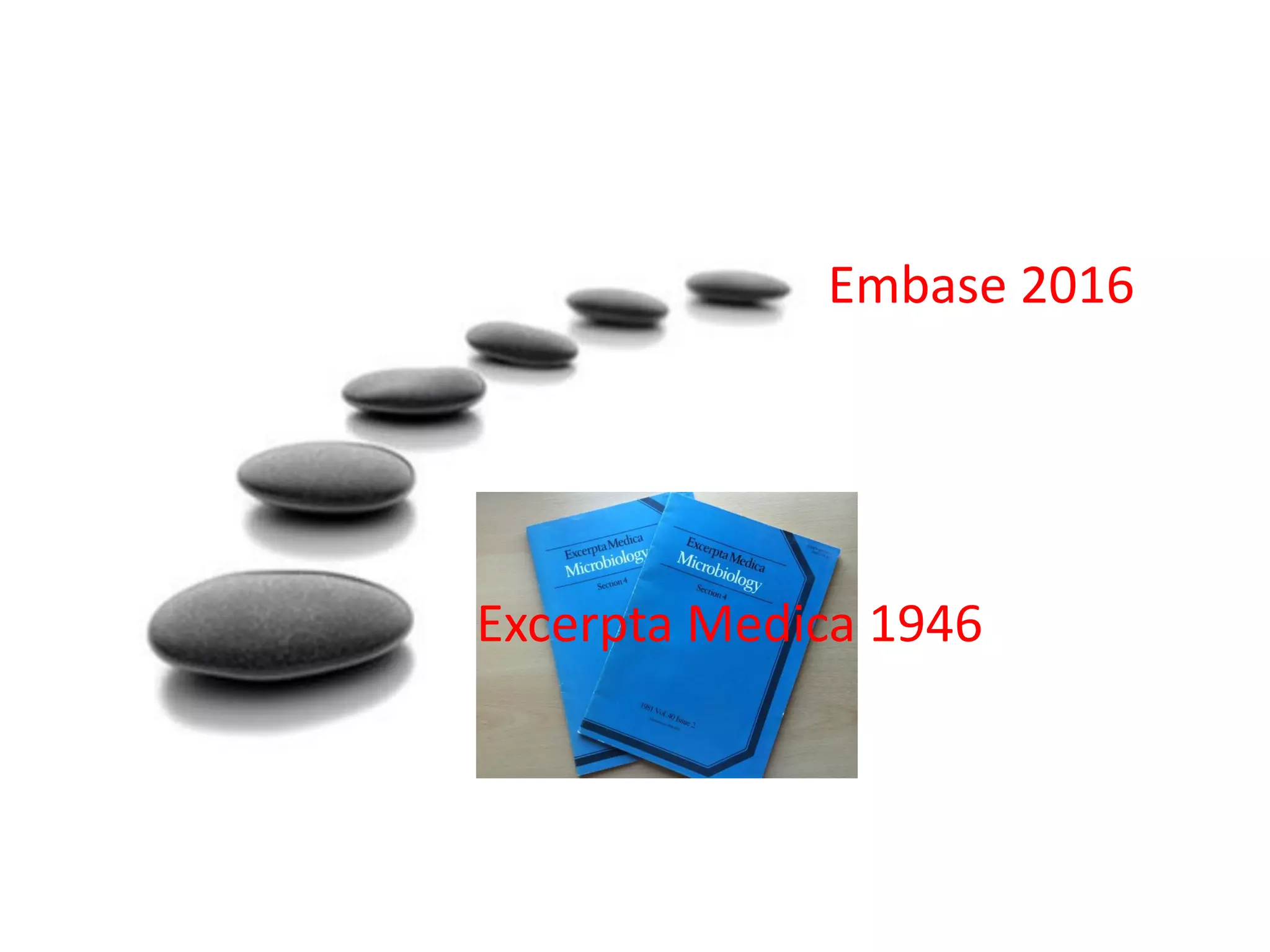
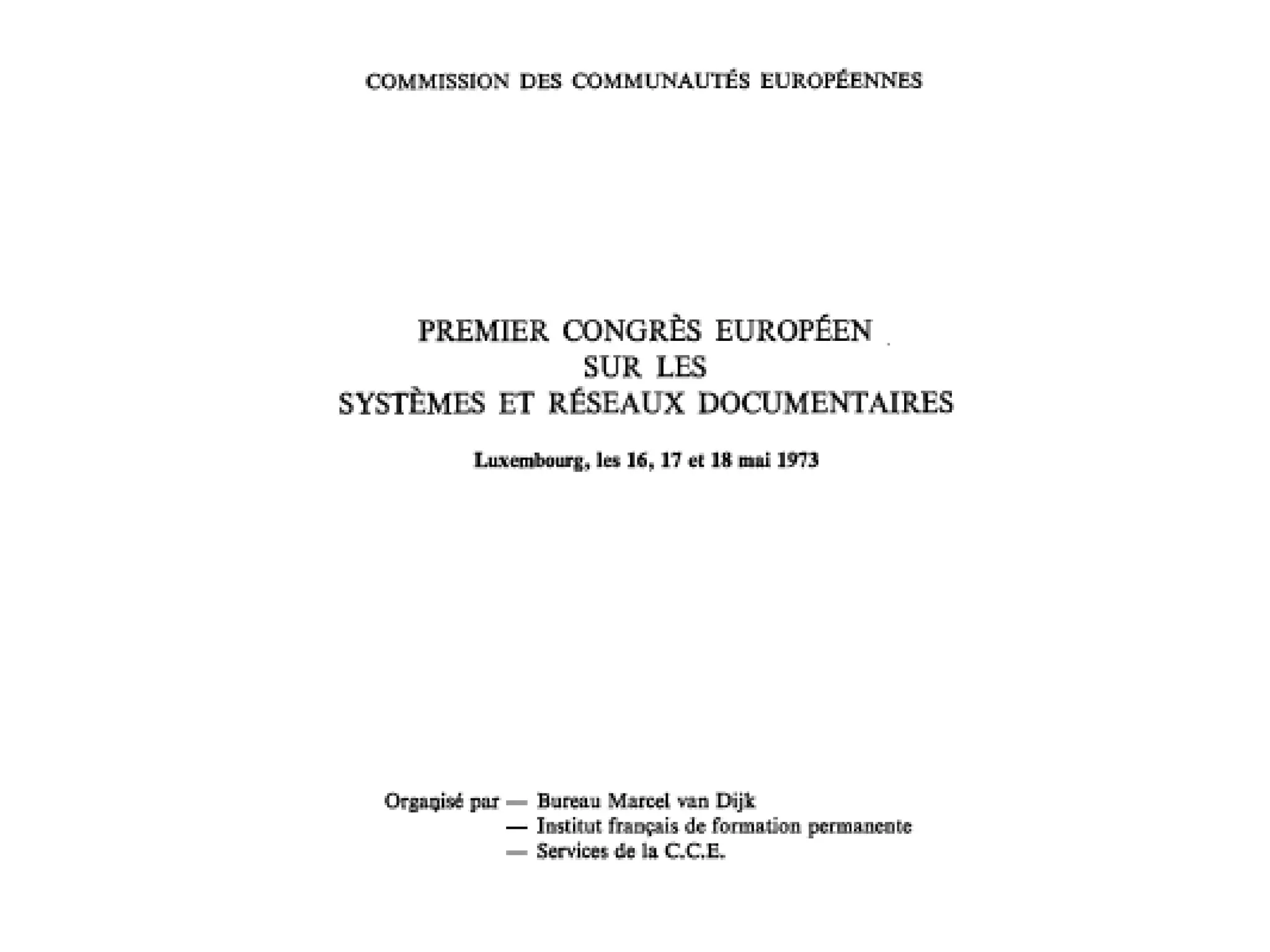
Excerpta Medica 1946
Embase 2016
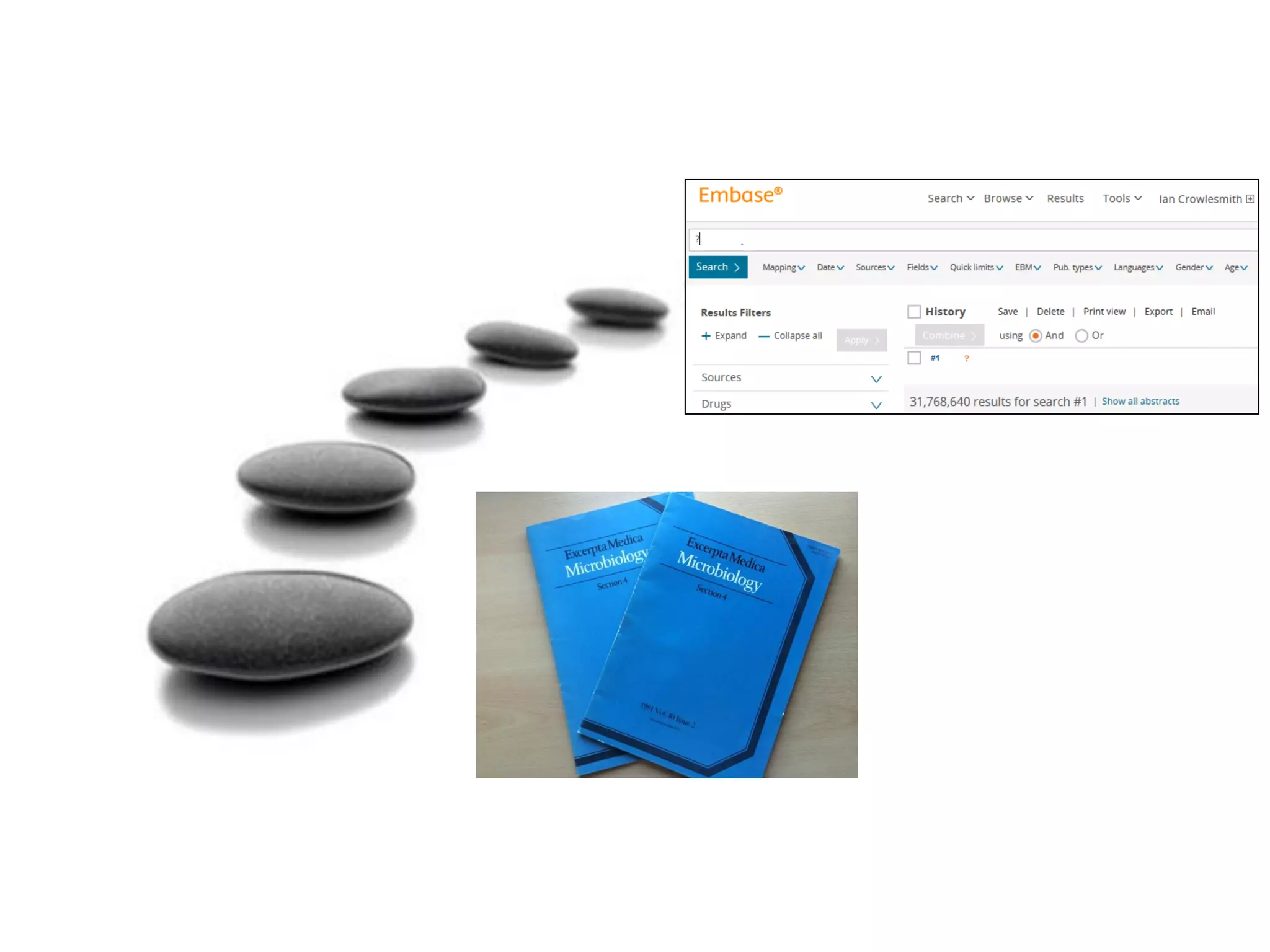
Embase 2016
Excerpta Medica 1946
Embase 2016
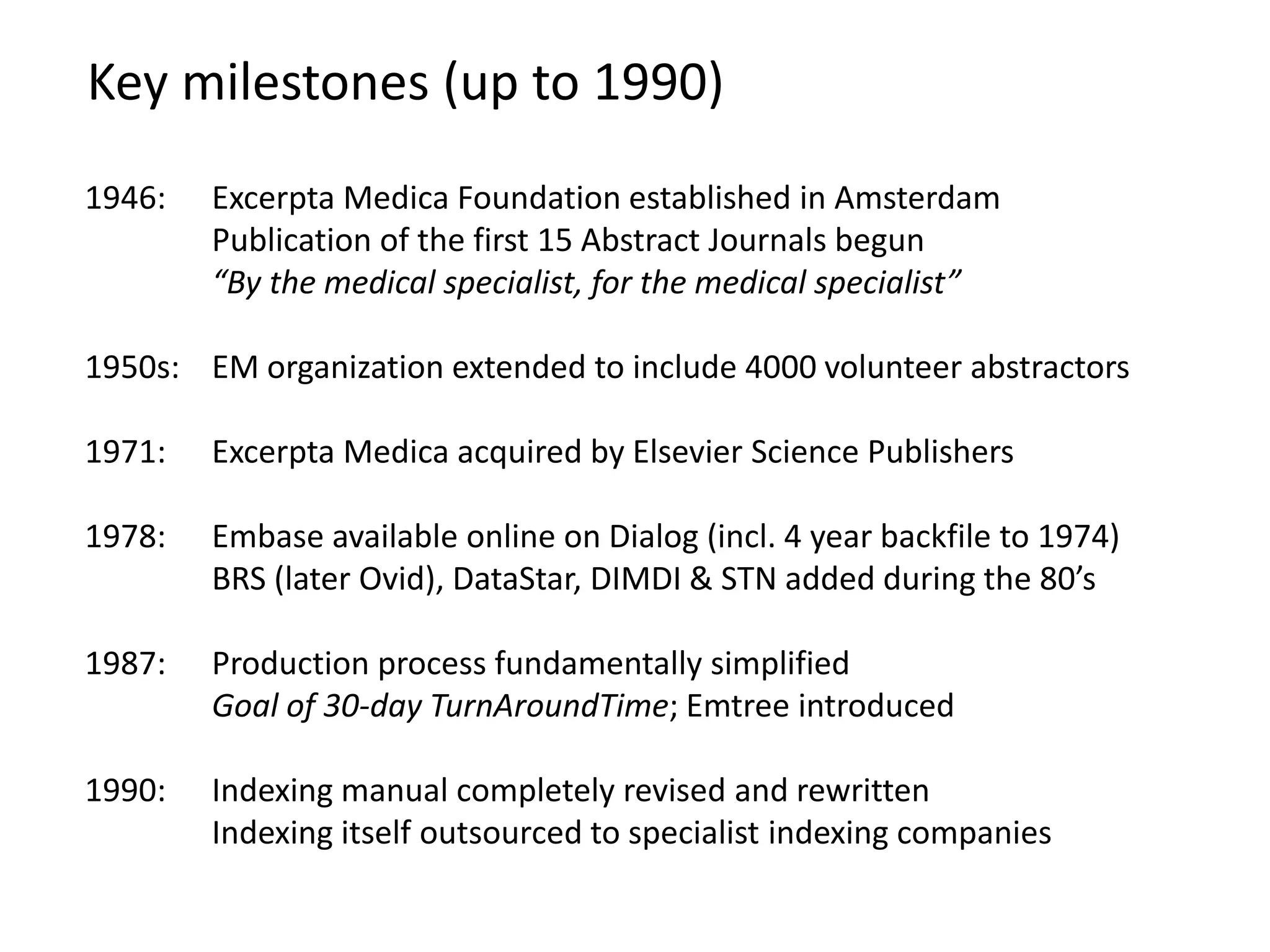
Key milestones (up to 1990)
1946: Excerpta Medica Foundation established in Amsterdam
Publication of the first 15 Abstract Journals begun
“By the medical specialist, for the medical specialist”
1950s: EM organization extended to include 4000 volunteer abstractors
1971: Excerpta Medica acquired by Elsevier Science Publishers
1978: Embase available online on Dialog (incl. 4 year backfile to 1974)
BRS (later Ovid), DataStar, DIMDI & STN added during the 80’s
1987: Production process fundamentally simplified
Goal of 30-day TurnAroundTime; Emtree introduced
1990: Indexing manual completely revised and rewritten
Indexing itself outsourced to specialist indexing companies
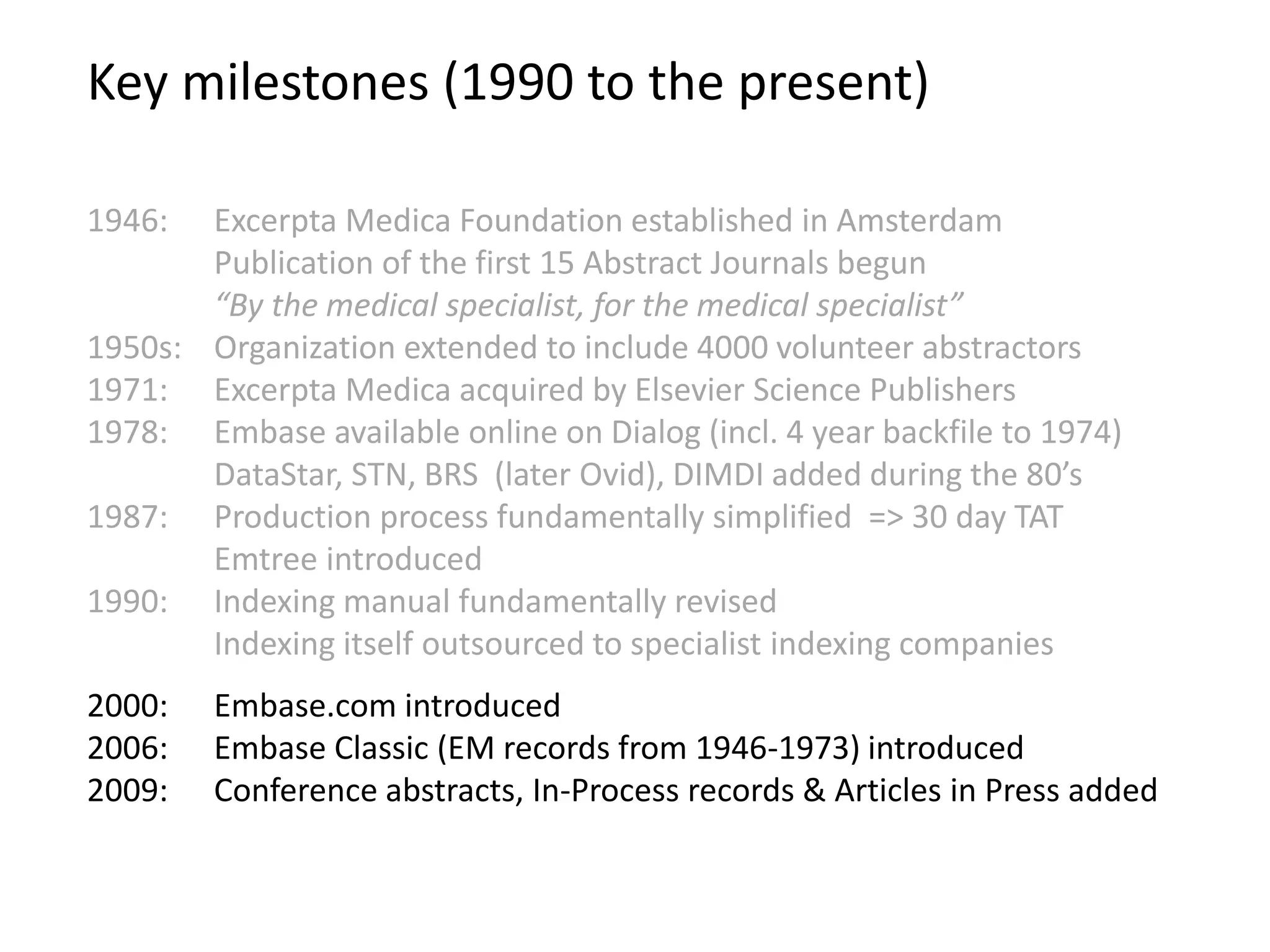
Key milestones (1990 to the present)
2000: Embase.com introduced
2006: Embase Classic (EM records from 1946-1973) introduced
2009: Conference abstracts, In-Process records & Articles in Press added
1946: Excerpta Medica Foundation established in Amsterdam
Publication of the first 15 Abstract Journals begun
“By the medical specialist, for the medical specialist”
1950s: Organization extended to include 4000 volunteer abstractors
1971: Excerpta Medica acquired by Elsevier Science Publishers
1978: Embase available online on Dialog (incl. 4 year backfile to 1974)
DataStar, STN, BRS (later Ovid), DIMDI added during the 80’s
1987: Production process fundamentally simplified => 30 day TAT
Emtree introduced
1990: Indexing manual fundamentally revised
Indexing itself outsourced to specialist indexing companies
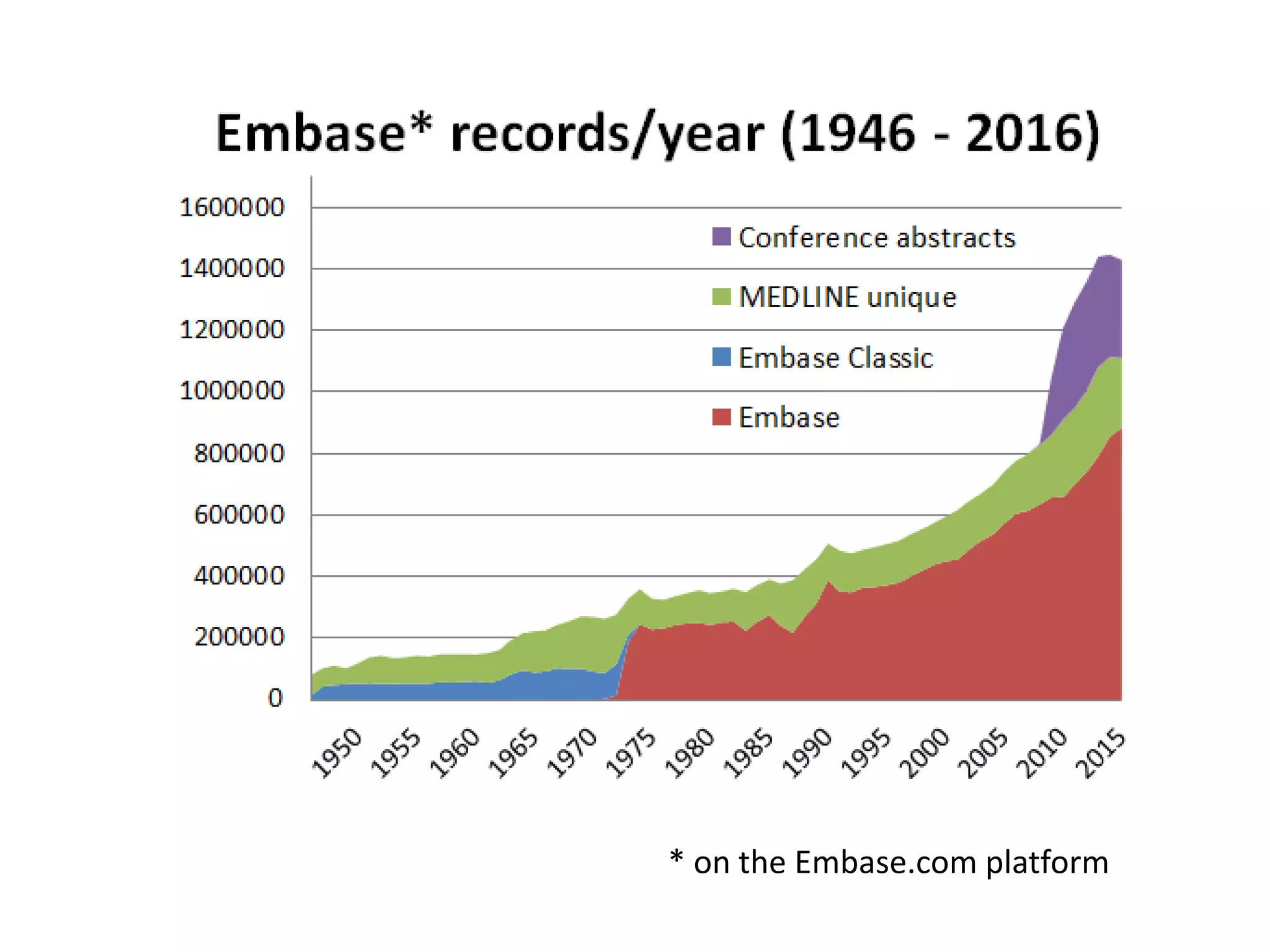
* on the Embase.com platform
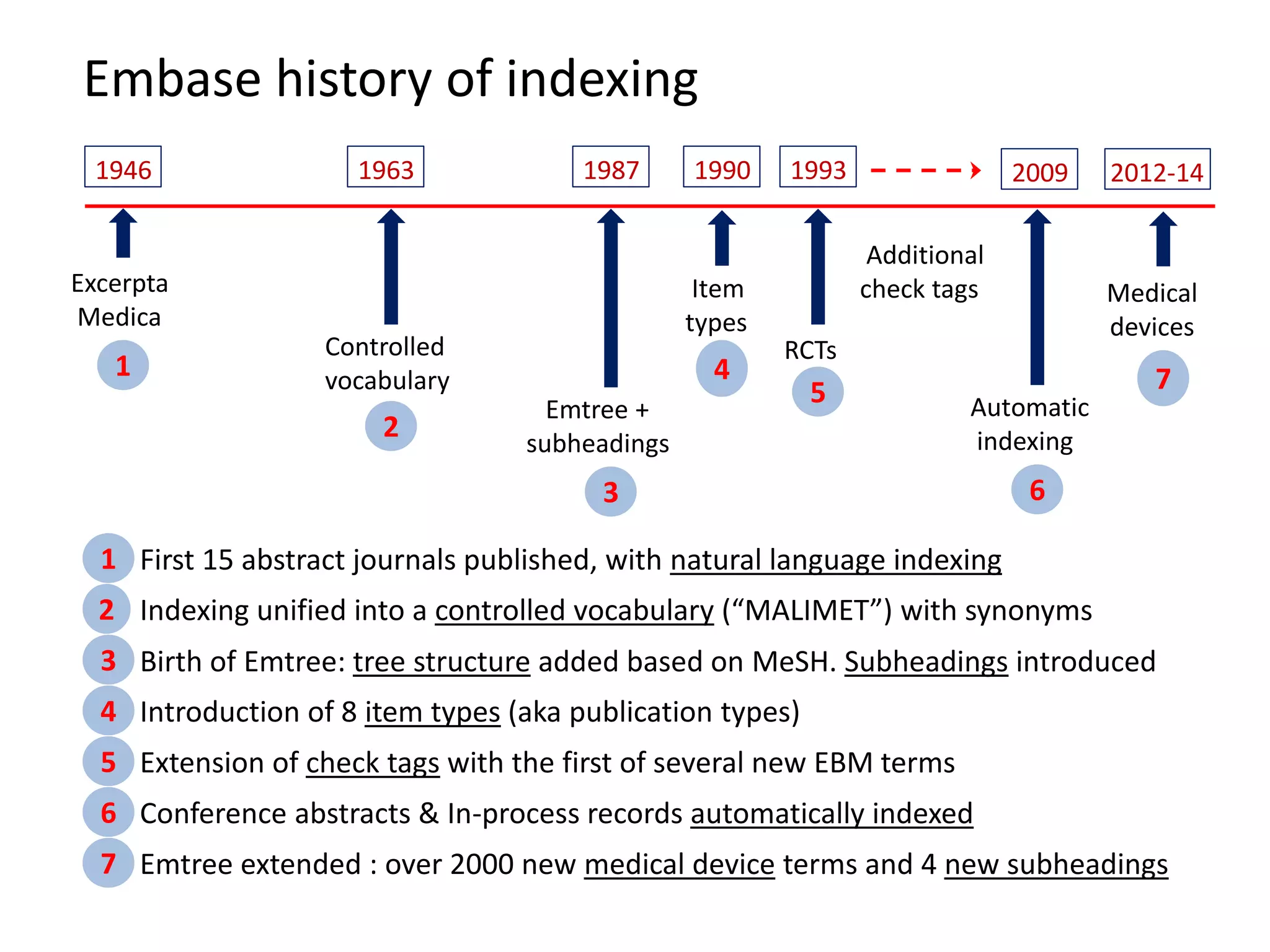
Embase history of indexing
Excerpta
Medica
1946
1
Medical
devices
2012-14
7
Automatic
indexing
2009
6
RCTs
Additional
check tags
1993
5
Item
types
1990
4
Emtree +
subheadings
1987
3
1963
Controlled
vocabulary
2
1
2
3
7
6
4
5
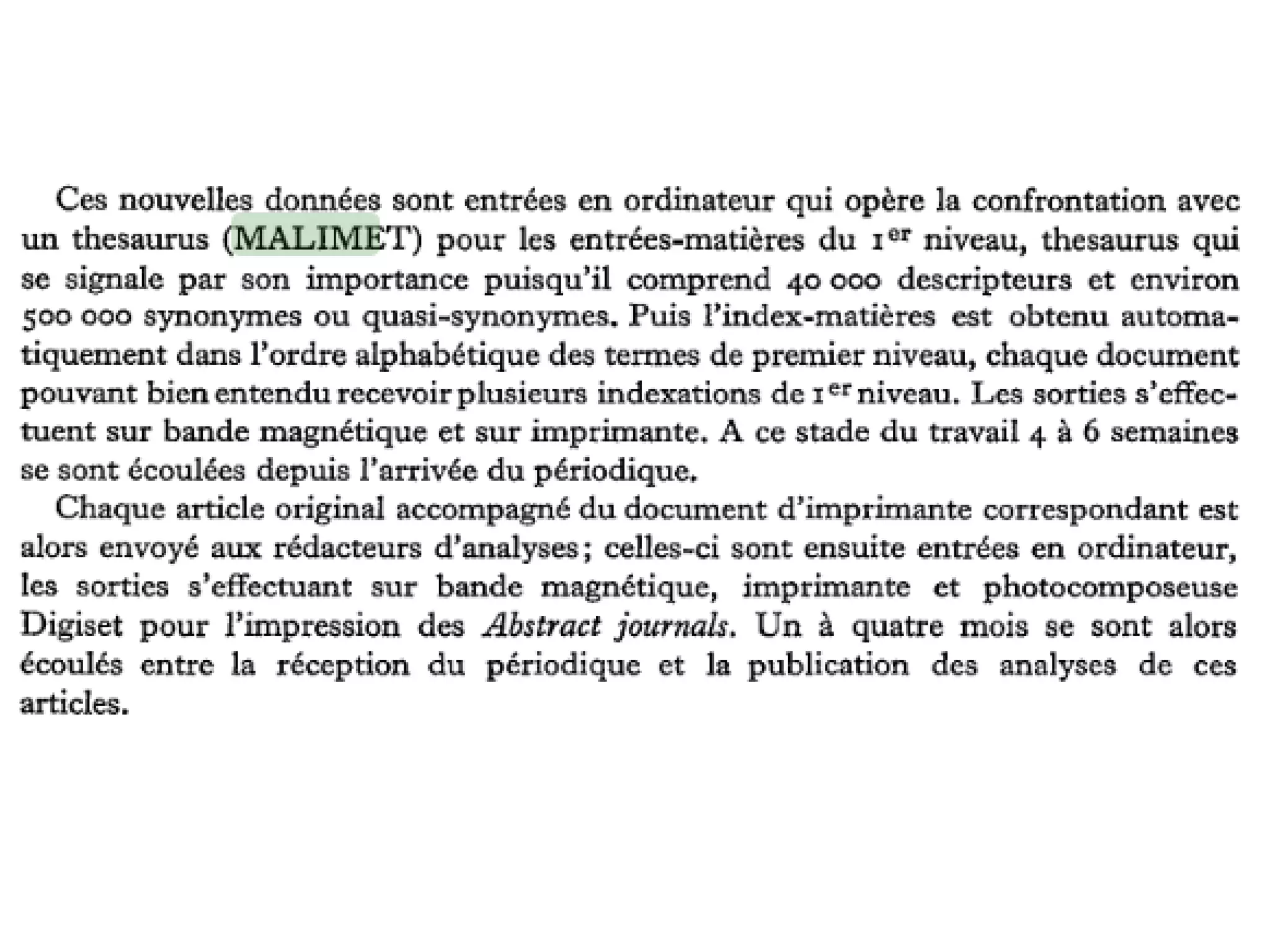
Indexing unified into a controlled vocabulary (“MALIMET”) with synonyms
First 15 abstract journals published, with natural language indexing
Birth of Emtree: tree structure added based on MeSH. Subheadings introduced
Introduction of 8 item types (aka publication types)
Extension of check tags with the first of several new EBM terms
Conference abstracts & In-process records automatically indexed
Emtree extended : over 2000 new medical device terms and 4 new subheadings
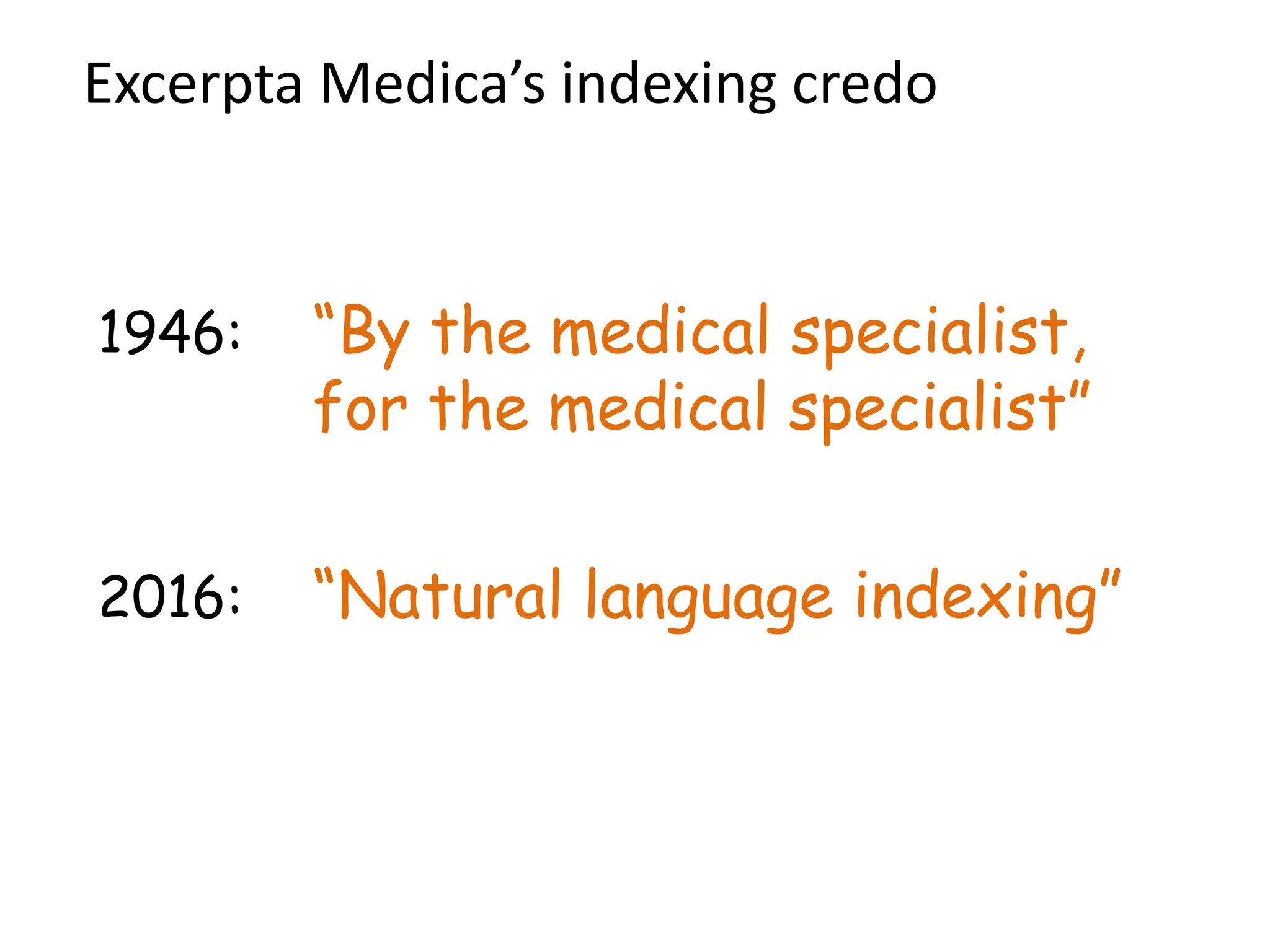
1946: “By the medical specialist,
for the medical specialist”
Excerpta Medica’s indexing credo
2016: “Natural language indexing”
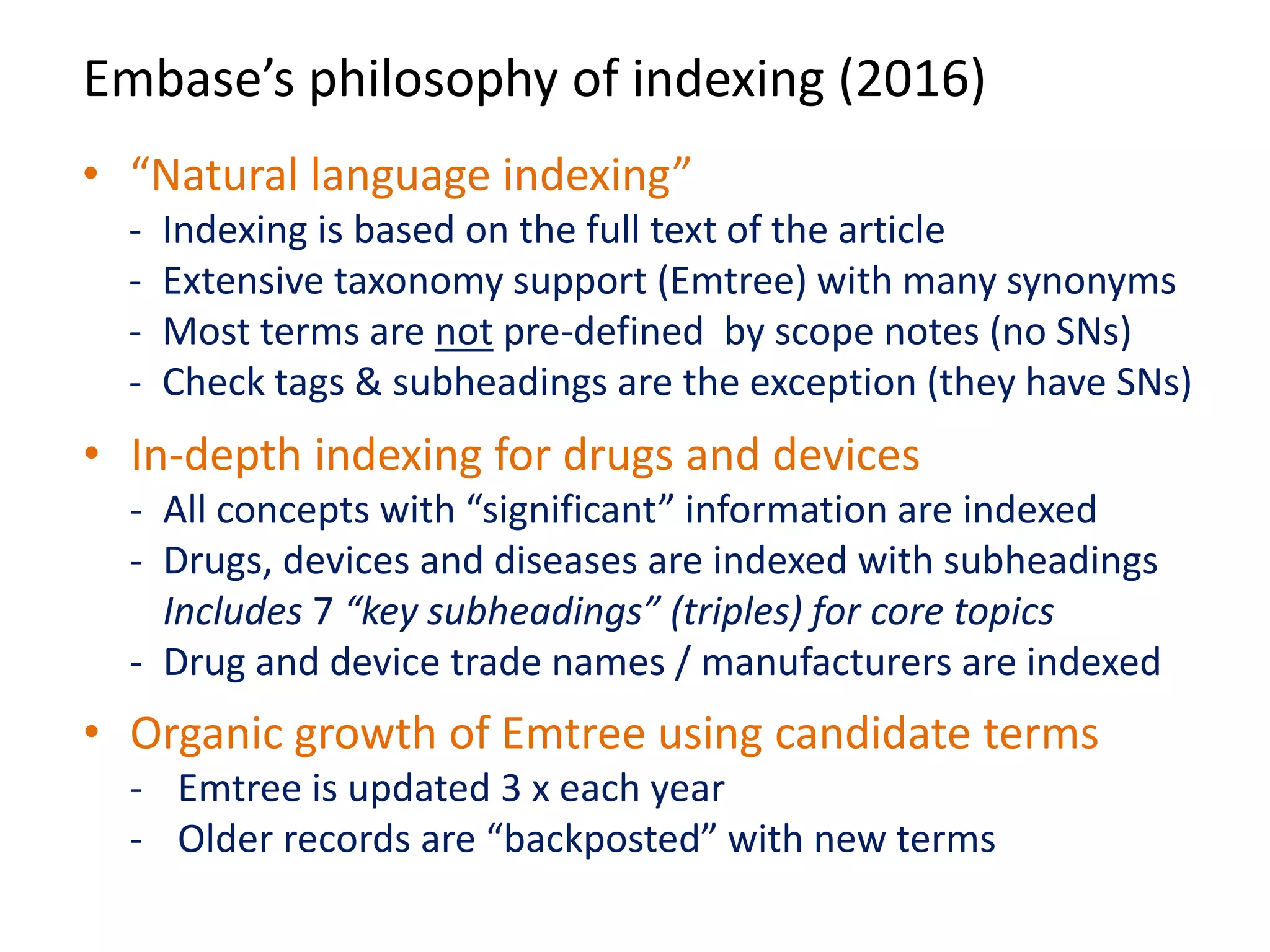
Embase’s philosophy of indexing (2016)
• “Natural language indexing”
- Indexing is based on the full text of the article
- Extensive taxonomy support (Emtree) with many synonyms
- Most terms are not pre-defined by scope notes (no SNs)
- Check tags & subheadings are the exception (they have SNs)
• In-depth indexing for drugs and devices
- All concepts with “significant” information are indexed
- Drugs, devices and diseases are indexed with subheadings
Includes 7 “key subheadings” (triples) for core topics
- Drug and device trade names / manufacturers are indexed
• Organic growth of Emtree using candidate terms
- Emtree is updated 3 x each year
- Older records are “backposted” with new terms
Thank you for your
attention
Dr. Ian Crowlesmith
Senior Product Manager for Content Development
i.crowlesmith@elsevier.com
MLA Toronto, May 17, 2016

Ian crowlesmith embase retrospective mla 2016

  • 1.
    Embase: a shorthistory Dr. Ian Crowlesmith Senior Product Manager for Content Development i.crowlesmith@elsevier.com MLA Toronto, May 17, 2016
  • 2.
    Embase : ashort history
  • 3.
  • 4.
  • 5.
  • 6.
    Key milestones (upto 1990) 1946: Excerpta Medica Foundation established in Amsterdam Publication of the first 15 Abstract Journals begun “By the medical specialist, for the medical specialist” 1950s: EM organization extended to include 4000 volunteer abstractors 1971: Excerpta Medica acquired by Elsevier Science Publishers 1978: Embase available online on Dialog (incl. 4 year backfile to 1974) BRS (later Ovid), DataStar, DIMDI & STN added during the 80’s 1987: Production process fundamentally simplified Goal of 30-day TurnAroundTime; Emtree introduced 1990: Indexing manual completely revised and rewritten Indexing itself outsourced to specialist indexing companies
  • 8.
    Key milestones (1990to the present) 2000: Embase.com introduced 2006: Embase Classic (EM records from 1946-1973) introduced 2009: Conference abstracts, In-Process records & Articles in Press added 1946: Excerpta Medica Foundation established in Amsterdam Publication of the first 15 Abstract Journals begun “By the medical specialist, for the medical specialist” 1950s: Organization extended to include 4000 volunteer abstractors 1971: Excerpta Medica acquired by Elsevier Science Publishers 1978: Embase available online on Dialog (incl. 4 year backfile to 1974) DataStar, STN, BRS (later Ovid), DIMDI added during the 80’s 1987: Production process fundamentally simplified => 30 day TAT Emtree introduced 1990: Indexing manual fundamentally revised Indexing itself outsourced to specialist indexing companies
  • 9.
    * on theEmbase.com platform
  • 10.
    Embase history ofindexing Excerpta Medica 1946 1 Medical devices 2012-14 7 Automatic indexing 2009 6 RCTs Additional check tags 1993 5 Item types 1990 4 Emtree + subheadings 1987 3 1963 Controlled vocabulary 2 1 2 3 7 6 4 5 Indexing unified into a controlled vocabulary (“MALIMET”) with synonyms First 15 abstract journals published, with natural language indexing Birth of Emtree: tree structure added based on MeSH. Subheadings introduced Introduction of 8 item types (aka publication types) Extension of check tags with the first of several new EBM terms Conference abstracts & In-process records automatically indexed Emtree extended : over 2000 new medical device terms and 4 new subheadings
  • 11.
    1946: “By themedical specialist, for the medical specialist” Excerpta Medica’s indexing credo 2016: “Natural language indexing”
  • 16.
    Embase’s philosophy ofindexing (2016) • “Natural language indexing” - Indexing is based on the full text of the article - Extensive taxonomy support (Emtree) with many synonyms - Most terms are not pre-defined by scope notes (no SNs) - Check tags & subheadings are the exception (they have SNs) • In-depth indexing for drugs and devices - All concepts with “significant” information are indexed - Drugs, devices and diseases are indexed with subheadings Includes 7 “key subheadings” (triples) for core topics - Drug and device trade names / manufacturers are indexed • Organic growth of Emtree using candidate terms - Emtree is updated 3 x each year - Older records are “backposted” with new terms
  • 17.
    Thank you foryour attention Dr. Ian Crowlesmith Senior Product Manager for Content Development i.crowlesmith@elsevier.com MLA Toronto, May 17, 2016