HYPOXIA AND
ITS TYPES
Dr Sara Ahmed
DEFINITION
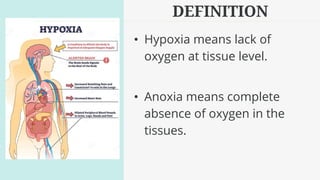
• Hypoxia means lack of
oxygen at tissue level.
• Anoxia means complete
absence of oxygen in the
tissues.
TYPES OF
HYPOXIA
1) HYPOXIC HYPOXIA
2) ANAEMIC HYPOXIA
3) STAGNANT HYPOXIA
4) HISTOTOXIC HYPOXIA
1) HYPOXIC HYPOXIA
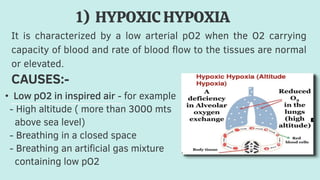
It is characterized by a low arterial pO2 when the O2 carrying
capacity of blood and rate of blood flow to the tissues are normal
or elevated.
CAUSES:-
• Low pO2 in inspired air - for example
- High altitude ( more than 3000 mts
above sea level)
- Breathing in a closed space
- Breathing an artificial gas mixture
containing low pO2
• Decreased pulmonary ventilation - seen in
- Airway obstruction
- Weakness/paralysis of respiratory muscles
- Depression of respiratory centres by drugs specially
morphine
• Venous arterial shunts - i.e. venous blood enters the arterial
blood without going into the lungs,therefore,arterial pO2
decreases. For example - cyanotic heart disease( Fallots
Tetrology )
• Defect in exchange of gases - through alveolar-capillary
membrane.This includes all the factors affecting the V/P ratio.
- Bronchial Asthma
- Pneumothorax
- Emphysema
- Pulmonary fibrosis
- Congestive heart failure
- Pulmonary embolism
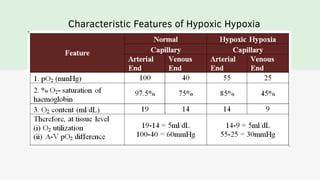
Characteristic Features of Hypoxic Hypoxia
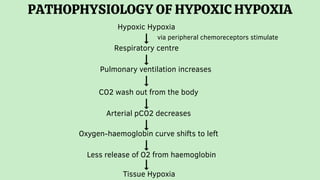
PATHOPHYSIOLOGY OF HYPOXIC HYPOXIA
via peripheral chemoreceptors stimulate
Hypoxic Hypoxia
Respiratory centre
Pulmonary ventilation increases
CO2 wash out from the body
Arterial pCO2 decreases
Oxygen-haemoglobin curve shifts to left
Less release of O2 from haemoglobin
Tissue Hypoxia
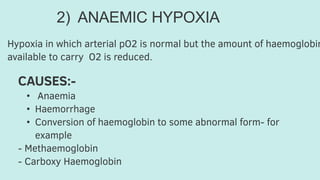
2) ANAEMIC HYPOXIA
Hypoxia in which arterial pO2 is normal but the amount of haemoglobin
available to carry O2 is reduced.
• Anaemia
• Haemorrhage
• Conversion of haemoglobin to some abnormal form- for
example
- Methaemoglobin
- Carboxy Haemoglobin
CAUSES:-
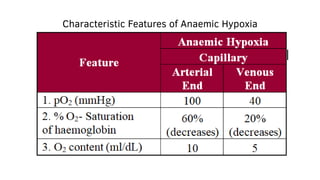
Characteristic Features of Anaemic Hypoxia
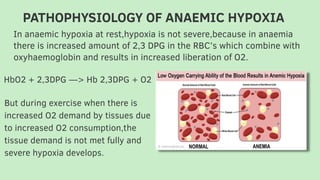
PATHOPHYSIOLOGY OF ANAEMIC HYPOXIA
In anaemic hypoxia at rest,hypoxia is not severe,because in anaemia
there is increased amount of 2,3 DPG in the RBC’s which combine with
oxyhaemoglobin and results in increased liberation of O2.
But during exercise when there is
increased O2 demand by tissues due
to increased O2 consumption,the
tissue demand is not met fully and
severe hypoxia develops.
HbO2 + 2,3DPG —> Hb 2,3DPG + O2
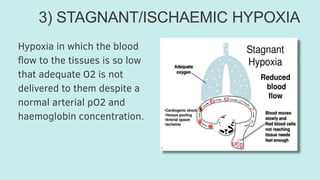
3) STAGNANT/ISCHAEMIC HYPOXIA
Hypoxia in which the blood
flow to the tissues is so low
that adequate O2 is not
delivered to them despite a
normal arterial pO2 and
haemoglobin concentration.
CAUSES:-
• Circulatory failure
• Haemorrhage - via baroreceptors produces reflux
vasoconstriction and thus blood flow to tissue decreases
• Congenital heart failure - It is associated with pulmonary
congestion which produces defect in
oxygenation,therefore,patient also suffers from hypoxic
hypoxia in addition to stagnant hypoxia.
Characteristic Features of Stagnant Hypoxia
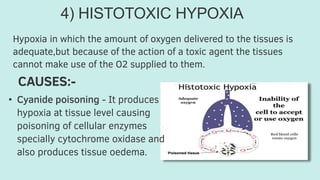
4) HISTOTOXIC HYPOXIA
Hypoxia in which the amount of oxygen delivered to the tissues is
adequate,but because of the action of a toxic agent the tissues
cannot make use of the O2 supplied to them.
CAUSES:-
• Cyanide poisoning - It produces
hypoxia at tissue level causing
poisoning of cellular enzymes
specially cytochrome oxidase and
also produces tissue oedema.
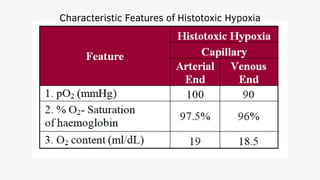
Characteristic Features of Histotoxic Hypoxia
Basic treatment of hypoxia includes :
• Treatment of the underlying cause
• Oxygen therapy -
A. By inhalation of 100% pure O2
B. By inhalation of 100% O2 at high barometric pressure
called hyperbaric oxygen therapy.
4
TREATMENT OF HYPOXIA
Hypoxia.pptx

Hypoxia.pptx

  • 1.
  • 2.
    DEFINITION • Hypoxia meanslack of oxygen at tissue level. • Anoxia means complete absence of oxygen in the tissues.
  • 3.
    TYPES OF HYPOXIA 1) HYPOXICHYPOXIA 2) ANAEMIC HYPOXIA 3) STAGNANT HYPOXIA 4) HISTOTOXIC HYPOXIA
  • 4.
    1) HYPOXIC HYPOXIA Itis characterized by a low arterial pO2 when the O2 carrying capacity of blood and rate of blood flow to the tissues are normal or elevated. CAUSES:- • Low pO2 in inspired air - for example - High altitude ( more than 3000 mts above sea level) - Breathing in a closed space - Breathing an artificial gas mixture containing low pO2
  • 5.
    • Decreased pulmonaryventilation - seen in - Airway obstruction - Weakness/paralysis of respiratory muscles - Depression of respiratory centres by drugs specially morphine • Venous arterial shunts - i.e. venous blood enters the arterial blood without going into the lungs,therefore,arterial pO2 decreases. For example - cyanotic heart disease( Fallots Tetrology )
  • 6.
    • Defect inexchange of gases - through alveolar-capillary membrane.This includes all the factors affecting the V/P ratio. - Bronchial Asthma - Pneumothorax - Emphysema - Pulmonary fibrosis - Congestive heart failure - Pulmonary embolism
  • 7.
  • 8.
    PATHOPHYSIOLOGY OF HYPOXICHYPOXIA via peripheral chemoreceptors stimulate Hypoxic Hypoxia Respiratory centre Pulmonary ventilation increases CO2 wash out from the body Arterial pCO2 decreases Oxygen-haemoglobin curve shifts to left Less release of O2 from haemoglobin Tissue Hypoxia
  • 9.
    2) ANAEMIC HYPOXIA Hypoxiain which arterial pO2 is normal but the amount of haemoglobin available to carry O2 is reduced. • Anaemia • Haemorrhage • Conversion of haemoglobin to some abnormal form- for example - Methaemoglobin - Carboxy Haemoglobin CAUSES:-
  • 10.
  • 11.
    PATHOPHYSIOLOGY OF ANAEMICHYPOXIA In anaemic hypoxia at rest,hypoxia is not severe,because in anaemia there is increased amount of 2,3 DPG in the RBC’s which combine with oxyhaemoglobin and results in increased liberation of O2. But during exercise when there is increased O2 demand by tissues due to increased O2 consumption,the tissue demand is not met fully and severe hypoxia develops. HbO2 + 2,3DPG —> Hb 2,3DPG + O2
  • 12.
    3) STAGNANT/ISCHAEMIC HYPOXIA Hypoxiain which the blood flow to the tissues is so low that adequate O2 is not delivered to them despite a normal arterial pO2 and haemoglobin concentration.
  • 13.
    CAUSES:- • Circulatory failure •Haemorrhage - via baroreceptors produces reflux vasoconstriction and thus blood flow to tissue decreases • Congenital heart failure - It is associated with pulmonary congestion which produces defect in oxygenation,therefore,patient also suffers from hypoxic hypoxia in addition to stagnant hypoxia.
  • 14.
  • 15.
    4) HISTOTOXIC HYPOXIA Hypoxiain which the amount of oxygen delivered to the tissues is adequate,but because of the action of a toxic agent the tissues cannot make use of the O2 supplied to them. CAUSES:- • Cyanide poisoning - It produces hypoxia at tissue level causing poisoning of cellular enzymes specially cytochrome oxidase and also produces tissue oedema.
  • 16.
    Characteristic Features ofHistotoxic Hypoxia
  • 17.
    Basic treatment ofhypoxia includes : • Treatment of the underlying cause • Oxygen therapy - A. By inhalation of 100% pure O2 B. By inhalation of 100% O2 at high barometric pressure called hyperbaric oxygen therapy. 4 TREATMENT OF HYPOXIA

Editor's Notes