Objectives
 Define hypnosis and identify common
characteristics of a hypnotic trance.
 Explain who and how one can hypnotized.
 Identify applications for hypnotherapy.
 Misconceptions
 Other forms of relaxation
Hypnosis
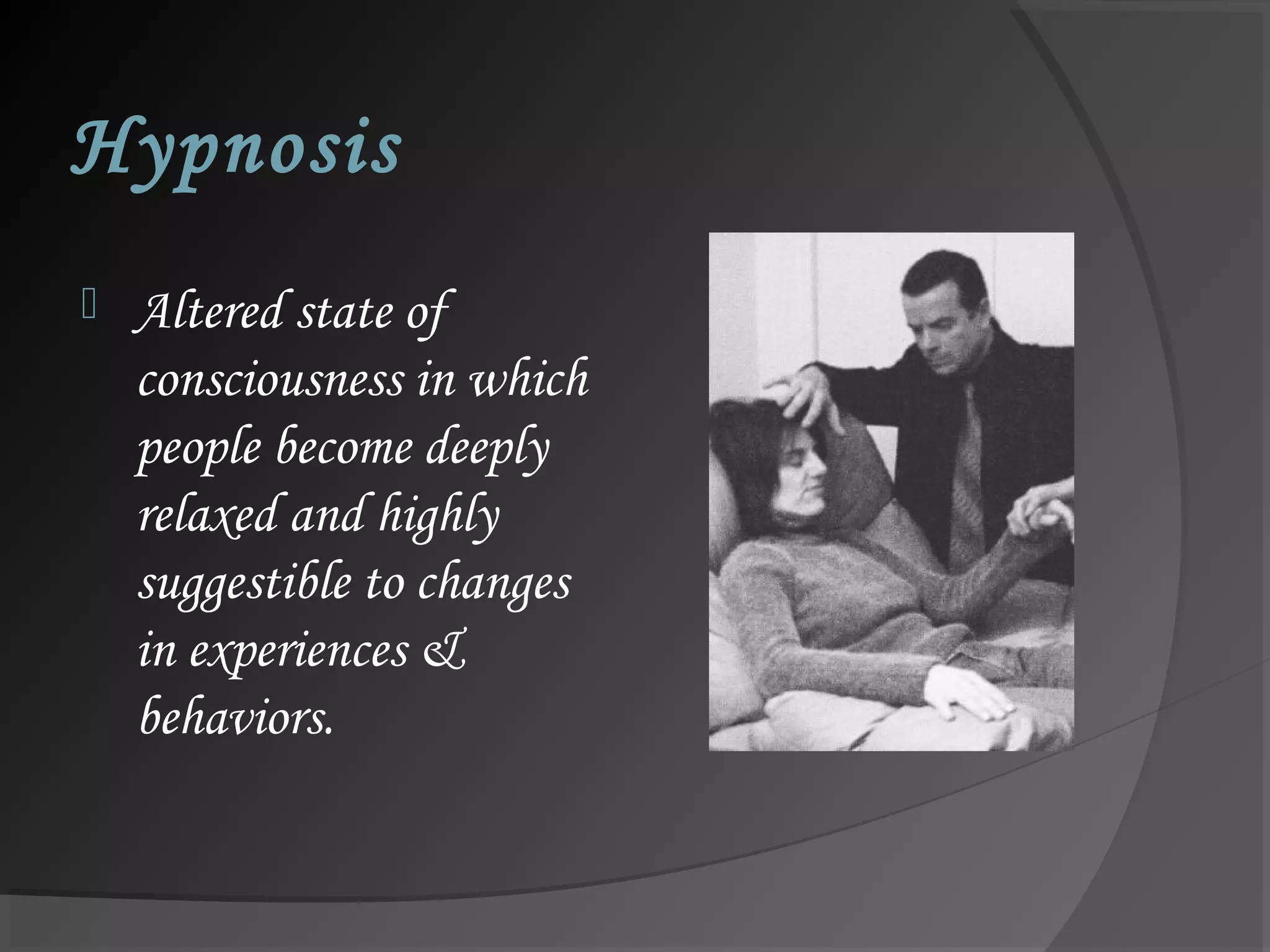
 Altered state of
consciousness in which
people become deeply
relaxed and highly
suggestible to changes
in experiences &
behaviors.
History of Hypnosis
 James Braid, early 1800’s, coins term hypnosis (as
deep sleep-like state).
 Clark Hull, 1920s, establishes first experimental
hypnosis lab.
 Franz Anton Mesmer, late 1700’s, cures problems
through “mesmerism” which means harnessing the
magnetic forces of the planets.
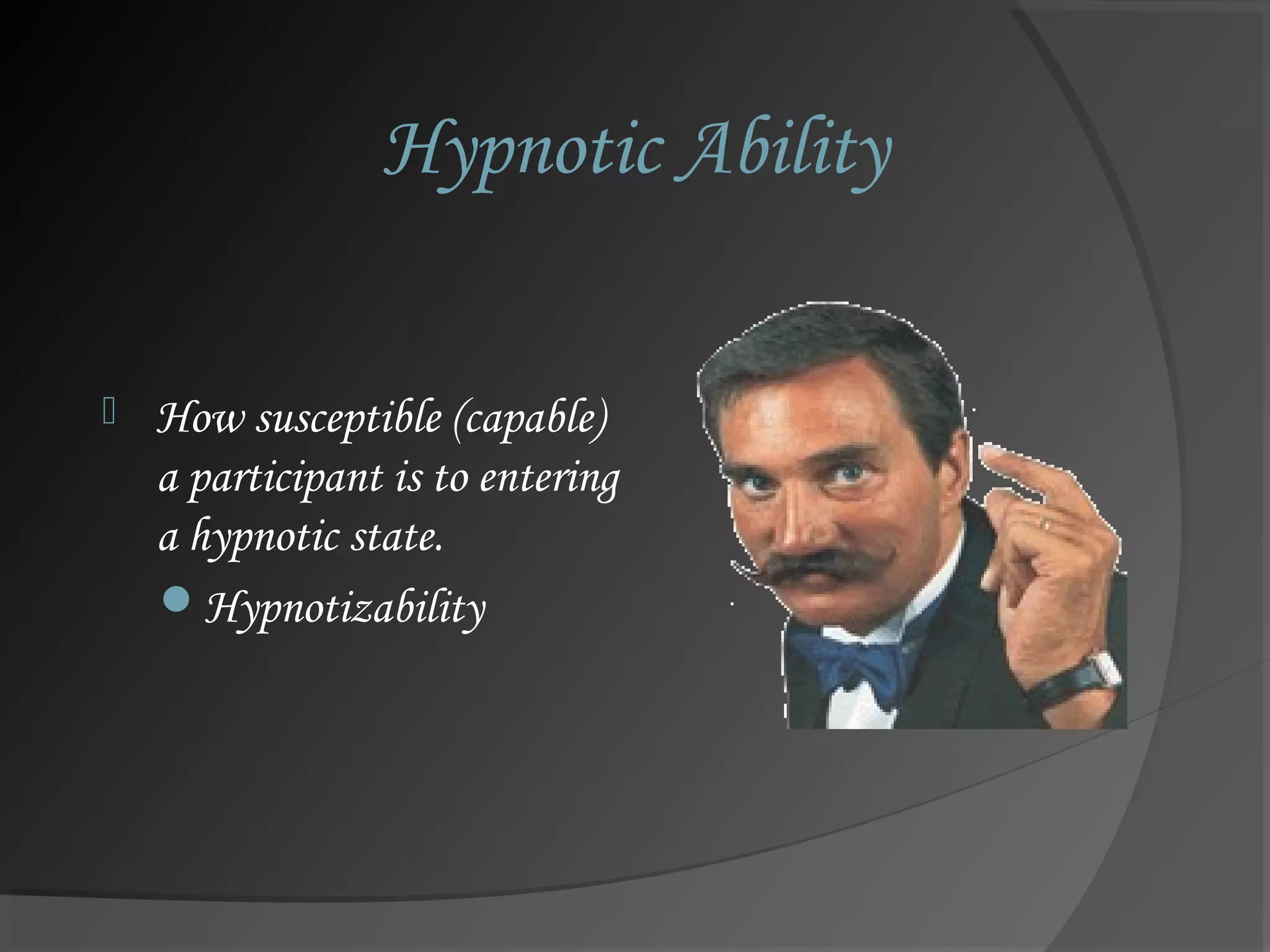
Hypnotic Ability
 How susceptible (capable)
a participant is to entering
a hypnotic state.
Hypnotizability
How is Someone Hypnotized?
 Hypnotic Induction- methods used to induce
hypnosis
Close eyes and concentrate on breathing
Fix attention on object/voice
Instant Induction
Characteristics of Hypnotic State
 Suggestibility
Do, think, say things as
told
 Dissociation
Separate self from
external reality
“Hypnotic
Analgesia”(Medication 
that acts to relieve pain)
Subject told to conductSubject told to conduct
orchestraorchestra
Characteristics of Hypnotic State
 Problems that are
Enhanced by Memory or
Hypermnesia (unusual
power of memory)
Recall remote events in
great detail
Age regression
False recollections
Characteristics of Hypnotic State
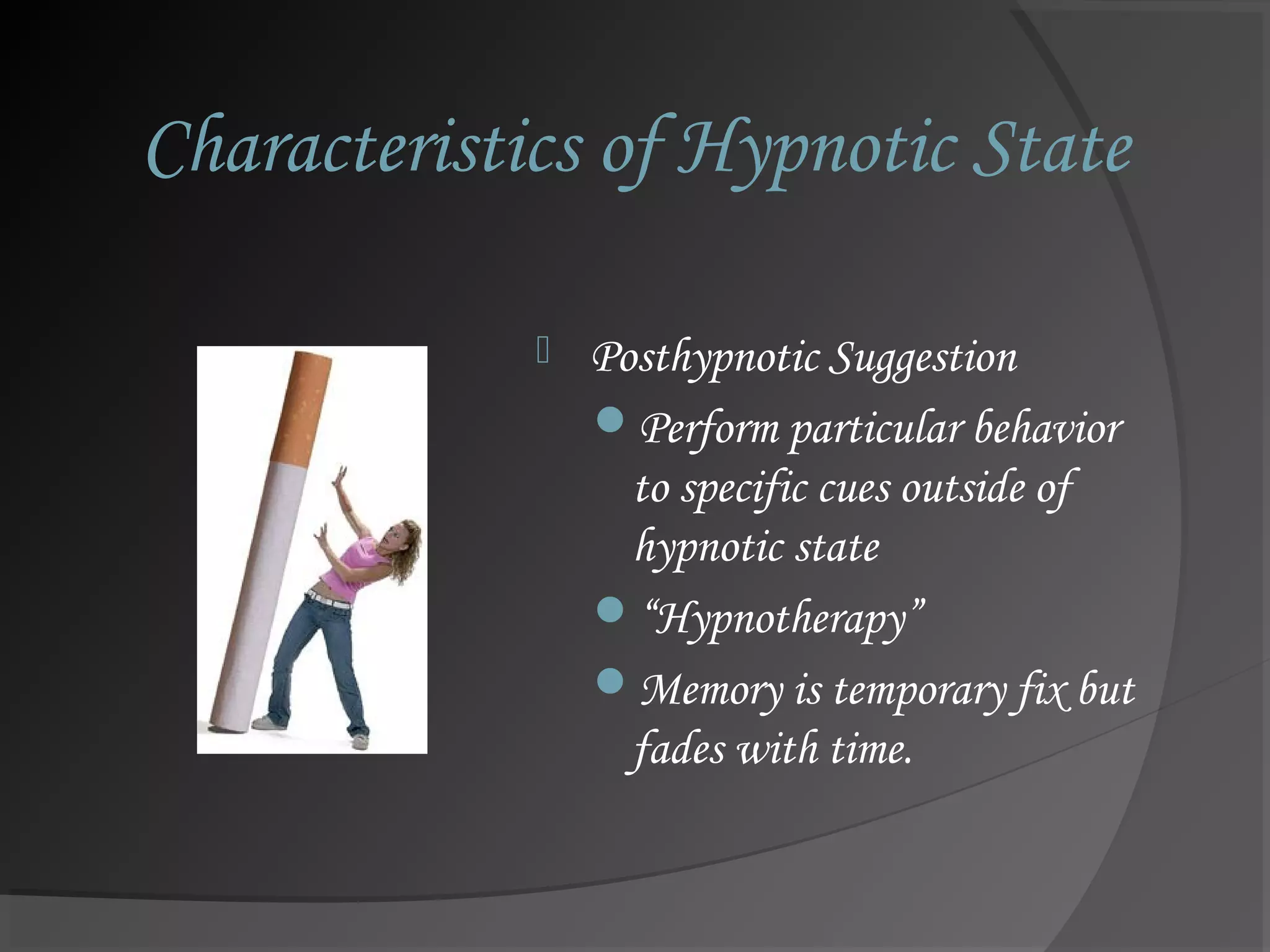
 Posthypnotic Suggestion
Perform particular behavior
to specific cues outside of
hypnotic state
“Hypnotherapy”
Memory is temporary fix but
fades with time.
Characteristics of Hypnotic State
 Posthypnotic Amnesia
Subject can’t recall
events that took place
under hypnosis
Applications for Hypnosis
 Posthypnotic Suggestion – control undesired
symptoms/behaviors.
 Pain Control – birth, chemotherapy, dental.
 Treatment Therapy – headaches, asthma, warts, acne,
smoking, weight control, nail biting.
Hypnosis Activity
 No right or wrong way to be hypnotized
 Not necessary to be in a trance
 Need willingness to suspend critical thinking!
 Close eyes and pretend you’re walking up to the front
door of your home. Open the door and walk in. Walk
through your home and count the doors, all the doors
or doorways, one floor or all floors, whatever you
choose. Do so now.
Some Misconceptions
 You will not become unconscious and you will be
aware of everything at all times.
 Hypnotized person loses their will and is partially
or completely under the command of the hypnotist.
 Hypnosis, particularly the deeper forms, can appear
to be like sleep because the person's body is
typically very still and quiet.
Other Forms of Relaxation
 Progressive Relaxation
Tense and relax major muscle groups until you’re
able to relax any group at will
 Biofeedback
Voluntarily learning to control internal processes
like blood pressure, heart rate, or temperature.
Requires machines and stuff
Meditation is also a way to get relaxed.
References
 http://www.clipsforclass.com/consciousness.
 http://www.youtube.com/watch?v=gbWuZL5wnNc
 http://www.youtube.com/watch?v=P8ujg1zScqg
THANK YOU….
Hope you liked this
presentation….

Hypnosis

  • 2.
    Objectives  Define hypnosisand identify common characteristics of a hypnotic trance.  Explain who and how one can hypnotized.  Identify applications for hypnotherapy.  Misconceptions  Other forms of relaxation
  • 3.
    Hypnosis  Altered stateof consciousness in which people become deeply relaxed and highly suggestible to changes in experiences & behaviors.
  • 4.
    History of Hypnosis James Braid, early 1800’s, coins term hypnosis (as deep sleep-like state).  Clark Hull, 1920s, establishes first experimental hypnosis lab.  Franz Anton Mesmer, late 1700’s, cures problems through “mesmerism” which means harnessing the magnetic forces of the planets.
  • 5.
    Hypnotic Ability  Howsusceptible (capable) a participant is to entering a hypnotic state. Hypnotizability
  • 6.
    How is SomeoneHypnotized?  Hypnotic Induction- methods used to induce hypnosis Close eyes and concentrate on breathing Fix attention on object/voice Instant Induction
  • 7.
    Characteristics of HypnoticState  Suggestibility Do, think, say things as told  Dissociation Separate self from external reality “Hypnotic Analgesia”(Medication  that acts to relieve pain) Subject told to conductSubject told to conduct orchestraorchestra
  • 8.
    Characteristics of HypnoticState  Problems that are Enhanced by Memory or Hypermnesia (unusual power of memory) Recall remote events in great detail Age regression False recollections
  • 9.
    Characteristics of HypnoticState  Posthypnotic Suggestion Perform particular behavior to specific cues outside of hypnotic state “Hypnotherapy” Memory is temporary fix but fades with time.
  • 10.
    Characteristics of HypnoticState  Posthypnotic Amnesia Subject can’t recall events that took place under hypnosis
  • 11.
    Applications for Hypnosis Posthypnotic Suggestion – control undesired symptoms/behaviors.  Pain Control – birth, chemotherapy, dental.  Treatment Therapy – headaches, asthma, warts, acne, smoking, weight control, nail biting.
  • 12.
    Hypnosis Activity  Noright or wrong way to be hypnotized  Not necessary to be in a trance  Need willingness to suspend critical thinking!  Close eyes and pretend you’re walking up to the front door of your home. Open the door and walk in. Walk through your home and count the doors, all the doors or doorways, one floor or all floors, whatever you choose. Do so now.
  • 13.
    Some Misconceptions  Youwill not become unconscious and you will be aware of everything at all times.  Hypnotized person loses their will and is partially or completely under the command of the hypnotist.  Hypnosis, particularly the deeper forms, can appear to be like sleep because the person's body is typically very still and quiet.
  • 14.
    Other Forms ofRelaxation  Progressive Relaxation Tense and relax major muscle groups until you’re able to relax any group at will  Biofeedback Voluntarily learning to control internal processes like blood pressure, heart rate, or temperature. Requires machines and stuff Meditation is also a way to get relaxed.
  • 15.
  • 16.
    THANK YOU…. Hope youliked this presentation….