Presented by:
Ramsha Sadiq
 Hypnosis
 Hypnotherapy
 Hypnotherapist
 Qualities of hypnotherapist
 History
 Does hypnotherapy works
 Levels of mind
 Techniques
 Types of hypnotherapy
 Benefits of hypnotherapy
 Misconceptions
The term “hypnosis” is
derived from the Greek
word Hypnos, meaning
“sleep.”
•Relaxation + imagination
Hypnosis is a slightly altered state of mind that
most of us experience just about every day of our
lives, whether we are driving, daydreaming,
dropping off to sleep at night, or are simply
absorbed in a good book or film.
 Hypnotherapy is the use of hypnosis to
give relief and removal of a huge variety
of conditions.
It is an altered state of awareness
induced by relaxation.
 It does not involve become unconscious
or going to sleep
A skilled hypnotherapist brings
this about by guiding the
individual into relaxation, and
giving them 'mind’s eye'
situations to imagine and
'experience'. Hypnotherapy is a
deep relaxation of the conscious
mind.
Hypnotherapist:
 They understand hypnosis
 Do not use script
 Must have good imagination
 The way he talks about your predicaments
resonates you
 Confident
 Smooth tone of voice
 Low pitch of voice
 Slow specking
 Have stream of motivated words
 Trustworthy
 Avoid to use negative points of patient during
the session
It today was
first associated
with the work
of an Austrian
physician
named “Franz
Anton
Mesmer”.
 In the 1700s, Mesmer used magnets and
other hypnotic techniques to treat people,
and while he achieved a number of dramatic
“cures” for blindness, paralysis, headache,
and joint pain, the medical community was
not convinced. Mesmer was accused of fraud
and his techniques called unscientific.
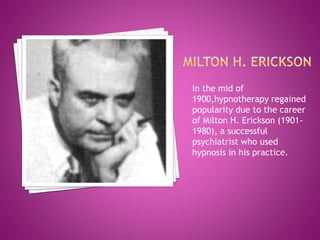
In the mid of
1900,hypnotherapy regained
popularity due to the career
of Milton H. Erickson (1901-
1980), a successful
psychiatrist who used
hypnosis in his practice.
 When in a relaxed state of hypnosis, it allows
you and the therapist to utilize your
subconscious mind - the powerhouse of your
mind.
 You are fully aware of what is taking place at
all times and cannot be made to do anything
you do not want to do.
There are three levels of mind which are as
follow:
 Conscious level
 Preconscious level
 unconscious level
There are several stages of hypnosis.
 The process begins with reframing the
problem;
 Becoming relaxed,
 Then absorbed (deeply engaged in the
words or images presented by a
hypnotherapist);
 Dissociating (letting go of critical
thoughts);
 Responding (complying whole-heartedly
to a hypnotherapist’s suggestions);
 Returning to usual awareness
It is very effective in dealing
with the more deep-seated
problems that many people have
such as anxiety, depression,
phobias, fears, eating disorders
and other psychological and
emotional problems/symptoms
 An example would be a phobia. In a phobic,
the person will have within them a fear,
whether it is of spiders, heights, snakes,
open spaces, dogs, Analytical Hypnotherapy,
seeks to find the root cause, rather than just
removing a symptom of it. Once the root fear
is removed, it becomes powerless.
 Pure hypnoanalysis is a very special type of
analytical hypnotherapy and is the single
most effective form of therapy available in
the world today. It is a highly developed form
of analytical hypnotherapy (sometimes called
Hypno-analysis).
 Pure Hypnoanalysis allows you to quickly and
easily resolve the emotions that were causing
the symptoms.
This is a hypnotic state, in which you
are fully in control but relaxed. You are
then given suggestions that will affect
your behavior/feelings once you are
out of the hypnotic state. All
suggestions given are always
completely positive.
This type of therapy session is ideal for:
 smokers wishing to stop smoking
 a person suffering from nerves disorder
 someone wanting help with their driving test,
 some habits
 weight loss
 help with pain control - particularly for
childbirth.
 Phobias
 Fear
 Anxiety
 Sleep disorder
 Depression
 Stress
 Post-trauma anxiety
 Grief and loss
 Eating disorder
 Pain control
 Weight control
 Stop smoking
 Nail biting
 Bed wetting
 Improving work or study
 Improving sport performance
 Self confidence
 Achieving potential
 Compulsions
 Panic attacks
 Kind of emotional problem
 Blood pressure
 Migraine
A single 90 minute
session is all that is
necessary.
 Many people finding
that two or three
sessions, spread over
a month or so, are
sufficient.
 Hypnosis is type of sleep.
 Control
 Hypnotize someone without knowing them
 Relaxation is not required for hypnosis
 I can’t be hypnotized
 Weak minded
Hypno therapy
Hypno therapy

Hypno therapy

  • 2.
  • 3.
     Hypnosis  Hypnotherapy Hypnotherapist  Qualities of hypnotherapist  History  Does hypnotherapy works  Levels of mind  Techniques  Types of hypnotherapy  Benefits of hypnotherapy  Misconceptions
  • 5.
    The term “hypnosis”is derived from the Greek word Hypnos, meaning “sleep.” •Relaxation + imagination
  • 6.
    Hypnosis is aslightly altered state of mind that most of us experience just about every day of our lives, whether we are driving, daydreaming, dropping off to sleep at night, or are simply absorbed in a good book or film.
  • 7.
     Hypnotherapy isthe use of hypnosis to give relief and removal of a huge variety of conditions. It is an altered state of awareness induced by relaxation.  It does not involve become unconscious or going to sleep
  • 8.
    A skilled hypnotherapistbrings this about by guiding the individual into relaxation, and giving them 'mind’s eye' situations to imagine and 'experience'. Hypnotherapy is a deep relaxation of the conscious mind. Hypnotherapist:
  • 10.
     They understandhypnosis  Do not use script  Must have good imagination  The way he talks about your predicaments resonates you  Confident  Smooth tone of voice  Low pitch of voice  Slow specking  Have stream of motivated words  Trustworthy  Avoid to use negative points of patient during the session
  • 12.
    It today was firstassociated with the work of an Austrian physician named “Franz Anton Mesmer”.
  • 13.
     In the1700s, Mesmer used magnets and other hypnotic techniques to treat people, and while he achieved a number of dramatic “cures” for blindness, paralysis, headache, and joint pain, the medical community was not convinced. Mesmer was accused of fraud and his techniques called unscientific.
  • 14.
    In the midof 1900,hypnotherapy regained popularity due to the career of Milton H. Erickson (1901- 1980), a successful psychiatrist who used hypnosis in his practice.
  • 15.
     When ina relaxed state of hypnosis, it allows you and the therapist to utilize your subconscious mind - the powerhouse of your mind.  You are fully aware of what is taking place at all times and cannot be made to do anything you do not want to do.
  • 16.
    There are threelevels of mind which are as follow:  Conscious level  Preconscious level  unconscious level
  • 18.
    There are severalstages of hypnosis.  The process begins with reframing the problem;  Becoming relaxed,  Then absorbed (deeply engaged in the words or images presented by a hypnotherapist);  Dissociating (letting go of critical thoughts);  Responding (complying whole-heartedly to a hypnotherapist’s suggestions);  Returning to usual awareness
  • 21.
    It is veryeffective in dealing with the more deep-seated problems that many people have such as anxiety, depression, phobias, fears, eating disorders and other psychological and emotional problems/symptoms
  • 22.
     An examplewould be a phobia. In a phobic, the person will have within them a fear, whether it is of spiders, heights, snakes, open spaces, dogs, Analytical Hypnotherapy, seeks to find the root cause, rather than just removing a symptom of it. Once the root fear is removed, it becomes powerless.
  • 23.
     Pure hypnoanalysisis a very special type of analytical hypnotherapy and is the single most effective form of therapy available in the world today. It is a highly developed form of analytical hypnotherapy (sometimes called Hypno-analysis).  Pure Hypnoanalysis allows you to quickly and easily resolve the emotions that were causing the symptoms.
  • 24.
    This is ahypnotic state, in which you are fully in control but relaxed. You are then given suggestions that will affect your behavior/feelings once you are out of the hypnotic state. All suggestions given are always completely positive.
  • 25.
    This type oftherapy session is ideal for:  smokers wishing to stop smoking  a person suffering from nerves disorder  someone wanting help with their driving test,  some habits  weight loss  help with pain control - particularly for childbirth.
  • 28.
     Phobias  Fear Anxiety  Sleep disorder  Depression  Stress  Post-trauma anxiety  Grief and loss  Eating disorder  Pain control  Weight control
  • 29.
     Stop smoking Nail biting  Bed wetting  Improving work or study  Improving sport performance  Self confidence  Achieving potential  Compulsions  Panic attacks  Kind of emotional problem  Blood pressure  Migraine
  • 31.
    A single 90minute session is all that is necessary.
  • 32.
     Many peoplefinding that two or three sessions, spread over a month or so, are sufficient.
  • 33.
     Hypnosis istype of sleep.  Control  Hypnotize someone without knowing them  Relaxation is not required for hypnosis  I can’t be hypnotized  Weak minded