Hypertensive
Crises
Introduction
• Blood pressure is the force exerted by the blood against the walls of blood vessels, and
the magnitude of this force depends on the cardiac output and the resistance of the blood
vessels.
• Normal blood pressure is below 120 systolic and below 80 diastolic
• Hypertensive crisis (a medical emergency) is when blood pressure is
above 180 systolic or above 110 diastolic.
▪ Prehypertension is 120-139 systolic or 80-89 diastolic.
▪ Stage 1 high blood pressure (hypertension) is 140-159 systolic or 90-99 diastolic
▪ Stage 2 high blood pressure (hypertension) is 160 or higher systolic or 100 or higher
diastolic above 180
Introduction
▪ Primary hypertension has no
identifiable cause.
▪ Secondary hypertension has
identifiable cause.
Source : American Heart
Association.
Classification Systolic
Pressure
(mmHg)
Diastolic
Pressure
(mmHg)
Normal 90 - 119 60 - 79
Prehypertensio
n
120 - 139 81 - 89
Stage1 140 -159 90 - 99
Stage2 ≥160 ≥100
Secondary
Hypertension
≥140 <90
Causes Of Hypertension
• The disease burden of high blood pressure is a growing
problem worldwide . The increases are blamed on lifestyle
factors, includes,
• Physical inactivity
• A salt-rich diet through processed and fatty foods.
• Alcohol and tobacco use.
Risk Factors
•Age - everyone is at greater risk of high blood pressure as they get older. Prevalence of
hypertension is higher in people over 60 years of age.
•Race - African-American adults are at higher risk than white or Hispanic American adults
•Size - being overweight or obese is a key risk factor
•Sex - men and women have different risk profiles. While they have the same lifetime
risks, men are more prone at younger ages while women are more prone at older ages
•Lifestyle - as mentioned above, this is to blame for growing rates of hypertension, from
greater uptakes of dietary salt, excessive alcohol, low dietary potassium, and physical
inactivity.
Specific Causes
• Primary hypertension is unlikely to have a specific cause but multiple factors, including blood plasma
volume and activity of the renin-angiotensin system, the hormonal regulator of blood volume and
pressure - and primary hypertension is affected by environmental factors, including the lifestyle-related
ones above.
• Secondary hypertension has specific causes - that is, it is secondary to another problem. One example,
thought to be the most common, is primary aldosteronism, a hormone disorder causing an imbalance
between potassium and sodium levels and so high blood pressure.
• Other secondary hypertensions are caused by:
• Kidney diseases.
• Pheochromocytoma (a cancer)
• Cushing syndrome (which can be caused by use of corticosteroid drugs)
• Congenital adrenal hyperplasia (disorder of the adrenal glands, which secrete the hormone cortisol)
• Hyperthyroidism (overactive thyroid gland).
Types of Hypertension
Malignant Hypertension
This, the most severe form of hypertension.
•It rapidly leads to organ damage. Unless properly treated.
•it is fatal within five years for the majority of patients.
•Death usually comes from heart failure, kidney damage or brain haemorrhage.
•Malignant hypertension is becoming relatively rare, and is not caused by cancer or
malignancy.
Isolated Systolic Hypertension
•systolic blood pressure above 160 mm Hg, and the diastolic below 90 mm Hg.
•This may occur in older people, and results from the age-related stiffening of the
arteries.
•The loss of easticity in arteries, like the aorta, is mostly due to arteriosclerosis.
•The Western lifestyle and diet is believed to be the root cause.
Types of hypertension
White coat hypertension
•Also called anxiety-induced hypertension, it means blood pressure is only high when
tested by a health professional.
•If confirmed, with repeat readings outside of the clinical setting, or a 24-hour
monitoring device, it does not need to be treated.
Resistant Hypertension
•If blood pressure cannot be reduced to below 140/90 mmHg, despite a triple-drug
regime, resistant hypertension is considered.
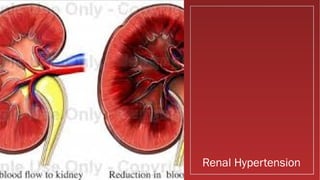
Renal Hypertension
•Condition which consists of high blood pressure caused by the kidneys' hormonal
response to narrowing of the arteries supplying the kidneys.
Melignant
Hypertension
Renal Hypertension
White-Coat
Hypertension
Symptoms
• An enlarged or weakened heart, to a point where it may fail to pump enough blood (
heart failure)
• Aneurysm - an abnormal bulge in the wall of an artery
• Blood vessel narrowing - in the kidneys, leading to possible kidney failure; also in
the heart, brain and legs, leading to potential heart attack, stroke or amputation,
respectively
• Blood vessels in the eyes my rupture or bleed, leading to vision problems or
blindness (hypertensive retinopathies, which can be classified by worsening grades
one through four).
Blood
Pressure
Diagnosis
Blood Pressure Is measured
by sphygmomanometer.
Complications
High Blood Pressure and Atherosclerosis
One of the most serious health problems related to untreated high blood pressure,
atherosclerosis contributes to coronary artery disease.
Stroke and Hypertension
A stroke occurs when blood flow to an area in the brain is cut off and people who have
hypertension are four to six times more likely to have a stroke.
Hypertension and Heart Disease
Heart disease is the No. 1 cause of death associated with hypertension.
Kidney Disease and Hypertension
Hypertension is a major cause of kidney disease and kidney failure
Complications
High Blood Pressure and Eye Disease
Untreated hypertension can affect your eyesight, causing damage to the blood vessels in
the retina. Known as hypertensive retinopathy, learn more about this condition and its
prevention.
High Blood Pressure and Diabetes
Hypertension is a risk factor for the development and worsening of many diabetes
complications, and likewise having diabetes increases your risk of developing high blood
pressure.
Preeclampsia: High Blood Pressure and Pregnancy
High blood pressure can be a sign of preeclampsia, a pregnancy-related problem that can
become life-threatening.
Complications
Metabolic Syndrome and High Blood Pressure
Metabolic syndrome is a group of health problems which include too much fat
around the waist, elevated blood pressure, elevated blood sugar, and more -- all
increasing your risk of heart attack, stroke, and diabetes. Find out more about
metabolic syndrome here.
High Blood Pressure and Erectile Dysfunction
High blood pressure by itself can lead to erectile dysfunction. But some drugs
for treating high blood pressure can actually be the cause as well. Find out more
about why high blood pressure is a major cause of erection problems.
Consequences
• Heart attack
• Heart failure
• Kidney damage/failure
• Transient ischemic attack
• Stroke – due to rupture of brain aneurysms.
• Progressive vision loss
• Pulmonary edema – fluid buildup on lungs
• Convulsions
• Loss of consciousness
First Aid Management
•Reassure the patient and call for medical help.
•Make him/her to lie on the bed and rest adequately.
•Try to comfort and reduce anxiety, as anxiety alone can increase blood pressure.
•Keep monitoring breathing, pulse rate, blood pressure, level of consciousness and for any
other dangerous signs ( e.g. paralysis of body in stroke, convulsions etc.)
•Do not allow them to walk about, accompany the patient if it is really needed. Watch out
for falls.
•If the patient is vomiting or having seizures, turn to lateral side to prevent aspiration.
First Aid Management
• If patient complains of difficulty in breathing, prop him/her up using pillows behind upper
back.
• Do not give anything by mouth to eat/drink if there is suspicion of stroke.
• Specially avoid caffeine or alcohol containing beverages.
• Meanwhile look for possible cause for hypertensive crisis. If the patient is a known
hypertensive and missed medication, consult doctor over the phone and give a dose of
medications if instructed.
• If breathing is unsatisfactory go for basic life support. Mouth to mouth breathing and CPR
if needed.
Management In Emergency
Pharmacotherapy
Optimal pharmacotherapy is dependent upon the specific organ. In patients
presenting with hypertensive emergencies, antihypertensive drug therapy
has been shown to be effective in acutely decreasing blood pressure.
•Sodium nitroprusside is a commonly used medication. It is a short-acting
agent, and the BP response can be titrated from minute to minute.
•The potential exists for thiocynate and cyanide toxicity with prolonged use
or if the patient has renal or hepatic failure.
•Labetalol, an alpha- and beta-blocking agent is particularly preferred in
patients with acute dissection and patients with end-stage renal disease.
Boluses of 10-20 mg may be administered, or the drug may be infused at 1
mg/min until the desired BP is obtained.
Management In Emergency
• Fenoldopam, a peripheral dopamine-1-receptor agonist is given as
initial IV dose of 0.1 µg/kg/min titrated every 15 minutes.
• Clevidipine, a dihydropyridine calcium channel blocker, is
administered intravenously for rapid and precise BP reduction.[10]
It is
rapidly metabolized in the blood and tissues and does not accumulate
in the body.
As the BP approaches its goal, increase the clevidipine dose by less than
double, and lengthen the time between dose adjustments to every 5-
10 minutes. An approximately 1-2 mg/h increase produces an
additional 2-4 mm Hg decrease in SBP.
Management In Emergency
Neurologic Emergencies
•Rapid BP reduction is indicated in neurologic emergencies, such as
hypertensive encephalopathy, acute ischemic stroke, acute intracerebral
hemorrhage, and subarachnoid hemorrhage.
•In hypertensive,Labetalol, nicardipine, esmolol are the preferred
medications; nitroprusside and hydralazine should be avoided.
•For acute ischemic stroke, the preferred medications are labetalol and
nicardipine. Withhold antihypertensive medications unless the SBP is
>220 mm Hg or the DBP is >120 mm Hg.
•For acute intracerebral hemorrhage, the preferred medications are
labetalol, nicardipine, and esmolol; avoid nitroprusside and hydralazine
Cardiovascular emergencies
Rapid BP reduction is also indicated in cardiovascular emergencies, such
as aortic dissection, acute coronary syndrome, and acute heart failure.
•In aortic dissection, the preferred medications are labetalol, nicardipine,
nitroprusside (with beta-blocker), esmolol, and morphine sulfate. Maintain
the SBP at < 110 mm Hg, unless signs of end-organ hypoperfusion are
present.
•For acute coronary syndrome, beta blockers and nitroglycerin are the
preferred drugs. Treatment is indicated if the SBP is >160 mm Hg and/or
the DBP is >100 mm Hg. Reduce the BP by 20-30% of baseline. Note that
thrombolytics are contraindicated if the BP is >185/100 mm Hg.
•In acute heart failure, the preferred medications are IV nitroglycerin
or sublingual nitroglycerin and IV enalaprilat.
Management In Emergency
Cocaine toxicity/pheochromocytoma
Diazepam, phentolamine, and nitroglycerin/nitroprusside are the preferred
drugs. However, avoid beta-adrenergic antagonists before administering phentolamine.
Alpha-adrenergic antagonists (phentolamine) are the preferred agents for cocaine-
associated acute coronary syndromes.
Preeclampsia/eclampsia
Hydralazine, labetalol, and nifedipine are preferred medication. Avoid - Nitroprusside,
angiotensin-converting enzyme inhibitors, esmolol. In women with eclampsia or preeclampsia, the
SBP should be < 160 mm Hg and the DBP should be < 110 mm Hg. If the platelet count is less
than 100,000 cells mm3
, the BP should be maintained below 150/100 mm Hg. Patients with
eclampsia or preeclampsia should also be treated with IV magnesium sulfate to avoid seizures.
Management In Emergency
Perioperative hypertension
Nitroprusside, nitroglycerin, and esmolol are preferred.
Target the perioperative BP to within 20% of the patient's
baseline pressure, except if there is the potential for life-
threatening arterial bleeding. Perioperative beta blockers
are the first choice in patients undergoing vascular
procedures or in patients with an intermediate or high risk
of cardiac complications.
Management Of Hypertensive Emergencies
Agent Mechanism of
Action
Doses Onset Duration of
Action
Adverse Effects/Precautions
Sodium
nitroprusside
Nitric oxide
compound,
direct arterial
and venous
vasodilator
0.25–10
μg/kg/min IV
infusion
Immediate 2–3 min after
infusion
Nausea, vomiting,
Thiocyanate and cyanide
intoxication
Increased intracranial pressure
Methemoglobinemia
Delivery sets must be light
resistant
Fenoldopam
mesylate
Dopamine-1
receptor
agonist
0.1–0.3
μg/kg/min IV
infusion
< 5 min 30 min Headache, flushing, tachycardia
Local phlebitis
Mild tolerance after prolonged
infusion
May reduce serum potassium
ECG changes: nonspecific T-
wave
changes/ventricular extra systoles
Management Of Hypertensive Emergencies
Agent Mechanism of
Action
Doses Onset Duration of
Action
Adverse Effects/Precautions
Nitroglycerin Nitric oxide
compound;
direct arterial
and venodilator
(mainly venous)
5–100 μg/min IV
infusion
2–5 min 5–10 min Headache, tachycardia,
flushing
Methemoglobinemia
Requires special delivery
system due to
drug binding to tubing
Enalaprilat ACE inhibitor 0.625–2.5 mg
every
6 hr IV
Within 30
min
12–24 hr Acute renal failure in patients
with
bilateral renal artery stenosis
Prolonged half-life
Management Of Hypertensive Emergencies
Agent Mechanism
of Action
Doses Onset Duration of
Action
Adverse Effects/Precautions
Hydralazine Direct
vasodilation
of
arterioles
with little
effect on
veins
5–20 mg IV
bolus or
10–40 mg
IM; repeat
every 4–6 hr
10 min IV
20–30 min IM
1–4 hr IV Tachycardia, flushing, headache
Sodium and water retention
Increased intracranial pressure
Aggravation of angina
Nicardipine Calcium
channel
blocker
5–15 mg/hr
IV infusion
1–5 min 15–30 min, but
may
exceed 4 hr
after
prolonged
infusion
Tachycardia, headache, flushing
Local phlebitis
Aggravation of angina
Management Of Hypertensive Emergencies
Agent Mechanism Of
Action
Doses Onset Duration of
Action
Adverse
Effects/Precautions
Esmolol β-Adrenergic
blocker
500 μg/kg bolus
injection
IV or 50–
100 μg/kg/min by
infusion. May repeat
bolus after 5 min or
increase infusion rate
to 300 μg/kg/min
1–2 min 10–30 min Hypotension, nausea
Asthma
First-degree
atrioventricular block
Heart failure
Labetalol α-, β-Adrenergic
blocker
20–80 mg IV bolus
every 10 min; 0.5–
2.0 mg/min IV infusion
5–10 min 3–6 hr Bronchoconstriction
Heart block
Vomiting, scalp
tingling
Heart failure
exacerbation
Management Of Hypertensive Emergencies
Agent Mechanism Of
Action
Doses Onset Duration of
Action
Adverse
Effects/Precautio
ns
Phentolamine α-Adrenergic
receptor
blocker
5–15 mg IV bolus 1–2 min 10–30 min Tachycardia,
flushing,
headache
References
R1: http://www.medicalnewstoday.com/articles/150109.php
R2: http://www.webmd.com/hypertension-high-blood-
pressure/guide/hypertension-symptoms-types
R3: http://www.health24.com/Medical/Hypertension/Types-of-
blood-
R4; http://firstaidsaskatoon.ca/first-aid-management-of-
hypertensive-crisis/
R5: http://emedicine.medscape.com/article/1952052-
overview#a2
R5: http://www.turner-white.com/pdf/hp_mar07_hypertensive.pdf

Hypertensive crisis

  • 1.
  • 2.
    Introduction • Blood pressureis the force exerted by the blood against the walls of blood vessels, and the magnitude of this force depends on the cardiac output and the resistance of the blood vessels. • Normal blood pressure is below 120 systolic and below 80 diastolic • Hypertensive crisis (a medical emergency) is when blood pressure is above 180 systolic or above 110 diastolic. ▪ Prehypertension is 120-139 systolic or 80-89 diastolic. ▪ Stage 1 high blood pressure (hypertension) is 140-159 systolic or 90-99 diastolic ▪ Stage 2 high blood pressure (hypertension) is 160 or higher systolic or 100 or higher diastolic above 180
  • 3.
    Introduction ▪ Primary hypertensionhas no identifiable cause. ▪ Secondary hypertension has identifiable cause. Source : American Heart Association. Classification Systolic Pressure (mmHg) Diastolic Pressure (mmHg) Normal 90 - 119 60 - 79 Prehypertensio n 120 - 139 81 - 89 Stage1 140 -159 90 - 99 Stage2 ≥160 ≥100 Secondary Hypertension ≥140 <90
  • 4.
    Causes Of Hypertension •The disease burden of high blood pressure is a growing problem worldwide . The increases are blamed on lifestyle factors, includes, • Physical inactivity • A salt-rich diet through processed and fatty foods. • Alcohol and tobacco use.
  • 5.
    Risk Factors •Age -everyone is at greater risk of high blood pressure as they get older. Prevalence of hypertension is higher in people over 60 years of age. •Race - African-American adults are at higher risk than white or Hispanic American adults •Size - being overweight or obese is a key risk factor •Sex - men and women have different risk profiles. While they have the same lifetime risks, men are more prone at younger ages while women are more prone at older ages •Lifestyle - as mentioned above, this is to blame for growing rates of hypertension, from greater uptakes of dietary salt, excessive alcohol, low dietary potassium, and physical inactivity.
  • 6.
    Specific Causes • Primaryhypertension is unlikely to have a specific cause but multiple factors, including blood plasma volume and activity of the renin-angiotensin system, the hormonal regulator of blood volume and pressure - and primary hypertension is affected by environmental factors, including the lifestyle-related ones above. • Secondary hypertension has specific causes - that is, it is secondary to another problem. One example, thought to be the most common, is primary aldosteronism, a hormone disorder causing an imbalance between potassium and sodium levels and so high blood pressure. • Other secondary hypertensions are caused by: • Kidney diseases. • Pheochromocytoma (a cancer) • Cushing syndrome (which can be caused by use of corticosteroid drugs) • Congenital adrenal hyperplasia (disorder of the adrenal glands, which secrete the hormone cortisol) • Hyperthyroidism (overactive thyroid gland).
  • 7.
    Types of Hypertension MalignantHypertension This, the most severe form of hypertension. •It rapidly leads to organ damage. Unless properly treated. •it is fatal within five years for the majority of patients. •Death usually comes from heart failure, kidney damage or brain haemorrhage. •Malignant hypertension is becoming relatively rare, and is not caused by cancer or malignancy. Isolated Systolic Hypertension •systolic blood pressure above 160 mm Hg, and the diastolic below 90 mm Hg. •This may occur in older people, and results from the age-related stiffening of the arteries. •The loss of easticity in arteries, like the aorta, is mostly due to arteriosclerosis. •The Western lifestyle and diet is believed to be the root cause.
  • 8.
    Types of hypertension Whitecoat hypertension •Also called anxiety-induced hypertension, it means blood pressure is only high when tested by a health professional. •If confirmed, with repeat readings outside of the clinical setting, or a 24-hour monitoring device, it does not need to be treated. Resistant Hypertension •If blood pressure cannot be reduced to below 140/90 mmHg, despite a triple-drug regime, resistant hypertension is considered. Renal Hypertension •Condition which consists of high blood pressure caused by the kidneys' hormonal response to narrowing of the arteries supplying the kidneys.
  • 9.
  • 10.
  • 11.
  • 12.
    Symptoms • An enlargedor weakened heart, to a point where it may fail to pump enough blood ( heart failure) • Aneurysm - an abnormal bulge in the wall of an artery • Blood vessel narrowing - in the kidneys, leading to possible kidney failure; also in the heart, brain and legs, leading to potential heart attack, stroke or amputation, respectively • Blood vessels in the eyes my rupture or bleed, leading to vision problems or blindness (hypertensive retinopathies, which can be classified by worsening grades one through four).
  • 13.
    Blood Pressure Diagnosis Blood Pressure Ismeasured by sphygmomanometer.
  • 14.
    Complications High Blood Pressureand Atherosclerosis One of the most serious health problems related to untreated high blood pressure, atherosclerosis contributes to coronary artery disease. Stroke and Hypertension A stroke occurs when blood flow to an area in the brain is cut off and people who have hypertension are four to six times more likely to have a stroke. Hypertension and Heart Disease Heart disease is the No. 1 cause of death associated with hypertension. Kidney Disease and Hypertension Hypertension is a major cause of kidney disease and kidney failure
  • 15.
    Complications High Blood Pressureand Eye Disease Untreated hypertension can affect your eyesight, causing damage to the blood vessels in the retina. Known as hypertensive retinopathy, learn more about this condition and its prevention. High Blood Pressure and Diabetes Hypertension is a risk factor for the development and worsening of many diabetes complications, and likewise having diabetes increases your risk of developing high blood pressure. Preeclampsia: High Blood Pressure and Pregnancy High blood pressure can be a sign of preeclampsia, a pregnancy-related problem that can become life-threatening.
  • 16.
    Complications Metabolic Syndrome andHigh Blood Pressure Metabolic syndrome is a group of health problems which include too much fat around the waist, elevated blood pressure, elevated blood sugar, and more -- all increasing your risk of heart attack, stroke, and diabetes. Find out more about metabolic syndrome here. High Blood Pressure and Erectile Dysfunction High blood pressure by itself can lead to erectile dysfunction. But some drugs for treating high blood pressure can actually be the cause as well. Find out more about why high blood pressure is a major cause of erection problems.
  • 17.
    Consequences • Heart attack •Heart failure • Kidney damage/failure • Transient ischemic attack • Stroke – due to rupture of brain aneurysms. • Progressive vision loss • Pulmonary edema – fluid buildup on lungs • Convulsions • Loss of consciousness
  • 18.
    First Aid Management •Reassurethe patient and call for medical help. •Make him/her to lie on the bed and rest adequately. •Try to comfort and reduce anxiety, as anxiety alone can increase blood pressure. •Keep monitoring breathing, pulse rate, blood pressure, level of consciousness and for any other dangerous signs ( e.g. paralysis of body in stroke, convulsions etc.) •Do not allow them to walk about, accompany the patient if it is really needed. Watch out for falls. •If the patient is vomiting or having seizures, turn to lateral side to prevent aspiration.
  • 19.
    First Aid Management •If patient complains of difficulty in breathing, prop him/her up using pillows behind upper back. • Do not give anything by mouth to eat/drink if there is suspicion of stroke. • Specially avoid caffeine or alcohol containing beverages. • Meanwhile look for possible cause for hypertensive crisis. If the patient is a known hypertensive and missed medication, consult doctor over the phone and give a dose of medications if instructed. • If breathing is unsatisfactory go for basic life support. Mouth to mouth breathing and CPR if needed.
  • 20.
    Management In Emergency Pharmacotherapy Optimalpharmacotherapy is dependent upon the specific organ. In patients presenting with hypertensive emergencies, antihypertensive drug therapy has been shown to be effective in acutely decreasing blood pressure. •Sodium nitroprusside is a commonly used medication. It is a short-acting agent, and the BP response can be titrated from minute to minute. •The potential exists for thiocynate and cyanide toxicity with prolonged use or if the patient has renal or hepatic failure. •Labetalol, an alpha- and beta-blocking agent is particularly preferred in patients with acute dissection and patients with end-stage renal disease. Boluses of 10-20 mg may be administered, or the drug may be infused at 1 mg/min until the desired BP is obtained.
  • 21.
    Management In Emergency •Fenoldopam, a peripheral dopamine-1-receptor agonist is given as initial IV dose of 0.1 µg/kg/min titrated every 15 minutes. • Clevidipine, a dihydropyridine calcium channel blocker, is administered intravenously for rapid and precise BP reduction.[10] It is rapidly metabolized in the blood and tissues and does not accumulate in the body. As the BP approaches its goal, increase the clevidipine dose by less than double, and lengthen the time between dose adjustments to every 5- 10 minutes. An approximately 1-2 mg/h increase produces an additional 2-4 mm Hg decrease in SBP.
  • 22.
    Management In Emergency NeurologicEmergencies •Rapid BP reduction is indicated in neurologic emergencies, such as hypertensive encephalopathy, acute ischemic stroke, acute intracerebral hemorrhage, and subarachnoid hemorrhage. •In hypertensive,Labetalol, nicardipine, esmolol are the preferred medications; nitroprusside and hydralazine should be avoided. •For acute ischemic stroke, the preferred medications are labetalol and nicardipine. Withhold antihypertensive medications unless the SBP is >220 mm Hg or the DBP is >120 mm Hg. •For acute intracerebral hemorrhage, the preferred medications are labetalol, nicardipine, and esmolol; avoid nitroprusside and hydralazine
  • 23.
    Cardiovascular emergencies Rapid BPreduction is also indicated in cardiovascular emergencies, such as aortic dissection, acute coronary syndrome, and acute heart failure. •In aortic dissection, the preferred medications are labetalol, nicardipine, nitroprusside (with beta-blocker), esmolol, and morphine sulfate. Maintain the SBP at < 110 mm Hg, unless signs of end-organ hypoperfusion are present. •For acute coronary syndrome, beta blockers and nitroglycerin are the preferred drugs. Treatment is indicated if the SBP is >160 mm Hg and/or the DBP is >100 mm Hg. Reduce the BP by 20-30% of baseline. Note that thrombolytics are contraindicated if the BP is >185/100 mm Hg. •In acute heart failure, the preferred medications are IV nitroglycerin or sublingual nitroglycerin and IV enalaprilat. Management In Emergency
  • 24.
    Management In Emergency Cocainetoxicity/pheochromocytoma Diazepam, phentolamine, and nitroglycerin/nitroprusside are the preferred drugs. However, avoid beta-adrenergic antagonists before administering phentolamine. Alpha-adrenergic antagonists (phentolamine) are the preferred agents for cocaine- associated acute coronary syndromes. Preeclampsia/eclampsia Hydralazine, labetalol, and nifedipine are preferred medication. Avoid - Nitroprusside, angiotensin-converting enzyme inhibitors, esmolol. In women with eclampsia or preeclampsia, the SBP should be < 160 mm Hg and the DBP should be < 110 mm Hg. If the platelet count is less than 100,000 cells mm3 , the BP should be maintained below 150/100 mm Hg. Patients with eclampsia or preeclampsia should also be treated with IV magnesium sulfate to avoid seizures.
  • 25.
    Management In Emergency Perioperativehypertension Nitroprusside, nitroglycerin, and esmolol are preferred. Target the perioperative BP to within 20% of the patient's baseline pressure, except if there is the potential for life- threatening arterial bleeding. Perioperative beta blockers are the first choice in patients undergoing vascular procedures or in patients with an intermediate or high risk of cardiac complications.
  • 26.
    Management Of HypertensiveEmergencies Agent Mechanism of Action Doses Onset Duration of Action Adverse Effects/Precautions Sodium nitroprusside Nitric oxide compound, direct arterial and venous vasodilator 0.25–10 μg/kg/min IV infusion Immediate 2–3 min after infusion Nausea, vomiting, Thiocyanate and cyanide intoxication Increased intracranial pressure Methemoglobinemia Delivery sets must be light resistant Fenoldopam mesylate Dopamine-1 receptor agonist 0.1–0.3 μg/kg/min IV infusion < 5 min 30 min Headache, flushing, tachycardia Local phlebitis Mild tolerance after prolonged infusion May reduce serum potassium ECG changes: nonspecific T- wave changes/ventricular extra systoles
  • 27.
    Management Of HypertensiveEmergencies Agent Mechanism of Action Doses Onset Duration of Action Adverse Effects/Precautions Nitroglycerin Nitric oxide compound; direct arterial and venodilator (mainly venous) 5–100 μg/min IV infusion 2–5 min 5–10 min Headache, tachycardia, flushing Methemoglobinemia Requires special delivery system due to drug binding to tubing Enalaprilat ACE inhibitor 0.625–2.5 mg every 6 hr IV Within 30 min 12–24 hr Acute renal failure in patients with bilateral renal artery stenosis Prolonged half-life
  • 28.
    Management Of HypertensiveEmergencies Agent Mechanism of Action Doses Onset Duration of Action Adverse Effects/Precautions Hydralazine Direct vasodilation of arterioles with little effect on veins 5–20 mg IV bolus or 10–40 mg IM; repeat every 4–6 hr 10 min IV 20–30 min IM 1–4 hr IV Tachycardia, flushing, headache Sodium and water retention Increased intracranial pressure Aggravation of angina Nicardipine Calcium channel blocker 5–15 mg/hr IV infusion 1–5 min 15–30 min, but may exceed 4 hr after prolonged infusion Tachycardia, headache, flushing Local phlebitis Aggravation of angina
  • 29.
    Management Of HypertensiveEmergencies Agent Mechanism Of Action Doses Onset Duration of Action Adverse Effects/Precautions Esmolol β-Adrenergic blocker 500 μg/kg bolus injection IV or 50– 100 μg/kg/min by infusion. May repeat bolus after 5 min or increase infusion rate to 300 μg/kg/min 1–2 min 10–30 min Hypotension, nausea Asthma First-degree atrioventricular block Heart failure Labetalol α-, β-Adrenergic blocker 20–80 mg IV bolus every 10 min; 0.5– 2.0 mg/min IV infusion 5–10 min 3–6 hr Bronchoconstriction Heart block Vomiting, scalp tingling Heart failure exacerbation
  • 30.
    Management Of HypertensiveEmergencies Agent Mechanism Of Action Doses Onset Duration of Action Adverse Effects/Precautio ns Phentolamine α-Adrenergic receptor blocker 5–15 mg IV bolus 1–2 min 10–30 min Tachycardia, flushing, headache
  • 31.
    References R1: http://www.medicalnewstoday.com/articles/150109.php R2: http://www.webmd.com/hypertension-high-blood- pressure/guide/hypertension-symptoms-types R3:http://www.health24.com/Medical/Hypertension/Types-of- blood- R4; http://firstaidsaskatoon.ca/first-aid-management-of- hypertensive-crisis/ R5: http://emedicine.medscape.com/article/1952052- overview#a2 R5: http://www.turner-white.com/pdf/hp_mar07_hypertensive.pdf