Hyperammonemia
Contents
• Introduction
• Causes
• Types
• Diagnosis
• Management
• Summary
Introduction
• Increase ammonia in blood
• Normal level of ammonia (10-40μmol/L)very low, compared to BUN.
• Medical emergency-neurotoxic
• Biochemical sign of failure of liver & defects in urea cycle enzymes.
• Symptoms- tremors, slurring of speech, somnolence, vomiting,
cerebral edema, blurring of vision.
• Leads to loss of consciousness,coma and convulsions, and may be
fatal
Explanation for ammonia toxicity
• Withdrawal of Alpha ketoglutarate to form glutamate ( catalyzed by
glutamate dehydrogenase) and then glutamine (catalyzed by
glutamine synthetase)
• Leads to lower concentrations of all citric acid cycle intermediates
• Reduced generation of ATP
• Ammonia also inhibits oxidative decarboxylation of Alpha
ketoglutarate
Causes
• Enzyme defects in urea cycle
• Organic acidurias
• Congenital lactic acidosis
• Hepatic encephalopathy; liver failure
• Cor pulmonale
• Pulmonary emphysema
• Renal failure
Types
1. Acquired Hyperammonemia (Hepatic Coma)
• Liver disease is the common cause in adults
# Hyperammonemia – characteristic feature of liver failure.
#The condition known as – portal systemic encephalopathy
Cirrhosis of Liver – collateral circulation – Portal blood shunted into
Systemic circulation
Ammonia Urea
• It may also be due to viral hepatitis or hepatotoxins(alcohol)
Types
2.Congenital hyperammonemia
Genetic deficiencies of enzymes of urea cycle – overall incidence-
1:25,000 live births
• X linked OTC deficiency – most common
• All other urea cycle disorders - autosomal recessive
Urea cycle disorders are characterized by hyperammonemia,
encephalopathy and respiratory alkalosis.
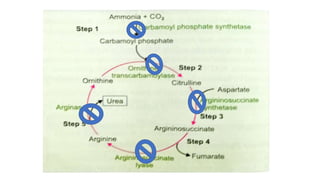
• Four of five metabolic diseases, results in accumulation of precursors
of urea principally ammonia and glutamine.
• Ammonia intoxification is most severe when the metabolic block
occurs at reactions 1 and 2 .
• #note
Hyperammonemia seen with arginase deficiency is less severe .
Carbomyl Phosphate Synthetase I deficiency
Hyperammonemia type I
Comparatively rare
Incidence is 1 in 100000
Severe Hyperammonemia; very high ammonia levels in blood.
Autosomal recessive
Mental retardation.
N- Acetylglutamate Synthetase deficiency
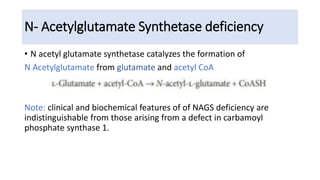
• N acetyl glutamate synthetase catalyzes the formation of
N Acetylglutamate from glutamate and acetyl CoA
Note: clinical and biochemical features of of NAGS deficiency are
indistinguishable from those arising from a defect in carbamoyl
phosphate synthase 1.
Ornithine transporter deficiency
Hyperornithinemia, hyper ammonemia and homocitrullinuria
HHH Syndrome
Mutation of ORNT1 gene – ornithine permease
Failure to import ornithine from cytoplasm to mitochondria
Decreased urea in blood
Autosomal recessive condition
Ornithine Transcarbomylase deficiency
Hyperammonemia type II
Most common and X linked trait.
High ammonia level in blood
Levels of glutamine are elevated in blood ,cerebrospinal fluid and urine.
Orotic aciduria – channeling of carbomyl phosphate into pyrimidine
synthesis.
Glutamate+NH3 glutamine synthetase. Glutamine
Arginosuccinate synthetase deficiency
Citrullinemia
Characterized by hyperammonemia ,citrullinuria and citrullinemia
High blood levels of ammonia and citrulline
1-2 g of citrulline are excreted daily.
Autosomal recessive
Incidence is 1 in 70000
Arginosuccinate lyase deficiency
Arginosuccinic aciduria
leads to arginosuccinic aciduria and therefore metabolic acidosis.
Hyperammonemia less severe.
Arginosuccinate is elevated in CSF and excreted in urine.
lncidence is 1:75000
Typical clinical feature : friable tufted hair ( trichorrhexis nodosa)
Arginase deficiency
Hyperargininemia
• Mild variety with accumulation and excretion of arginine
• Hyperargininemia and argininuria are seen
• Symptoms like other urea cycle disorders do not appear until age
2 to 4 years.
• Incidence is 1 in 100000
Signs and Symptoms
Early onset hyperammonemia(neonates)
• Normal appearance at birth
• Hypothermia
• Lethargy
• Irritability
• feeding disruption ( increases catabolism)
• Vomitting
• Seizures
• Hyperventillation; grunting respiration
Signs and Symptoms
Late onset hyperammonemia(later in life)
• Intermittent ataxia
• Intellectual impairment
• Gait abnormality
• Recurrent reye syndrome
• Tend to avoid protein in their food
• Epilepsy
Diagnosis
*Family history
*Physical examination: No findings
*Lab tests:
• Arterial blood gas analysis
• Serum aminoacid levels
• Urinary orotic acid levels
• Urinary ketone tests
• Plasma and urinary organic acid levels
• Enzyme assays
Diagnosis
*Molecular genetic testing
*Tandem Mass Spectrometry- even small amounts of metabolic
intermediates accumulated in the blood of newborn infants can be
detected
*Liver function tests
Management
• Restrict protein intake and supplement with Alpha ketoacids.
• Administration of compounds that bind covalently to non essential
amino acids producing nitrogen containing molecules that are
excreated in the urine
example :phenyl acetate can conjugate with glutamine and glycine
forming Phenylacetatylglutamine and hippurate
• Gene therapy
Summary
References
• D M Vasudevan
• Harper’s illustrated biochemistry
• Lippincott
• NCBI
Hyperammonemia

Hyperammonemia

  • 1.
  • 2.
    Contents • Introduction • Causes •Types • Diagnosis • Management • Summary
  • 3.
    Introduction • Increase ammoniain blood • Normal level of ammonia (10-40μmol/L)very low, compared to BUN. • Medical emergency-neurotoxic • Biochemical sign of failure of liver & defects in urea cycle enzymes. • Symptoms- tremors, slurring of speech, somnolence, vomiting, cerebral edema, blurring of vision. • Leads to loss of consciousness,coma and convulsions, and may be fatal
  • 4.
    Explanation for ammoniatoxicity • Withdrawal of Alpha ketoglutarate to form glutamate ( catalyzed by glutamate dehydrogenase) and then glutamine (catalyzed by glutamine synthetase) • Leads to lower concentrations of all citric acid cycle intermediates • Reduced generation of ATP • Ammonia also inhibits oxidative decarboxylation of Alpha ketoglutarate
  • 5.
    Causes • Enzyme defectsin urea cycle • Organic acidurias • Congenital lactic acidosis • Hepatic encephalopathy; liver failure • Cor pulmonale • Pulmonary emphysema • Renal failure
  • 6.
    Types 1. Acquired Hyperammonemia(Hepatic Coma) • Liver disease is the common cause in adults # Hyperammonemia – characteristic feature of liver failure. #The condition known as – portal systemic encephalopathy Cirrhosis of Liver – collateral circulation – Portal blood shunted into Systemic circulation Ammonia Urea • It may also be due to viral hepatitis or hepatotoxins(alcohol)
  • 7.
    Types 2.Congenital hyperammonemia Genetic deficienciesof enzymes of urea cycle – overall incidence- 1:25,000 live births • X linked OTC deficiency – most common • All other urea cycle disorders - autosomal recessive Urea cycle disorders are characterized by hyperammonemia, encephalopathy and respiratory alkalosis.
  • 9.
    • Four offive metabolic diseases, results in accumulation of precursors of urea principally ammonia and glutamine. • Ammonia intoxification is most severe when the metabolic block occurs at reactions 1 and 2 . • #note Hyperammonemia seen with arginase deficiency is less severe .
  • 10.
    Carbomyl Phosphate SynthetaseI deficiency Hyperammonemia type I Comparatively rare Incidence is 1 in 100000 Severe Hyperammonemia; very high ammonia levels in blood. Autosomal recessive Mental retardation.
  • 11.
    N- Acetylglutamate Synthetasedeficiency • N acetyl glutamate synthetase catalyzes the formation of N Acetylglutamate from glutamate and acetyl CoA Note: clinical and biochemical features of of NAGS deficiency are indistinguishable from those arising from a defect in carbamoyl phosphate synthase 1.
  • 12.
    Ornithine transporter deficiency Hyperornithinemia,hyper ammonemia and homocitrullinuria HHH Syndrome Mutation of ORNT1 gene – ornithine permease Failure to import ornithine from cytoplasm to mitochondria Decreased urea in blood Autosomal recessive condition
  • 13.
    Ornithine Transcarbomylase deficiency Hyperammonemiatype II Most common and X linked trait. High ammonia level in blood Levels of glutamine are elevated in blood ,cerebrospinal fluid and urine. Orotic aciduria – channeling of carbomyl phosphate into pyrimidine synthesis. Glutamate+NH3 glutamine synthetase. Glutamine
  • 14.
    Arginosuccinate synthetase deficiency Citrullinemia Characterizedby hyperammonemia ,citrullinuria and citrullinemia High blood levels of ammonia and citrulline 1-2 g of citrulline are excreted daily. Autosomal recessive Incidence is 1 in 70000
  • 15.
    Arginosuccinate lyase deficiency Arginosuccinicaciduria leads to arginosuccinic aciduria and therefore metabolic acidosis. Hyperammonemia less severe. Arginosuccinate is elevated in CSF and excreted in urine. lncidence is 1:75000 Typical clinical feature : friable tufted hair ( trichorrhexis nodosa)
  • 16.
    Arginase deficiency Hyperargininemia • Mildvariety with accumulation and excretion of arginine • Hyperargininemia and argininuria are seen • Symptoms like other urea cycle disorders do not appear until age 2 to 4 years. • Incidence is 1 in 100000
  • 17.
    Signs and Symptoms Earlyonset hyperammonemia(neonates) • Normal appearance at birth • Hypothermia • Lethargy • Irritability • feeding disruption ( increases catabolism) • Vomitting • Seizures • Hyperventillation; grunting respiration
  • 18.
    Signs and Symptoms Lateonset hyperammonemia(later in life) • Intermittent ataxia • Intellectual impairment • Gait abnormality • Recurrent reye syndrome • Tend to avoid protein in their food • Epilepsy
  • 19.
    Diagnosis *Family history *Physical examination:No findings *Lab tests: • Arterial blood gas analysis • Serum aminoacid levels • Urinary orotic acid levels • Urinary ketone tests • Plasma and urinary organic acid levels • Enzyme assays
  • 20.
    Diagnosis *Molecular genetic testing *TandemMass Spectrometry- even small amounts of metabolic intermediates accumulated in the blood of newborn infants can be detected *Liver function tests
  • 21.
    Management • Restrict proteinintake and supplement with Alpha ketoacids. • Administration of compounds that bind covalently to non essential amino acids producing nitrogen containing molecules that are excreated in the urine example :phenyl acetate can conjugate with glutamine and glycine forming Phenylacetatylglutamine and hippurate • Gene therapy
  • 23.
  • 24.
    References • D MVasudevan • Harper’s illustrated biochemistry • Lippincott • NCBI