
Health,Hygiene And Exercise
Presentation by :
Aman Kumar
Pondicherry University.
Objective
define health and differentiate between personal and community health.
explain the role of proper nutrition, healthy habits and physical exercise
in maintaining good health;
define hygiene and suggest ways to show that health and hygiene are
interrelated.
•
define disease and classify diseases into communicable and non-
communicable types.
HEALTH AND HYGIENE
Health is a state of complete physical, mental and
social well-being.
We take health as being free from diseases but it is
much more than
Good health involves proper functioning of all body
organs.
Proper nutrition, physical exercise, rest and sleep,
cleanliness, and medical care are essential parts of
maintaining good health.
 Sound mind in a sound body.
 sound mind and healthy body
bring many happy events to your
family.
PERSONAL HEALTH
(a) Balanced diet: includes the correct proportion of
carbohydrates, proteins, vitamins, minerals and
roughage in your diet.
(b) Personal hygiene:
 Regular toilet habits:
 Washing hands before eating:
 Bathing regularly and wearing clean
clothes:
 Cleaning the teeth:
 Washing hair, cleaning eyes, ears and nails:
Cont..
(c) Domestic hygiene :
(d) Clean food and water
(e) Cooking with care:
(f) Abstaining from habit-forming substances:
(g) Exercise:
(h) Regular sleep and relaxation:
COMMUNITY HEALTH
This may not be an individual problem, but the
problem of community and requires immediate
attention.
awareness is regularly created through nationwide
campaigns against the spread of diseases such as
malaria, dengue,AIDS, polio,leprosy,and Hepatitis
Government hospitals, and dispensaries
2. The National Malaria Eradication (removal) Programme
3. The Tuberculosis (T. B.) Eradication Programme
4. National Immunization Programme
5. National Pulse Polio Programme
Some of the important tasks,
which the community health
centres undertake are:
To maintain proper cleanliness by
disposing off the sewage
from colonies.
To provide safe and germ free drinking
water.
ENVIRONMENTAL HYGIENE
 Keeping the house clean:
 Throwing garbage in dustbins:
 Keeping dustbins covered:
DISEASE
 A disease is defined as any deviation from health or
any state when body is not at ease.
 Disease may be the sickness of the body or the
mind.
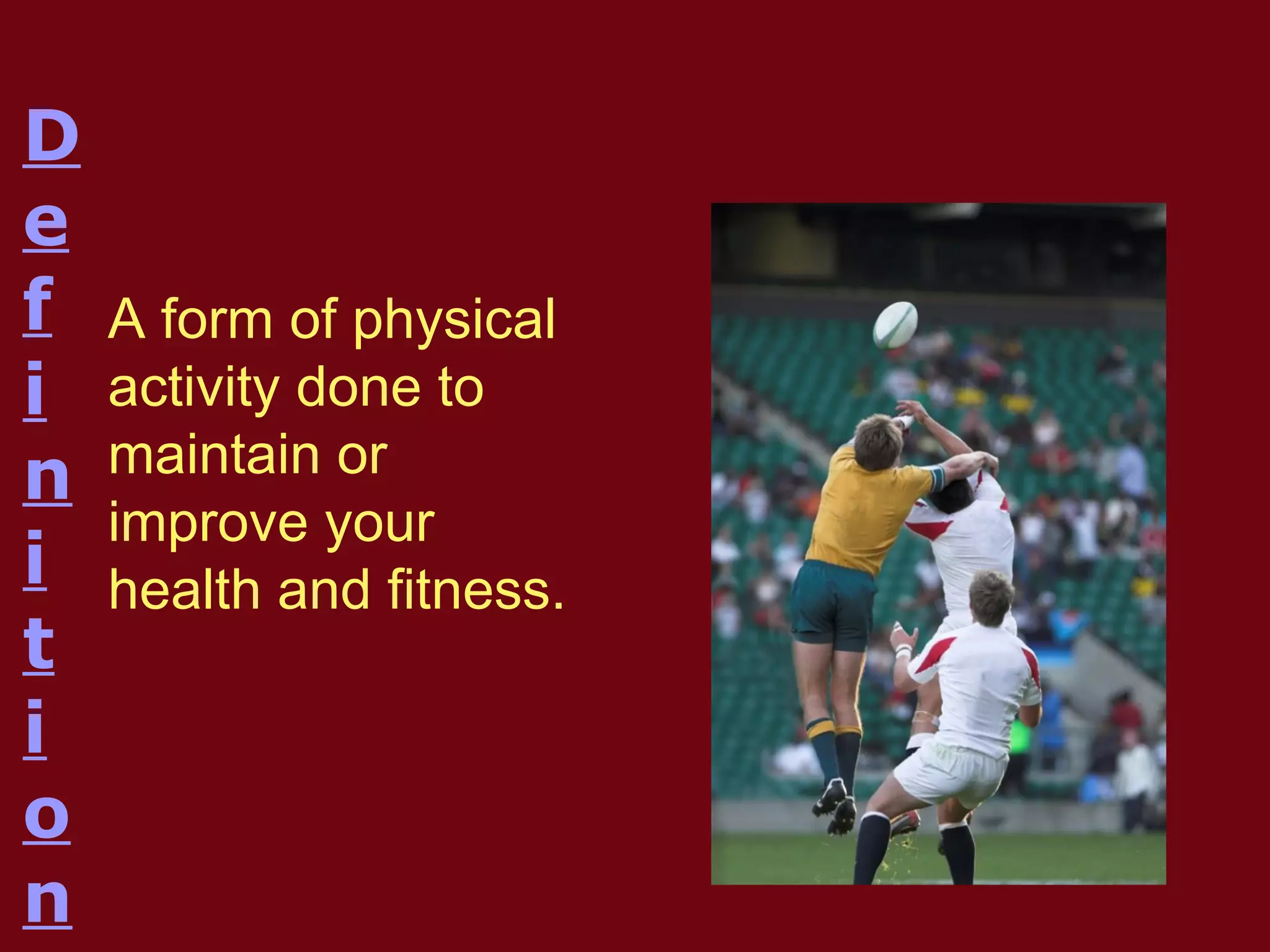
A form of physical
activity done to
maintain or
improve your
health and fitness.
D
e
f
i
n
i
t
i
o
n
3-D Benefits of
Exercise
Mental is to do with how well
you concentrate, think things
through and approach life.
Social is to do with how well
you interact, cooperate and deal
with other people.
Fitness is to do with the
The impact of physical activity on health
 reducing blood pressure;
 improving blood cholesterol
levels;
An example: Walking
Walking is one of the best forms of physical activity – it is
low impact (so does not put stress
on the joints), weight-bearing (so it can improve b
one density) and a 60kg individual walking
briskly will burn about 300kcal an hour, so it can
assist with weight loss. Additional benefits
include stress reduction and improved sleep
Add the habit of Walking
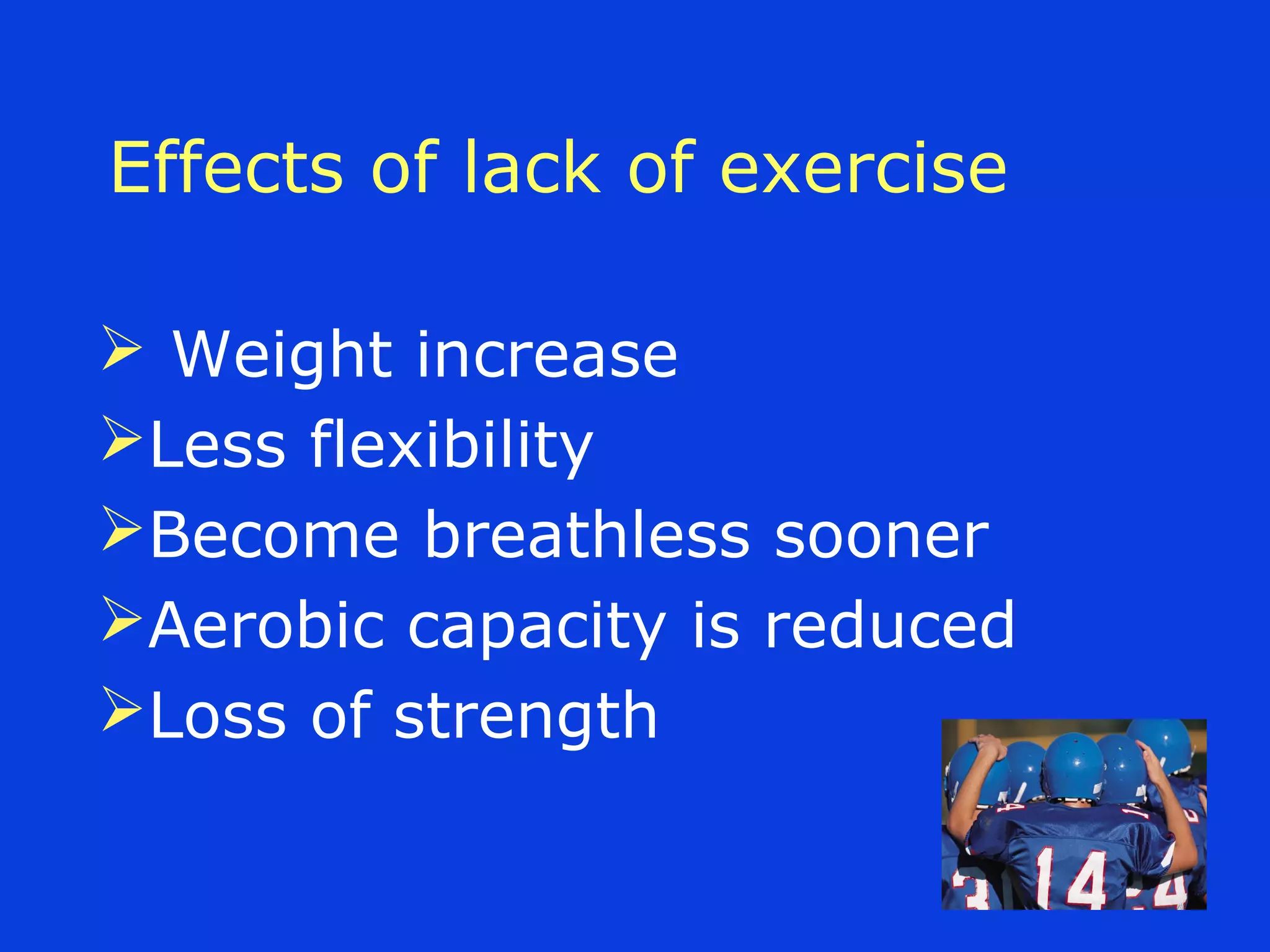
Effects of lack of exercise
 Weight increase
Less flexibility
Become breathless sooner
Aerobic capacity is reduced
Loss of strength
THANK YOU

Hygiene health and exercise

  • 1.
    Health,Hygiene And Exercise Presentationby : Aman Kumar Pondicherry University.
  • 2.
    Objective define health anddifferentiate between personal and community health. explain the role of proper nutrition, healthy habits and physical exercise in maintaining good health; define hygiene and suggest ways to show that health and hygiene are interrelated. • define disease and classify diseases into communicable and non- communicable types.
  • 3.
    HEALTH AND HYGIENE Healthis a state of complete physical, mental and social well-being. We take health as being free from diseases but it is much more than Good health involves proper functioning of all body organs. Proper nutrition, physical exercise, rest and sleep, cleanliness, and medical care are essential parts of maintaining good health.
  • 4.
     Sound mindin a sound body.  sound mind and healthy body bring many happy events to your family.
  • 5.
    PERSONAL HEALTH (a) Balanceddiet: includes the correct proportion of carbohydrates, proteins, vitamins, minerals and roughage in your diet. (b) Personal hygiene:  Regular toilet habits:  Washing hands before eating:  Bathing regularly and wearing clean clothes:  Cleaning the teeth:  Washing hair, cleaning eyes, ears and nails:
  • 6.
    Cont.. (c) Domestic hygiene: (d) Clean food and water (e) Cooking with care: (f) Abstaining from habit-forming substances: (g) Exercise: (h) Regular sleep and relaxation:
  • 7.
    COMMUNITY HEALTH This maynot be an individual problem, but the problem of community and requires immediate attention. awareness is regularly created through nationwide campaigns against the spread of diseases such as malaria, dengue,AIDS, polio,leprosy,and Hepatitis Government hospitals, and dispensaries 2. The National Malaria Eradication (removal) Programme 3. The Tuberculosis (T. B.) Eradication Programme 4. National Immunization Programme 5. National Pulse Polio Programme
  • 8.
    Some of theimportant tasks, which the community health centres undertake are: To maintain proper cleanliness by disposing off the sewage from colonies. To provide safe and germ free drinking water.
  • 9.
    ENVIRONMENTAL HYGIENE  Keepingthe house clean:  Throwing garbage in dustbins:  Keeping dustbins covered:
  • 10.
    DISEASE  A diseaseis defined as any deviation from health or any state when body is not at ease.  Disease may be the sickness of the body or the mind.
  • 11.
    A form ofphysical activity done to maintain or improve your health and fitness. D e f i n i t i o n
  • 12.
    3-D Benefits of Exercise Mentalis to do with how well you concentrate, think things through and approach life. Social is to do with how well you interact, cooperate and deal with other people. Fitness is to do with the
  • 13.
    The impact ofphysical activity on health  reducing blood pressure;  improving blood cholesterol levels;
  • 14.
    An example: Walking Walkingis one of the best forms of physical activity – it is low impact (so does not put stress on the joints), weight-bearing (so it can improve b one density) and a 60kg individual walking briskly will burn about 300kcal an hour, so it can assist with weight loss. Additional benefits include stress reduction and improved sleep Add the habit of Walking
  • 15.
    Effects of lackof exercise  Weight increase Less flexibility Become breathless sooner Aerobic capacity is reduced Loss of strength
  • 16.