“Health is a state of complete physical,
mental, and social well-being and not
merely the absence of disease or
infirmity.”
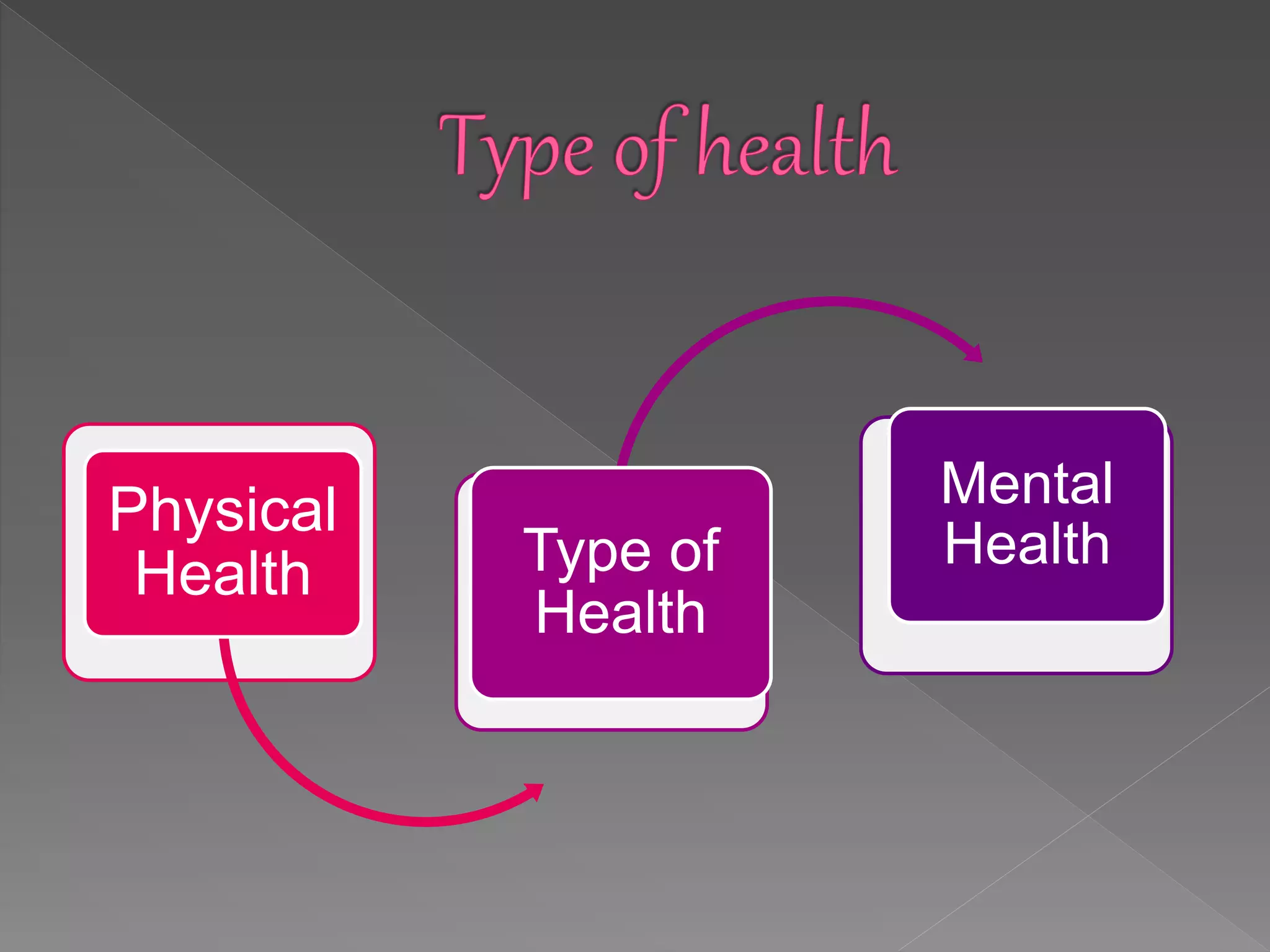
Physical
Health Type of
Health
Mental
Health
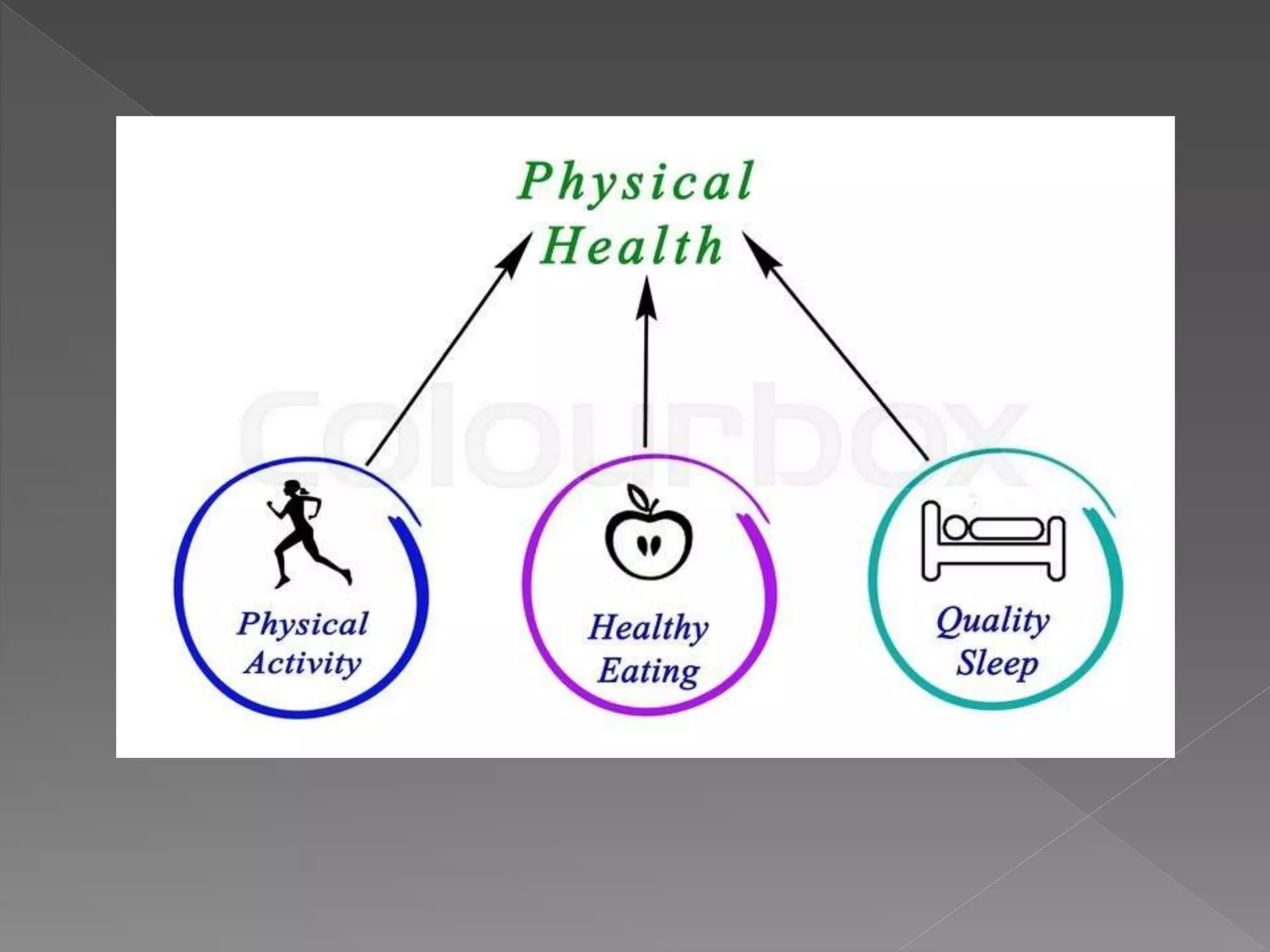
A person who has good physical health is
likely to have bodily functions and
processes working at their peak.
Active Lifestyle - Being active
throughout the day, not just when
you’re working out.
Healthy Diet - Eating and drinking
a balanced diet to fuel your body.
Hygiene and Disease
Prevention - Keeping your body
clean & free of disease by doing
things like brushing your teeth,
sleeping 8+ hours, and drinking lots
of water.
Physical Fitness - Intentionally
strengthening your physical body by
working out.
Mental health refers to a person’s emotional, social, and
psychological well-being. Mental health is as important as
physical health as part of a full, active lifestyle.
Hygiene is the practice of
keeping yourself and your
surroundings clean, especially
in order to prevent illness or the
spread of diseases.
Personal
Domestic
Public
Personal hygiene - cleaning
your body every day. washing your
hands with soap after going to the
toilet. brushing your teeth twice a day.
covering your mouth and nose with a
tissue (or your sleeve) when sneezing
or coughing.
Domestic Hygiene - which involves
cleanliness, the sanitary
preparation of food, and
ventilation, generally means
cleanliness in homes. Domestic
hygiene practices include all the
work done to keep people’s
clothes, beddings, and houses
clean.
Public hygiene is the science and
practices to make our surroundings clean
from the spread of communicable
diseases. It is equally important for personal
hygiene to keep the environment clean and
free of germs.
Health & Hygiene.pptx

Health & Hygiene.pptx

  • 2.
    “Health is astate of complete physical, mental, and social well-being and not merely the absence of disease or infirmity.”
  • 3.
  • 4.
    A person whohas good physical health is likely to have bodily functions and processes working at their peak.
  • 6.
    Active Lifestyle -Being active throughout the day, not just when you’re working out. Healthy Diet - Eating and drinking a balanced diet to fuel your body.
  • 7.
    Hygiene and Disease Prevention- Keeping your body clean & free of disease by doing things like brushing your teeth, sleeping 8+ hours, and drinking lots of water. Physical Fitness - Intentionally strengthening your physical body by working out.
  • 9.
    Mental health refersto a person’s emotional, social, and psychological well-being. Mental health is as important as physical health as part of a full, active lifestyle.
  • 12.
    Hygiene is thepractice of keeping yourself and your surroundings clean, especially in order to prevent illness or the spread of diseases.
  • 13.
  • 14.
    Personal hygiene -cleaning your body every day. washing your hands with soap after going to the toilet. brushing your teeth twice a day. covering your mouth and nose with a tissue (or your sleeve) when sneezing or coughing.
  • 16.
    Domestic Hygiene -which involves cleanliness, the sanitary preparation of food, and ventilation, generally means cleanliness in homes. Domestic hygiene practices include all the work done to keep people’s clothes, beddings, and houses clean.
  • 17.
    Public hygiene isthe science and practices to make our surroundings clean from the spread of communicable diseases. It is equally important for personal hygiene to keep the environment clean and free of germs.