HEALTH
AWARENESS
PROGRAM
MAINTAINING
PHYSICAL AND MENTAL HEALTH
By -SHRIJITA DUTTA.
CONTENT
• PRIMARY HEALTH CARE
• INTRODUCTION TO PANDEMIC COVID-19
• HEALTH AT HOME
• WHAT IS PHYSICAL HEALTH ?
• HOW TO MAINTAIN IT ?
• WHAT IS MENTAL HEALTH?
• HOW TO MAINTAIN IT ?
WHAT IS HEALTH ?
Health is a state of complete
physical, mental, and social
well-being and not merely the
absence of disease or
infirmity.”
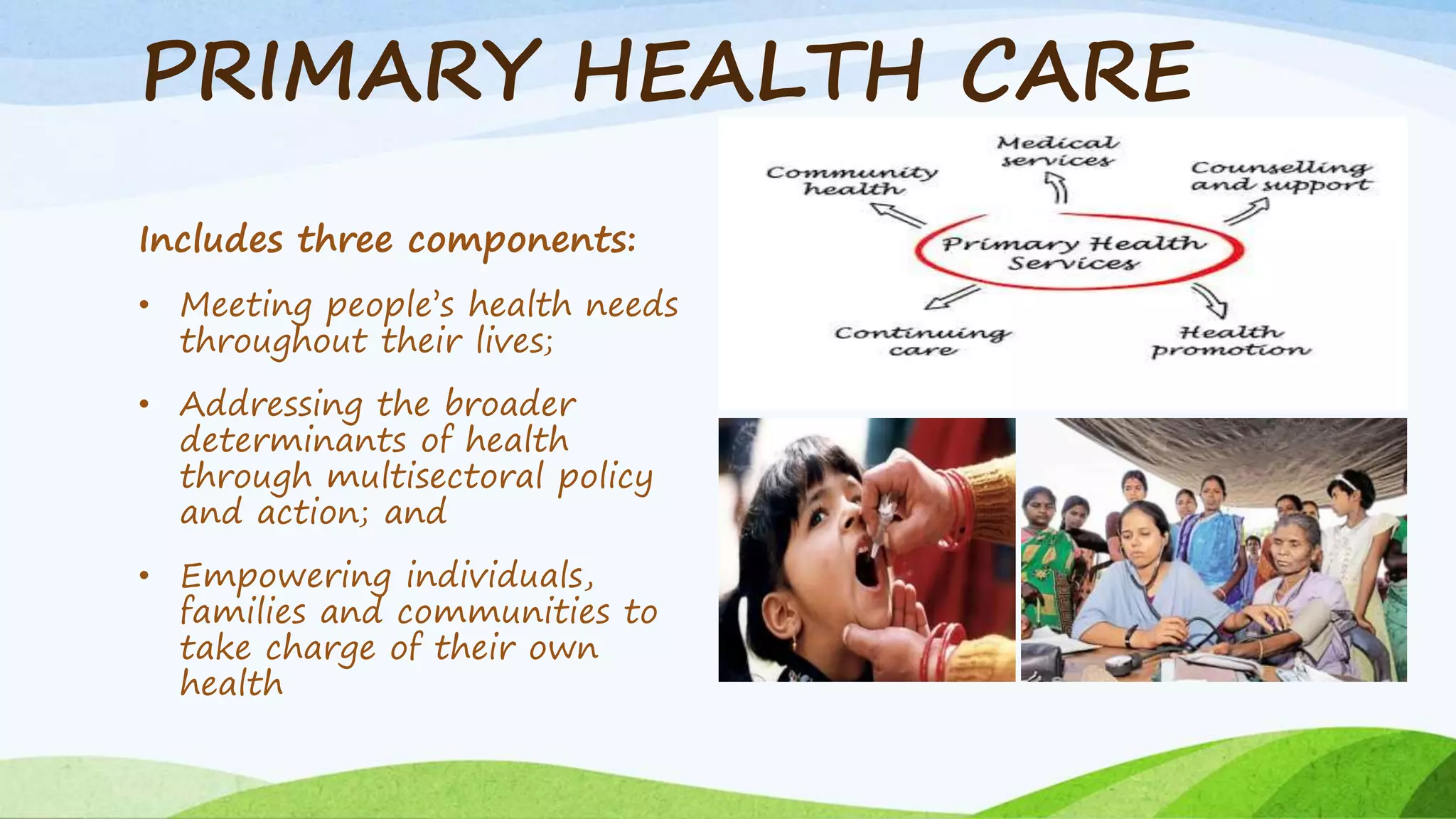
PRIMARY HEALTH CARE
Includes three components:
• Meeting people’s health needs
throughout their lives;
• Addressing the broader
determinants of health
through multisectoral policy
and action; and
• Empowering individuals,
families and communities to
take charge of their own
health
WHAT DO YOU
SEE?
WHAT IS PANDEMIC ??
A pandemic is a disease outbreak that
spreads across countries or continents.
It affects more people and takes more
lives than an epidemic.
The World Health Organization (WHO)
declared COVID-19 to be a pandemic
when it became clear that the illness was
severe and that it was spreading quickly
over a wide area.
Coronaviruses are a large family
of viruses which may cause
illness in animals or humans
.The most recently discovered
coronavirus causes coronavirus
disease COVID-19.
The full form is the
corona virus disease of
2019 given by WHO
(world health
organization) on 11 feb
2020
COVID-19 is the names of
the disease that is caused by
the SARS-COV2 virus. As
mentioned above COVID-19
is the acronym.
IS IT ?!! WHAT DO
YOU THINK?
HOW DOES IT SPREADS
This is why it is important to stay at least (1 meter) away from others. These droplets
can land on objects and surfaces around the person such as tables, doorknobs and
handrails. People can become infected by touching these objects or surfaces, then touching
their eyes, nose or mouth.
PRECAUTIONS:
The most effective ways to protect
yourself and others against COVID-
19 are to:
• Clean your hands frequently
and thoroughly
• Avoid touching your eyes,
mouth and nose
• Cover your cough with the
bend of elbow or tissue. If a
tissue is used, discard it
immediately and wash your
hands.
• Maintain a distance of at least
1 metre from others.
What Is Social Distancing?
Not going out unless it is necessary. Necessary reasons to go out
include buying food, getting medical care, or going for a walk or a
bike ride alone or with members of the household
MAINTAINING
THE PHYSICAL
HEALTH
Regular physical activity can
help give our days a routine
and be a way to stay in
contact with family and
friends.
WHO recommendations
The amount of physical activity
people of all ages.
Infants under 1 year of age
• this includes at least 30 minutes in
prone position (tummy time), as
floor-based play
Children under 5 years of age
• spend at least 180 minutes a
day in a variety of types of
physical activities .
• Children and adolescents aged
5-17 years
• All children and adolescents should
do at least 60 minutes a day of
moderate to vigorous-intensity
physical activity
• Adults aged over 18 years
At least 150 minutes of physical activity
throughout the week
At least 75 minutes of vigorous-intensity physical
activity throughout the week.
Some who recommended posters
Tips for maintaining a healthy diet:
Eating a healthy diet is very
important during the COVID-19
pandemic. What we eat and drink can
affect our body’s ability to prevent,
fight and recover from infections.
1. Eat a variety of food, including
fruits and vegetables.
2. Cut back on salt
• Limit salt intake to 5 grams
(equivalent to a teaspoon) a day.
3. Eat moderate amounts of fats and
oil.
• Replace butter, ghee and lard with
healthier fats like olive, soy, sunflower
or corn oil when cooking.
• Try steaming or boiling instead of
frying food when cooking
4. Limit sugar intake.
• Limit intake of sweets and sugary
drinks such as fizzy drinks, fruit juices
and juice drinks, liquid and powder
concentrates, flavoured water, energy
and sports drinks, ready-to-drink tea
and coffee and flavoured milk drinks.
5. Stay hydrated: Drink enough water.
Drinking water instead of sugar-
sweetened beverages is a simple way to
limit your intake of sugar and excess
calories.
6. Avoid hazardous and harmful
alcohol use.
Alcohol is not a part of a healthy diet.
Drinking alcohol does not protect
against COVID-19 and can be
dangerous.
7. Breastfeed babies and young
children.
Babies should be breastfed exclusively
during the first 6 months of life, as
breast milk provides all the nutrients
and fluids they need.
WHO’s Five keys to safer food
• Keep clean
• Separate raw and cooked
• Cook thoroughly
• Keep food at safe
temperatures
• Use safe water and raw
materials
SOME QUARIES POSTERS GIVEN BELOW
MAINTAINING THE MENTAL HEALTH.
There are lots of things that we can
do to look after our own mental
health and to help others who may
need some extra support and care.
Here are tips and advice that is useful.
• Keep informed.
• Have a routine.
Keep up with daily routines as far as possible,
or make new ones.
Get up and go to bed at similar times every day.
Keep up with personal hygiene.
Eat healthy meals at regular times.
Exercise regularly.
Allocate time for working and time for resting.
Make time for doing things you enjoy.
• Minimize newsfeeds.
• Social contact is important.
Try to reduce how much you
watch, read or listen to news
that makes you feel anxious or
distressed. Seek the latest
information at specific times of
the day, once or twice a day if
needed.
If your movements are restricted,
keep in regular contact with
people close to you by telephone
and online channels.
• Alcohol and drug use.
There is no evidence of any
protective effect of
drinking alcohol for viral or
other infections. In fact,
the opposite is true as the
harmful use of alcohol is
associated with increased
risk of infections and worse
treatment outcomes
Be aware of how much time
you spend in front of a screen
every day. Make sure that you
take regular breaks from on-
screen activities
While video games can be a way to
relax, it can be tempting to spend
much more time on them than usual
when at home for long periods. Be
sure to keep the right balance with
off-line activities in your daily routine.
Use your social media
accounts to promote positive
and hopeful stories. Correct
misinformation wherever you
see it.
Video games
Screen time.
Social
media.
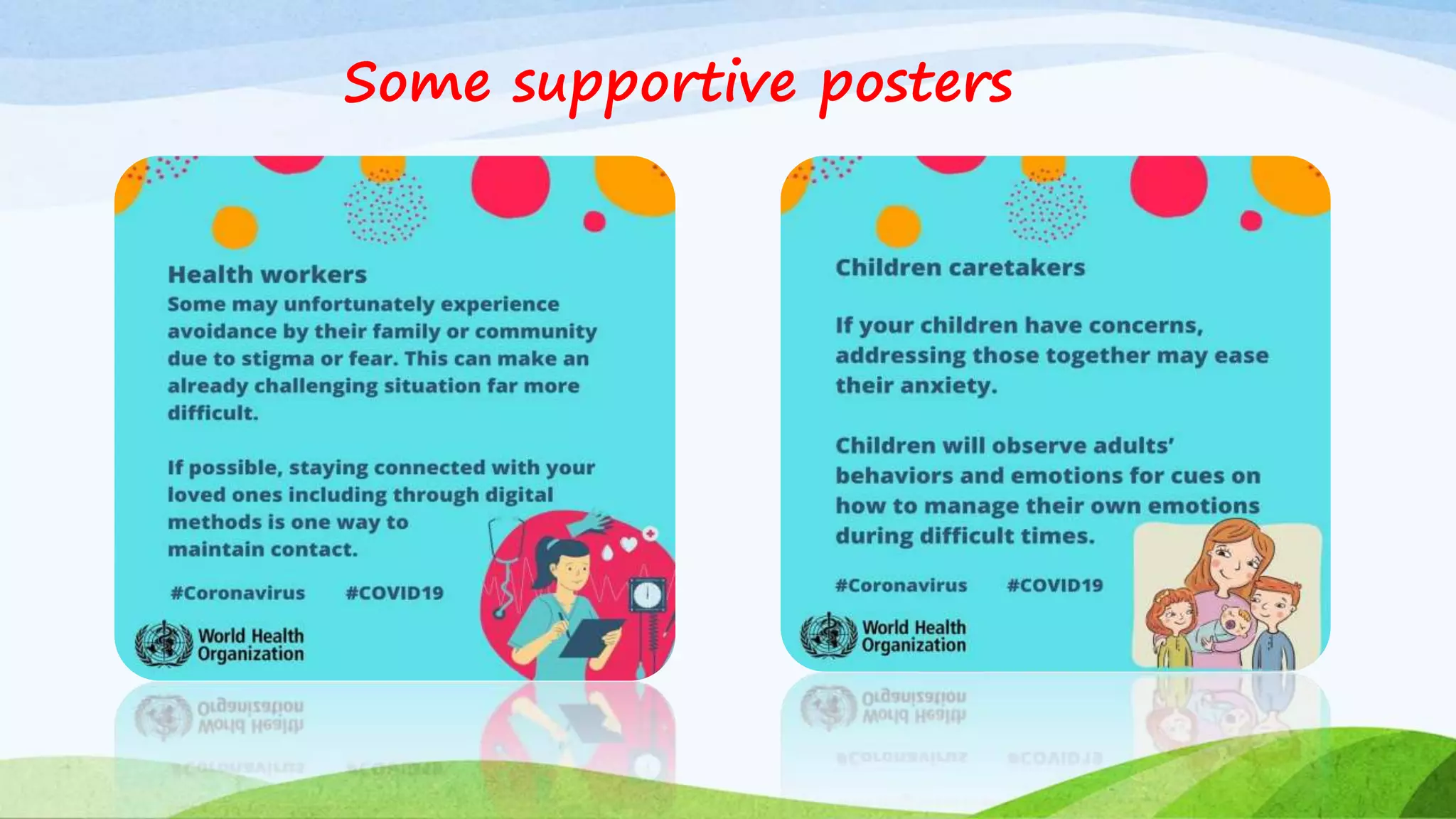
Some supportive posters
FUTURE DIRECTION AND TREATMENTS.
Looking into the near future, containing the
COVID-19 epidemic is likely to take several
months; public health interventions will be
directed towards social distancing and
improving hygienic practices. These
interventions will be effective in delaying the
onset of wide community transmission,
reducing peak incidence and its impact on
public services.
Health awareness program

Health awareness program

  • 1.
  • 2.
    CONTENT • PRIMARY HEALTHCARE • INTRODUCTION TO PANDEMIC COVID-19 • HEALTH AT HOME • WHAT IS PHYSICAL HEALTH ? • HOW TO MAINTAIN IT ? • WHAT IS MENTAL HEALTH? • HOW TO MAINTAIN IT ?
  • 3.
    WHAT IS HEALTH? Health is a state of complete physical, mental, and social well-being and not merely the absence of disease or infirmity.”
  • 4.
    PRIMARY HEALTH CARE Includesthree components: • Meeting people’s health needs throughout their lives; • Addressing the broader determinants of health through multisectoral policy and action; and • Empowering individuals, families and communities to take charge of their own health
  • 5.
  • 6.
    WHAT IS PANDEMIC?? A pandemic is a disease outbreak that spreads across countries or continents. It affects more people and takes more lives than an epidemic. The World Health Organization (WHO) declared COVID-19 to be a pandemic when it became clear that the illness was severe and that it was spreading quickly over a wide area.
  • 7.
    Coronaviruses are alarge family of viruses which may cause illness in animals or humans .The most recently discovered coronavirus causes coronavirus disease COVID-19. The full form is the corona virus disease of 2019 given by WHO (world health organization) on 11 feb 2020 COVID-19 is the names of the disease that is caused by the SARS-COV2 virus. As mentioned above COVID-19 is the acronym.
  • 8.
    IS IT ?!!WHAT DO YOU THINK?
  • 9.
    HOW DOES ITSPREADS This is why it is important to stay at least (1 meter) away from others. These droplets can land on objects and surfaces around the person such as tables, doorknobs and handrails. People can become infected by touching these objects or surfaces, then touching their eyes, nose or mouth.
  • 10.
    PRECAUTIONS: The most effectiveways to protect yourself and others against COVID- 19 are to: • Clean your hands frequently and thoroughly • Avoid touching your eyes, mouth and nose • Cover your cough with the bend of elbow or tissue. If a tissue is used, discard it immediately and wash your hands. • Maintain a distance of at least 1 metre from others.
  • 11.
    What Is SocialDistancing? Not going out unless it is necessary. Necessary reasons to go out include buying food, getting medical care, or going for a walk or a bike ride alone or with members of the household
  • 13.
    MAINTAINING THE PHYSICAL HEALTH Regular physicalactivity can help give our days a routine and be a way to stay in contact with family and friends.
  • 14.
    WHO recommendations The amountof physical activity people of all ages. Infants under 1 year of age • this includes at least 30 minutes in prone position (tummy time), as floor-based play Children under 5 years of age • spend at least 180 minutes a day in a variety of types of physical activities .
  • 15.
    • Children andadolescents aged 5-17 years • All children and adolescents should do at least 60 minutes a day of moderate to vigorous-intensity physical activity • Adults aged over 18 years At least 150 minutes of physical activity throughout the week At least 75 minutes of vigorous-intensity physical activity throughout the week.
  • 16.
  • 17.
    Tips for maintaininga healthy diet: Eating a healthy diet is very important during the COVID-19 pandemic. What we eat and drink can affect our body’s ability to prevent, fight and recover from infections. 1. Eat a variety of food, including fruits and vegetables.
  • 18.
    2. Cut backon salt • Limit salt intake to 5 grams (equivalent to a teaspoon) a day. 3. Eat moderate amounts of fats and oil. • Replace butter, ghee and lard with healthier fats like olive, soy, sunflower or corn oil when cooking. • Try steaming or boiling instead of frying food when cooking
  • 19.
    4. Limit sugarintake. • Limit intake of sweets and sugary drinks such as fizzy drinks, fruit juices and juice drinks, liquid and powder concentrates, flavoured water, energy and sports drinks, ready-to-drink tea and coffee and flavoured milk drinks. 5. Stay hydrated: Drink enough water. Drinking water instead of sugar- sweetened beverages is a simple way to limit your intake of sugar and excess calories.
  • 20.
    6. Avoid hazardousand harmful alcohol use. Alcohol is not a part of a healthy diet. Drinking alcohol does not protect against COVID-19 and can be dangerous. 7. Breastfeed babies and young children. Babies should be breastfed exclusively during the first 6 months of life, as breast milk provides all the nutrients and fluids they need.
  • 21.
    WHO’s Five keysto safer food • Keep clean • Separate raw and cooked • Cook thoroughly • Keep food at safe temperatures • Use safe water and raw materials
  • 22.
  • 23.
    MAINTAINING THE MENTALHEALTH. There are lots of things that we can do to look after our own mental health and to help others who may need some extra support and care. Here are tips and advice that is useful. • Keep informed. • Have a routine. Keep up with daily routines as far as possible, or make new ones. Get up and go to bed at similar times every day. Keep up with personal hygiene. Eat healthy meals at regular times. Exercise regularly. Allocate time for working and time for resting. Make time for doing things you enjoy.
  • 24.
    • Minimize newsfeeds. •Social contact is important. Try to reduce how much you watch, read or listen to news that makes you feel anxious or distressed. Seek the latest information at specific times of the day, once or twice a day if needed. If your movements are restricted, keep in regular contact with people close to you by telephone and online channels. • Alcohol and drug use. There is no evidence of any protective effect of drinking alcohol for viral or other infections. In fact, the opposite is true as the harmful use of alcohol is associated with increased risk of infections and worse treatment outcomes
  • 25.
    Be aware ofhow much time you spend in front of a screen every day. Make sure that you take regular breaks from on- screen activities While video games can be a way to relax, it can be tempting to spend much more time on them than usual when at home for long periods. Be sure to keep the right balance with off-line activities in your daily routine. Use your social media accounts to promote positive and hopeful stories. Correct misinformation wherever you see it. Video games Screen time. Social media.
  • 26.
  • 27.
    FUTURE DIRECTION ANDTREATMENTS. Looking into the near future, containing the COVID-19 epidemic is likely to take several months; public health interventions will be directed towards social distancing and improving hygienic practices. These interventions will be effective in delaying the onset of wide community transmission, reducing peak incidence and its impact on public services.