Physical properties of hydrogen
1. Colorless odorless gas
2. Neutral to litmus
3. Less dense than air (so collected by upward delivery)
4. Insoluble in water (can be collected over water)
5. Highly flammable
∙ Collection of hydrogen
1. Upward delivery ( hydrogen, 0.089 g/L, is less dense than air,
1.28 g/L)
2. Over water (hydrogen is insoluble in water)
3. In a gas syringe.
ÂŹ A sample of hydrogen can be dried using a suitable drying agent:
1. Anhydrous calcium chloride (CaCl2)
2. Concentrated sulphuric acid (H2SO4)
∙ Test for hydrogen gas
Hydrogen gas burns with a squeaky pop sound using a lighted splint.
Hydrogen gas burns explosively with oxygen in the air to form water.
Laboratory preparation of hydrogen
1. Reaction between metal and dilute acid
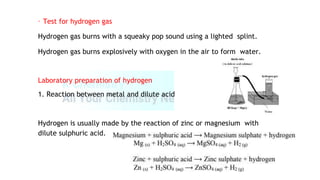
Hydrogen is usually made by the reaction of zinc or magnesium with
dilute sulphuric acid.
Notes
1.Potassium, sodium, lithium and calcium all react violently with dilute
sulfuric acid and dilute hydrochloric acid. It is dangerous to put these
metals into an acid.
2.Metals below hydrogen in the reactivity series (copper, silver, gold and
platinum) will not react with dilute acid.
Industrial preparation of hydrogen
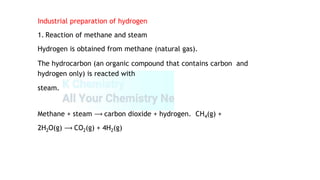
1. Reaction of methane and steam
Hydrogen is obtained from methane (natural gas).
The hydrocarbon (an organic compound that contains carbon and
hydrogen only) is reacted with
steam.
Methane + steam ⟶ carbon dioxide + hydrogen. CH4(g) +
2H2O(g) ⟶ CO2(g) + 4H2(g)
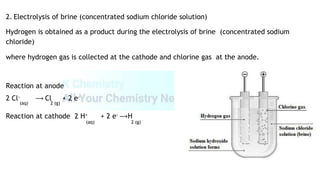
2. Electrolysis of brine (concentrated sodium chloride solution)
Hydrogen is obtained as a product during the electrolysis of brine (concentrated sodium
chloride)
where hydrogen gas is collected at the cathode and chlorine gas at the anode.
Reaction at anode
2 Cl- ⟶ Cl + 2 e-
(aq) 2 (g)
Reaction at cathode 2 H+ + 2 e- ⟶H
(aq) 2 (g)
3.Electrolysis of acidified water
If a sample of water (with few drops of an acid) is electrolyzed,
hydrogen gas is produced at the cathode and oxygen gas at anode.
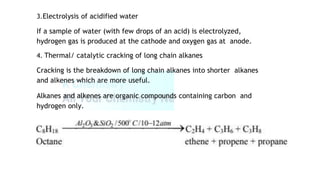
4. Thermal/ catalytic cracking of long chain alkanes
Cracking is the breakdown of long chain alkanes into shorter alkanes
and alkenes which are more useful.
Alkanes and alkenes are organic compounds containing carbon and
hydrogen only.
Uses of hydrogen
1. In synthesis of ammonia (NH3).
2. In synthesis of hydrochloric acid (HCl).
3. In the hardening of unsaturated oils to make margarine.
4. In filling balloons.
5. As a rocket fuel.
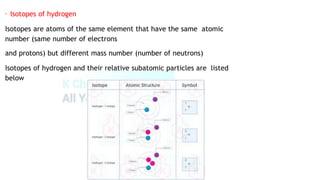
∙ Isotopes of hydrogen
Isotopes are atoms of the same element that have the same atomic
number (same number of electrons
and protons) but different mass number (number of neutrons)
Isotopes of hydrogen and their relative subatomic particles are listed
below
Hydrogen as a Fuel
Hydrogen can be used directly as a fuel for cars or used in a fuel cell to
produce electricity.
Hydrogen reacts with oxygen to produce water plus energy. hydrogen
+ oxygen ⟶ water + energy
2H2(g) + O2(g) ⟶ 2H2O(l)
The energy released by the reaction can be used to run a car engine
which is similar to (but not the same as) car engines which burn
petrol.
ÂŹ Advantages of using Hydrogen as a Fuel
1.Hydrogen can be made from the electrolysis of water. If the electricity used
during electrolysis comes from a renewable resource (solar power for example)
then the hydrogen fuel produced is also renewable.
2.Hydrogen used as a fuel does not produce pollution or contribute to global
warming because the only product of combustion is water.
ÂŹ Disadvantages of using Hydrogen as a Fuel
1.Hydrogen does not contain a lot of energy compared to petrol per gram. A larger
amount of hydrogen is needed to run a similar car.
2. Hydrogen is explosive and being a gas is difficult to store.
3.If the hydrogen does not come from a renewable resource but is made from
methane, then the hydrogen fuel produced is also not renewable.

Hydrogen gas

  • 1.
    Physical properties ofhydrogen 1. Colorless odorless gas 2. Neutral to litmus 3. Less dense than air (so collected by upward delivery) 4. Insoluble in water (can be collected over water) 5. Highly flammable
  • 2.
    ∙ Collection ofhydrogen 1. Upward delivery ( hydrogen, 0.089 g/L, is less dense than air, 1.28 g/L) 2. Over water (hydrogen is insoluble in water) 3. In a gas syringe. ¬ A sample of hydrogen can be dried using a suitable drying agent: 1. Anhydrous calcium chloride (CaCl2) 2. Concentrated sulphuric acid (H2SO4)
  • 3.
    ∙ Test forhydrogen gas Hydrogen gas burns with a squeaky pop sound using a lighted splint. Hydrogen gas burns explosively with oxygen in the air to form water. Laboratory preparation of hydrogen 1. Reaction between metal and dilute acid Hydrogen is usually made by the reaction of zinc or magnesium with dilute sulphuric acid.
  • 4.
    Notes 1.Potassium, sodium, lithiumand calcium all react violently with dilute sulfuric acid and dilute hydrochloric acid. It is dangerous to put these metals into an acid. 2.Metals below hydrogen in the reactivity series (copper, silver, gold and platinum) will not react with dilute acid.
  • 5.
    Industrial preparation ofhydrogen 1. Reaction of methane and steam Hydrogen is obtained from methane (natural gas). The hydrocarbon (an organic compound that contains carbon and hydrogen only) is reacted with steam. Methane + steam ⟶ carbon dioxide + hydrogen. CH4(g) + 2H2O(g) ⟶ CO2(g) + 4H2(g)
  • 6.
    2. Electrolysis ofbrine (concentrated sodium chloride solution) Hydrogen is obtained as a product during the electrolysis of brine (concentrated sodium chloride) where hydrogen gas is collected at the cathode and chlorine gas at the anode. Reaction at anode 2 Cl- ⟶ Cl + 2 e- (aq) 2 (g) Reaction at cathode 2 H+ + 2 e- ⟶H (aq) 2 (g)
  • 7.
    3.Electrolysis of acidifiedwater If a sample of water (with few drops of an acid) is electrolyzed, hydrogen gas is produced at the cathode and oxygen gas at anode. 4. Thermal/ catalytic cracking of long chain alkanes Cracking is the breakdown of long chain alkanes into shorter alkanes and alkenes which are more useful. Alkanes and alkenes are organic compounds containing carbon and hydrogen only.
  • 8.
    Uses of hydrogen 1.In synthesis of ammonia (NH3). 2. In synthesis of hydrochloric acid (HCl). 3. In the hardening of unsaturated oils to make margarine. 4. In filling balloons. 5. As a rocket fuel.
  • 9.
    ∙ Isotopes ofhydrogen Isotopes are atoms of the same element that have the same atomic number (same number of electrons and protons) but different mass number (number of neutrons) Isotopes of hydrogen and their relative subatomic particles are listed below
  • 10.
    Hydrogen as aFuel Hydrogen can be used directly as a fuel for cars or used in a fuel cell to produce electricity. Hydrogen reacts with oxygen to produce water plus energy. hydrogen + oxygen ⟶ water + energy 2H2(g) + O2(g) ⟶ 2H2O(l) The energy released by the reaction can be used to run a car engine which is similar to (but not the same as) car engines which burn petrol.
  • 11.
    ÂŹ Advantages ofusing Hydrogen as a Fuel 1.Hydrogen can be made from the electrolysis of water. If the electricity used during electrolysis comes from a renewable resource (solar power for example) then the hydrogen fuel produced is also renewable. 2.Hydrogen used as a fuel does not produce pollution or contribute to global warming because the only product of combustion is water. ÂŹ Disadvantages of using Hydrogen as a Fuel 1.Hydrogen does not contain a lot of energy compared to petrol per gram. A larger amount of hydrogen is needed to run a similar car. 2. Hydrogen is explosive and being a gas is difficult to store. 3.If the hydrogen does not come from a renewable resource but is made from methane, then the hydrogen fuel produced is also not renewable.