1


MEDC: Local:
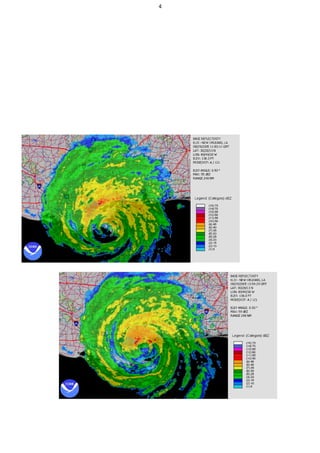
Hurricane Katrina
Formed: August 23rd, 2005 (2005 Hurricane Season)

Dissipated: August 30th, 2005

Highest Winds: 175mph

Fatalities: 1, 836

Damage: $300billion (MetOffice)

Areas Affected: Bahamas, South Florida, Cuba, Louisiana,
Mississippi, Alabama, Florida, Panhandle.

                                              Flooded levee system in New Orleans, Louisiana;
                                              80% of New Orleans was flooded. Much of this
                                              flooding was caused by failures in the city’s
                                              floodwalls.

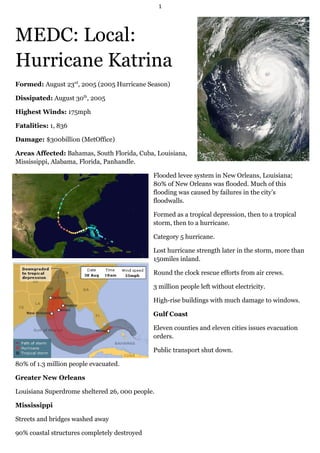
                                              Formed as a tropical depression, then to a tropical
                                              storm, then to a hurricane.

                                              Category 5 hurricane.

                                              Lost hurricane strength later in the storm, more than
                                              150miles inland.

                                              Round the clock rescue efforts from air crews.

                                              3 million people left without electricity.

                                              High-rise buildings with much damage to windows.

                                              Gulf Coast

                                              Eleven counties and eleven cities issues evacuation
                                              orders.

                                              Public transport shut down.

80% of 1.3 million people evacuated.

Greater New Orleans

Louisiana Superdrome sheltered 26, 000 people.

Mississippi

Streets and bridges washed away

90% coastal structures completely destroyed
2


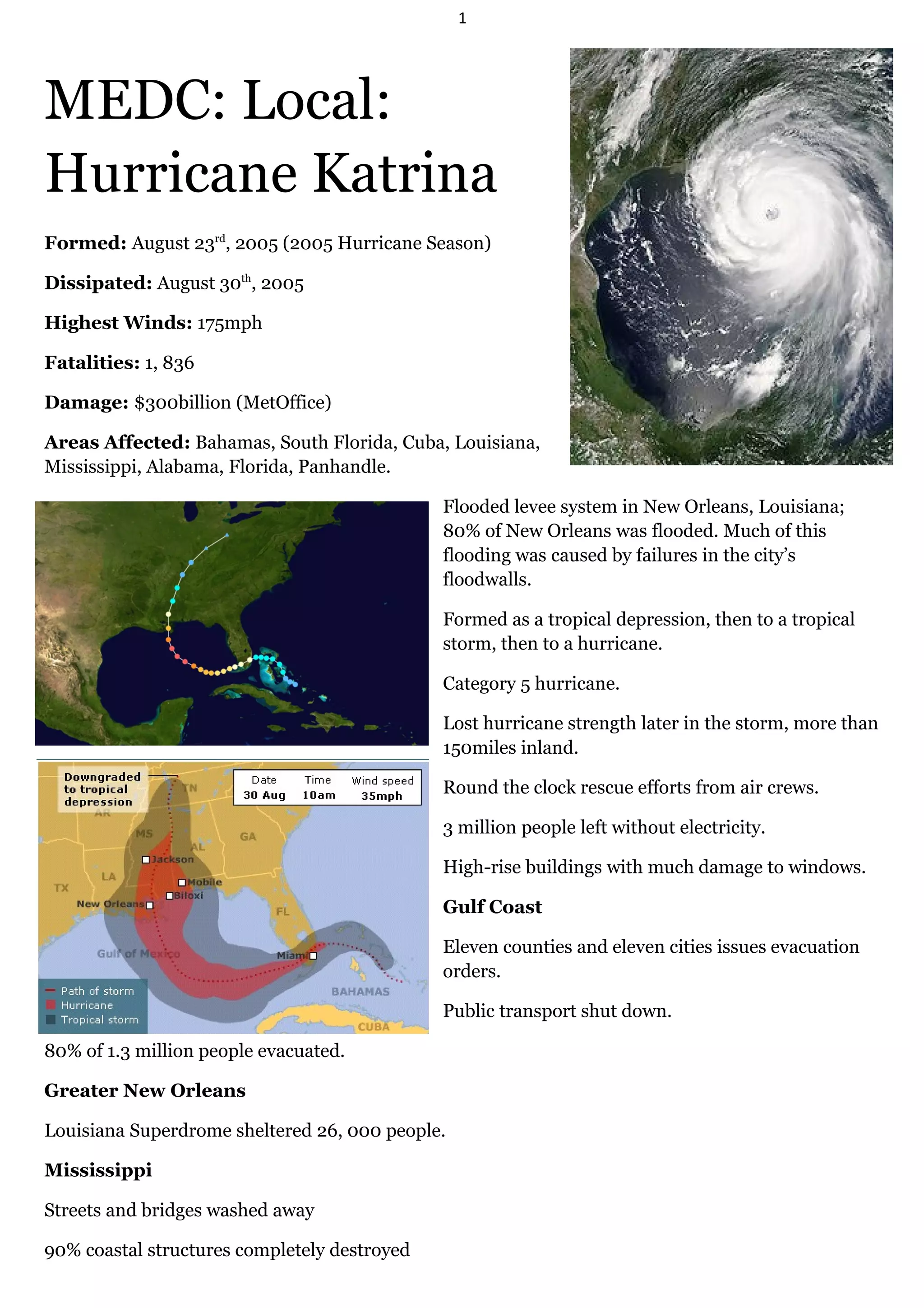
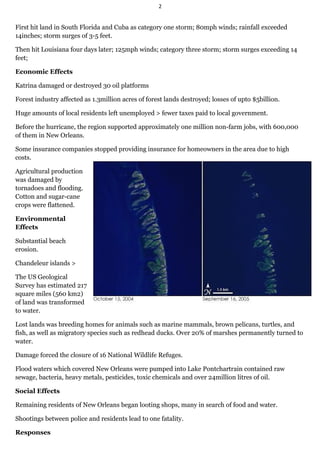
First hit land in South Florida and Cuba as category one storm; 80mph winds; rainfall exceeded
14inches; storm surges of 3-5 feet.

Then hit Louisiana four days later; 125mph winds; category three storm; storm surges exceeding 14
feet;

Economic Effects

Katrina damaged or destroyed 30 oil platforms

Forest industry affected as 1.3million acres of forest lands destroyed; losses of upto $5billion.

Huge amounts of local residents left unemployed > fewer taxes paid to local government.

Before the hurricane, the region supported approximately one million non-farm jobs, with 600,000
of them in New Orleans.

Some insurance companies stopped providing insurance for homeowners in the area due to high
costs.

Agricultural production
was damaged by
tornadoes and flooding.
Cotton and sugar-cane
crops were flattened.

Environmental
Effects

Substantial beach
erosion.

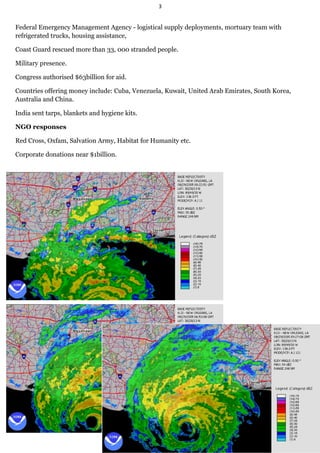
Chandeleur islands >

The US Geological
Survey has estimated 217
square miles (560 km2)
of land was transformed
to water.

Lost lands was breeding homes for animals such as marine mammals, brown pelicans, turtles, and
fish, as well as migratory species such as redhead ducks. Over 20% of marshes permanently turned to
water.

Damage forced the closure of 16 National Wildlife Refuges.

Flood waters which covered New Orleans were pumped into Lake Pontchartrain contained raw
sewage, bacteria, heavy metals, pesticides, toxic chemicals and over 24million litres of oil.

Social Effects

Remaining residents of New Orleans began looting shops, many in search of food and water.

Shootings between police and residents lead to one fatality.

Responses
3


Federal Emergency Management Agency - logistical supply deployments, mortuary team with
refrigerated trucks, housing assistance,

Coast Guard rescued more than 33, 000 stranded people.

Military presence.

Congress authorised $63billion for aid.

Countries offering money include: Cuba, Venezuela, Kuwait, United Arab Emirates, South Korea,
Australia and China.

India sent tarps, blankets and hygiene kits.

NGO responses

Red Cross, Oxfam, Salvation Army, Habitat for Humanity etc.

Corporate donations near $1billion.
4
5


 Number of housing units damaged, destroyed, or inaccessible because of Katrina: 850,791

 Percentage of New Orleans’ pre-Katrina residents who have returned to the city:
   approximately 45

 Depth of water covering parts of New Orleans: 20 feet

 Square miles of coastal wetlands that were converted to open water after Hurricanes Katrina
   and Rita: 118

 In terms of energy, number of atomic bombs it would take to equal Hurricane Katrina’s power:
   100,000

 Gallons of water the New Orleans water system loses each day due to breaks caused by Katrina
   and an under funded repair budget: 85 million

 Percentage of New Orleans cultural institutions that remain closed from storm damage: 75

 Number of homes destroyed by breaches in federally designed and funded levees and not
   covered under the federal housing recovery plan: 200,000

 Number of jobs eliminated in the Gulf Coast by Hurricane Katrina: 230,000

 Permanent employment loss in Louisiana: 100,000

Hurricane katrina

  • 1.
    1 MEDC: Local: Hurricane Katrina Formed:August 23rd, 2005 (2005 Hurricane Season) Dissipated: August 30th, 2005 Highest Winds: 175mph Fatalities: 1, 836 Damage: $300billion (MetOffice) Areas Affected: Bahamas, South Florida, Cuba, Louisiana, Mississippi, Alabama, Florida, Panhandle. Flooded levee system in New Orleans, Louisiana; 80% of New Orleans was flooded. Much of this flooding was caused by failures in the city’s floodwalls. Formed as a tropical depression, then to a tropical storm, then to a hurricane. Category 5 hurricane. Lost hurricane strength later in the storm, more than 150miles inland. Round the clock rescue efforts from air crews. 3 million people left without electricity. High-rise buildings with much damage to windows. Gulf Coast Eleven counties and eleven cities issues evacuation orders. Public transport shut down. 80% of 1.3 million people evacuated. Greater New Orleans Louisiana Superdrome sheltered 26, 000 people. Mississippi Streets and bridges washed away 90% coastal structures completely destroyed
  • 2.
    2 First hit landin South Florida and Cuba as category one storm; 80mph winds; rainfall exceeded 14inches; storm surges of 3-5 feet. Then hit Louisiana four days later; 125mph winds; category three storm; storm surges exceeding 14 feet; Economic Effects Katrina damaged or destroyed 30 oil platforms Forest industry affected as 1.3million acres of forest lands destroyed; losses of upto $5billion. Huge amounts of local residents left unemployed > fewer taxes paid to local government. Before the hurricane, the region supported approximately one million non-farm jobs, with 600,000 of them in New Orleans. Some insurance companies stopped providing insurance for homeowners in the area due to high costs. Agricultural production was damaged by tornadoes and flooding. Cotton and sugar-cane crops were flattened. Environmental Effects Substantial beach erosion. Chandeleur islands > The US Geological Survey has estimated 217 square miles (560 km2) of land was transformed to water. Lost lands was breeding homes for animals such as marine mammals, brown pelicans, turtles, and fish, as well as migratory species such as redhead ducks. Over 20% of marshes permanently turned to water. Damage forced the closure of 16 National Wildlife Refuges. Flood waters which covered New Orleans were pumped into Lake Pontchartrain contained raw sewage, bacteria, heavy metals, pesticides, toxic chemicals and over 24million litres of oil. Social Effects Remaining residents of New Orleans began looting shops, many in search of food and water. Shootings between police and residents lead to one fatality. Responses
  • 3.
    3 Federal Emergency ManagementAgency - logistical supply deployments, mortuary team with refrigerated trucks, housing assistance, Coast Guard rescued more than 33, 000 stranded people. Military presence. Congress authorised $63billion for aid. Countries offering money include: Cuba, Venezuela, Kuwait, United Arab Emirates, South Korea, Australia and China. India sent tarps, blankets and hygiene kits. NGO responses Red Cross, Oxfam, Salvation Army, Habitat for Humanity etc. Corporate donations near $1billion.
  • 4.
  • 5.
    5  Number ofhousing units damaged, destroyed, or inaccessible because of Katrina: 850,791  Percentage of New Orleans’ pre-Katrina residents who have returned to the city: approximately 45  Depth of water covering parts of New Orleans: 20 feet  Square miles of coastal wetlands that were converted to open water after Hurricanes Katrina and Rita: 118  In terms of energy, number of atomic bombs it would take to equal Hurricane Katrina’s power: 100,000  Gallons of water the New Orleans water system loses each day due to breaks caused by Katrina and an under funded repair budget: 85 million  Percentage of New Orleans cultural institutions that remain closed from storm damage: 75  Number of homes destroyed by breaches in federally designed and funded levees and not covered under the federal housing recovery plan: 200,000  Number of jobs eliminated in the Gulf Coast by Hurricane Katrina: 230,000  Permanent employment loss in Louisiana: 100,000