Download to read offline
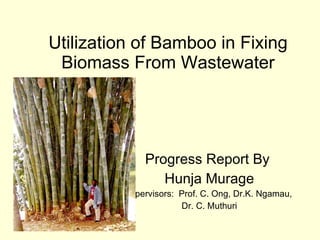
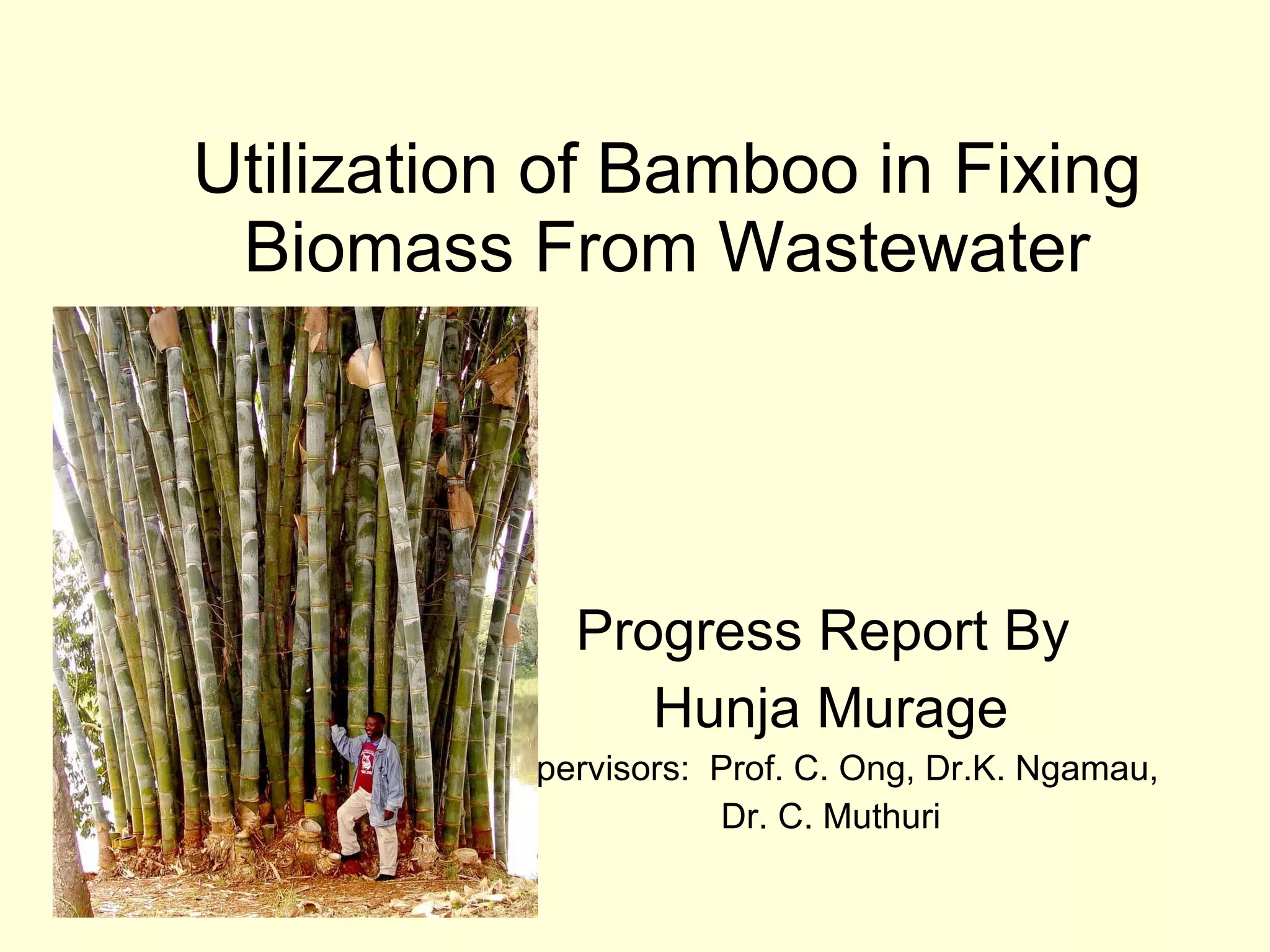
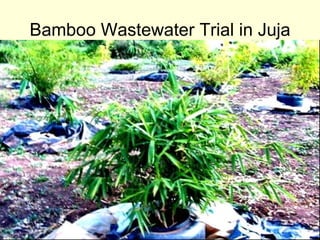
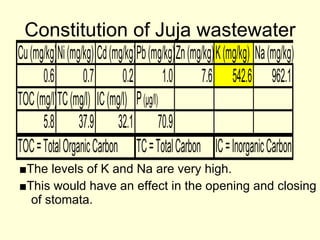
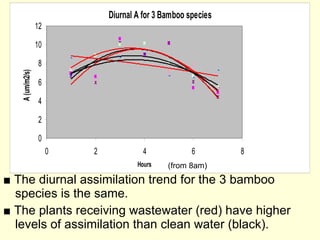

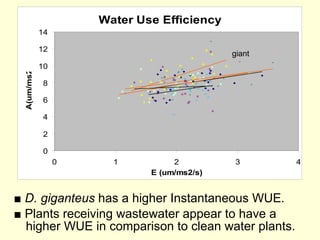

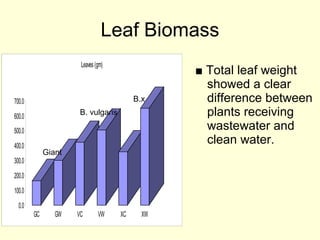


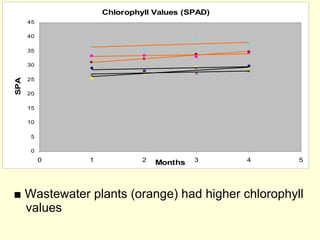
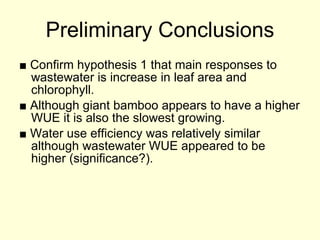

This report summarizes a study that tested the utility of three bamboo species (Bambusa vulgaris, Dendrocalamus giganteus, and Bambusa X) for treating wastewater in Kenya. The bamboo were grown in pots irrigated with wastewater from a university treatment plant or clean water. Results showed that bamboo irrigated with wastewater had higher biomass, leaf area, chlorophyll content, and assimilation rates compared to those with clean water. While D. giganteus had the highest water use efficiency, B. vulgaris and B. X grew faster and had larger leaf areas, confirming the hypothesis that bamboo respond to wastewater by increasing nutrient uptake and leaf growth.


