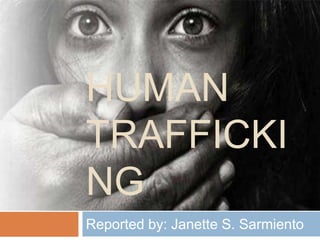
This document discusses human trafficking in the Philippines. It defines human trafficking as the trade of humans for forced labor, sexual slavery, or exploitation. The key elements of human trafficking include the act of recruiting, transporting or harboring victims, the means of using force, coercion or abuse, and the purpose of exploiting the victims. Common forms of trafficking found in the Philippines include forced labor, debt bondage, domestic servitude, child labor, and sex trafficking. The Anti-Trafficking in Persons Act of 2003 was passed as part of legal efforts in the Philippines to combat human trafficking and protect victim rights and dignity in accordance with international human rights standards.