Human Trafficking and Slavery:  A Global Problem
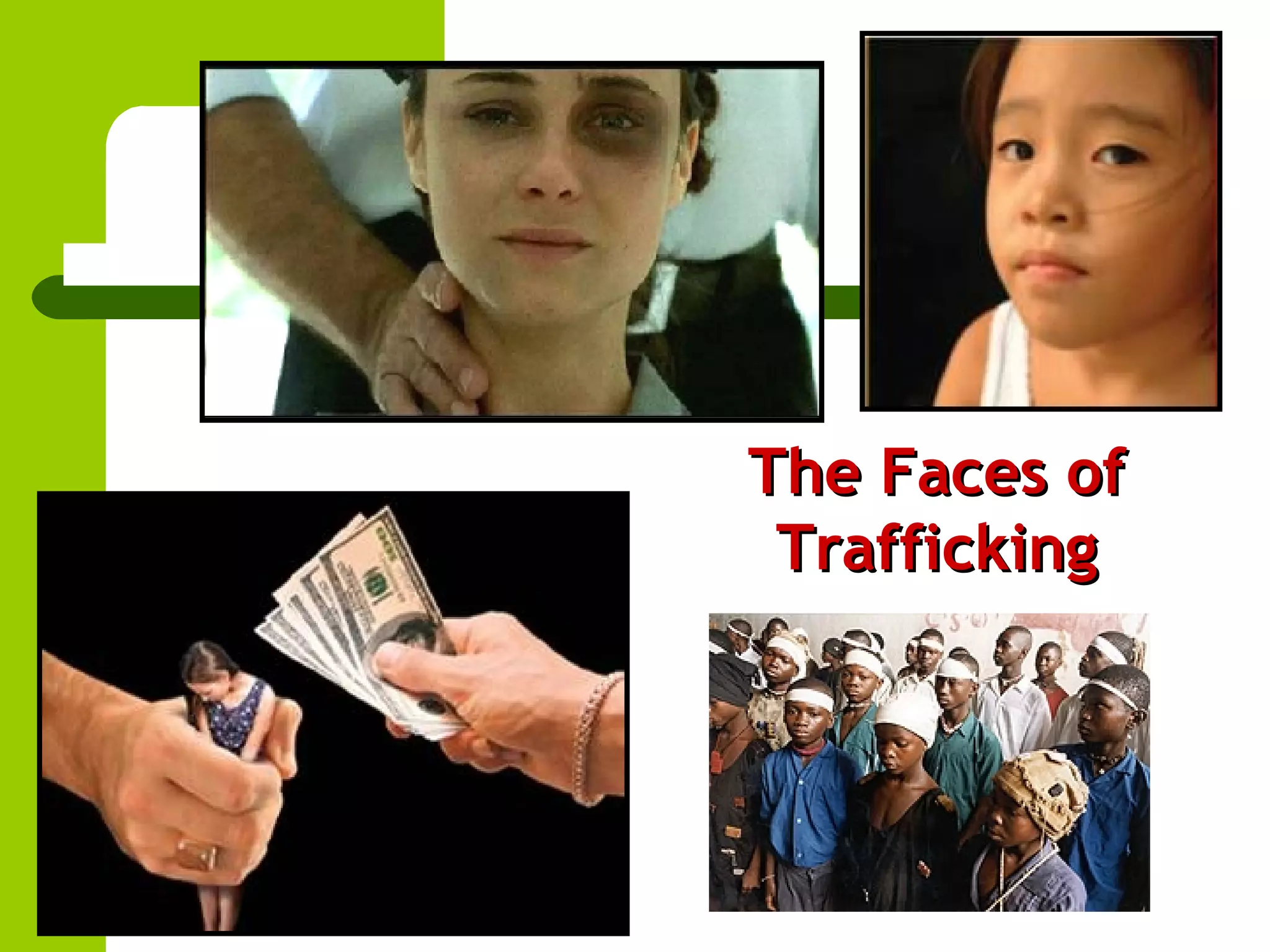
Summary The Faces of Trafficking
What is meant by trafficking
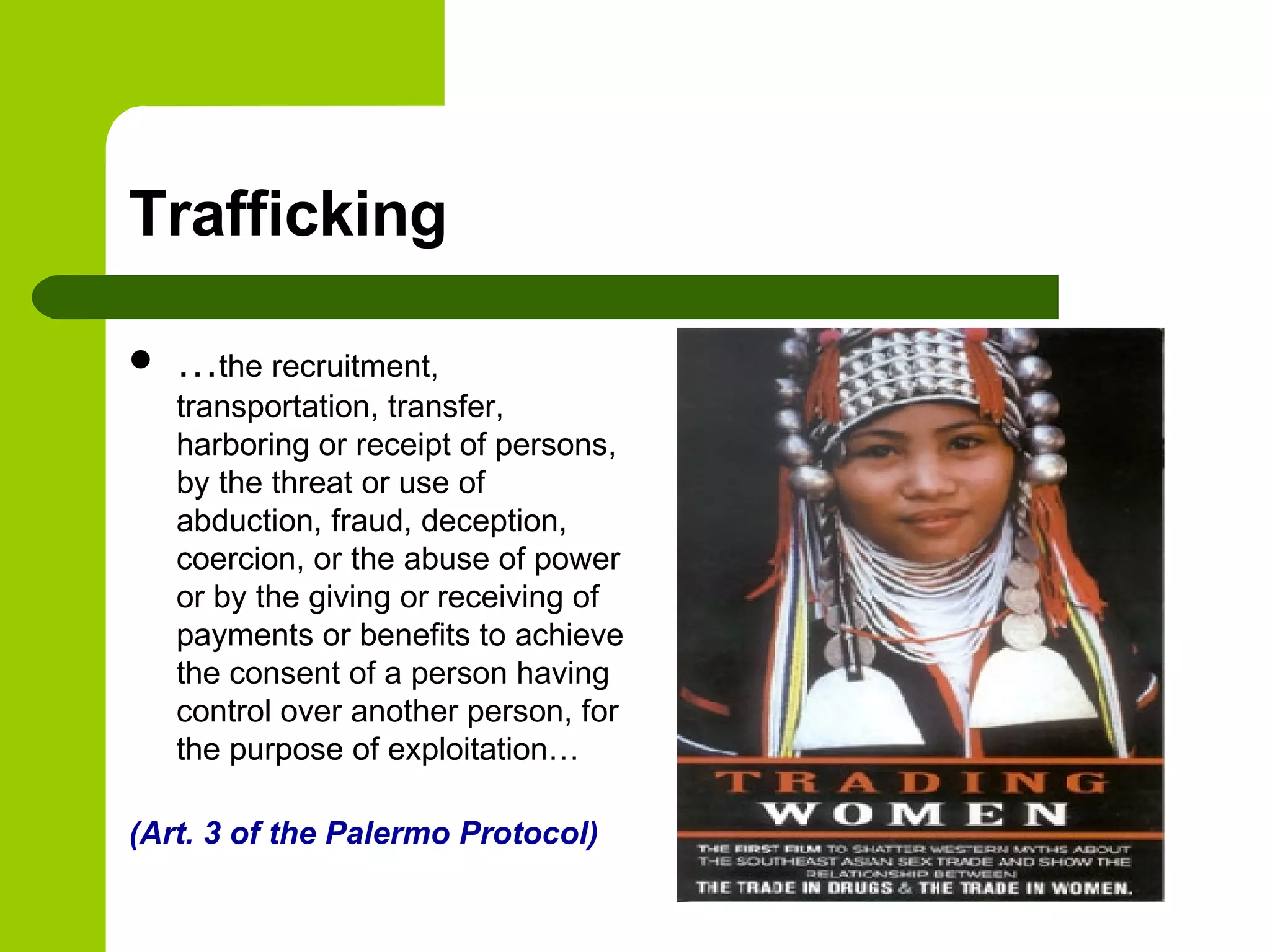
Trafficking … the recruitment, transportation, transfer, harboring or receipt of persons, by the threat or use of abduction, fraud, deception, coercion, or the abuse of power or by the giving or receiving of payments or benefits to achieve the consent of a person having control over another person, for the purpose of exploitation… (Art. 3 of the Palermo Protocol)
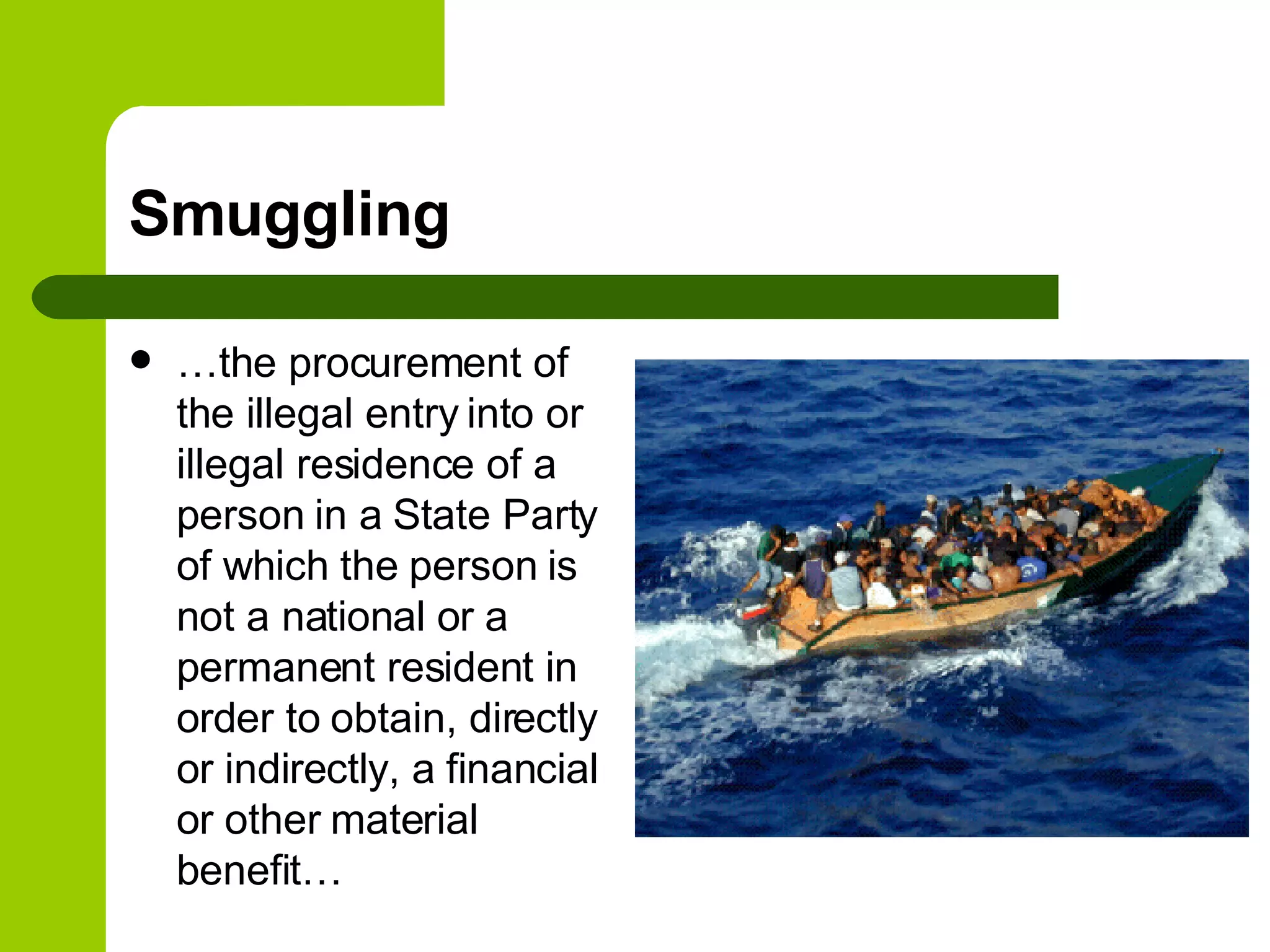
Smuggling … the procurement of the illegal entry into or illegal residence of a person in a State Party of which the person is not a national or a permanent resident in order to obtain, directly or indirectly, a financial or other material benefit…
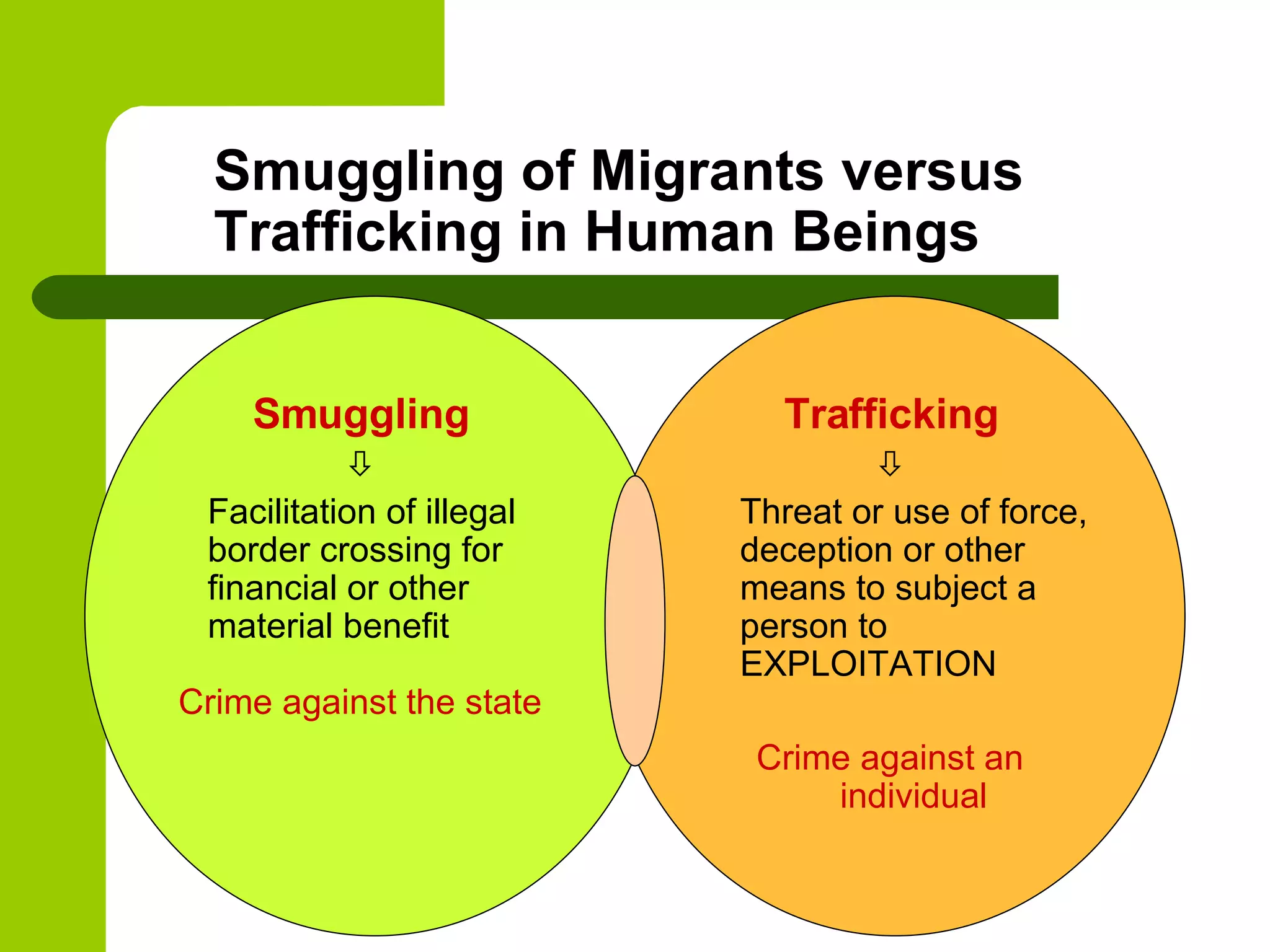
Smuggling of Migrants versus Trafficking in Human Beings Trafficking  Threat or use of force, deception or other means to subject a person to EXPLOITATION Crime against an individual Smuggling  Facilitation of illegal border crossing for financial or other material benefit Crime against the state
Numbers Estimates and Guesstimates “ The nature of the crime makes it difficult to estimate exactly how many victims are trafficked … but there are reasons to believe that they should be counted in the hundreds of thousands.”—Europol “ Of the estimated 600,000 to 800,000 men, women, and children trafficked across international borders each year, approximately 80 percent are women and girls and up to 50 percent are minors.”—State Dept.
Forms of Trafficking Sexual exploitation, including prostitution and pornography Forced labor, including agriculture, manufacturing (sweatshops), domestic servitude, fishing Forced marriage and illegal adoption Child soldiers Organ trafficking
Causes of Trafficking Supply-side factors Lack of economic opportunities Gender discrimination, particularly in access to employment and education Tolerance of gender-based violence Conflict and displacement from natural and manmade causes Breakdown in law and order Cultural practices (e.g., ‘apprenticeships’)
Causes of Trafficking Demand-side factors Growth of global, commercial sex industry Restrictive immigration policies that prevent legal admissions for legitimate work purposes Unregulated labor markets that enable exploitive practices to flourish Gender discrimination and tolerance of violence
Causes of Trafficking Facilitators of trafficking Organized criminal operations transnational  domestic Official corruption Technology (and its misuse) Transportation Communications Transnationalism
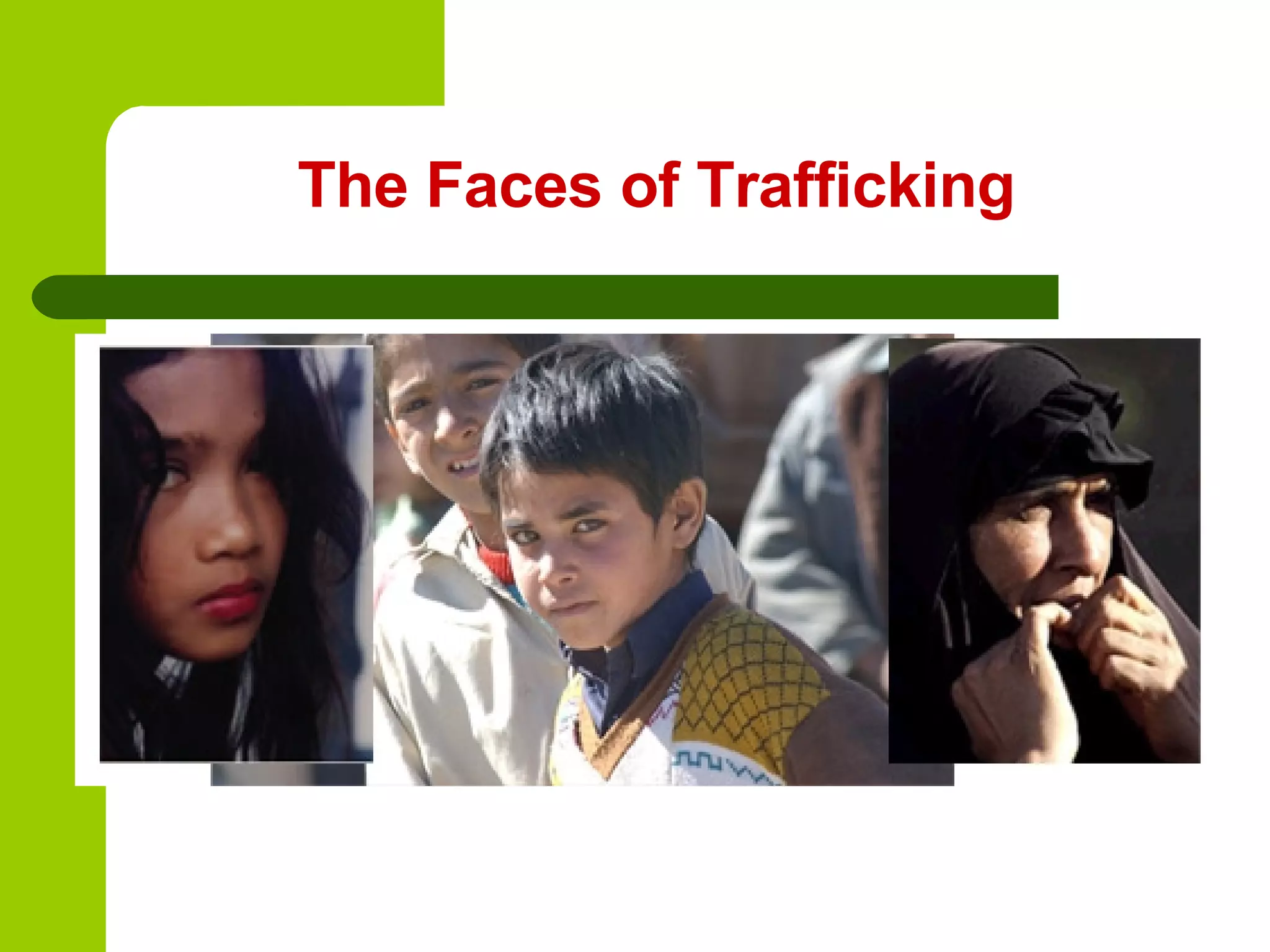
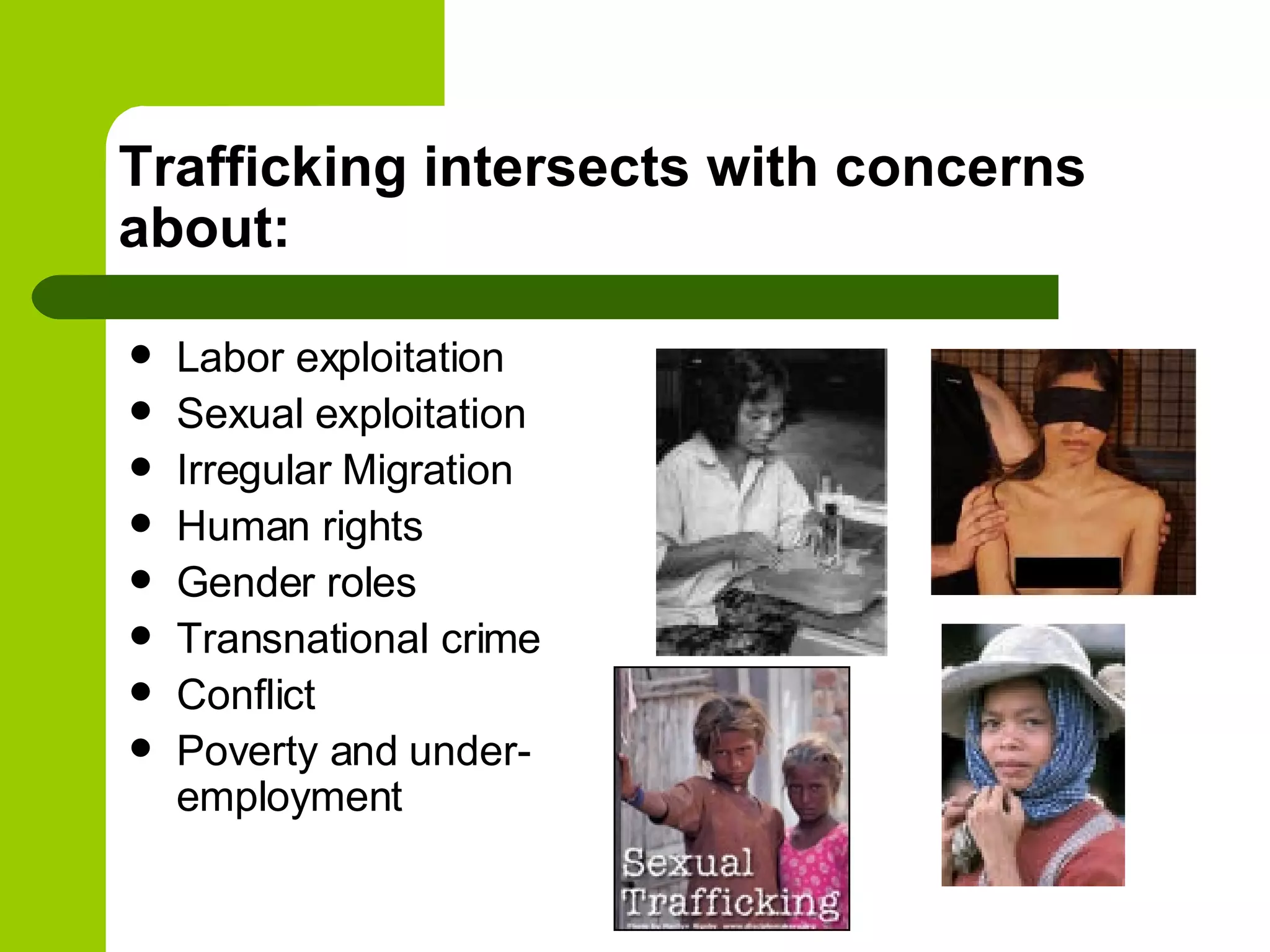
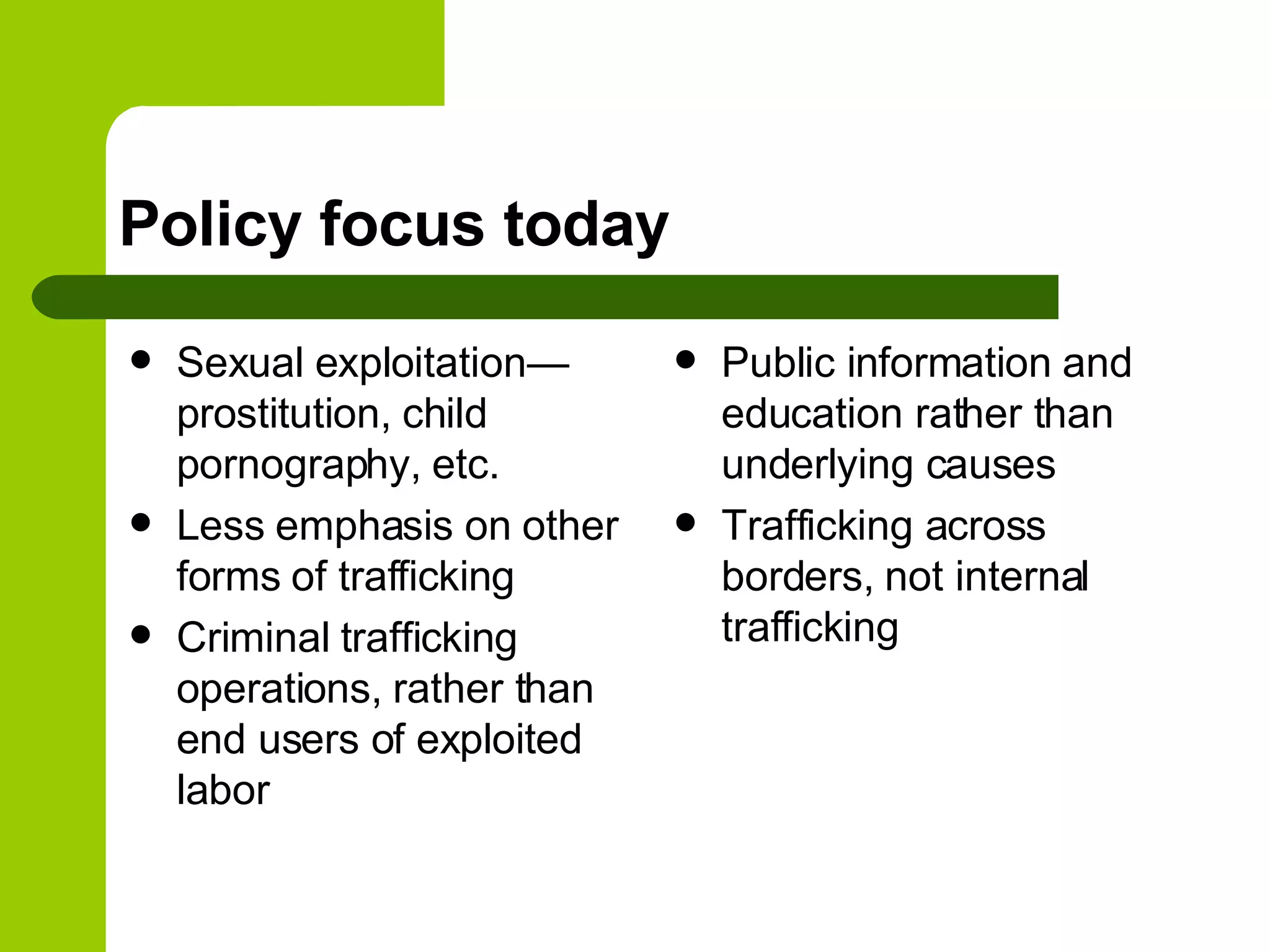
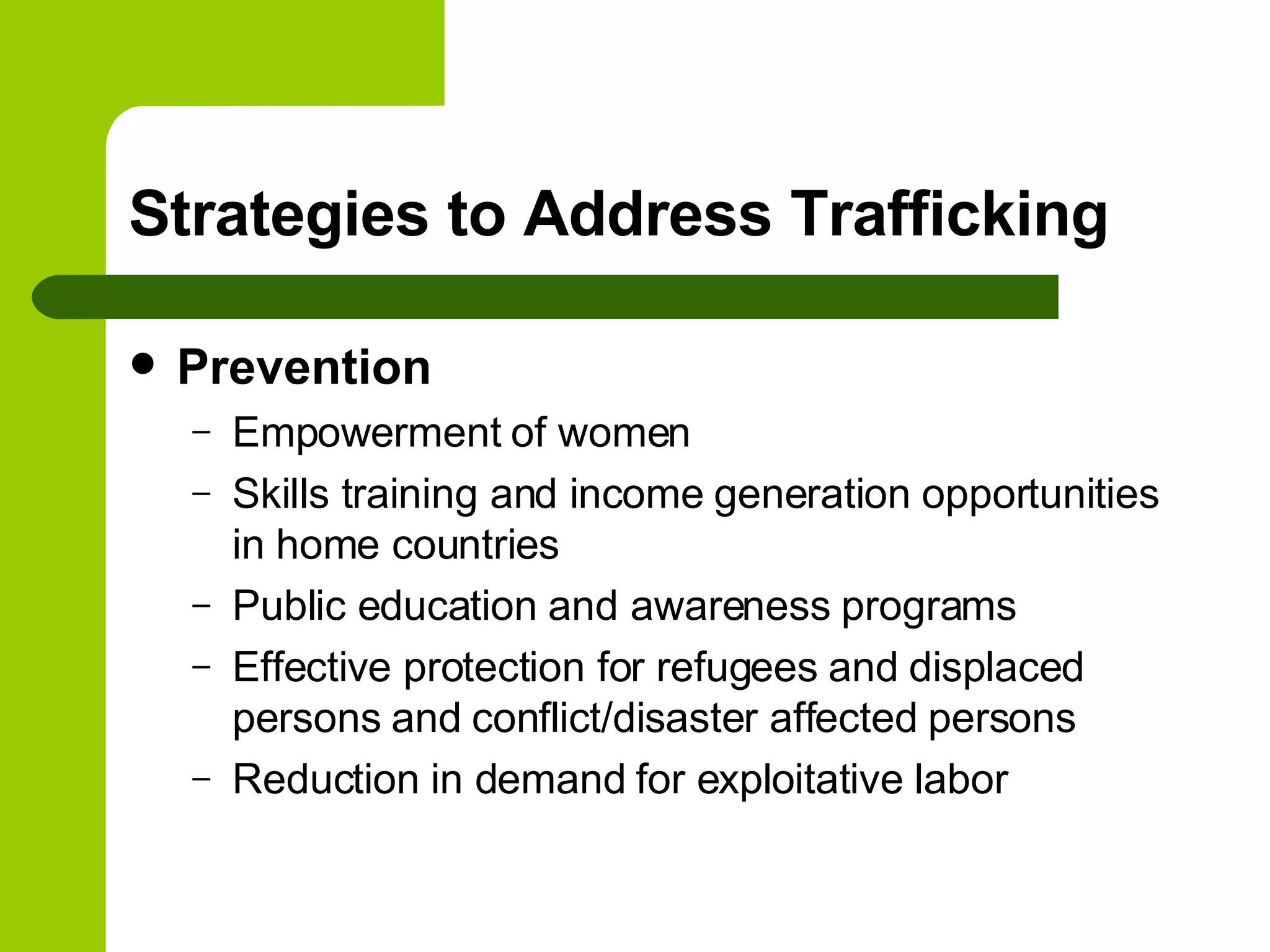
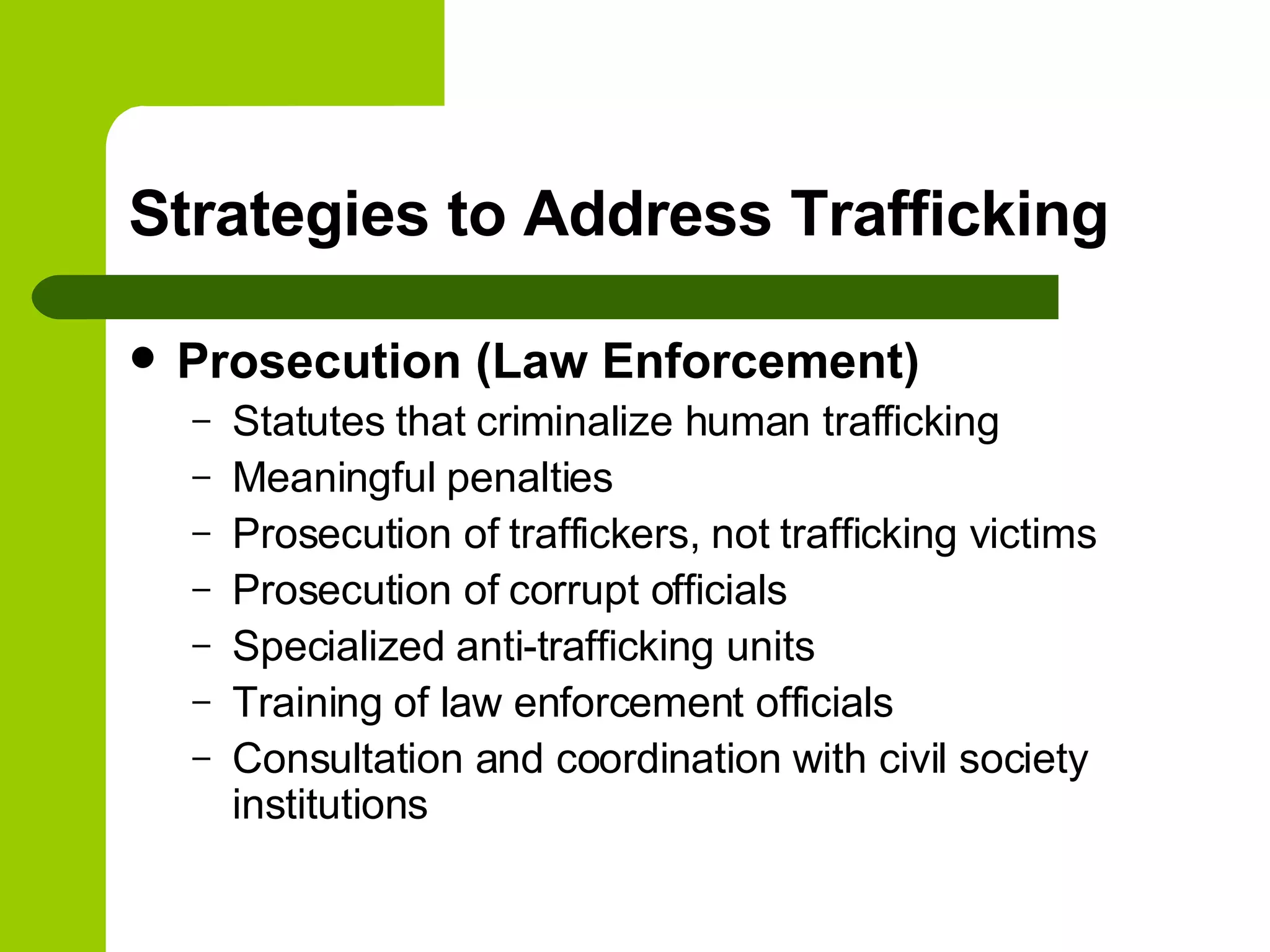
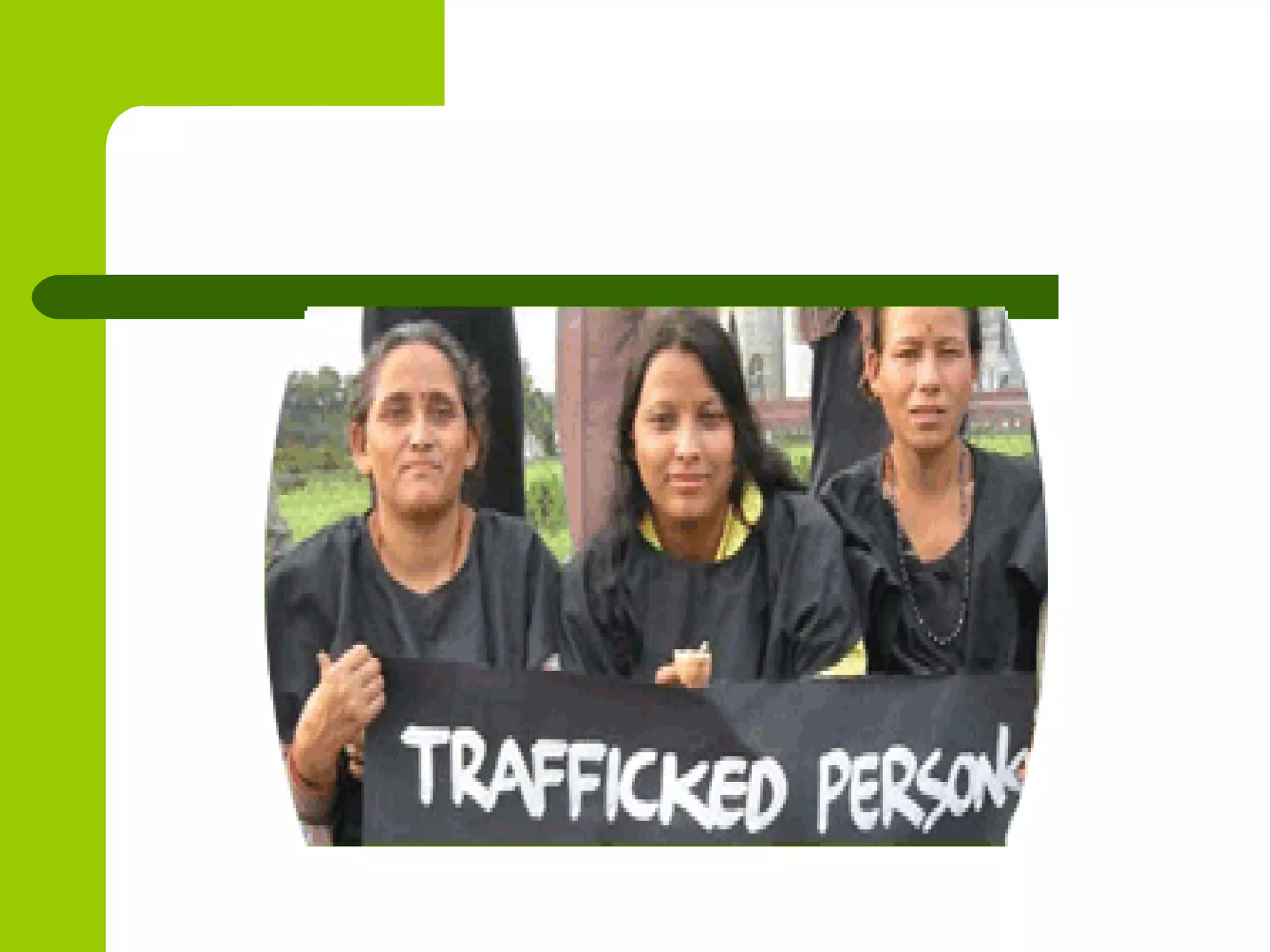
The Faces of Trafficking
Trafficking intersects with concerns about: Labor exploitation Sexual exploitation  Irregular Migration  Human rights Gender roles Transnational crime Conflict Poverty and under-employment
Policy focus today Sexual exploitation—prostitution, child pornography, etc. Less emphasis on other forms of trafficking Criminal trafficking operations, rather than end users of exploited labor Public information and education rather than underlying causes Trafficking across borders, not internal trafficking
Strategies to Address Trafficking Prevention Empowerment of women Skills training and income generation opportunities in home countries Public education and awareness programs Effective protection for refugees and displaced persons and conflict/disaster affected persons Reduction in demand for exploitative labor
Strategies to Address Trafficking Prosecution (Law Enforcement) Statutes that criminalize human trafficking Meaningful penalties Prosecution of traffickers, not trafficking victims Prosecution of corrupt officials Specialized anti-trafficking units Training of law enforcement officials Consultation and coordination with civil society institutions
Strategies to Address Trafficking Protection Identification of trafficking survivors Protection against retaliation by traffickers Witness protection for those who testify Protection of families if needed  Reintegration assistance if return takes place Legal status in host country if return is not safe or desirable
In summary: Trafficking is a global problem Addressing trafficking requires multi-faceted approach that goes well beyond law enforcement Need also to focus on economic development, human rights protection, women’s empowerment and conflict prevention and resolution We must remember the faces of trafficking, keeping in mind the protection of those who are exploited and abused.
 
“ Human life is the gift of our Creator -- and it should never be for sale” . (President Bush, 7/16/04)

Human Trafficking Intro

  • 1.
    Human Trafficking andSlavery: A Global Problem
  • 2.
    Summary The Facesof Trafficking
  • 3.
    What is meantby trafficking
  • 4.
    Trafficking … therecruitment, transportation, transfer, harboring or receipt of persons, by the threat or use of abduction, fraud, deception, coercion, or the abuse of power or by the giving or receiving of payments or benefits to achieve the consent of a person having control over another person, for the purpose of exploitation… (Art. 3 of the Palermo Protocol)
  • 5.
    Smuggling … theprocurement of the illegal entry into or illegal residence of a person in a State Party of which the person is not a national or a permanent resident in order to obtain, directly or indirectly, a financial or other material benefit…
  • 6.
    Smuggling of Migrantsversus Trafficking in Human Beings Trafficking  Threat or use of force, deception or other means to subject a person to EXPLOITATION Crime against an individual Smuggling  Facilitation of illegal border crossing for financial or other material benefit Crime against the state
  • 7.
    Numbers Estimates andGuesstimates “ The nature of the crime makes it difficult to estimate exactly how many victims are trafficked … but there are reasons to believe that they should be counted in the hundreds of thousands.”—Europol “ Of the estimated 600,000 to 800,000 men, women, and children trafficked across international borders each year, approximately 80 percent are women and girls and up to 50 percent are minors.”—State Dept.
  • 8.
    Forms of TraffickingSexual exploitation, including prostitution and pornography Forced labor, including agriculture, manufacturing (sweatshops), domestic servitude, fishing Forced marriage and illegal adoption Child soldiers Organ trafficking
  • 9.
    Causes of TraffickingSupply-side factors Lack of economic opportunities Gender discrimination, particularly in access to employment and education Tolerance of gender-based violence Conflict and displacement from natural and manmade causes Breakdown in law and order Cultural practices (e.g., ‘apprenticeships’)
  • 10.
    Causes of TraffickingDemand-side factors Growth of global, commercial sex industry Restrictive immigration policies that prevent legal admissions for legitimate work purposes Unregulated labor markets that enable exploitive practices to flourish Gender discrimination and tolerance of violence
  • 11.
    Causes of TraffickingFacilitators of trafficking Organized criminal operations transnational domestic Official corruption Technology (and its misuse) Transportation Communications Transnationalism
  • 12.
    The Faces ofTrafficking
  • 13.
    Trafficking intersects withconcerns about: Labor exploitation Sexual exploitation Irregular Migration Human rights Gender roles Transnational crime Conflict Poverty and under-employment
  • 14.
    Policy focus todaySexual exploitation—prostitution, child pornography, etc. Less emphasis on other forms of trafficking Criminal trafficking operations, rather than end users of exploited labor Public information and education rather than underlying causes Trafficking across borders, not internal trafficking
  • 15.
    Strategies to AddressTrafficking Prevention Empowerment of women Skills training and income generation opportunities in home countries Public education and awareness programs Effective protection for refugees and displaced persons and conflict/disaster affected persons Reduction in demand for exploitative labor
  • 16.
    Strategies to AddressTrafficking Prosecution (Law Enforcement) Statutes that criminalize human trafficking Meaningful penalties Prosecution of traffickers, not trafficking victims Prosecution of corrupt officials Specialized anti-trafficking units Training of law enforcement officials Consultation and coordination with civil society institutions
  • 17.
    Strategies to AddressTrafficking Protection Identification of trafficking survivors Protection against retaliation by traffickers Witness protection for those who testify Protection of families if needed Reintegration assistance if return takes place Legal status in host country if return is not safe or desirable
  • 18.
    In summary: Traffickingis a global problem Addressing trafficking requires multi-faceted approach that goes well beyond law enforcement Need also to focus on economic development, human rights protection, women’s empowerment and conflict prevention and resolution We must remember the faces of trafficking, keeping in mind the protection of those who are exploited and abused.
  • 19.
  • 20.
    “ Human lifeis the gift of our Creator -- and it should never be for sale” . (President Bush, 7/16/04)