 Rotaru Cătălina.
Human
and
Children
Rights
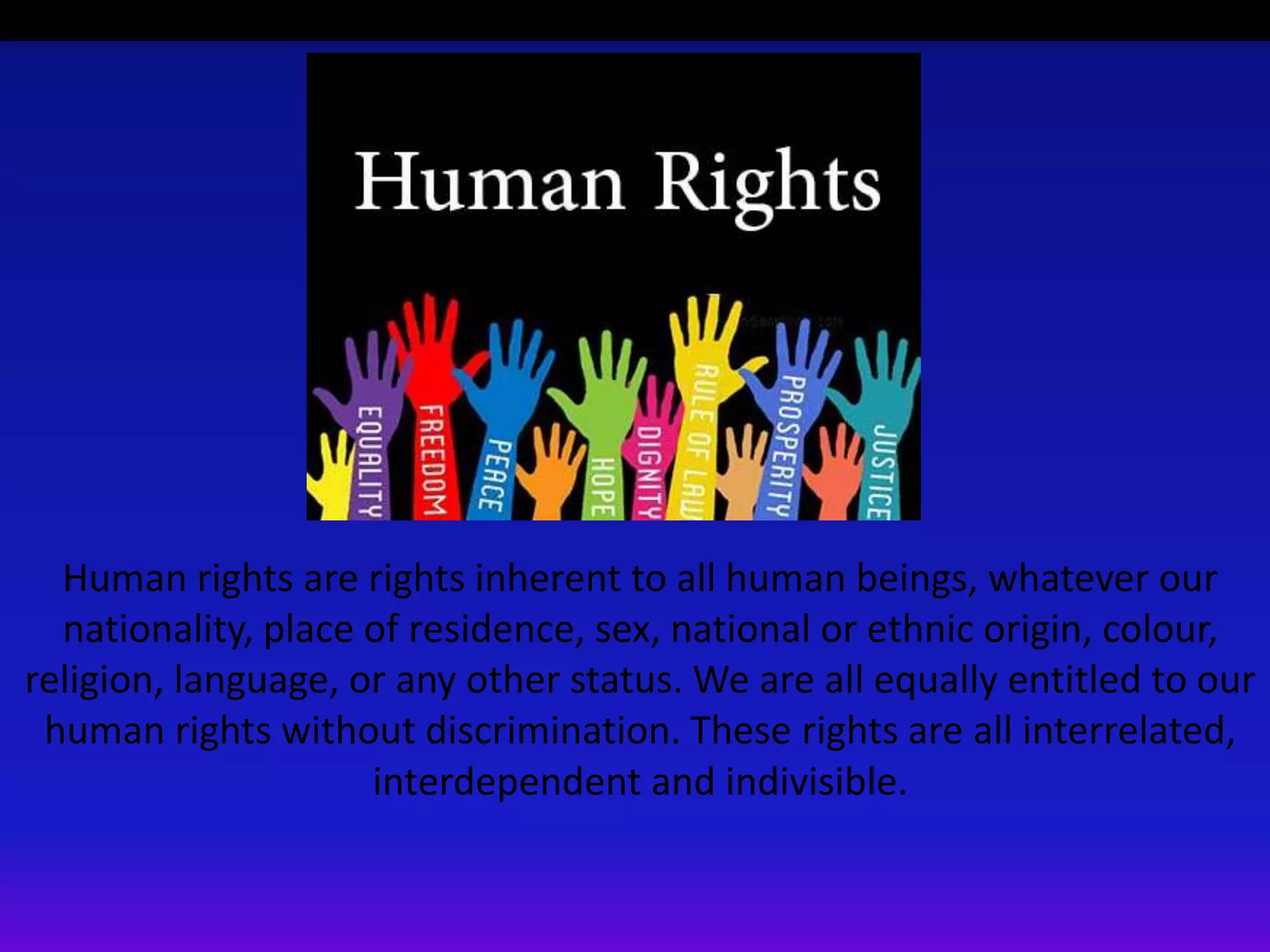
Human rights are rights inherent to all human beings, whatever our
nationality, place of residence, sex, national or ethnic origin, colour,
religion, language, or any other status. We are all equally entitled to our
human rights without discrimination. These rights are all interrelated,
interdependent and indivisible.
Universal human rights are often
expressed and guaranteed by law,
in the forms of treaties, customary
international law , general
principles and other sources of
international law.
International human rights law
lays down obligations of
Governments to act in certain
ways or to refrain from certain
acts, in order to promote and
protect human rights and
fundamental freedoms of
individuals or groups.
Embedded in its founding treaty, they have been reinforced by the
adoption of the Charter of Fundamental Rights. Countries wishing to
join the European Union, must respect human rights.
Human rights,
democracy and
the rule of law
are core values
of the European
Union.
Human Rights Declaration contains 30 articles that are present in all human rights, and the
state is obliged to respect these rights and intervene in case they are violated.
On 10 December 1948 the General Assembly of the United Nations adopted and proclaimed
the Universal Declaration of Human Rights. Through this historic act the Assembly called on
all member states to publish the text of the Declaration and afterwards to be "distributed,
displayed, read and expounded in schools and other educational institutions, without
distinction dependent on the political condition of countries or territories."
Basic characteristic of Human Rights:
• Inherent;
• Fundamental;
• Inalienable;
• Indivible;
• Universal;
• Interdependent;
• Imprescriptible.
Children's rights are governed by the Convention on
the Rights of the Child adopted by the United
Nations General Assembly on 20 November 1989.
The document defines the rights and principles
normal development of a child.
Children have rights wherever they are - at home
birth parents, foster families, institutions for care or
school. Parents and families, professional groups
working with children, and every responsible citizen
should know about these rights.
In conclusion I can say that
human rights and children
there to keep people safe
and to be respected.
The right to life, liberty,
opinion, privacy and all the
other allow us to develop
safe and beautiful.
The
End!


Human rights.

  • 1.
  • 2.
    Human rights arerights inherent to all human beings, whatever our nationality, place of residence, sex, national or ethnic origin, colour, religion, language, or any other status. We are all equally entitled to our human rights without discrimination. These rights are all interrelated, interdependent and indivisible.
  • 3.
    Universal human rightsare often expressed and guaranteed by law, in the forms of treaties, customary international law , general principles and other sources of international law. International human rights law lays down obligations of Governments to act in certain ways or to refrain from certain acts, in order to promote and protect human rights and fundamental freedoms of individuals or groups.
  • 4.
    Embedded in itsfounding treaty, they have been reinforced by the adoption of the Charter of Fundamental Rights. Countries wishing to join the European Union, must respect human rights. Human rights, democracy and the rule of law are core values of the European Union.
  • 5.
    Human Rights Declarationcontains 30 articles that are present in all human rights, and the state is obliged to respect these rights and intervene in case they are violated. On 10 December 1948 the General Assembly of the United Nations adopted and proclaimed the Universal Declaration of Human Rights. Through this historic act the Assembly called on all member states to publish the text of the Declaration and afterwards to be "distributed, displayed, read and expounded in schools and other educational institutions, without distinction dependent on the political condition of countries or territories."
  • 6.
    Basic characteristic ofHuman Rights: • Inherent; • Fundamental; • Inalienable; • Indivible; • Universal; • Interdependent; • Imprescriptible.
  • 7.
    Children's rights aregoverned by the Convention on the Rights of the Child adopted by the United Nations General Assembly on 20 November 1989. The document defines the rights and principles normal development of a child. Children have rights wherever they are - at home birth parents, foster families, institutions for care or school. Parents and families, professional groups working with children, and every responsible citizen should know about these rights.
  • 9.
    In conclusion Ican say that human rights and children there to keep people safe and to be respected. The right to life, liberty, opinion, privacy and all the other allow us to develop safe and beautiful.
  • 10.