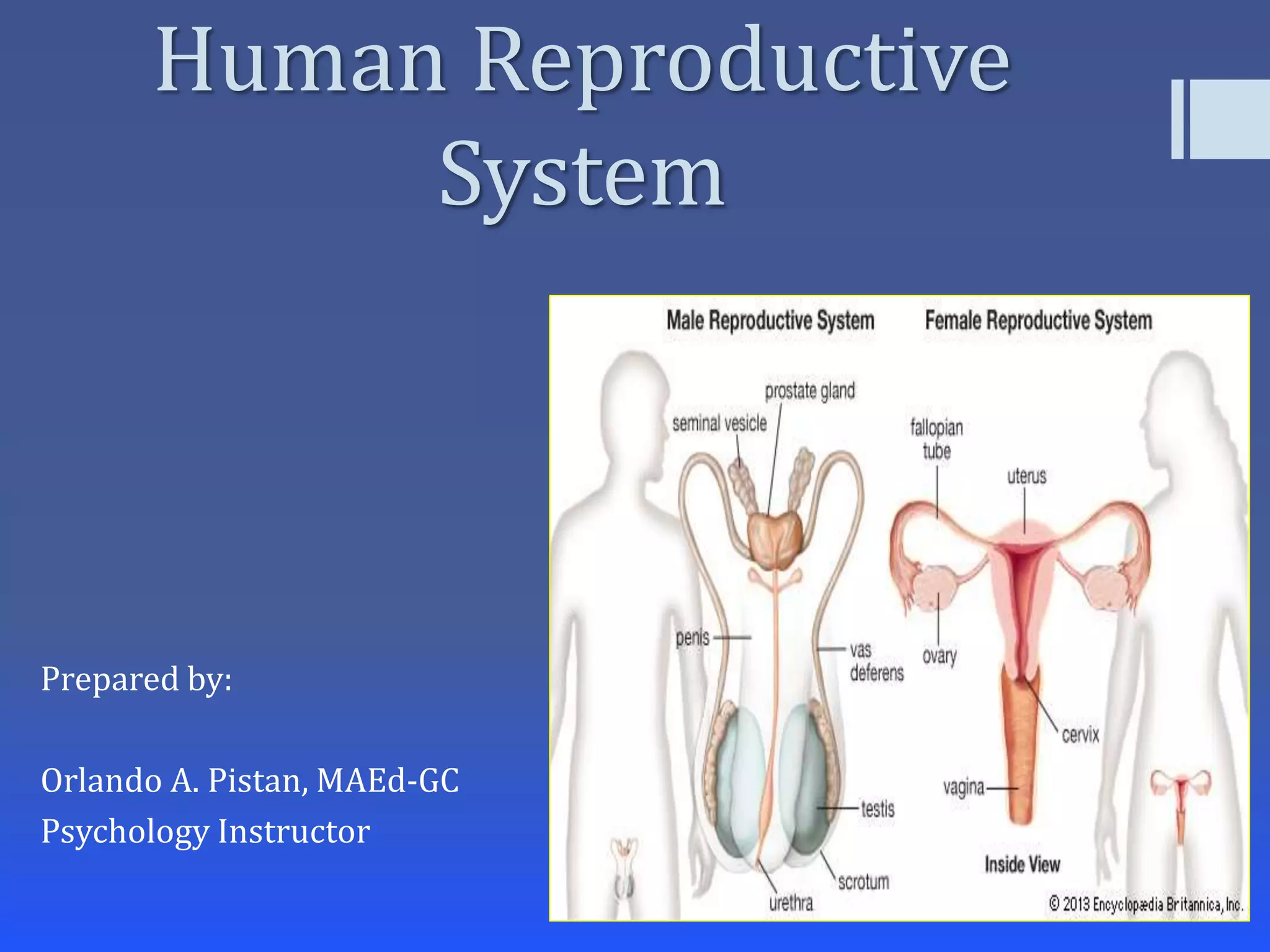
Human Reproductive
System
Prepared by:
Orlando A. Pistan, MAEd-GC
Psychology Instructor
Female Reproductive
System
Vagina
The vagina receives the penis during
sexual intercourse and also serves as a
conduit for menstrual flow from the
uterus. During childbirth, the baby
passes through the vagina.
The hymen is a thin membrane of
tissue that surrounds and narrows
the vaginal opening.
Female Reproductive
System
Cervix
It is the lower most part of the uterus
and is made up of strong muscles.
The function of the cervix is to allow
flow of menstrual blood from the
uterus into the vagina, and direct the
sperms into the uterus during
intercourse. The opening of
the cervical canal is normally very
narrow.
Female Reproductive
System
Uterus
The uterus, also known as the
womb, is the hollow organ in the
female reproductive system that
holds a fetus during pregnancy.
Female Reproductive
System
Ovaries
The ovaries are located in the
pelvis, one on each side of the
uterus. Each ovary is about the size
and shape of an almond.
The ovaries produce eggs (ova)
and female hormones. During each
monthly menstrual cycle, an egg is
released from one ovary.
Female Reproductive
System
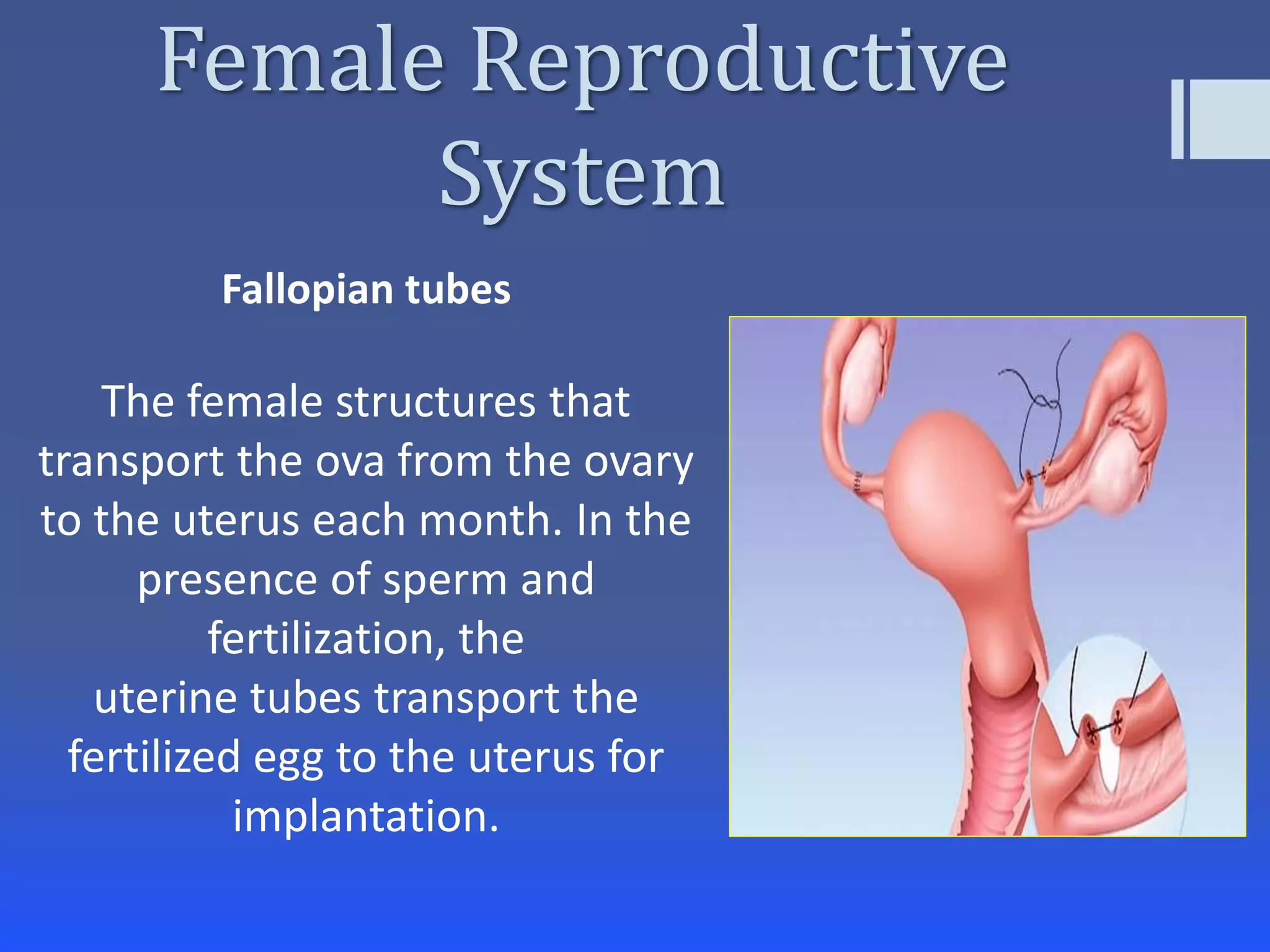
Fallopian tubes
The female structures that
transport the ova from the ovary
to the uterus each month. In the
presence of sperm and
fertilization, the
uterine tubes transport the
fertilized egg to the uterus for
implantation.
Male Reproductive System
Scrotum
Scrotum, in the male reproductive
system, a thin external sack of skin
that is divided into two
compartments; each compartment
contains one of the two testes, the
glands that produce sperm.
Male Reproductive System
Testis
The male gonads — the primary
male reproductive organs. They
have two, very
important functions that are very
important to the male
reproductive system: they produce
sperm, and they secrete
hormones, primarily testosterone.
Male Reproductive System
Epididymis
The epididymis is a tightly coiled
mass of thin tubes that carries
sperm from the testes to the vas
deferens in the male reproductive
system. They maturates the sperm
for 10 days to develop motility.
Male Reproductive System
Sperm duct
During mating, sperm cells that
have been released pass through
the sperm ducts.
Male Reproductive System
Seminal vesicle
Two small glands that store and produce
the majority of the fluid that makes up
semen. During ejaculation, the fluid
from the seminal vesicles is expelled into
the ejaculatory duct where it can then
move on to mix with sperm and other
reproductive fluids.
They secrete fluid that (60%) composes
the semen to appear slimy and slippery.
Ejaculation speed is 45 km/hr.
Male Reproductive System
Prostate gland
The prostate gland is a male
reproductive organ whose
main function is to
secrete prostate fluid, the milky
components of semen. The
muscles of the prostate gland also
help propel this seminal fluid into
the urethra during ejaculation.
Male Reproductive System
Penis
Penis is the male organ
for urination and sexual
intercourse. The penis is an
elongated, cylindrical structure
made of connective and erectile
tissue that extends outside the
body from the base of the pelvis.
Facts:
1. During Puberty, (approx. age 10-15), the
reproductive organs grow to their adult size.
2. During Puberty, the genitals becomes
functional for reproduction.
3. Testosterone is male gonadal hormone.
4. Estrogen is female gonadal hormone.
Secondary sexual
characteristics:
Boys Girls
Enlargement of scrotum and
penis
Development of breasts
Voice deepens and shoulders
widen
Hips widens
Develops pubic hair (genital, face,
body)
Develops pubic hair (genital,
body)
Produce sperm (Wet dreams)
Menstruation (menarche- first
period)
Human Reproductive
System
Thank you for
paying attention.

Human Reproductive System

  • 1.
    Human Reproductive System Prepared by: OrlandoA. Pistan, MAEd-GC Psychology Instructor
  • 2.
    Female Reproductive System Vagina The vaginareceives the penis during sexual intercourse and also serves as a conduit for menstrual flow from the uterus. During childbirth, the baby passes through the vagina. The hymen is a thin membrane of tissue that surrounds and narrows the vaginal opening.
  • 3.
    Female Reproductive System Cervix It isthe lower most part of the uterus and is made up of strong muscles. The function of the cervix is to allow flow of menstrual blood from the uterus into the vagina, and direct the sperms into the uterus during intercourse. The opening of the cervical canal is normally very narrow.
  • 4.
    Female Reproductive System Uterus The uterus,also known as the womb, is the hollow organ in the female reproductive system that holds a fetus during pregnancy.
  • 5.
    Female Reproductive System Ovaries The ovariesare located in the pelvis, one on each side of the uterus. Each ovary is about the size and shape of an almond. The ovaries produce eggs (ova) and female hormones. During each monthly menstrual cycle, an egg is released from one ovary.
  • 6.
    Female Reproductive System Fallopian tubes Thefemale structures that transport the ova from the ovary to the uterus each month. In the presence of sperm and fertilization, the uterine tubes transport the fertilized egg to the uterus for implantation.
  • 7.
    Male Reproductive System Scrotum Scrotum,in the male reproductive system, a thin external sack of skin that is divided into two compartments; each compartment contains one of the two testes, the glands that produce sperm.
  • 8.
    Male Reproductive System Testis Themale gonads — the primary male reproductive organs. They have two, very important functions that are very important to the male reproductive system: they produce sperm, and they secrete hormones, primarily testosterone.
  • 9.
    Male Reproductive System Epididymis Theepididymis is a tightly coiled mass of thin tubes that carries sperm from the testes to the vas deferens in the male reproductive system. They maturates the sperm for 10 days to develop motility.
  • 10.
    Male Reproductive System Spermduct During mating, sperm cells that have been released pass through the sperm ducts.
  • 11.
    Male Reproductive System Seminalvesicle Two small glands that store and produce the majority of the fluid that makes up semen. During ejaculation, the fluid from the seminal vesicles is expelled into the ejaculatory duct where it can then move on to mix with sperm and other reproductive fluids. They secrete fluid that (60%) composes the semen to appear slimy and slippery. Ejaculation speed is 45 km/hr.
  • 12.
    Male Reproductive System Prostategland The prostate gland is a male reproductive organ whose main function is to secrete prostate fluid, the milky components of semen. The muscles of the prostate gland also help propel this seminal fluid into the urethra during ejaculation.
  • 13.
    Male Reproductive System Penis Penisis the male organ for urination and sexual intercourse. The penis is an elongated, cylindrical structure made of connective and erectile tissue that extends outside the body from the base of the pelvis.
  • 14.
    Facts: 1. During Puberty,(approx. age 10-15), the reproductive organs grow to their adult size. 2. During Puberty, the genitals becomes functional for reproduction. 3. Testosterone is male gonadal hormone. 4. Estrogen is female gonadal hormone.
  • 15.
    Secondary sexual characteristics: Boys Girls Enlargementof scrotum and penis Development of breasts Voice deepens and shoulders widen Hips widens Develops pubic hair (genital, face, body) Develops pubic hair (genital, body) Produce sperm (Wet dreams) Menstruation (menarche- first period)
  • 16.