Human-in-the-loop in
Machine Learning
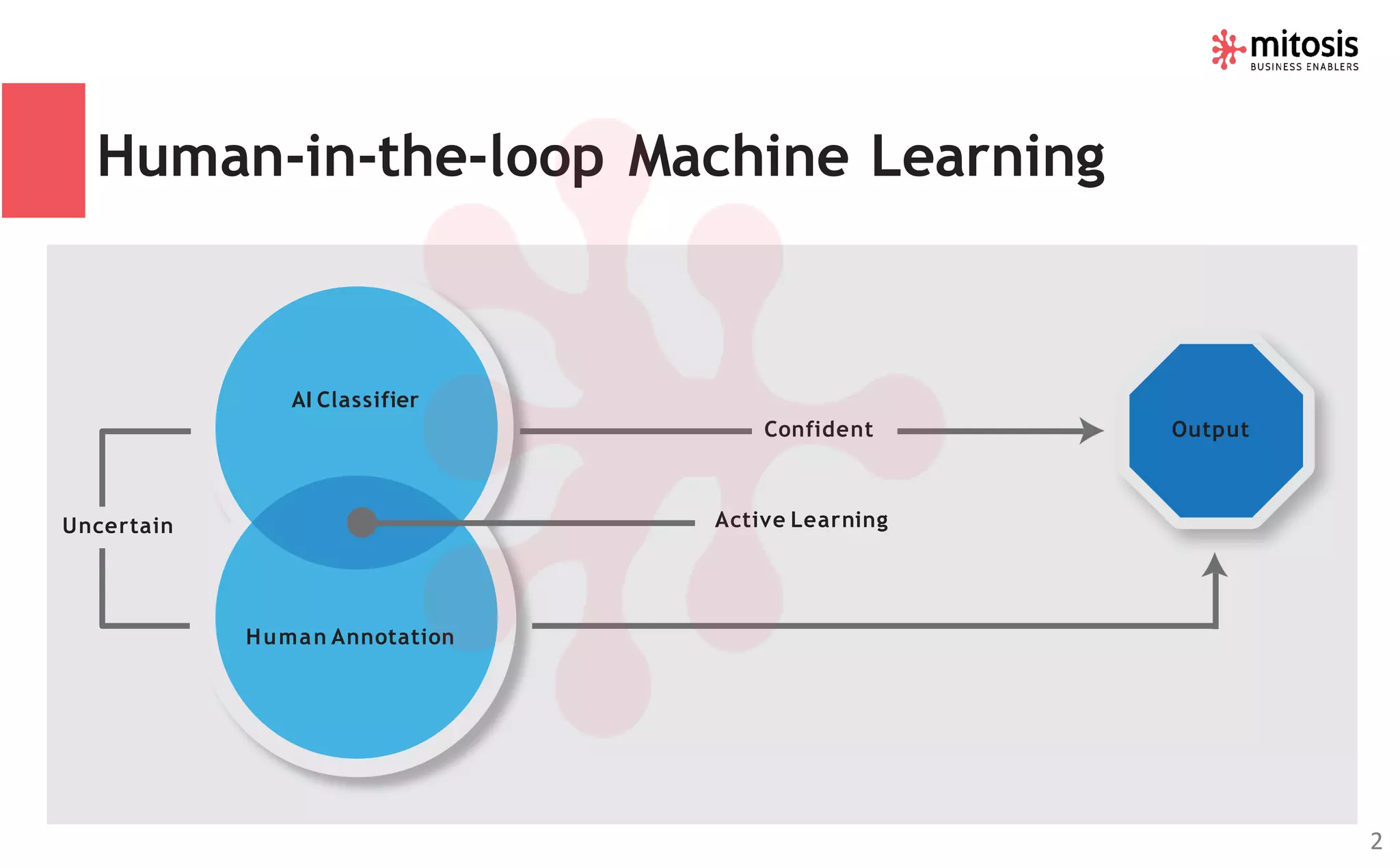
Uncertain
Confident
Active Learning
Output
AI Classifier
Human Annotation
Human-in-the-loop Machine Learning
2
What is Human-in-the-loop?
▪ Human in the loop machine learning is a process that leverages both human and
machine intelligence to create machine learning-based AImodels.
▪ When a system is unable to provide a solution or solve a problem, human
intervention is needed in the training and testing phases of an algorithm
development.
▪ This creates a recurring feedback loop where every iteration of algorithm provides
better solutions.Humans can also modify the algorithm to improve accuracy.
3
What is HITL Machine Learning?
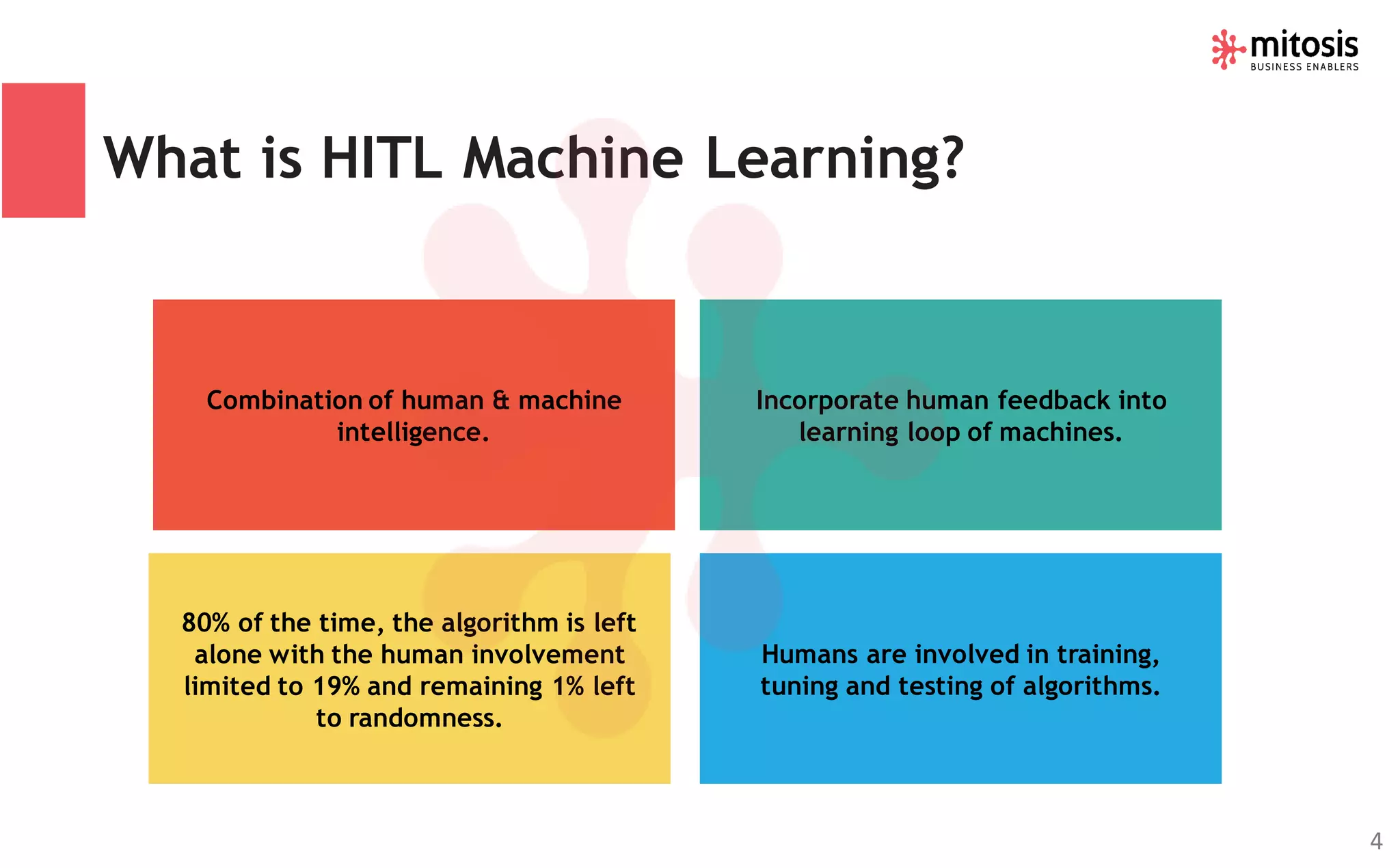
Combination of human & machine
intelligence.
Incorporate human feedback into
learning loop of machines.
Humans are involved in training,
tuning and testing of algorithms.
80% of the time, the algorithm is left
alone with the human involvement
limited to 19% and remaining 1% left
to randomness.
4
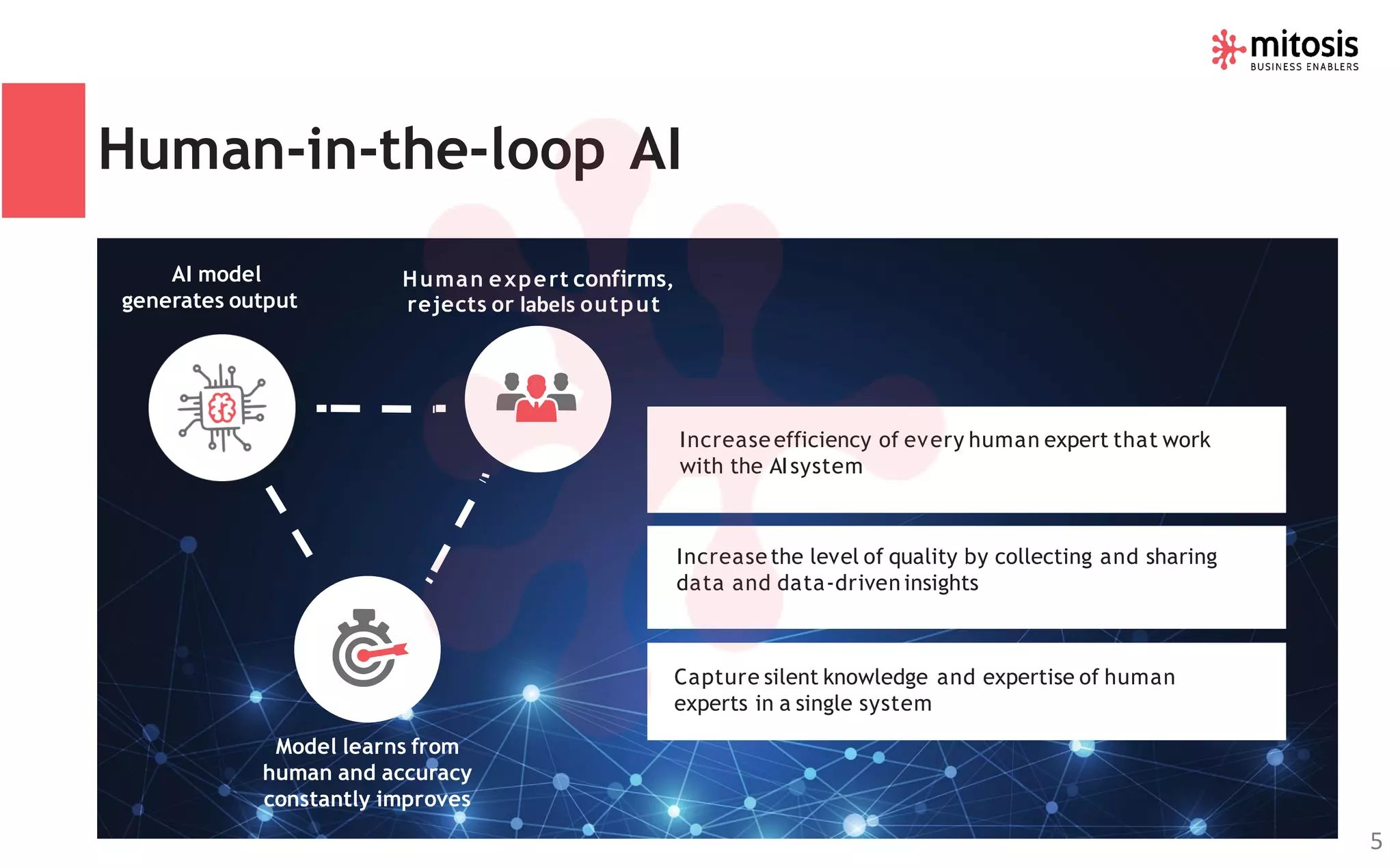
Human-in-the-loop AI
Increase efficiency of every human expert that work
with the AIsystem
Increase the level of quality by collecting and sharing
data and data-driven insights
Capture silent knowledge and expertise of human
experts in a single system
Human expert confirms,
rejects or labels output
AI model
generates output
Model learns from
human and accuracy
constantly improves
5
Combining Machine Learning with
Human Contributions
Crowdsourcing of subjective
parameters.
▪ Contextualize data.
▪ Use user expertise in identifying
and recognizing patterns.
▪ Process data that is difficult
to process automatically.
▪ Ask users to improvealgorithms.
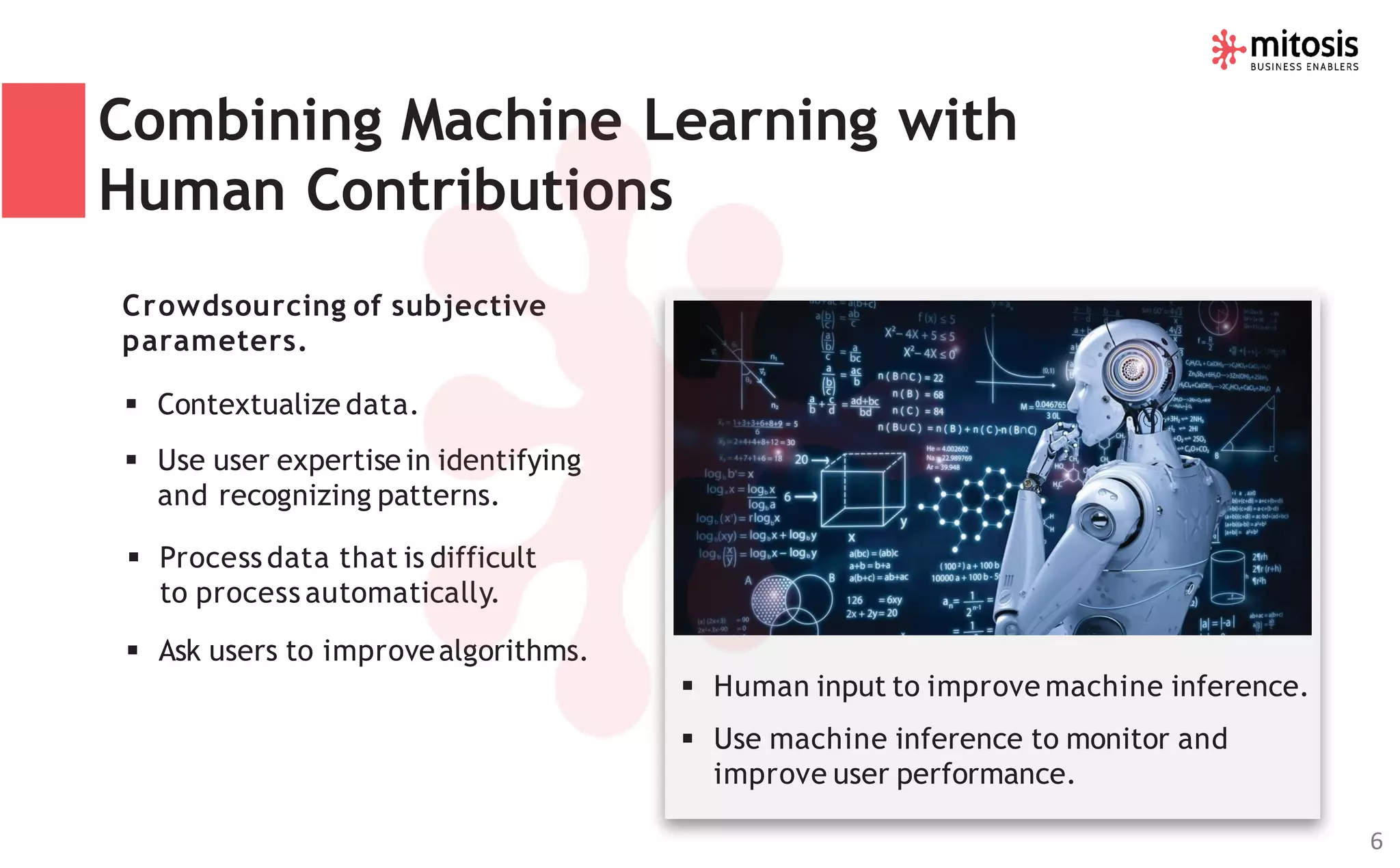
▪ Human input to improve machine inference.
▪ Use machine inference to monitor and
improve user performance.
6
Types of Data Labelling
The data labelling can be categorized into different types such as
▪ Semantic segmentation to train visual perception annotation-based model
▪ Landmark annotation to train facial recognition
▪ NLPannotation, text annotation and sentiment analysis to train language
or voice recognition model.
▪ The data are annotated and labelled to develop AI devices that communicates
with humans.
▪ HITLcan create different types of training data sets for different types of machine
learning models built for different fields.
7
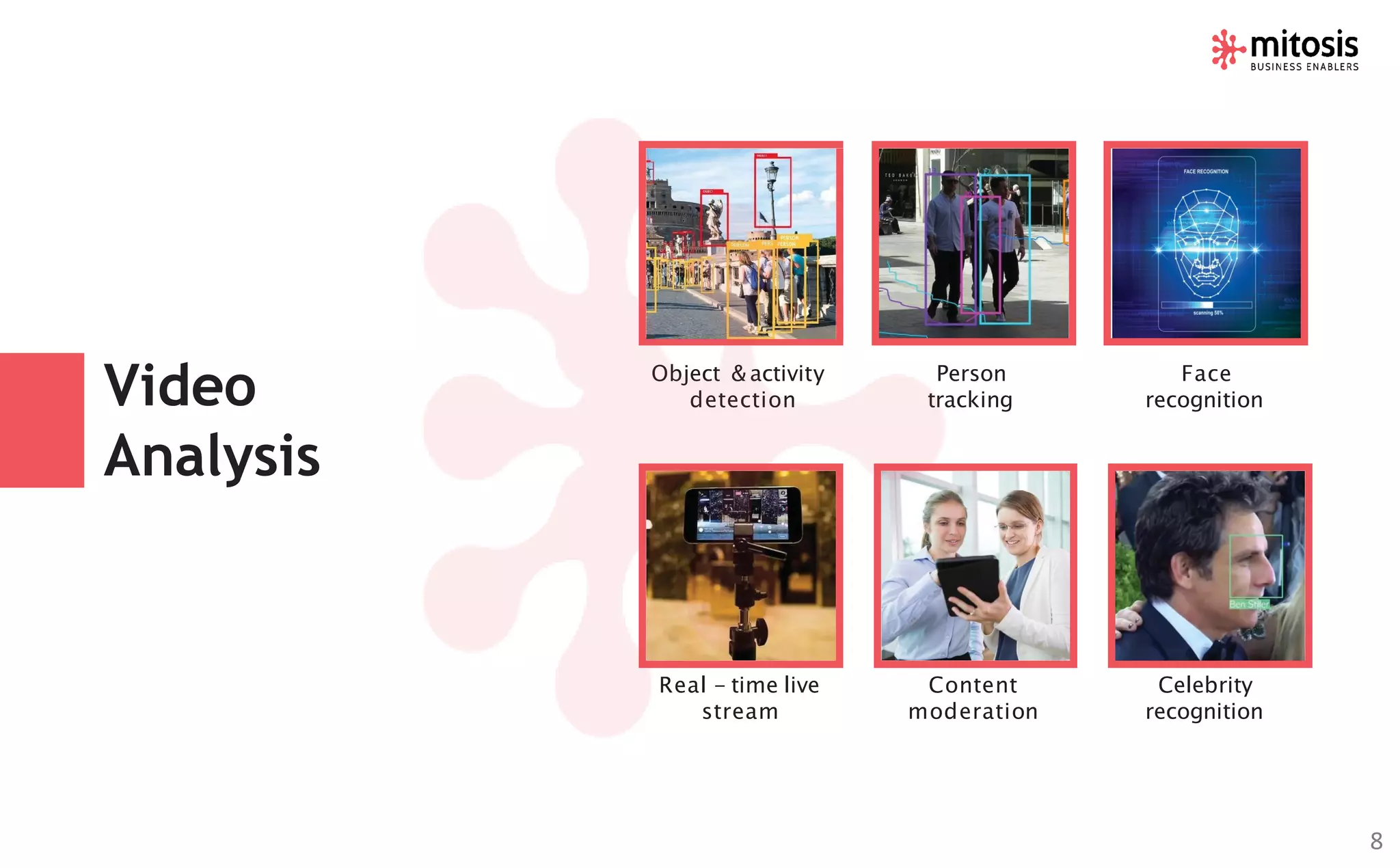
Object & activity
detection
Person
tracking
Face
recognition
Real - time live
stream
Content
moderation
Celebrity
recognition
Video
Analysis
8
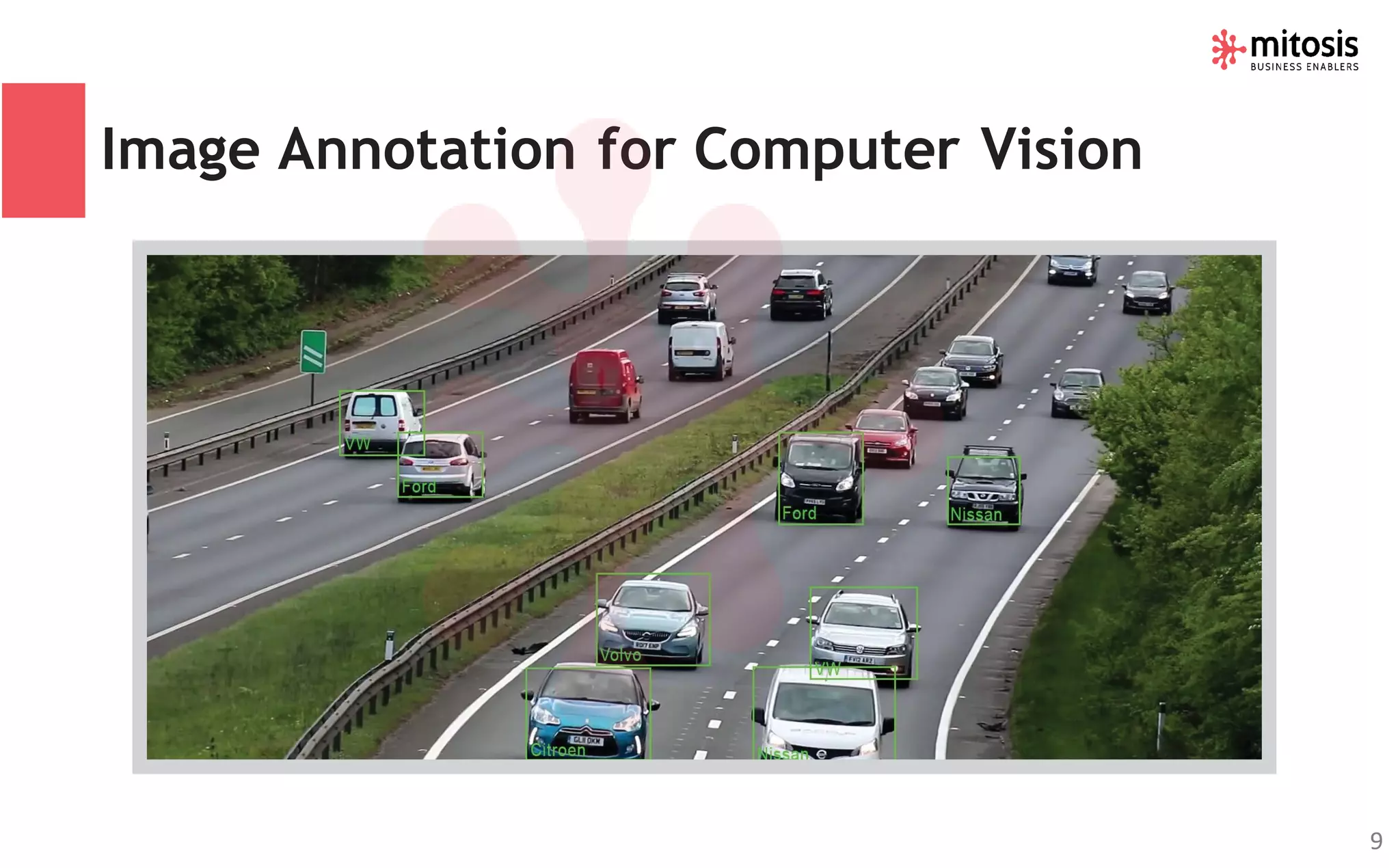
Image Annotation for Computer Vision
9
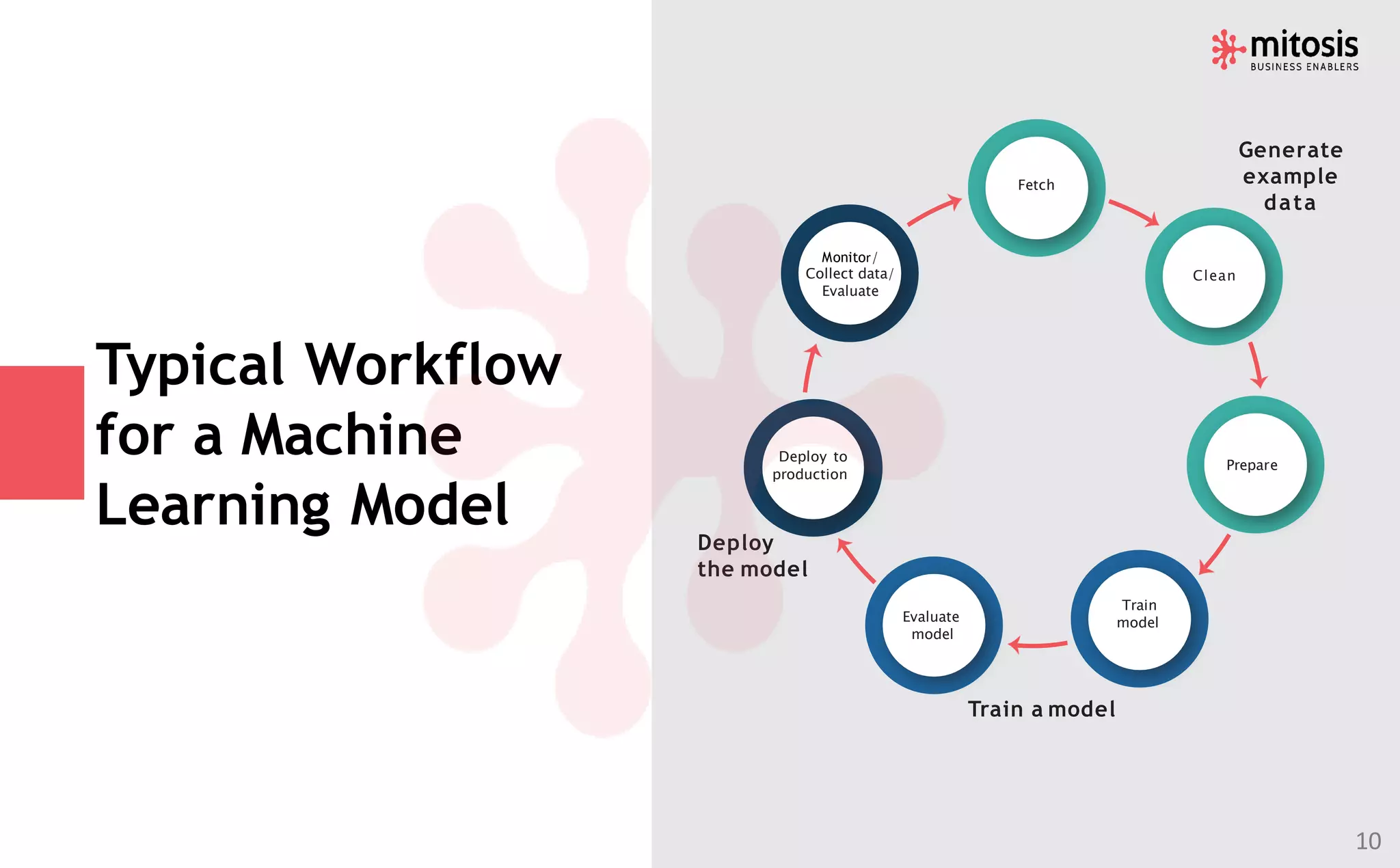
Typical Workflow
for a Machine
Learning Model Deploy
the model
Generate
example
data
Train a model
Clean
Fetch
Prepare
Train
modelEvaluate
model
Deploy to
production
Monitor/
Collect data/
Evaluate
10
Lifecycle of HITL Machine Learning
▪ Inception - A manual workflowgets created.
▪ Iteration - The workflow is improvediteratively.
▪ Transition - The workflow transitions from a complete manual to semi-automated.
▪ Monitoring - Complete automation shifts HITLinto a validation mechanism.
11
Inception
▪ Here, we follow a "Divide and Conquer" approach where we categorize the process
into smaller components and train the machine learning models accordingly.
▪ The goal of the Machine learning model is defined and conceptualized. We fetch the
raw unstructured data, clean, label the same and prepare for the next stage.
12
Iteration
▪ We increase the efficiency, time cost, quality and accuracy of the machine learning
model to achieve better outcomes and obtain higher quality data.
▪ We train and evaluate the model to determine its efficiency in an iterative way.
▪ The iterative process on the workflow components benefits us to structure our
machine learning modelefficiently.
13
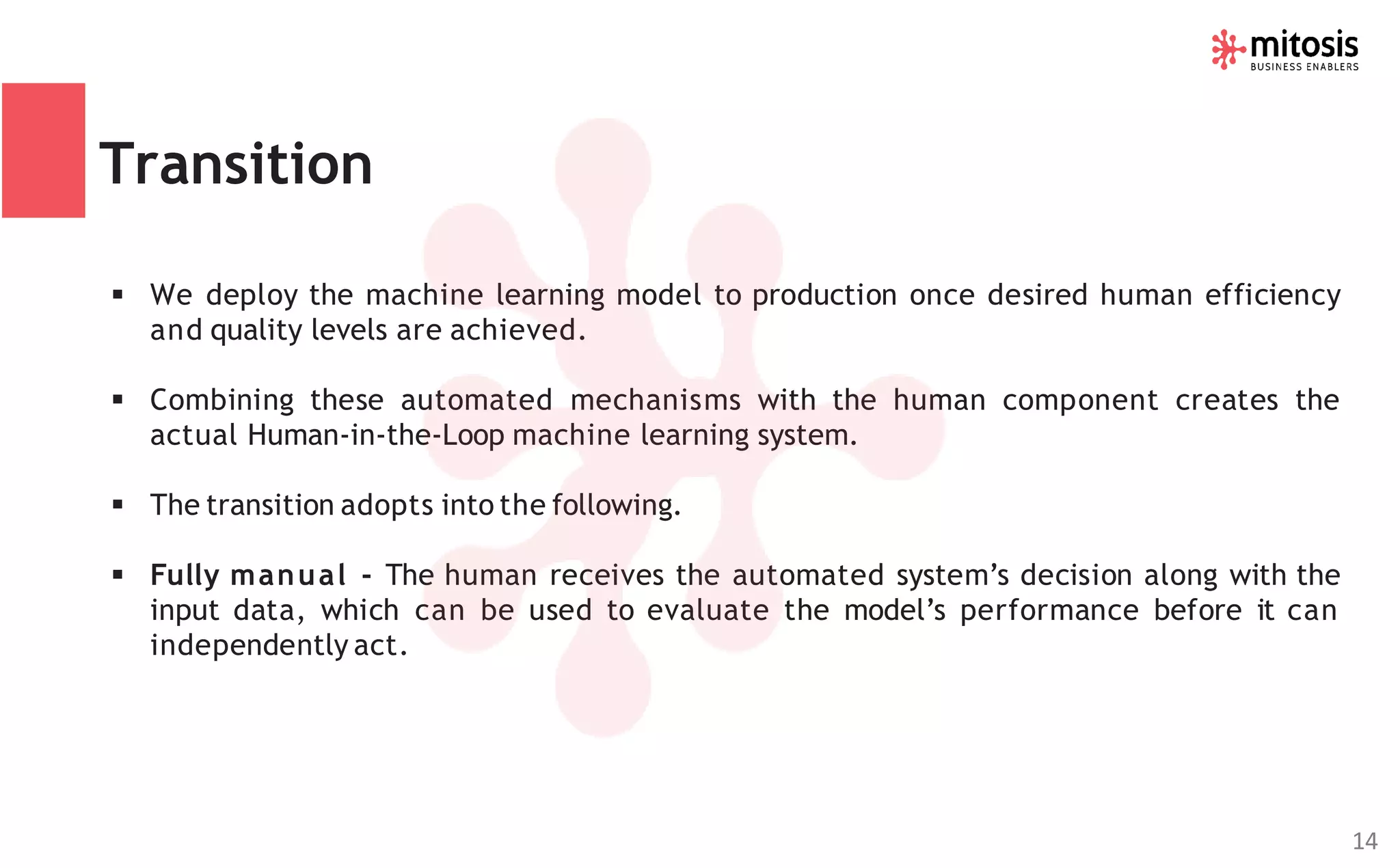
Transition
▪ We deploy the machine learning model to production once desired human efficiency
and quality levels are achieved.
▪ Combining these automated mechanisms with the human component creates the
actual Human-in-the-Loop machine learning system.
▪ The transition adopts into the following.
▪ Fully manual - The human receives the automated system’s decision along with the
input data, which can be used to evaluate the model’s performance before it can
independently act.
14
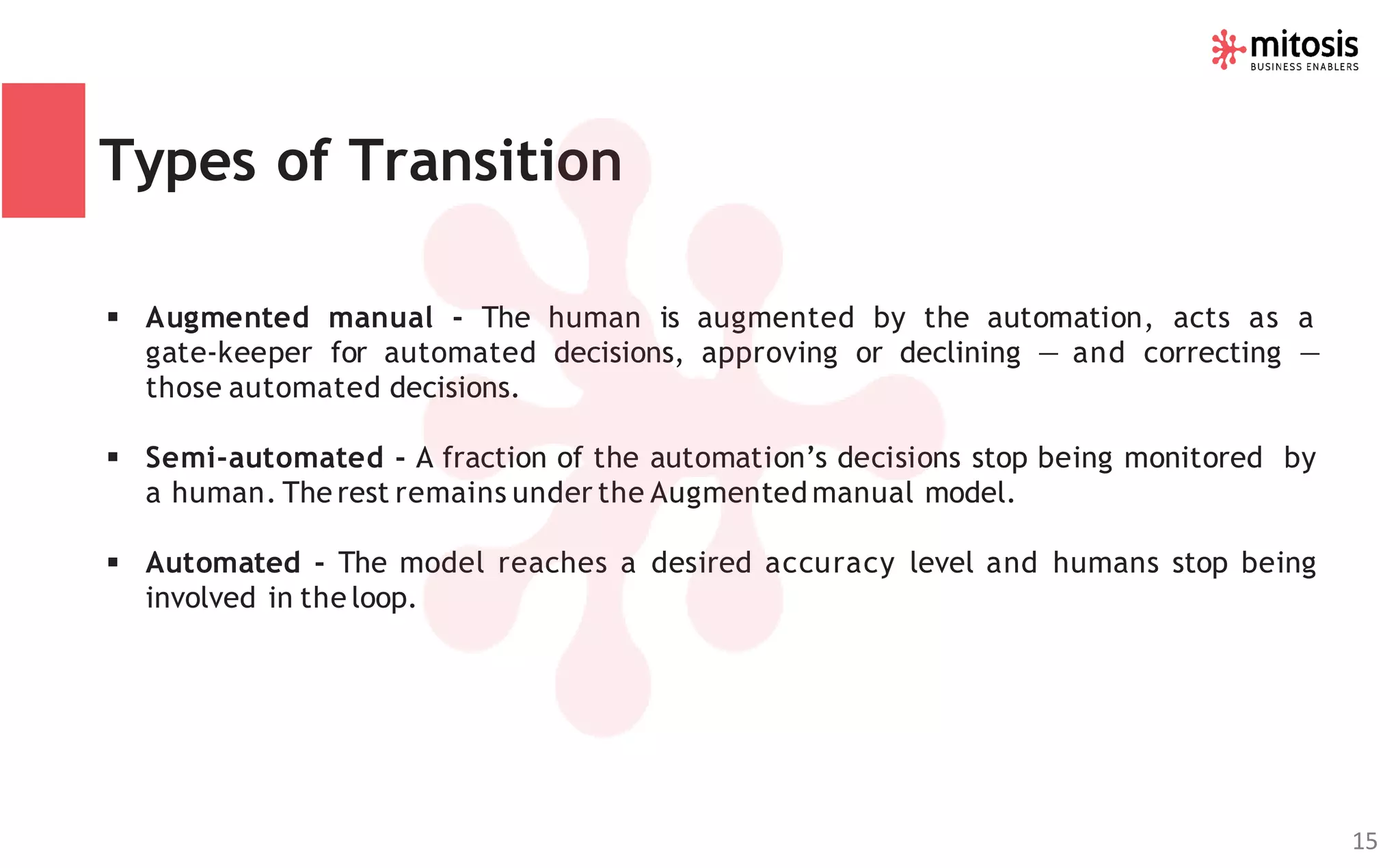
Types of Transition
▪ Augmented manual - The human is augmented by the automation, acts as a
gate-keeper for automated decisions, approving or declining — and correcting —
those automated decisions.
▪ Semi-automated - A fraction of the automation’s decisions stop being monitored by
a human. The rest remains under the Augmented manual model.
▪ Automated - The model reaches a desired accuracy level and humans stop being
involved in the loop.
15
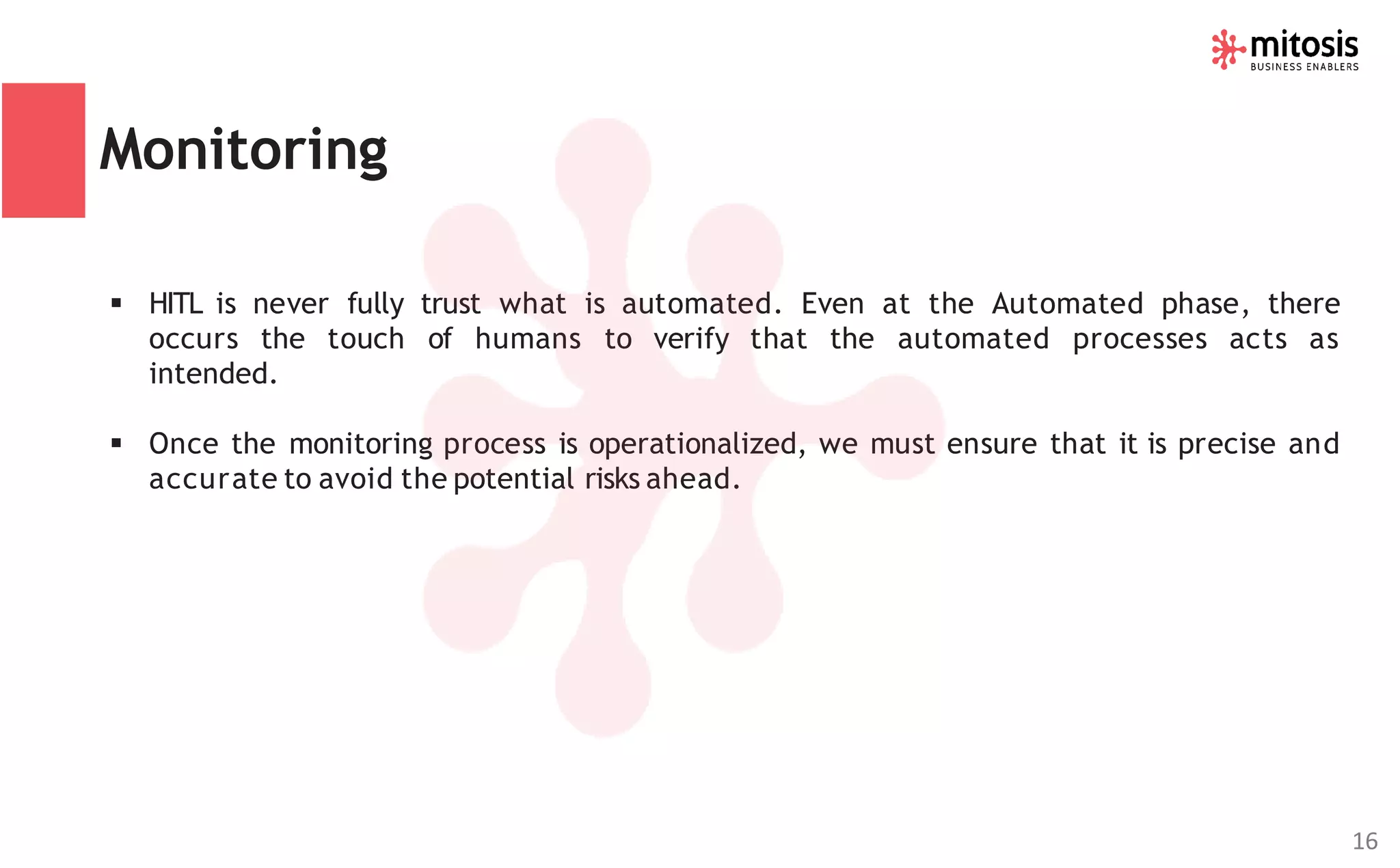
Monitoring
▪ HITL is never fully trust what is automated. Even at the Automated phase, there
occurs the touch of humans to verify that the automated processes acts as
intended.
▪ Once the monitoring process is operationalized, we must ensure that it is precise and
accurate to avoid the potential risks ahead.
16
Who uses Human-in-the-loop
Machine Learning?
▪ HITL can be used for manifold AI projects including NLP, computer vision,
sentiment analysis, transcription, and a vast amount of other use cases.
▪ Any deep learning AI can benefit from human intelligence involved into the
loop at some point.
17
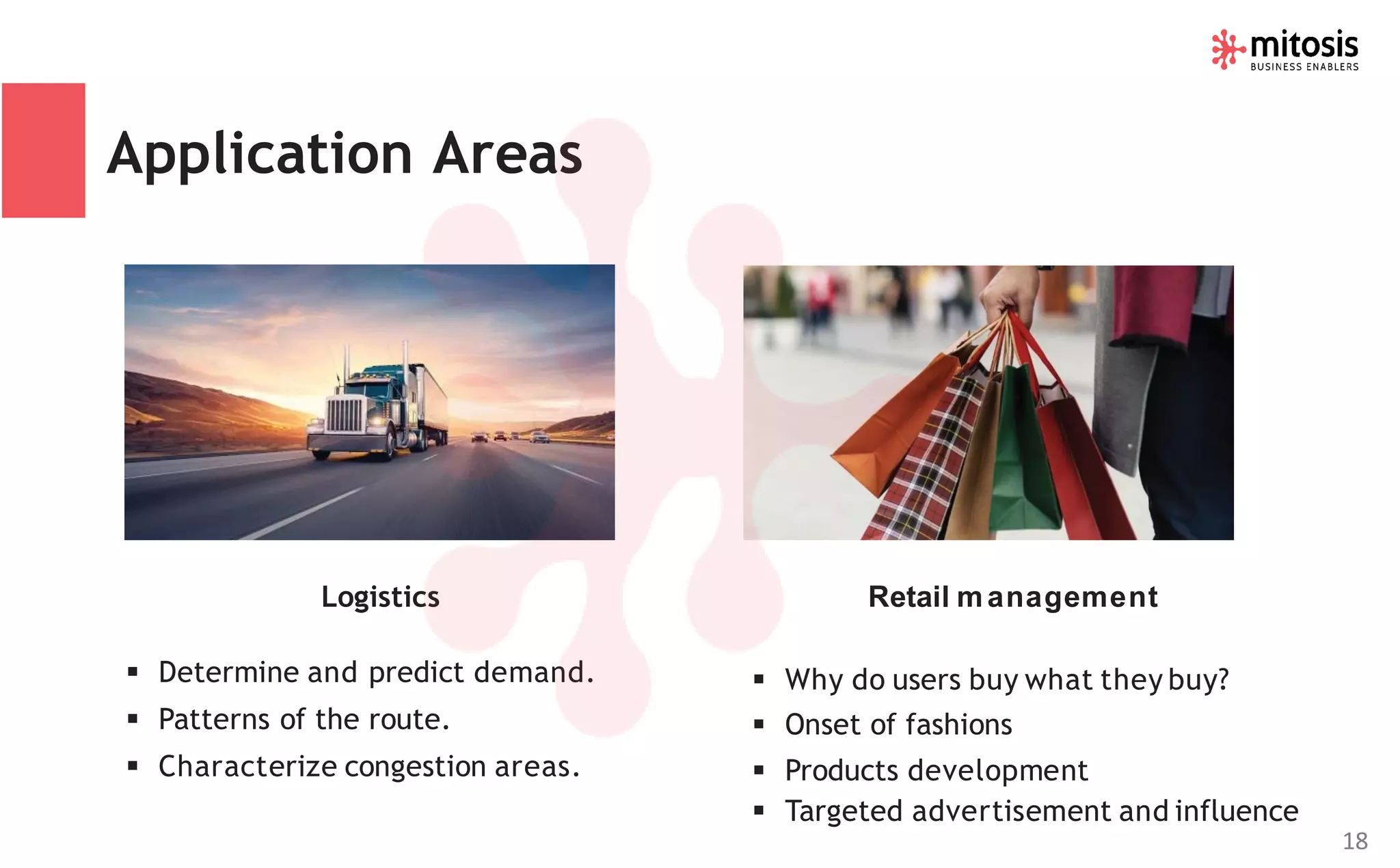
Logistics
▪ Determine and predict demand.
▪ Patterns of the route.
▪ Characterize congestion areas.
Retail management
▪ Why do users buy what they buy?
▪ Onset of fashions
▪ Products development
▪ Targeted advertisement and influence
Application Areas
18
19
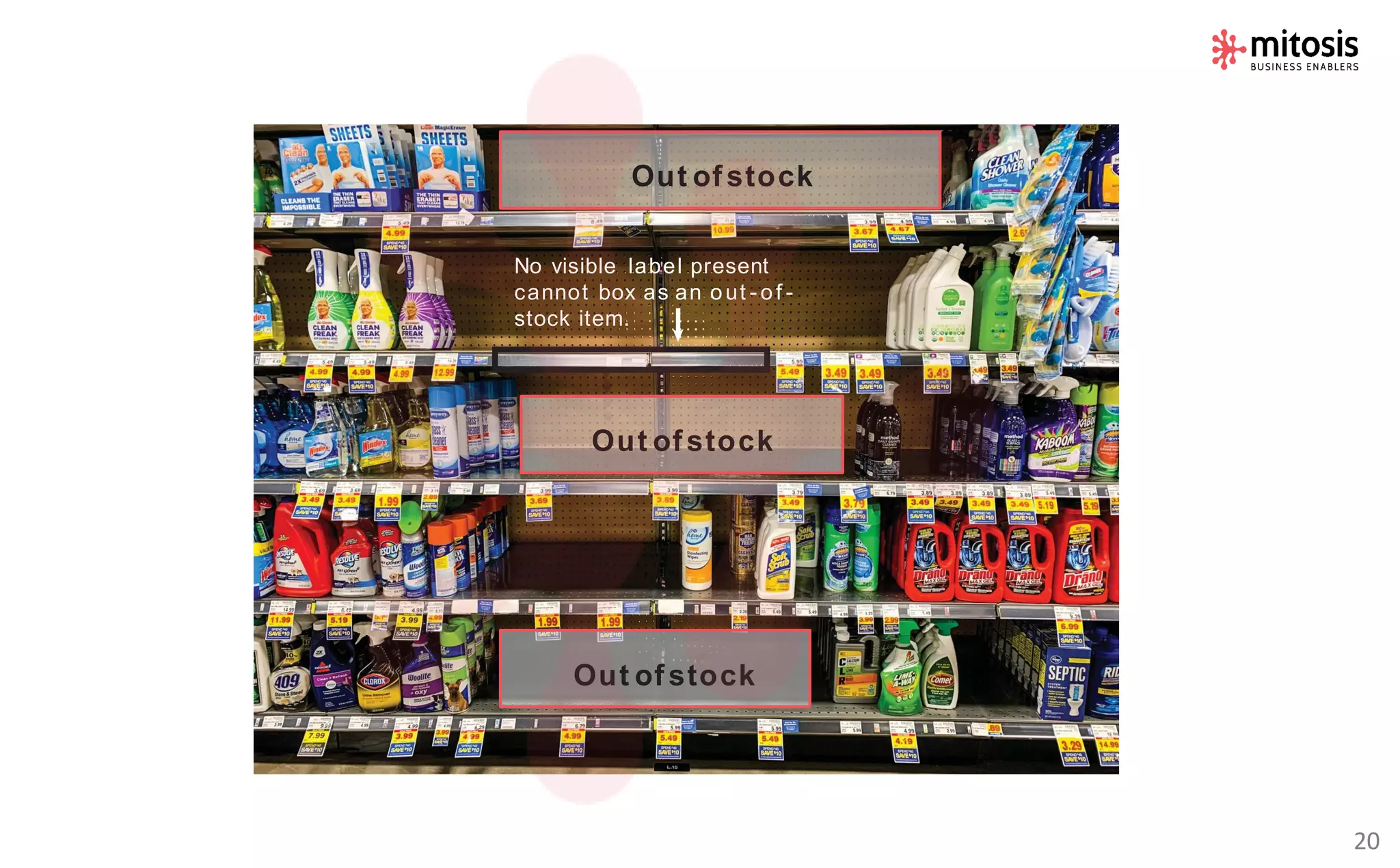
Out ofstock
Out ofstock
Out ofstock
No visible label present
cannot box as an out - of -
stock item.
20
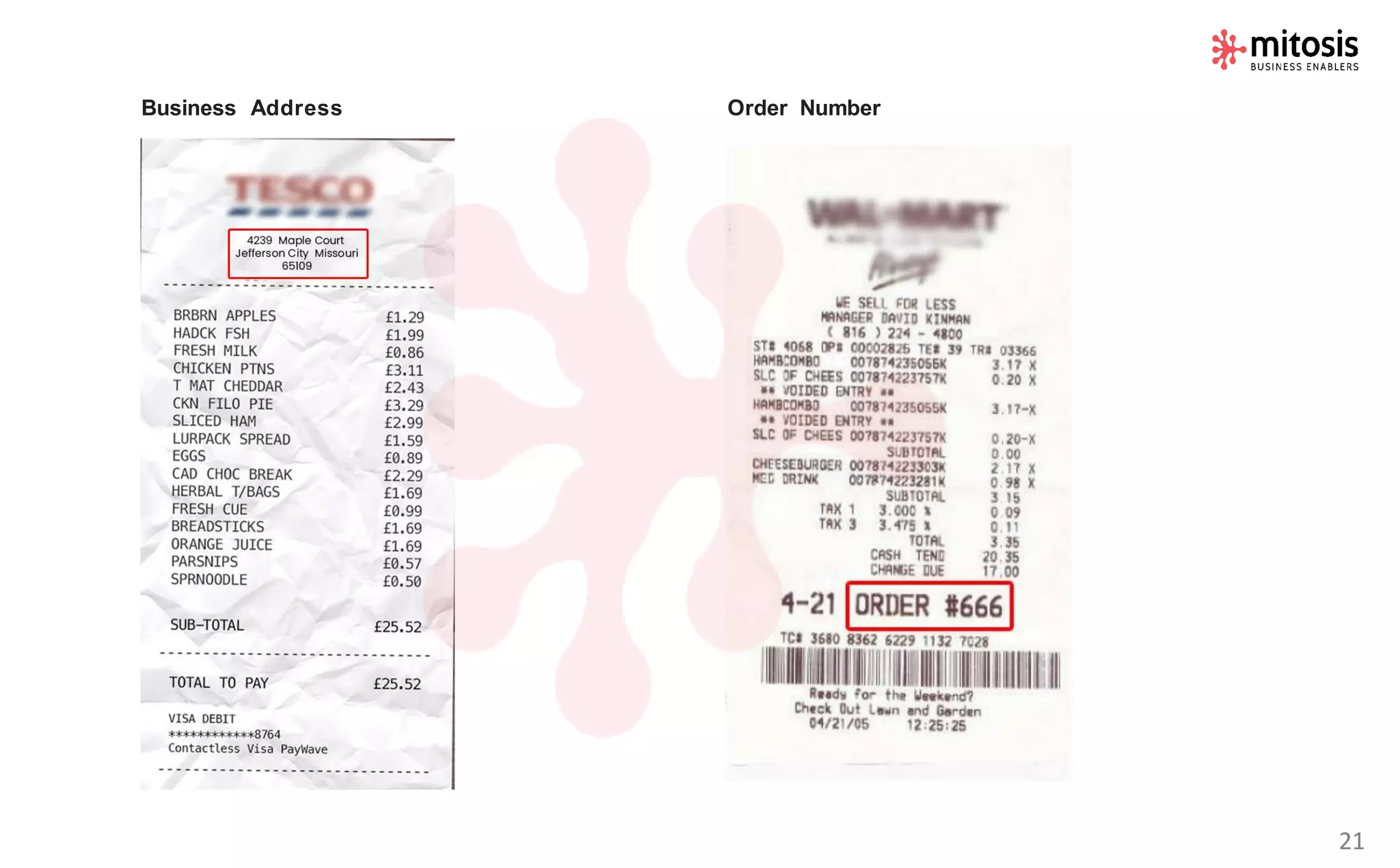
Business Address Order Number
21
Conclusion
▪ HITL will significantly change the way business workflows are carried out in future
by creating a pipeline that includes data collection, model training, testing,
deployment andmaintenance.
▪ This is a very excitingtime to be involved in this field as industry and institutions
are pushing the limits furtherevery day.
22
hello@mitosistech.com
www.mitosistech.com
IND: +91-78240 35173
US: +1-(415) 251-2064

Human in-the-loop in Machine Learning

  • 1.
  • 2.
    Uncertain Confident Active Learning Output AI Classifier HumanAnnotation Human-in-the-loop Machine Learning 2
  • 3.
    What is Human-in-the-loop? ▪Human in the loop machine learning is a process that leverages both human and machine intelligence to create machine learning-based AImodels. ▪ When a system is unable to provide a solution or solve a problem, human intervention is needed in the training and testing phases of an algorithm development. ▪ This creates a recurring feedback loop where every iteration of algorithm provides better solutions.Humans can also modify the algorithm to improve accuracy. 3
  • 4.
    What is HITLMachine Learning? Combination of human & machine intelligence. Incorporate human feedback into learning loop of machines. Humans are involved in training, tuning and testing of algorithms. 80% of the time, the algorithm is left alone with the human involvement limited to 19% and remaining 1% left to randomness. 4
  • 5.
    Human-in-the-loop AI Increase efficiencyof every human expert that work with the AIsystem Increase the level of quality by collecting and sharing data and data-driven insights Capture silent knowledge and expertise of human experts in a single system Human expert confirms, rejects or labels output AI model generates output Model learns from human and accuracy constantly improves 5
  • 6.
    Combining Machine Learningwith Human Contributions Crowdsourcing of subjective parameters. ▪ Contextualize data. ▪ Use user expertise in identifying and recognizing patterns. ▪ Process data that is difficult to process automatically. ▪ Ask users to improvealgorithms. ▪ Human input to improve machine inference. ▪ Use machine inference to monitor and improve user performance. 6
  • 7.
    Types of DataLabelling The data labelling can be categorized into different types such as ▪ Semantic segmentation to train visual perception annotation-based model ▪ Landmark annotation to train facial recognition ▪ NLPannotation, text annotation and sentiment analysis to train language or voice recognition model. ▪ The data are annotated and labelled to develop AI devices that communicates with humans. ▪ HITLcan create different types of training data sets for different types of machine learning models built for different fields. 7
  • 8.
    Object & activity detection Person tracking Face recognition Real- time live stream Content moderation Celebrity recognition Video Analysis 8
  • 9.
    Image Annotation forComputer Vision 9
  • 10.
    Typical Workflow for aMachine Learning Model Deploy the model Generate example data Train a model Clean Fetch Prepare Train modelEvaluate model Deploy to production Monitor/ Collect data/ Evaluate 10
  • 11.
    Lifecycle of HITLMachine Learning ▪ Inception - A manual workflowgets created. ▪ Iteration - The workflow is improvediteratively. ▪ Transition - The workflow transitions from a complete manual to semi-automated. ▪ Monitoring - Complete automation shifts HITLinto a validation mechanism. 11
  • 12.
    Inception ▪ Here, wefollow a "Divide and Conquer" approach where we categorize the process into smaller components and train the machine learning models accordingly. ▪ The goal of the Machine learning model is defined and conceptualized. We fetch the raw unstructured data, clean, label the same and prepare for the next stage. 12
  • 13.
    Iteration ▪ We increasethe efficiency, time cost, quality and accuracy of the machine learning model to achieve better outcomes and obtain higher quality data. ▪ We train and evaluate the model to determine its efficiency in an iterative way. ▪ The iterative process on the workflow components benefits us to structure our machine learning modelefficiently. 13
  • 14.
    Transition ▪ We deploythe machine learning model to production once desired human efficiency and quality levels are achieved. ▪ Combining these automated mechanisms with the human component creates the actual Human-in-the-Loop machine learning system. ▪ The transition adopts into the following. ▪ Fully manual - The human receives the automated system’s decision along with the input data, which can be used to evaluate the model’s performance before it can independently act. 14
  • 15.
    Types of Transition ▪Augmented manual - The human is augmented by the automation, acts as a gate-keeper for automated decisions, approving or declining — and correcting — those automated decisions. ▪ Semi-automated - A fraction of the automation’s decisions stop being monitored by a human. The rest remains under the Augmented manual model. ▪ Automated - The model reaches a desired accuracy level and humans stop being involved in the loop. 15
  • 16.
    Monitoring ▪ HITL isnever fully trust what is automated. Even at the Automated phase, there occurs the touch of humans to verify that the automated processes acts as intended. ▪ Once the monitoring process is operationalized, we must ensure that it is precise and accurate to avoid the potential risks ahead. 16
  • 17.
    Who uses Human-in-the-loop MachineLearning? ▪ HITL can be used for manifold AI projects including NLP, computer vision, sentiment analysis, transcription, and a vast amount of other use cases. ▪ Any deep learning AI can benefit from human intelligence involved into the loop at some point. 17
  • 18.
    Logistics ▪ Determine andpredict demand. ▪ Patterns of the route. ▪ Characterize congestion areas. Retail management ▪ Why do users buy what they buy? ▪ Onset of fashions ▪ Products development ▪ Targeted advertisement and influence Application Areas 18
  • 19.
  • 20.
    Out ofstock Out ofstock Outofstock No visible label present cannot box as an out - of - stock item. 20
  • 21.
  • 22.
    Conclusion ▪ HITL willsignificantly change the way business workflows are carried out in future by creating a pipeline that includes data collection, model training, testing, deployment andmaintenance. ▪ This is a very excitingtime to be involved in this field as industry and institutions are pushing the limits furtherevery day. 22
  • 23.