HTTP/2
- A brief history about HTTP protocols

- The main benefits of HTTP/2

- Performance and example
HTTP/0.9 - The One-line Protocol (1991)
Invented by Tim Berners-Lee at CERN in the years 1989–1991

Initial version of HTTP — a simple client-server, request-response, telenet-
friendly protocol

Request nature: single-line (method + path for requested document)

Methods supported: GET only

Response type: hypertext only

Connection nature: terminated immediately after the response

No HTTP headers (cannot transfer other content type files), No status/
error codes, No URLs, No versioning
HTTP/1.0  -  Building extensibility - (1996)
Browser-friendly protocol

Provided header fields including rich metadata about both request
and response (HTTP version number, status code, content type)

Response: not limited to hypertext (Content-Type header provided
ability to transmit files other than plain HTML files — e.g. scripts,
stylesheets, media)

Methods supported: GET , HEAD , POST

Connection nature: terminated immediately after the response
HTTP/1.1 -  The standardised protocol (1999)
This is the HTTP version currently in common use.

Introduced critical performance optimisations and feature
enhancements — persistent and pipelined connections, chunked
transfers, compression/decompression, content negotiations,
virtual hosting (a server with a single IP Address hosting multiple
domains), faster response and great bandwidth savings by adding
cache support.

Methods supported: GET , HEAD , POST , PUT , DELETE , TRACE
, OPTIONS

Connection nature: long-lived
HTTPS - RFC 2818 (May 2000)
Is the secure version of HTTP. It uses SSL/TLS for secure encrypted
communications.

Originally developed by Netscape in mid-1990s, SSL (Secure Socket Layer) is a
cryptographic protocol enhancement to HTTP, which defines how client and server
should communicate with each other securely. TLS (Transport Layer Security) is the
successor of SSL.

An HTTPS connection can protect the data transfer from the man-in-the-middle
attacks and common security threats by providing bidirectional encryption for
communications between a client and server.

SSL/TLS Handshake — major problem in HTTPS

Although HTTPS is secure by its design, the SSL/TLS handshake process
consumes a significant time before establishing an HTTPS connection. It normally
costs 1–2 seconds and drastically slows down the startup performance of a
website.
HTTP/2 - (2015)
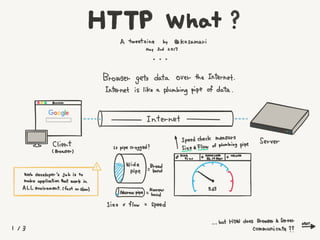
The HTTP/2 protocol has several prime differences from the HTTP/1.1
version:

It is a binary protocol rather than text. It can no longer be read and
created manually. Despite this hurdle, improved optimisation techniques
can now be implemented.

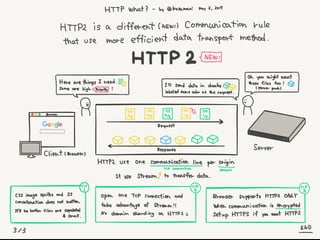
It is a multiplexed protocol. Parallel requests can be handled over the
same connection, removing the order and blocking constraints of the
HTTP/1.x protocol.

It compresses headers. As these are often similar among a set of
requests, this removes duplication and overhead of data transmitted.

It allows a server to populate data in a client cache, in advance of it
being required, through a mechanism called the server push.
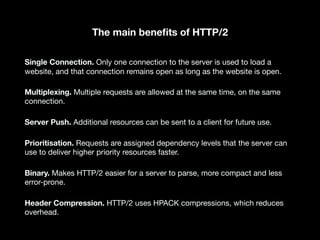
The main benefits of HTTP/2
Single Connection. Only one connection to the server is used to load a
website, and that connection remains open as long as the website is open. 

Multiplexing. Multiple requests are allowed at the same time, on the same
connection. 

Server Push. Additional resources can be sent to a client for future use.

Prioritisation. Requests are assigned dependency levels that the server can
use to deliver higher priority resources faster.

Binary. Makes HTTP/2 easier for a server to parse, more compact and less
error-prone.

Header Compression. HTTP/2 uses HPACK compressions, which reduces
overhead.
Performance and examples
https://blog.golang.org/h2push

https://http2.golang.org/

https://http2.golang.org/gophertiles

https://github.com/pdr0/http2-nodejs
@pselas
github.com/pdr0
me@pedroselas.com
https://github.com/pdr0/http2-nodejs

HTTP/2 - A brief introduction

  • 1.
    HTTP/2 - A briefhistory about HTTP protocols - The main benefits of HTTP/2 - Performance and example
  • 2.
    HTTP/0.9 - TheOne-line Protocol (1991) Invented by Tim Berners-Lee at CERN in the years 1989–1991 Initial version of HTTP — a simple client-server, request-response, telenet- friendly protocol Request nature: single-line (method + path for requested document) Methods supported: GET only Response type: hypertext only Connection nature: terminated immediately after the response No HTTP headers (cannot transfer other content type files), No status/ error codes, No URLs, No versioning
  • 4.
    HTTP/1.0  -  Buildingextensibility - (1996) Browser-friendly protocol Provided header fields including rich metadata about both request and response (HTTP version number, status code, content type) Response: not limited to hypertext (Content-Type header provided ability to transmit files other than plain HTML files — e.g. scripts, stylesheets, media) Methods supported: GET , HEAD , POST Connection nature: terminated immediately after the response
  • 5.
    HTTP/1.1 -  Thestandardised protocol (1999) This is the HTTP version currently in common use. Introduced critical performance optimisations and feature enhancements — persistent and pipelined connections, chunked transfers, compression/decompression, content negotiations, virtual hosting (a server with a single IP Address hosting multiple domains), faster response and great bandwidth savings by adding cache support. Methods supported: GET , HEAD , POST , PUT , DELETE , TRACE , OPTIONS Connection nature: long-lived
  • 6.
    HTTPS - RFC2818 (May 2000) Is the secure version of HTTP. It uses SSL/TLS for secure encrypted communications. Originally developed by Netscape in mid-1990s, SSL (Secure Socket Layer) is a cryptographic protocol enhancement to HTTP, which defines how client and server should communicate with each other securely. TLS (Transport Layer Security) is the successor of SSL. An HTTPS connection can protect the data transfer from the man-in-the-middle attacks and common security threats by providing bidirectional encryption for communications between a client and server. SSL/TLS Handshake — major problem in HTTPS Although HTTPS is secure by its design, the SSL/TLS handshake process consumes a significant time before establishing an HTTPS connection. It normally costs 1–2 seconds and drastically slows down the startup performance of a website.
  • 8.
    HTTP/2 - (2015) TheHTTP/2 protocol has several prime differences from the HTTP/1.1 version: It is a binary protocol rather than text. It can no longer be read and created manually. Despite this hurdle, improved optimisation techniques can now be implemented. It is a multiplexed protocol. Parallel requests can be handled over the same connection, removing the order and blocking constraints of the HTTP/1.x protocol. It compresses headers. As these are often similar among a set of requests, this removes duplication and overhead of data transmitted. It allows a server to populate data in a client cache, in advance of it being required, through a mechanism called the server push.
  • 9.
    The main benefitsof HTTP/2 Single Connection. Only one connection to the server is used to load a website, and that connection remains open as long as the website is open. Multiplexing. Multiple requests are allowed at the same time, on the same connection. Server Push. Additional resources can be sent to a client for future use. Prioritisation. Requests are assigned dependency levels that the server can use to deliver higher priority resources faster. Binary. Makes HTTP/2 easier for a server to parse, more compact and less error-prone. Header Compression. HTTP/2 uses HPACK compressions, which reduces overhead.
  • 13.
  • 14.