HSC Biology
• Module 3: The Search For Better Health
Students Learn to:
1. Over 3000 years ago
the Chinese and
Hebrews were
advocating cleanliness
in food, water and
personal hygiene
1. • Identify the conditions under which an
organism is described as a pathogen
2.
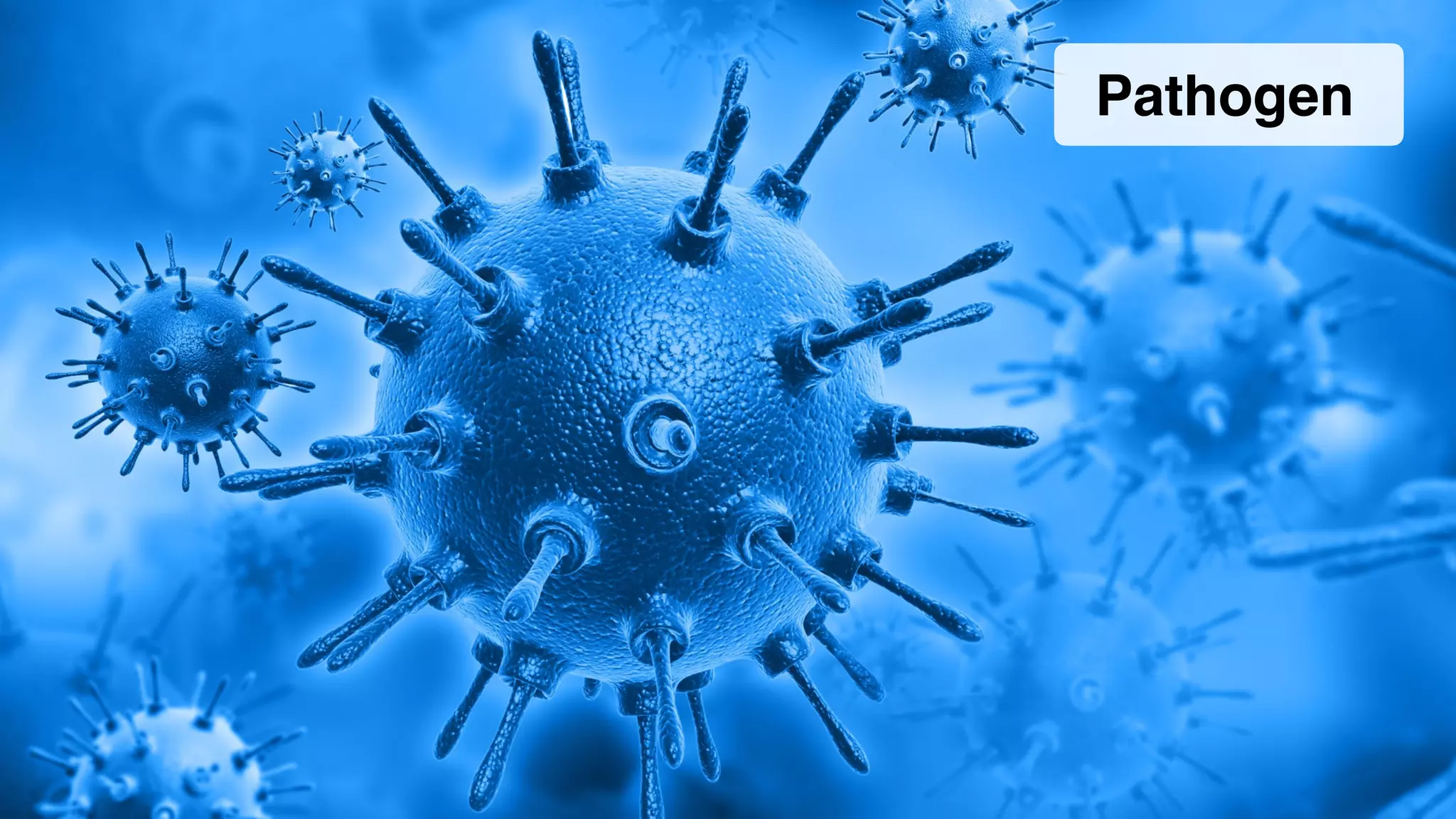
Pathogen
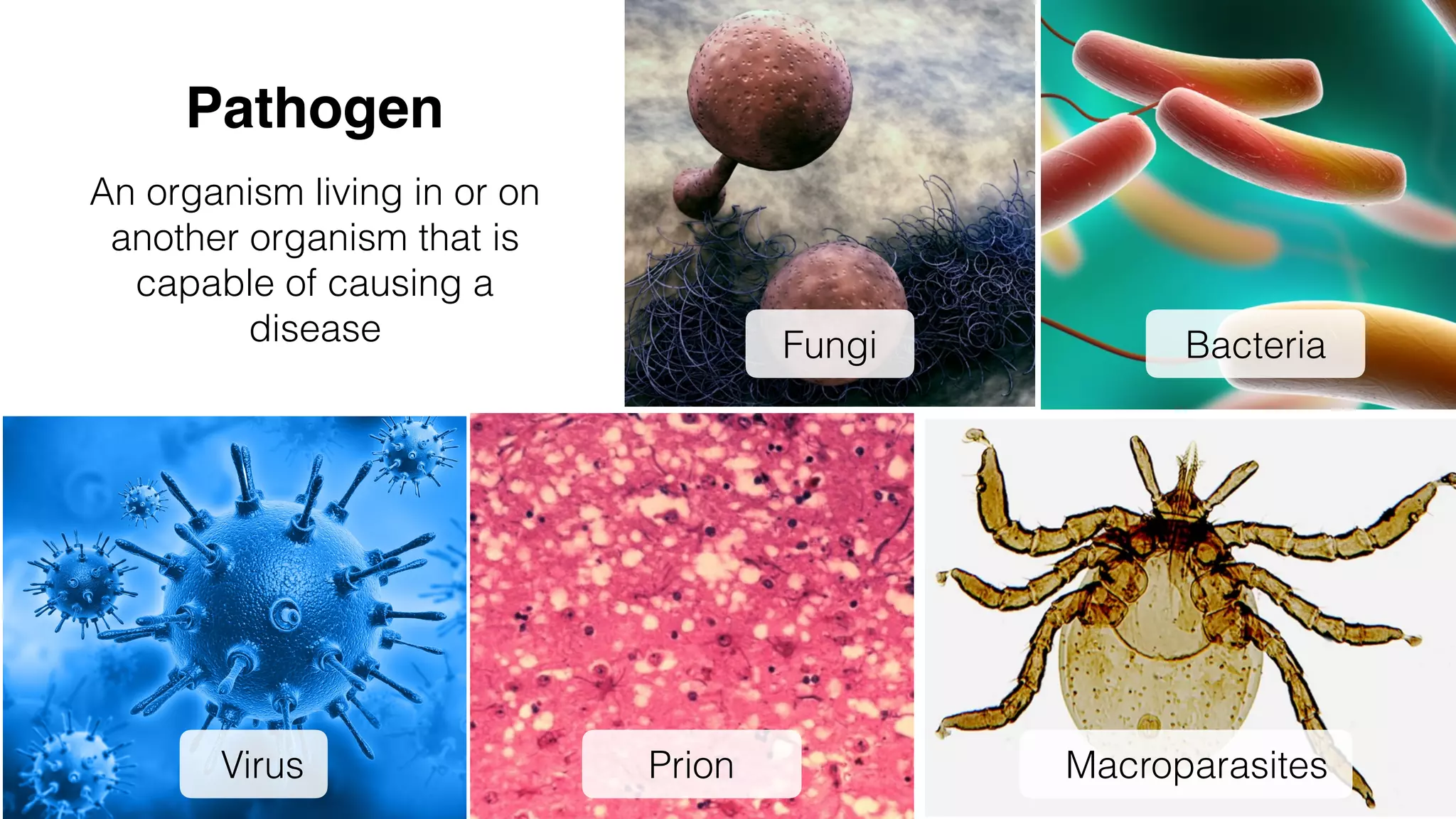
An organism living in or on
another organism that is
capable of causing a
disease Fungi Bacteria
Prion MacroparasitesVirus
Pathogen
Microscopic Visible to the naked Eye
Visible to the naked Eye
Virus
Microscopic
Prions
Visible to the naked Eye
TapewormVirus
Prions
Microscopic
When are pathogens ‘successful’?
1
Firstly, it depends if the pathogen has enough virulence,
which is how severe and poisonous it can be, and whether
it’s able to produce a disease or not in the body.
2 Secondly, a pathogen can be considered “successful”, if you
want it call it that, if it can enter the body and survive in there.
• Generally, pathogens can’t survive due to the body’s
lines of defence aimed at keeping the bugs out.
• Pathogens can occasionally get in, but they have to
get through 3 lines of defence first.
What are the conditions under which an organism is
described as a pathogen?
1
It should be able to move from one
host organism to another, and be
able infect another person.
A pathogen must also be able to
survive the movement from one
host to another.
2

HSC Biology 3.2: Pathogens

  • 1.
    HSC Biology • Module3: The Search For Better Health Students Learn to: 1. Over 3000 years ago the Chinese and Hebrews were advocating cleanliness in food, water and personal hygiene 1. • Identify the conditions under which an organism is described as a pathogen 2.
  • 2.
  • 3.
    An organism livingin or on another organism that is capable of causing a disease Fungi Bacteria Prion MacroparasitesVirus Pathogen
  • 4.
  • 5.
    Visible to thenaked Eye Virus Microscopic Prions
  • 6.
    Visible to thenaked Eye TapewormVirus Prions Microscopic
  • 7.
    When are pathogens‘successful’? 1 Firstly, it depends if the pathogen has enough virulence, which is how severe and poisonous it can be, and whether it’s able to produce a disease or not in the body. 2 Secondly, a pathogen can be considered “successful”, if you want it call it that, if it can enter the body and survive in there. • Generally, pathogens can’t survive due to the body’s lines of defence aimed at keeping the bugs out. • Pathogens can occasionally get in, but they have to get through 3 lines of defence first.
  • 8.
    What are theconditions under which an organism is described as a pathogen? 1 It should be able to move from one host organism to another, and be able infect another person. A pathogen must also be able to survive the movement from one host to another. 2