HARMFUL MICROORGANISMS
 We previously learnt that there are organisms that are
extremely small and can’t be viewed without the help of
a microscope.
 These organisms are called microorganisms. some of
them are quite helpful but some are harmful, they cause
diseases.
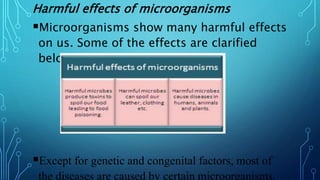
Harmful microorganisms can spoil our food, leather,
clothing etc. One another harmful effect of
microorganisms is that they cause diseases in plants,
animals and even human beings.
Microorganisms include bacteria, algae, fungi,
archaea, and protozoa.
Harmful microorganisms which cause disease are
known as infectious agents. These are harmful in
nature and are also called pathogens.
1) Pathogens can mostly cause communicable diseases.
• Communicable diseases are the diseases which
are transmitted from one person to another by different
modes of infection. Body fluids of the infectious person
carry disease causing organisms. e.g. Discharge from
nose, mouth, eyes and the faeces carry these pathogens.
Healthy person coming in contact with such infected
discharges develops the disease and becomes sick.
2) Pathogens select carriers to reach their particular
host. Insects, rodents, sometimes even sheep, pigs and
many other animals become carriers for pathogens to
reach their final host.
3) Pathogens can be microorganisms which obtain
nourishment from the host. e.g. Bacteria, Viruses,
Fungi, Protozoa, Helminths.
Harmful effects of microorganisms
Microorganisms show many harmful effects
on us. Some of the effects are clarified
below.
Except for genetic and congenital factors, most of
the diseases are caused by certain microorganisms.
Harmful microorganisms not only damage the human
body, but also the food we eat.
Sometimes, they multiply on food and release toxic
products, hence cause food poisoning.
To avoid food poisoning, food preservation is done in
various ways like pasteurization, salting, boiling etc.
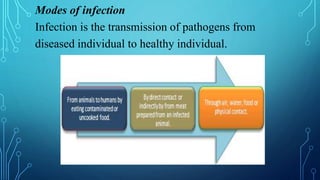
Modes of infection
Infection is the transmission of pathogens from
diseased individual to healthy individual.
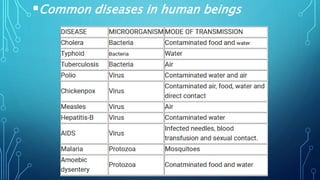
Common diseases in human beings
Prevention of infection
• We can prevent the spread of infection by using a handkerchief
while sneezing or coughing.
•Antibiotics are widely used to control the infection. Antibiotics
are used to cure a variety of diseases caused by fungi, bacteria
and protozoa.
•Infection can be prevented by using some bacteria or fungi
which produce specific chemicals to prevent the growth of
microbes causing disease.
•Diseases can be prevented by vaccination.
•Vaccination is the process of administering vaccines.

Harmful Micro-organisms

  • 1.
    HARMFUL MICROORGANISMS  Wepreviously learnt that there are organisms that are extremely small and can’t be viewed without the help of a microscope.  These organisms are called microorganisms. some of them are quite helpful but some are harmful, they cause diseases.
  • 2.
    Harmful microorganisms canspoil our food, leather, clothing etc. One another harmful effect of microorganisms is that they cause diseases in plants, animals and even human beings. Microorganisms include bacteria, algae, fungi, archaea, and protozoa. Harmful microorganisms which cause disease are known as infectious agents. These are harmful in nature and are also called pathogens.
  • 3.
    1) Pathogens canmostly cause communicable diseases. • Communicable diseases are the diseases which are transmitted from one person to another by different modes of infection. Body fluids of the infectious person carry disease causing organisms. e.g. Discharge from nose, mouth, eyes and the faeces carry these pathogens. Healthy person coming in contact with such infected discharges develops the disease and becomes sick.
  • 4.
    2) Pathogens selectcarriers to reach their particular host. Insects, rodents, sometimes even sheep, pigs and many other animals become carriers for pathogens to reach their final host. 3) Pathogens can be microorganisms which obtain nourishment from the host. e.g. Bacteria, Viruses, Fungi, Protozoa, Helminths.
  • 6.
    Harmful effects ofmicroorganisms Microorganisms show many harmful effects on us. Some of the effects are clarified below. Except for genetic and congenital factors, most of the diseases are caused by certain microorganisms.
  • 7.
    Harmful microorganisms notonly damage the human body, but also the food we eat. Sometimes, they multiply on food and release toxic products, hence cause food poisoning. To avoid food poisoning, food preservation is done in various ways like pasteurization, salting, boiling etc.
  • 8.
    Modes of infection Infectionis the transmission of pathogens from diseased individual to healthy individual.
  • 9.
  • 10.
    Prevention of infection •We can prevent the spread of infection by using a handkerchief while sneezing or coughing. •Antibiotics are widely used to control the infection. Antibiotics are used to cure a variety of diseases caused by fungi, bacteria and protozoa. •Infection can be prevented by using some bacteria or fungi which produce specific chemicals to prevent the growth of microbes causing disease. •Diseases can be prevented by vaccination. •Vaccination is the process of administering vaccines.