1
PERFORMANCE
APPRAISAL
(Management)
2
Performance Appraisal Defined
 System of review and
evaluation of job
performance
 Assesses accomplishments
and evolves plans for
development
3
Performance Management
 Process that significantly determines how
organization performs
 Managers and employees work together to
set expectations, review results and reward
performance.
 Platform for assessing individual and team
performance
4
Appraiser Discomfort
 Performance appraisal
process cuts into
manager’s time
 Experience can be
unpleasant when
employee has not
performed well
5
Employee Anxiety
 Creates anxiety for appraised employee
Rationale for Performance Appraisal
 Provides legal and other benefits for employers
6
Uses of Performance Appraisal
 Human resource planning
 Recruitment and selection
 Training and development
 Career planning and development
 Compensation programs
 Internal employee relations
 Assessment of employee potential
7
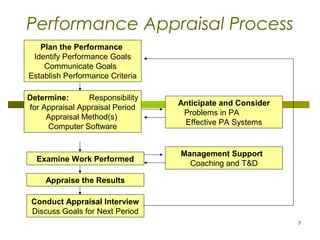
Performance Appraisal Process
Plan the Performance
Identify Performance Goals
Communicate Goals
Establish Performance Criteria
Determine: Responsibility
for Appraisal Appraisal Period
Appraisal Method(s)
Computer Software
Examine Work Performed
Appraise the Results
Conduct Appraisal Interview
Discuss Goals for Next Period
Anticipate and Consider
Problems in PA
Effective PA Systems
Management Support
Coaching and T&D
8
Responsibility for Appraisal
 Immediate supervisor
 Subordinates
 Peers
 Self-appraisal
 Customer appraisal
9
Performance Appraisal Methods
 360-Degree Feedback
 Rating Scales
 Critical Incidents
 Essay
 Work Standards
 Ranking
10
The Appraisal Period
 Prepared at specific
intervals
 Usually annually or
semiannually
 Period may begin with
employee’s date of hire
 All employees may be
evaluated at same time
11
Effective Appraisal System
 Job-related criteria
 Performance expectations
 Standardization
 Trained appraisers
 Continuous open communication
 Performance reviews
 Due process
12
Legal Implications
 Adverse impact on protected classes
 The controlling of subordinate career
 Should have someone review and approve
appraisals
 The rater must have personal knowledge of
employee’s performance
 The appraisal system must use
predetermined criteria
13
The Appraisal Interview
 Scheduling the
interview
 Interview structure
 Use of praise and
criticism
 Employees’ role
 Concluding the
interview

Hr dev performanceappraisal

  • 1.
  • 2.
    2 Performance Appraisal Defined System of review and evaluation of job performance  Assesses accomplishments and evolves plans for development
  • 3.
    3 Performance Management  Processthat significantly determines how organization performs  Managers and employees work together to set expectations, review results and reward performance.  Platform for assessing individual and team performance
  • 4.
    4 Appraiser Discomfort  Performanceappraisal process cuts into manager’s time  Experience can be unpleasant when employee has not performed well
  • 5.
    5 Employee Anxiety  Createsanxiety for appraised employee Rationale for Performance Appraisal  Provides legal and other benefits for employers
  • 6.
    6 Uses of PerformanceAppraisal  Human resource planning  Recruitment and selection  Training and development  Career planning and development  Compensation programs  Internal employee relations  Assessment of employee potential
  • 7.
    7 Performance Appraisal Process Planthe Performance Identify Performance Goals Communicate Goals Establish Performance Criteria Determine: Responsibility for Appraisal Appraisal Period Appraisal Method(s) Computer Software Examine Work Performed Appraise the Results Conduct Appraisal Interview Discuss Goals for Next Period Anticipate and Consider Problems in PA Effective PA Systems Management Support Coaching and T&D
  • 8.
    8 Responsibility for Appraisal Immediate supervisor  Subordinates  Peers  Self-appraisal  Customer appraisal
  • 9.
    9 Performance Appraisal Methods 360-Degree Feedback  Rating Scales  Critical Incidents  Essay  Work Standards  Ranking
  • 10.
    10 The Appraisal Period Prepared at specific intervals  Usually annually or semiannually  Period may begin with employee’s date of hire  All employees may be evaluated at same time
  • 11.
    11 Effective Appraisal System Job-related criteria  Performance expectations  Standardization  Trained appraisers  Continuous open communication  Performance reviews  Due process
  • 12.
    12 Legal Implications  Adverseimpact on protected classes  The controlling of subordinate career  Should have someone review and approve appraisals  The rater must have personal knowledge of employee’s performance  The appraisal system must use predetermined criteria
  • 13.
    13 The Appraisal Interview Scheduling the interview  Interview structure  Use of praise and criticism  Employees’ role  Concluding the interview