Training & Development
Training as a management skill /
Training and developing to employee
Dr Vijay Pithadia
2
Importance of Training
 Maintains qualified products / services
 Achieves high service standards
 Provides information for new comers
 Refreshes memory of old employees
 Achieves learning about new things; technology,
products / service delivery
 Reduces mistakes - minimizing costs
 Opportunity for staff to feedback / suggest improvements
 Improves communication & relationships - better
teamwork
3
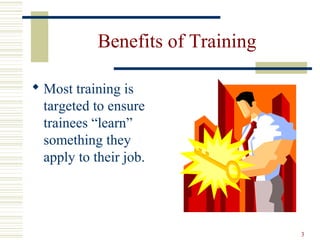
Benefits of Training
 Most training is
targeted to ensure
trainees “learn”
something they
apply to their job.
4
What is Training?
 Training is a systematic process through
which an organization’s human resources
gain knowledge and develop skills by
instruction and practical activities that result
in improved corporate performance.
5
Differences between Training,
Education & Development
 Training is short term, task oriented and targeted
on achieving a change of attitude, skills and
knowledge in a specific area. It is usually job
related.
 Education is a lifetime investment. It tends to be
initiated by a person in the area of his/her interest
 Development is a long term investment in human
resources.
6
Five Principles of Learning
 Participation: involve trainees, learn by
doing
 Repetition: repeat ideas & concepts to help
people learn
 Relevance: learn better when material is
meaningful and related
 Transference: to real world using simulations
 Feedback: ask for it and adjust training
7
A Systematic Approach
to Training
Key Concepts in Preparing a Training Plan
Before you train and develop people identify what:
 They must know - before they can perform job
 They should know - to improve performance
 Would be nice for them to know – but not
necessary to perform duties.
8
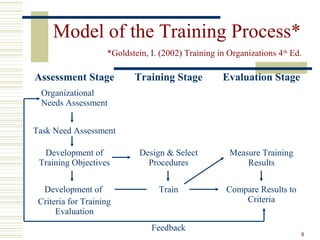
Model of the Training Process*
Assessment Stage Training Stage Evaluation Stage
Organizational
Needs Assessment
Task Need Assessment
Development of
Training Objectives
Design & Select
Procedures
Measure Training
Results
Development of
Criteria for Training
Evaluation
Train Compare Results to
Criteria
Feedback
*Goldstein, I. (2002) Training in Organizations 4th
Ed.
9
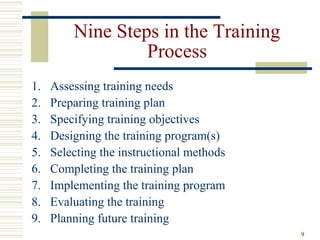
Nine Steps in the Training
Process
1. Assessing training needs
2. Preparing training plan
3. Specifying training objectives
4. Designing the training program(s)
5. Selecting the instructional methods
6. Completing the training plan
7. Implementing the training program
8. Evaluating the training
9. Planning future training
10
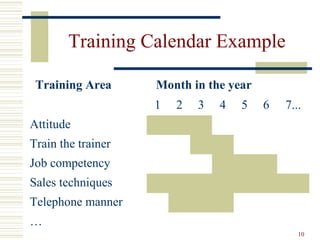
Training Calendar Example
1 2 3 4 5 6 7...
Attitude
Train the trainer
Job competency
Sales techniques
Telephone manner
…
Training Area Month in the year
11
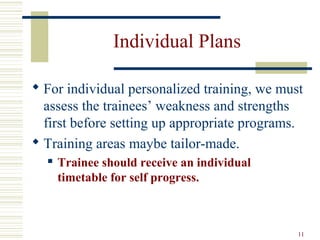
Individual Plans
 For individual personalized training, we must
assess the trainees’ weakness and strengths
first before setting up appropriate programs.
 Training areas maybe tailor-made.
 Trainee should receive an individual
timetable for self progress.

Lecture 6 training development

  • 1.
    Training & Development Trainingas a management skill / Training and developing to employee Dr Vijay Pithadia
  • 2.
    2 Importance of Training Maintains qualified products / services  Achieves high service standards  Provides information for new comers  Refreshes memory of old employees  Achieves learning about new things; technology, products / service delivery  Reduces mistakes - minimizing costs  Opportunity for staff to feedback / suggest improvements  Improves communication & relationships - better teamwork
  • 3.
    3 Benefits of Training Most training is targeted to ensure trainees “learn” something they apply to their job.
  • 4.
    4 What is Training? Training is a systematic process through which an organization’s human resources gain knowledge and develop skills by instruction and practical activities that result in improved corporate performance.
  • 5.
    5 Differences between Training, Education& Development  Training is short term, task oriented and targeted on achieving a change of attitude, skills and knowledge in a specific area. It is usually job related.  Education is a lifetime investment. It tends to be initiated by a person in the area of his/her interest  Development is a long term investment in human resources.
  • 6.
    6 Five Principles ofLearning  Participation: involve trainees, learn by doing  Repetition: repeat ideas & concepts to help people learn  Relevance: learn better when material is meaningful and related  Transference: to real world using simulations  Feedback: ask for it and adjust training
  • 7.
    7 A Systematic Approach toTraining Key Concepts in Preparing a Training Plan Before you train and develop people identify what:  They must know - before they can perform job  They should know - to improve performance  Would be nice for them to know – but not necessary to perform duties.
  • 8.
    8 Model of theTraining Process* Assessment Stage Training Stage Evaluation Stage Organizational Needs Assessment Task Need Assessment Development of Training Objectives Design & Select Procedures Measure Training Results Development of Criteria for Training Evaluation Train Compare Results to Criteria Feedback *Goldstein, I. (2002) Training in Organizations 4th Ed.
  • 9.
    9 Nine Steps inthe Training Process 1. Assessing training needs 2. Preparing training plan 3. Specifying training objectives 4. Designing the training program(s) 5. Selecting the instructional methods 6. Completing the training plan 7. Implementing the training program 8. Evaluating the training 9. Planning future training
  • 10.
    10 Training Calendar Example 12 3 4 5 6 7... Attitude Train the trainer Job competency Sales techniques Telephone manner … Training Area Month in the year
  • 11.
    11 Individual Plans  Forindividual personalized training, we must assess the trainees’ weakness and strengths first before setting up appropriate programs.  Training areas maybe tailor-made.  Trainee should receive an individual timetable for self progress.