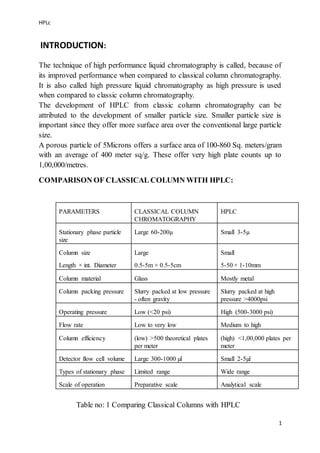
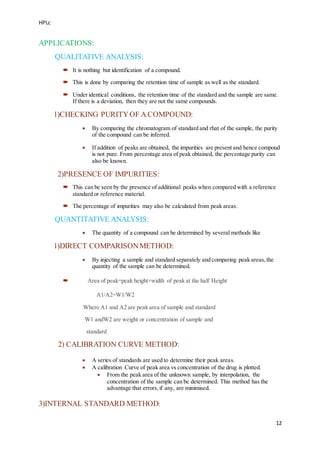
1) HPLC provides improved performance over classical column chromatography due to smaller particle sizes (<5 microns), higher operating pressures (>4000 psi), and higher column efficiencies (>100,000 theoretical plates per meter).
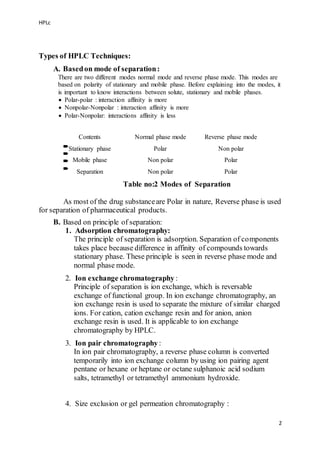
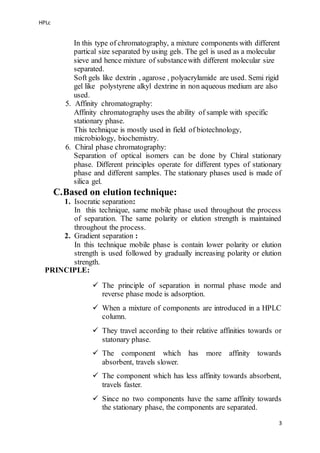
2) There are two main modes of HPLC separation - normal phase which uses a polar stationary phase and non-polar mobile phase, and reverse phase which uses a non-polar stationary phase and polar mobile phase.
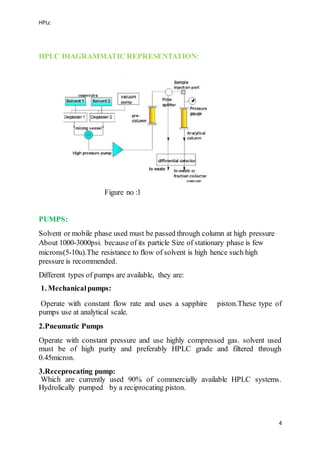
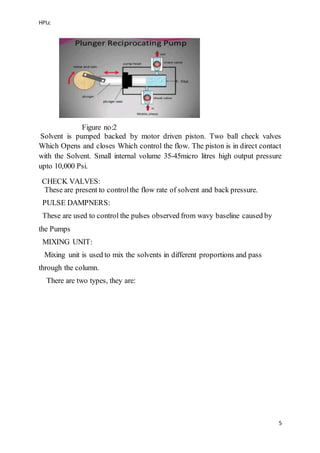
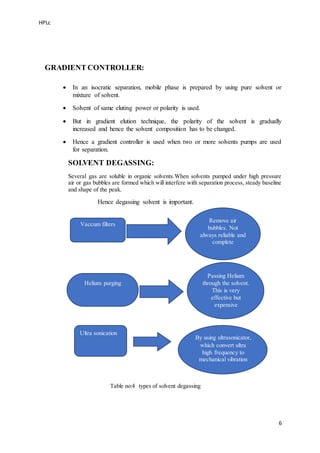
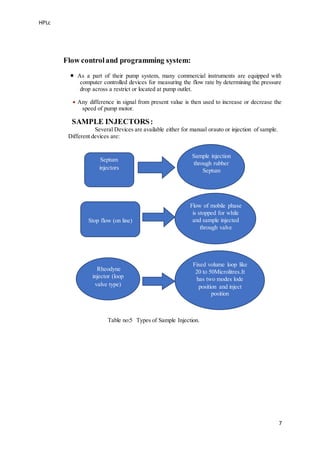
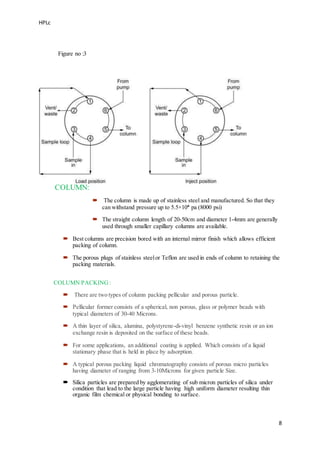
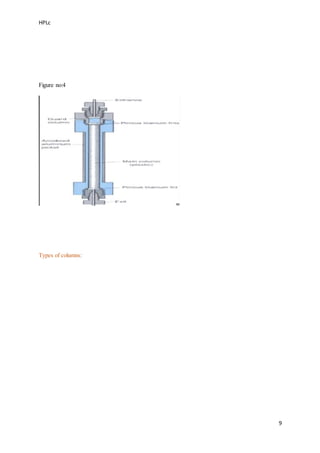
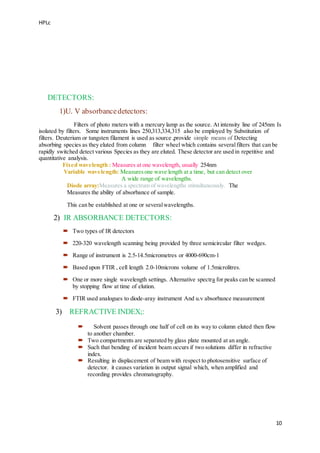
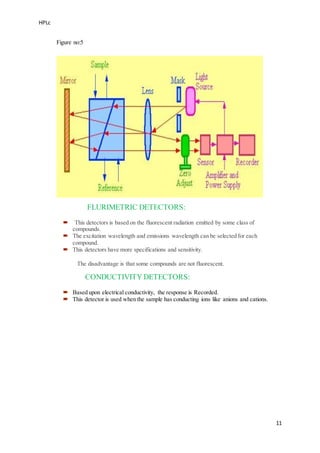
3) Key components of an HPLC system include pumps to deliver the mobile phase at high pressure, injectors to introduce samples, columns packed with stationary phase to perform the separation, and detectors such as UV/Vis to identify eluted components.