Quality Assurance /
Software Testing Training
HP ALM
Page 2Classification: Restricted
Agenda
• ALM – What is ALM? Why use ALM? Architecture of ALM.
• ALM – Workflow
• Test Execution and its cycles
• Testing Methodology (BBT , WBT)
• Class Assignment
Page 3Classification: Restricted
Introduction
• HP – ALM is a web based tool that helps organization to manage application
life cycle from project planning, requirement gathering, testing, defect
tracking and deployment
Page 4Classification: Restricted
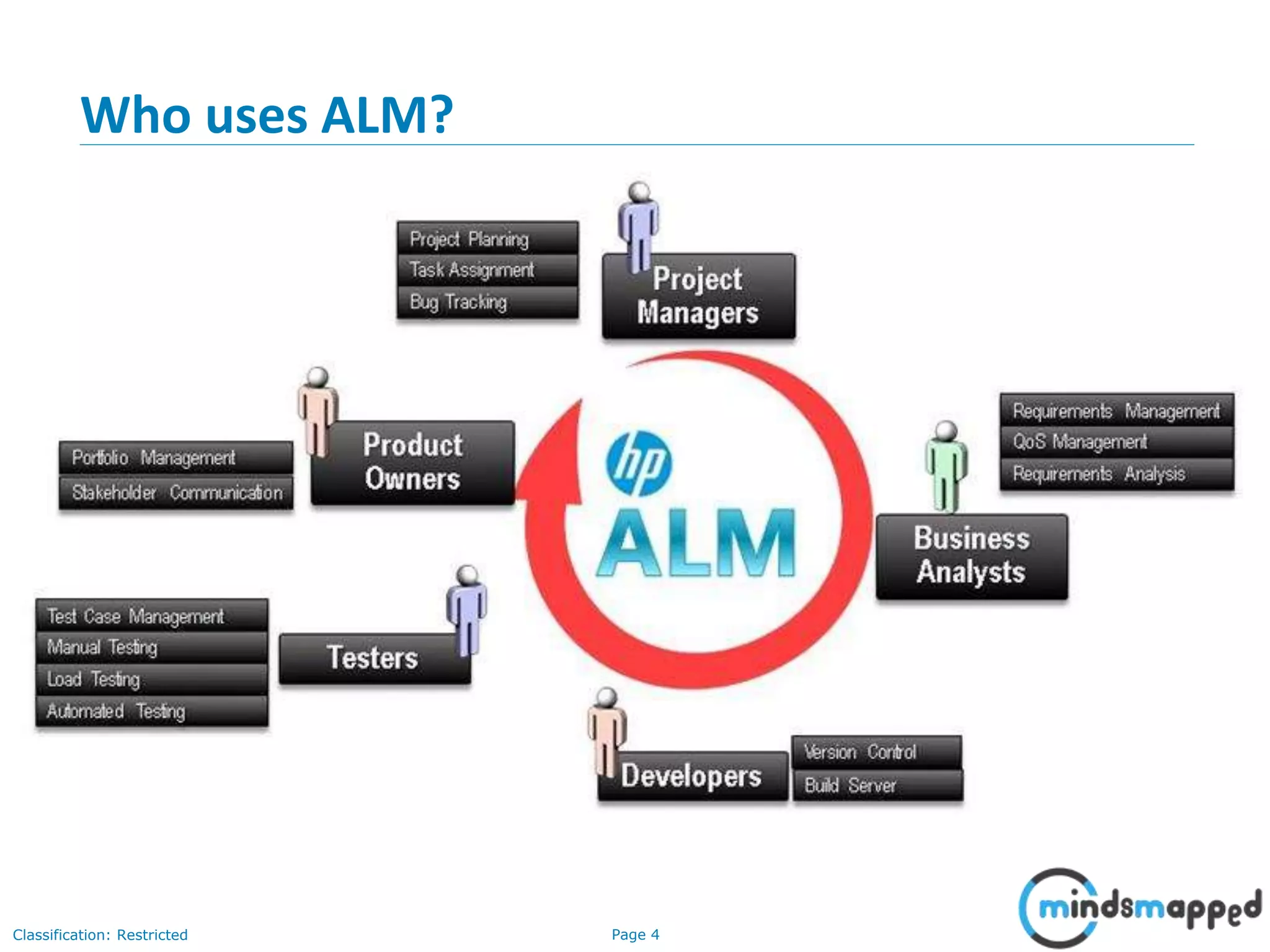
Who uses ALM?
Page 5Classification: Restricted
Architecture of ALM
1 – HP ALM client
2 – Application Server or ALM Server
3 – Database Server
Page 6Classification: Restricted
ALM Workflow
• Release specifications- release, cycle
• Create Requirements, Test cases
• Execute Test cases
• Defect
• Reports
• Graphs
Page 7Classification: Restricted
ALM – Site Administration
• ALM site administrator can create Domain, Project & User
• Assign Roles to users
• Version Management
Page 8Classification: Restricted
ALM – Management(release)
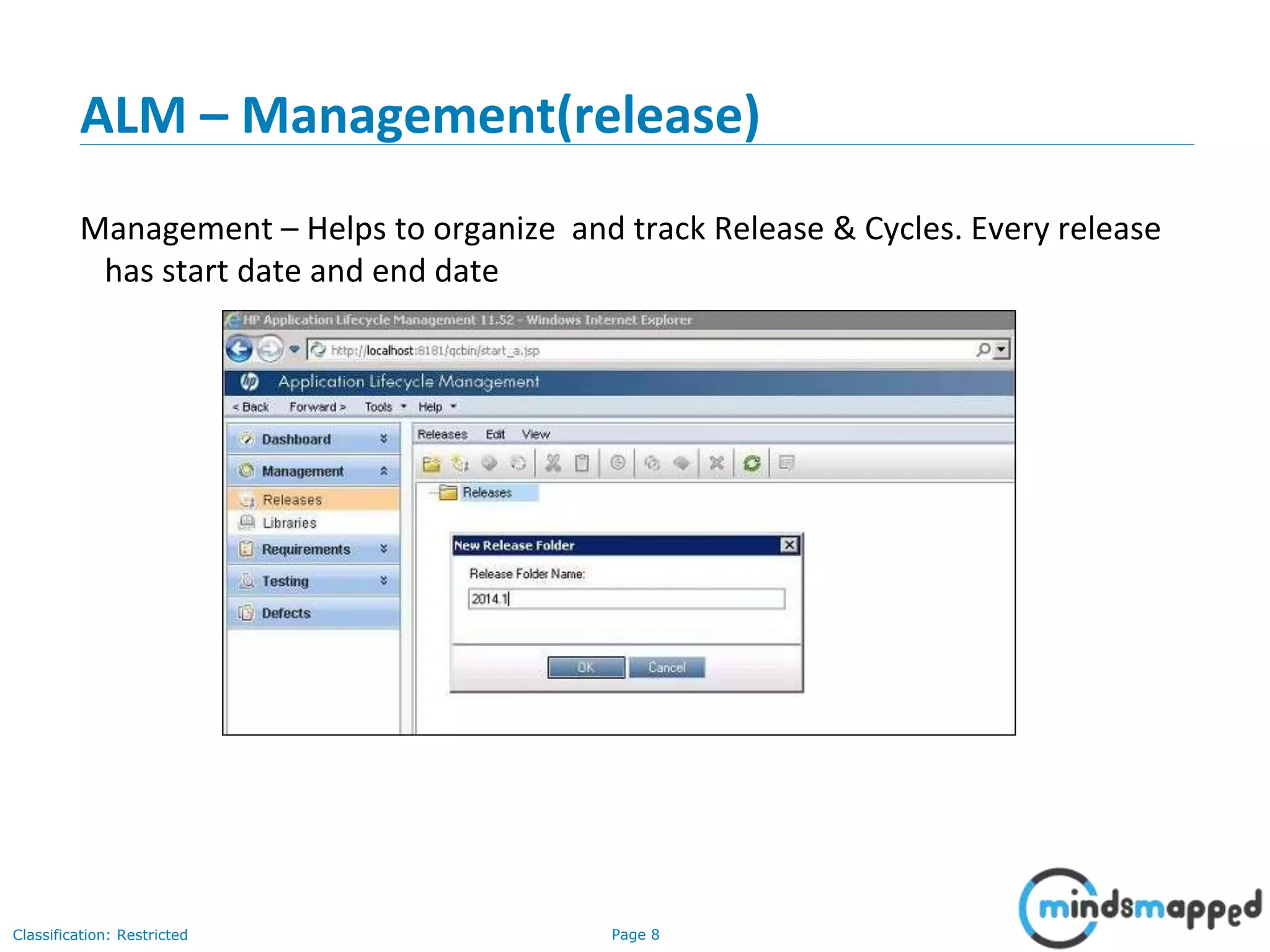
Management – Helps to organize and track Release & Cycles. Every release
has start date and end date
Page 9Classification: Restricted
ALM – Management(cycle)
Cycle:Each release is further divided into cycles.
Select the Release under which one would like to create cycles. Click the New
Cycles button and the New Cycles dialog opens as shown below. Users have
to enter the start date and the end date of the cycle. Users can create as
many cycles as they can under a release.
Page 10Classification: Restricted
ALM – Management(milestone)
Milestone:Each Release has a scope and scope can be added under "Release
Scope" tab under Releases as shown below.
Page 11Classification: Restricted
ALM – Requirement
Requirement: Defining and Capturing Requirements is one of the key criteria
for any software development process. Describing Requirements refers to
what needs to be done to meet the objectives during development.
The Requirements module enables users to define, manage and track
requirements at all stages of the software lifecycle.
Functionality Performed:
• Create Requirements
• Uploading Requirements from MS office
• Requirement Traceability
• Traceability Matrix
Page 12Classification: Restricted
Test Closure
• Data is collected from completed test activities to consolidate
1. Experience , learning
2. Facts and figures
Test closure activities also include:
• Check whether all the planned deliverables have been delivered?
• Create test summary report
• Handover the tested application to the maintenance team , so that they
can deploy it to the client
Page 13Classification: Restricted
Thank You

HP ALM

  • 1.
    Quality Assurance / SoftwareTesting Training HP ALM
  • 2.
    Page 2Classification: Restricted Agenda •ALM – What is ALM? Why use ALM? Architecture of ALM. • ALM – Workflow • Test Execution and its cycles • Testing Methodology (BBT , WBT) • Class Assignment
  • 3.
    Page 3Classification: Restricted Introduction •HP – ALM is a web based tool that helps organization to manage application life cycle from project planning, requirement gathering, testing, defect tracking and deployment
  • 4.
  • 5.
    Page 5Classification: Restricted Architectureof ALM 1 – HP ALM client 2 – Application Server or ALM Server 3 – Database Server
  • 6.
    Page 6Classification: Restricted ALMWorkflow • Release specifications- release, cycle • Create Requirements, Test cases • Execute Test cases • Defect • Reports • Graphs
  • 7.
    Page 7Classification: Restricted ALM– Site Administration • ALM site administrator can create Domain, Project & User • Assign Roles to users • Version Management
  • 8.
    Page 8Classification: Restricted ALM– Management(release) Management – Helps to organize and track Release & Cycles. Every release has start date and end date
  • 9.
    Page 9Classification: Restricted ALM– Management(cycle) Cycle:Each release is further divided into cycles. Select the Release under which one would like to create cycles. Click the New Cycles button and the New Cycles dialog opens as shown below. Users have to enter the start date and the end date of the cycle. Users can create as many cycles as they can under a release.
  • 10.
    Page 10Classification: Restricted ALM– Management(milestone) Milestone:Each Release has a scope and scope can be added under "Release Scope" tab under Releases as shown below.
  • 11.
    Page 11Classification: Restricted ALM– Requirement Requirement: Defining and Capturing Requirements is one of the key criteria for any software development process. Describing Requirements refers to what needs to be done to meet the objectives during development. The Requirements module enables users to define, manage and track requirements at all stages of the software lifecycle. Functionality Performed: • Create Requirements • Uploading Requirements from MS office • Requirement Traceability • Traceability Matrix
  • 12.
    Page 12Classification: Restricted TestClosure • Data is collected from completed test activities to consolidate 1. Experience , learning 2. Facts and figures Test closure activities also include: • Check whether all the planned deliverables have been delivered? • Create test summary report • Handover the tested application to the maintenance team , so that they can deploy it to the client
  • 13.