Quality Assurance /
Software Testing Training
Page 2Classification: Restricted
Agenda
• Defects / Bug and few Scenarios
• Reason for defects
• Defect template
• Defect Life Cycle
• Defect report & Defect Tracking tools
• Class Assignment
Page 3Classification: Restricted
What is Defect / Bug?
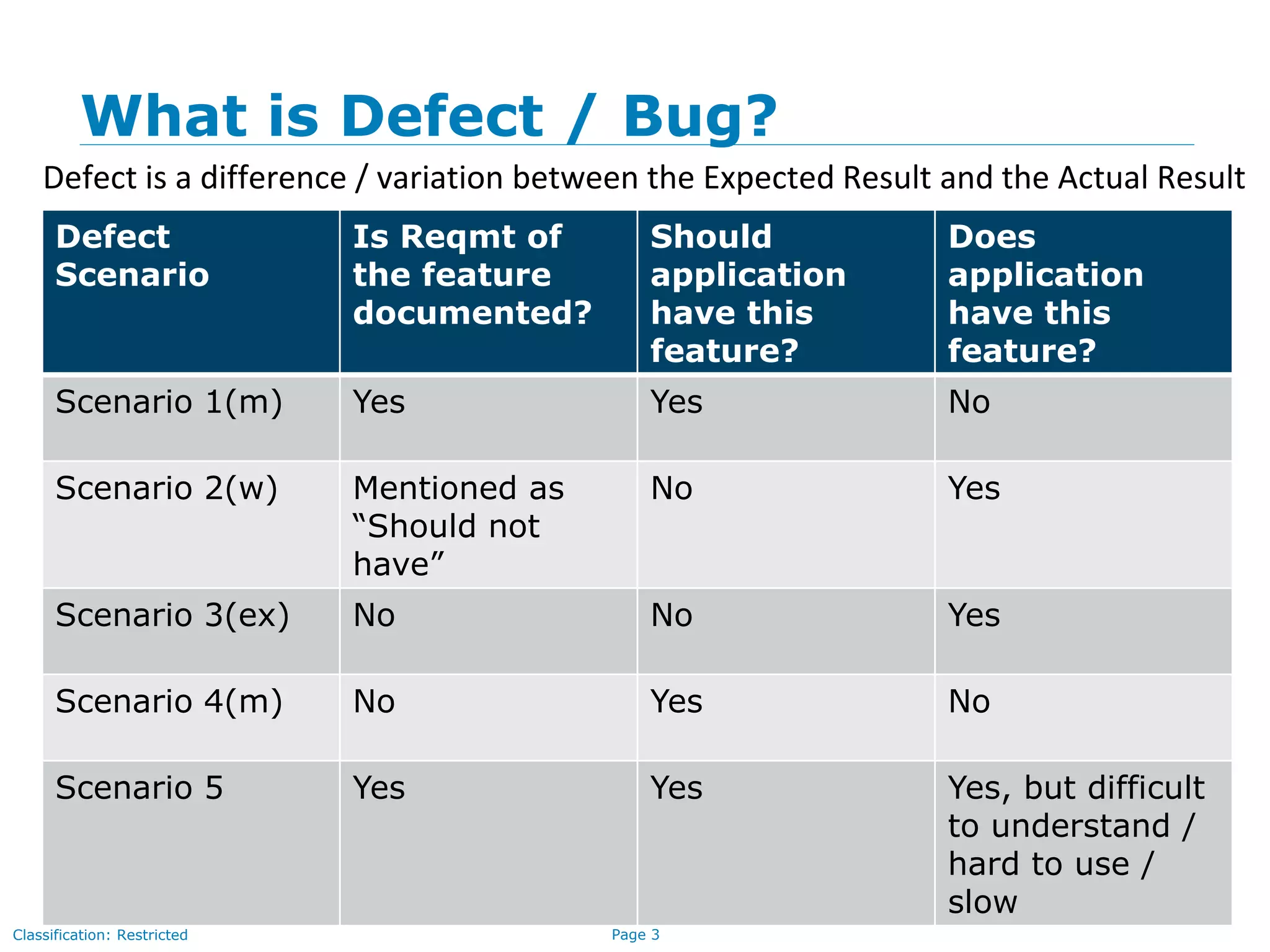
Defect is a difference / variation between the Expected Result and the Actual Result
Defect
Scenario
Is Reqmt of
the feature
documented?
Should
application
have this
feature?
Does
application
have this
feature?
Scenario 1(m) Yes Yes No
Scenario 2(w) Mentioned as
“Should not
have”
No Yes
Scenario 3(ex) No No Yes
Scenario 4(m) No Yes No
Scenario 5 Yes Yes Yes, but difficult
to understand /
hard to use /
slow
Page 4Classification: Restricted
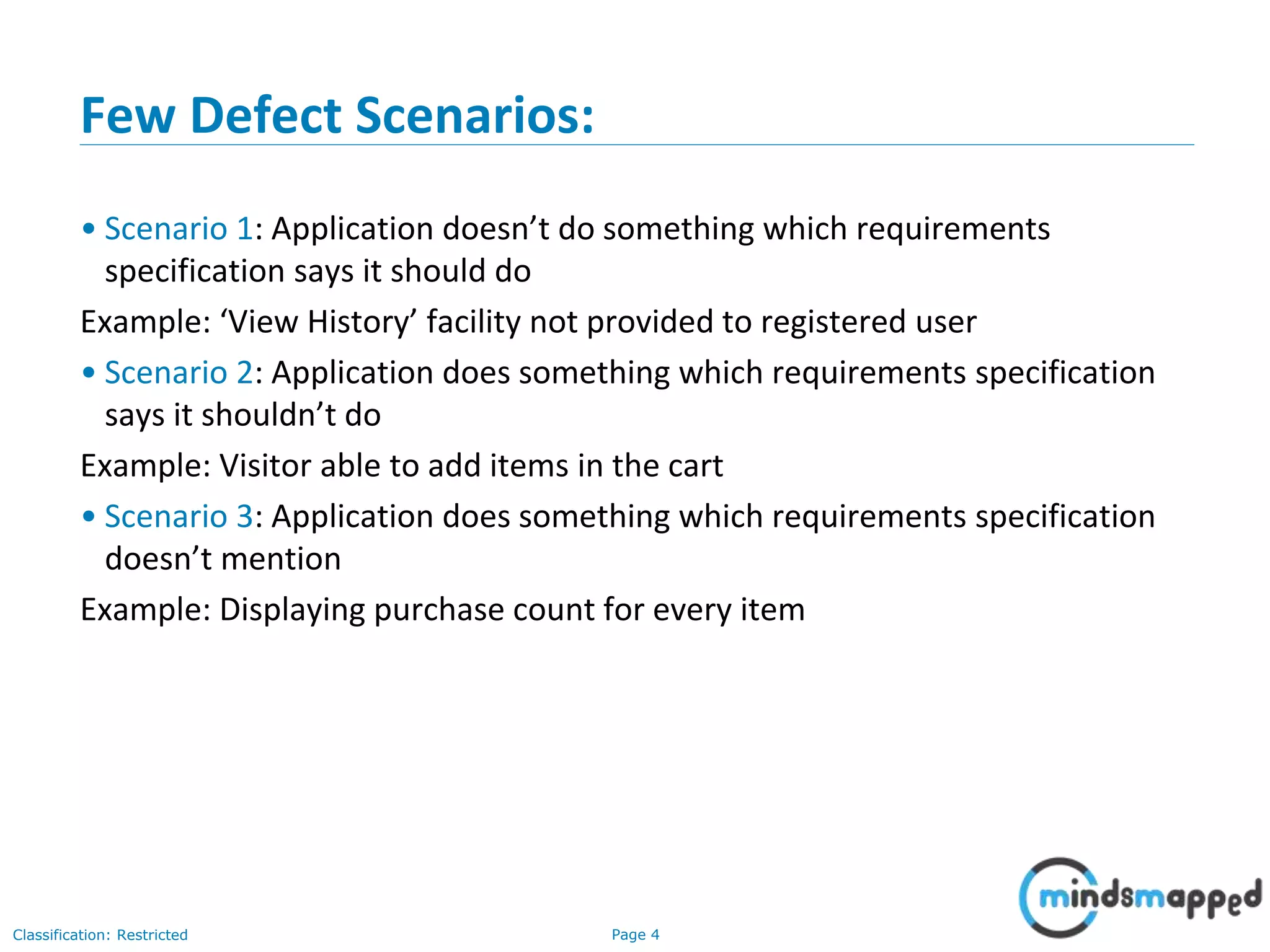
Few Defect Scenarios:
• Scenario 1: Application doesn’t do something which requirements
specification says it should do
Example: ‘View History’ facility not provided to registered user
• Scenario 2: Application does something which requirements specification
says it shouldn’t do
Example: Visitor able to add items in the cart
• Scenario 3: Application does something which requirements specification
doesn’t mention
Example: Displaying purchase count for every item
Page 5Classification: Restricted
contd:
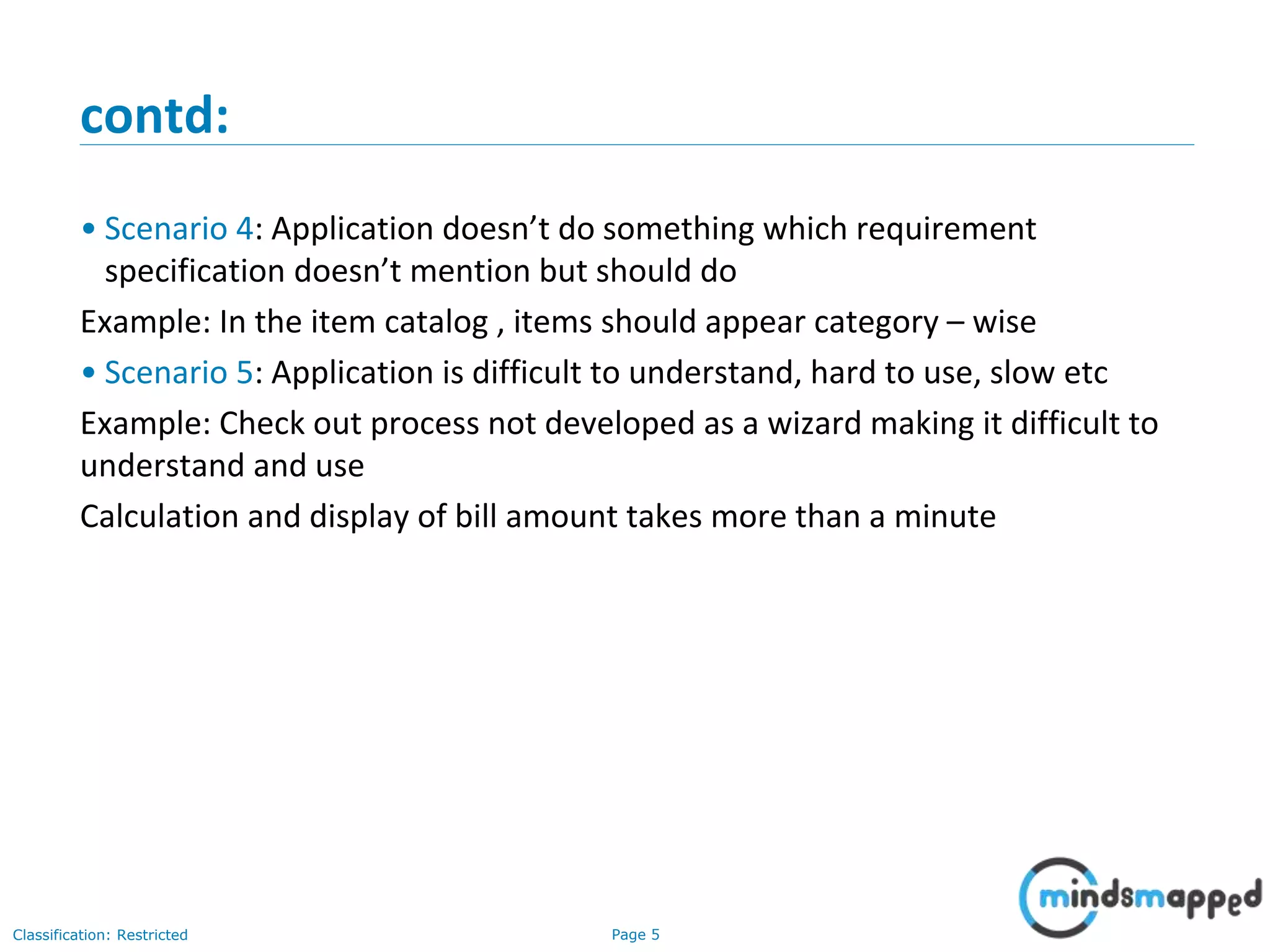
• Scenario 4: Application doesn’t do something which requirement
specification doesn’t mention but should do
Example: In the item catalog , items should appear category – wise
• Scenario 5: Application is difficult to understand, hard to use, slow etc
Example: Check out process not developed as a wizard making it difficult to
understand and use
Calculation and display of bill amount takes more than a minute
Page 6Classification: Restricted
Reasons for Defects
Requirement
• Unclear or missing Requirement
• Frequently changing Requirement
Design (performance)
• Complicated design
Implementation (coding)
• Incorrect coding by developers
• New technology
• Poor documentation / lack of application knowledge
Page 7Classification: Restricted
Defect Attributes
• Defect id
• Project name
• Module name
• Type of defect
• Severity
• Priority
• Summary
• Description
• Status
• Reported by / on
• Assigned ( which developer)
Page 8Classification: Restricted
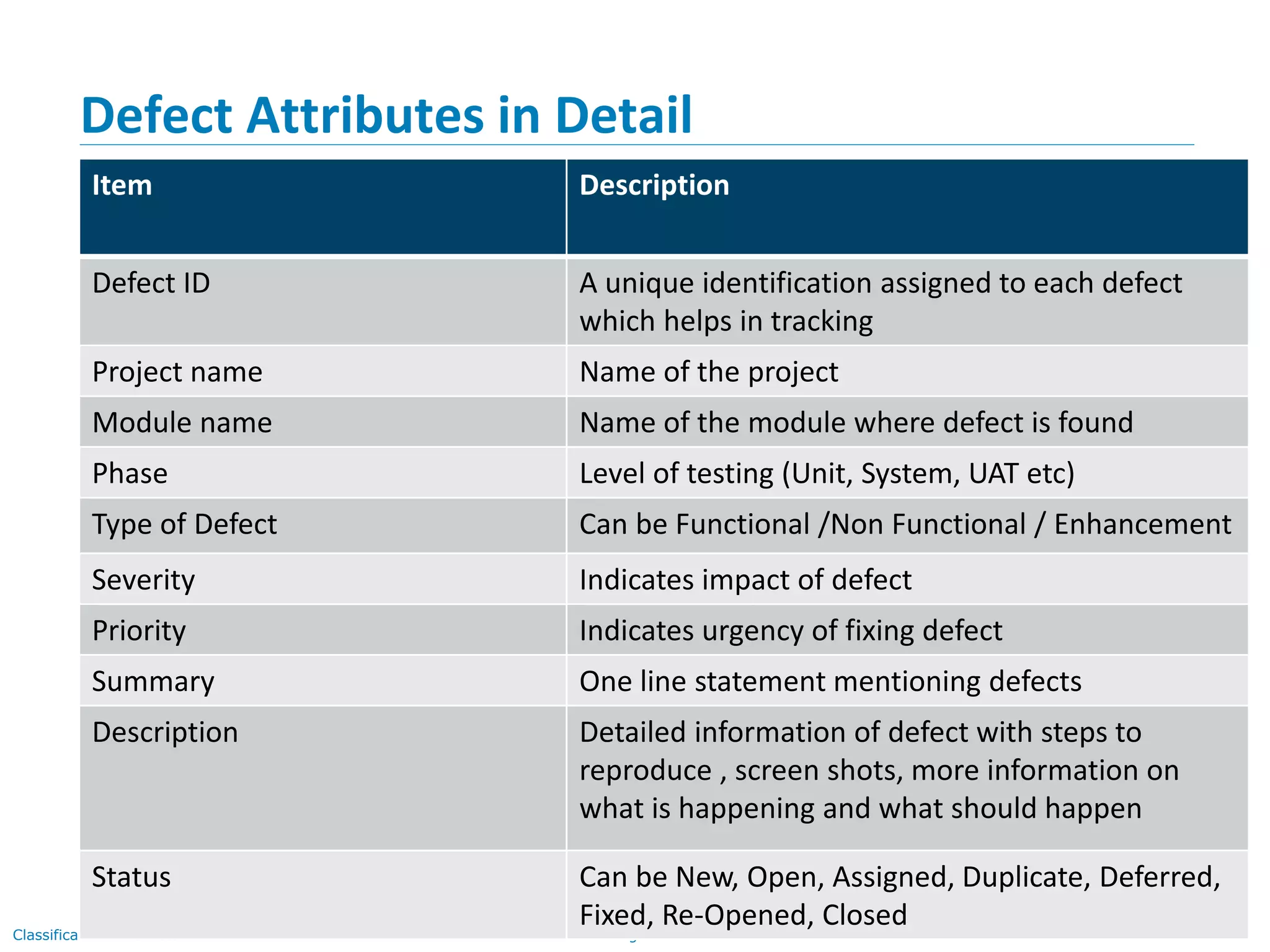
Defect Attributes in Detail
Item Description
Defect ID A unique identification assigned to each defect
which helps in tracking
Project name Name of the project
Module name Name of the module where defect is found
Phase Level of testing (Unit, System, UAT etc)
Type of Defect Can be Functional /Non Functional / Enhancement
Severity Indicates impact of defect
Priority Indicates urgency of fixing defect
Summary One line statement mentioning defects
Description Detailed information of defect with steps to
reproduce , screen shots, more information on
what is happening and what should happen
Status Can be New, Open, Assigned, Duplicate, Deferred,
Fixed, Re-Opened, Closed
Page 9Classification: Restricted
Defect Reporting
Purpose:
• To have a complete record of defects that may be used in multiple ways
• Communicate defects to all concerned stakeholders
• Track defects till they get closed
• Forms basis for quality measurement
• Use this knowledge for future similar projects
• Process improvement
• Gather statistics to predict defects in future applications
• Take decision about readiness to handover the application for user
acceptance testing or deployment
Page 10Classification: Restricted
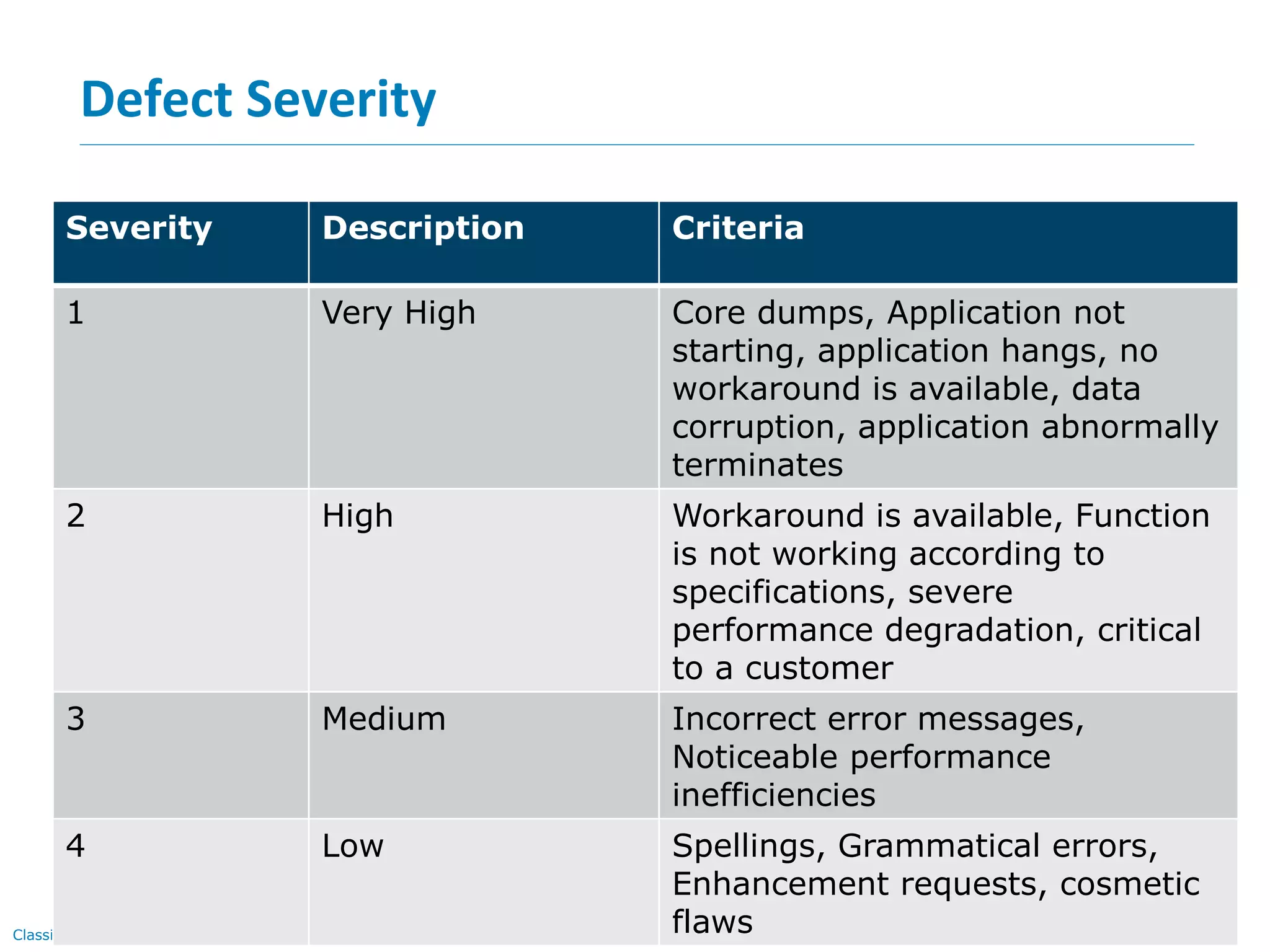
Defect Severity
•Severity indicates impact of the bug on the
application
Severity Description Criteria
1 Very High Core dumps, Application not
starting, application hangs, no
workaround is available, data
corruption, application abnormally
terminates
2 High Workaround is available, Function
is not working according to
specifications, severe
performance degradation, critical
to a customer
3 Medium Incorrect error messages,
Noticeable performance
inefficiencies
4 Low Spellings, Grammatical errors,
Enhancement requests, cosmetic
flaws
Page 11Classification: Restricted
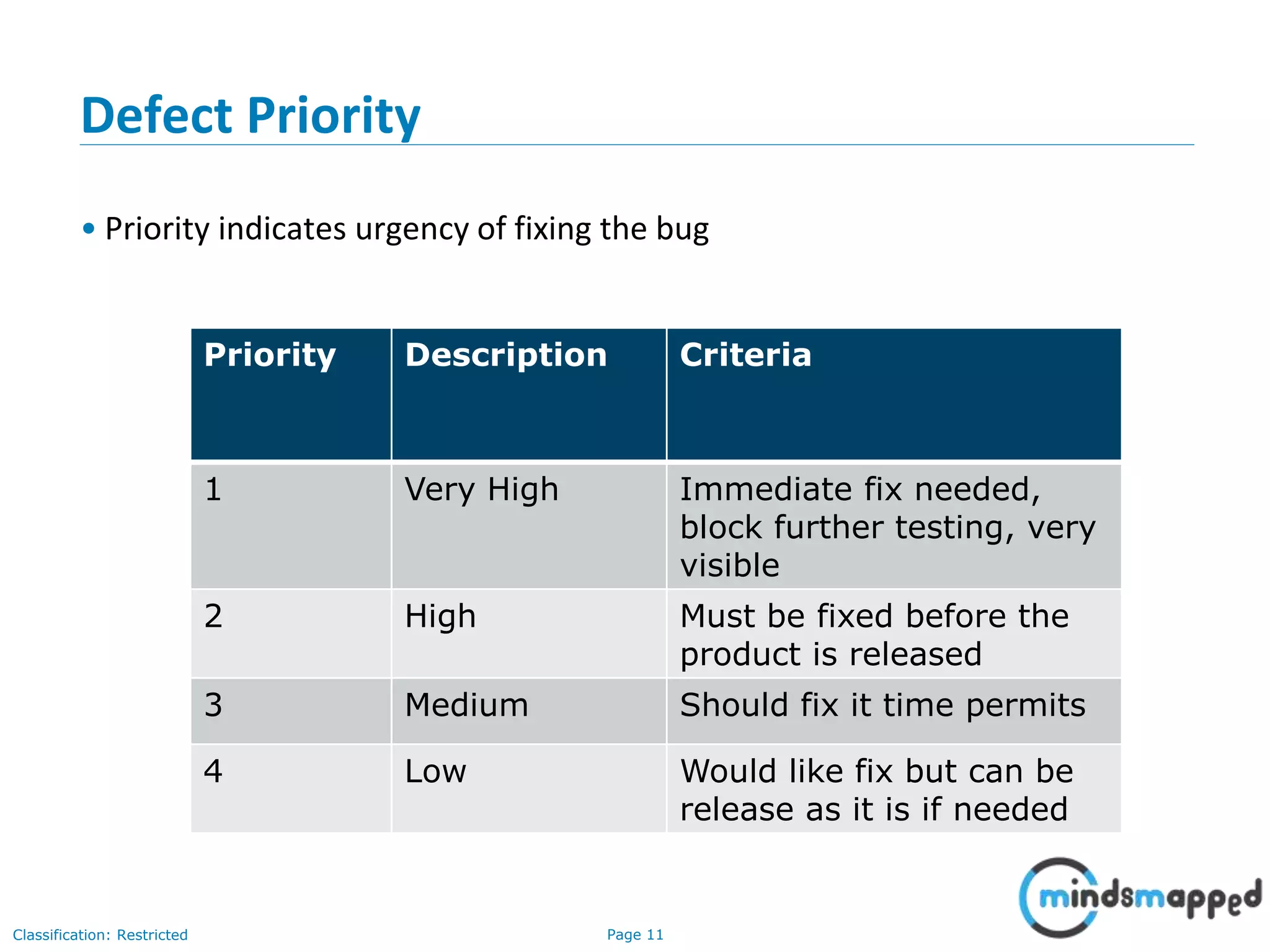
Defect Priority
• Priority indicates urgency of fixing the bug
Priority Description Criteria
1 Very High Immediate fix needed,
block further testing, very
visible
2 High Must be fixed before the
product is released
3 Medium Should fix it time permits
4 Low Would like fix but can be
release as it is if needed
Page 12Classification: Restricted
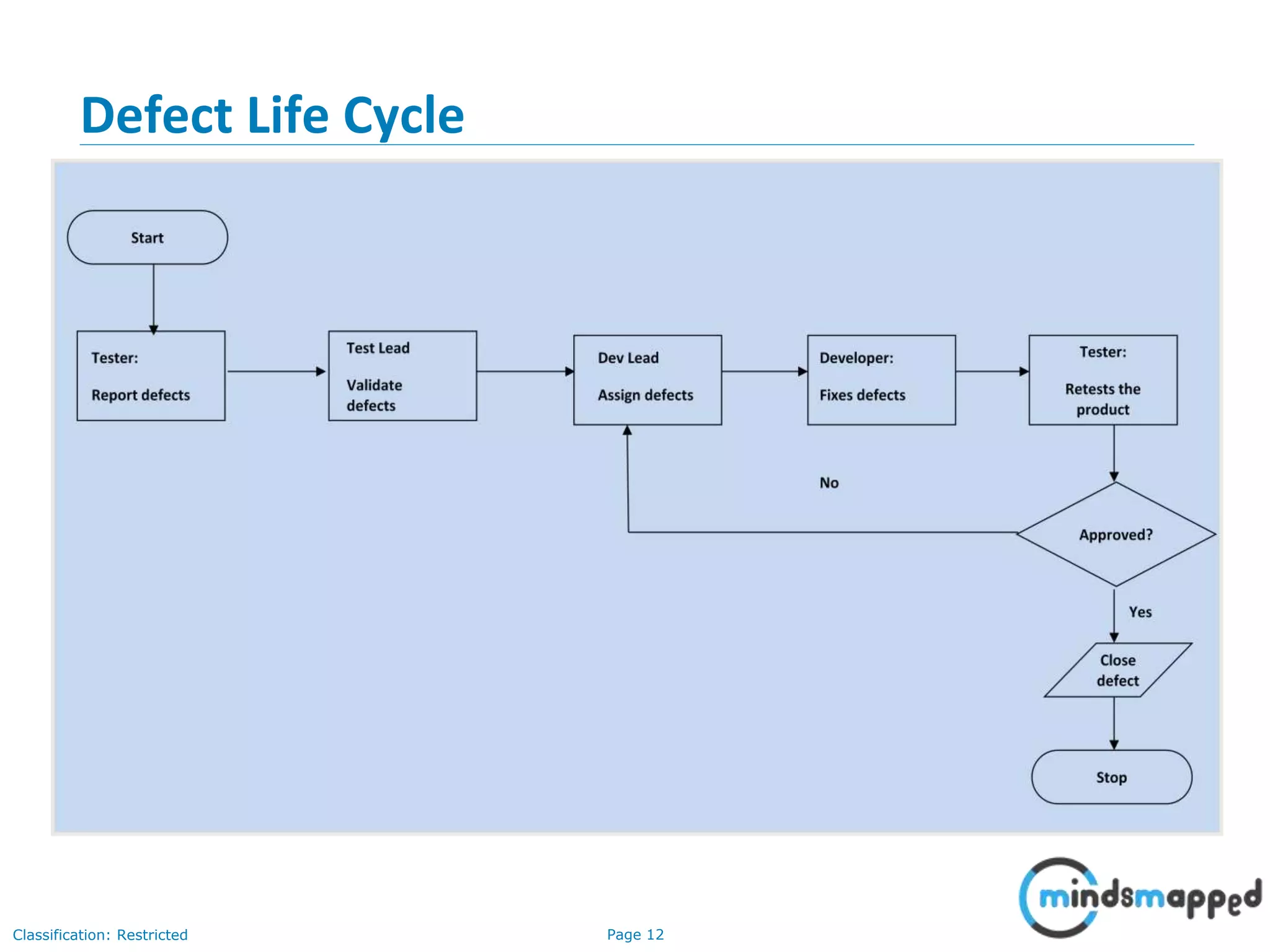
Defect Life Cycle
Page 13Classification: Restricted
Advantages of Defect Tracking
• Information sharing
• Resource allocations for defect fix
• Prioritization of defects
• Understanding stability of Application
• Judge release readiness of Application
Page 14Classification: Restricted
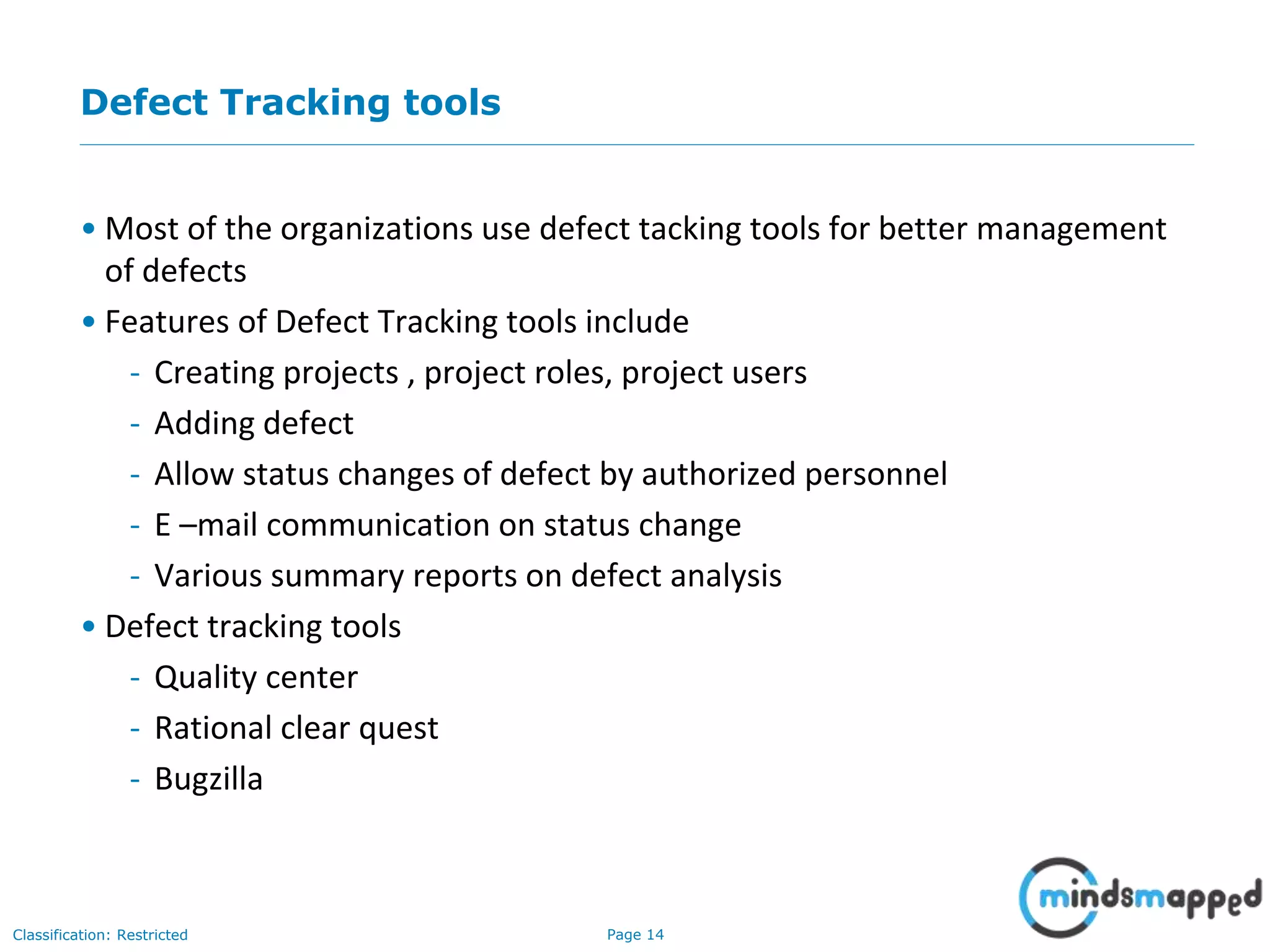
Defect Tracking tools
• Most of the organizations use defect tacking tools for better management
of defects
• Features of Defect Tracking tools include
- Creating projects , project roles, project users
- Adding defect
- Allow status changes of defect by authorized personnel
- E –mail communication on status change
- Various summary reports on defect analysis
• Defect tracking tools
- Quality center
- Rational clear quest
- Bugzilla
Page 15Classification: Restricted
Thank You

Defects and Categories

  • 1.
  • 2.
    Page 2Classification: Restricted Agenda •Defects / Bug and few Scenarios • Reason for defects • Defect template • Defect Life Cycle • Defect report & Defect Tracking tools • Class Assignment
  • 3.
    Page 3Classification: Restricted Whatis Defect / Bug? Defect is a difference / variation between the Expected Result and the Actual Result Defect Scenario Is Reqmt of the feature documented? Should application have this feature? Does application have this feature? Scenario 1(m) Yes Yes No Scenario 2(w) Mentioned as “Should not have” No Yes Scenario 3(ex) No No Yes Scenario 4(m) No Yes No Scenario 5 Yes Yes Yes, but difficult to understand / hard to use / slow
  • 4.
    Page 4Classification: Restricted FewDefect Scenarios: • Scenario 1: Application doesn’t do something which requirements specification says it should do Example: ‘View History’ facility not provided to registered user • Scenario 2: Application does something which requirements specification says it shouldn’t do Example: Visitor able to add items in the cart • Scenario 3: Application does something which requirements specification doesn’t mention Example: Displaying purchase count for every item
  • 5.
    Page 5Classification: Restricted contd: •Scenario 4: Application doesn’t do something which requirement specification doesn’t mention but should do Example: In the item catalog , items should appear category – wise • Scenario 5: Application is difficult to understand, hard to use, slow etc Example: Check out process not developed as a wizard making it difficult to understand and use Calculation and display of bill amount takes more than a minute
  • 6.
    Page 6Classification: Restricted Reasonsfor Defects Requirement • Unclear or missing Requirement • Frequently changing Requirement Design (performance) • Complicated design Implementation (coding) • Incorrect coding by developers • New technology • Poor documentation / lack of application knowledge
  • 7.
    Page 7Classification: Restricted DefectAttributes • Defect id • Project name • Module name • Type of defect • Severity • Priority • Summary • Description • Status • Reported by / on • Assigned ( which developer)
  • 8.
    Page 8Classification: Restricted DefectAttributes in Detail Item Description Defect ID A unique identification assigned to each defect which helps in tracking Project name Name of the project Module name Name of the module where defect is found Phase Level of testing (Unit, System, UAT etc) Type of Defect Can be Functional /Non Functional / Enhancement Severity Indicates impact of defect Priority Indicates urgency of fixing defect Summary One line statement mentioning defects Description Detailed information of defect with steps to reproduce , screen shots, more information on what is happening and what should happen Status Can be New, Open, Assigned, Duplicate, Deferred, Fixed, Re-Opened, Closed
  • 9.
    Page 9Classification: Restricted DefectReporting Purpose: • To have a complete record of defects that may be used in multiple ways • Communicate defects to all concerned stakeholders • Track defects till they get closed • Forms basis for quality measurement • Use this knowledge for future similar projects • Process improvement • Gather statistics to predict defects in future applications • Take decision about readiness to handover the application for user acceptance testing or deployment
  • 10.
    Page 10Classification: Restricted DefectSeverity •Severity indicates impact of the bug on the application Severity Description Criteria 1 Very High Core dumps, Application not starting, application hangs, no workaround is available, data corruption, application abnormally terminates 2 High Workaround is available, Function is not working according to specifications, severe performance degradation, critical to a customer 3 Medium Incorrect error messages, Noticeable performance inefficiencies 4 Low Spellings, Grammatical errors, Enhancement requests, cosmetic flaws
  • 11.
    Page 11Classification: Restricted DefectPriority • Priority indicates urgency of fixing the bug Priority Description Criteria 1 Very High Immediate fix needed, block further testing, very visible 2 High Must be fixed before the product is released 3 Medium Should fix it time permits 4 Low Would like fix but can be release as it is if needed
  • 12.
  • 13.
    Page 13Classification: Restricted Advantagesof Defect Tracking • Information sharing • Resource allocations for defect fix • Prioritization of defects • Understanding stability of Application • Judge release readiness of Application
  • 14.
    Page 14Classification: Restricted DefectTracking tools • Most of the organizations use defect tacking tools for better management of defects • Features of Defect Tracking tools include - Creating projects , project roles, project users - Adding defect - Allow status changes of defect by authorized personnel - E –mail communication on status change - Various summary reports on defect analysis • Defect tracking tools - Quality center - Rational clear quest - Bugzilla
  • 15.