Sanity Testing And
Smoke Testing
University of Gujrat
Smoke Testing.
 Build Verification Testing
 A type of software testing that comprises of a non-
exhaustive set of tests that aim at ensuring that the
most important functions work.
 A similar type of hardware testing(initial pass is done to
check if it did not catch the fire or smoke in the initial
switch on).
Smoke Testing
 Smoke testing is the initial testing process exercised to
check whether the software under test is ready/stable
for further testing.
 It check whether the deployed build is stable or not as
to confirm if the QA team can proceed with further
testing.
In simple terms, we are verifying
whether the important features
are working and there are no
showstoppers in the build that is
under testing.
When do we do smoke testing
 Smoke Testing is done whenever the new functionalities
of software are developed and integrated with existing
build that is deployed in QA/staging environment. It
ensures that all critical functionalities are working
correctly or not.
Why we Do smoke Testing
• All the show stoppers in the build will get identified by
performing smoke testing.
• Smoke testing is done after the build is released to QA.
With the help of smoke testing, most of the defects are
identified at initial stages of software development.
• With smoke testing, we simplify the detection and
correction of major defects.
• By smoke testing, QA team can find defects to the
application functionality that may have surfaced by the
new code.
• Smoke testing finds the major severity defects.
Who Will Do it &
Methods
 QA engineers
QA lead
a. Manual Smoke testing
b. Smoke testing by Automation
Example.
 Logging window(Able to move to next window with valid
username and password on clicking submit button.).
 User unable to sign out the from webpage.
 New registration button is added in the login window
and build is deployed with the new code. We perform
smoke testing on a new build.
Advantages.
• Easy to perform testing
• Defects will be identified in early stages.
• Improves the quality of the system
• Reduces the risk
• Progress is easier to access.
• Saves test effort and time
• Easy to detect critical errors and correction of errors.
• It runs quickly
• Minimizes integration risks
Sanity Testing
 Sanity Testing is the subset of Regression Testing and it
is performed when we do not have enough time for doing
testing.
 Sanity testing is carry out to check whether the bugs
reported in previous build are fixed & there is regression
introduced due to these fixes i.e. not breaking any
previously working functionality. The main aim of
Sanity testing to check the planned functionality is
working as expected.
Sanity Testing
• Sanity testing is a kind of Software Testing performed
after receiving a software build, with minor changes in
code, or functionality, to ascertain that the bugs have
been fixed and no further issues are introduced due to
these changes. The goal is to determine that the
proposed functionality works roughly as expected. If
sanity test fails, the build is rejected to save the time
and costs involved in a more rigorous testing.
consolidated points of Sanity
testing
• Sanity testing follows narrow and deep approach with
detailed testing of some limited features.
• Sanity testing is typically non-scripted.
• Sanity testing is a sub-set of regression testing.
• Sanity testing is cursory testing to prove software
application is working as mention in the specification
documents & meets the user needs.
• Sanity testing is used to verify the requirements of end
users are meeting or not.
• Sanity testing to check the after minor fixes the small
section of code or functionality is working as expected &
not breaking related functionality.
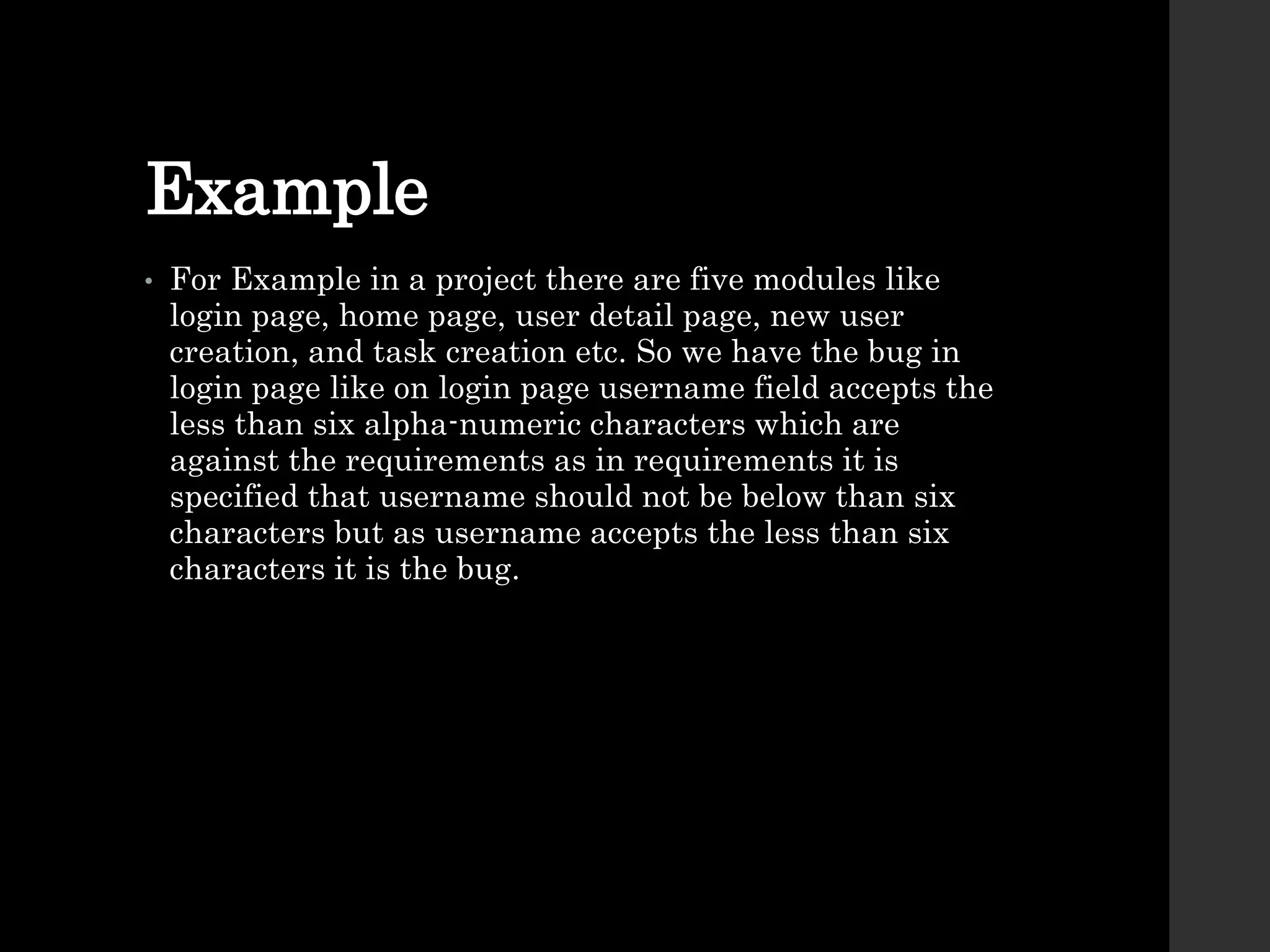
Example
• For Example in a project there are five modules like
login page, home page, user detail page, new user
creation, and task creation etc. So we have the bug in
login page like on login page username field accepts the
less than six alpha-numeric characters which are
against the requirements as in requirements it is
specified that username should not be below than six
characters but as username accepts the less than six
characters it is the bug.
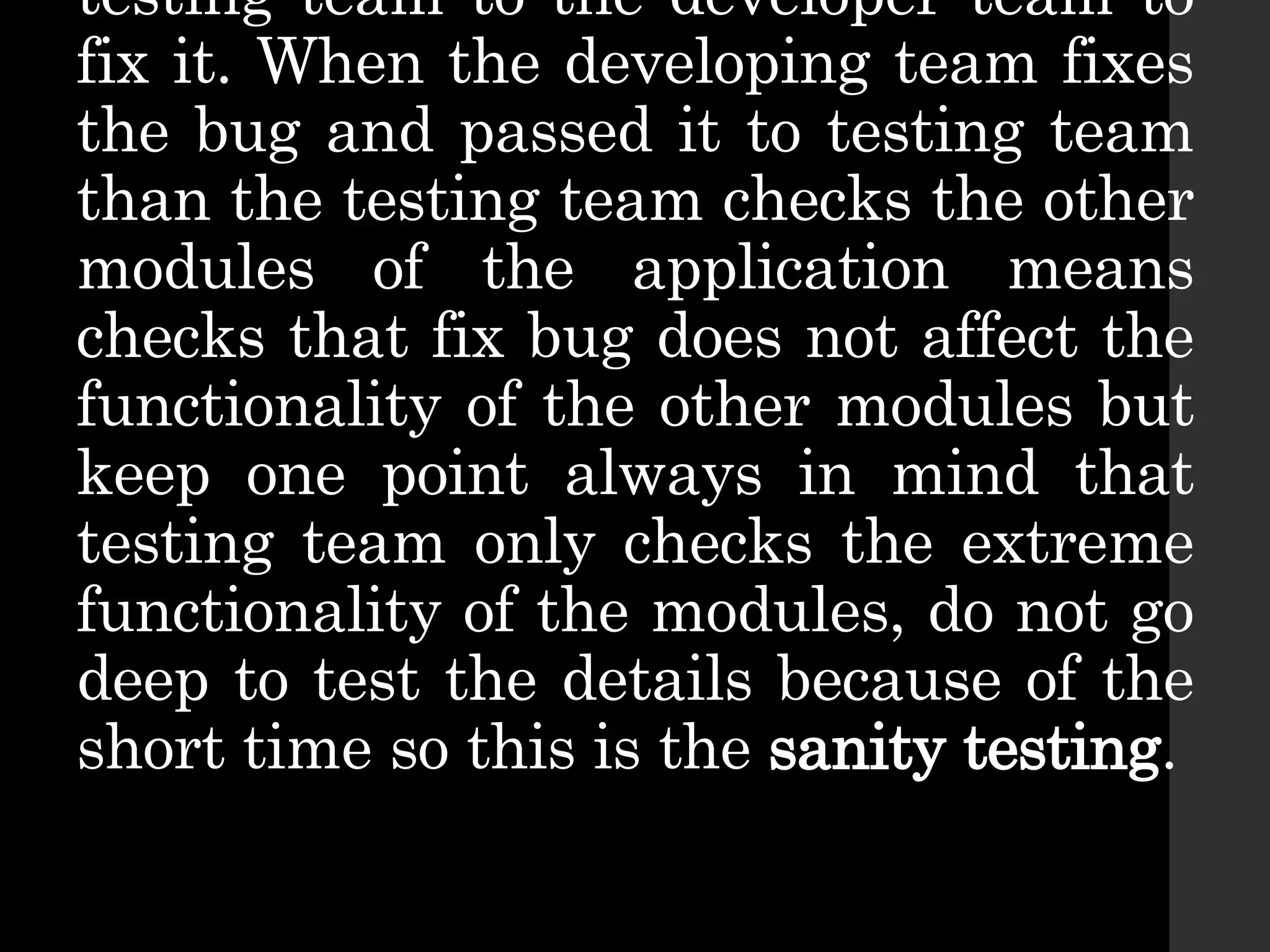
testing team to the developer team to
fix it. When the developing team fixes
the bug and passed it to testing team
than the testing team checks the other
modules of the application means
checks that fix bug does not affect the
functionality of the other modules but
keep one point always in mind that
testing team only checks the extreme
functionality of the modules, do not go
deep to test the details because of the
short time so this is the sanity testing.
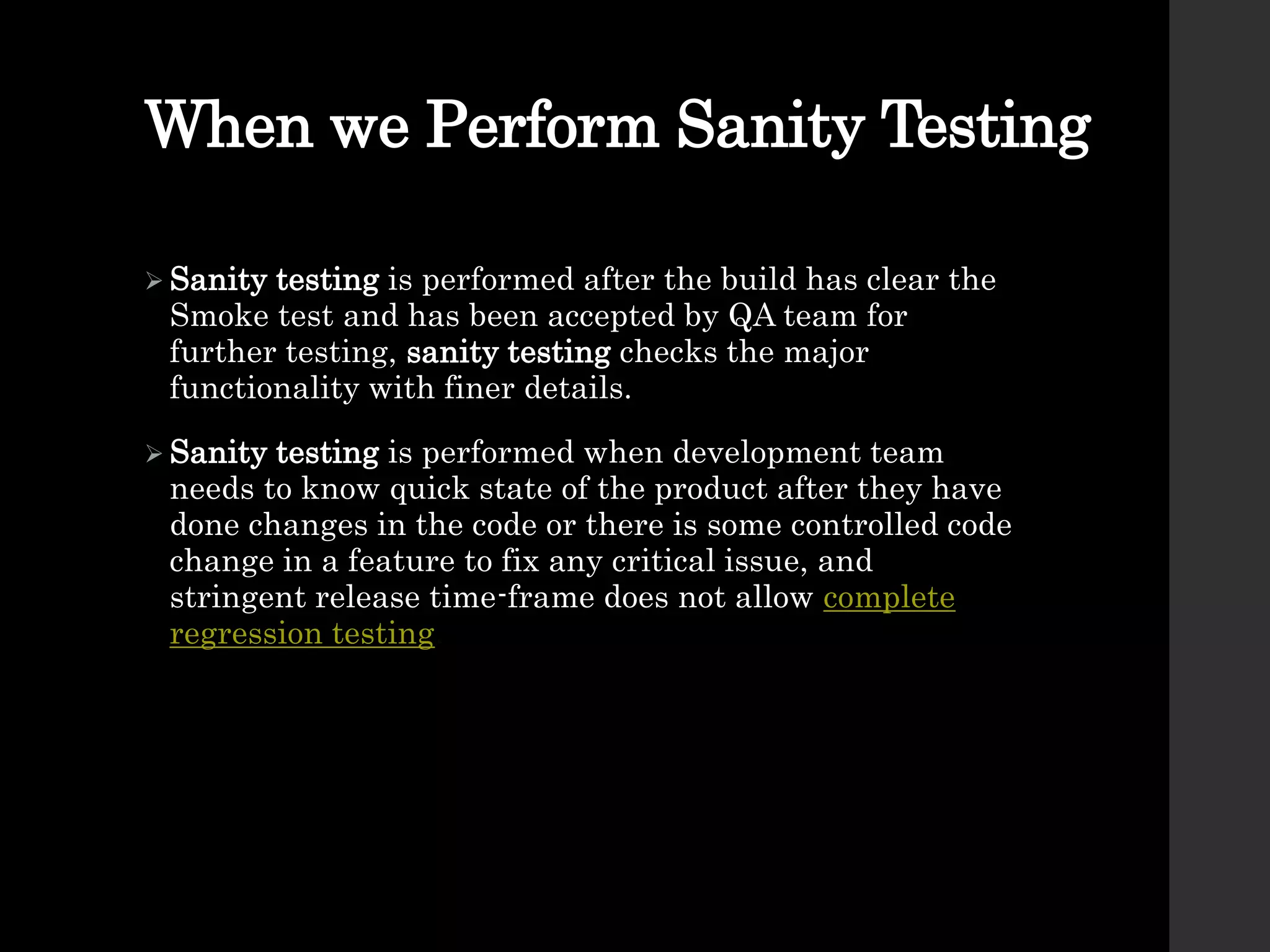
When we Perform Sanity Testing
 Sanity testing is performed after the build has clear the
Smoke test and has been accepted by QA team for
further testing, sanity testing checks the major
functionality with finer details.
 Sanity testing is performed when development team
needs to know quick state of the product after they have
done changes in the code or there is some controlled code
change in a feature to fix any critical issue, and
stringent release time-frame does not allow complete
regression testing.
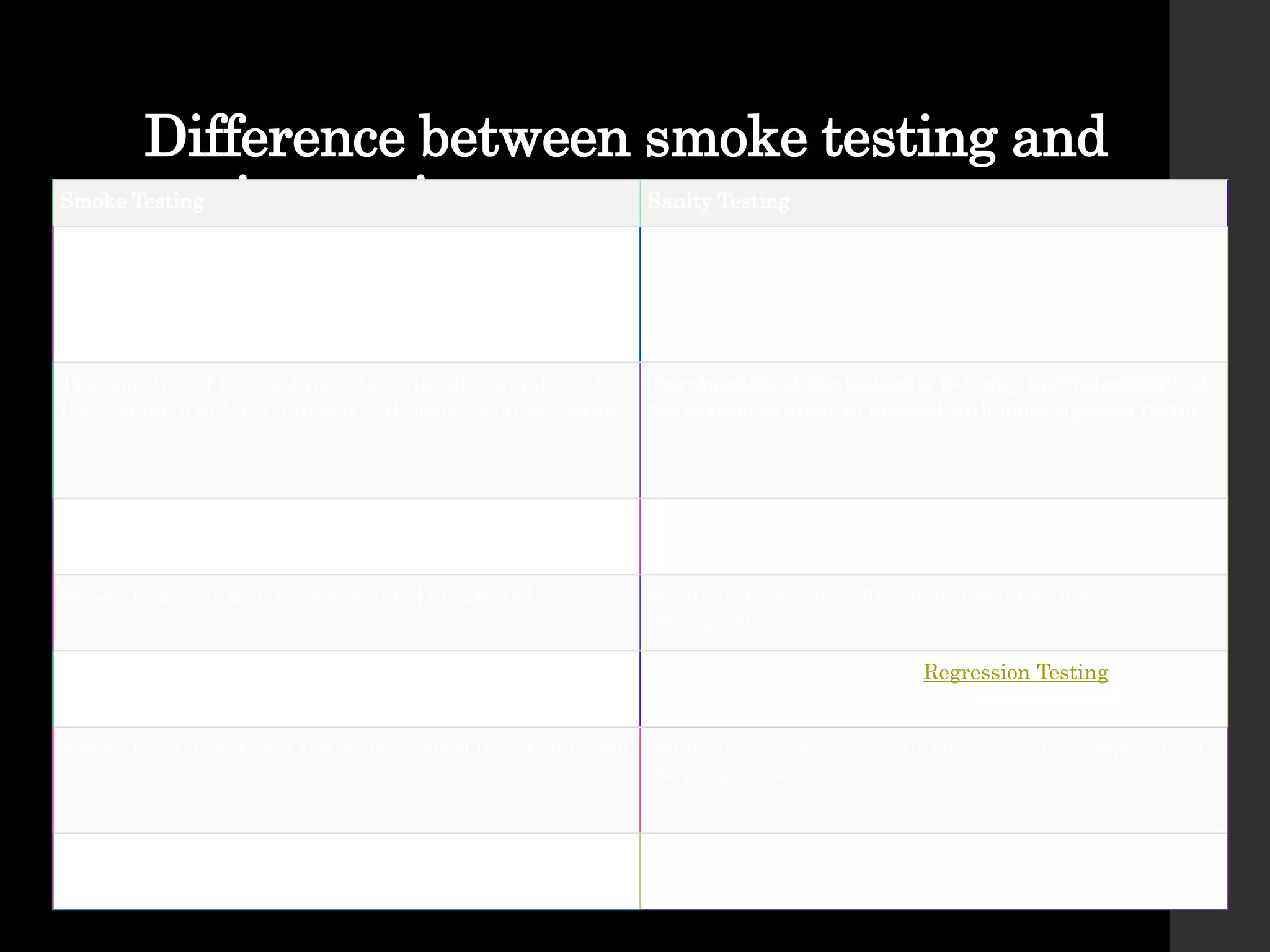
Difference between smoke testing and
sanity testing.Smoke Testing Sanity Testing
Smoke Testing is performed to ascertain that the critical
functionalities of the program is working fine
Sanity Testing is done to check the new functionality /
bugs have been fixed
The objective of this testing is to verify the "stability" of
the system in order to proceed with more rigorous testing
The objective of the testing is to verify the "rationality" of
the system in order to proceed with more rigorous testing
This testing is performed by the developers or testers Sanity testing is usually performed by testers
Smoke testing is usually documented or scripted Sanity testing is usually not documented and is
unscripted
Smoke testing is a subset of Acceptance testing Sanity testing is a subset of Regression Testing
Smoke testing exercises the entire system from end to end Sanity testing exercises only the particular component of
the entire system
Smoke testing is like General Health Check Up Sanity Testing is like specialized health check up
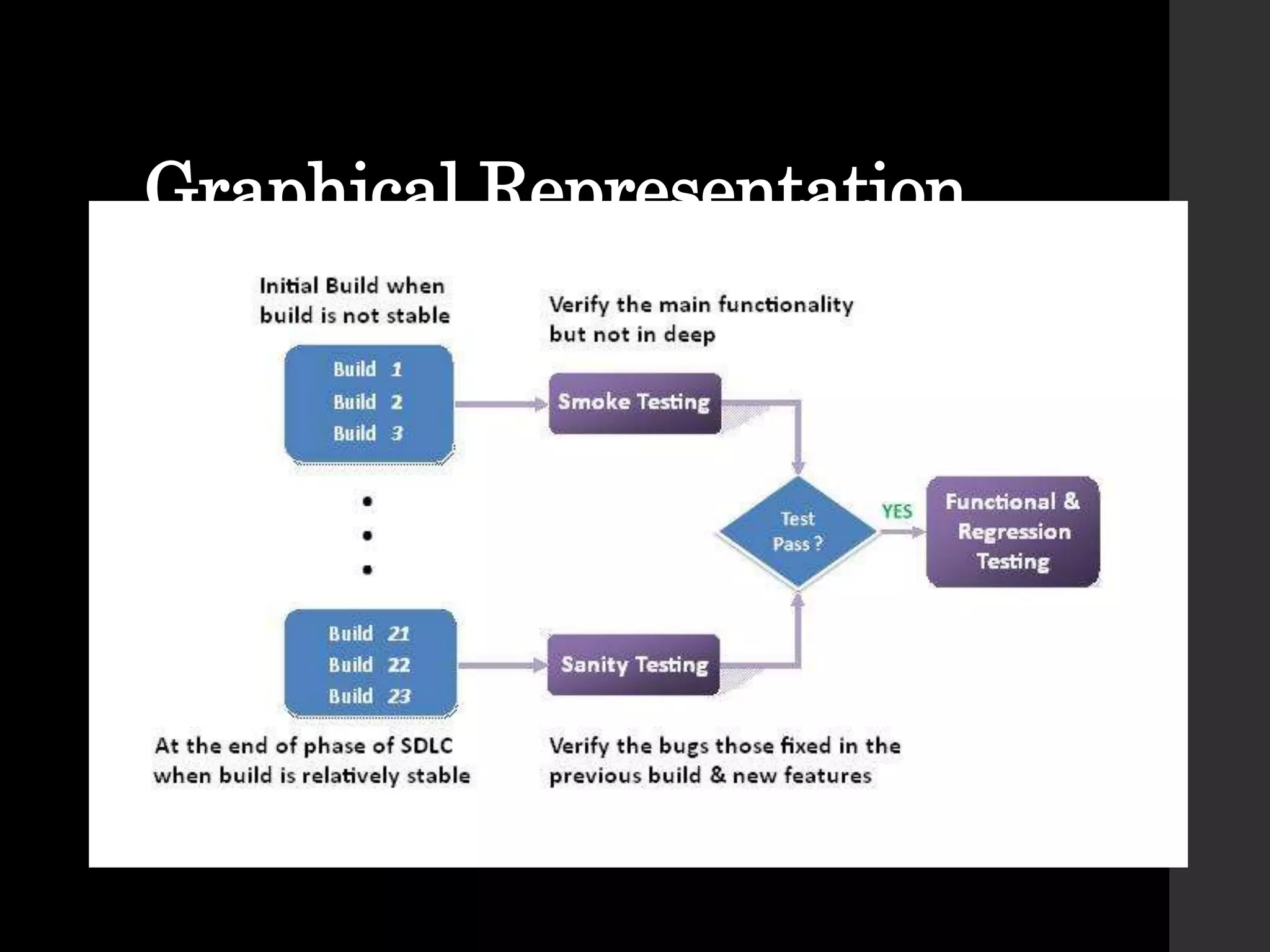
Graphical Representation.
Sanity testing and smoke testing

Sanity testing and smoke testing

  • 1.
    Sanity Testing And SmokeTesting University of Gujrat
  • 2.
    Smoke Testing.  BuildVerification Testing  A type of software testing that comprises of a non- exhaustive set of tests that aim at ensuring that the most important functions work.  A similar type of hardware testing(initial pass is done to check if it did not catch the fire or smoke in the initial switch on).
  • 3.
    Smoke Testing  Smoketesting is the initial testing process exercised to check whether the software under test is ready/stable for further testing.  It check whether the deployed build is stable or not as to confirm if the QA team can proceed with further testing.
  • 4.
    In simple terms,we are verifying whether the important features are working and there are no showstoppers in the build that is under testing.
  • 5.
    When do wedo smoke testing  Smoke Testing is done whenever the new functionalities of software are developed and integrated with existing build that is deployed in QA/staging environment. It ensures that all critical functionalities are working correctly or not.
  • 6.
    Why we Dosmoke Testing • All the show stoppers in the build will get identified by performing smoke testing. • Smoke testing is done after the build is released to QA. With the help of smoke testing, most of the defects are identified at initial stages of software development. • With smoke testing, we simplify the detection and correction of major defects. • By smoke testing, QA team can find defects to the application functionality that may have surfaced by the new code. • Smoke testing finds the major severity defects.
  • 7.
    Who Will Doit & Methods  QA engineers QA lead a. Manual Smoke testing b. Smoke testing by Automation
  • 8.
    Example.  Logging window(Ableto move to next window with valid username and password on clicking submit button.).  User unable to sign out the from webpage.  New registration button is added in the login window and build is deployed with the new code. We perform smoke testing on a new build.
  • 9.
    Advantages. • Easy toperform testing • Defects will be identified in early stages. • Improves the quality of the system • Reduces the risk • Progress is easier to access. • Saves test effort and time • Easy to detect critical errors and correction of errors. • It runs quickly • Minimizes integration risks
  • 10.
    Sanity Testing  SanityTesting is the subset of Regression Testing and it is performed when we do not have enough time for doing testing.  Sanity testing is carry out to check whether the bugs reported in previous build are fixed & there is regression introduced due to these fixes i.e. not breaking any previously working functionality. The main aim of Sanity testing to check the planned functionality is working as expected.
  • 11.
    Sanity Testing • Sanitytesting is a kind of Software Testing performed after receiving a software build, with minor changes in code, or functionality, to ascertain that the bugs have been fixed and no further issues are introduced due to these changes. The goal is to determine that the proposed functionality works roughly as expected. If sanity test fails, the build is rejected to save the time and costs involved in a more rigorous testing.
  • 12.
    consolidated points ofSanity testing • Sanity testing follows narrow and deep approach with detailed testing of some limited features. • Sanity testing is typically non-scripted. • Sanity testing is a sub-set of regression testing. • Sanity testing is cursory testing to prove software application is working as mention in the specification documents & meets the user needs. • Sanity testing is used to verify the requirements of end users are meeting or not. • Sanity testing to check the after minor fixes the small section of code or functionality is working as expected & not breaking related functionality.
  • 13.
    Example • For Examplein a project there are five modules like login page, home page, user detail page, new user creation, and task creation etc. So we have the bug in login page like on login page username field accepts the less than six alpha-numeric characters which are against the requirements as in requirements it is specified that username should not be below than six characters but as username accepts the less than six characters it is the bug.
  • 14.
    testing team tothe developer team to fix it. When the developing team fixes the bug and passed it to testing team than the testing team checks the other modules of the application means checks that fix bug does not affect the functionality of the other modules but keep one point always in mind that testing team only checks the extreme functionality of the modules, do not go deep to test the details because of the short time so this is the sanity testing.
  • 15.
    When we PerformSanity Testing  Sanity testing is performed after the build has clear the Smoke test and has been accepted by QA team for further testing, sanity testing checks the major functionality with finer details.  Sanity testing is performed when development team needs to know quick state of the product after they have done changes in the code or there is some controlled code change in a feature to fix any critical issue, and stringent release time-frame does not allow complete regression testing.
  • 16.
    Difference between smoketesting and sanity testing.Smoke Testing Sanity Testing Smoke Testing is performed to ascertain that the critical functionalities of the program is working fine Sanity Testing is done to check the new functionality / bugs have been fixed The objective of this testing is to verify the "stability" of the system in order to proceed with more rigorous testing The objective of the testing is to verify the "rationality" of the system in order to proceed with more rigorous testing This testing is performed by the developers or testers Sanity testing is usually performed by testers Smoke testing is usually documented or scripted Sanity testing is usually not documented and is unscripted Smoke testing is a subset of Acceptance testing Sanity testing is a subset of Regression Testing Smoke testing exercises the entire system from end to end Sanity testing exercises only the particular component of the entire system Smoke testing is like General Health Check Up Sanity Testing is like specialized health check up
  • 17.