HOW GLOBAL BRANDS COMPETE
In 2004 Douglas B. Holt, John A. Quelch and
Earl L. Taylor evaluate the current worldview
of global brands and their overall effect on
various countries. They conducted an
extensive study into transnational brands
versus non-global brands and their impact on
the consumers of the world.
HIGHLIGHTS OF THE STUDY
• Consumers worldwide are in awe of the
political power of certain global entities and
their overall impact on
societies, communities, nations and the planet
as a whole.
• There are three main characteristics that
consumers look at when considering a global
brand. These are the factors that reign
supreme in the overall perception of global
consumer brands.
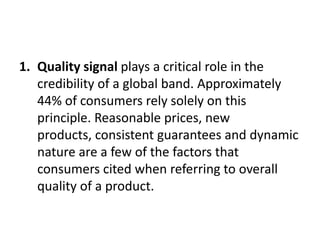
1. Quality signal plays a critical role in the
credibility of a global band. Approximately
44% of consumers rely solely on this
principle. Reasonable prices, new
products, consistent guarantees and dynamic
nature are a few of the factors that
consumers cited when referring to overall
quality of a product.
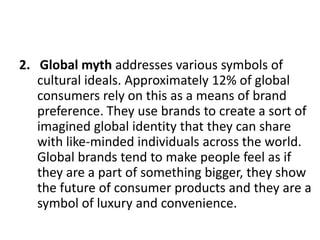
2. Global myth addresses various symbols of
cultural ideals. Approximately 12% of global
consumers rely on this as a means of brand
preference. They use brands to create a sort of
imagined global identity that they can share
with like-minded individuals across the world.
Global brands tend to make people feel as if
they are a part of something bigger, they show
the future of consumer products and they are a
symbol of luxury and convenience.
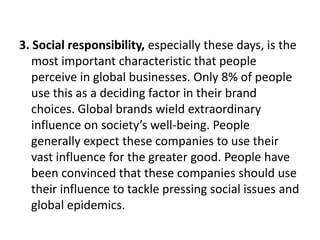
3. Social responsibility, especially these days, is the
most important characteristic that people
perceive in global businesses. Only 8% of people
use this as a deciding factor in their brand
choices. Global brands wield extraordinary
influence on society’s well-being. People
generally expect these companies to use their
vast influence for the greater good. People have
been convinced that these companies should use
their influence to tackle pressing social issues and
global epidemics.
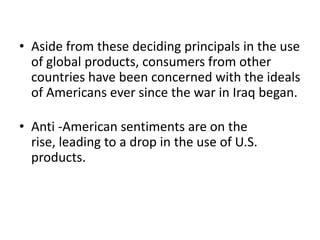
• Aside from these deciding principals in the use
of global products, consumers from other
countries have been concerned with the ideals
of Americans ever since the war in Iraq began.
• Anti -American sentiments are on the
rise, leading to a drop in the use of U.S.
products.
Overall, global consumer segments
consist of four main types of
consumers

i.
ii.
iii.
iv.

Global citizens
Global dreamers
Anti-globals
Global agnostics.
GLOBAL CITIZENS

Global Citizens comprise 55% of the
population and solely rely on whether
companies behave responsibly on pressing
issues such as consumer
health, environmental concerns and
workers rights.
GLOBAL DREAMERS

Global dreamers are the second largest
segment at 23% of the world’s population.
These consumers are less discerning about
transnational companies. This facet of the
population is more likely to believe global
myths and remains devoted to their use of
certain products.
ANTI-GLOBALS
Anti-globals make up approximately 13% of
the world’s population. This segment of the
population is highly sceptical of transnational
products and their wide influence. They
mostly avoid contact with transnational firms
and their brands.
GLOBAL AGNOSTICS
Global Agnostics are the least influential
group of consumers when it comes to global
brands. Comprising about 8% of the
population, this group evaluates a global
product by the same criteria they use to judge
local brands.
There are five main goals that global brands
should have when considering new
opportunities and new responsibilities. These
are;
i.
ii.
iii.
iv.
v.

Thinking globally
Managing the dark side
Building credible myths
Treating anti-globals as customers
Turning social responsibility into
entrepreneurship.
Thinking globally is essential for major
corporations because their products are
ultimately symbols of what consumers
perceive them to be. Firms must learn to
participate in a polarized conversation about
global brands and influence it.
Managing the dark side of companies is
difficult, but essential. Managing perceptions
of global brands is an integral part of keeping
the company successful. Advertising
approaches are paramount in maintaining a
positive image.
Building credible myths is also a gateway to
success for large brands. Firms must create
appropriate myths highlighting things such as
personal empowerment, consumer focused
campaigns and philosophical dialogue with
consumers. This ultimately earns credibility
with your market demographic.
Treating anti- globals as customers is equally
important. Although this facet of the
population typically strays from larger
firms, they represent one in ten people in the
world. Companies must earn the trust of this
segment by focusing on them as disgruntled
consumers and making every advance to
perfect their products for this demographic.
Turning social responsibility into
entrepreneurship is a key factor, especially
since social responsibility has become an
integral part of society’s allegiance to certain
firms. Most companies have launched
successful social responsibility campaigns
including philanthropic efforts and
environmental initiatives. People tend to buy
products that are socially responsible or fund
a good cause.

How Global Brands Compete by AMITESH SINGH YADAV

  • 1.
  • 2.
    In 2004 DouglasB. Holt, John A. Quelch and Earl L. Taylor evaluate the current worldview of global brands and their overall effect on various countries. They conducted an extensive study into transnational brands versus non-global brands and their impact on the consumers of the world.
  • 3.
    HIGHLIGHTS OF THESTUDY • Consumers worldwide are in awe of the political power of certain global entities and their overall impact on societies, communities, nations and the planet as a whole. • There are three main characteristics that consumers look at when considering a global brand. These are the factors that reign supreme in the overall perception of global consumer brands.
  • 4.
    1. Quality signalplays a critical role in the credibility of a global band. Approximately 44% of consumers rely solely on this principle. Reasonable prices, new products, consistent guarantees and dynamic nature are a few of the factors that consumers cited when referring to overall quality of a product.
  • 5.
    2. Global mythaddresses various symbols of cultural ideals. Approximately 12% of global consumers rely on this as a means of brand preference. They use brands to create a sort of imagined global identity that they can share with like-minded individuals across the world. Global brands tend to make people feel as if they are a part of something bigger, they show the future of consumer products and they are a symbol of luxury and convenience.
  • 6.
    3. Social responsibility,especially these days, is the most important characteristic that people perceive in global businesses. Only 8% of people use this as a deciding factor in their brand choices. Global brands wield extraordinary influence on society’s well-being. People generally expect these companies to use their vast influence for the greater good. People have been convinced that these companies should use their influence to tackle pressing social issues and global epidemics.
  • 7.
    • Aside fromthese deciding principals in the use of global products, consumers from other countries have been concerned with the ideals of Americans ever since the war in Iraq began. • Anti -American sentiments are on the rise, leading to a drop in the use of U.S. products.
  • 8.
    Overall, global consumersegments consist of four main types of consumers i. ii. iii. iv. Global citizens Global dreamers Anti-globals Global agnostics.
  • 9.
    GLOBAL CITIZENS Global Citizenscomprise 55% of the population and solely rely on whether companies behave responsibly on pressing issues such as consumer health, environmental concerns and workers rights.
  • 10.
    GLOBAL DREAMERS Global dreamersare the second largest segment at 23% of the world’s population. These consumers are less discerning about transnational companies. This facet of the population is more likely to believe global myths and remains devoted to their use of certain products.
  • 11.
    ANTI-GLOBALS Anti-globals make upapproximately 13% of the world’s population. This segment of the population is highly sceptical of transnational products and their wide influence. They mostly avoid contact with transnational firms and their brands.
  • 12.
    GLOBAL AGNOSTICS Global Agnosticsare the least influential group of consumers when it comes to global brands. Comprising about 8% of the population, this group evaluates a global product by the same criteria they use to judge local brands.
  • 13.
    There are fivemain goals that global brands should have when considering new opportunities and new responsibilities. These are; i. ii. iii. iv. v. Thinking globally Managing the dark side Building credible myths Treating anti-globals as customers Turning social responsibility into entrepreneurship.
  • 14.
    Thinking globally isessential for major corporations because their products are ultimately symbols of what consumers perceive them to be. Firms must learn to participate in a polarized conversation about global brands and influence it.
  • 15.
    Managing the darkside of companies is difficult, but essential. Managing perceptions of global brands is an integral part of keeping the company successful. Advertising approaches are paramount in maintaining a positive image.
  • 16.
    Building credible mythsis also a gateway to success for large brands. Firms must create appropriate myths highlighting things such as personal empowerment, consumer focused campaigns and philosophical dialogue with consumers. This ultimately earns credibility with your market demographic.
  • 17.
    Treating anti- globalsas customers is equally important. Although this facet of the population typically strays from larger firms, they represent one in ten people in the world. Companies must earn the trust of this segment by focusing on them as disgruntled consumers and making every advance to perfect their products for this demographic.
  • 18.
    Turning social responsibilityinto entrepreneurship is a key factor, especially since social responsibility has become an integral part of society’s allegiance to certain firms. Most companies have launched successful social responsibility campaigns including philanthropic efforts and environmental initiatives. People tend to buy products that are socially responsible or fund a good cause.