HOW TO WRITE A 
DISCURSIVE ESSAY
PLANNING 
• Planning is key to a successful essay 
• Always make a list of for and 
against arguments first. 
• Make sure that you have sufficient 
arguments for both sides of the 
point 
• Use evidence to support your point.
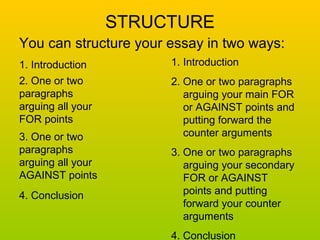
STRUCTURE 
You can structure your essay in two ways: 
1. Introduction 
2. One or two 
paragraphs 
arguing all your 
FOR points 
3. One or two 
paragraphs 
arguing all your 
AGAINST points 
4. Conclusion 
1. Introduction 
2. One or two paragraphs 
arguing your main FOR 
or AGAINST points and 
putting forward the 
counter arguments 
3. One or two paragraphs 
arguing your secondary 
FOR or AGAINST 
points and putting 
forward your counter 
arguments 
4. Conclusion
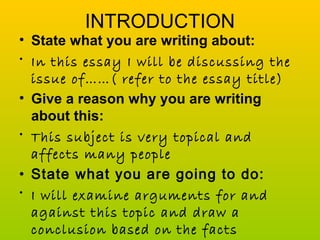
INTRODUCTION 
• State what you are writing about: 
• In this essay I will be discussing the 
issue of……( refer to the essay title) 
• Give a reason why you are writing 
about this: 
• This subject is very topical and 
affects many people 
• State what you are going to do: 
• I will examine arguments for and 
against this topic and draw a 
conclusion based on the facts 
presented.
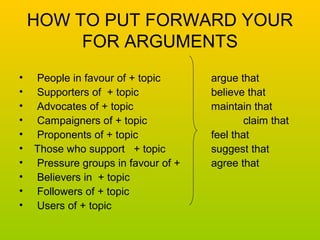
HOW TO PUT FORWARD YOUR 
FOR ARGUMENTS 
• People in favour of + topic argue that 
• Supporters of + topic believe that 
• Advocates of + topic maintain that 
• Campaigners of + topic claim that 
• Proponents of + topic feel that 
• Those who support + topic suggest that 
• Pressure groups in favour of + agree that 
• Believers in + topic 
• Followers of + topic 
• Users of + topic
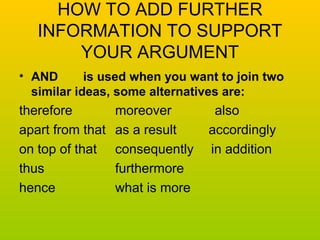
HOW TO ADD FURTHER 
INFORMATION TO SUPPORT 
YOUR ARGUMENT 
• AND is used when you want to join two 
similar ideas, some alternatives are: 
therefore moreover also 
apart from that as a result accordingly 
on top of that consequently in addition 
thus furthermore 
hence what is more
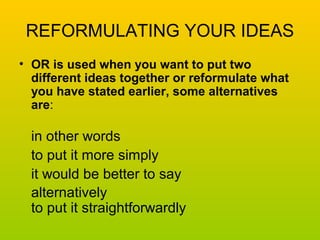
REFORMULATING YOUR IDEAS 
• OR is used when you want to put two 
different ideas together or reformulate what 
you have stated earlier, some alternatives 
are: 
in other words 
to put it more simply 
it would be better to say 
alternatively 
to put it straightforwardly
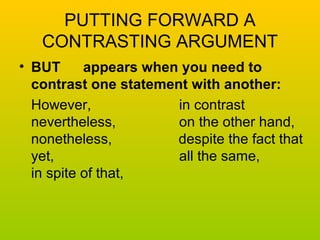
PUTTING FORWARD A 
CONTRASTING ARGUMENT 
• BUT appears when you need to 
contrast one statement with another: 
However, in contrast 
nevertheless, on the other hand, 
nonetheless, despite the fact that 
yet, all the same, 
in spite of that,
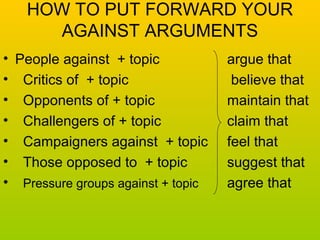
HOW TO PUT FORWARD YOUR 
AGAINST ARGUMENTS 
• People against + topic argue that 
• Critics of + topic believe that 
• Opponents of + topic maintain that 
• Challengers of + topic claim that 
• Campaigners against + topic feel that 
• Those opposed to + topic suggest that 
• Pressure groups against + topic agree that
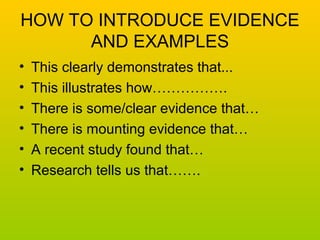
HOW TO INTRODUCE EVIDENCE 
AND EXAMPLES 
• This clearly demonstrates that... 
• This illustrates how……………. 
• There is some/clear evidence that… 
• There is mounting evidence that… 
• A recent study found that… 
• Research tells us that…….
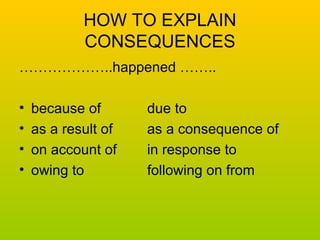
HOW TO EXPLAIN 
CONSEQUENCES 
………………..happened …….. 
• because of due to 
• as a result of as a consequence of 
• on account of in response to 
• owing to following on from
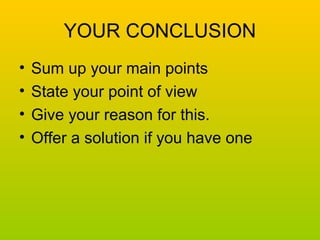
YOUR CONCLUSION 
• Sum up your main points 
• State your point of view 
• Give your reason for this. 
• Offer a solution if you have one
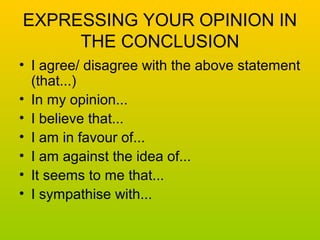
EXPRESSING YOUR OPINION IN 
THE CONCLUSION 
• I agree/ disagree with the above statement 
(that...) 
• In my opinion... 
• I believe that... 
• I am in favour of... 
• I am against the idea of... 
• It seems to me that... 
• I sympathise with...
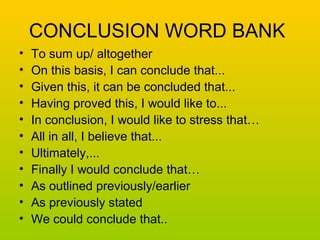
CONCLUSION WORD BANK 
• To sum up/ altogether 
• On this basis, I can conclude that... 
• Given this, it can be concluded that... 
• Having proved this, I would like to... 
• In conclusion, I would like to stress that… 
• All in all, I believe that... 
• Ultimately,... 
• Finally I would conclude that… 
• As outlined previously/earlier 
• As previously stated 
• We could conclude that..

How to-write-a-discursive-essay4

  • 1.
    HOW TO WRITEA DISCURSIVE ESSAY
  • 2.
    PLANNING • Planningis key to a successful essay • Always make a list of for and against arguments first. • Make sure that you have sufficient arguments for both sides of the point • Use evidence to support your point.
  • 3.
    STRUCTURE You canstructure your essay in two ways: 1. Introduction 2. One or two paragraphs arguing all your FOR points 3. One or two paragraphs arguing all your AGAINST points 4. Conclusion 1. Introduction 2. One or two paragraphs arguing your main FOR or AGAINST points and putting forward the counter arguments 3. One or two paragraphs arguing your secondary FOR or AGAINST points and putting forward your counter arguments 4. Conclusion
  • 4.
    INTRODUCTION • Statewhat you are writing about: • In this essay I will be discussing the issue of……( refer to the essay title) • Give a reason why you are writing about this: • This subject is very topical and affects many people • State what you are going to do: • I will examine arguments for and against this topic and draw a conclusion based on the facts presented.
  • 5.
    HOW TO PUTFORWARD YOUR FOR ARGUMENTS • People in favour of + topic argue that • Supporters of + topic believe that • Advocates of + topic maintain that • Campaigners of + topic claim that • Proponents of + topic feel that • Those who support + topic suggest that • Pressure groups in favour of + agree that • Believers in + topic • Followers of + topic • Users of + topic
  • 6.
    HOW TO ADDFURTHER INFORMATION TO SUPPORT YOUR ARGUMENT • AND is used when you want to join two similar ideas, some alternatives are: therefore moreover also apart from that as a result accordingly on top of that consequently in addition thus furthermore hence what is more
  • 7.
    REFORMULATING YOUR IDEAS • OR is used when you want to put two different ideas together or reformulate what you have stated earlier, some alternatives are: in other words to put it more simply it would be better to say alternatively to put it straightforwardly
  • 8.
    PUTTING FORWARD A CONTRASTING ARGUMENT • BUT appears when you need to contrast one statement with another: However, in contrast nevertheless, on the other hand, nonetheless, despite the fact that yet, all the same, in spite of that,
  • 9.
    HOW TO PUTFORWARD YOUR AGAINST ARGUMENTS • People against + topic argue that • Critics of + topic believe that • Opponents of + topic maintain that • Challengers of + topic claim that • Campaigners against + topic feel that • Those opposed to + topic suggest that • Pressure groups against + topic agree that
  • 10.
    HOW TO INTRODUCEEVIDENCE AND EXAMPLES • This clearly demonstrates that... • This illustrates how……………. • There is some/clear evidence that… • There is mounting evidence that… • A recent study found that… • Research tells us that…….
  • 11.
    HOW TO EXPLAIN CONSEQUENCES ………………..happened …….. • because of due to • as a result of as a consequence of • on account of in response to • owing to following on from
  • 12.
    YOUR CONCLUSION •Sum up your main points • State your point of view • Give your reason for this. • Offer a solution if you have one
  • 13.
    EXPRESSING YOUR OPINIONIN THE CONCLUSION • I agree/ disagree with the above statement (that...) • In my opinion... • I believe that... • I am in favour of... • I am against the idea of... • It seems to me that... • I sympathise with...
  • 14.
    CONCLUSION WORD BANK • To sum up/ altogether • On this basis, I can conclude that... • Given this, it can be concluded that... • Having proved this, I would like to... • In conclusion, I would like to stress that… • All in all, I believe that... • Ultimately,... • Finally I would conclude that… • As outlined previously/earlier • As previously stated • We could conclude that..