HOW TO WRITE
GOODER AND
NOT SUCK AT
EMAIL
creating a company we love. one email at a time.
9 email etiquette rules every
team member should follow_
Include a
clear,
direct
subject
line_
Examples of a good subject line
include “Meeting date changed,”
“Quick question about your
presentation,”
or “Suggestions for the proposal.”
People often decide whether to open
an email based on the subject line so
choose one that lets readers
know you are addressing their
concerns on business issues.
Please leave all marketing subject
lines to the marketing team ;)
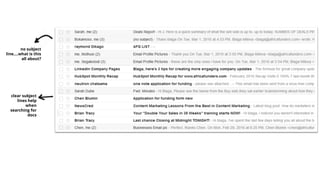
no subject
line….what is this
all about?
clear subject
lines help
when
searching for
docs
Use a
professional
email
address_
Always use your africafunders.com
email address for work
communication and do not
send inappropriate, vulgar or chain
mail emails using your work
account.
Remember, when you use your
work email you are representing
our organization, therefore
everything you say affects your
professional standing.
Think
twice
before
hitting
‘reply all’_
No one wants to read emails from
20 people that have nothing to do
with them.
Refrain from hitting ‘reply all’ unless
you really think everyone on the list
needs to receive the email.
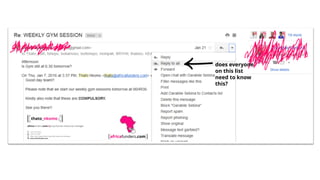
Classic example: gym reminders
and announcements from various
departments
does everyone
on this list
need to know
this?
Include a
signature
block_
Always use your
africafunders.com email signature
so your reader can contact you
directly if the need arises.
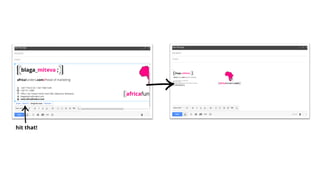
If you use the Gmail portal to send
emails make sure you click on
“best fit” right under your
signature image so you never,
ever send an email with a giant
signature.
hit that!
Use
professional
salutations_
Don’t use laid-back, colloquial
expressions like, “Hey you guys,”
“Yo,” or “Hi folks.”
Always use Hi or Hello to be on the
safe side and never shorten a
person’s name unless you are
certain they prefer to be called by a
short name. Say “Hi Michael,” unless
you are certain he prefers to be
called “Mike.”
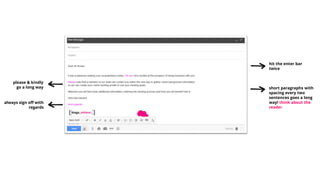
please & kindly
go a long way
always sign off with
regards
hit the enter bar
twice
short paragraphs with
spacing every two
sentences goes a long
way! think about the
reader
Use the
‘one-thing’
rule_
Emails are not the same as business
meetings. With business meetings,
the more agenda items you work
through, the more productive the
meeting.
With emails, the opposite is true. The
less you include in your emails, the
better.
That's why it's a good idea to practice
the "one thing" rule. Make each email
you send about one thing only. If you
need to communicate about another
project, write another email.
Proofread
every
message_
Your mistakes won’t go unnoticed by
the recipients of your email, and
depending upon the
recipient you may be judged for
making them.
Don’t rely on spell-check. Read and
reread your email a few times,
preferably aloud, before
sending it off.
Be
cautious
with
humour_
Humour can easily be lost in
translation without the right tone or
facial expressions. In
a professional exchange, it’s better to
leave homour out of emails unless
you know the recipient well.
Something perceived as funny when
spoken may come across very
differently when written. When in
doubt, leave it out.
Keep
tabs on
your
tone_
Just as jokes get lost in translation,
tone is easy to misconstrue without
the context you’d get from vocal cues
and facial expressions.
It’s easy to come off as more abrupt
than you might have intended. You
meant “straightforward”; they read
“angry and curt.”
To avoid misunderstandings, read
your email out loud before hitting
send. If it sounds harsh to you, it
would be harsh to the reader.
happy emailing_

How to write gooder and not suck at email

  • 1.
    HOW TO WRITE GOODERAND NOT SUCK AT EMAIL creating a company we love. one email at a time.
  • 2.
    9 email etiquetterules every team member should follow_
  • 3.
    Include a clear, direct subject line_ Examples ofa good subject line include “Meeting date changed,” “Quick question about your presentation,” or “Suggestions for the proposal.” People often decide whether to open an email based on the subject line so choose one that lets readers know you are addressing their concerns on business issues. Please leave all marketing subject lines to the marketing team ;)
  • 4.
    no subject line….what isthis all about? clear subject lines help when searching for docs
  • 5.
    Use a professional email address_ Always useyour africafunders.com email address for work communication and do not send inappropriate, vulgar or chain mail emails using your work account. Remember, when you use your work email you are representing our organization, therefore everything you say affects your professional standing.
  • 6.
    Think twice before hitting ‘reply all’_ No onewants to read emails from 20 people that have nothing to do with them. Refrain from hitting ‘reply all’ unless you really think everyone on the list needs to receive the email. Classic example: gym reminders and announcements from various departments
  • 7.
    does everyone on thislist need to know this?
  • 8.
    Include a signature block_ Always useyour africafunders.com email signature so your reader can contact you directly if the need arises. If you use the Gmail portal to send emails make sure you click on “best fit” right under your signature image so you never, ever send an email with a giant signature.
  • 9.
  • 10.
    Use professional salutations_ Don’t use laid-back,colloquial expressions like, “Hey you guys,” “Yo,” or “Hi folks.” Always use Hi or Hello to be on the safe side and never shorten a person’s name unless you are certain they prefer to be called by a short name. Say “Hi Michael,” unless you are certain he prefers to be called “Mike.”
  • 11.
    please & kindly goa long way always sign off with regards hit the enter bar twice short paragraphs with spacing every two sentences goes a long way! think about the reader
  • 12.
    Use the ‘one-thing’ rule_ Emails arenot the same as business meetings. With business meetings, the more agenda items you work through, the more productive the meeting. With emails, the opposite is true. The less you include in your emails, the better. That's why it's a good idea to practice the "one thing" rule. Make each email you send about one thing only. If you need to communicate about another project, write another email.
  • 13.
    Proofread every message_ Your mistakes won’tgo unnoticed by the recipients of your email, and depending upon the recipient you may be judged for making them. Don’t rely on spell-check. Read and reread your email a few times, preferably aloud, before sending it off.
  • 14.
    Be cautious with humour_ Humour can easilybe lost in translation without the right tone or facial expressions. In a professional exchange, it’s better to leave homour out of emails unless you know the recipient well. Something perceived as funny when spoken may come across very differently when written. When in doubt, leave it out.
  • 15.
    Keep tabs on your tone_ Just asjokes get lost in translation, tone is easy to misconstrue without the context you’d get from vocal cues and facial expressions. It’s easy to come off as more abrupt than you might have intended. You meant “straightforward”; they read “angry and curt.” To avoid misunderstandings, read your email out loud before hitting send. If it sounds harsh to you, it would be harsh to the reader.
  • 16.