SECOND LANGUAGE
ACQUISITION SCHOOLS

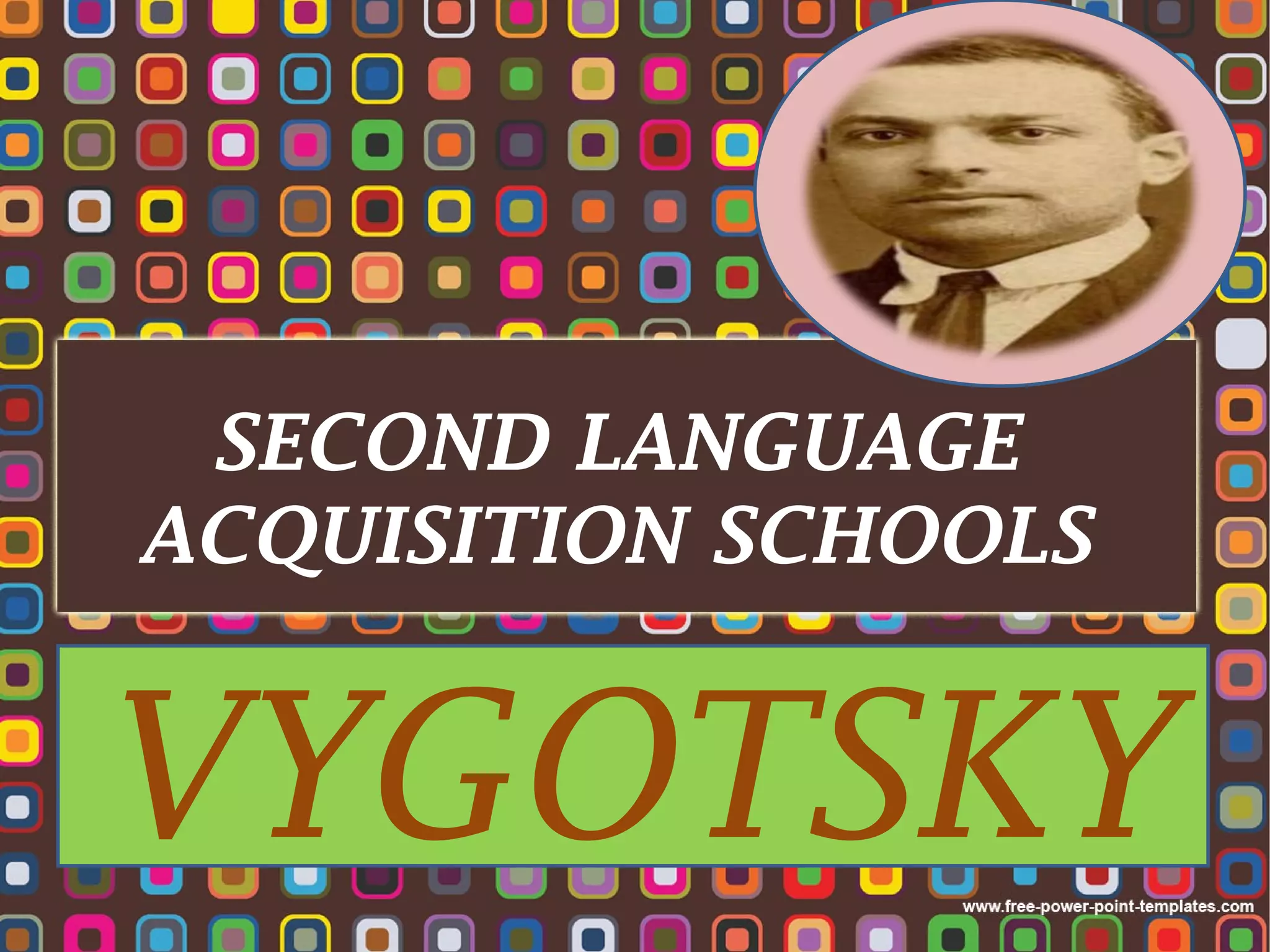
VYGOTSKY
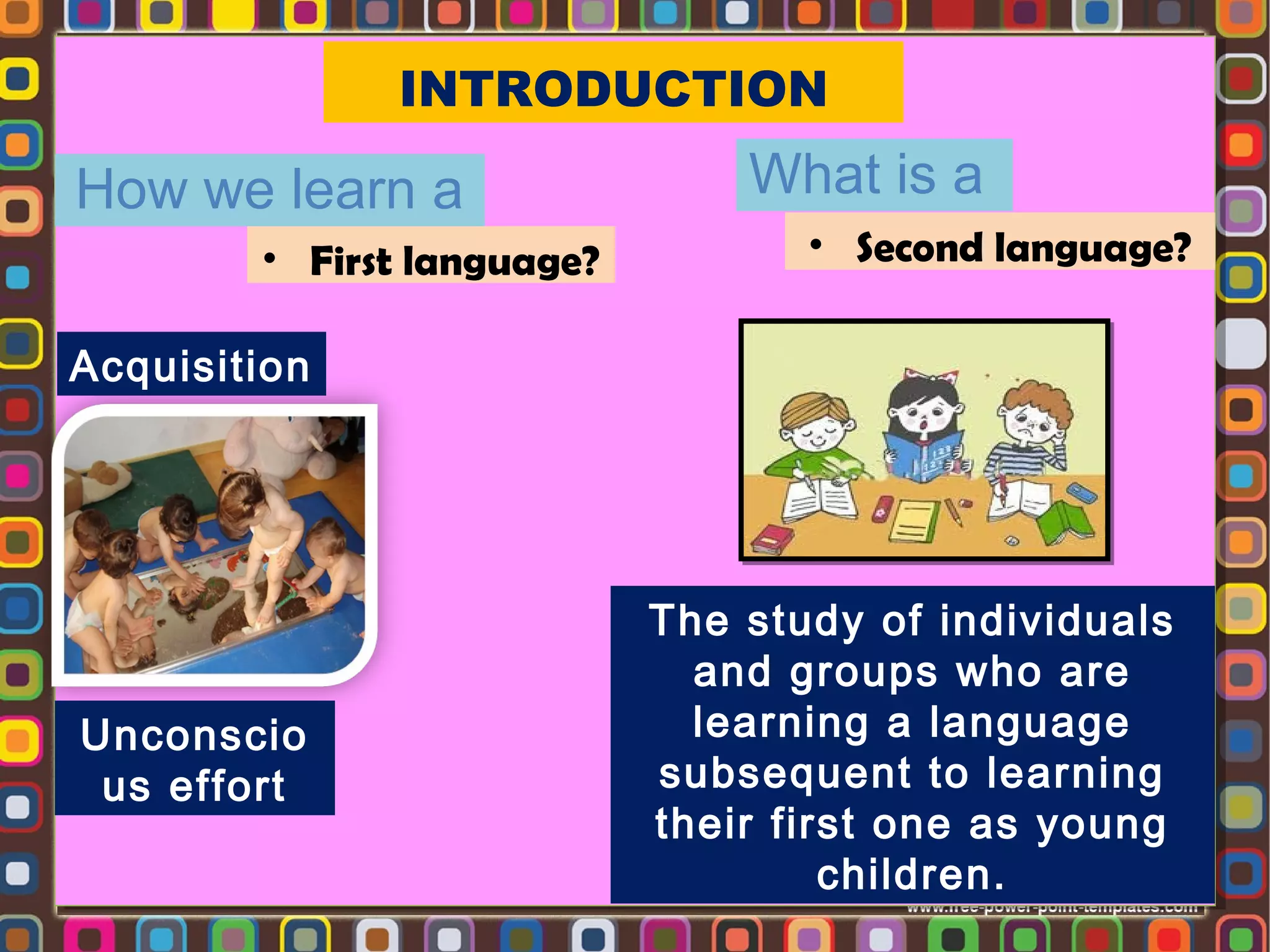
INTRODUCTION

How we learn a
• First language?

What is a
• Second language?

Acquisition

Unconscio
us effort

The study of individuals
and groups who are
learning a language
subsequent to learning
their first one as young
children.
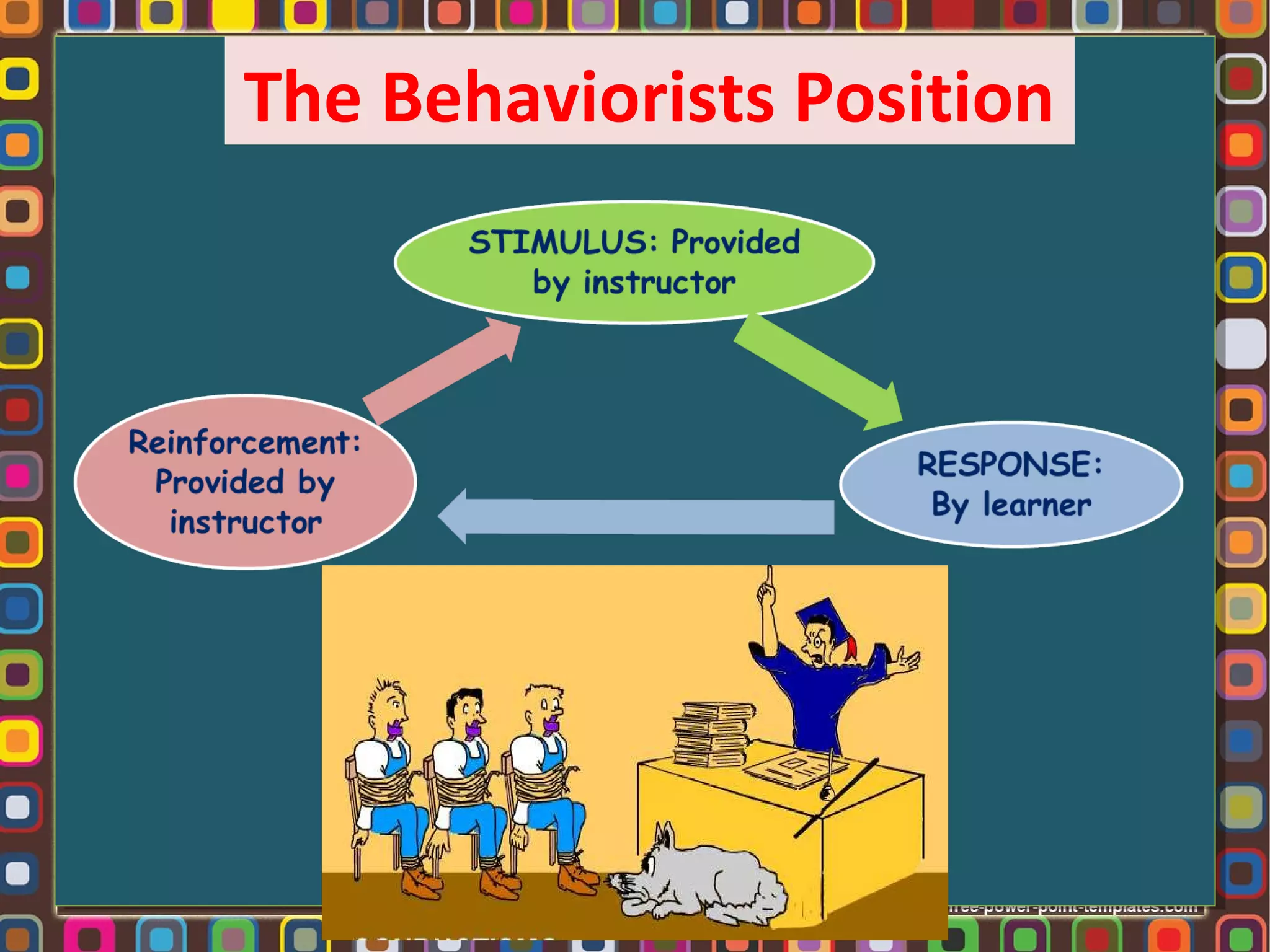
The Behaviorists Position
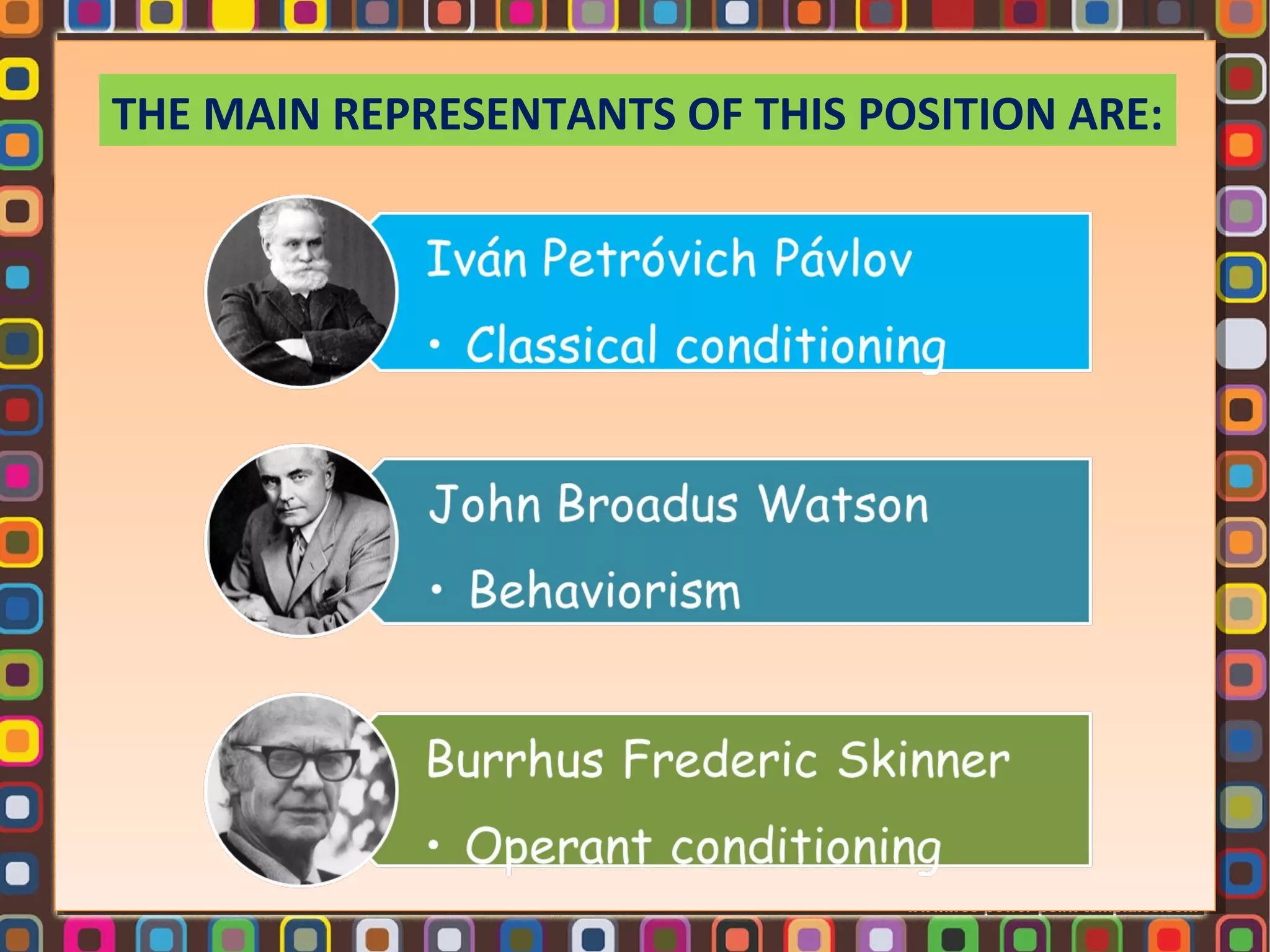
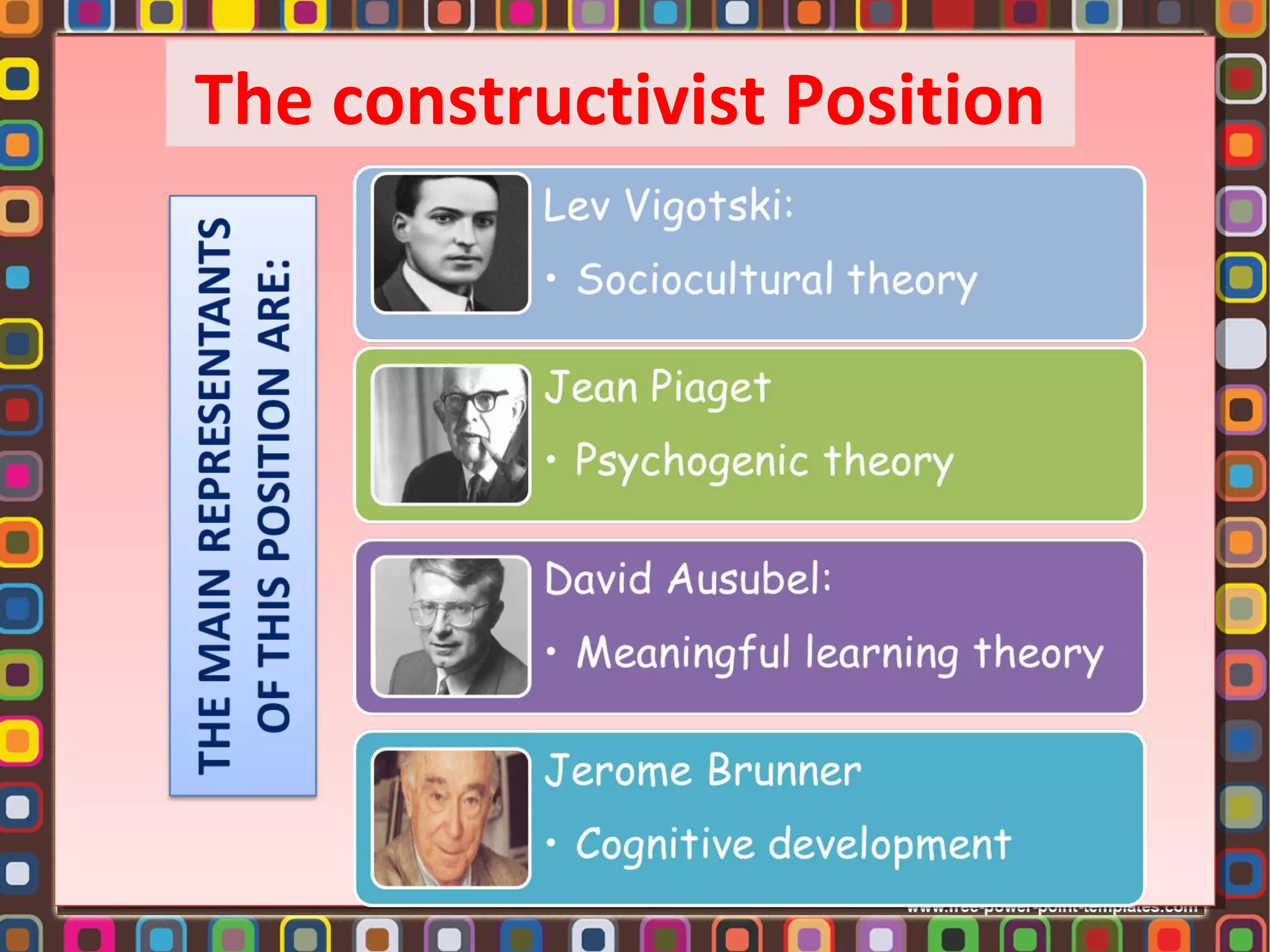
THE MAIN REPRESENTANTS OF THIS POSITION ARE:
The constructivist Position
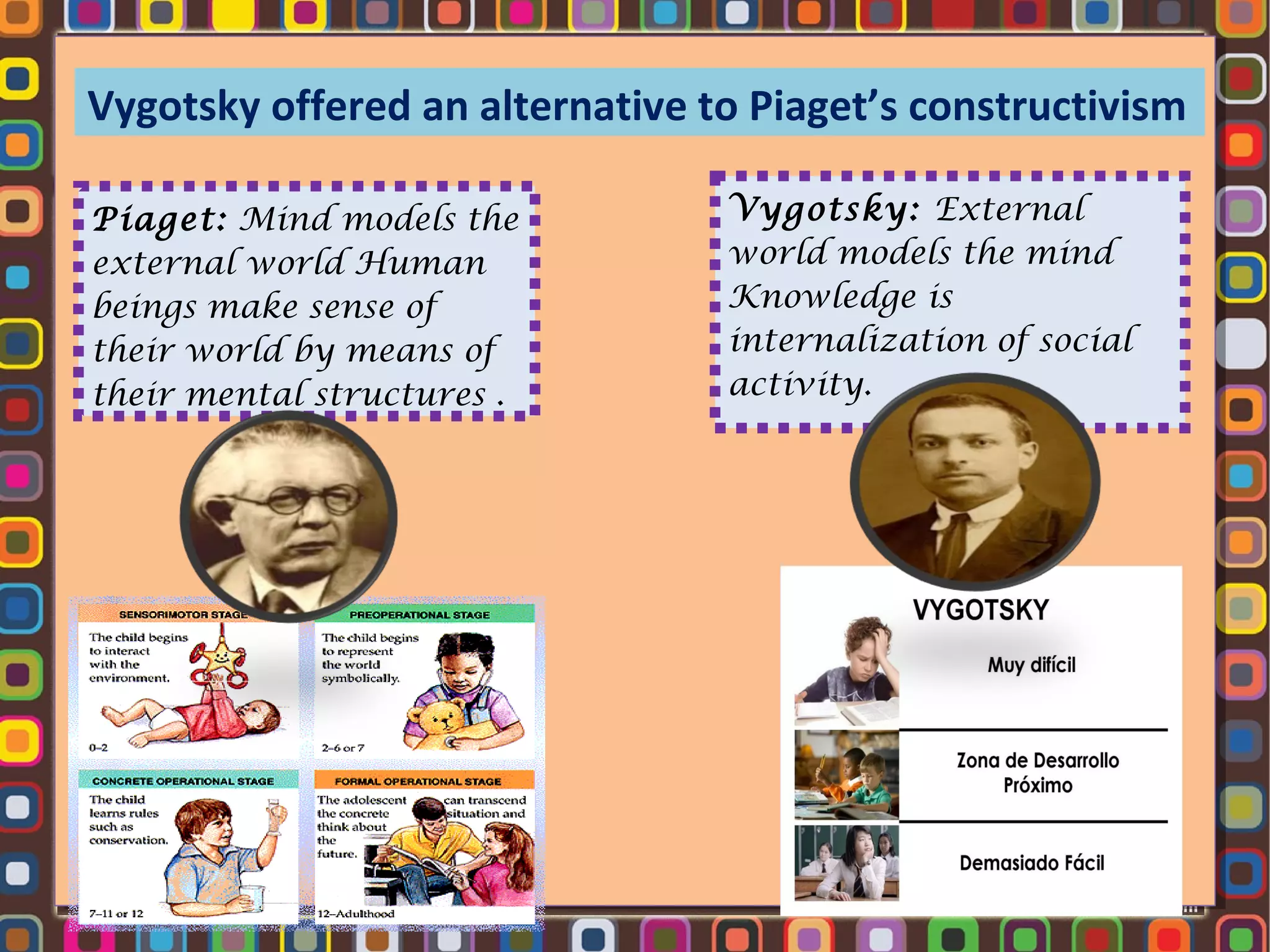
Vygotsky offered an alternative to Piaget’s constructivism
Piaget: Mind models the
external world Human
beings make sense of
their world by means of
their mental structures .

Vygotsky: External
world models the mind
Knowledge is
internalization of social
activity.
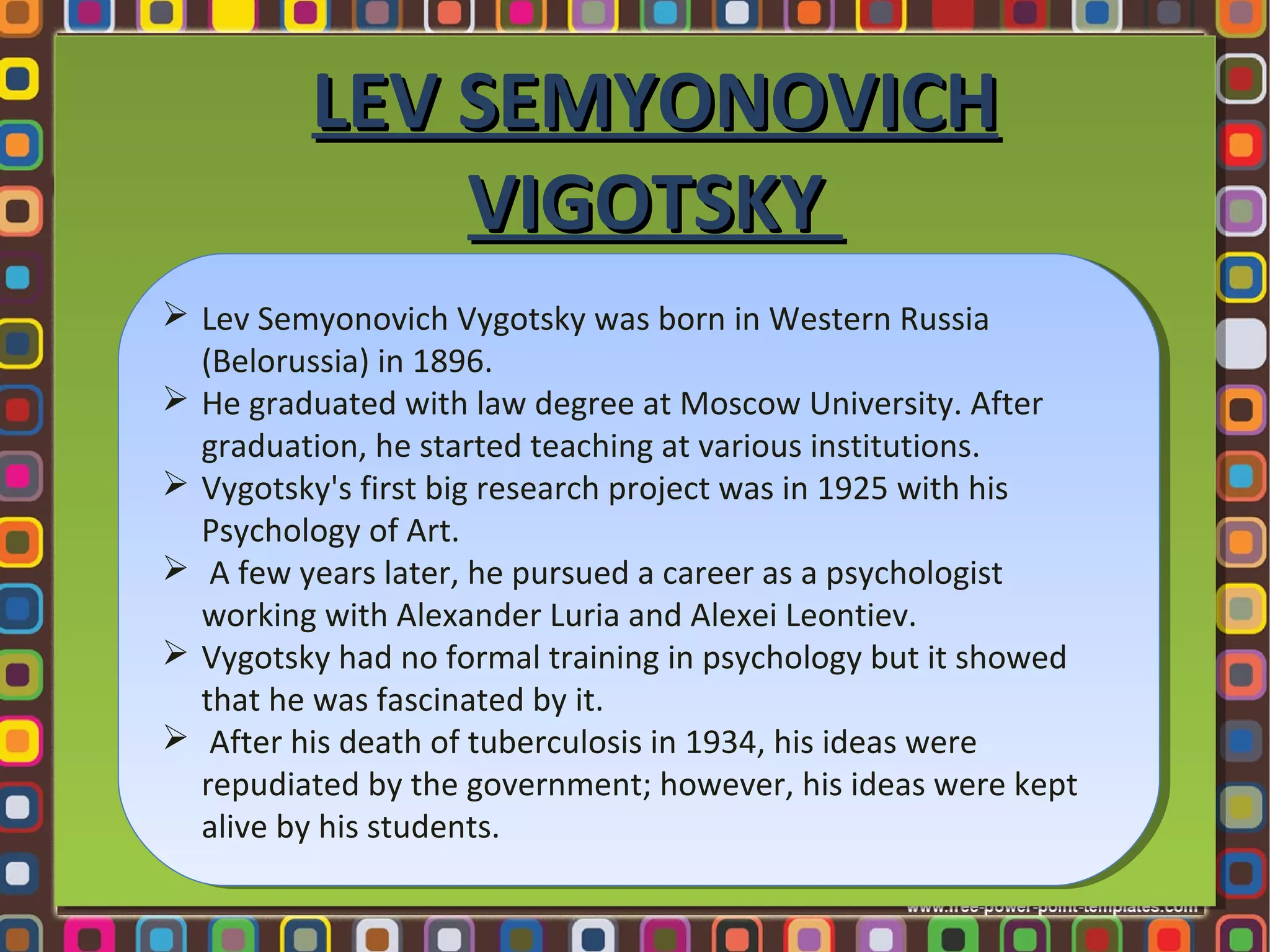
LEV SEMYONOVICH
VIGOTSKY
 Lev Semyonovich Vygotsky was born in Western Russia
(Belorussia) in 1896.
 He graduated with law degree at Moscow University. After
graduation, he started teaching at various institutions.
 Vygotsky's first big research project was in 1925 with his
Psychology of Art.
Psychology of Art.
 A few years later, he pursued aacareer as a psychologist
 A few years later, he pursued career as a psychologist
working with Alexander Luria and Alexei Leontiev.
 Vygotsky had no formal training in psychology but it showed
that he was fascinated by it.
 After his death of tuberculosis in 1934, his ideas were
repudiated by the government; however, his ideas were kept
alive by his students.
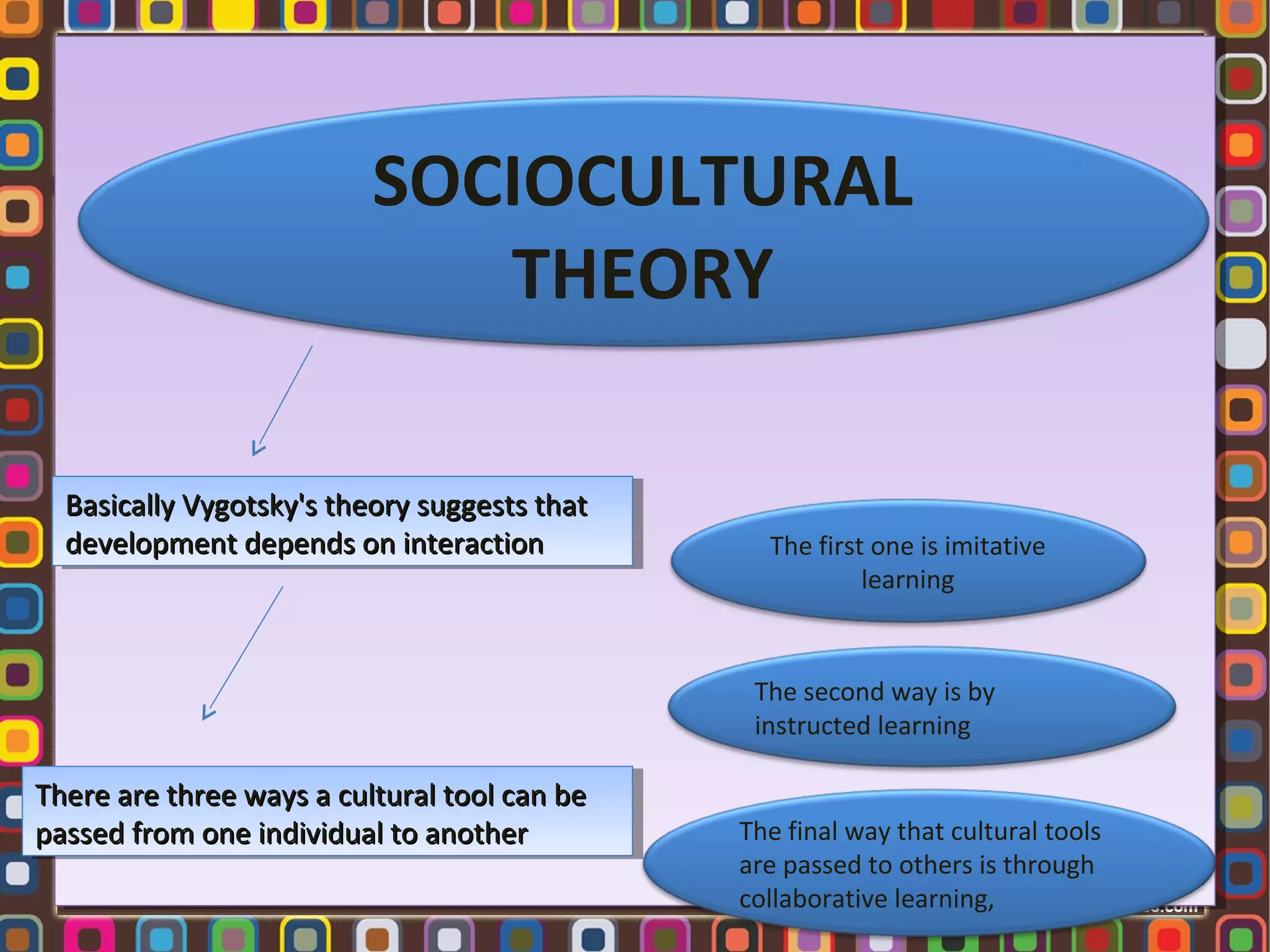
SOCIOCULTURAL
THEORY
Basically Vygotsky's theory suggests that
development depends on interaction

The first one is imitative
learning

The second way is by
instructed learning

There are three ways aacultural tool can be
There are three ways cultural tool can be
passed from one individual to another

The final way that cultural tools
are passed to others is through
collaborative learning,
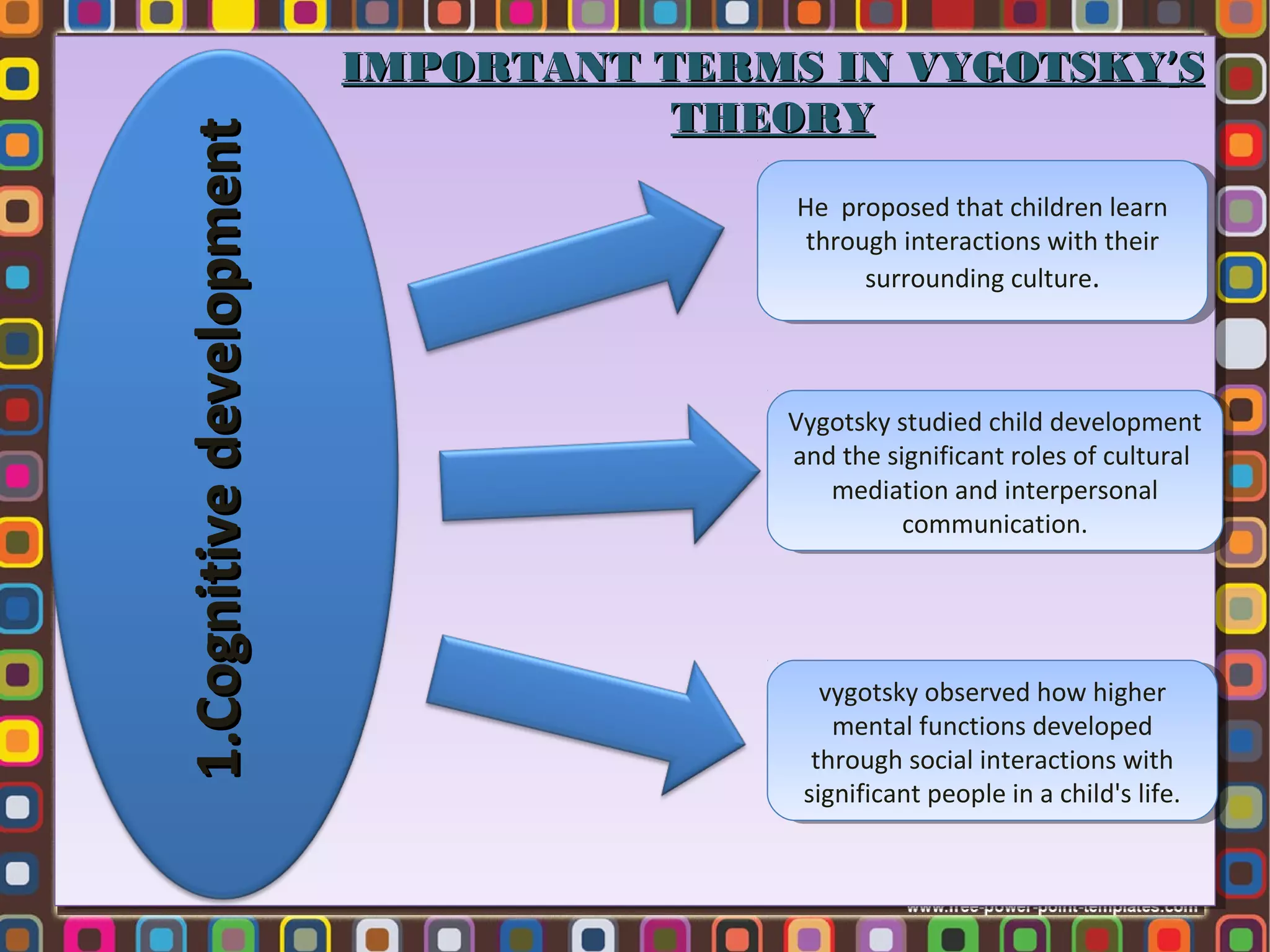
1.Cognitive development

IMPORTANT TERMS IN VYGOTSKY’S
THEORY
He proposed that children learn
through interactions with their
surrounding culture. .
surrounding culture

Vygotsky studied child development
and the significant roles of cultural
mediation and interpersonal
communication.
communication.

vygotsky observed how higher
mental functions developed
through social interactions with
significant people in aachild's life.
significant people in child's life.
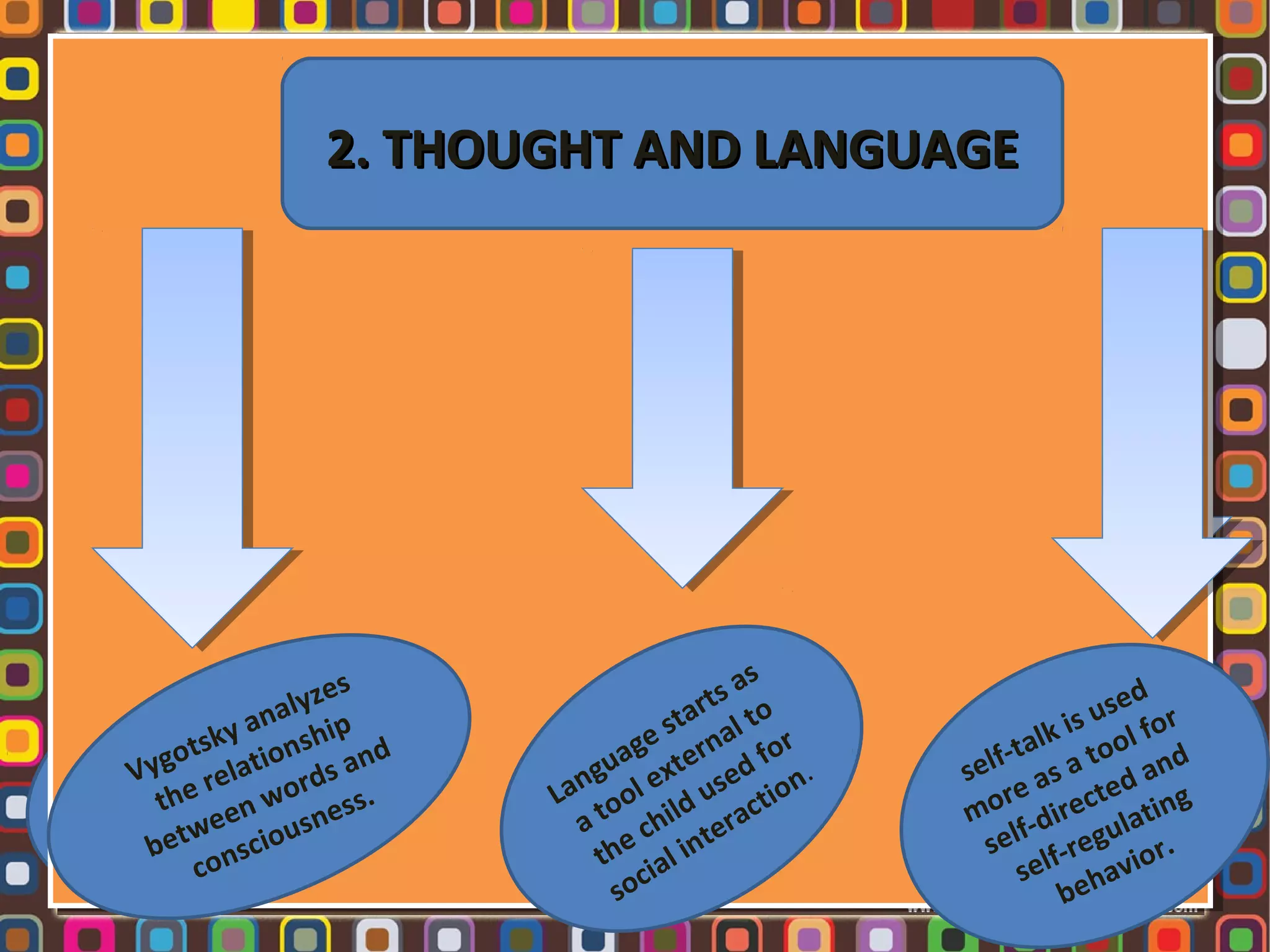
2. THOUGHT AND LANGUAGE

s
lyzezes
a
y an nalyip
h i
k
otstsky ia nsnshap d
o
Vyg gorelat tiords n nd
Vy e rela o rdssa
th e en w o e s . .
s
th e owsn
etwween u usnes
b e t n sc i i o
b co nsc
co

s
s a as
t
tarartlsto o
s
t
ge e et na alfor
s
ua agxt r red for
n
g u
e d .
an ngol e extus etion n.
L a o l ld s c
La t ochi ldeua ctio
t o hint r ra
a
c
the eal i inte
h
toci ial
s oc
s

d
useseor
d
s
lk i is u l f for
a
o
lf-t -talk to oolnd
a t a d
se l f a s a d n
sere s te a
r
mo ore iaecectleding g
t
r
m lf-d-driegu alatin
se lflf- guor.
e
sse lf-re vi ior.
a
sebeh hav
be
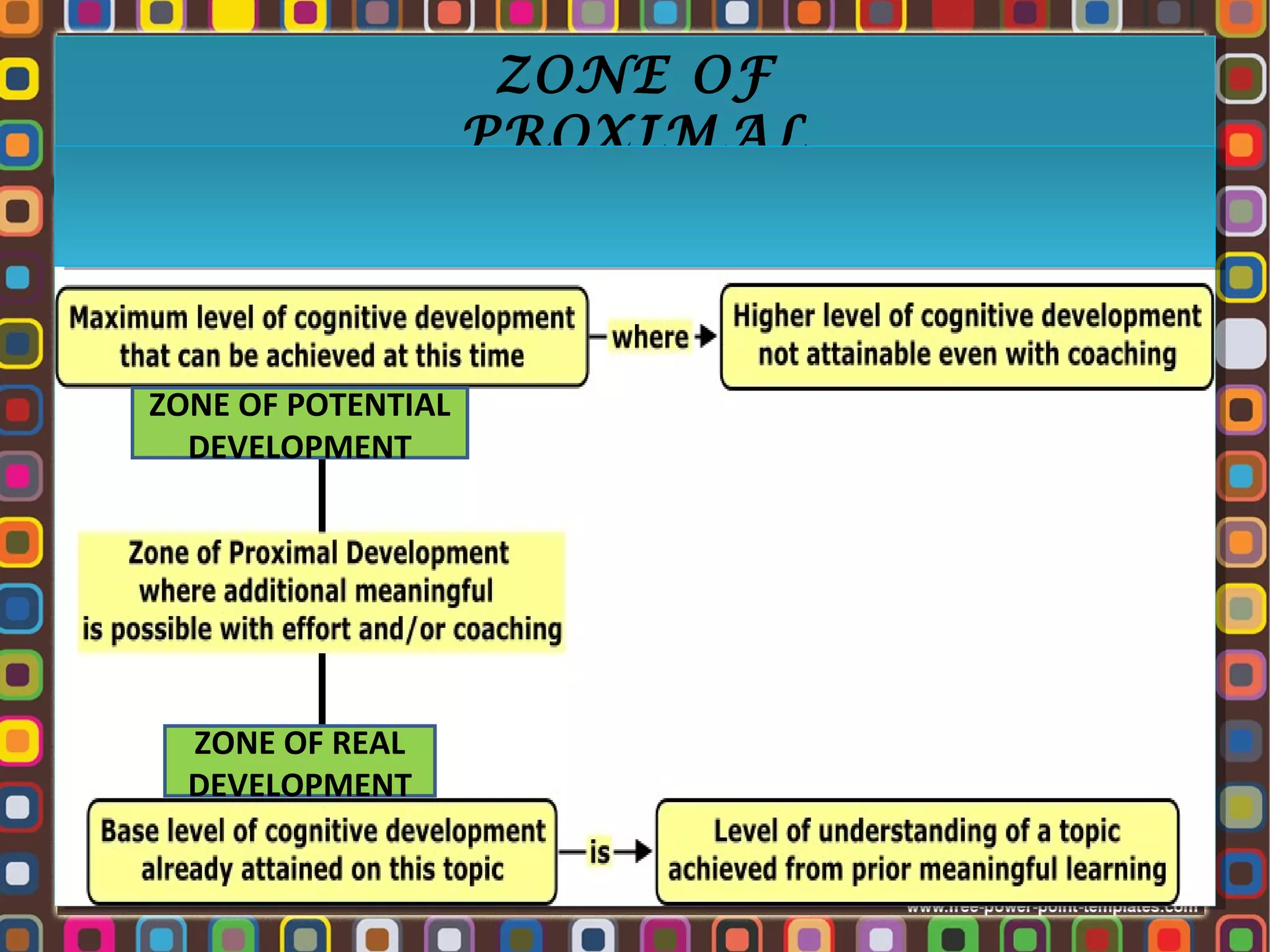
ZONE OF
PROXIMAL
DEVELOPMENT

ZONE OF POTENTIAL
DEVELOPMENT

ZONE OF REAL
DEVELOPMENT
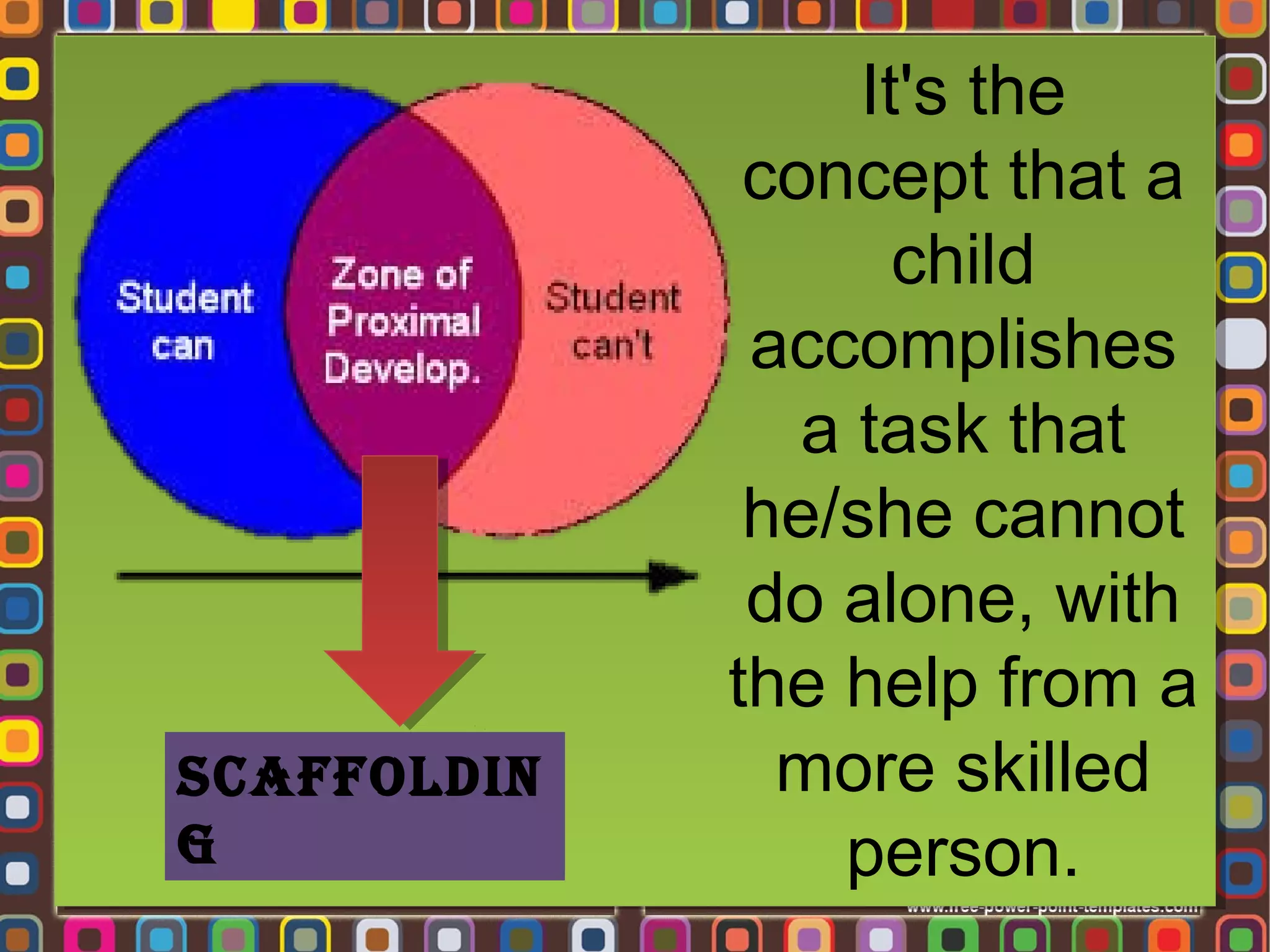
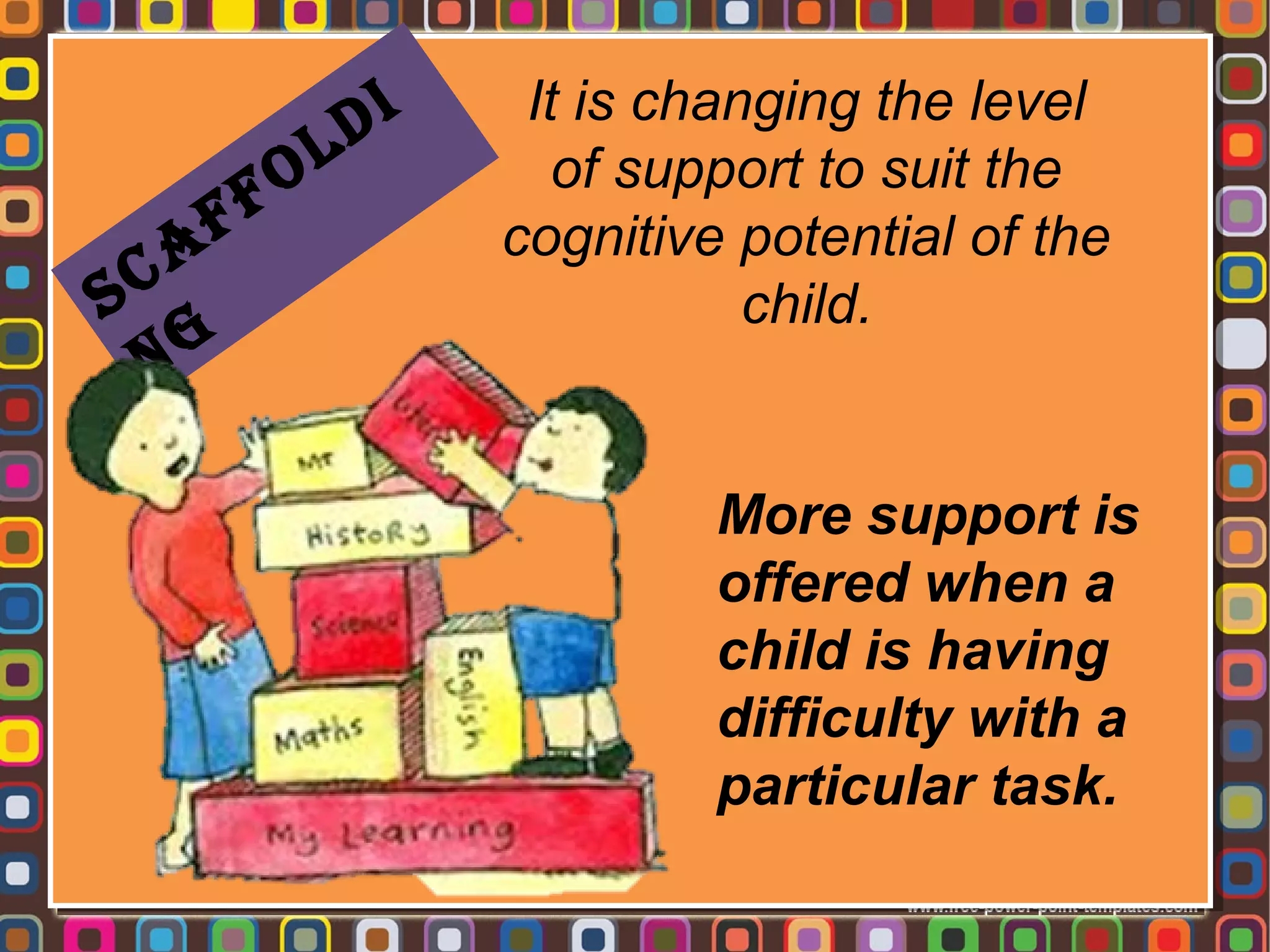
SCAFFOLDIN
G

It's the
concept that a
child
accomplishes
a task that
he/she cannot
do alone, with
the help from a
more skilled
person.
F
A

SC
G
N

O
F

DI
L

It is changing the level
of support to suit the
cognitive potential of the
child.

More support is
offered when a
child is having
difficulty with a
particular task.
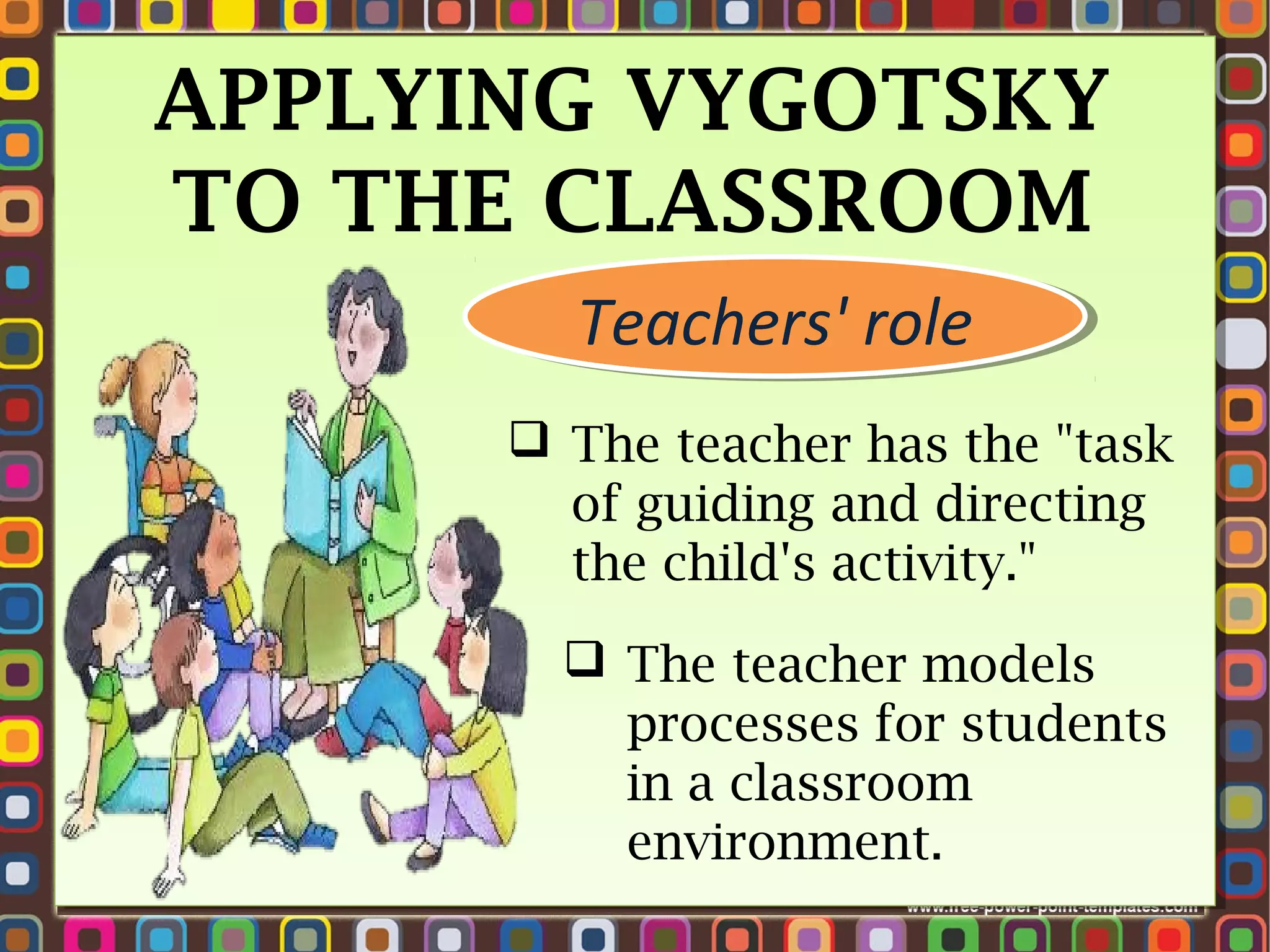
APPLYING VYGOTSKY
TO THE CLASSROOM
Teachers' role
Teachers' role
 The teacher has the "task
of guiding and directing
the child's activity." 
 The teacher models
processes for students
in a classroom
environment.
OVERALL GOAL OF EDUCATION
ACCORDING TO VYGOTSKY

"generate and lead
"generate and lead
development which is the
result of social learning
through internalization of
culture and social
culture and social
relationships."   
relationships."
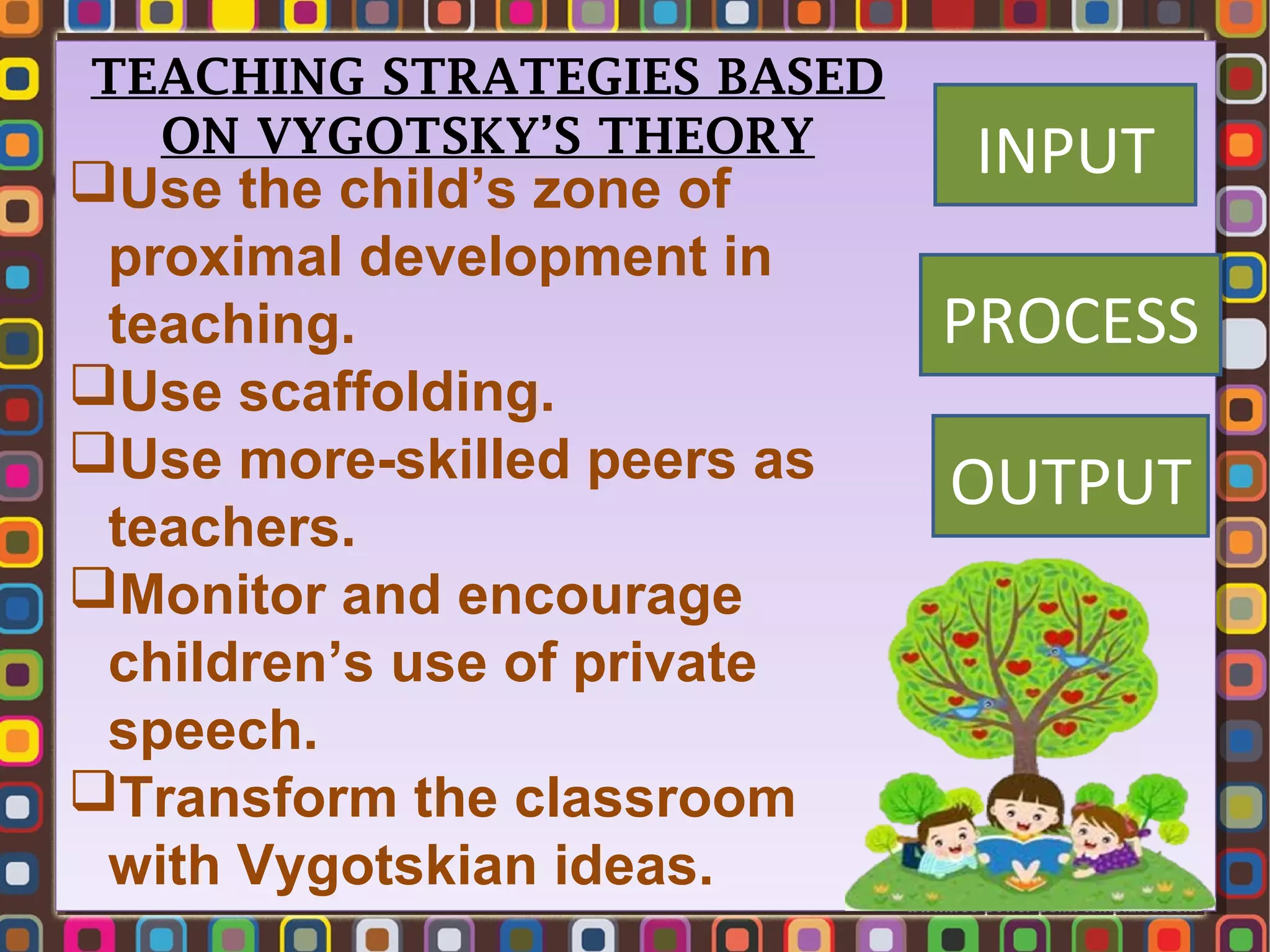
TEACHING STRATEGIES BASED
ON VYGOTSKY’S THEORY

Use the child’s zone of
proximal development in
teaching.
Use scaffolding.
Use more-skilled peers as
teachers.
Monitor and encourage
children’s use of private
speech.
Transform the classroom
with Vygotskian ideas.

INPUT
PROCESS
OUTPUT
THANKS FOR
YOUR
ATTENTION

how to use Vygotsky for teaching english

  • 1.
  • 2.
    INTRODUCTION How we learna • First language? What is a • Second language? Acquisition Unconscio us effort The study of individuals and groups who are learning a language subsequent to learning their first one as young children.
  • 3.
  • 4.
    THE MAIN REPRESENTANTSOF THIS POSITION ARE:
  • 5.
  • 6.
    Vygotsky offered analternative to Piaget’s constructivism Piaget: Mind models the external world Human beings make sense of their world by means of their mental structures . Vygotsky: External world models the mind Knowledge is internalization of social activity.
  • 7.
    LEV SEMYONOVICH VIGOTSKY  LevSemyonovich Vygotsky was born in Western Russia  Lev Semyonovich Vygotsky was born in Western Russia (Belorussia) in 1896. (Belorussia) in 1896.  He graduated with law degree at Moscow University. After  He graduated with law degree at Moscow University. After graduation, he started teaching at various institutions. graduation, he started teaching at various institutions.  Vygotsky's first big research project was in 1925 with his  Vygotsky's first big research project was in 1925 with his Psychology of Art. Psychology of Art.  A few years later, he pursued aacareer as a psychologist  A few years later, he pursued career as a psychologist working with Alexander Luria and Alexei Leontiev. working with Alexander Luria and Alexei Leontiev.  Vygotsky had no formal training in psychology but it showed  Vygotsky had no formal training in psychology but it showed that he was fascinated by it. that he was fascinated by it.  After his death of tuberculosis in 1934, his ideas were  After his death of tuberculosis in 1934, his ideas were repudiated by the government; however, his ideas were kept repudiated by the government; however, his ideas were kept alive by his students. alive by his students.
  • 8.
    SOCIOCULTURAL THEORY Basically Vygotsky's theorysuggests that Basically Vygotsky's theory suggests that development depends on interaction development depends on interaction The first one is imitative learning The second way is by instructed learning There are three ways aacultural tool can be There are three ways cultural tool can be passed from one individual to another passed from one individual to another The final way that cultural tools are passed to others is through collaborative learning,
  • 9.
    1.Cognitive development IMPORTANT TERMSIN VYGOTSKY’S THEORY He proposed that children learn He proposed that children learn through interactions with their through interactions with their surrounding culture. . surrounding culture Vygotsky studied child development Vygotsky studied child development and the significant roles of cultural and the significant roles of cultural mediation and interpersonal mediation and interpersonal communication. communication. vygotsky observed how higher vygotsky observed how higher mental functions developed mental functions developed through social interactions with through social interactions with significant people in aachild's life. significant people in child's life.
  • 10.
    2. THOUGHT ANDLANGUAGE 2. THOUGHT AND LANGUAGE s lyzezes a y an nalyip h i k otstsky ia nsnshap d o Vyg gorelat tiords n nd Vy e rela o rdssa th e en w o e s . . s th e owsn etwween u usnes b e t n sc i i o b co nsc co s s a as t tarartlsto o s t ge e et na alfor s ua agxt r red for n g u e d . an ngol e extus etion n. L a o l ld s c La t ochi ldeua ctio t o hint r ra a c the eal i inte h toci ial s oc s d useseor d s lk i is u l f for a o lf-t -talk to oolnd a t a d se l f a s a d n sere s te a r mo ore iaecectleding g t r m lf-d-driegu alatin se lflf- guor. e sse lf-re vi ior. a sebeh hav be
  • 11.
    ZONE OF PROXIMAL DEVELOPMENT ZONE OFPOTENTIAL DEVELOPMENT ZONE OF REAL DEVELOPMENT
  • 12.
    SCAFFOLDIN G It's the concept thata child accomplishes a task that he/she cannot do alone, with the help from a more skilled person.
  • 13.
    F A SC G N O F DI L It is changingthe level of support to suit the cognitive potential of the child. More support is offered when a child is having difficulty with a particular task.
  • 14.
    APPLYING VYGOTSKY TO THECLASSROOM Teachers' role Teachers' role  The teacher has the "task of guiding and directing the child's activity."   The teacher models processes for students in a classroom environment.
  • 15.
    OVERALL GOAL OFEDUCATION ACCORDING TO VYGOTSKY "generate and lead "generate and lead development which is the development which is the result of social learning result of social learning through internalization of through internalization of culture and social culture and social relationships."    relationships."
  • 16.
    TEACHING STRATEGIES BASED ONVYGOTSKY’S THEORY Use the child’s zone of proximal development in teaching. Use scaffolding. Use more-skilled peers as teachers. Monitor and encourage children’s use of private speech. Transform the classroom with Vygotskian ideas. INPUT PROCESS OUTPUT
  • 17.