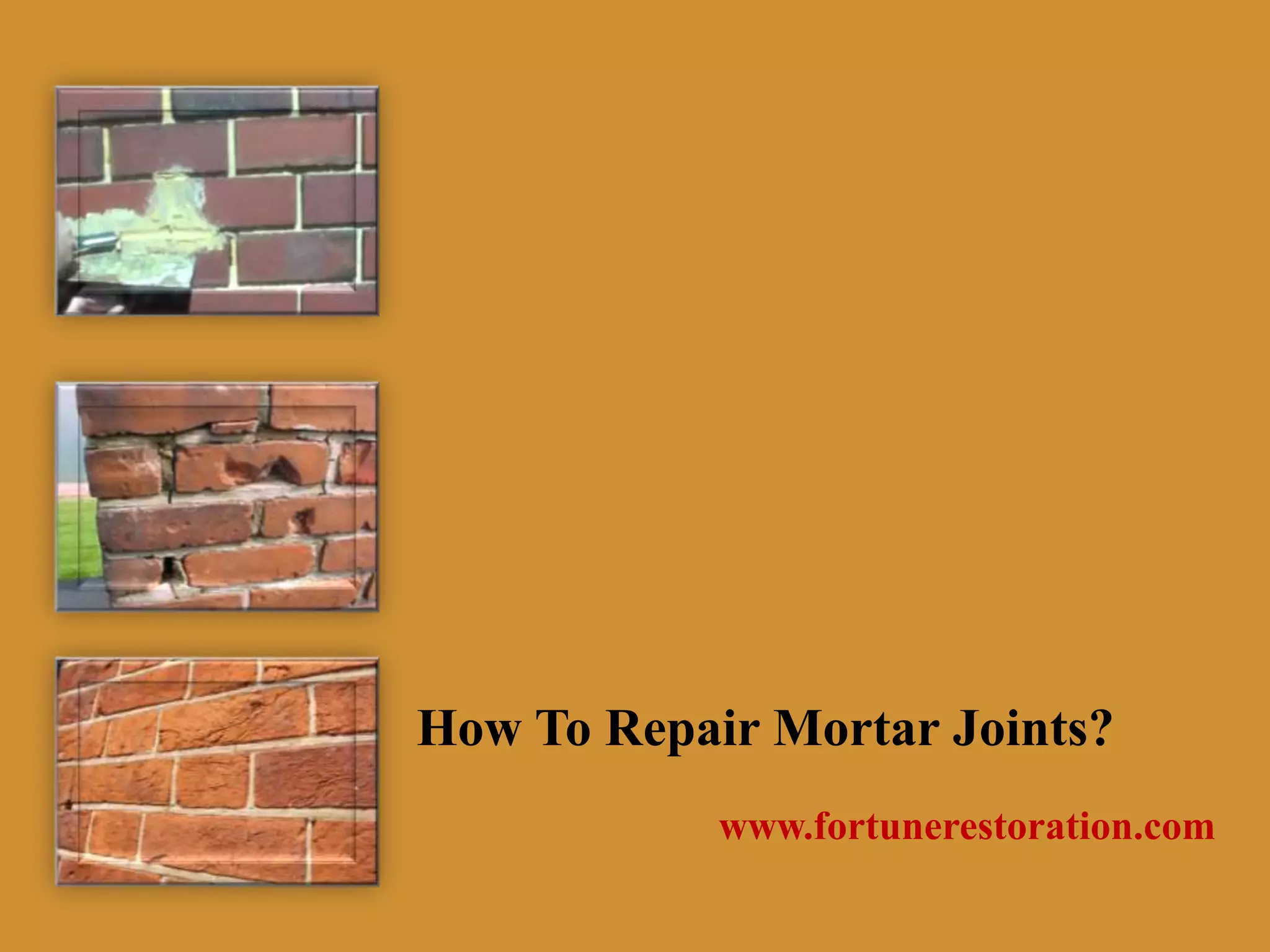
How To Repair Mortar Joints?
www.fortunerestoration.com
Brick is one of the most prized exteriors for
homes because it's so attractive and easy to
maintain. Repairing eroding and cracked
mortar joints is called pointing, repointing or
tuckpointing. To keep them that way for the
long run, you have to stop water from getting
into your bricks and foundation. Brick is
durable; bad results will bother you for a long
time!
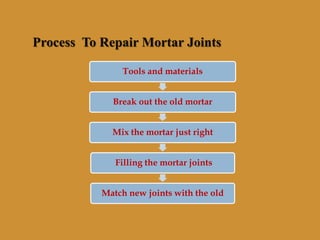
Tools and materials
Break out the old mortar
Mix the mortar just right
Filling the mortar joints
Match new joints with the old
Process To Repair Mortar Joints
Tools and materials
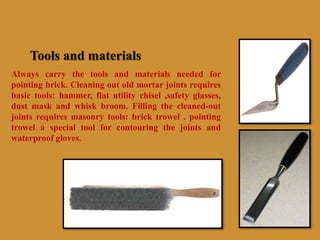
Always carry the tools and materials needed for
pointing brick. Cleaning out old mortar joints requires
basic tools: hammer, flat utility chisel ,safety glasses,
dust mask and whisk broom. Filling the cleaned-out
joints requires masonry tools: brick trowel . pointing
trowel a special tool for contouring the joints and
waterproof gloves.
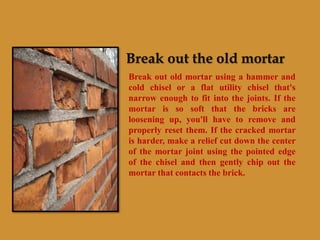
Break out the old mortar
Break out old mortar using a hammer and
cold chisel or a flat utility chisel that's
narrow enough to fit into the joints. If the
mortar is so soft that the bricks are
loosening up, you'll have to remove and
properly reset them. If the cracked mortar
is harder, make a relief cut down the center
of the mortar joint using the pointed edge
of the chisel and then gently chip out the
mortar that contacts the brick.
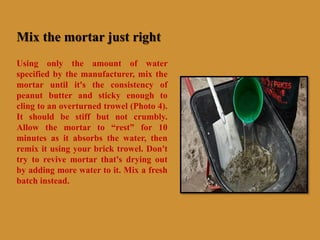
Mix the mortar just right
Using only the amount of water
specified by the manufacturer, mix the
mortar until it's the consistency of
peanut butter and sticky enough to
cling to an overturned trowel (Photo 4).
It should be stiff but not crumbly.
Allow the mortar to “rest” for 10
minutes as it absorbs the water, then
remix it using your brick trowel. Don't
try to revive mortar that's drying out
by adding more water to it. Mix a fresh
batch instead.
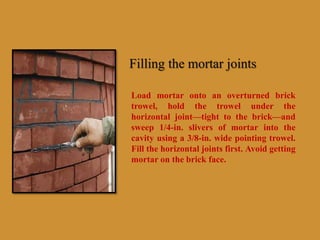
Filling the mortar joints
Load mortar onto an overturned brick
trowel, hold the trowel under the
horizontal joint—tight to the brick—and
sweep 1/4-in. slivers of mortar into the
cavity using a 3/8-in. wide pointing trowel.
Fill the horizontal joints first. Avoid getting
mortar on the brick face.
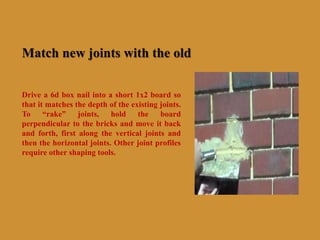
Match new joints with the old
Drive a 6d box nail into a short 1x2 board so
that it matches the depth of the existing joints.
To “rake” joints, hold the board
perpendicular to the bricks and move it back
and forth, first along the vertical joints and
then the horizontal joints. Other joint profiles
require other shaping tools.
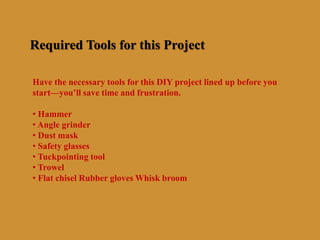
Required Tools for this Project
Have the necessary tools for this DIY project lined up before you
start—you’ll save time and frustration.
• Hammer
• Angle grinder
• Dust mask
• Safety glasses
• Tuckpointing tool
• Trowel
• Flat chisel Rubber gloves Whisk broom
Thank you

How TO Repair Mortar Joints

  • 1.
    How To RepairMortar Joints? www.fortunerestoration.com
  • 2.
    Brick is oneof the most prized exteriors for homes because it's so attractive and easy to maintain. Repairing eroding and cracked mortar joints is called pointing, repointing or tuckpointing. To keep them that way for the long run, you have to stop water from getting into your bricks and foundation. Brick is durable; bad results will bother you for a long time!
  • 3.
    Tools and materials Breakout the old mortar Mix the mortar just right Filling the mortar joints Match new joints with the old Process To Repair Mortar Joints
  • 4.
    Tools and materials Alwayscarry the tools and materials needed for pointing brick. Cleaning out old mortar joints requires basic tools: hammer, flat utility chisel ,safety glasses, dust mask and whisk broom. Filling the cleaned-out joints requires masonry tools: brick trowel . pointing trowel a special tool for contouring the joints and waterproof gloves.
  • 5.
    Break out theold mortar Break out old mortar using a hammer and cold chisel or a flat utility chisel that's narrow enough to fit into the joints. If the mortar is so soft that the bricks are loosening up, you'll have to remove and properly reset them. If the cracked mortar is harder, make a relief cut down the center of the mortar joint using the pointed edge of the chisel and then gently chip out the mortar that contacts the brick.
  • 6.
    Mix the mortarjust right Using only the amount of water specified by the manufacturer, mix the mortar until it's the consistency of peanut butter and sticky enough to cling to an overturned trowel (Photo 4). It should be stiff but not crumbly. Allow the mortar to “rest” for 10 minutes as it absorbs the water, then remix it using your brick trowel. Don't try to revive mortar that's drying out by adding more water to it. Mix a fresh batch instead.
  • 7.
    Filling the mortarjoints Load mortar onto an overturned brick trowel, hold the trowel under the horizontal joint—tight to the brick—and sweep 1/4-in. slivers of mortar into the cavity using a 3/8-in. wide pointing trowel. Fill the horizontal joints first. Avoid getting mortar on the brick face.
  • 8.
    Match new jointswith the old Drive a 6d box nail into a short 1x2 board so that it matches the depth of the existing joints. To “rake” joints, hold the board perpendicular to the bricks and move it back and forth, first along the vertical joints and then the horizontal joints. Other joint profiles require other shaping tools.
  • 9.
    Required Tools forthis Project Have the necessary tools for this DIY project lined up before you start—you’ll save time and frustration. • Hammer • Angle grinder • Dust mask • Safety glasses • Tuckpointing tool • Trowel • Flat chisel Rubber gloves Whisk broom
  • 10.