



How to Protect Your
AWS Environment
Lahav Savir, CEO & Architect
Emind Cloud Experts
A Global Expert in
Cloud Enablement for Products,
SaaS ISV, and Online Solutions
Top Level Partnership
A “Cloud-native” MSP
Market Guide for Managed Service Providers on Amazon Web Services (Lydia Leong, Oct. 2015)
“Amazon Web Services does not offer managed
services, but many customers want to use AWS as a
cloud IaaS and PaaS platform, while outsourcing IT
operations or application management. AWS's
ecosystem of MSP partners can fulfill this need.”
https://www.gartner.com/doc/3157620/market-guide-managed-service-providers
“Common Types of MSPs (on AWS) with Example
References
● Cloud-native MSPs. These MSPs were either
founded specifically to provide services on cloud
IaaS, or pivoted to entirely focus their business
on these services. Many of these MSPs are AWS-
specific. Examples include 2nd Watch,
Cloudnexa, Cloudreach, Emind and Minjar”
The future is all about cloud computing.
Report shows how by 2018, over 78% of
workloads will be managed by cloud data
centers as against the remaining 22%
processed by traditional data centers.
Where there is more data,
there is bound to be more
data breaches!
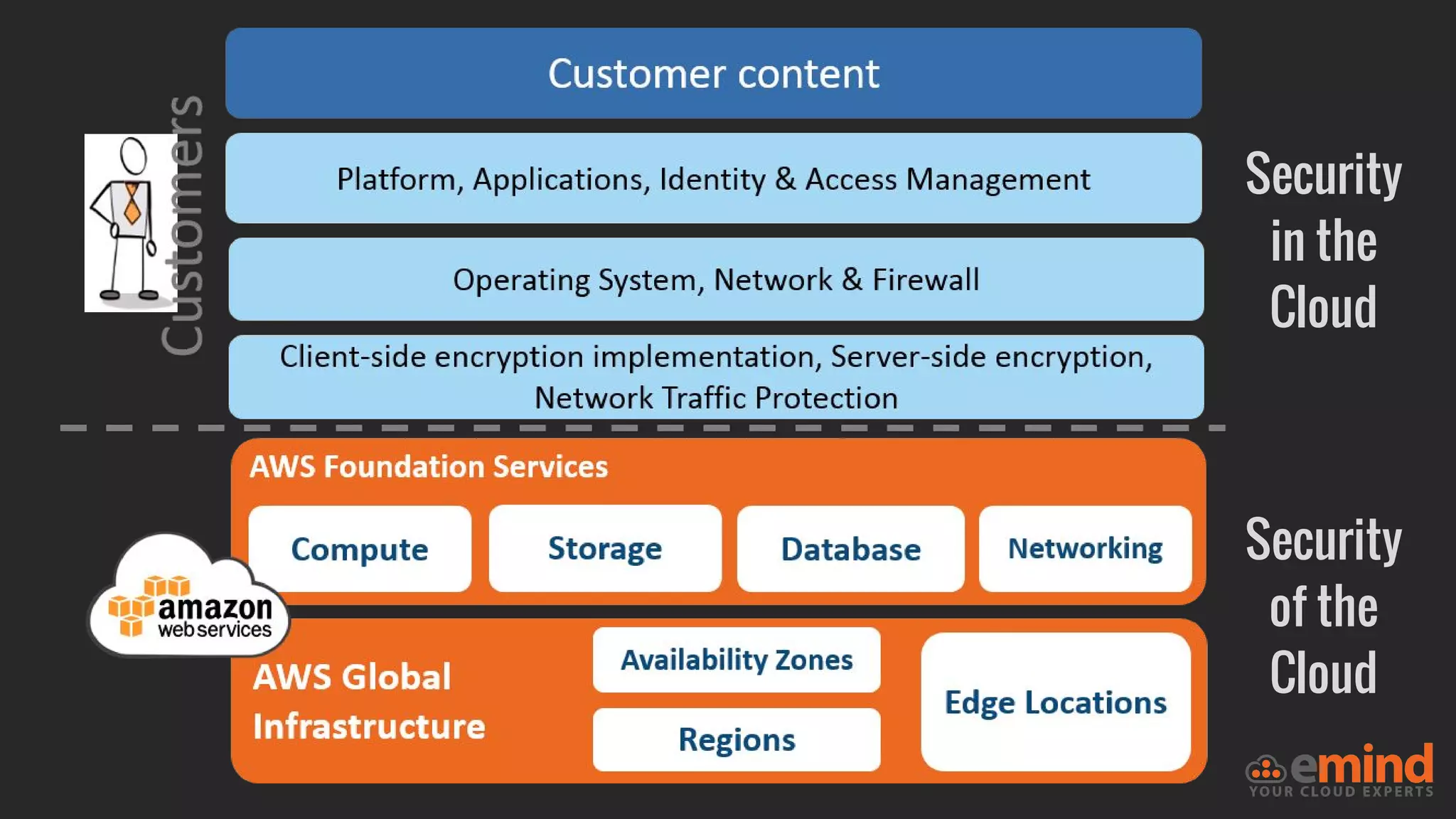
Security
in the
Cloud
Security
of the
Cloud
Assessing the Risk:
Yes, the Cloud Can Be More
Secure Than Your On-Premises
Environment
IDC, July 2015
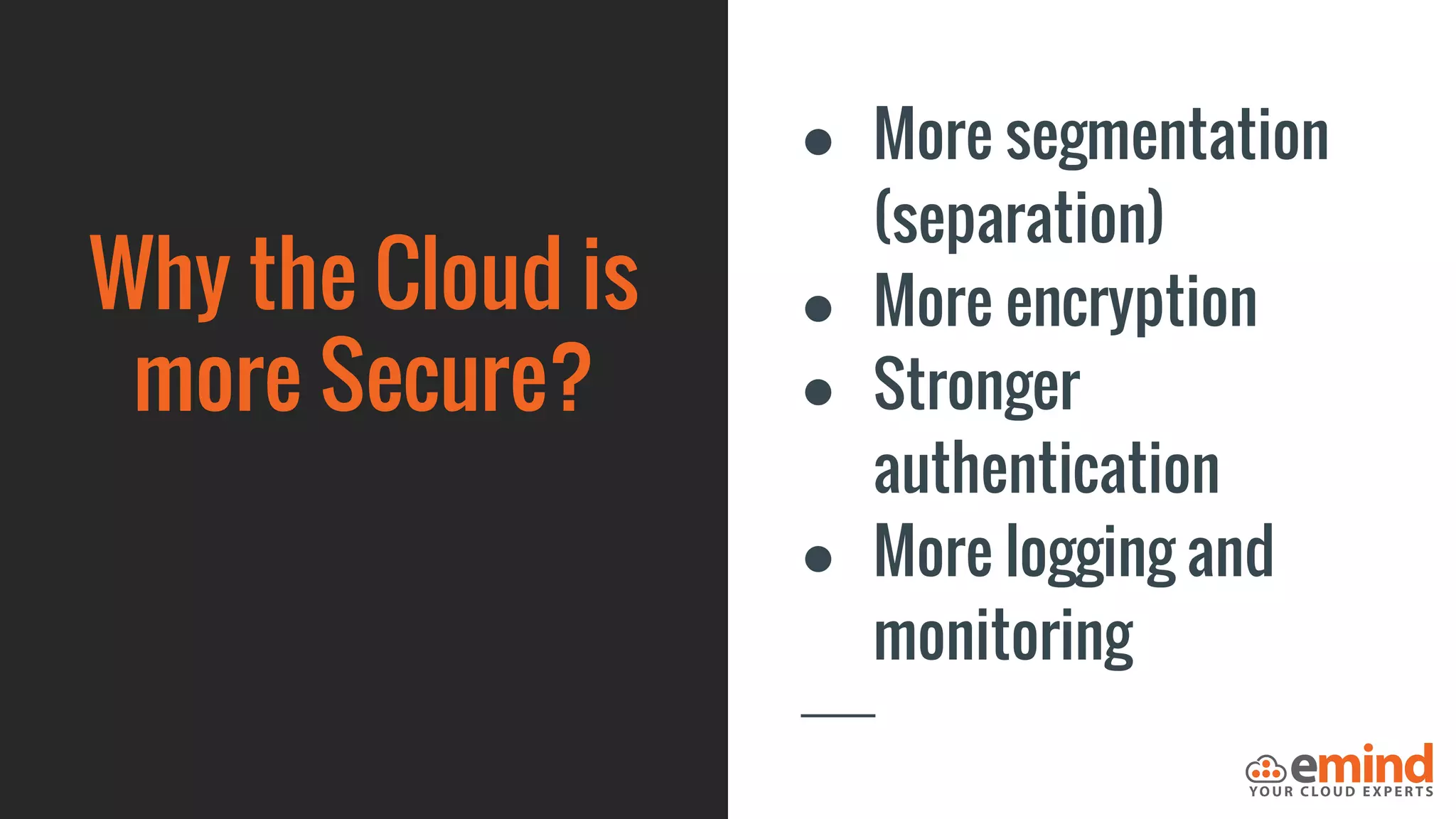
Why the Cloud is
more Secure?
● More segmentation
(separation)
● More encryption
● Stronger
authentication
● More logging and
monitoring
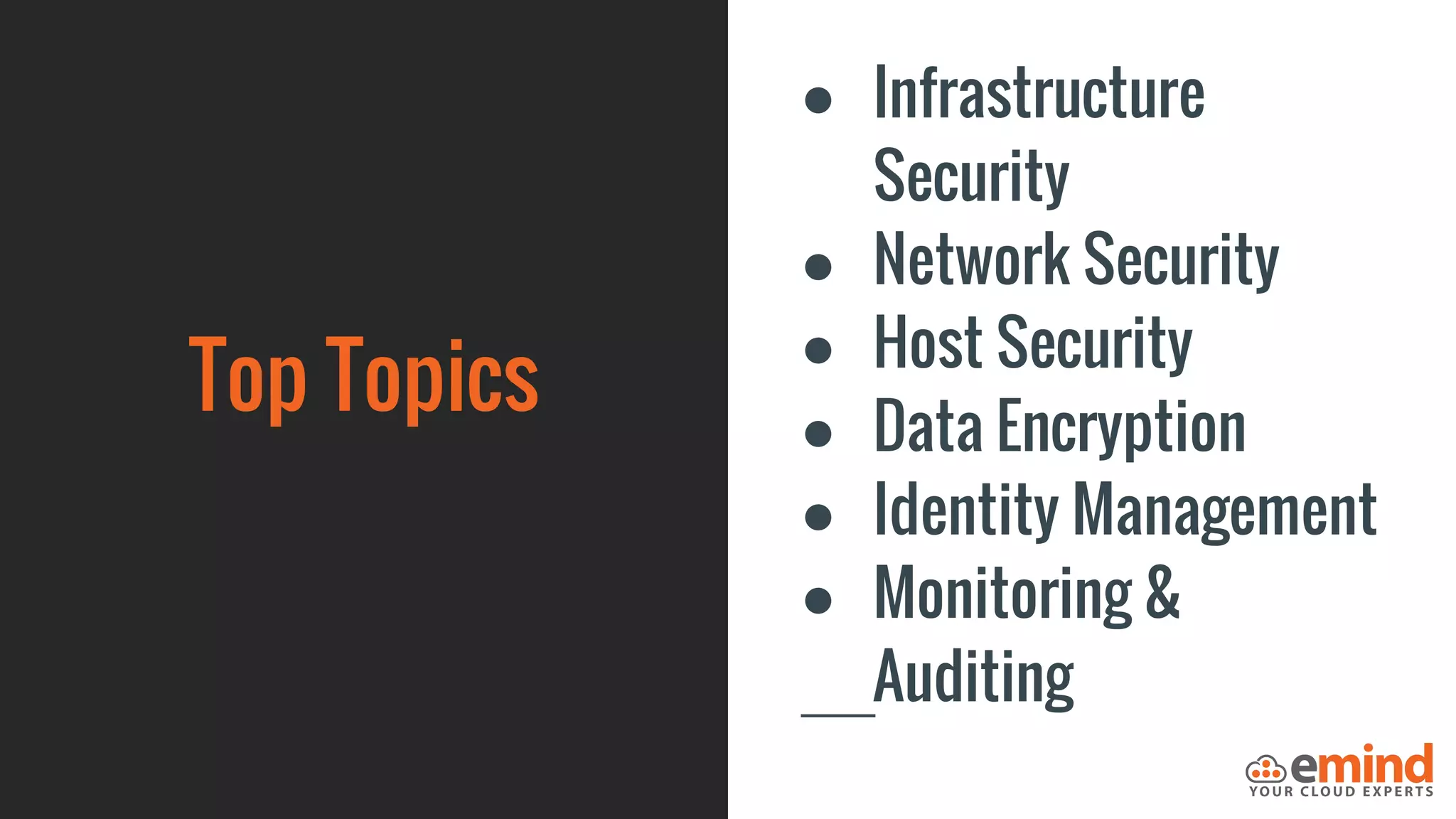
Top Topics
● Infrastructure
Security
● Network Security
● Host Security
● Data Encryption
● Identity Management
● Monitoring &
Auditing
Identity Federation
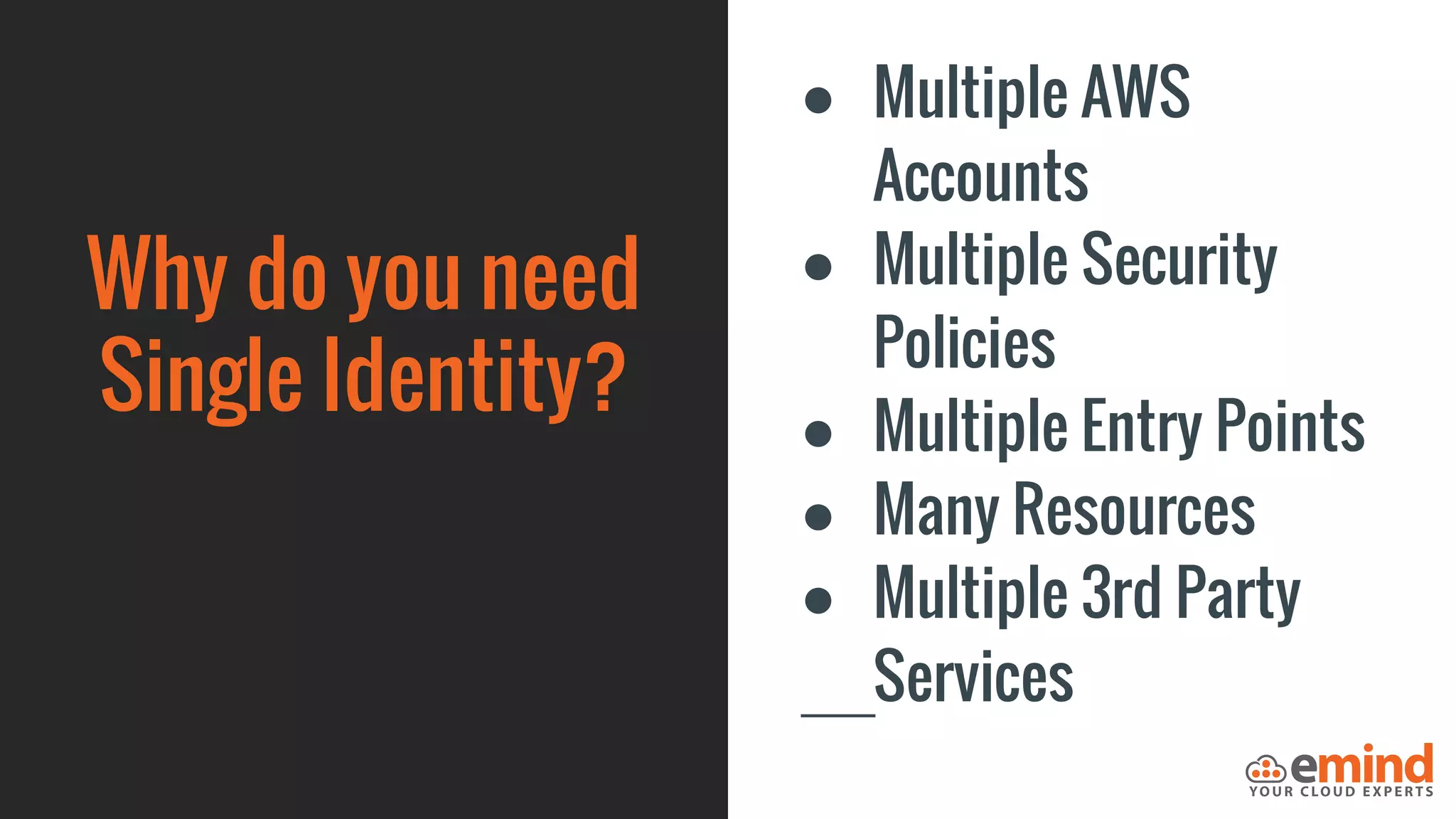
Why do you need
Single Identity?
● Multiple AWS
Accounts
● Multiple Security
Policies
● Multiple Entry Points
● Many Resources
● Multiple 3rd Party
Services
Single Identity
Provider
● Single Password
Policy
● Single Lock Policy
● Single OTP
● Single Login Audit
● Same username used
across all resources
Organization users accessing:
AWS Resources
● AWS Console
● AWS API
● Network Access / VPN
● EC2 Instances
Other Resources
● New Relic
● Datadog
● Pingdom
● Google Apps
● Office 365
● Jira
● Github
● Logz.io
● ...
● Don't mix Corporate
and Cloud Resources
● Minimize Replication
● Maximize Federation
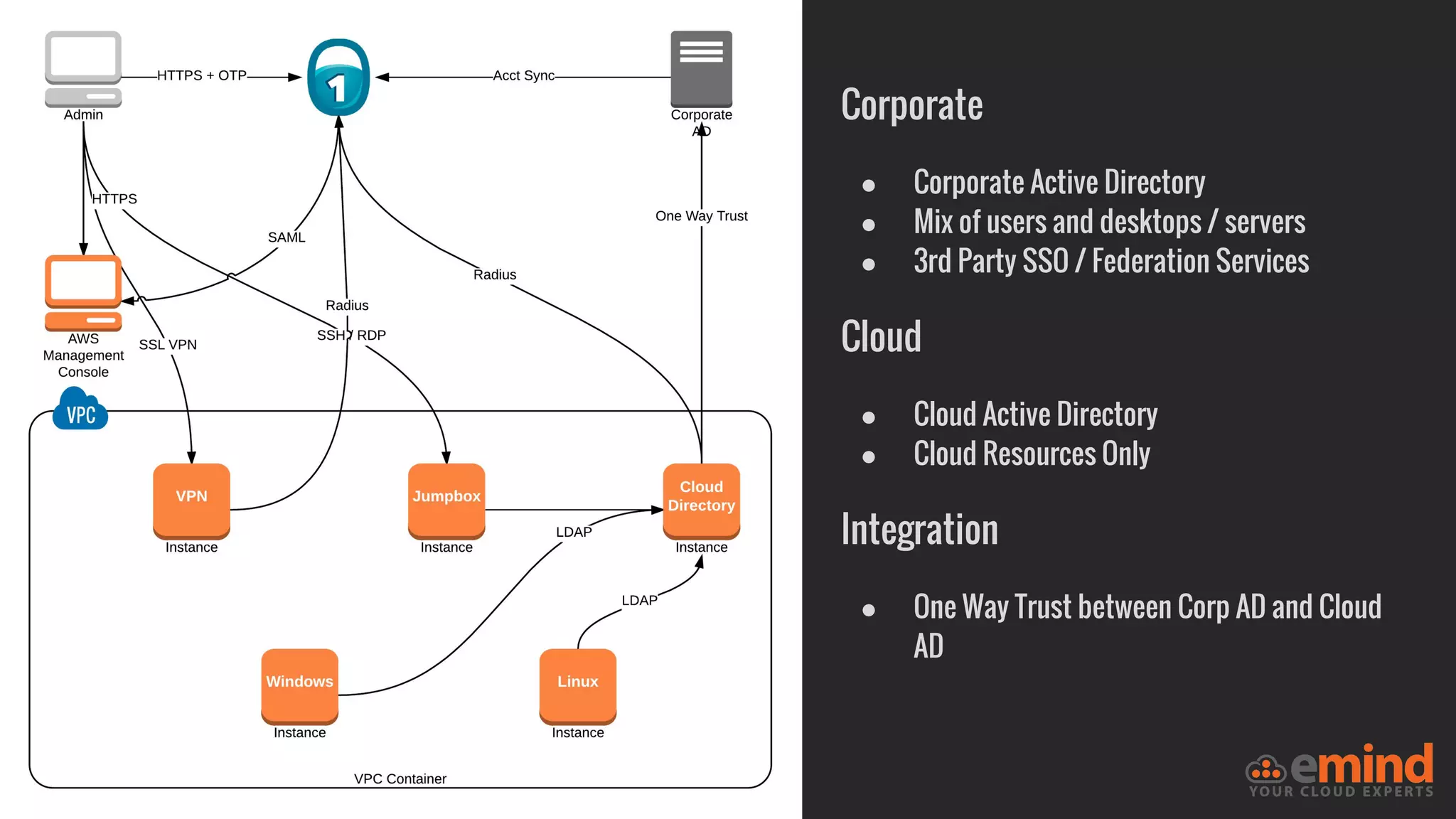
Corporate
● Corporate Active Directory
● Mix of users and desktops / servers
● 3rd Party SSO / Federation Services
Cloud
● Cloud Active Directory
● Cloud Resources Only
Integration
● One Way Trust between Corp AD and Cloud
AD
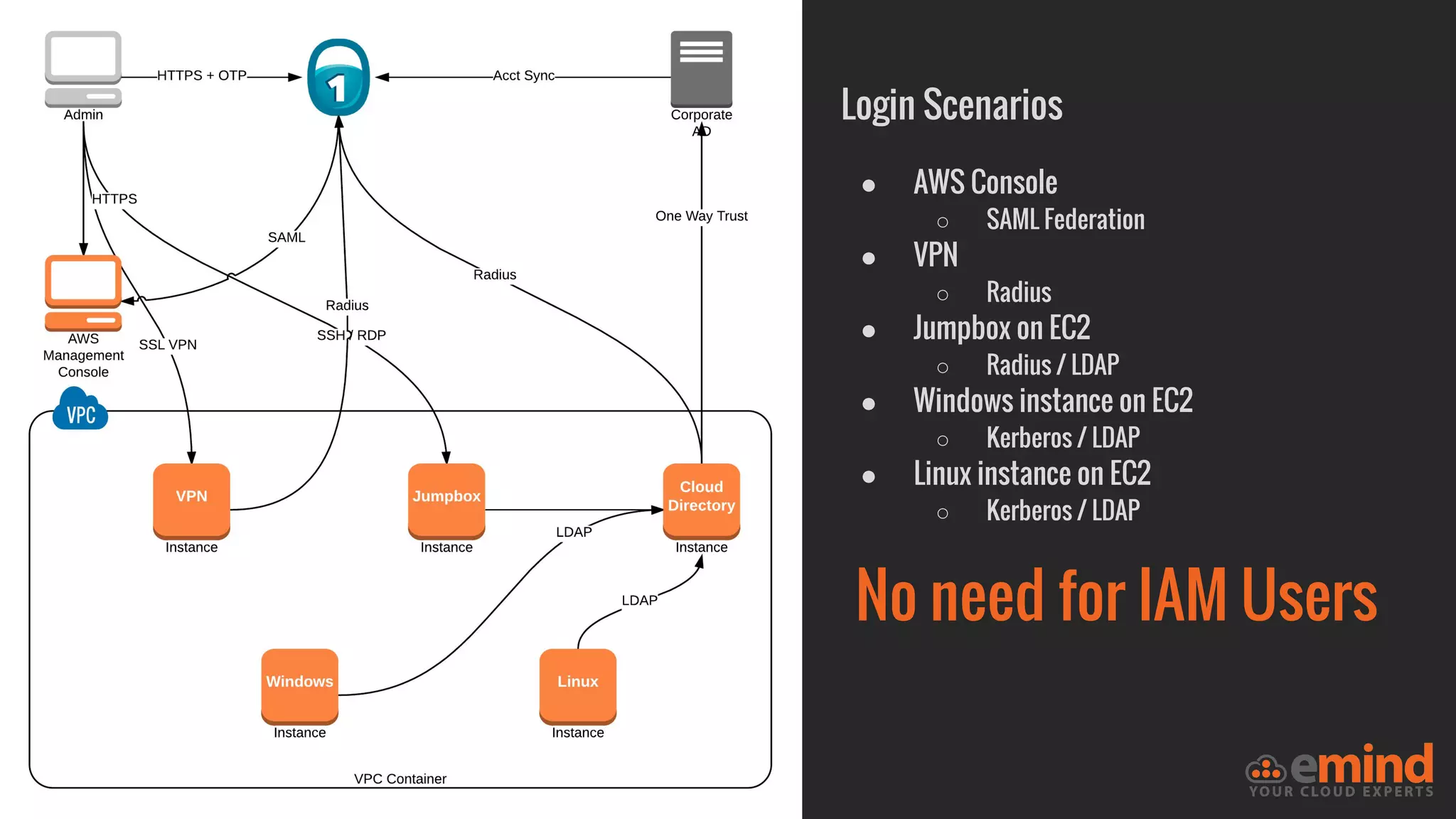
Login Scenarios
● AWS Console
○ SAML Federation
● VPN
○ Radius
● Jumpbox on EC2
○ Radius / LDAP
● Windows instance on EC2
○ Kerberos / LDAP
● Linux instance on EC2
○ Kerberos / LDAP
No need for IAM Users
Network Access
Networking
● Public Internet
● VPN / IPSec Tunnel
● DirectConnect
Direct Connect
Options
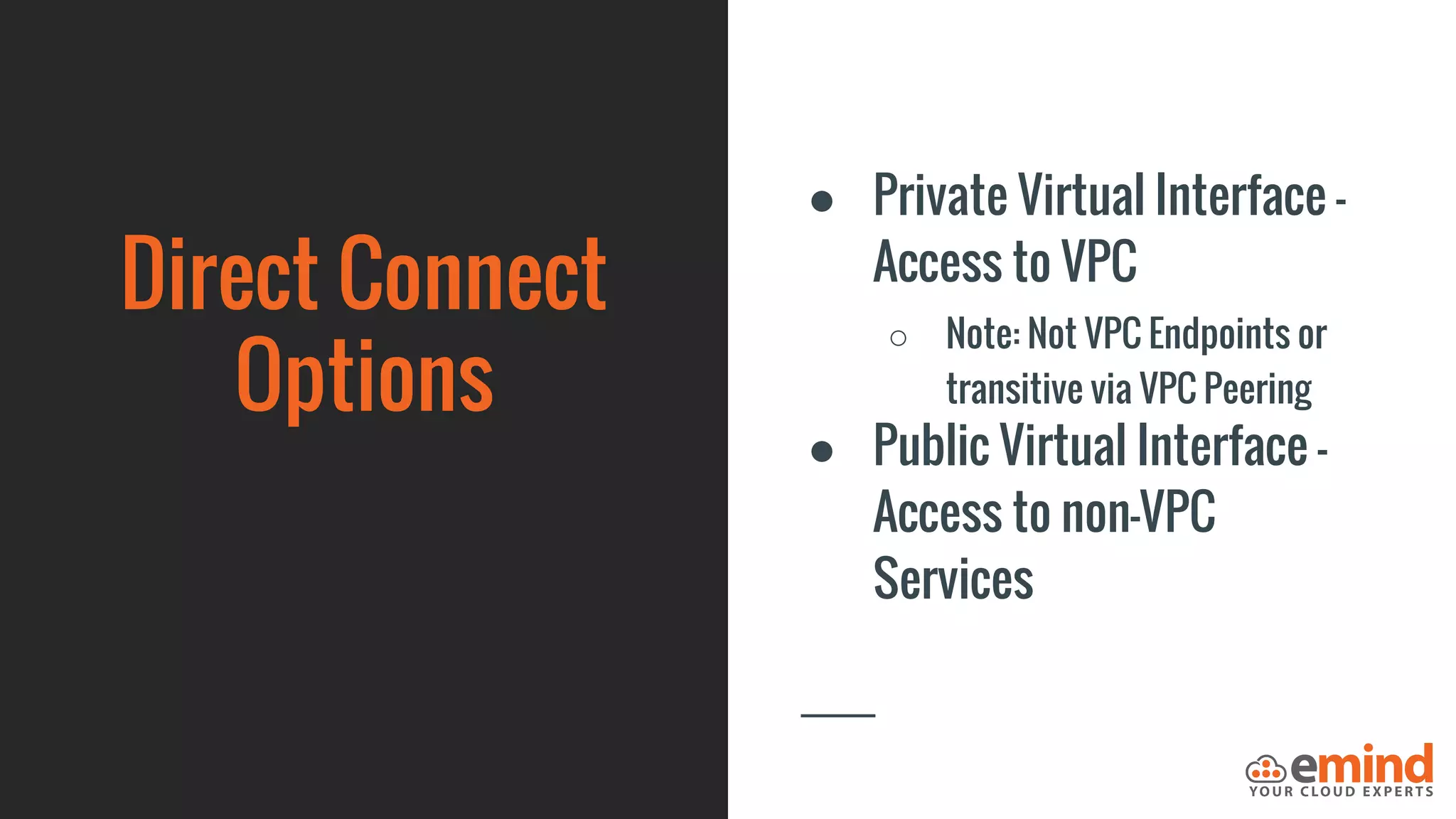
● Private Virtual Interface –
Access to VPC
○ Note: Not VPC Endpoints or
transitive via VPC Peering
● Public Virtual Interface –
Access to non-VPC
Services
SSL VPN
Options
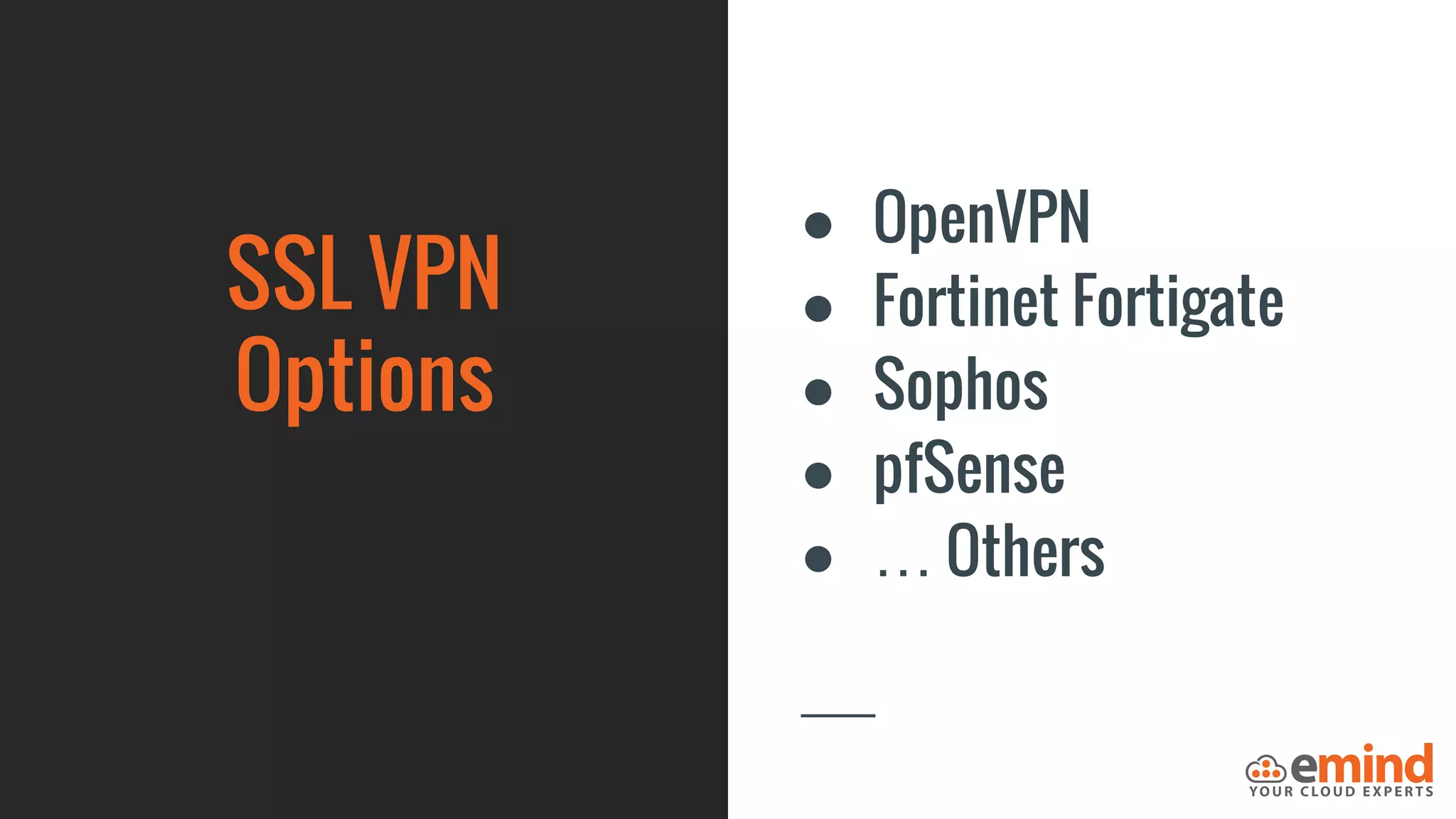
● OpenVPN
● Fortinet Fortigate
● Sophos
● pfSense
● … Others
Don’t assume your corporate network is
secure and expose your production
networks to all users
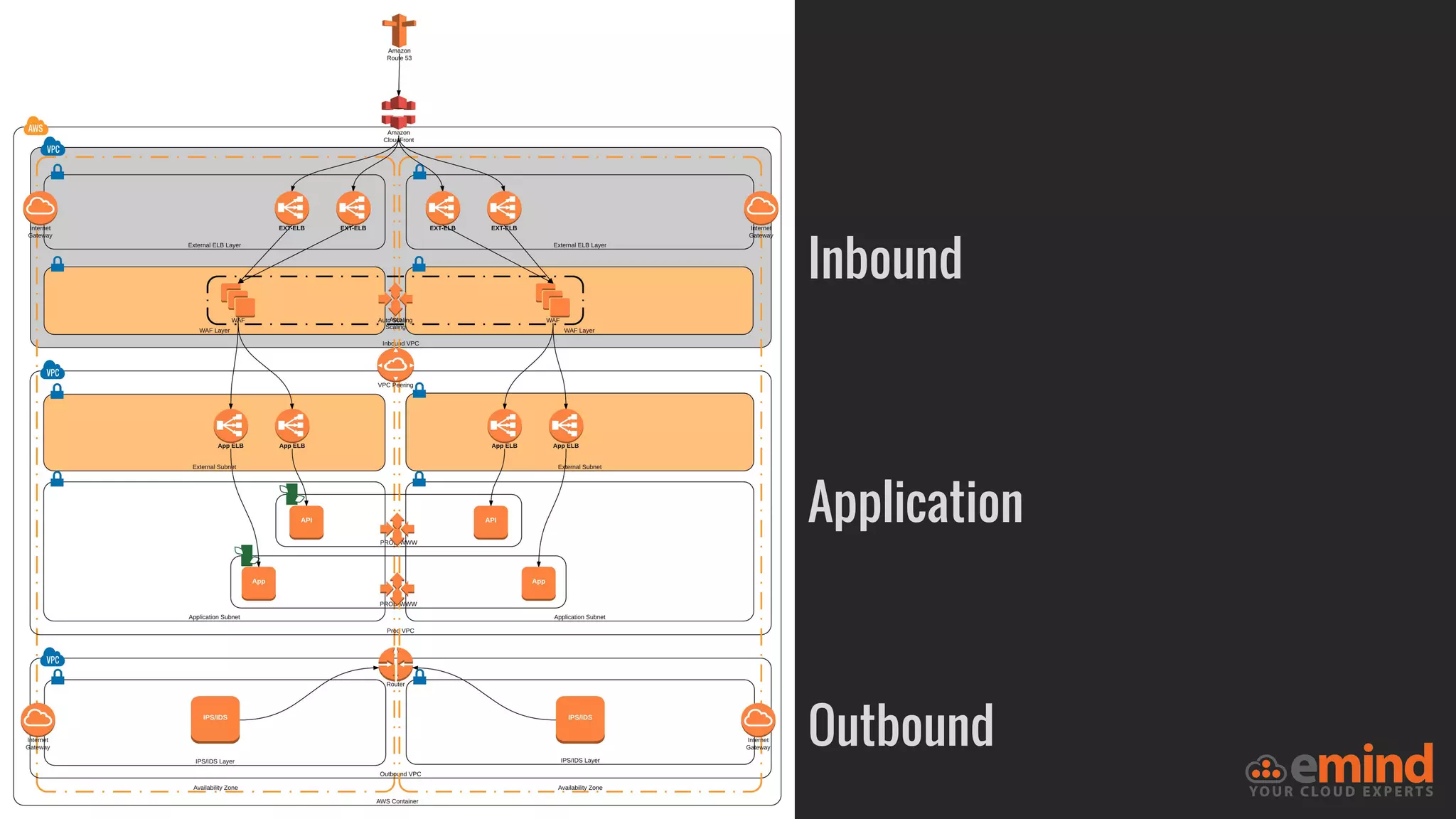
Smart Separation
Inbound
Application
Outbound
● Create a controlled environment that
minimizes human mistakes
● Inspect inbound and outbound traffic
Host Security
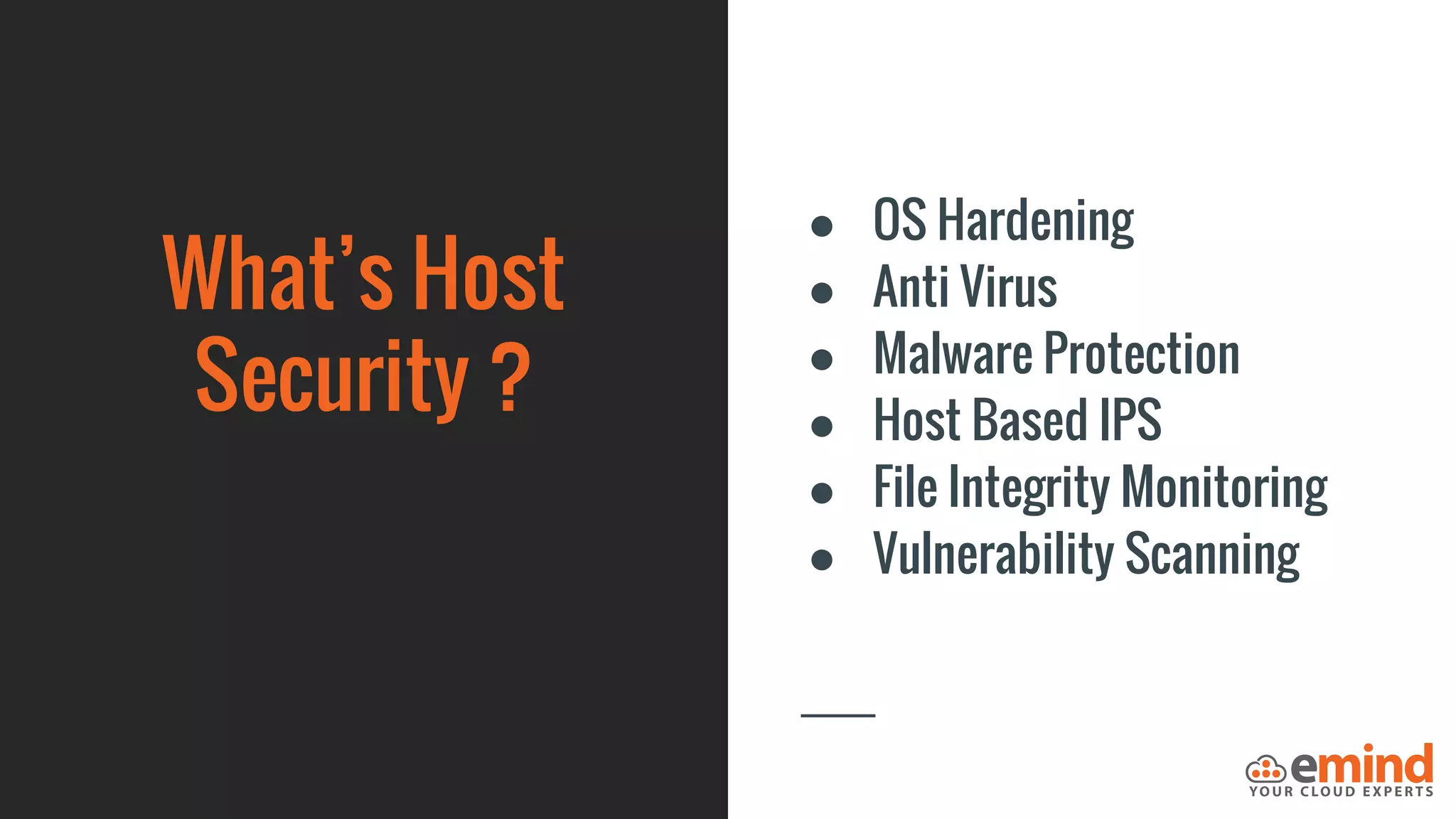
What’s Host
Security ?
● OS Hardening
● Anti Virus
● Malware Protection
● Host Based IPS
● File Integrity Monitoring
● Vulnerability Scanning
Data Encryption
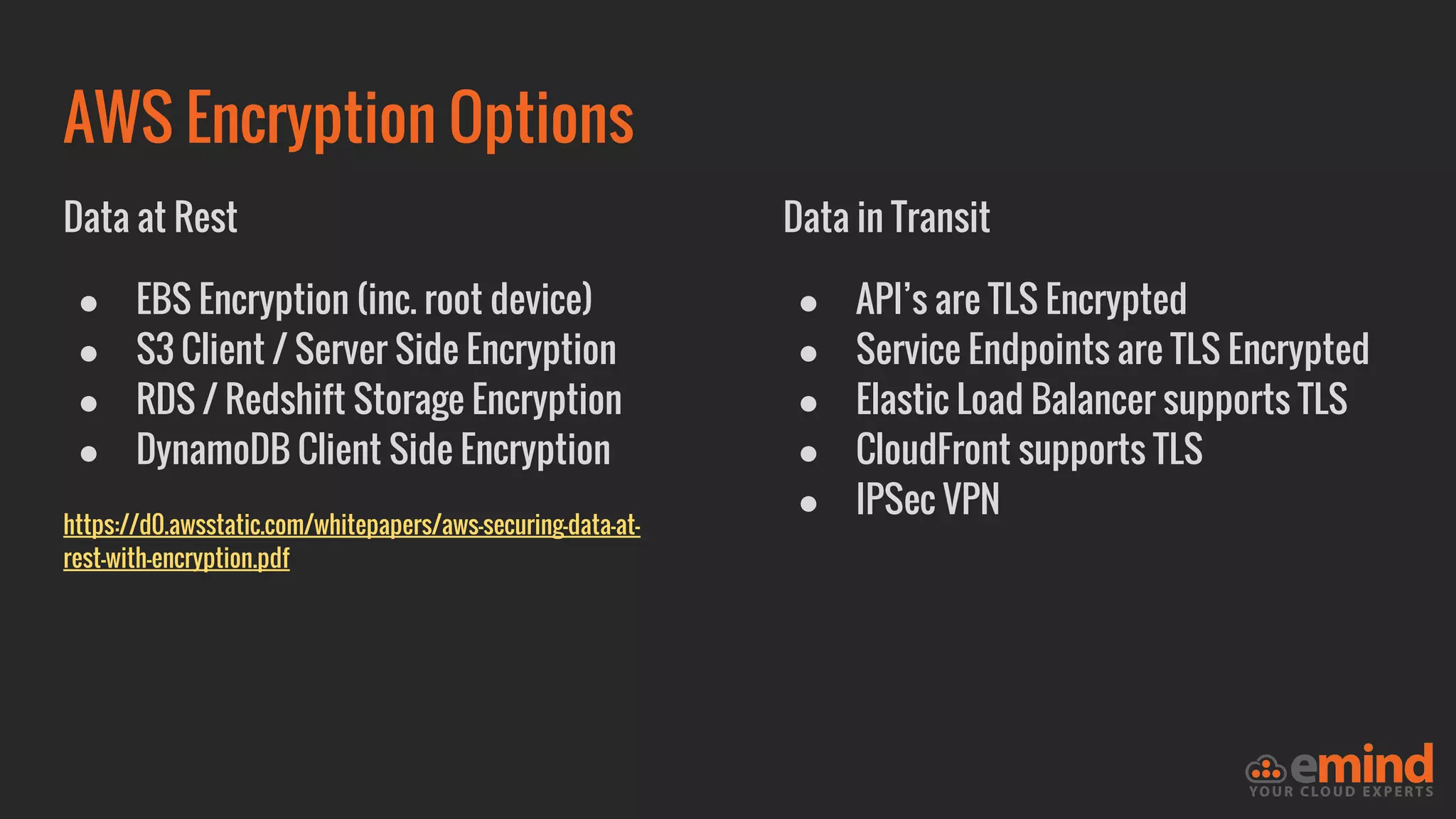
AWS Encryption Options
Data at Rest
● EBS Encryption (inc. root device)
● S3 Client / Server Side Encryption
● RDS / Redshift Storage Encryption
● DynamoDB Client Side Encryption
https://d0.awsstatic.com/whitepapers/aws-securing-data-at-
rest-with-encryption.pdf
Data in Transit
● API’s are TLS Encrypted
● Service Endpoints are TLS Encrypted
● Elastic Load Balancer supports TLS
● CloudFront supports TLS
● IPSec VPN
Encrypt all your data, you never know who
and when someone will request access to
the data
Centrally Monitor and Audit
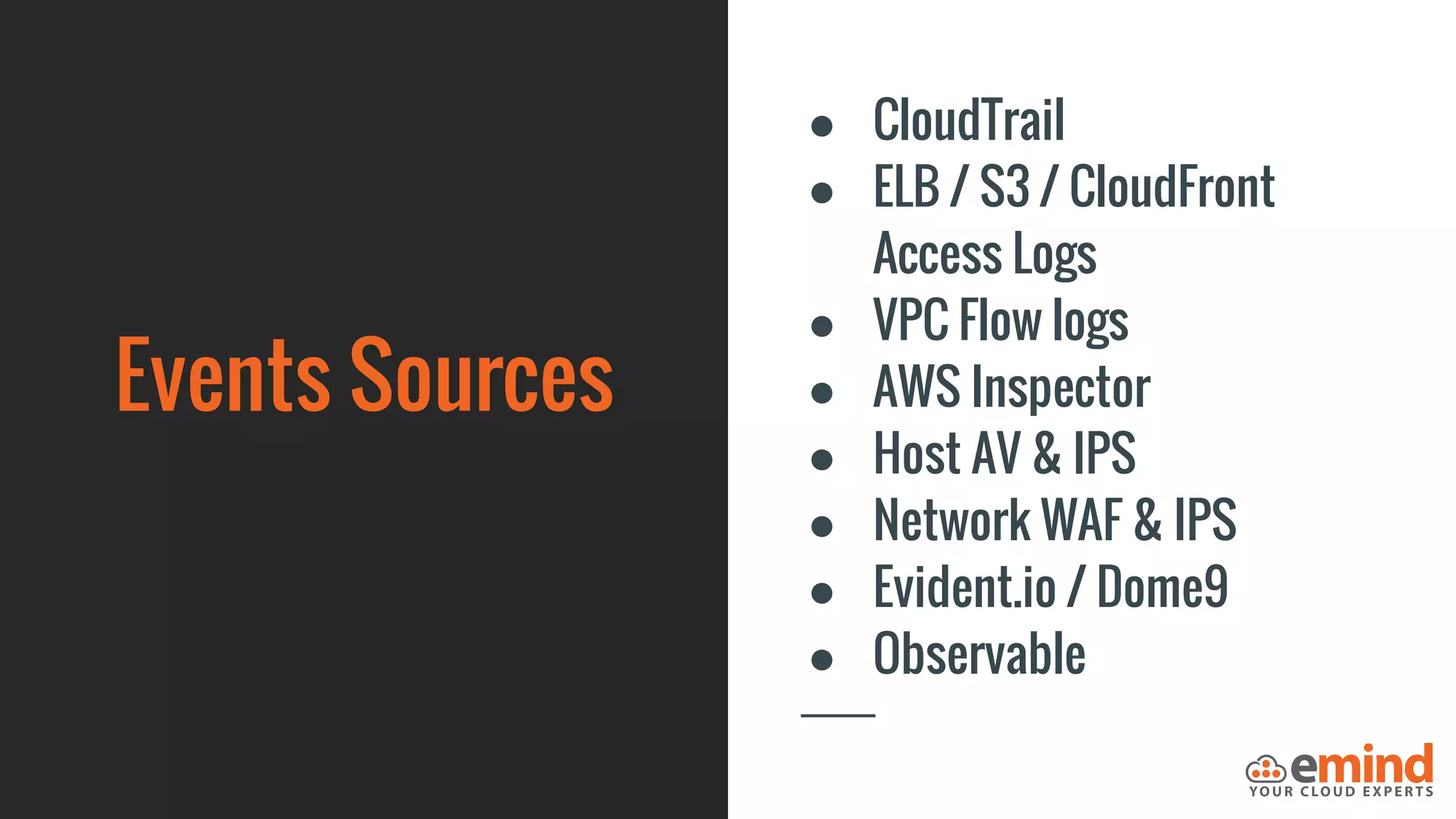
Events Sources
● CloudTrail
● ELB / S3 / CloudFront
Access Logs
● VPC Flow logs
● AWS Inspector
● Host AV & IPS
● Network WAF & IPS
● Evident.io / Dome9
● Observable
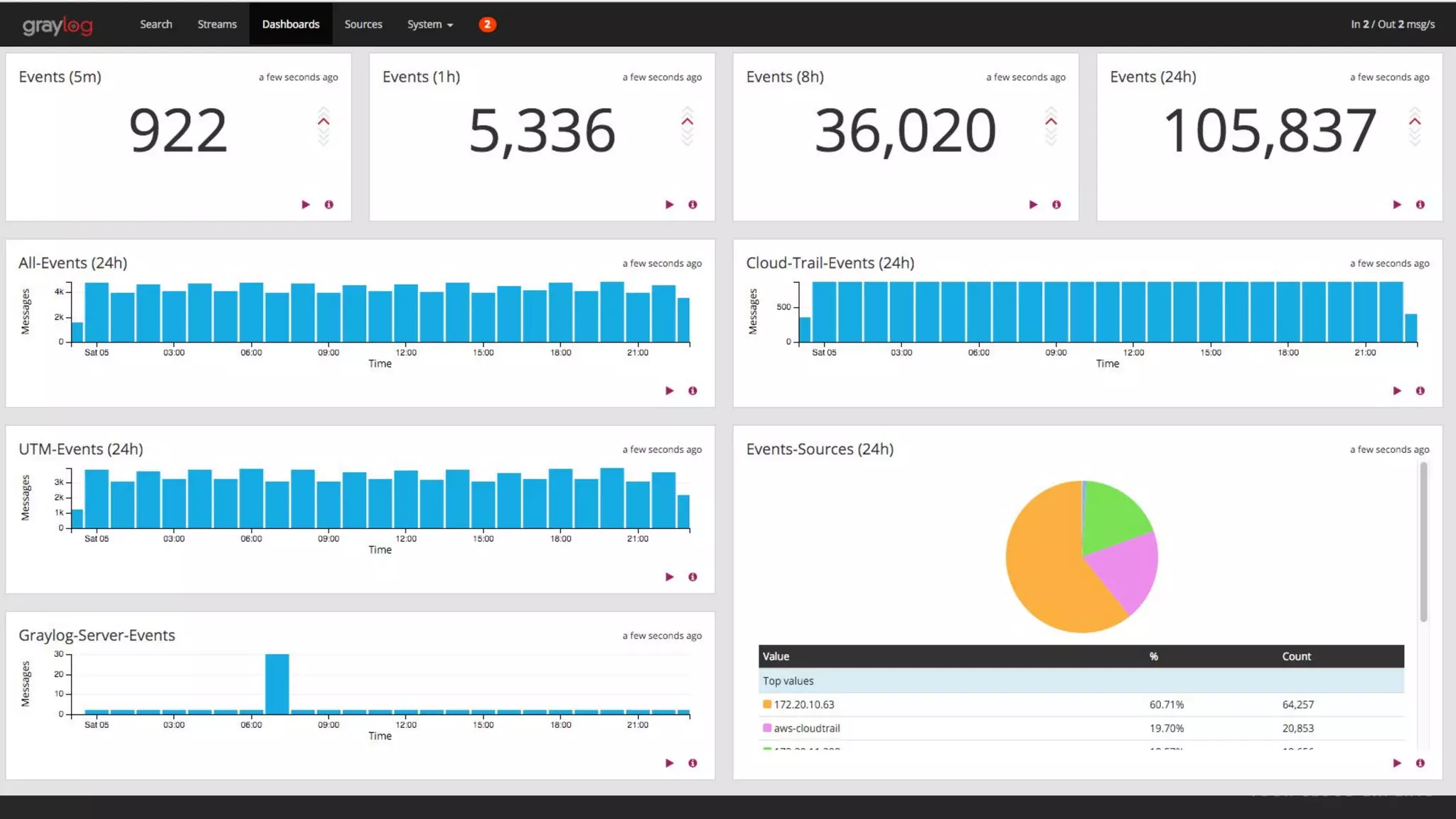
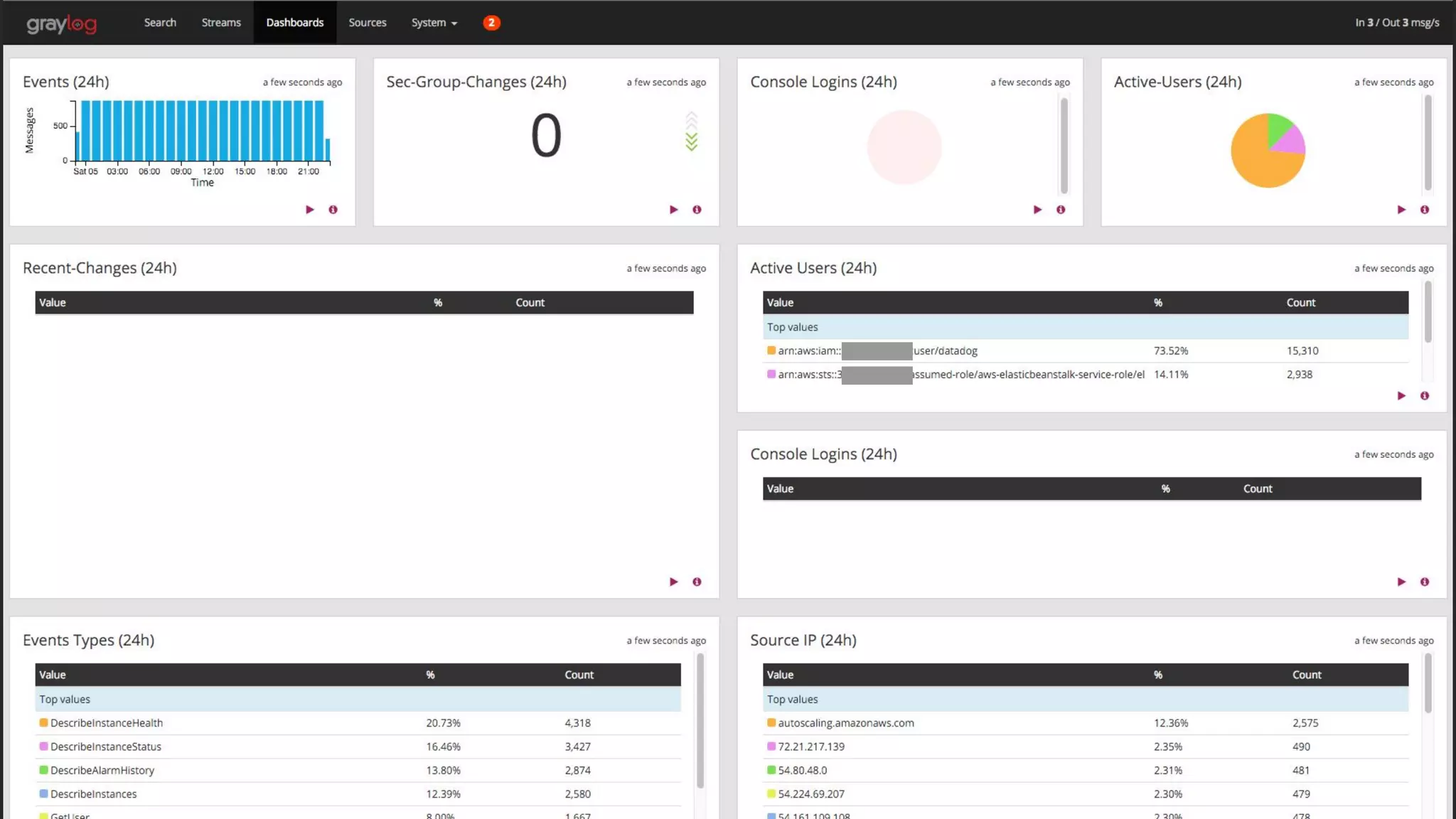
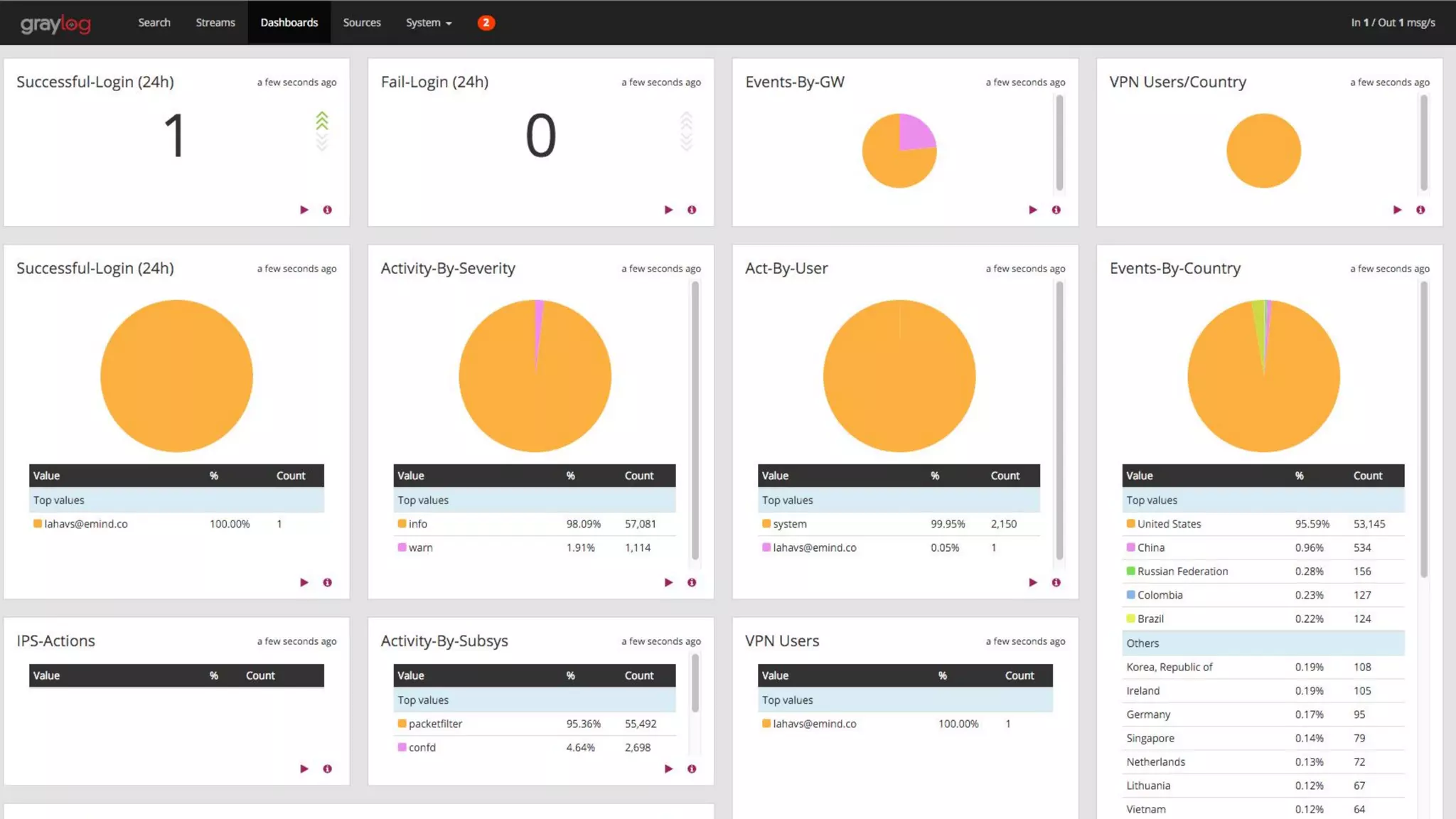
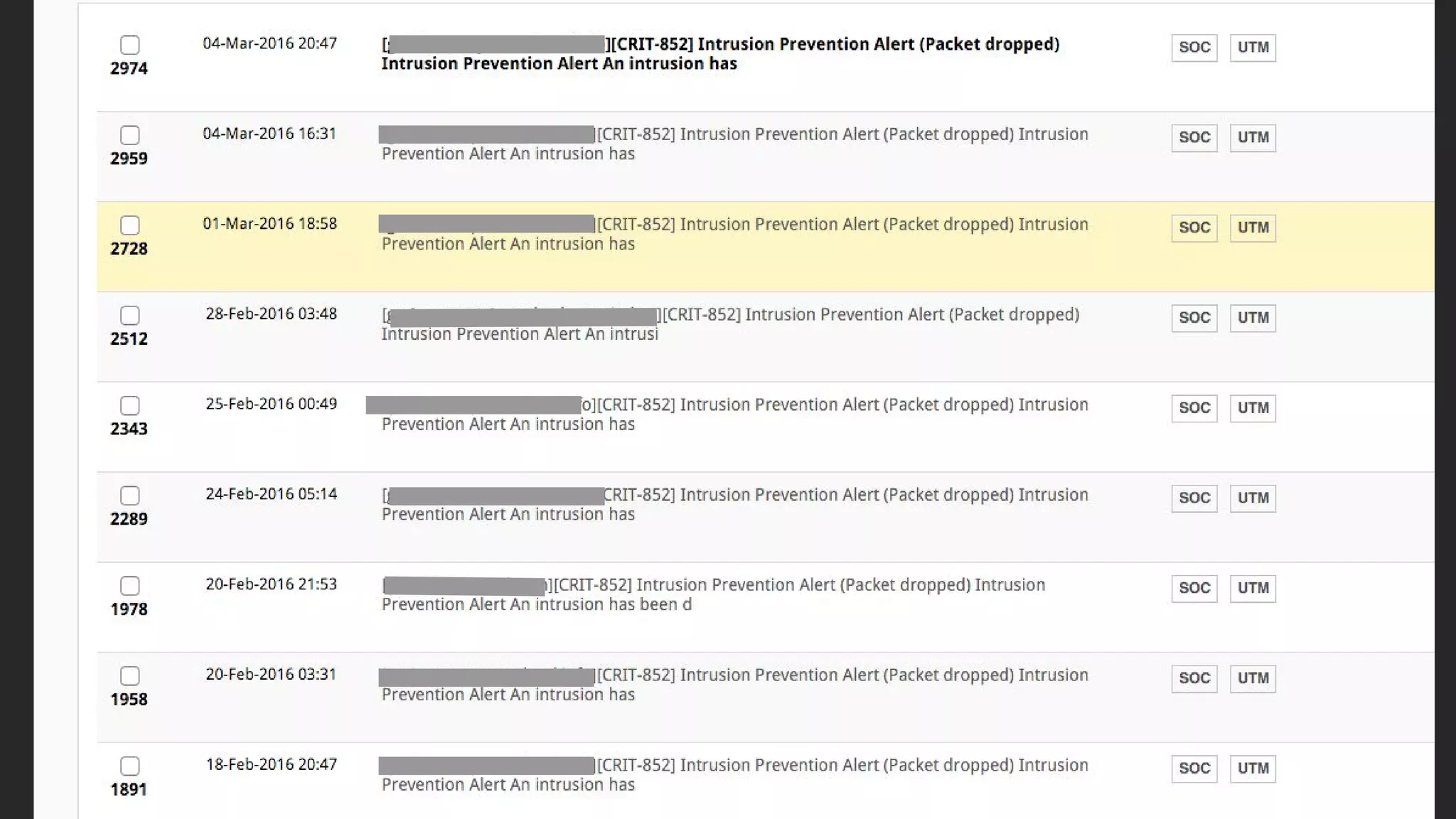
● Create Clear Visibility
● Set Governance Rules
● Define Actions
Join our Fastlane to a
Successful Cloud Deployment
Thank you,
lahavs@emind.co

How to Protect your AWS Environment

  • 1.
    How to ProtectYour AWS Environment Lahav Savir, CEO & Architect Emind Cloud Experts
  • 2.
    A Global Expertin Cloud Enablement for Products, SaaS ISV, and Online Solutions
  • 3.
  • 4.
    A “Cloud-native” MSP MarketGuide for Managed Service Providers on Amazon Web Services (Lydia Leong, Oct. 2015) “Amazon Web Services does not offer managed services, but many customers want to use AWS as a cloud IaaS and PaaS platform, while outsourcing IT operations or application management. AWS's ecosystem of MSP partners can fulfill this need.” https://www.gartner.com/doc/3157620/market-guide-managed-service-providers “Common Types of MSPs (on AWS) with Example References ● Cloud-native MSPs. These MSPs were either founded specifically to provide services on cloud IaaS, or pivoted to entirely focus their business on these services. Many of these MSPs are AWS- specific. Examples include 2nd Watch, Cloudnexa, Cloudreach, Emind and Minjar”
  • 5.
    The future isall about cloud computing. Report shows how by 2018, over 78% of workloads will be managed by cloud data centers as against the remaining 22% processed by traditional data centers.
  • 6.
    Where there ismore data, there is bound to be more data breaches!
  • 7.
  • 8.
    Assessing the Risk: Yes,the Cloud Can Be More Secure Than Your On-Premises Environment IDC, July 2015
  • 9.
    Why the Cloudis more Secure? ● More segmentation (separation) ● More encryption ● Stronger authentication ● More logging and monitoring
  • 10.
    Top Topics ● Infrastructure Security ●Network Security ● Host Security ● Data Encryption ● Identity Management ● Monitoring & Auditing
  • 11.
  • 12.
    Why do youneed Single Identity? ● Multiple AWS Accounts ● Multiple Security Policies ● Multiple Entry Points ● Many Resources ● Multiple 3rd Party Services
  • 13.
    Single Identity Provider ● SinglePassword Policy ● Single Lock Policy ● Single OTP ● Single Login Audit ● Same username used across all resources
  • 14.
    Organization users accessing: AWSResources ● AWS Console ● AWS API ● Network Access / VPN ● EC2 Instances Other Resources ● New Relic ● Datadog ● Pingdom ● Google Apps ● Office 365 ● Jira ● Github ● Logz.io ● ...
  • 15.
    ● Don't mixCorporate and Cloud Resources ● Minimize Replication ● Maximize Federation
  • 16.
    Corporate ● Corporate ActiveDirectory ● Mix of users and desktops / servers ● 3rd Party SSO / Federation Services Cloud ● Cloud Active Directory ● Cloud Resources Only Integration ● One Way Trust between Corp AD and Cloud AD
  • 17.
    Login Scenarios ● AWSConsole ○ SAML Federation ● VPN ○ Radius ● Jumpbox on EC2 ○ Radius / LDAP ● Windows instance on EC2 ○ Kerberos / LDAP ● Linux instance on EC2 ○ Kerberos / LDAP No need for IAM Users
  • 19.
  • 20.
    Networking ● Public Internet ●VPN / IPSec Tunnel ● DirectConnect
  • 21.
    Direct Connect Options ● PrivateVirtual Interface – Access to VPC ○ Note: Not VPC Endpoints or transitive via VPC Peering ● Public Virtual Interface – Access to non-VPC Services
  • 22.
    SSL VPN Options ● OpenVPN ●Fortinet Fortigate ● Sophos ● pfSense ● … Others
  • 23.
    Don’t assume yourcorporate network is secure and expose your production networks to all users
  • 24.
  • 25.
  • 26.
    ● Create acontrolled environment that minimizes human mistakes ● Inspect inbound and outbound traffic
  • 27.
  • 28.
    What’s Host Security ? ●OS Hardening ● Anti Virus ● Malware Protection ● Host Based IPS ● File Integrity Monitoring ● Vulnerability Scanning
  • 29.
  • 30.
    AWS Encryption Options Dataat Rest ● EBS Encryption (inc. root device) ● S3 Client / Server Side Encryption ● RDS / Redshift Storage Encryption ● DynamoDB Client Side Encryption https://d0.awsstatic.com/whitepapers/aws-securing-data-at- rest-with-encryption.pdf Data in Transit ● API’s are TLS Encrypted ● Service Endpoints are TLS Encrypted ● Elastic Load Balancer supports TLS ● CloudFront supports TLS ● IPSec VPN
  • 31.
    Encrypt all yourdata, you never know who and when someone will request access to the data
  • 32.
  • 33.
    Events Sources ● CloudTrail ●ELB / S3 / CloudFront Access Logs ● VPC Flow logs ● AWS Inspector ● Host AV & IPS ● Network WAF & IPS ● Evident.io / Dome9 ● Observable
  • 38.
    ● Create ClearVisibility ● Set Governance Rules ● Define Actions
  • 39.
    Join our Fastlaneto a Successful Cloud Deployment Thank you, lahavs@emind.co