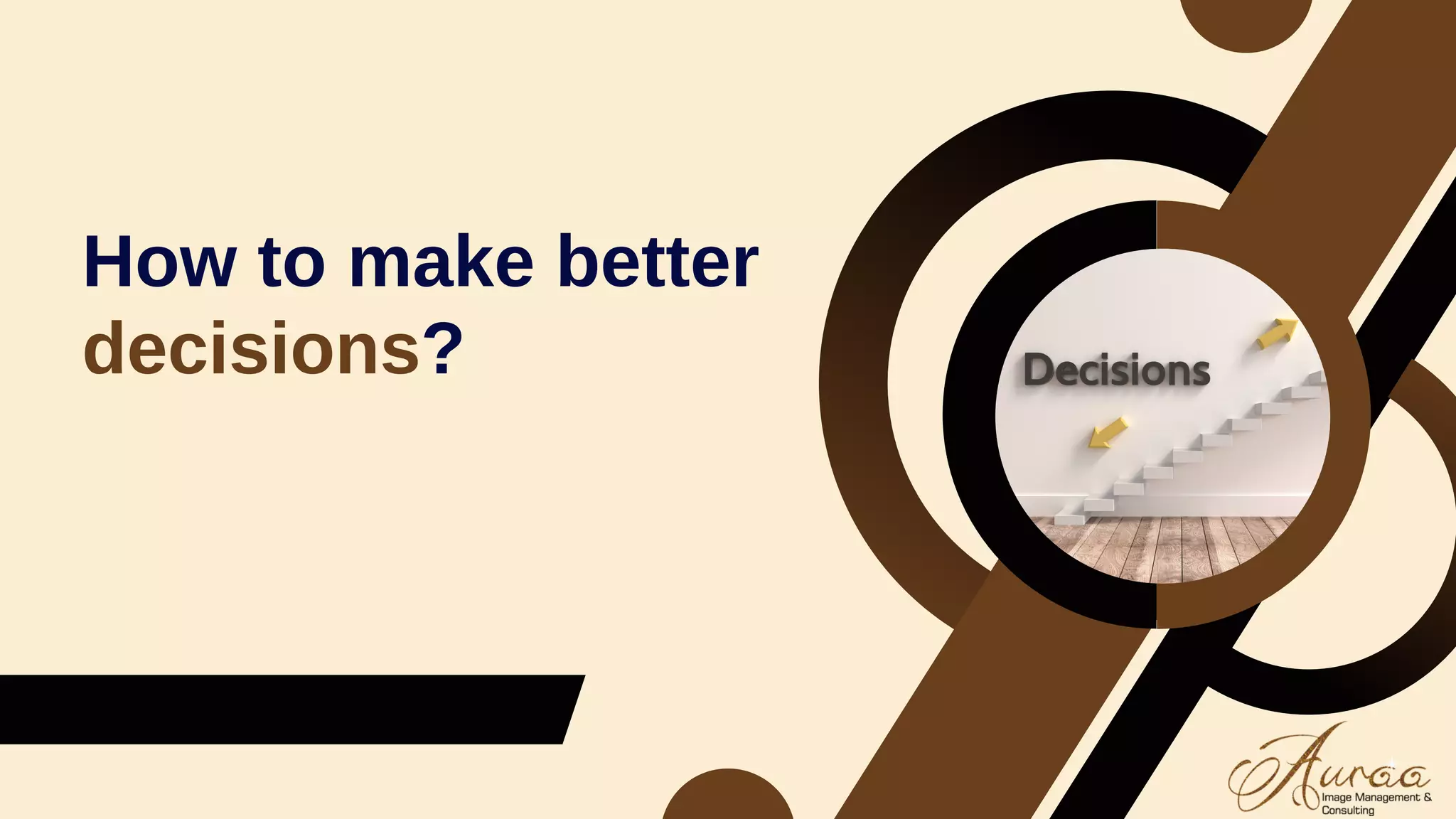
How to make better
decisions?
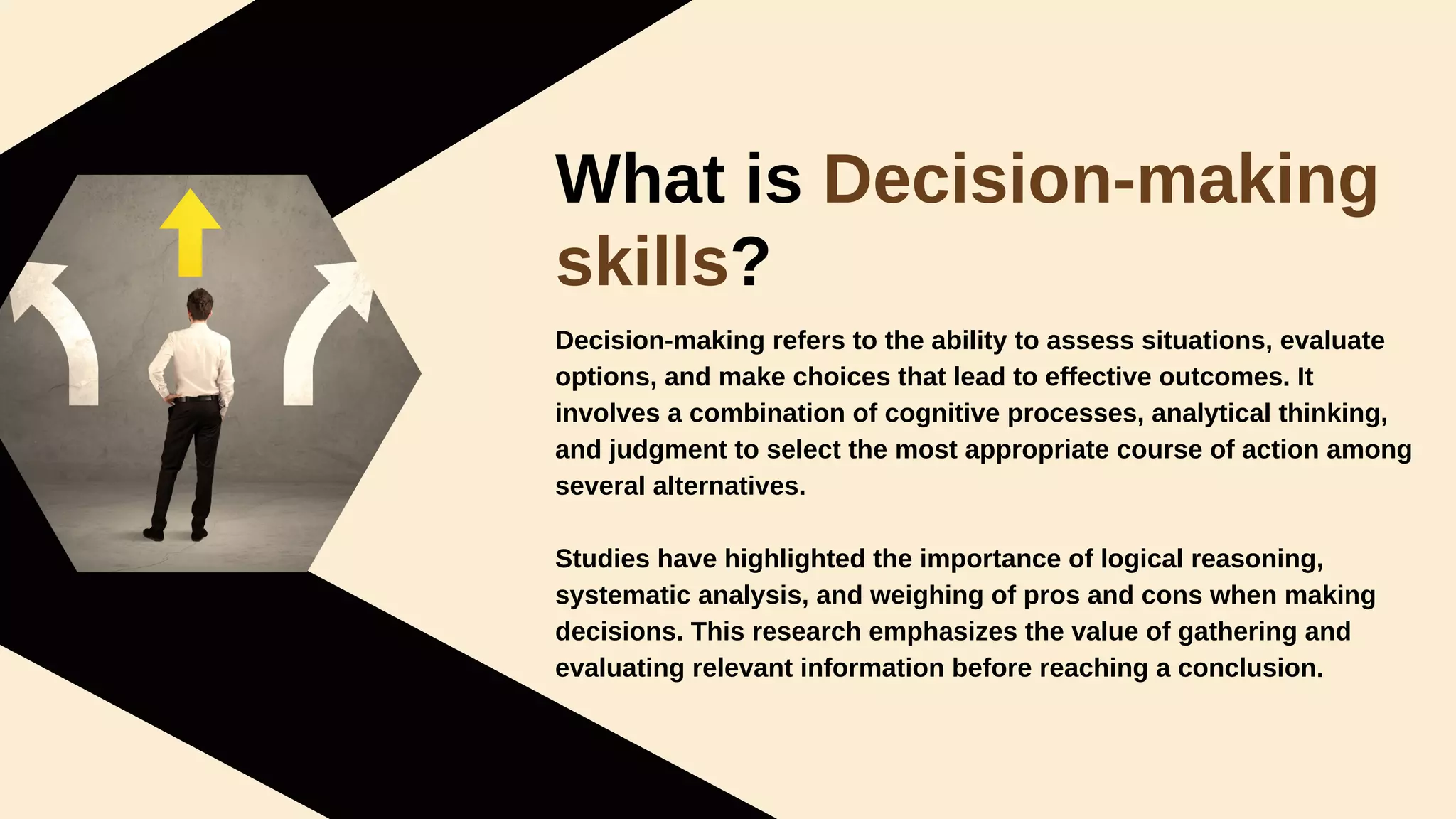
What is Decision-making
skills?
Decision-making refers to the ability to assess situations, evaluate
options, and make choices that lead to effective outcomes. It
involves a combination of cognitive processes, analytical thinking,
and judgment to select the most appropriate course of action among
several alternatives.
Studies have highlighted the importance of logical reasoning,
systematic analysis, and weighing of pros and cons when making
decisions. This research emphasizes the value of gathering and
evaluating relevant information before reaching a conclusion.
“Life is a chess match. Every decision that you make
has a consequence to it.”
- P.K. Subban
Do You?
How well do you gather information? Do you take the
time to gather relevant and accurate information
before making decisions, or do you rely on
assumptions or limited data?
How well do you consider the long-term
implications?
How do I balance analysis with intuition? Do I
consider both logical reasoning and intuition when
making decisions, recognizing the value of both
approaches?
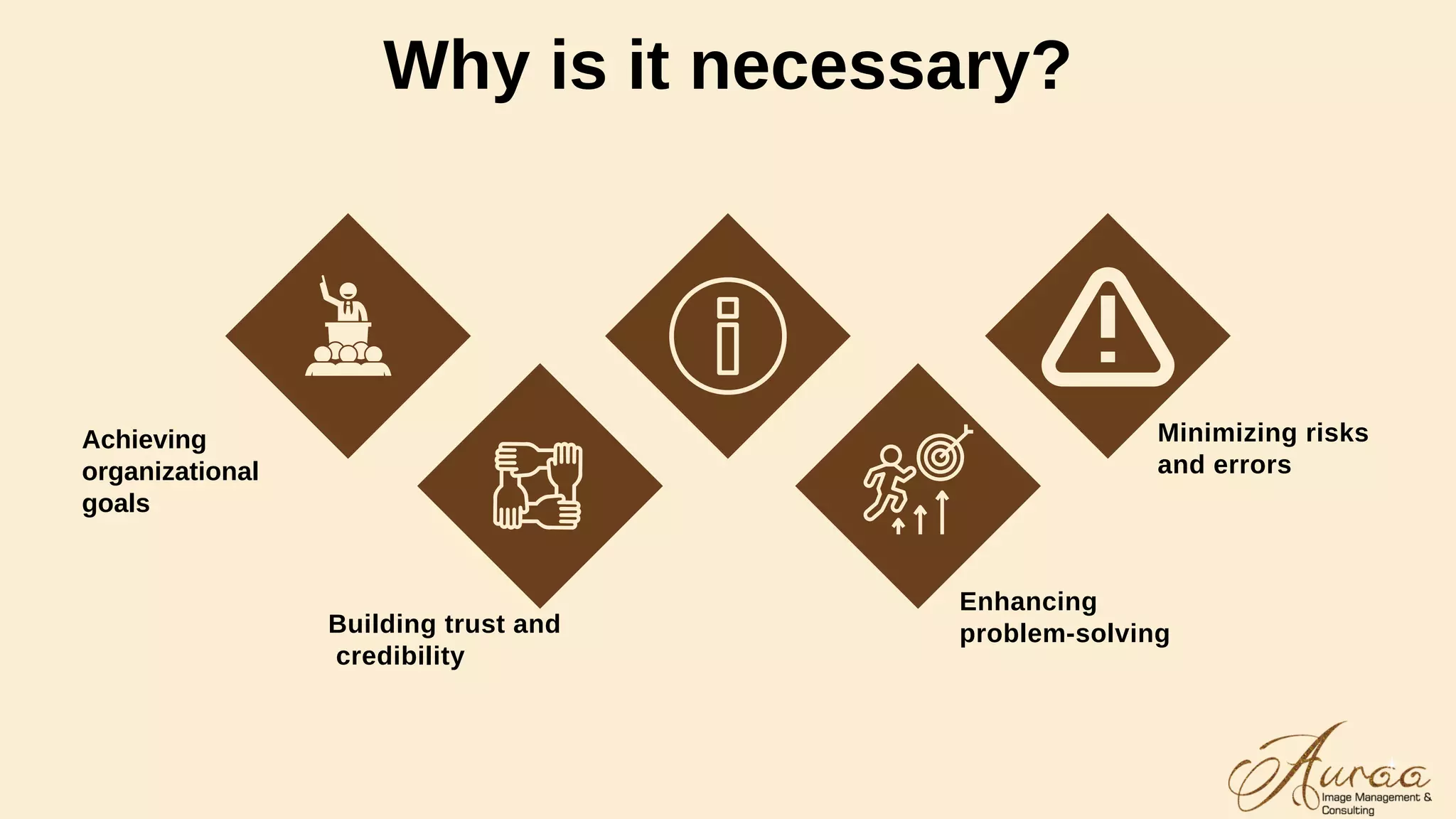
Why is it necessary?
Achieving
organizational
goals
Building trust and
credibility
Enhancing
problem-solving
Minimizing risks
and errors
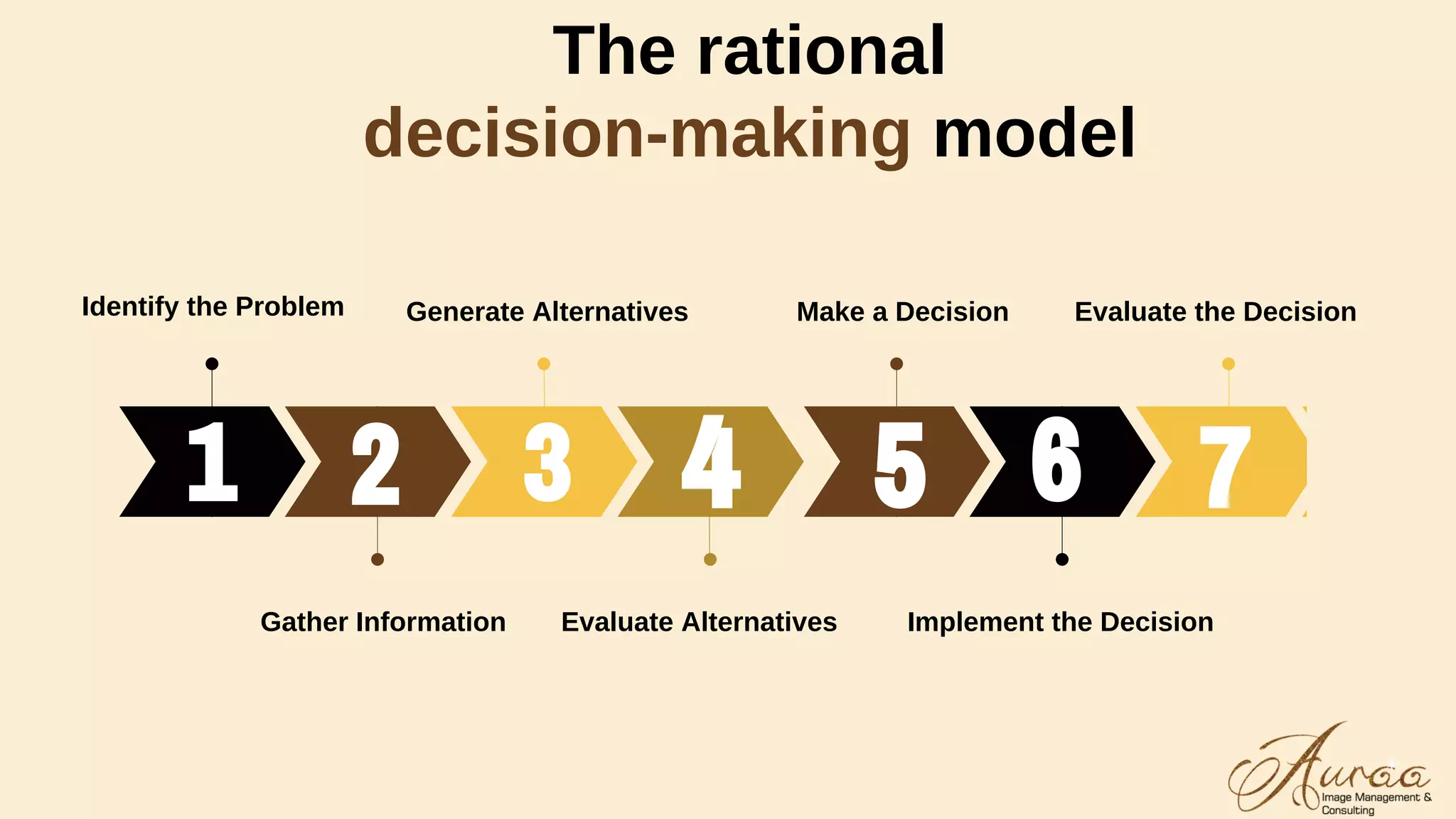
The rational
decision-making model
Identify the Problem
Gather Information
Generate Alternatives
Evaluate Alternatives
Make a Decision
Implement the Decision
Evaluate the Decision
“Wherever you see a successful business, someone
once made a courageous decision.”
- Peter Drucker
Here's an enjoyable approach to acquiring decision-making skills. Try this game with
your friends and colleagues during your upcoming gathering or team-building session.
Gather a group of participants and explain the game's objective.
Provide a scenario or a problem to be solved. It can be a fictional scenario or a real-life situation
related to your work or industry.
Ask each participant to individually brainstorm and write down three possible courses of action to
address the scenario or problem. Encourage creativity and diverse perspectives.
Once everyone has their options, ask participants to think about the potential positive and negative
consequences of each choice. They can write these down as well.
Pair up participants and ask them to discuss their options and consequences with each other. They
can provide feedback, ask questions, and challenge each other's reasoning.
After the discussions, reconvene as a group and invite participants to share their thought processes,
options, and the consequences they identified.
Facilitate a group discussion, encouraging participants to evaluate the strengths and weaknesses of
each option and consider additional perspectives that may have been missed.
Finally, ask each participant to make their final decision, taking into account the insights gained from
the group discussion and their individual reflections.
Discuss the chosen decisions as a group, highlighting the rationale behind each choice and the
potential impact on the scenario or problem.
Reflect on the decision-making process as a group. Discuss lessons learned, alternative approaches,
and how the exercise can be applied to real-life decision-making situations.
1.
2.
3.
4.
5.
6.
7.
8.
9.
10.
Let'sPlayaGame!
Let's look at different situations where rational
decision-making model can help!
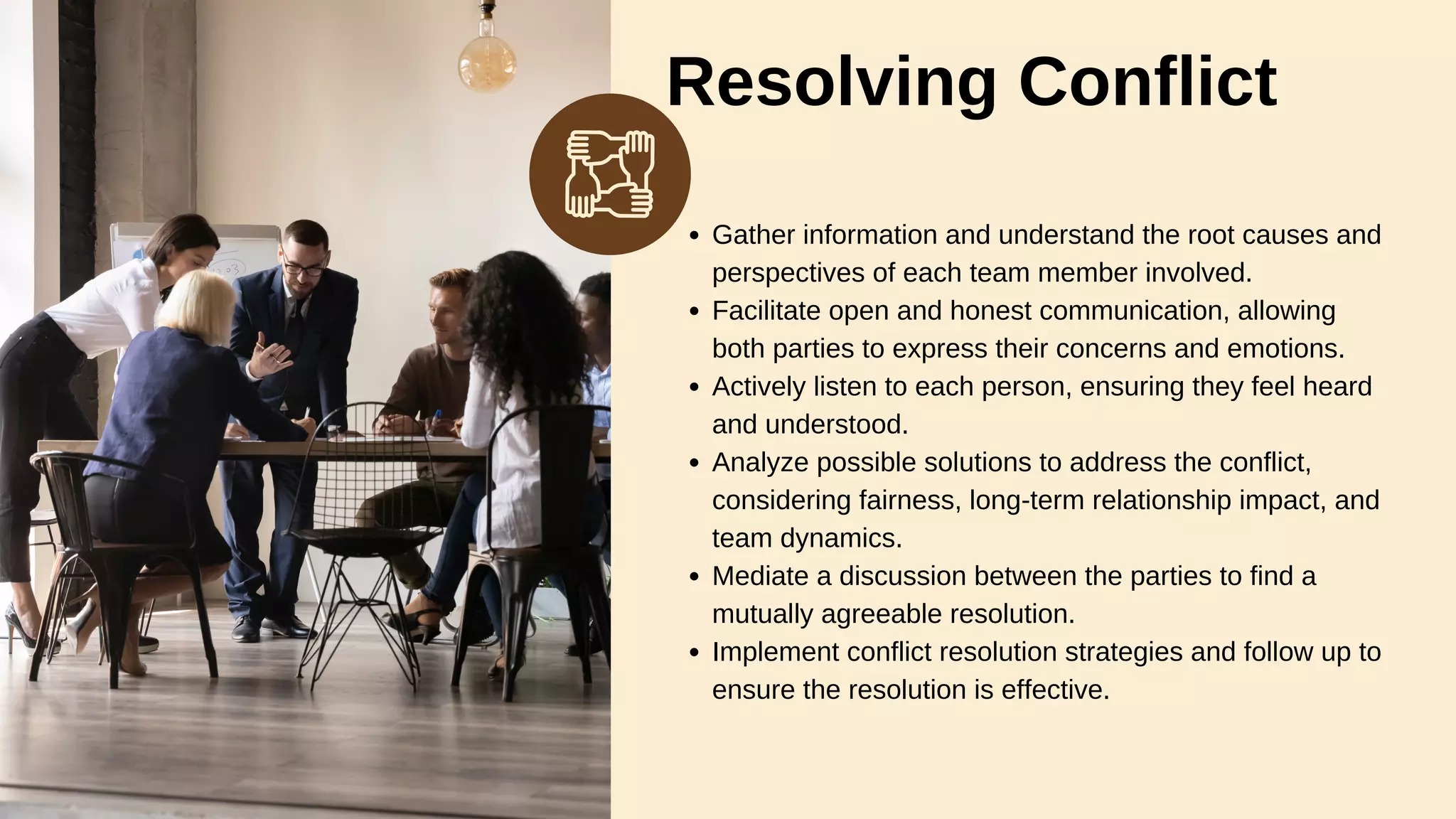
Resolving Conflict
Gather information and understand the root causes and
perspectives of each team member involved.
Facilitate open and honest communication, allowing
both parties to express their concerns and emotions.
Actively listen to each person, ensuring they feel heard
and understood.
Analyze possible solutions to address the conflict,
considering fairness, long-term relationship impact, and
team dynamics.
Mediate a discussion between the parties to find a
mutually agreeable resolution.
Implement conflict resolution strategies and follow up to
ensure the resolution is effective.
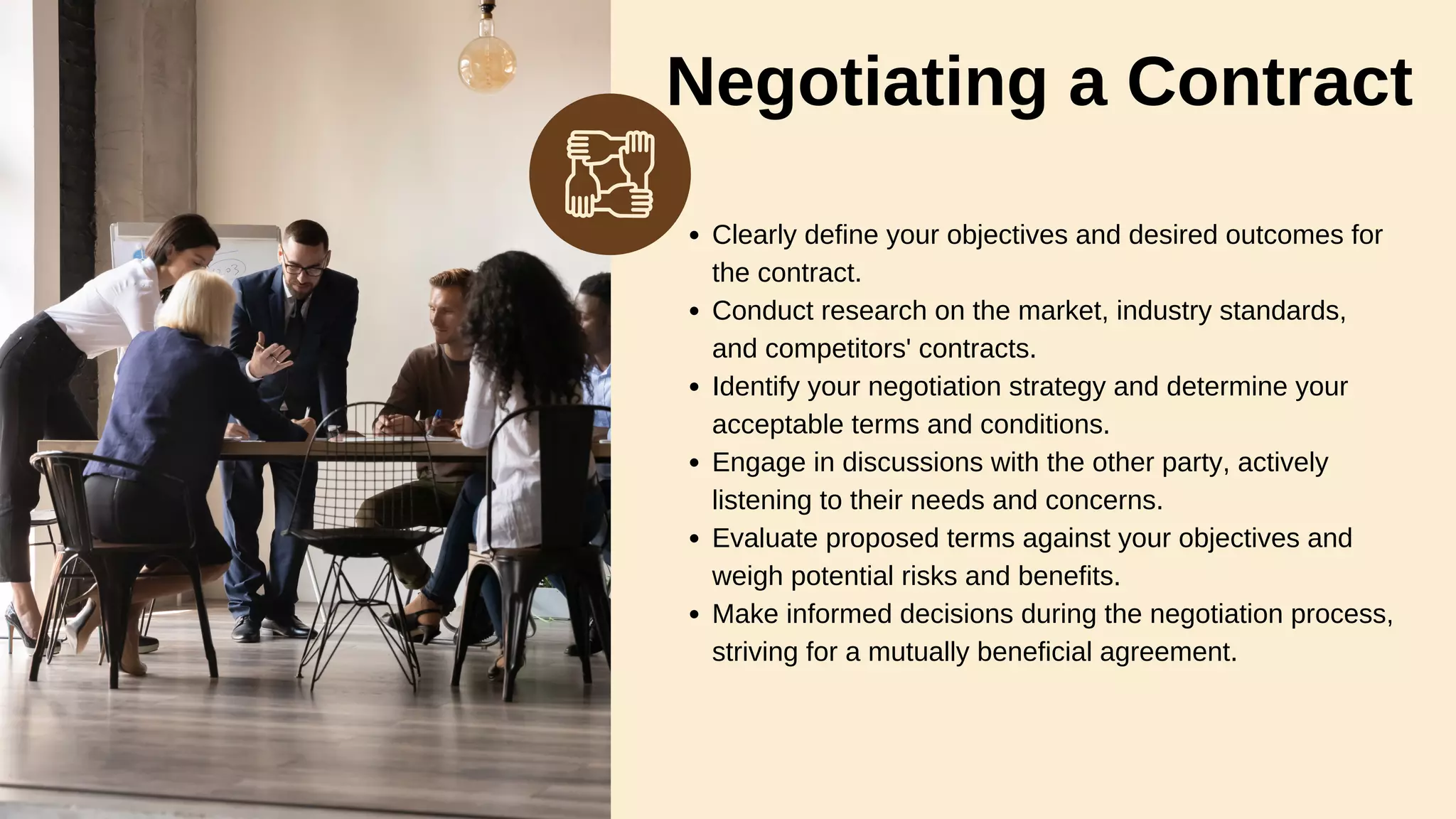
Negotiating a Contract
Clearly define your objectives and desired outcomes for
the contract.
Conduct research on the market, industry standards,
and competitors' contracts.
Identify your negotiation strategy and determine your
acceptable terms and conditions.
Engage in discussions with the other party, actively
listening to their needs and concerns.
Evaluate proposed terms against your objectives and
weigh potential risks and benefits.
Make informed decisions during the negotiation process,
striving for a mutually beneficial agreement.
“The best we can do is size up the chances, calculate the risks involved,
estimate our ability to deal with them, and then make our plans with
confidence.
- Henry Ford
Contact Us
For personalized coaching & training
Phone Number
+91 9958934766/ +91 7830222285
Email Address
samira@auraaimage.com/
nayanika@auraaimage.com
Website
https://auraaimage.com
https://samiragupta.com
For more of such interesting content,
follow us on:
@auraaimageandlife
@coachsamira
https://www.facebook.com/auraaimage
https://www.linkedin.com/company/auraa-
image-management-and-consulting/
https://www.linkedin.com/in/coach-samira-gupta-pcc
Thank You
Samira Chandra Gupta
Executive Presence Coach, Life Coach, Corporate Facilitator, NLP
Practitioner, National Award Winning Image Consultant (IMPA), Fire-
walking Instructor, International Best-Selling Author, Motivational
Speaker
+91 9958934766 / +91 7830222285

How to make better decisions?

  • 2.
    How to makebetter decisions?
  • 3.
    What is Decision-making skills? Decision-makingrefers to the ability to assess situations, evaluate options, and make choices that lead to effective outcomes. It involves a combination of cognitive processes, analytical thinking, and judgment to select the most appropriate course of action among several alternatives. Studies have highlighted the importance of logical reasoning, systematic analysis, and weighing of pros and cons when making decisions. This research emphasizes the value of gathering and evaluating relevant information before reaching a conclusion.
  • 4.
    “Life is achess match. Every decision that you make has a consequence to it.” - P.K. Subban
  • 5.
    Do You? How welldo you gather information? Do you take the time to gather relevant and accurate information before making decisions, or do you rely on assumptions or limited data? How well do you consider the long-term implications? How do I balance analysis with intuition? Do I consider both logical reasoning and intuition when making decisions, recognizing the value of both approaches?
  • 6.
    Why is itnecessary? Achieving organizational goals Building trust and credibility Enhancing problem-solving Minimizing risks and errors
  • 7.
    The rational decision-making model Identifythe Problem Gather Information Generate Alternatives Evaluate Alternatives Make a Decision Implement the Decision Evaluate the Decision
  • 8.
    “Wherever you seea successful business, someone once made a courageous decision.” - Peter Drucker
  • 9.
    Here's an enjoyableapproach to acquiring decision-making skills. Try this game with your friends and colleagues during your upcoming gathering or team-building session. Gather a group of participants and explain the game's objective. Provide a scenario or a problem to be solved. It can be a fictional scenario or a real-life situation related to your work or industry. Ask each participant to individually brainstorm and write down three possible courses of action to address the scenario or problem. Encourage creativity and diverse perspectives. Once everyone has their options, ask participants to think about the potential positive and negative consequences of each choice. They can write these down as well. Pair up participants and ask them to discuss their options and consequences with each other. They can provide feedback, ask questions, and challenge each other's reasoning. After the discussions, reconvene as a group and invite participants to share their thought processes, options, and the consequences they identified. Facilitate a group discussion, encouraging participants to evaluate the strengths and weaknesses of each option and consider additional perspectives that may have been missed. Finally, ask each participant to make their final decision, taking into account the insights gained from the group discussion and their individual reflections. Discuss the chosen decisions as a group, highlighting the rationale behind each choice and the potential impact on the scenario or problem. Reflect on the decision-making process as a group. Discuss lessons learned, alternative approaches, and how the exercise can be applied to real-life decision-making situations. 1. 2. 3. 4. 5. 6. 7. 8. 9. 10. Let'sPlayaGame!
  • 10.
    Let's look atdifferent situations where rational decision-making model can help!
  • 11.
    Resolving Conflict Gather informationand understand the root causes and perspectives of each team member involved. Facilitate open and honest communication, allowing both parties to express their concerns and emotions. Actively listen to each person, ensuring they feel heard and understood. Analyze possible solutions to address the conflict, considering fairness, long-term relationship impact, and team dynamics. Mediate a discussion between the parties to find a mutually agreeable resolution. Implement conflict resolution strategies and follow up to ensure the resolution is effective.
  • 12.
    Negotiating a Contract Clearlydefine your objectives and desired outcomes for the contract. Conduct research on the market, industry standards, and competitors' contracts. Identify your negotiation strategy and determine your acceptable terms and conditions. Engage in discussions with the other party, actively listening to their needs and concerns. Evaluate proposed terms against your objectives and weigh potential risks and benefits. Make informed decisions during the negotiation process, striving for a mutually beneficial agreement.
  • 13.
    “The best wecan do is size up the chances, calculate the risks involved, estimate our ability to deal with them, and then make our plans with confidence. - Henry Ford
  • 14.
    Contact Us For personalizedcoaching & training Phone Number +91 9958934766/ +91 7830222285 Email Address samira@auraaimage.com/ nayanika@auraaimage.com Website https://auraaimage.com https://samiragupta.com For more of such interesting content, follow us on: @auraaimageandlife @coachsamira https://www.facebook.com/auraaimage https://www.linkedin.com/company/auraa- image-management-and-consulting/ https://www.linkedin.com/in/coach-samira-gupta-pcc
  • 15.
    Thank You Samira ChandraGupta Executive Presence Coach, Life Coach, Corporate Facilitator, NLP Practitioner, National Award Winning Image Consultant (IMPA), Fire- walking Instructor, International Best-Selling Author, Motivational Speaker +91 9958934766 / +91 7830222285