GUIDE TO
GOOD
POSTURE
•Good posture is about more
than standing up straight so
you can look your best.
•It is an important part of your
long-term health.
•Posture is how you hold your
body.
There are two types:
•Dynamic posture is how you
hold yourself when you are
moving.
•Static posture is how
you hold yourself
when you are not
moving.
•The key to good posture is
the position of your spine.
Your spine has three natural
curves - at your cervical
curve ,thoracic curve , and
lumbar curve .
How can posture affect my
health?
Poor posture can be bad
for your health. Slouching or
slumping over can:
•Misalign your musculoskeletal system
•Wear away at your spine, making it
more fragile and prone to injury
•Cause neck, shoulder, and back pain
•Decrease your flexibility
•Affect how well your joints move
•Affect your balance and increase
your risk of falling
•Make it harder to digest your
food
•Make it harder to breathe
How can I improve
my posture in
general?
•Be mindful of your
posture during everyday
activities, like watching
television, washing dishes,
or walking
•Stay active. Any kind of
exercise may help improve
your posture, but certain
types of exercises can be
especially helpful.
•Maintain a
healthy weight.
•Wear
comfortable, low-
heeled shoes.
•Make sure work surfaces are
at a comfortable height for
you, whether you're sitting in
front of a computer, making
dinner, or eating a meal.
How can I improve my posture when
sitting?
Many Americans spend a lot of their
time sitting - either at work, at school,
or at home. It is important to sit
properly, and to take frequent breaks:
•Switch sitting positions often
•Take brief walks around your office or home
•Gently stretch your muscles every so often to
help relieve muscle tension
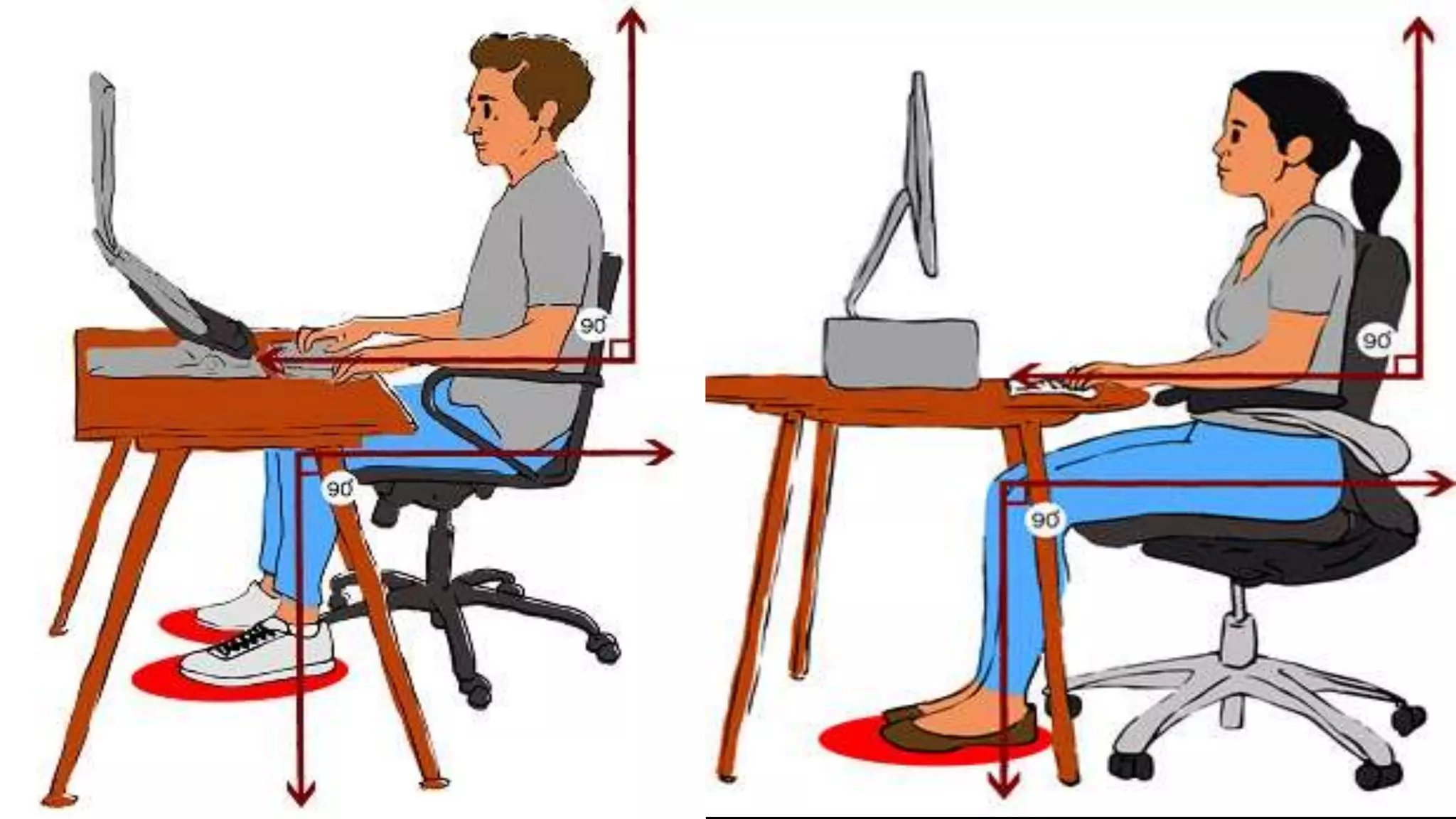
•Don't cross your legs; keep your feet on the
floor, with your ankles in front of your knees
•Make sure that your feet touch the floor, or if
that's not possible, use a footrest
•Relax your shoulders; they should not be
rounded or pulled backwards
•Keep your elbows in close to your body. They
should be bent between 90 and 120 degrees.
•Make sure that your back is fully
supported. Use a back pillow or other back
support if your chair does not have a backrest
that can support your lower back's curve.
•Make sure that your thighs and
hips are supported. You should
have a well-padded seat, and
your thighs and hips should be
parallel to the floor.
How can I improve my posture
when standing?
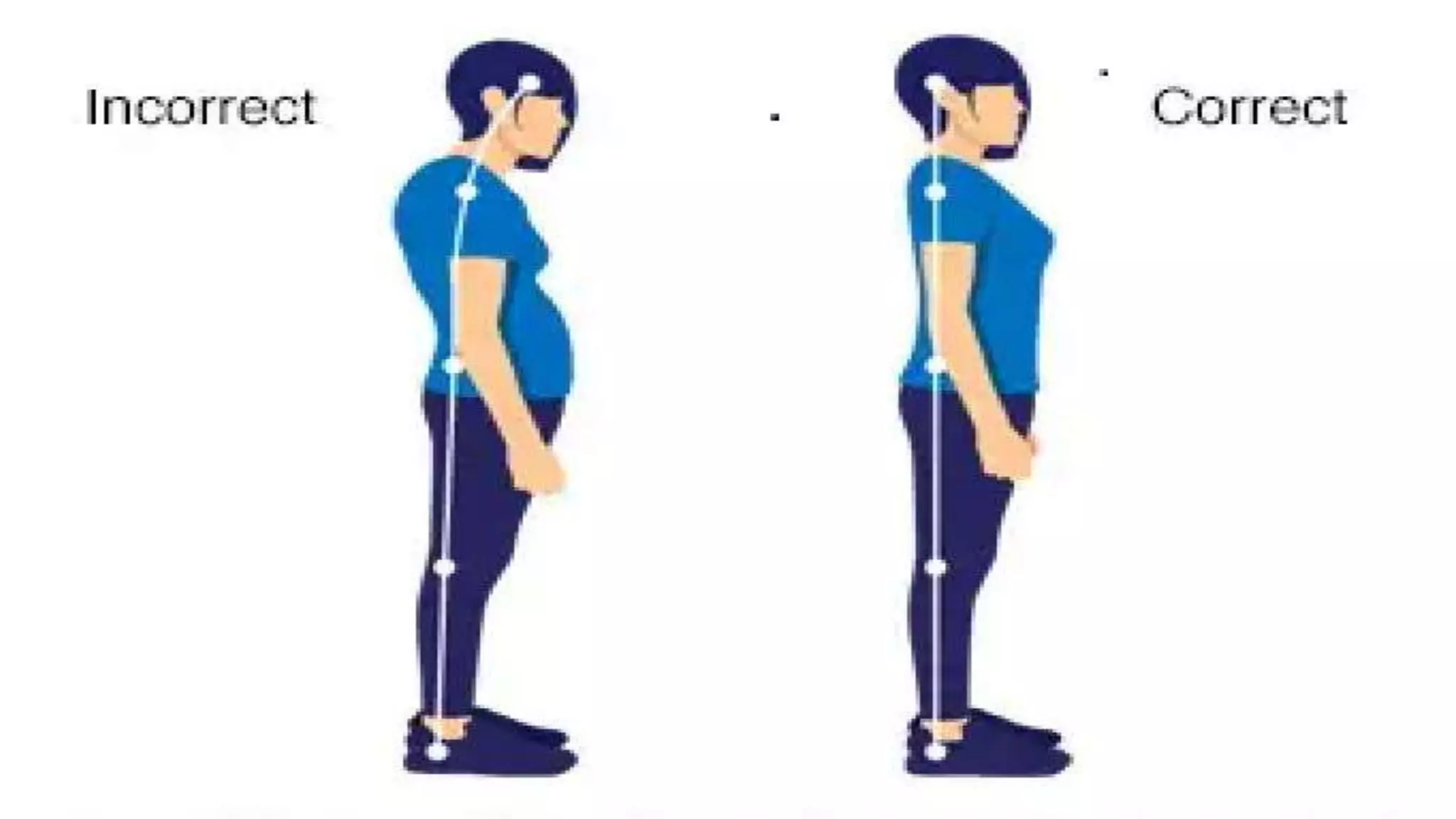
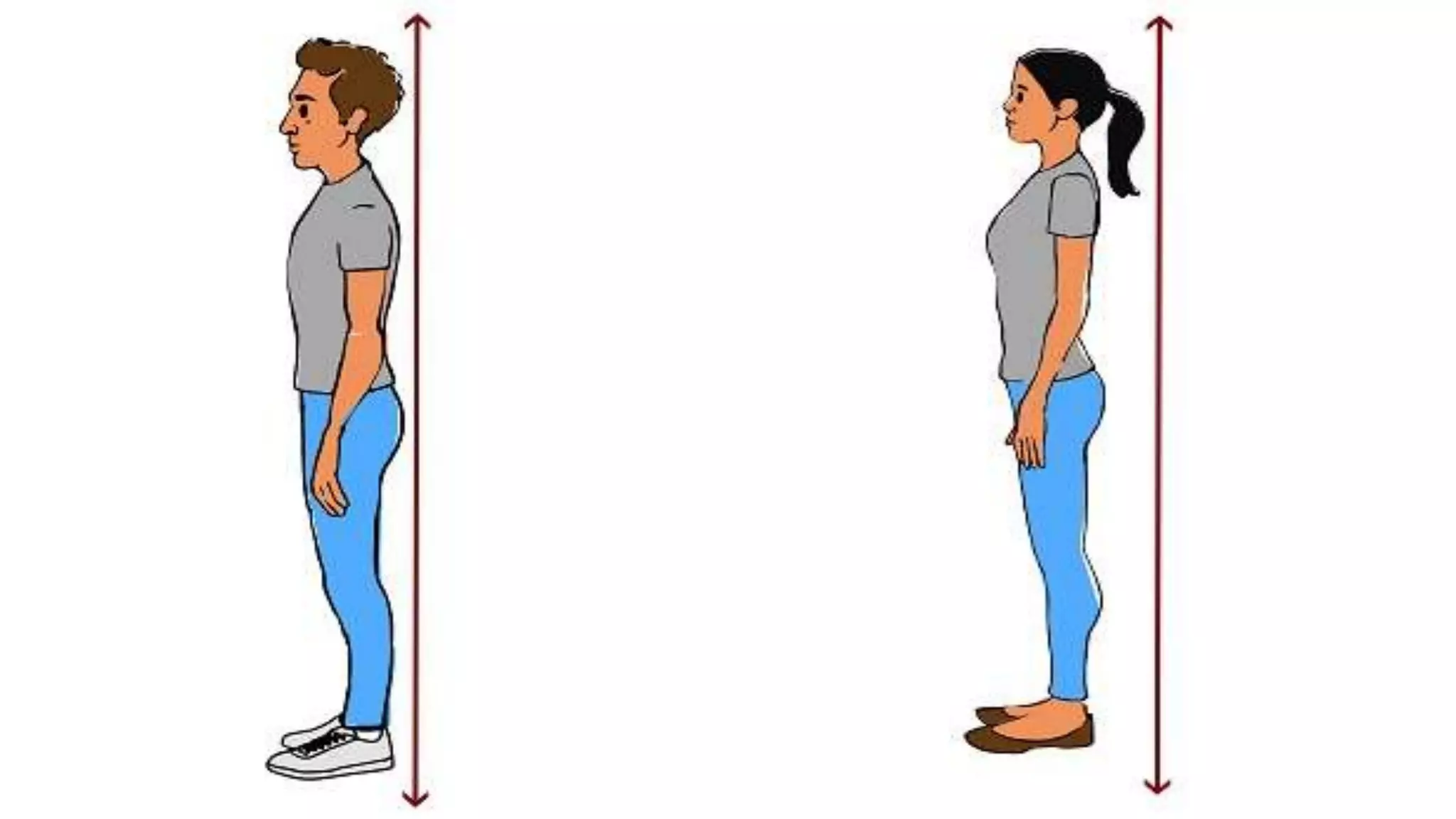
•Stand up straight and tall
•Keep your shoulders back
•Pull your stomach in
•Put your weight mostly on the balls of
your feet
•Keep your head level
•Let your arms hang down naturally at your
sides
•Keep your feet about shoulder-width
apart
THERE ARE FIVE PRINCIPLES
OF POSTURE AND MOVEMENT
THAT OUTLINE THE WAYS OUR
BODIES WORK:
Posture Principle 1 – Movement. Your body is designed to
move and stay moving. Posture ensures that you can do
this effectively
Posture Principle 2 – Balance. Proper posture allows you
to balance your body against gravity comfortably and
safely.
Posture Principle 3 – Movement Patterns. The pattern of
your body’s motion goes down the easiest path. This
prevents your body from straining.
Posture Principle 4 – Compensation. Your body
learns patterns naturally to guide movement.
When you experience pain, your body alters the
way it moves in order to avoid pain.
Posture Principle 5 – Adaptation. When you
change your posture and motion, your body’s
physiology also changes.
•With practice, you can
improve your posture;
you will look and feel
better.

HOW TO MAINTAIN GOOD POSTURE.

  • 1.
  • 2.
    •Good posture isabout more than standing up straight so you can look your best. •It is an important part of your long-term health.
  • 3.
    •Posture is howyou hold your body. There are two types: •Dynamic posture is how you hold yourself when you are moving.
  • 4.
    •Static posture ishow you hold yourself when you are not moving.
  • 5.
    •The key togood posture is the position of your spine. Your spine has three natural curves - at your cervical curve ,thoracic curve , and lumbar curve .
  • 6.
    How can postureaffect my health? Poor posture can be bad for your health. Slouching or slumping over can:
  • 7.
    •Misalign your musculoskeletalsystem •Wear away at your spine, making it more fragile and prone to injury •Cause neck, shoulder, and back pain •Decrease your flexibility
  • 8.
    •Affect how wellyour joints move •Affect your balance and increase your risk of falling •Make it harder to digest your food •Make it harder to breathe
  • 9.
    How can Iimprove my posture in general?
  • 10.
    •Be mindful ofyour posture during everyday activities, like watching television, washing dishes, or walking
  • 11.
    •Stay active. Anykind of exercise may help improve your posture, but certain types of exercises can be especially helpful.
  • 12.
  • 13.
  • 14.
    •Make sure worksurfaces are at a comfortable height for you, whether you're sitting in front of a computer, making dinner, or eating a meal.
  • 15.
    How can Iimprove my posture when sitting? Many Americans spend a lot of their time sitting - either at work, at school, or at home. It is important to sit properly, and to take frequent breaks:
  • 16.
    •Switch sitting positionsoften •Take brief walks around your office or home •Gently stretch your muscles every so often to help relieve muscle tension •Don't cross your legs; keep your feet on the floor, with your ankles in front of your knees •Make sure that your feet touch the floor, or if that's not possible, use a footrest
  • 17.
    •Relax your shoulders;they should not be rounded or pulled backwards •Keep your elbows in close to your body. They should be bent between 90 and 120 degrees. •Make sure that your back is fully supported. Use a back pillow or other back support if your chair does not have a backrest that can support your lower back's curve.
  • 18.
    •Make sure thatyour thighs and hips are supported. You should have a well-padded seat, and your thighs and hips should be parallel to the floor.
  • 20.
    How can Iimprove my posture when standing? •Stand up straight and tall •Keep your shoulders back •Pull your stomach in
  • 21.
    •Put your weightmostly on the balls of your feet •Keep your head level •Let your arms hang down naturally at your sides •Keep your feet about shoulder-width apart
  • 24.
    THERE ARE FIVEPRINCIPLES OF POSTURE AND MOVEMENT THAT OUTLINE THE WAYS OUR BODIES WORK:
  • 25.
    Posture Principle 1– Movement. Your body is designed to move and stay moving. Posture ensures that you can do this effectively Posture Principle 2 – Balance. Proper posture allows you to balance your body against gravity comfortably and safely. Posture Principle 3 – Movement Patterns. The pattern of your body’s motion goes down the easiest path. This prevents your body from straining.
  • 26.
    Posture Principle 4– Compensation. Your body learns patterns naturally to guide movement. When you experience pain, your body alters the way it moves in order to avoid pain. Posture Principle 5 – Adaptation. When you change your posture and motion, your body’s physiology also changes.
  • 27.
    •With practice, youcan improve your posture; you will look and feel better.