Azerbaijan State Oil and Industry University
Computer Science
Subject: English
Teacher: Gulnara Ahmedova
Student: Rasulzade Shams
Group: 606.20E
How to Detect a Lie?
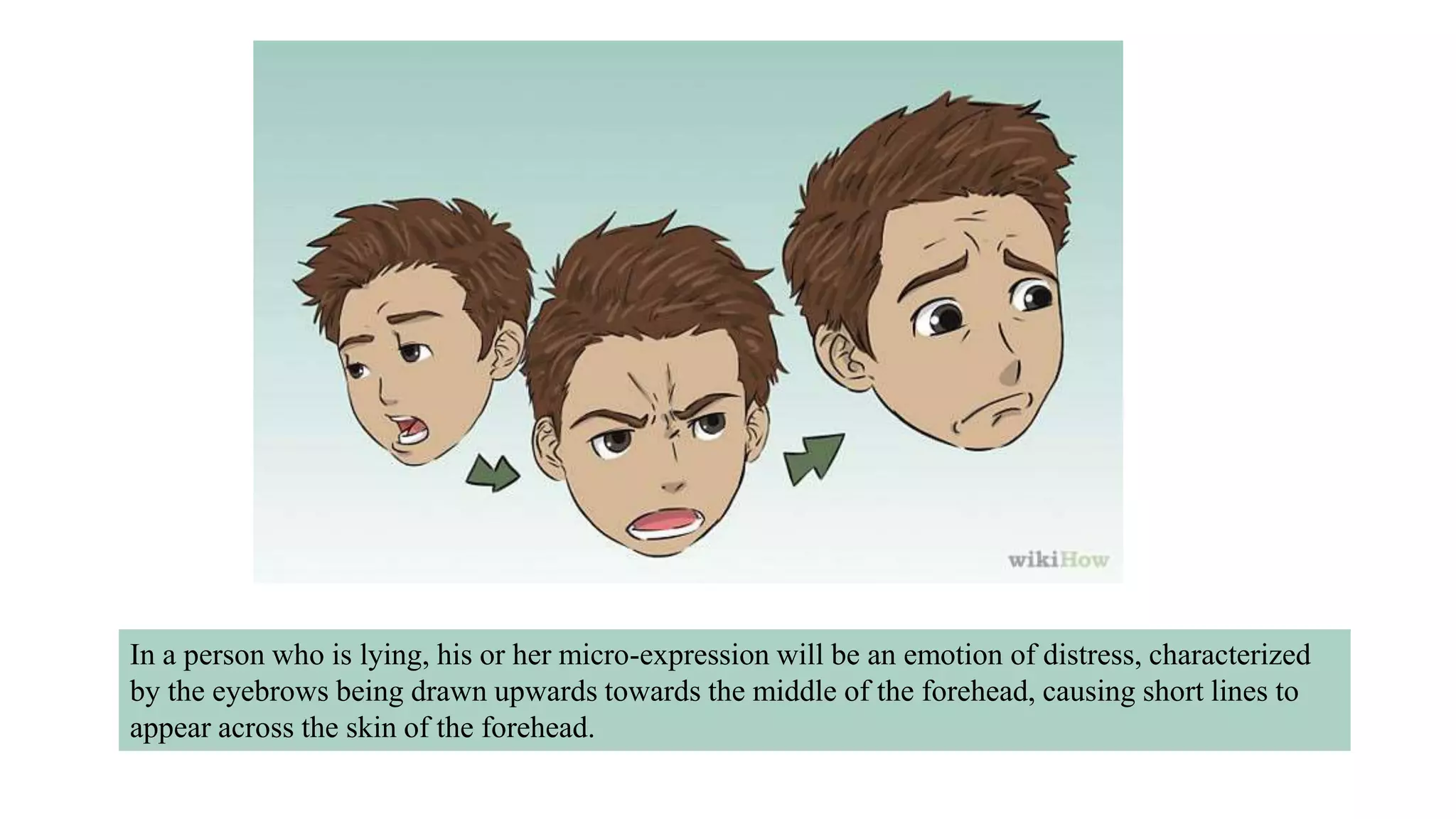
In a person who is lying, his or her micro-expression will be an emotion of distress, characterized
by the eyebrows being drawn upwards towards the middle of the forehead, causing short lines to
appear across the skin of the forehead.
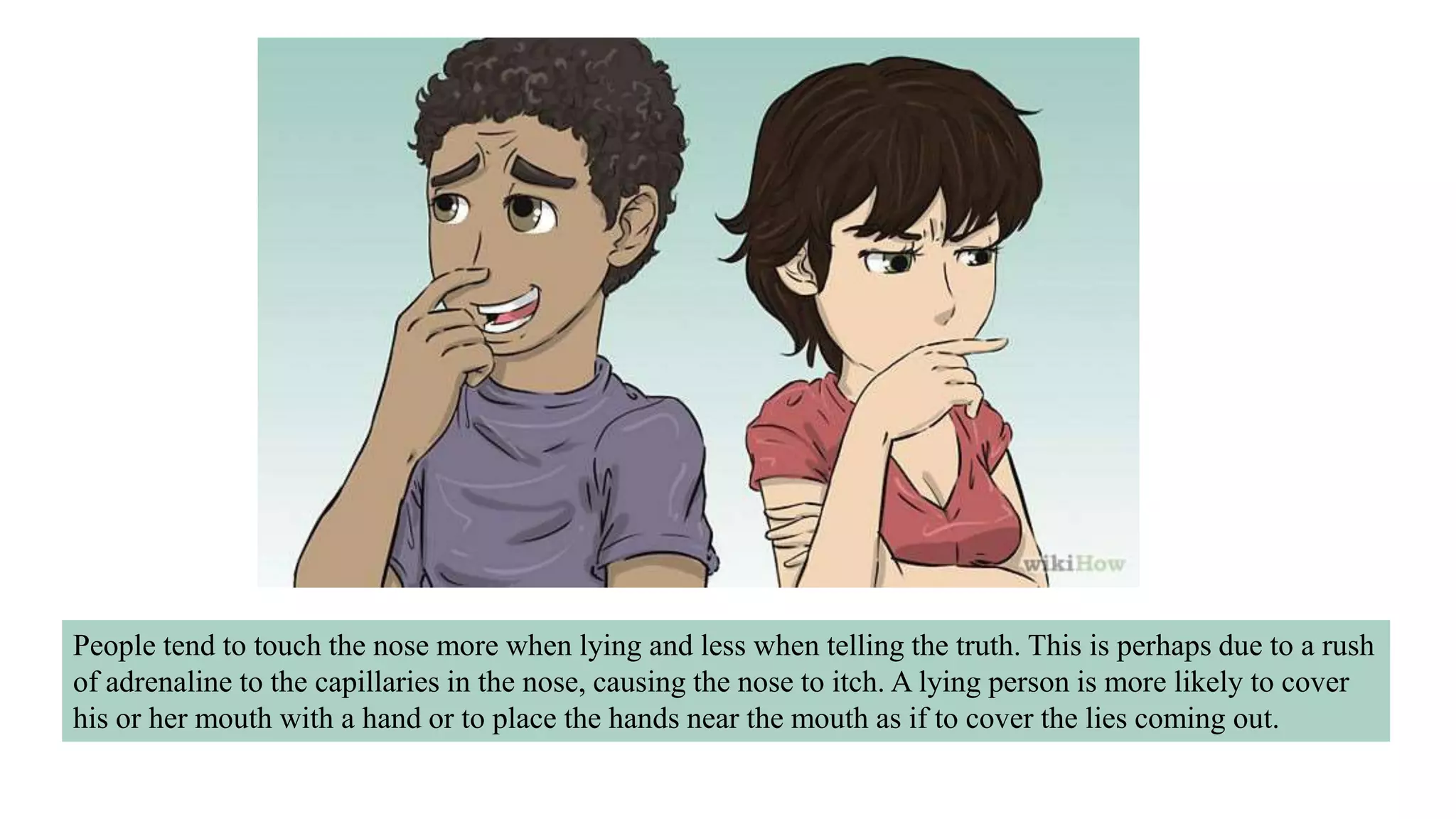
People tend to touch the nose more when lying and less when telling the truth. This is perhaps due to a rush
of adrenaline to the capillaries in the nose, causing the nose to itch. A lying person is more likely to cover
his or her mouth with a hand or to place the hands near the mouth as if to cover the lies coming out.
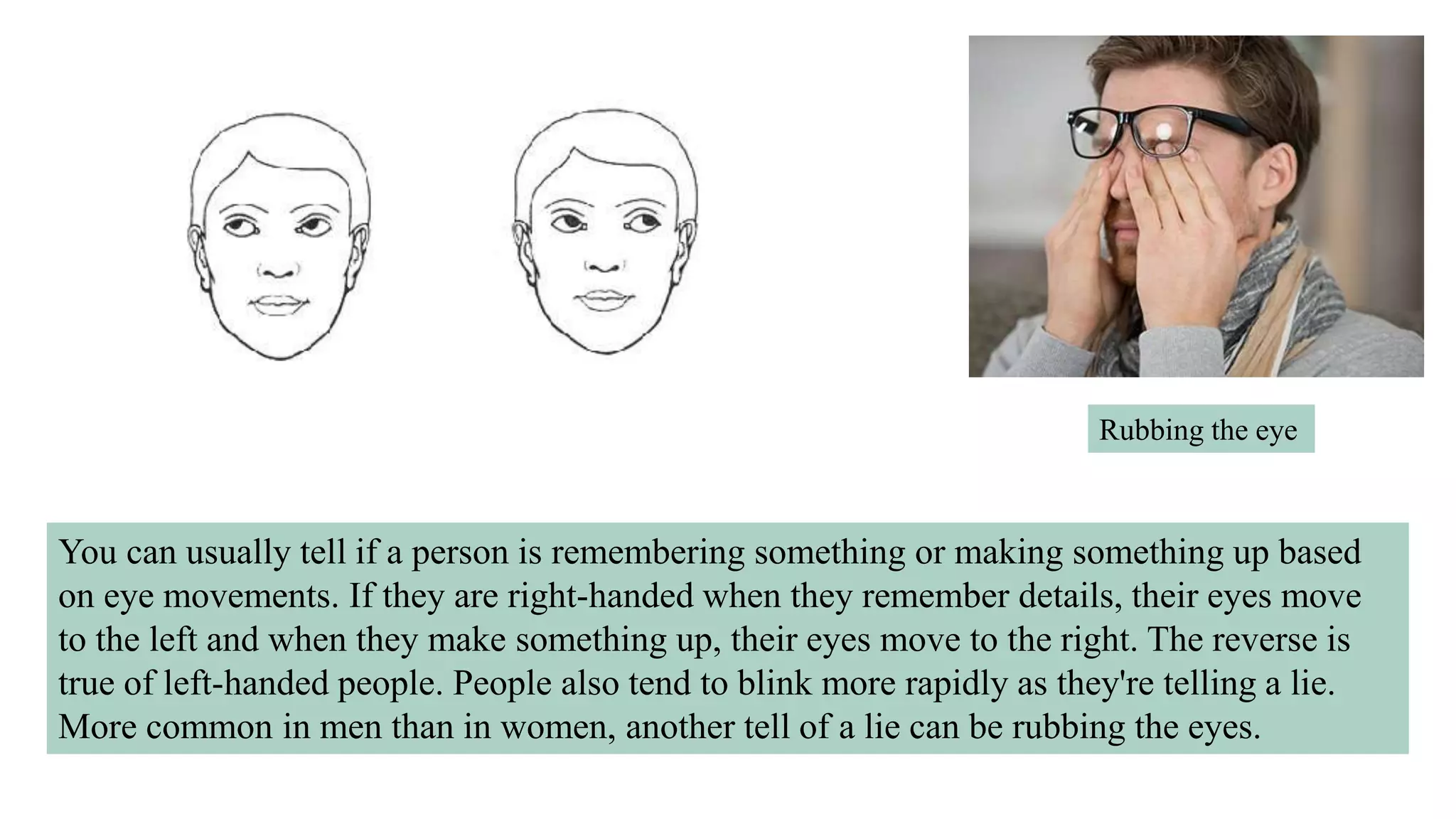
You can usually tell if a person is remembering something or making something up based
on eye movements. If they are right-handed when they remember details, their eyes move
to the left and when they make something up, their eyes move to the right. The reverse is
true of left-handed people. People also tend to blink more rapidly as they're telling a lie.
More common in men than in women, another tell of a lie can be rubbing the eyes.
Rubbing the eye
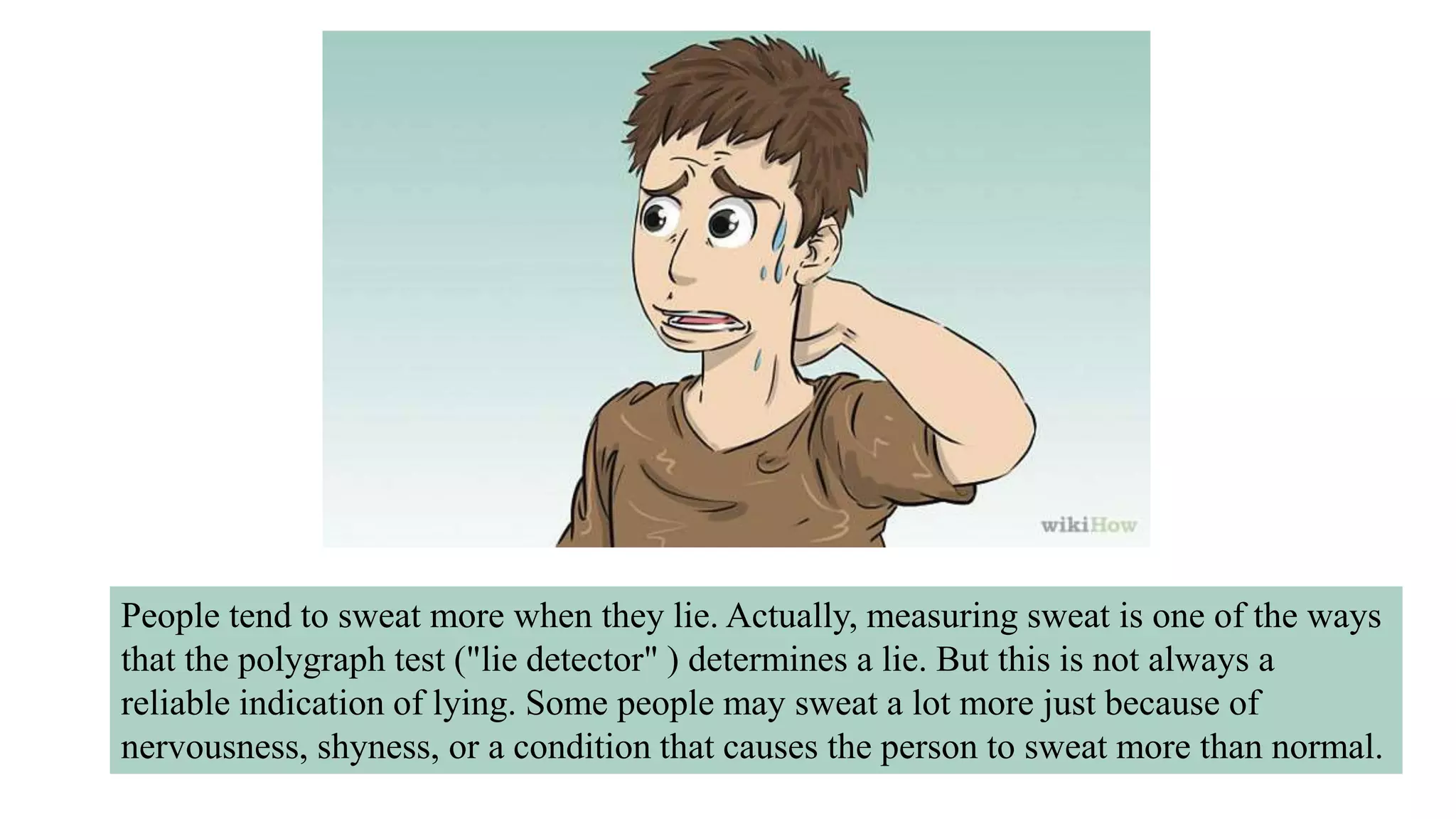
People tend to sweat more when they lie. Actually, measuring sweat is one of the ways
that the polygraph test ("lie detector" ) determines a lie. But this is not always a
reliable indication of lying. Some people may sweat a lot more just because of
nervousness, shyness, or a condition that causes the person to sweat more than normal.
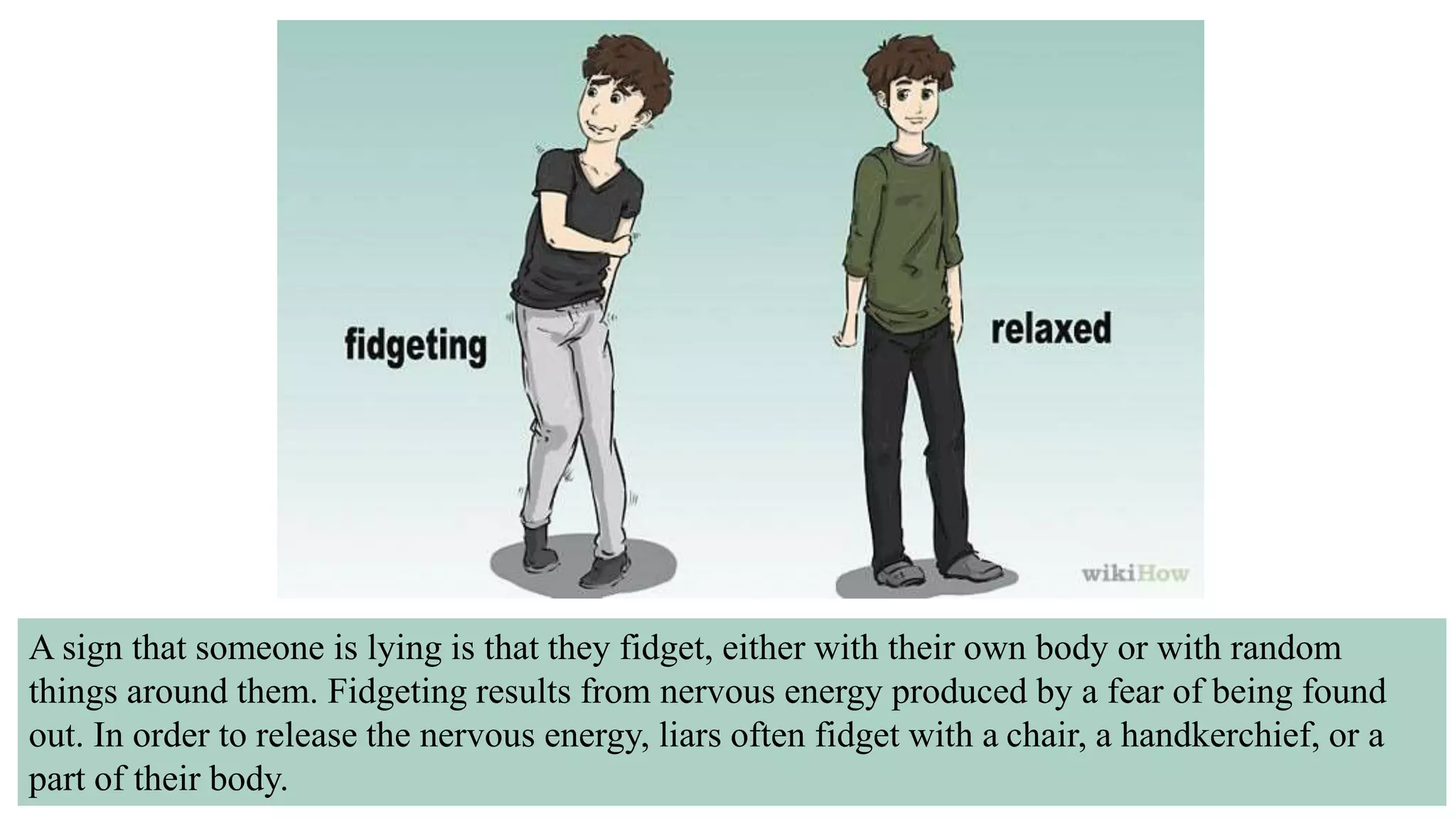
A sign that someone is lying is that they fidget, either with their own body or with random
things around them. Fidgeting results from nervous energy produced by a fear of being found
out. In order to release the nervous energy, liars often fidget with a chair, a handkerchief, or a
part of their body.
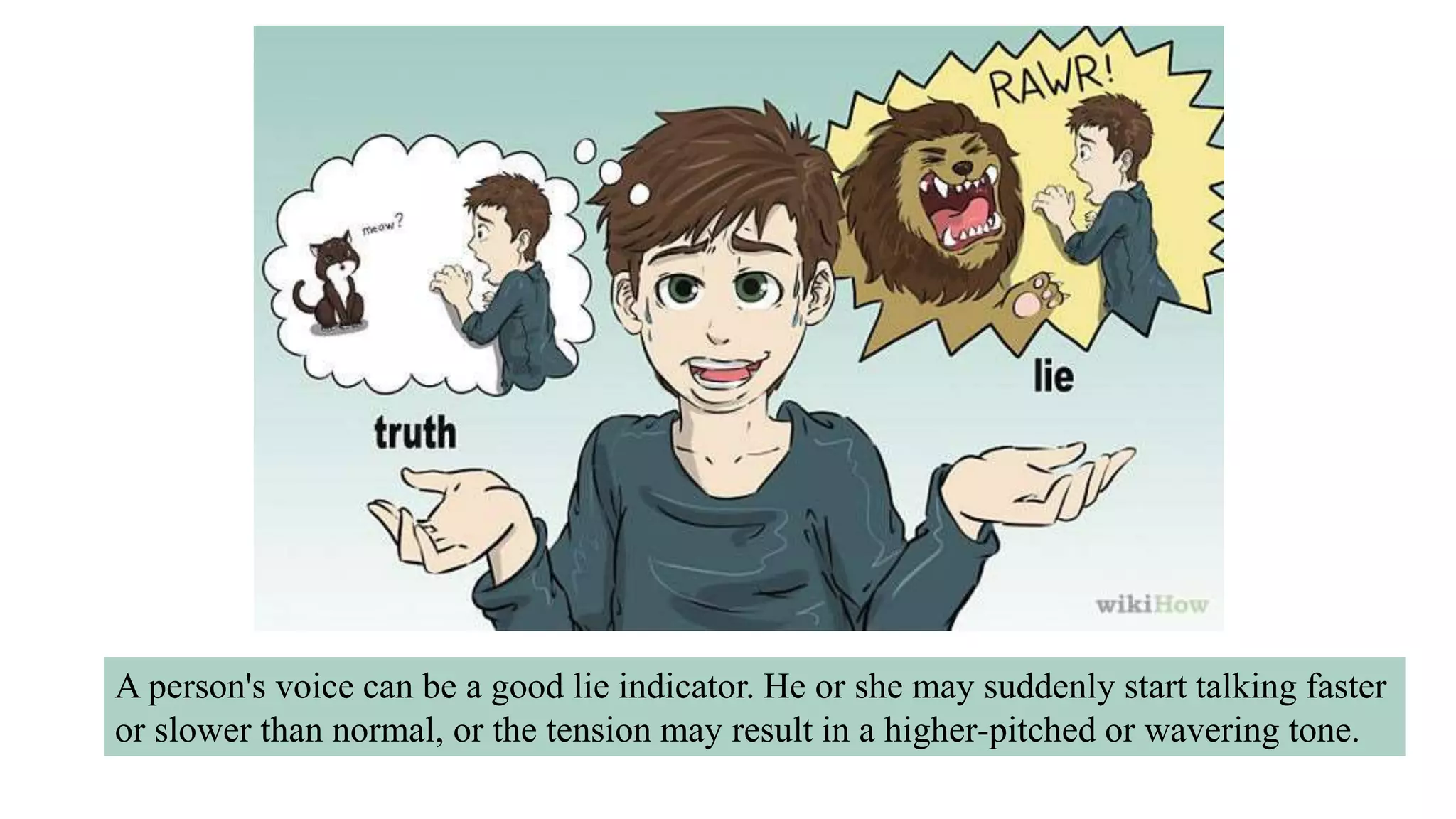
A person's voice can be a good lie indicator. He or she may suddenly start talking faster
or slower than normal, or the tension may result in a higher-pitched or wavering tone.
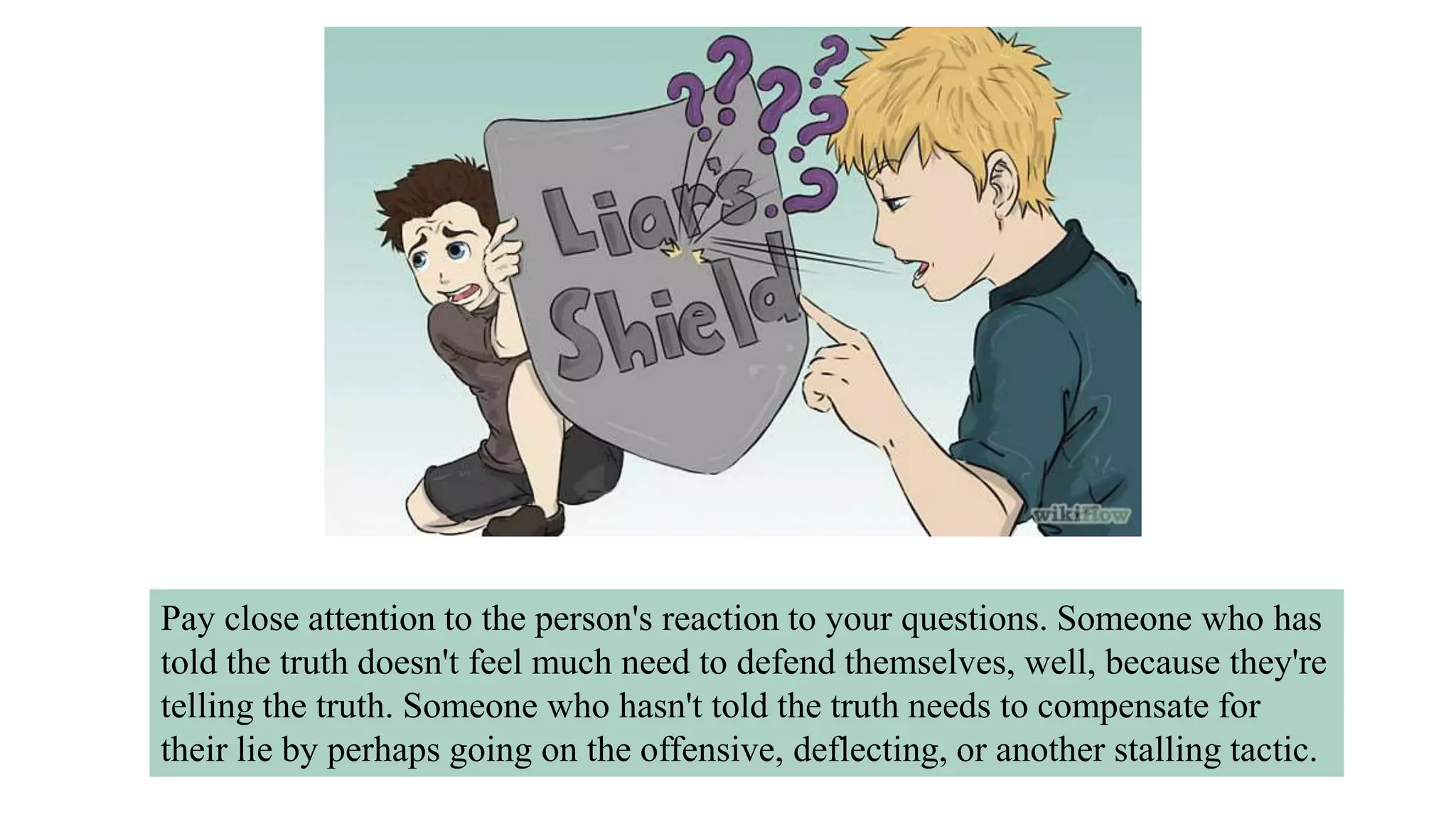
Pay close attention to the person's reaction to your questions. Someone who has
told the truth doesn't feel much need to defend themselves, well, because they're
telling the truth. Someone who hasn't told the truth needs to compensate for
their lie by perhaps going on the offensive, deflecting, or another stalling tactic.
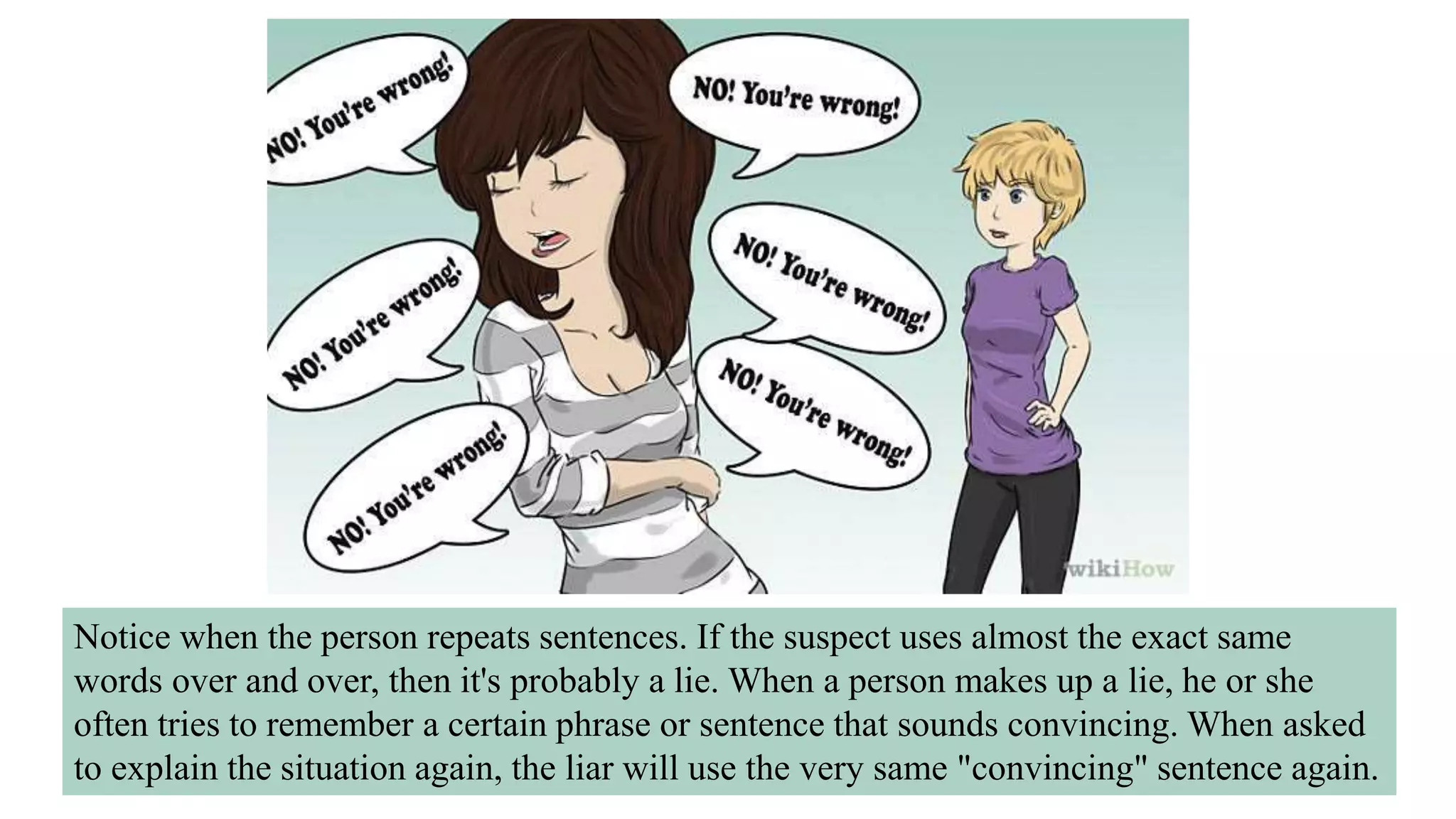
Notice when the person repeats sentences. If the suspect uses almost the exact same
words over and over, then it's probably a lie. When a person makes up a lie, he or she
often tries to remember a certain phrase or sentence that sounds convincing. When asked
to explain the situation again, the liar will use the very same "convincing" sentence again.
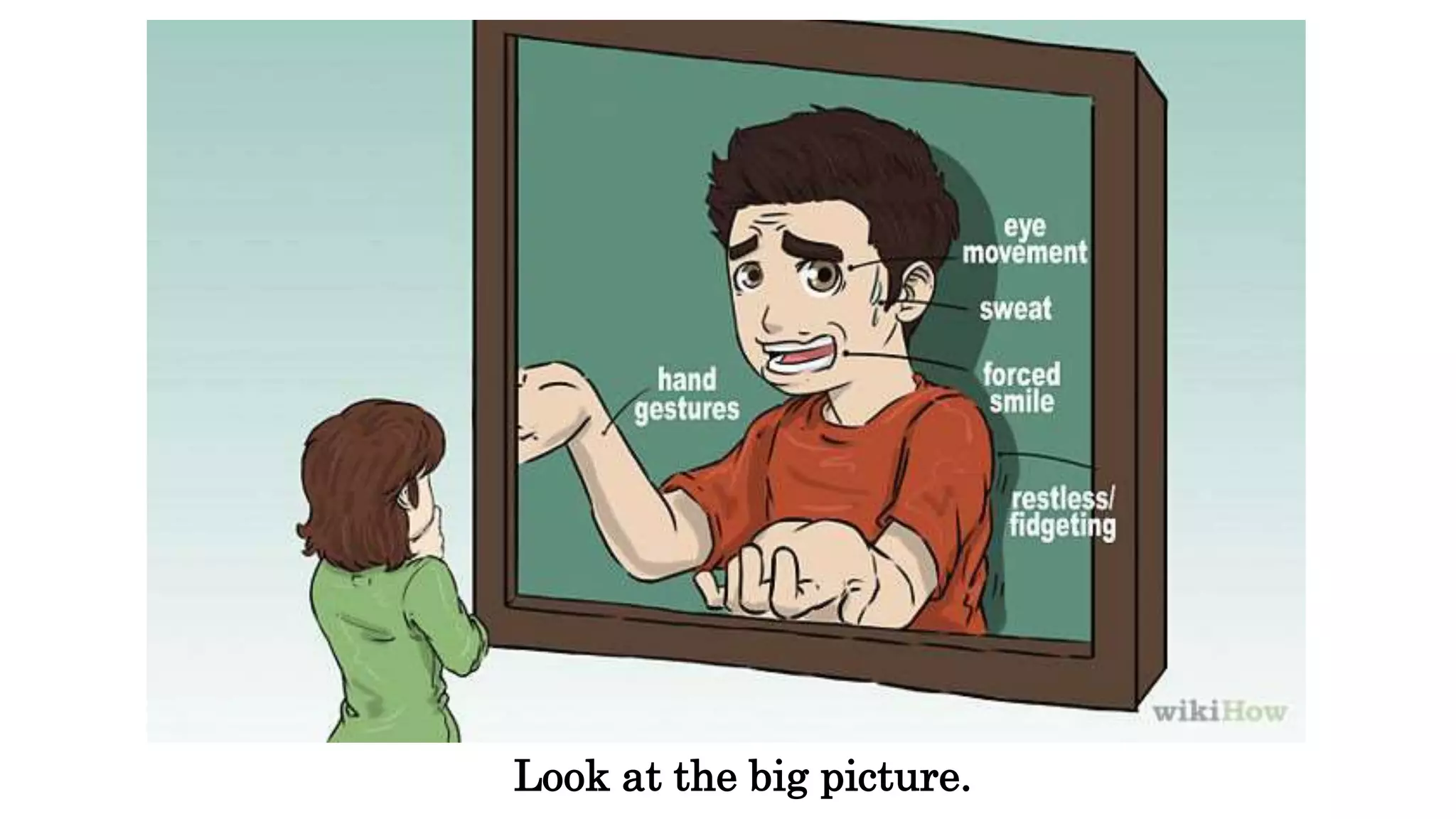
Look at the big picture.
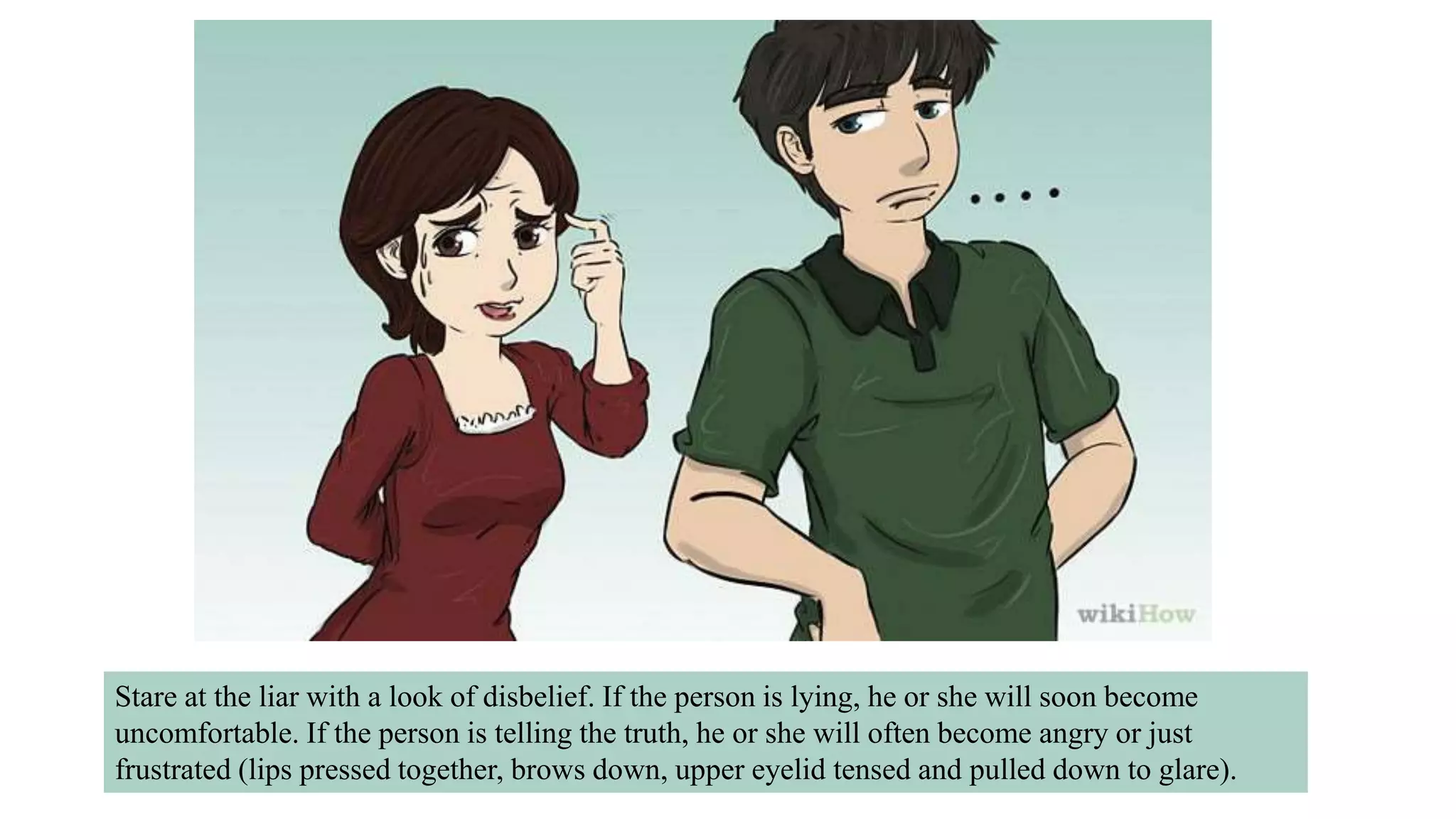
Stare at the liar with a look of disbelief. If the person is lying, he or she will soon become
uncomfortable. If the person is telling the truth, he or she will often become angry or just
frustrated (lips pressed together, brows down, upper eyelid tensed and pulled down to glare).
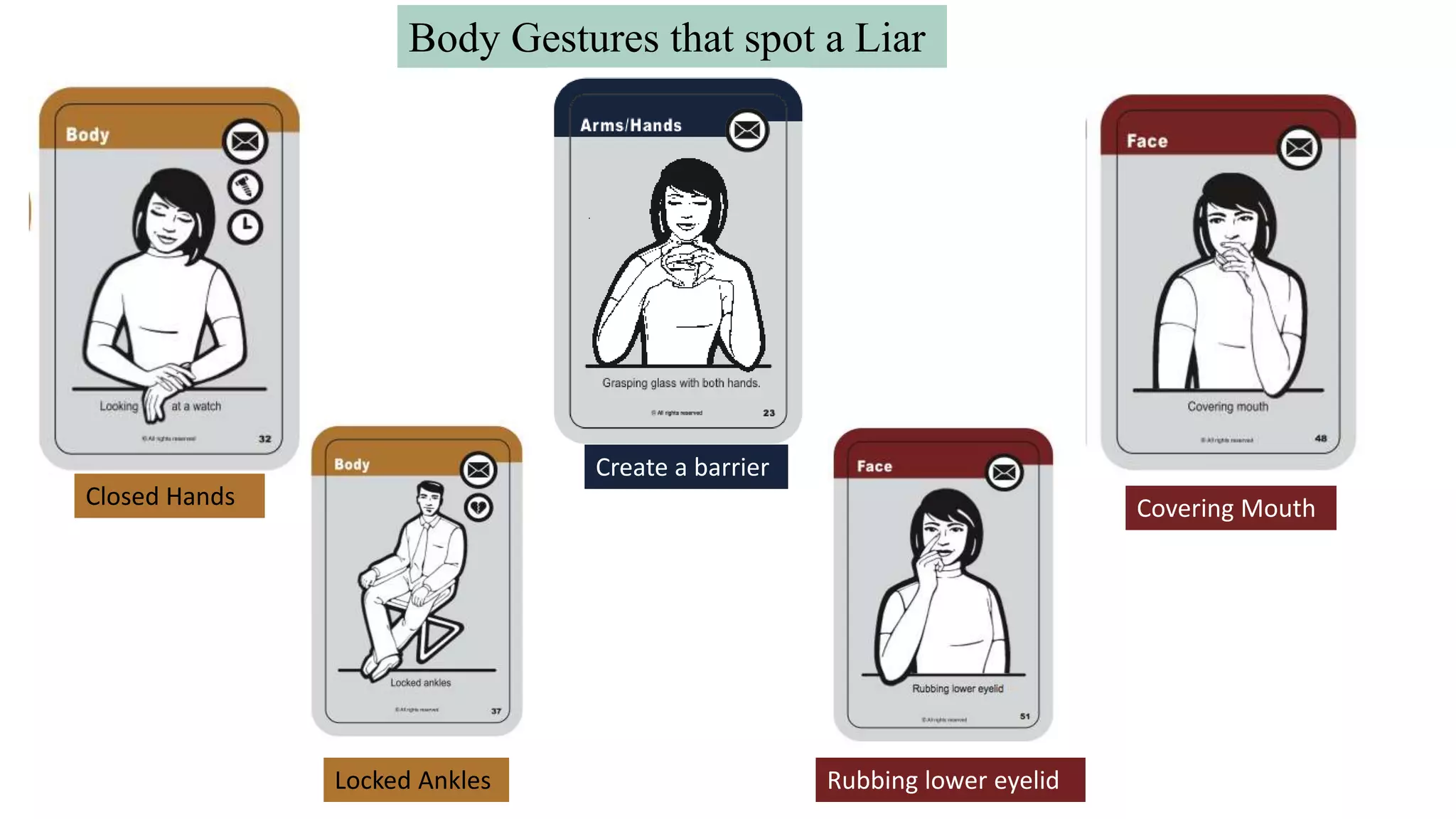
Body Gestures that spot a Liar
Closed Hands
Locked Ankles
Create a barrier
Covering Mouth
Rubbing lower eyelid
Remember, it’s never one gesture that detects
a lie, some of these gestures however can
have multiple meanings such as doubt,
uncertainty therefore make sure you detect
multiple body language gestures.
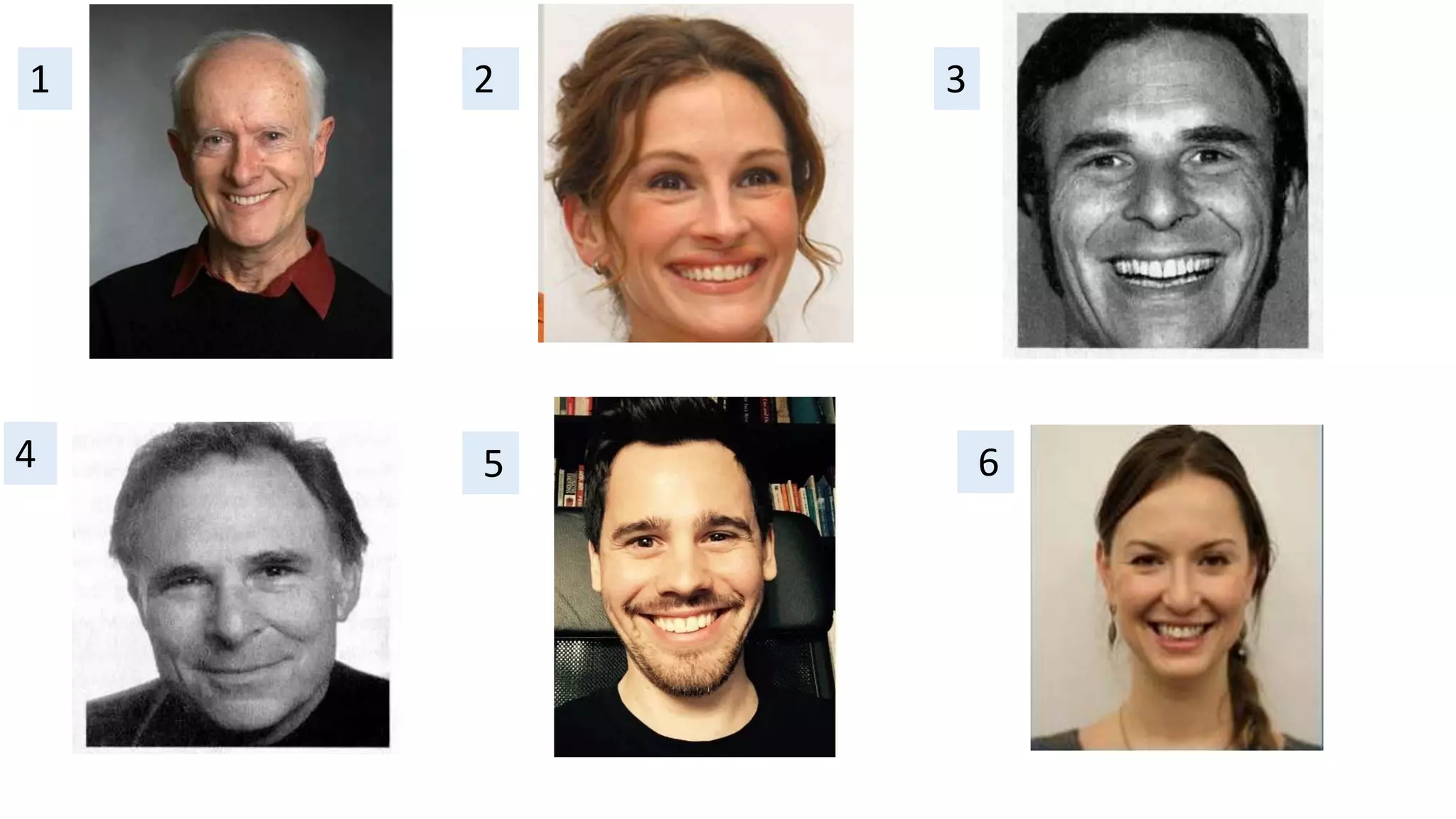
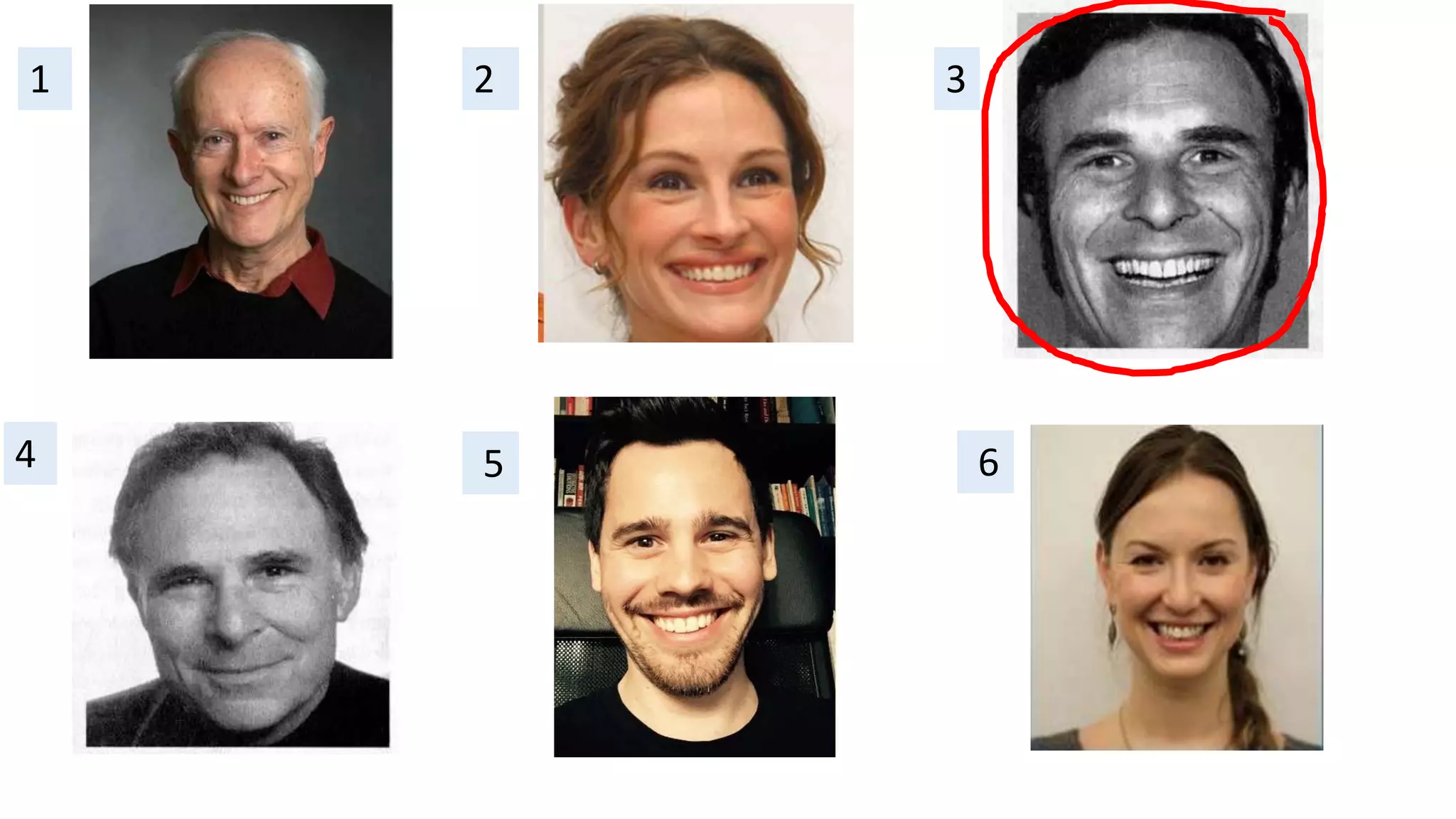
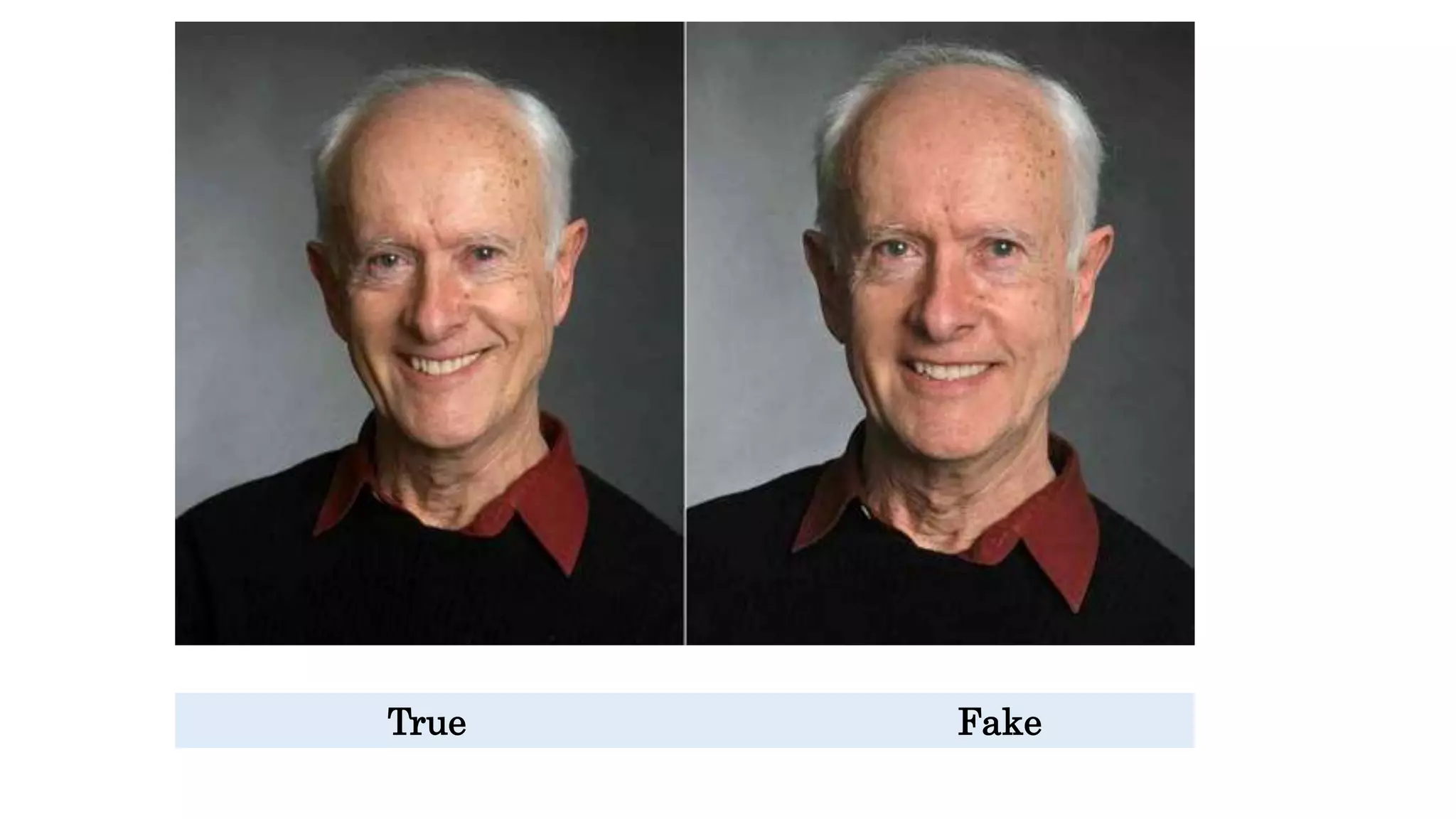
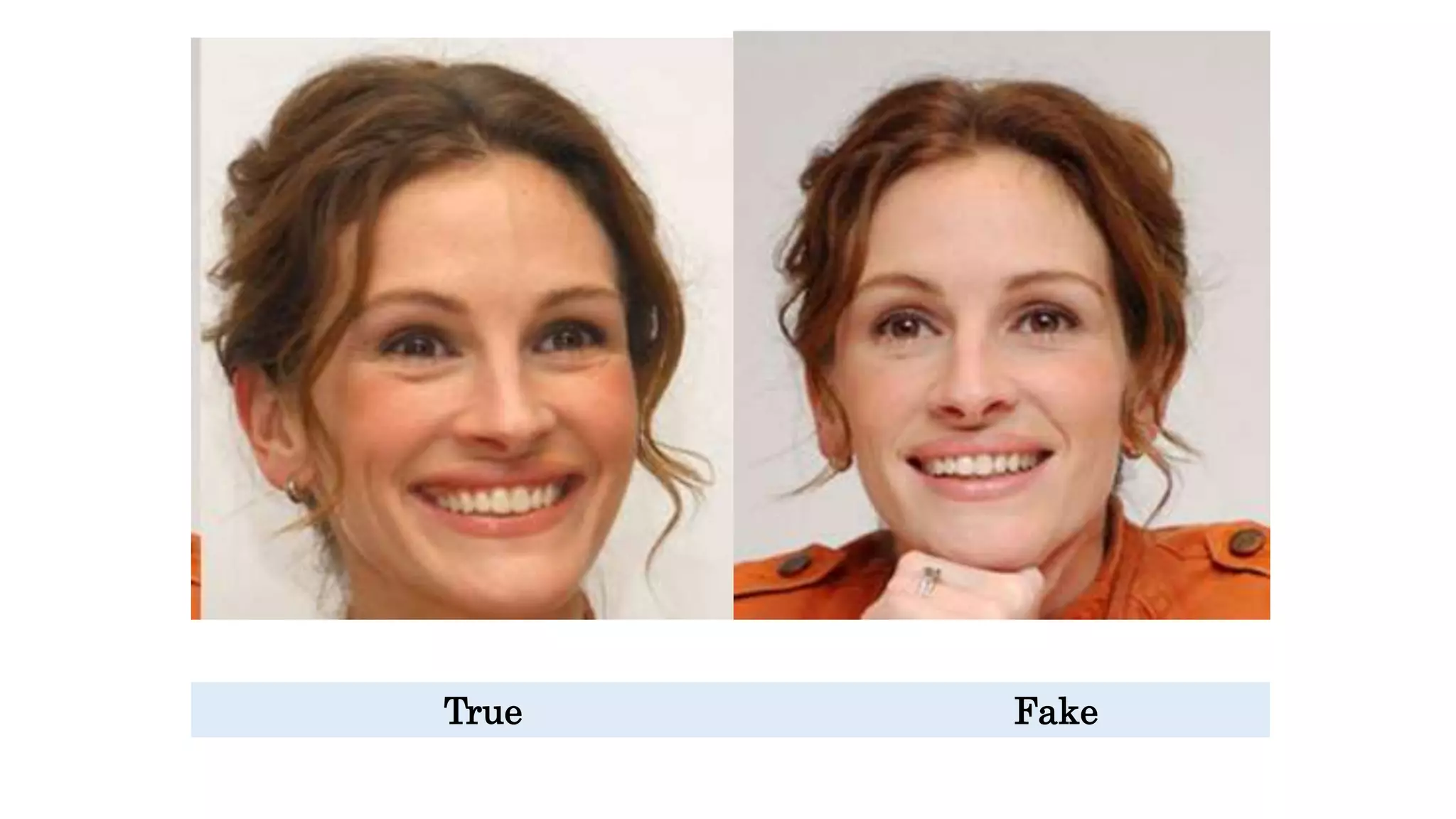
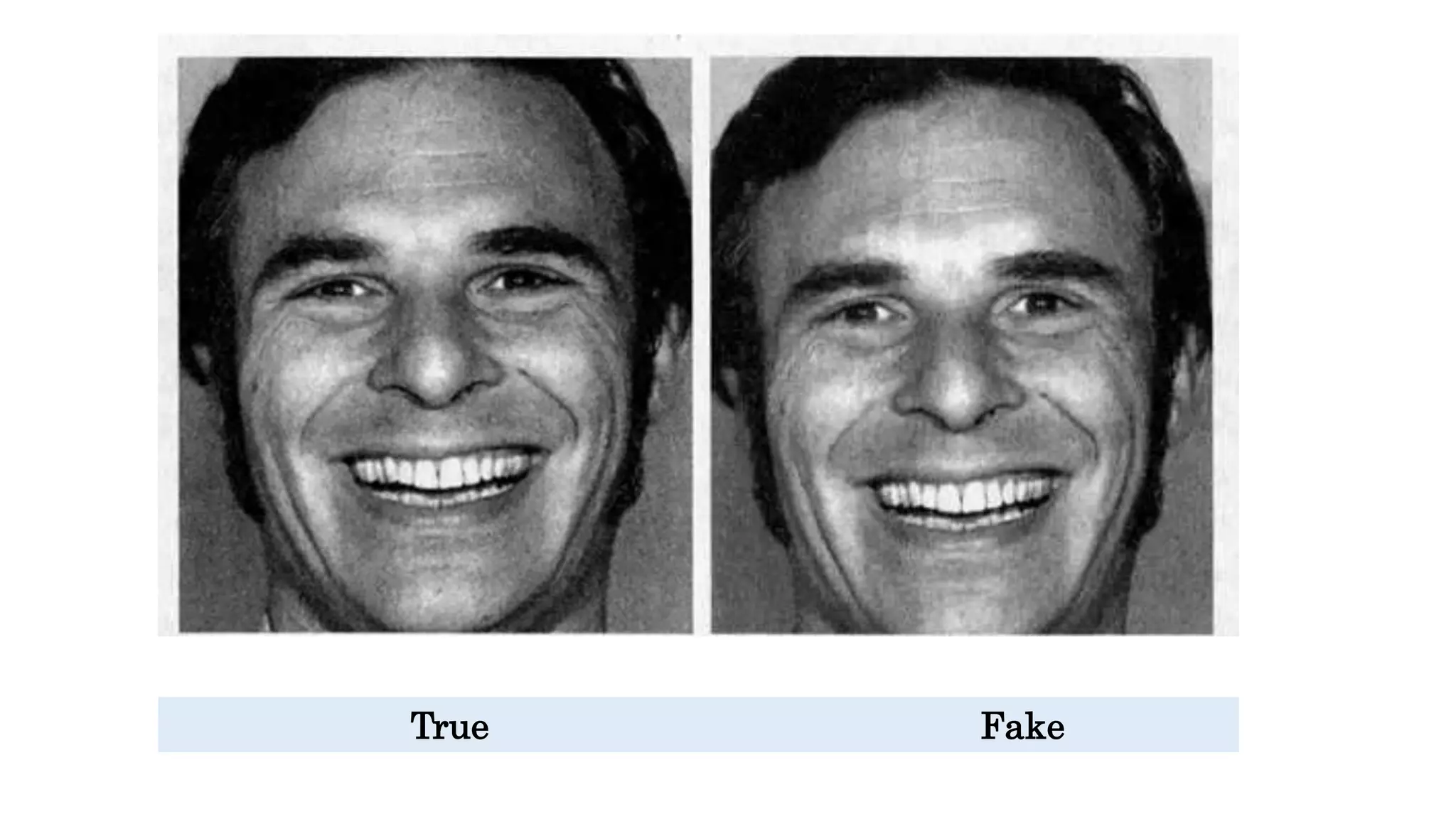
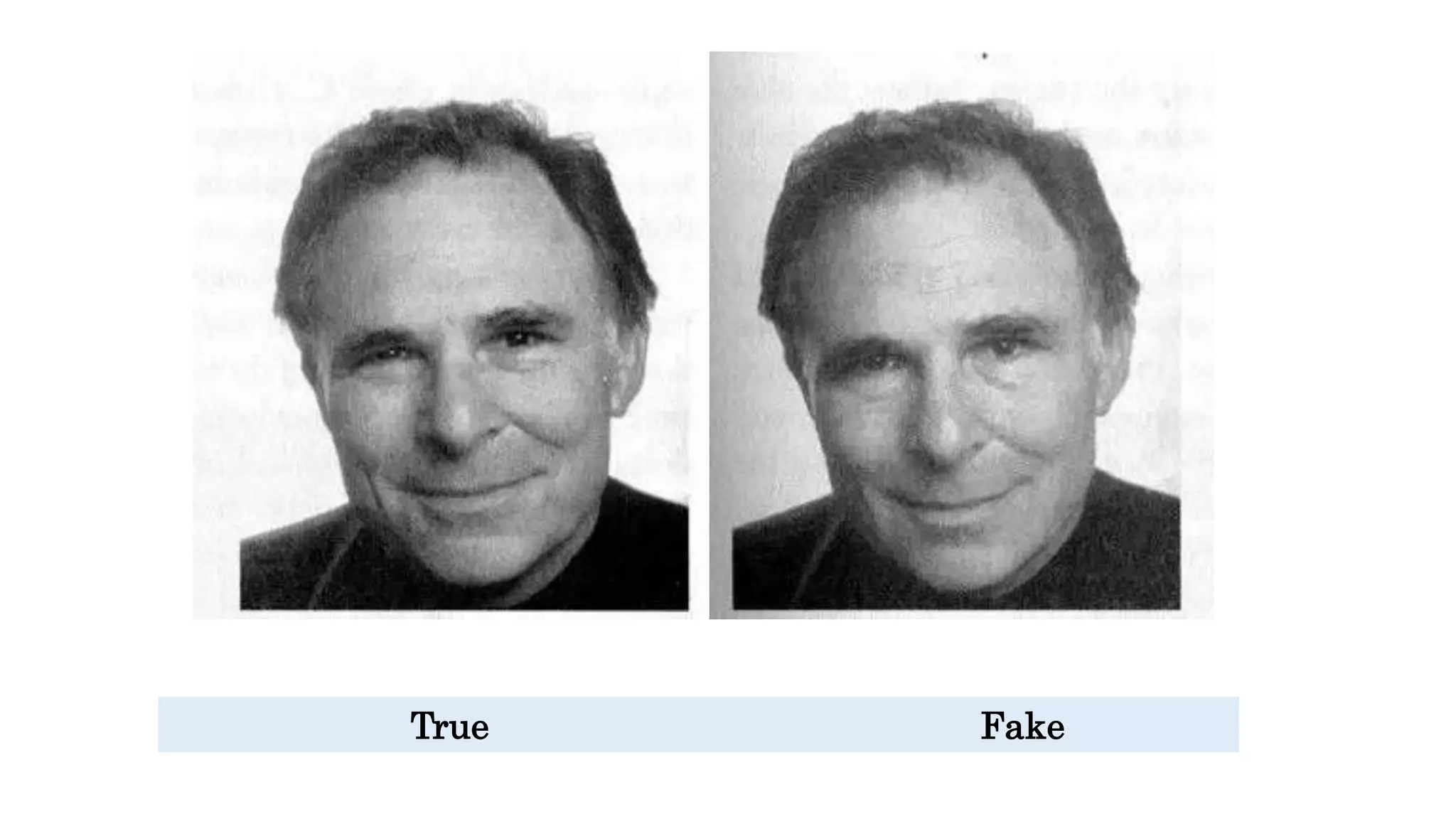
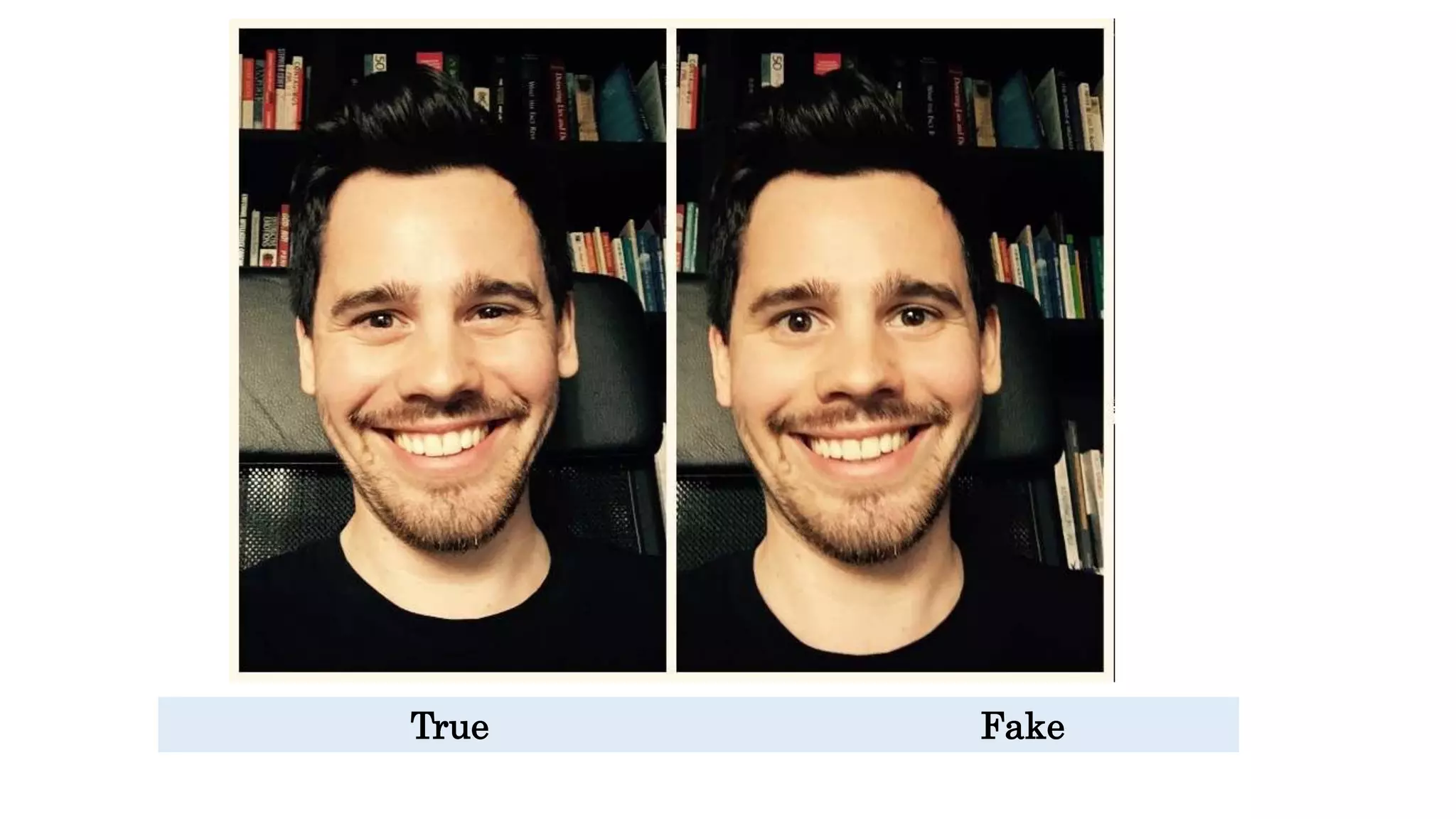
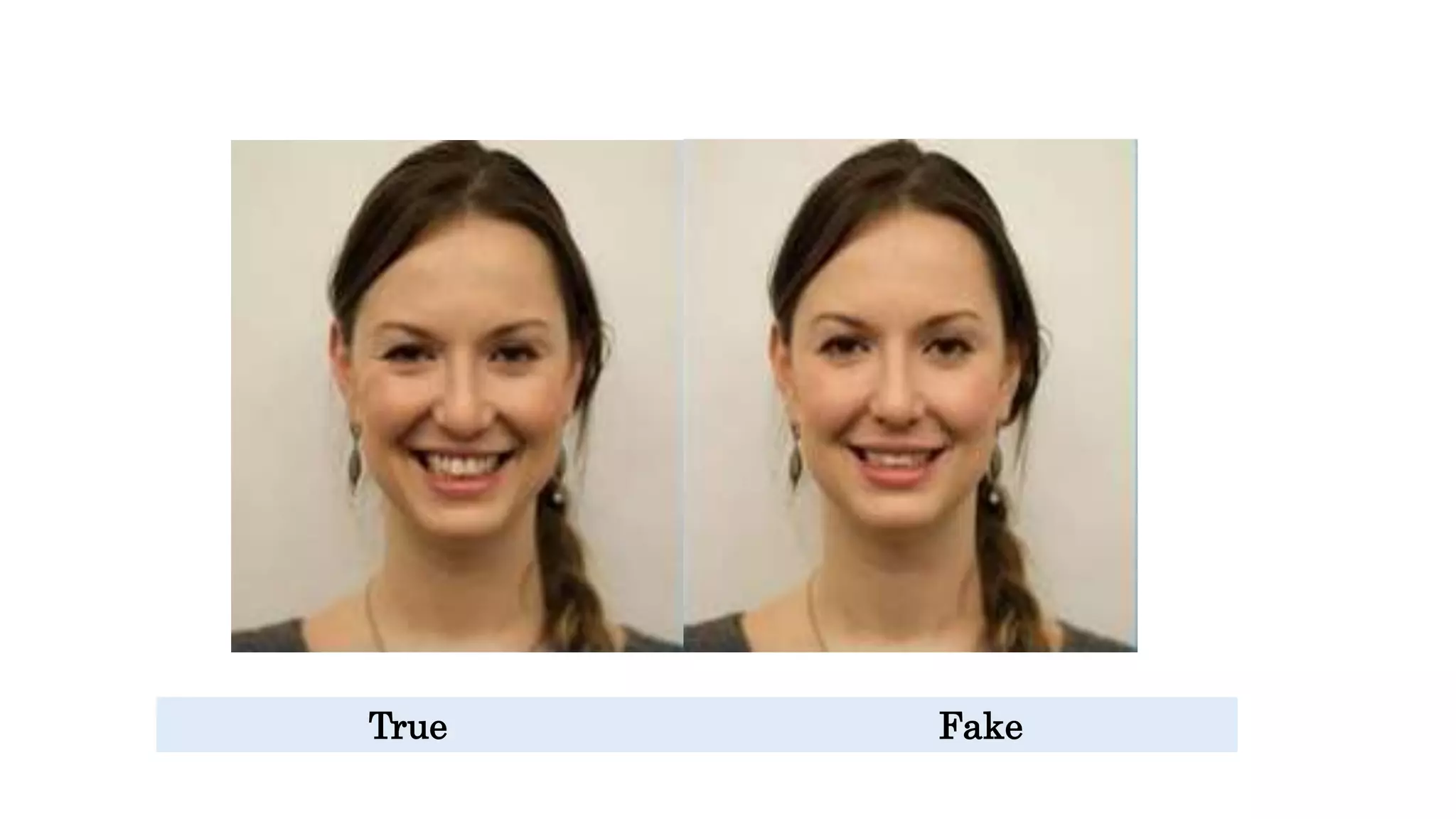
Detect a Fake Smile
Test
1 2 3
4 5 6
1 2 3
4 5 6
True Fake
True Fake
True Fake
True Fake
True Fake
True Fake
Dictionary
capillaries- any of the fine branching blood vessels that form a network
between the arterioles and venules
deflect- cause (something) to change direction by interposing something
stalling-stop or cause to stop making progress
Thank you for attention

How to Detect a Lie.pptx

  • 1.
    Azerbaijan State Oiland Industry University Computer Science Subject: English Teacher: Gulnara Ahmedova Student: Rasulzade Shams Group: 606.20E
  • 2.
  • 3.
    In a personwho is lying, his or her micro-expression will be an emotion of distress, characterized by the eyebrows being drawn upwards towards the middle of the forehead, causing short lines to appear across the skin of the forehead.
  • 4.
    People tend totouch the nose more when lying and less when telling the truth. This is perhaps due to a rush of adrenaline to the capillaries in the nose, causing the nose to itch. A lying person is more likely to cover his or her mouth with a hand or to place the hands near the mouth as if to cover the lies coming out.
  • 5.
    You can usuallytell if a person is remembering something or making something up based on eye movements. If they are right-handed when they remember details, their eyes move to the left and when they make something up, their eyes move to the right. The reverse is true of left-handed people. People also tend to blink more rapidly as they're telling a lie. More common in men than in women, another tell of a lie can be rubbing the eyes. Rubbing the eye
  • 6.
    People tend tosweat more when they lie. Actually, measuring sweat is one of the ways that the polygraph test ("lie detector" ) determines a lie. But this is not always a reliable indication of lying. Some people may sweat a lot more just because of nervousness, shyness, or a condition that causes the person to sweat more than normal.
  • 7.
    A sign thatsomeone is lying is that they fidget, either with their own body or with random things around them. Fidgeting results from nervous energy produced by a fear of being found out. In order to release the nervous energy, liars often fidget with a chair, a handkerchief, or a part of their body.
  • 8.
    A person's voicecan be a good lie indicator. He or she may suddenly start talking faster or slower than normal, or the tension may result in a higher-pitched or wavering tone.
  • 9.
    Pay close attentionto the person's reaction to your questions. Someone who has told the truth doesn't feel much need to defend themselves, well, because they're telling the truth. Someone who hasn't told the truth needs to compensate for their lie by perhaps going on the offensive, deflecting, or another stalling tactic.
  • 10.
    Notice when theperson repeats sentences. If the suspect uses almost the exact same words over and over, then it's probably a lie. When a person makes up a lie, he or she often tries to remember a certain phrase or sentence that sounds convincing. When asked to explain the situation again, the liar will use the very same "convincing" sentence again.
  • 11.
    Look at thebig picture.
  • 12.
    Stare at theliar with a look of disbelief. If the person is lying, he or she will soon become uncomfortable. If the person is telling the truth, he or she will often become angry or just frustrated (lips pressed together, brows down, upper eyelid tensed and pulled down to glare).
  • 13.
    Body Gestures thatspot a Liar Closed Hands Locked Ankles Create a barrier Covering Mouth Rubbing lower eyelid
  • 14.
    Remember, it’s neverone gesture that detects a lie, some of these gestures however can have multiple meanings such as doubt, uncertainty therefore make sure you detect multiple body language gestures.
  • 15.
    Detect a FakeSmile Test
  • 16.
  • 17.
  • 18.
  • 19.
  • 20.
  • 21.
  • 22.
  • 23.
  • 24.
    Dictionary capillaries- any ofthe fine branching blood vessels that form a network between the arterioles and venules deflect- cause (something) to change direction by interposing something stalling-stop or cause to stop making progress
  • 25.
    Thank you forattention