How to DESIGN


0.
     your STARTUP
     idea.
                              Fred Ooms

            Web: sopartec.com, vivesfund.com
                         Twitter: @fredooms
                      Blog: thebraintwist.com
                          Linkedin: fredooms
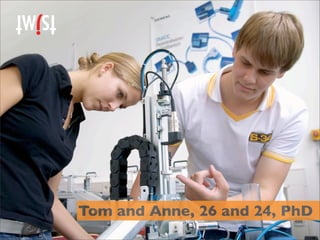
Tom and Anne, 26 and 24, PhD
                          2
Sarah, 25, Business School
                        3
VivesII - Investment
Manager
                       4
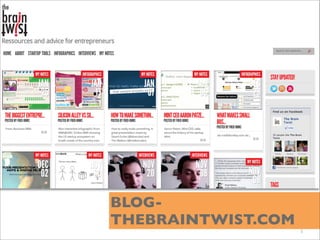
BLOG-
THEBRAINTWIST.COM
                    5
Killer idea...
Lots of $$$$$$$$$...
                       7
A lot of them fail...
                        8
How could I help them?
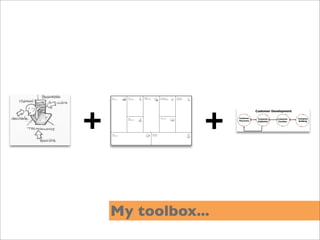
+               +

    My toolbox...
think outside of the
       box...
1.
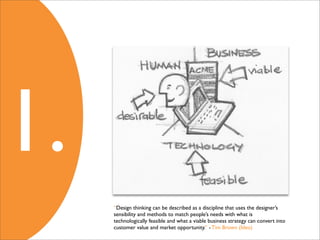
     “Design thinking can be described as a discipline that uses the designer’s
     sensibility and methods to match people’s needs with what is
     technologically feasible and what a viable business strategy can convert into
     customer value and market opportunity.” - Tim Brown (Ideo)
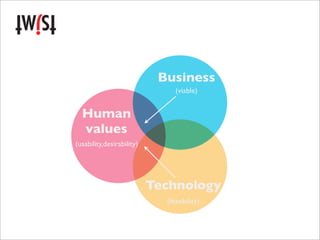
Business
                                (viable)


  Human
  values
(usability,desirability)


                           Technology
                             (feasibility)
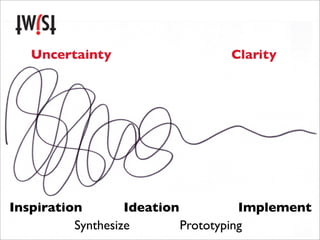
Uncertainty                                 Business                          Clarity
                                                       (viable)


             Human
             values
          (usability,desirability)


                                         Technology
                                                  (feasibility)


        “Design thinking can be described as a discipline that uses the designer’s
Inspiration        Ideation           Implement
        sensibility and methods to match people’s needs with what is
        technologically feasible and what a viable business strategy can convert into

          Synthesize        Prototyping
        customer value and market opportunity.” - Tim Brown (Ideo)
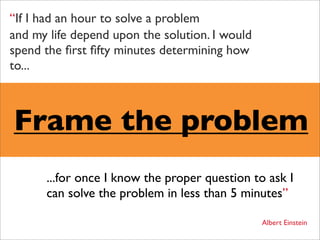
“If I had an hour to solve a problem
and my life depend upon the solution. I would
spend the first fifty minutes determining how
to...


Frame the problem
      ...for once I know the proper question to ask I
      can solve the problem in less than 5 minutes”

                                                Albert Einstein
Define constraints...
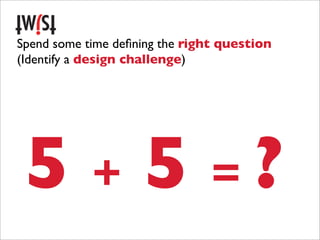
Spend some time defining the right question
(Identify a design challenge)


                                   ?
Spend some time defining the right question
(Identify a design challenge)


 5 + 5 =?
Spend some time defining the right question
(Identify a design challenge)


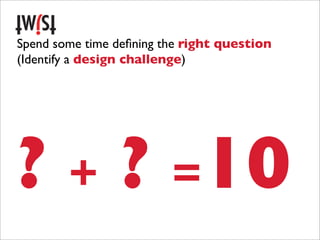
? + ? =10
Spend some time defining the right question
(Identify a design challenge)

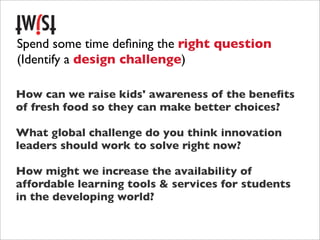
How can we raise kids' awareness of the benefits
of fresh food so they can make better choices?

What global challenge do you think innovation
leaders should work to solve right now?

How might we increase the availability of
affordable learning tools & services for students
in the developing world?
Design
challenge
5 minutes
 exercice
“Genius is 1% inspiration and
99% perspiration”
                                Thomas Edison


        Pay attention
                       Stock your creative reservoir
                       before you go fishing for
                       ideas
leave the school !
leave
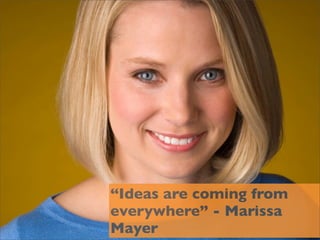
IDEAS COME FROM
   EVERYWHERE

    “Ideas are coming from
    everywhere” - Marissa
    Mayer
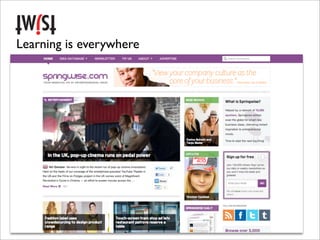
Learning is everywhere


                         Netfix
Learning is everywhere
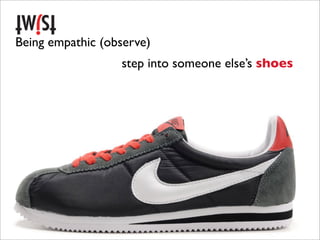
Being empathic (observe)
                  step into someone else’s shoes
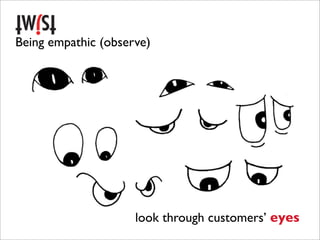
Being empathic (observe)


                     look through customers’ eyes
Being empathic (observe)


                           and ...defer judgment
How ?
How ?
Conduct interviews
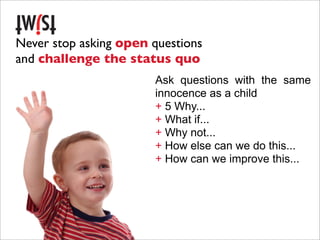
Never stop asking open questions
and challenge the status quo
                       Ask questions with the same
                       innocence as a child
                       + 5 Why...
                       + What if...
                       + Why not...
                       + How else can we do this...
                       + How can we improve this...
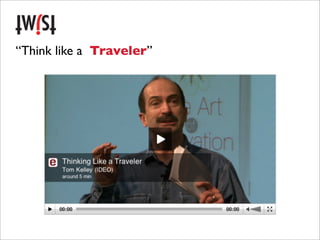
“Think like a Traveler”
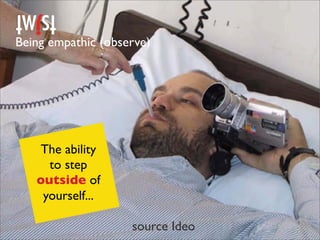
Being empathic (observe)


   The ability
     to step
   outside of
    yourself...

                    source Ideo
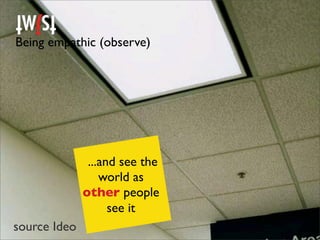
Being empathic (observe)


               ...and see the
                  world as
              other people
                    see it
source Ideo
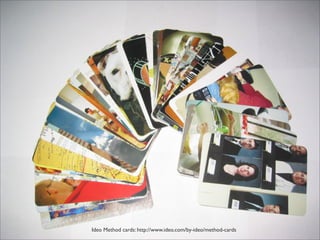
Look with fresh eyes
Ideo Method cards: http://www.ideo.com/by-ideo/method-cards
synthesize
F T
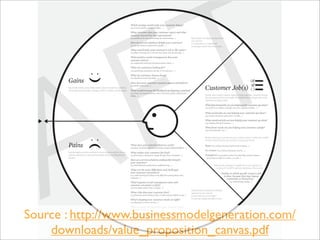
                                                                                              Which savings would make your customer happy?
                                                                                              (e.g. in terms of time, money and effort, …)

                                                                                              What outcomes does your customer expect and what
                                                                                              would go beyond his/her expectations?
                                                                                              (e.g. quality level, more of something, less of something, …)                       Rank each gain according to its relevance to
                                                                                                                                                                                  your customer.
                                                                                              How do current solutions delight your customer?                                     Is it substantial or is it insignificant?
                                                                                                                                                                                  For each gain indicate how often it occurs.
                                                                                              What would make your customer’s job or life easier?


 A
                                                                                              What positive social consequences does your
                                                                                              customer desire?
                                                                                              (e.g. makes them look good, increase in power, status, …)

                                                                                              What are customers looking for?


                                                                                              What do customers dream about?

       Gains
                                                                                              (e.g. big achievements, big reliefs, …)

                                                                                              How does your customer measure success and failure?

                                                                                                                                                                                                     Customer Job(s)
                                                                                              (e.g. performance, cost, …)
       Describe the benefits your customer expects, desires or would be surprised by.
       This includes functional utility, social gains, positive emotions, and cost savings.   What would increase the likelihood of adopting a solution?
                                                                                              (e.g. lower cost, less investments, lower risk, better quality, performance,
                                                                                              design, …)                                                                                             Describe what a specific customer segment is trying to get done. It could be the tasks
                                                                                                                                                                                                     they are trying to perform and complete, the problems they are trying to solve, or the
                                                                                                                                                                                                     needs they are trying to satisfy.
                                                                                                                                                                                                     What functional jobs are you helping your customer get done?


                                                                                                                                                                                                     What social jobs are you helping your customer get done?
                                                                                                                                                                                                     (e.g. trying to look good, gain power or status, …)

                                                                                                                                                                                                     What emotional jobs are you helping your customer get done?
                                                                                                                                                                                                     (e.g. esthetics, feel good, security, …)

                                                                                                                                                                                                     What basic needs are you helping your customer satisfy?
                                                                                                                                                                                                     (e.g. communication, sex, …)


                                                                                                                                                                                                     Besides trying to get a core job done, your customer performs ancillary jobs in differ-
                                                                                                                                                                                                     ent roles. Describe the jobs your customer is trying to get done as:

       Pains                                                                                  (e.g. takes a lot of time, costs too much money, requires substantial efforts, …)
                                                                                                                                                                                                     Buyer (e.g. trying to look good, gain power or status, …)
                                                                                                                                                                                                     Co-creator (e.g. esthetics, feel good, security, …)
       Describe negative emotions, undesired costs and situations, and risks that your        What makes your customer feel bad?
       customer experiences or could experience before, during, and after getting the         (e.g. frustrations, annoyances, things that give them a headache, …)                                   Transferrer (e.g. products and services that help customers dispose
       job done.                                                                                                                                                                                       of a product, transfer it to others, or resell, …)
                                                                                              How are current solutions underperforming for
                                                                                              your customer?
                                                                                              (e.g. lack of features, performance, malfunctioning, …)                                                            Rank each job according to its significance to your customer. Is it
                                                                                                                                                                                                                    crucial or is it trivial? For each job indicate how often it occurs.
                                                                                              your customer encounters?
                                                                                                                                                                                                                                 is done, because that may impose
                                                                                              resistance, …)
                                                                                                                                                                                                                                    constraints or limitations.
                                                                                              What negative social consequences does your                                                                                              (e.g. while driving, outside, …)
                                                                                              customer encounter or fear?
                                                                                              (e.g. loss of face, power, trust, or status, …)
                                                                                                                                                                                  Rank each pain according to the intensity it
                                                                                              What risks does your customer fear?                                                 represents for your customer.
                                                                                                                                                                                  Is it very intense or is it very light.?
                                                                                              What’s keeping your customer awake at night?                                        For each pain indicate how often it occurs.
                                                                                              (e.g. big issues, concerns, worries, …)

                                                                                              What common mistakes does your customer make?


Source : http://www.businessmodelgeneration.com/
                                                                                              (e.g. usage mistakes, …)

                                                                                              What barriers are keeping your customer from
                                                                                              adopting solutions?
                                                                                              (e.g. upfront investment costs, learning curve, resistance to change, …)


    downloads/value_proposition_canvas.pdf
Ideation
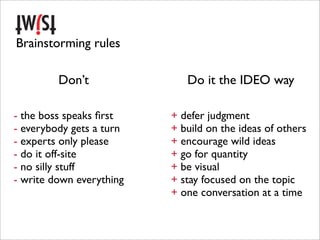
Brainstorming rules

         Don’t               Do it the IDEO way

- the boss speaks first    + defer judgment
- everybody gets a turn   + build on the ideas of others
- experts only please     + encourage wild ideas
- do it off-site          + go for quantity
- no silly stuff          + be visual
- write down everything   + stay focused on the topic
                          + one conversation at a time
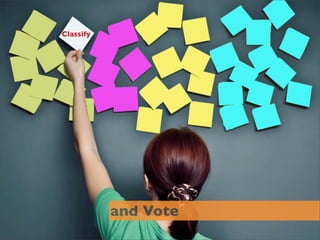
Classify


           and Vote
Do they…
                                                                                            Create savings that make your customer happy?                                Do something customers are looking for?
                                                                                            (e.g. in terms of time, money and effort, …)

                                                                                            Produce outcomes your customer expects or that go
                                                                                            beyond their expectations?                                                   (e.g. help big achievements, produce big reliefs, …)
                                                                                            (e.g. better quality level, more of something, less of something, …)
                                                                                                                                                                         Produce positive outcomes matching your customers
                                                                                            Copy or outperform current solutions that delight your                       success and failure criteria?
                                                                                            customer?                                                                    (e.g. better performance, lower cost, …)

                                                                                                                                                                         Help make adoption easier?
                                                                                            Make your customer’s job or life easier?                                     (e.g. lower cost, less investments, lower risk, better quality,


                                                                                                                                                                                                                                                                     A
                                                                                                                                                                         performance, design, …)
                                                                                            cost of ownership, …)
                                                                                                                                                                         Rank each gain your products and services create according to its relevance to your
                                                                                            Create positive social consequences that your                                customer. Is it substantial or insignificant? For each gain indicate how often it occurs.
                                                                                            customer desires?
                                                                                            (e.g. makes them look good, produces an increase in power, status, …)


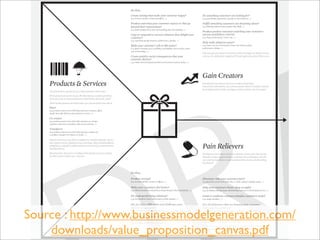
                                                                                                                                                                         Gain Creators
    Products & Services                                                                                                                                                  Describe how your products and services create customer gains.
                                                                                                                                                                         How do they create benefits your customer expects, desires or would be surprised
                                                                                                                                                                         by, including functional utility, social gains, positive emotions, and cost savings?
    List all the products and services your value proposition is built around.
    Which products and services do you offer that help your customer get either a
    functional, social, or emotional job done, or help him/her satisfy basic needs?
    Which ancillary products and services help your customer perform the roles of:
    Buyer
    (e.g. products and services that help customers compare offers,
    decide, buy, take delivery of a product or service, …)

    Co-creator
    (e.g. products and services that help customers co-design
    solutions, otherwise contribute value to the solution, …)

    Transferrer
    (e.g. products and services that help customers dispose of
    a product, transfer it to others, or resell, …)

    Products and services may either by tangible (e.g. manufactured goods, face-to-
    face customer service), digital/virtual (e.g. downloads, online recommendations),
    intangible (e.g. copyrights, quality assurance), or financial (e.g. investment funds,
    financing services).                                                                                                                                                 Pain Relievers
    Rank all products and services according to their importance to your customer.                                                                                       Describe how your products and services alleviate customer pains. How do they
    Are they crucial or trivial to your customer?                                                                                                                        eliminate or reduce negative emotions, undesired costs and situations, and risks
                                                                                                                                                                         your customer experiences or could experience before, during, and after getting
                                                                                                                                                                         the job done?


                                                                                            Do they…

                                                                                            Produce savings?                                                             Eliminate risks your customers fear?
                                                                                            (e.g. in terms of time, money, or efforts, …)

                                                                                            Make your customers feel better?                                             Help your customers better sleep at night?
                                                                                            (e.g. kills frustrations, annoyances, things that give them a headache, …)   (e.g. by helping with big issues, diminishing concerns, or eliminating worries, …)

                                                                                            Fix underperforming solutions?                                               Limit or eradicate common mistakes customers make?
                                                                                            (e.g. new features, better performance, better quality, …)                   (e.g. usage mistakes, …)

                                                                                                                                                                         Get rid of barriers that are keeping your customer
                                                                                            customers encounter?                                                         from adopting solutions?


Source : http://www.businessmodelgeneration.com/
                                                                                            (e.g. make things easier, helping them get done, eliminate resistance, …)
                                                                                                                                                                         resistance to change, …)
                                                                                            Wipe out negative social consequences your
                                                                                            customers encounter or fear?                                                 Rank each pain your products and services kill according to their intensity
                                                                                            (e.g. loss of face, power, trust, or status, …)                              for your customer. Is it very intense or very light?


    downloads/value_proposition_canvas.pdf
                                                                                                                                                                         For each pain indicate how often it occurs. Risks your customer experiences or
                                                                                                                                                                         could experience before, during, and after getting the job done?
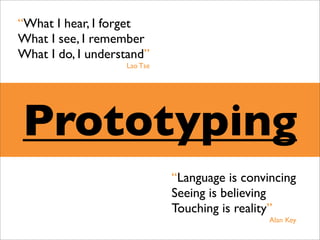
“What I hear, I forget
What I see, I remember
What I do, I understand”
                   Lao Tse


Prototyping
                             “Language is convincing
                             Seeing is believing
                             Touching is reality”
                                               Alan Key
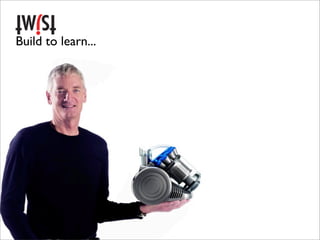
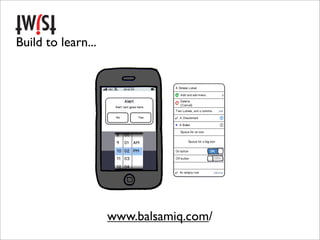
Build to learn...
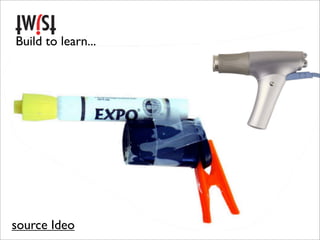
Build to learn...


source Ideo
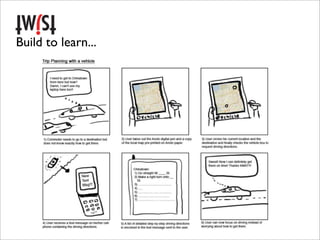
Build to learn...
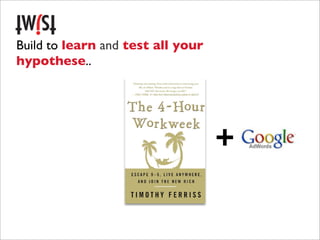
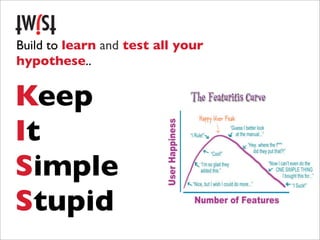
Build to learn and test all your
hypothese..
Build to learn and test all your
hypothese..


                                   +
Build to learn...


                    www.balsamiq.com/
The Marshmallow exercice
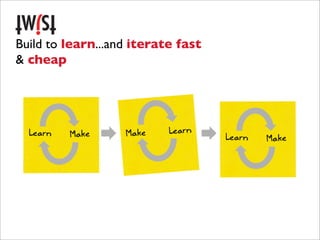
Build to learn...and iterate fast
& cheap
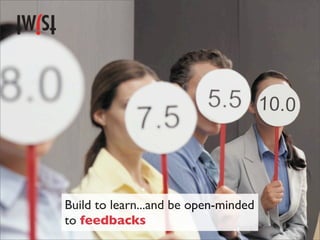
Build to learn...and be open-minded
to feedbacks
Build to learn and test all your
hypothese..


Keep
It
Simple
Stupid
Great exemples
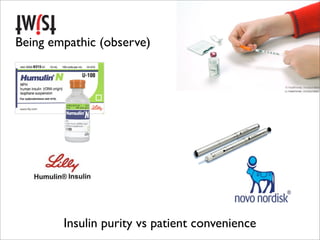
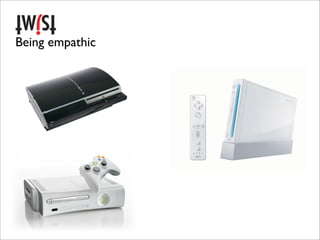
Being empathic (observe)


        Insulin purity vs patient convenience
source Ideo
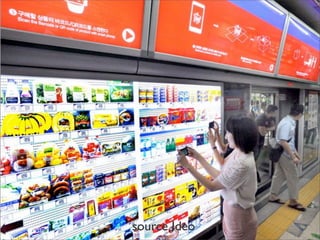
Being empathic
IDEO shopping cart
2.   JUST DO IT!
Implement

“An idea is not a company...”
       - Steve Blank
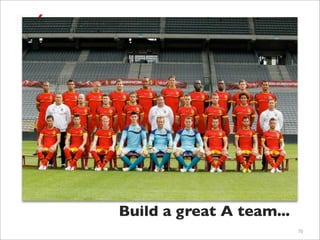
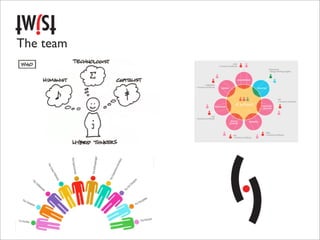
Build a great A team...
                          70
The team
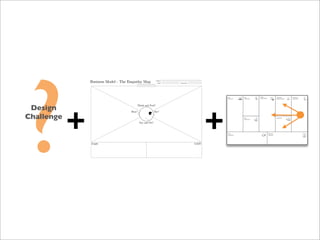
+
 Design
Challenge
                +

How to design your startup idea

  • 1.
    How to DESIGN 0. your STARTUP idea. Fred Ooms Web: sopartec.com, vivesfund.com Twitter: @fredooms Blog: thebraintwist.com Linkedin: fredooms
  • 2.
    Tom and Anne,26 and 24, PhD 2
  • 3.
  • 4.
  • 5.
  • 6.
  • 7.
  • 8.
    A lot ofthem fail... 8
  • 9.
    How could Ihelp them?
  • 10.
    + + My toolbox...
  • 11.
    think outside ofthe box...
  • 12.
    1. “Design thinking can be described as a discipline that uses the designer’s sensibility and methods to match people’s needs with what is technologically feasible and what a viable business strategy can convert into customer value and market opportunity.” - Tim Brown (Ideo)
  • 15.
    Business (viable) Human values (usability,desirability) Technology (feasibility)
  • 16.
    Uncertainty Business Clarity (viable) Human values (usability,desirability) Technology (feasibility) “Design thinking can be described as a discipline that uses the designer’s Inspiration Ideation Implement sensibility and methods to match people’s needs with what is technologically feasible and what a viable business strategy can convert into Synthesize Prototyping customer value and market opportunity.” - Tim Brown (Ideo)
  • 17.
    “If I hadan hour to solve a problem and my life depend upon the solution. I would spend the first fifty minutes determining how to... Frame the problem ...for once I know the proper question to ask I can solve the problem in less than 5 minutes” Albert Einstein
  • 18.
  • 19.
    Spend some timedefining the right question (Identify a design challenge) ?
  • 20.
    Spend some timedefining the right question (Identify a design challenge) 5 + 5 =?
  • 21.
    Spend some timedefining the right question (Identify a design challenge) ? + ? =10
  • 22.
    Spend some timedefining the right question (Identify a design challenge) How can we raise kids' awareness of the benefits of fresh food so they can make better choices? What global challenge do you think innovation leaders should work to solve right now? How might we increase the availability of affordable learning tools & services for students in the developing world?
  • 23.
  • 24.
    “Genius is 1%inspiration and 99% perspiration” Thomas Edison Pay attention Stock your creative reservoir before you go fishing for ideas
  • 25.
  • 26.
  • 27.
    IDEAS COME FROM EVERYWHERE “Ideas are coming from everywhere” - Marissa Mayer
  • 28.
  • 29.
  • 30.
  • 31.
    Being empathic (observe) step into someone else’s shoes
  • 32.
    Being empathic (observe) look through customers’ eyes
  • 33.
    Being empathic (observe) and ...defer judgment
  • 34.
  • 35.
  • 36.
    Never stop askingopen questions and challenge the status quo Ask questions with the same innocence as a child + 5 Why... + What if... + Why not... + How else can we do this... + How can we improve this...
  • 37.
    “Think like aTraveler”
  • 38.
    Being empathic (observe) The ability to step outside of yourself... source Ideo
  • 39.
    Being empathic (observe) ...and see the world as other people see it source Ideo
  • 40.
  • 41.
    Ideo Method cards:http://www.ideo.com/by-ideo/method-cards
  • 42.
  • 45.
    F T Which savings would make your customer happy? (e.g. in terms of time, money and effort, …) What outcomes does your customer expect and what would go beyond his/her expectations? (e.g. quality level, more of something, less of something, …) Rank each gain according to its relevance to your customer. How do current solutions delight your customer? Is it substantial or is it insignificant? For each gain indicate how often it occurs. What would make your customer’s job or life easier? A What positive social consequences does your customer desire? (e.g. makes them look good, increase in power, status, …) What are customers looking for? What do customers dream about? Gains (e.g. big achievements, big reliefs, …) How does your customer measure success and failure? Customer Job(s) (e.g. performance, cost, …) Describe the benefits your customer expects, desires or would be surprised by. This includes functional utility, social gains, positive emotions, and cost savings. What would increase the likelihood of adopting a solution? (e.g. lower cost, less investments, lower risk, better quality, performance, design, …) Describe what a specific customer segment is trying to get done. It could be the tasks they are trying to perform and complete, the problems they are trying to solve, or the needs they are trying to satisfy. What functional jobs are you helping your customer get done? What social jobs are you helping your customer get done? (e.g. trying to look good, gain power or status, …) What emotional jobs are you helping your customer get done? (e.g. esthetics, feel good, security, …) What basic needs are you helping your customer satisfy? (e.g. communication, sex, …) Besides trying to get a core job done, your customer performs ancillary jobs in differ- ent roles. Describe the jobs your customer is trying to get done as: Pains (e.g. takes a lot of time, costs too much money, requires substantial efforts, …) Buyer (e.g. trying to look good, gain power or status, …) Co-creator (e.g. esthetics, feel good, security, …) Describe negative emotions, undesired costs and situations, and risks that your What makes your customer feel bad? customer experiences or could experience before, during, and after getting the (e.g. frustrations, annoyances, things that give them a headache, …) Transferrer (e.g. products and services that help customers dispose job done. of a product, transfer it to others, or resell, …) How are current solutions underperforming for your customer? (e.g. lack of features, performance, malfunctioning, …) Rank each job according to its significance to your customer. Is it crucial or is it trivial? For each job indicate how often it occurs. your customer encounters? is done, because that may impose resistance, …) constraints or limitations. What negative social consequences does your (e.g. while driving, outside, …) customer encounter or fear? (e.g. loss of face, power, trust, or status, …) Rank each pain according to the intensity it What risks does your customer fear? represents for your customer. Is it very intense or is it very light.? What’s keeping your customer awake at night? For each pain indicate how often it occurs. (e.g. big issues, concerns, worries, …) What common mistakes does your customer make? Source : http://www.businessmodelgeneration.com/ (e.g. usage mistakes, …) What barriers are keeping your customer from adopting solutions? (e.g. upfront investment costs, learning curve, resistance to change, …) downloads/value_proposition_canvas.pdf
  • 46.
  • 47.
    Brainstorming rules Don’t Do it the IDEO way - the boss speaks first + defer judgment - everybody gets a turn + build on the ideas of others - experts only please + encourage wild ideas - do it off-site + go for quantity - no silly stuff + be visual - write down everything + stay focused on the topic + one conversation at a time
  • 48.
    Classify and Vote
  • 49.
    Do they… Create savings that make your customer happy? Do something customers are looking for? (e.g. in terms of time, money and effort, …) Produce outcomes your customer expects or that go beyond their expectations? (e.g. help big achievements, produce big reliefs, …) (e.g. better quality level, more of something, less of something, …) Produce positive outcomes matching your customers Copy or outperform current solutions that delight your success and failure criteria? customer? (e.g. better performance, lower cost, …) Help make adoption easier? Make your customer’s job or life easier? (e.g. lower cost, less investments, lower risk, better quality, A performance, design, …) cost of ownership, …) Rank each gain your products and services create according to its relevance to your Create positive social consequences that your customer. Is it substantial or insignificant? For each gain indicate how often it occurs. customer desires? (e.g. makes them look good, produces an increase in power, status, …) Gain Creators Products & Services Describe how your products and services create customer gains. How do they create benefits your customer expects, desires or would be surprised by, including functional utility, social gains, positive emotions, and cost savings? List all the products and services your value proposition is built around. Which products and services do you offer that help your customer get either a functional, social, or emotional job done, or help him/her satisfy basic needs? Which ancillary products and services help your customer perform the roles of: Buyer (e.g. products and services that help customers compare offers, decide, buy, take delivery of a product or service, …) Co-creator (e.g. products and services that help customers co-design solutions, otherwise contribute value to the solution, …) Transferrer (e.g. products and services that help customers dispose of a product, transfer it to others, or resell, …) Products and services may either by tangible (e.g. manufactured goods, face-to- face customer service), digital/virtual (e.g. downloads, online recommendations), intangible (e.g. copyrights, quality assurance), or financial (e.g. investment funds, financing services). Pain Relievers Rank all products and services according to their importance to your customer. Describe how your products and services alleviate customer pains. How do they Are they crucial or trivial to your customer? eliminate or reduce negative emotions, undesired costs and situations, and risks your customer experiences or could experience before, during, and after getting the job done? Do they… Produce savings? Eliminate risks your customers fear? (e.g. in terms of time, money, or efforts, …) Make your customers feel better? Help your customers better sleep at night? (e.g. kills frustrations, annoyances, things that give them a headache, …) (e.g. by helping with big issues, diminishing concerns, or eliminating worries, …) Fix underperforming solutions? Limit or eradicate common mistakes customers make? (e.g. new features, better performance, better quality, …) (e.g. usage mistakes, …) Get rid of barriers that are keeping your customer customers encounter? from adopting solutions? Source : http://www.businessmodelgeneration.com/ (e.g. make things easier, helping them get done, eliminate resistance, …) resistance to change, …) Wipe out negative social consequences your customers encounter or fear? Rank each pain your products and services kill according to their intensity (e.g. loss of face, power, trust, or status, …) for your customer. Is it very intense or very light? downloads/value_proposition_canvas.pdf For each pain indicate how often it occurs. Risks your customer experiences or could experience before, during, and after getting the job done?
  • 50.
    “What I hear,I forget What I see, I remember What I do, I understand” Lao Tse Prototyping “Language is convincing Seeing is believing Touching is reality” Alan Key
  • 51.
  • 52.
  • 53.
  • 54.
    Build to learnand test all your hypothese..
  • 55.
    Build to learnand test all your hypothese.. +
  • 56.
    Build to learn... www.balsamiq.com/
  • 57.
  • 58.
    Build to learn...anditerate fast & cheap
  • 59.
    Build to learn...andbe open-minded to feedbacks
  • 60.
    Build to learnand test all your hypothese.. Keep It Simple Stupid
  • 61.
  • 62.
    Being empathic (observe) Insulin purity vs patient convenience
  • 63.
  • 64.
  • 67.
  • 68.
    2. JUST DO IT!
  • 69.
    Implement “An idea isnot a company...” - Steve Blank
  • 70.
    Build a greatA team... 70
  • 71.
  • 72.