How Safe is Asynchronous Active-Active Setup
in MySQL
September 10, 2020 Sveta Smirnova
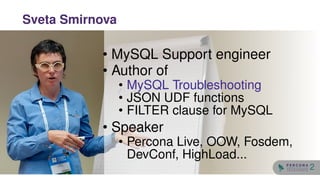
• MySQL Support engineer
• Author of
• MySQL Troubleshooting
• JSON UDF functions
• FILTER clause for MySQL
• Speaker
• Percona Live, OOW, Fosdem,
DevConf, HighLoad...
Sveta Smirnova
2
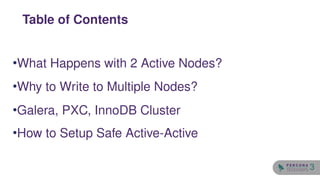
•What Happens with 2 Active Nodes?
•Why to Write to Multiple Nodes?
•Galera, PXC, InnoDB Cluster
•How to Setup Safe Active-Active
Table of Contents
3
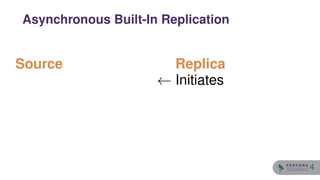
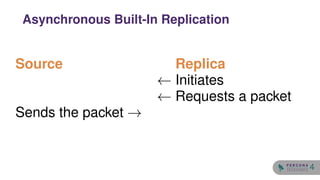
Source Replica
← Initiates
Asynchronous Built-In Replication
4
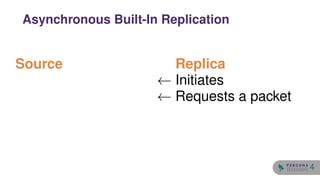
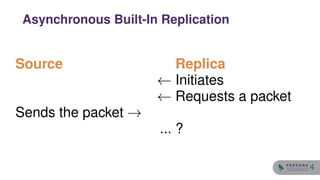
Source Replica
← Initiates
← Requests a packet
Asynchronous Built-In Replication
4
Source
Sends the packet →
Replica
← Initiates
← Requests a packet
Asynchronous Built-In Replication
4
Source
Sends the packet →
Replica
← Initiates
← Requests a packet
... ?
Asynchronous Built-In Replication
4
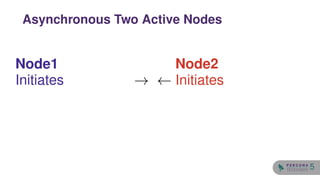
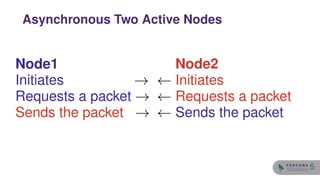
Node1
Initiates →
Node2
← Initiates
Asynchronous Two Active Nodes
5
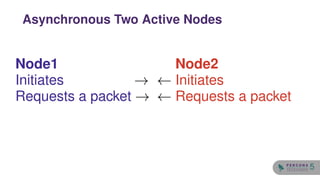
Node1
Initiates →
Requests a packet →
Node2
← Initiates
← Requests a packet
Asynchronous Two Active Nodes
5
Node1
Initiates →
Requests a packet →
Sends the packet →
Node2
← Initiates
← Requests a packet
← Sends the packet
Asynchronous Two Active Nodes
5
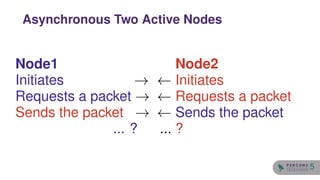
Node1
Initiates →
Requests a packet →
Sends the packet →
... ?
Node2
← Initiates
← Requests a packet
← Sends the packet
... ?
Asynchronous Two Active Nodes
5
What Happens with 2 Active Nodes?
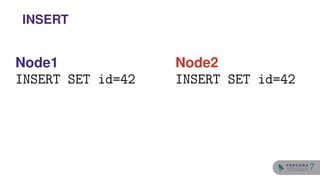
Node1
INSERT SET id=42
Node2
INSERT SET id=42
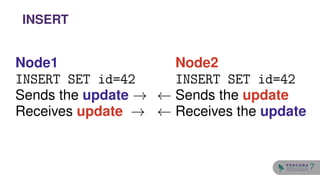
INSERT
7
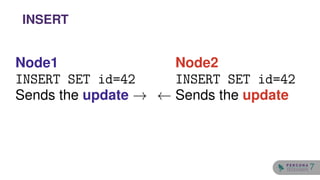
Node1
INSERT SET id=42
Sends the update →
Node2
INSERT SET id=42
← Sends the update
INSERT
7
Node1
INSERT SET id=42
Sends the update →
Receives update →
Node2
INSERT SET id=42
← Sends the update
← Receives the update
INSERT
7
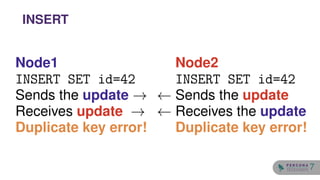
Node1
INSERT SET id=42
Sends the update →
Receives update →
Duplicate key error!
Node2
INSERT SET id=42
← Sends the update
← Receives the update
Duplicate key error!
INSERT
7
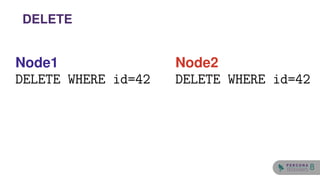
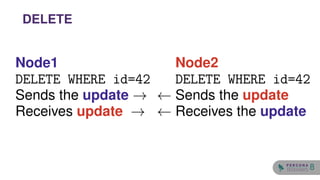
Node1
DELETE WHERE id=42
Node2
DELETE WHERE id=42
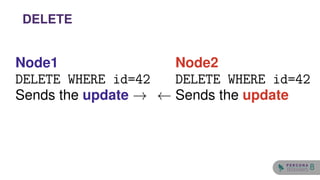
DELETE
8
Node1
DELETE WHERE id=42
Sends the update →
Node2
DELETE WHERE id=42
← Sends the update
DELETE
8
Node1
DELETE WHERE id=42
Sends the update →
Receives update →
Node2
DELETE WHERE id=42
← Sends the update
← Receives the update
DELETE
8
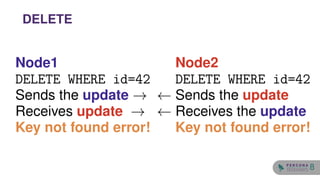
Node1
DELETE WHERE id=42
Sends the update →
Receives update →
Key not found error!
Node2
DELETE WHERE id=42
← Sends the update
← Receives the update
Key not found error!
DELETE
8
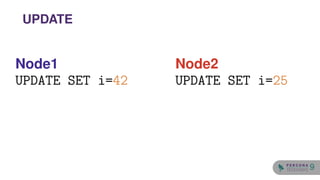
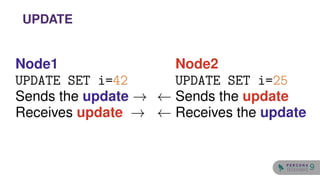
Node1
UPDATE SET i=42
Node2
UPDATE SET i=25
UPDATE
9
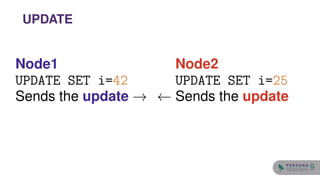
Node1
UPDATE SET i=42
Sends the update →
Node2
UPDATE SET i=25
← Sends the update
UPDATE
9
Node1
UPDATE SET i=42
Sends the update →
Receives update →
Node2
UPDATE SET i=25
← Sends the update
← Receives the update
UPDATE
9
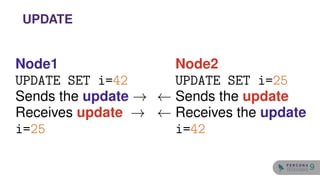
Node1
UPDATE SET i=42
Sends the update →
Receives update →
i=25
Node2
UPDATE SET i=25
← Sends the update
← Receives the update
i=42
UPDATE
9
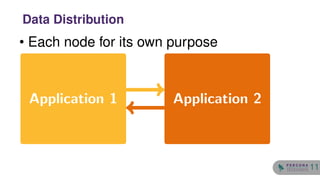
Why to Write to Multiple Nodes?
• Each node for its own purpose
Application 1 Application 2
Data Distribution
11
• Multiple machines for better scalability
Node 1 Node 2
[Read] Scale
12
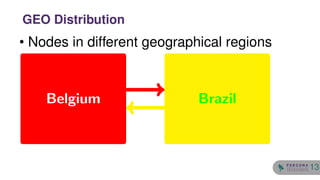
• Nodes in different geographical regions
Belgium Brazil
GEO Distribution
13
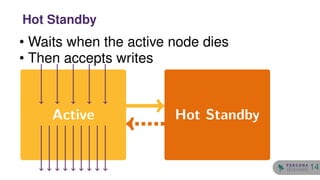
• Waits when the active node dies
• Then accepts writes
Active Hot Standby
Hot Standby
14
Galera, PXC, InnoDB Cluster
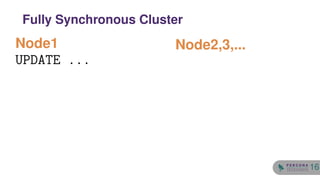
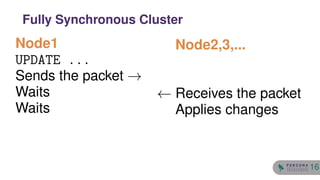
Node1
UPDATE ...
Node2,3,...
Fully Synchronous Cluster
16
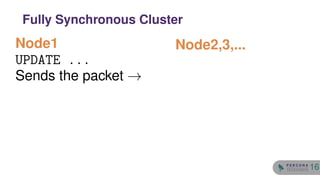
Node1
UPDATE ...
Sends the packet →
Node2,3,...
Fully Synchronous Cluster
16
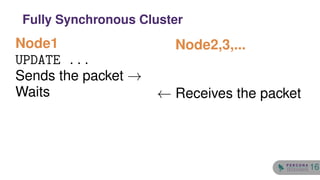
Node1
UPDATE ...
Sends the packet →
Waits
Node2,3,...
← Receives the packet
Fully Synchronous Cluster
16
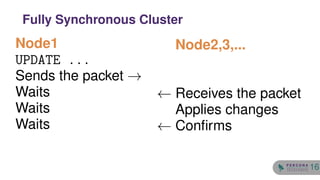
Node1
UPDATE ...
Sends the packet →
Waits
Waits
Node2,3,...
← Receives the packet
Applies changes
Fully Synchronous Cluster
16
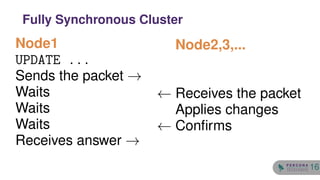
Node1
UPDATE ...
Sends the packet →
Waits
Waits
Waits
Node2,3,...
← Receives the packet
Applies changes
← Confirms
Fully Synchronous Cluster
16
Node1
UPDATE ...
Sends the packet →
Waits
Waits
Waits
Receives answer →
Node2,3,...
← Receives the packet
Applies changes
← Confirms
Fully Synchronous Cluster
16
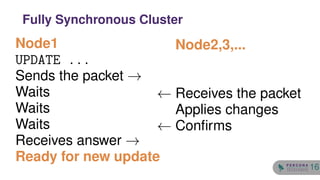
Node1
UPDATE ...
Sends the packet →
Waits
Waits
Waits
Receives answer →
Ready for new update
Node2,3,...
← Receives the packet
Applies changes
← Confirms
Fully Synchronous Cluster
16
• Speed of the slowest member
Synchronization Penalty
17
• Speed of the slowest member
• Writes or reads should wait
Synchronization Penalty
17
• Speed of the slowest member
• Writes or reads should wait
• Tunable
Synchronization Penalty
17
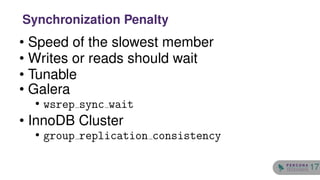
• Speed of the slowest member
• Writes or reads should wait
• Tunable
• Galera
• wsrep sync wait
• InnoDB Cluster
• group replication consistency
Synchronization Penalty
17
• Synchronization takes too much time
• Nodes often disconnect
GEO Replication is Painful
18
How to Setup Safe Active-Active
• Business logic
• Servers
• Databases
• Tables
• Rows
Divide and Rule
20
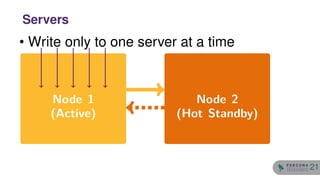
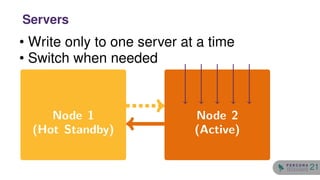
• Write only to one server at a time
Node 1
(Active)
Node 2
(Hot Standby)
Servers
21
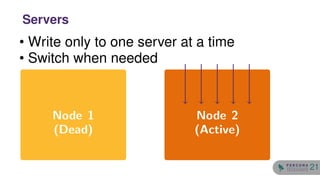
• Write only to one server at a time
• Switch when needed
Node 1
(Dead)
Node 2
(Active)
Servers
21
• Write only to one server at a time
• Switch when needed
Node 1
(Hot Standby)
Node 2
(Active)
Servers
21
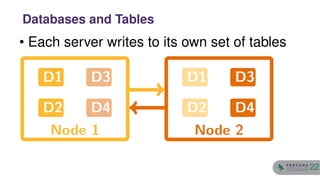
• Each server writes to its own set of tables
Node 1 Node 2
D1
D2
D3
D4
D1
D2
D3
D4
Databases and Tables
22
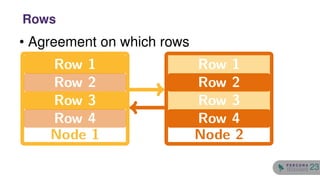
• Agreement on which rows
Node 1 Node 2
Row 1
Row 2
Row 3
Row 4
Row 1
Row 2
Row 3
Row 4
Rows
23
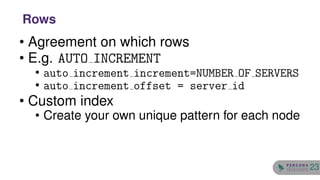
• Agreement on which rows
• E.g. AUTO INCREMENT
• auto increment increment=NUMBER OF SERVERS
• auto increment offset = server id
• Custom index
• Create your own unique pattern for each node
Rows
23
• Hot Standby
• Easy to setup and maintain
• Separating writes by database/table
• Comparatively easy to setup and maintain
• Separating writes by row
• Should be used very carefully
Conclusion
24
MySQL User Reference Manual
Why MySQL Replication Fails, and How...
MySQL High Availability
More information
25
www.slideshare.net/SvetaSmirnova
twitter.com/svetsmirnova
github.com/svetasmirnova
Thank you!
26

How Safe is Asynchronous Master-Master Setup?