1
2
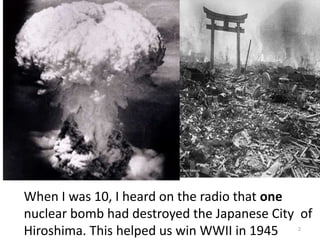
When I was 10, I heard on the radio that one
nuclear bomb had destroyed the Japanese City of
Hiroshima. This helped us win WWII in 1945
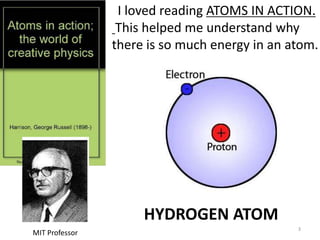
I loved reading ATOMS IN ACTION.
This helped me understand why
there is so much energy in an atom.
HYDROGEN ATOM
3
MIT Professor
4
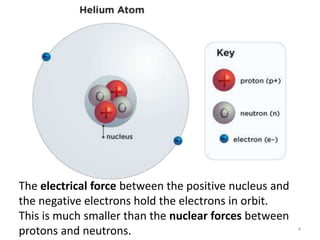
The electrical force between the positive nucleus and
the negative electrons hold the electrons in orbit.
This is much smaller than the nuclear forces between
protons and neutrons.
5
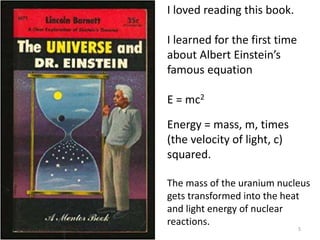
I loved reading this book.
I learned for the first time
about Albert Einstein’s
famous equation
E = mc2
Energy = mass, m, times
(the velocity of light, c)
squared.
The mass of the uranium nucleus
gets transformed into the heat
and light energy of nuclear
reactions.
6
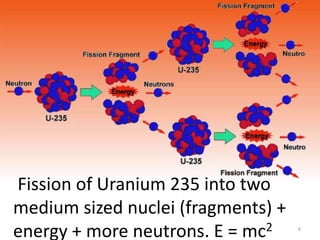
Fission of Uranium 235 into two
medium sized nuclei (fragments) +
energy + more neutrons. E = mc2
7
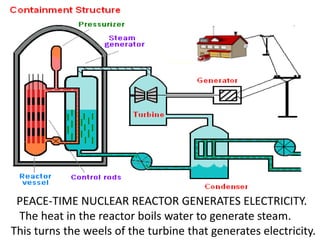
PEACE-TIME NUCLEAR REACTOR GENERATES ELECTRICITY.
The heat in the reactor boils water to generate steam.
This turns the weels of the turbine that generates electricity.
8
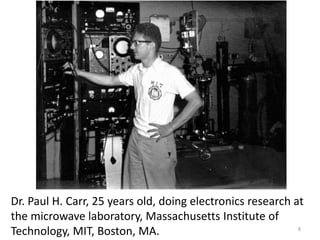
Dr. Paul H. Carr, 25 years old, doing electronics research at
the microwave laboratory, Massachusetts Institute of
Technology, MIT, Boston, MA.
9
10
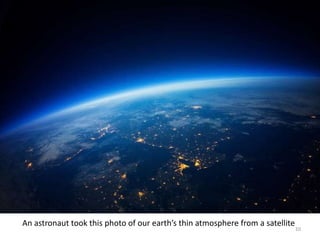
An astronaut took this photo of our earth’s thin atmosphere from a satellite
11
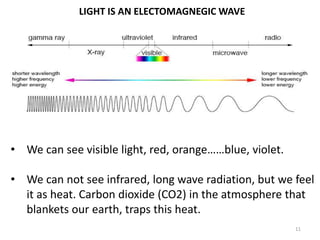
• We can see visible light, red, orange……blue, violet.
• We can not see infrared, long wave radiation, but we feel
it as heat. Carbon dioxide (CO2) in the atmosphere that
blankets our earth, traps this heat.
LIGHT IS AN ELECTOMAGNEGIC WAVE
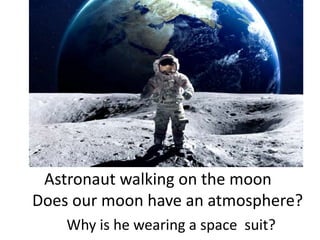
Astronaut walking on the moon
Does our moon have an atmosphere?
Why is he wearing a space suit?
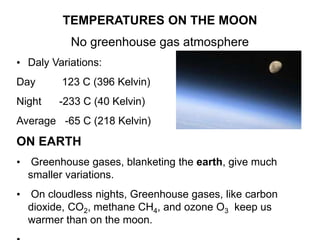
TEMPERATURES ON THE MOON
No greenhouse gas atmosphere
• Daly Variations:
Day 123 C (396 Kelvin)
Night -233 C (40 Kelvin)
Average -65 C (218 Kelvin)
ON EARTH
• Greenhouse gases, blanketing the earth, give much
smaller variations.
• On cloudless nights, Greenhouse gases, like carbon
dioxide, CO2, methane CH4, and ozone O3 keep us
warmer than on the moon.
14
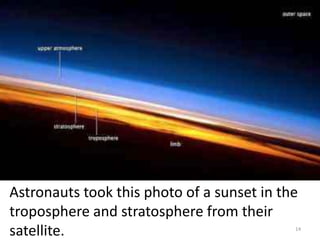
Astronauts took this photo of a sunset in the
troposphere and stratosphere from their
satellite.
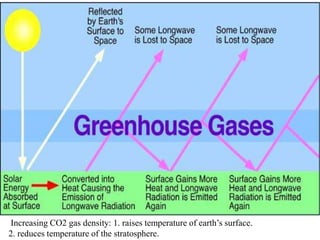
Increasing CO2 gas density: 1. raises temperature of earth’s surface.
2. reduces temperature of the stratosphere.
16
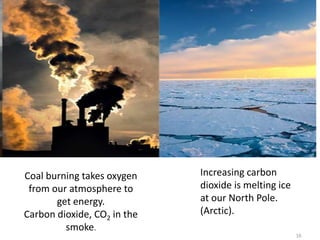
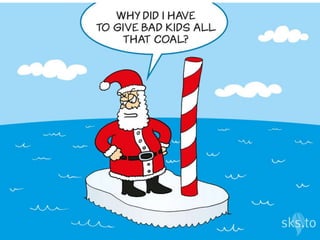
Coal burning takes oxygen
from our atmosphere to
get energy.
Carbon dioxide, CO2 in the
smoke.
Increasing carbon
dioxide is melting ice
at our North Pole.
(Arctic).
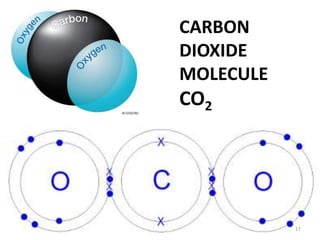
CARBON
DIOXIDE
MOLECULE
CO2
17
18
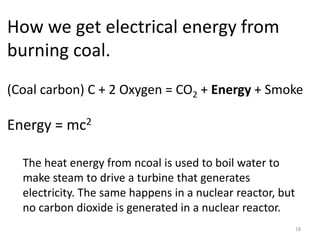
How we get electrical energy from
burning coal.
(Coal carbon) C + 2 Oxygen = CO2 + Energy + Smoke
Energy = mc2
The heat energy from ncoal is used to boil water to
make steam to drive a turbine that generates
electricity. The same happens in a nuclear reactor, but
no carbon dioxide is generated in a nuclear reactor.
19
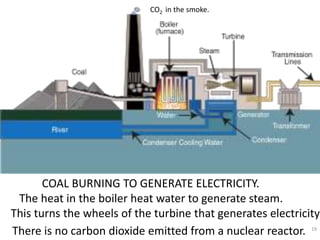
COAL BURNING TO GENERATE ELECTRICITY.
The heat in the boiler heat water to generate steam.
This turns the wheels of the turbine that generates electricity.
CO2 in the smoke.
There is no carbon dioxide emitted from a nuclear reactor.
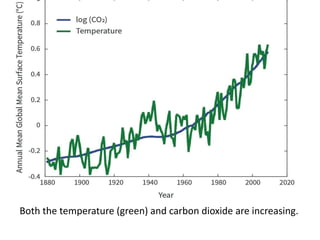
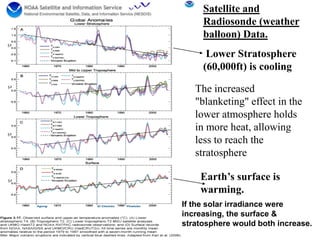
Both the temperature (green) and carbon dioxide are increasing.
Satellite and
Radiosonde (weather
balloon) Data.
Lower Stratosphere
(60,000ft) is cooling
Earth’s surface is
warming.
The increased
"blanketing" effect in the
lower atmosphere holds
in more heat, allowing
less to reach the
stratosphere
If the solar irradiance were
increasing, the surface &
stratosphere would both increase.
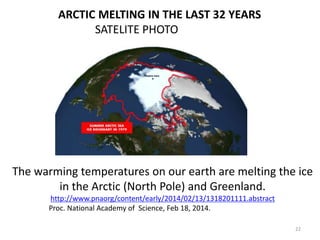
The warming temperatures on our earth are melting the ice
in the Arctic (North Pole) and Greenland.
http://www.pnaorg/content/early/2014/02/13/1318201111.abstract
Proc. National Academy of Science, Feb 18, 2014.
ARCTIC MELTING IN THE LAST 32 YEARS
SATELITE PHOTO
22
23
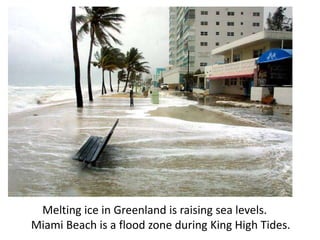
Melting ice in Greenland is raising sea levels.
Miami Beach is a flood zone during King High Tides.
25
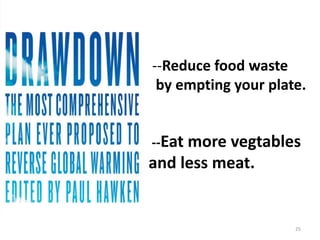
--Reduce food waste
by empting your plate.
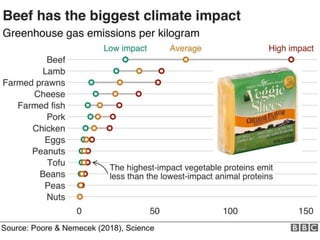
--Eat more vegtables
and less meat.
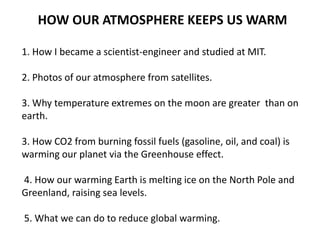
HOW OUR ATMOSPHERE KEEPS US WARM
1. How I became a scientist-engineer and studied at MIT.
2. Photos of our atmosphere from satellites.
3. Why temperature extremes on the moon are greater than on
earth.
3. How CO2 from burning fossil fuels (gasoline, oil, and coal) is
warming our planet via the Greenhouse effect.
4. How our warming Earth is melting ice on the North Pole and
Greenland, raising sea levels.
5. What we can do to reduce global warming.

HOW OUR ATMOSPHERE KEEPS US WARM

  • 1.
  • 2.
    2 When I was10, I heard on the radio that one nuclear bomb had destroyed the Japanese City of Hiroshima. This helped us win WWII in 1945
  • 3.
    I loved readingATOMS IN ACTION. This helped me understand why there is so much energy in an atom. HYDROGEN ATOM 3 MIT Professor
  • 4.
    4 The electrical forcebetween the positive nucleus and the negative electrons hold the electrons in orbit. This is much smaller than the nuclear forces between protons and neutrons.
  • 5.
    5 I loved readingthis book. I learned for the first time about Albert Einstein’s famous equation E = mc2 Energy = mass, m, times (the velocity of light, c) squared. The mass of the uranium nucleus gets transformed into the heat and light energy of nuclear reactions.
  • 6.
    6 Fission of Uranium235 into two medium sized nuclei (fragments) + energy + more neutrons. E = mc2
  • 7.
    7 PEACE-TIME NUCLEAR REACTORGENERATES ELECTRICITY. The heat in the reactor boils water to generate steam. This turns the weels of the turbine that generates electricity.
  • 8.
    8 Dr. Paul H.Carr, 25 years old, doing electronics research at the microwave laboratory, Massachusetts Institute of Technology, MIT, Boston, MA.
  • 9.
  • 10.
    10 An astronaut tookthis photo of our earth’s thin atmosphere from a satellite
  • 11.
    11 • We cansee visible light, red, orange……blue, violet. • We can not see infrared, long wave radiation, but we feel it as heat. Carbon dioxide (CO2) in the atmosphere that blankets our earth, traps this heat. LIGHT IS AN ELECTOMAGNEGIC WAVE
  • 12.
    Astronaut walking onthe moon Does our moon have an atmosphere? Why is he wearing a space suit?
  • 13.
    TEMPERATURES ON THEMOON No greenhouse gas atmosphere • Daly Variations: Day 123 C (396 Kelvin) Night -233 C (40 Kelvin) Average -65 C (218 Kelvin) ON EARTH • Greenhouse gases, blanketing the earth, give much smaller variations. • On cloudless nights, Greenhouse gases, like carbon dioxide, CO2, methane CH4, and ozone O3 keep us warmer than on the moon.
  • 14.
    14 Astronauts took thisphoto of a sunset in the troposphere and stratosphere from their satellite.
  • 15.
    Increasing CO2 gasdensity: 1. raises temperature of earth’s surface. 2. reduces temperature of the stratosphere.
  • 16.
    16 Coal burning takesoxygen from our atmosphere to get energy. Carbon dioxide, CO2 in the smoke. Increasing carbon dioxide is melting ice at our North Pole. (Arctic).
  • 17.
  • 18.
    18 How we getelectrical energy from burning coal. (Coal carbon) C + 2 Oxygen = CO2 + Energy + Smoke Energy = mc2 The heat energy from ncoal is used to boil water to make steam to drive a turbine that generates electricity. The same happens in a nuclear reactor, but no carbon dioxide is generated in a nuclear reactor.
  • 19.
    19 COAL BURNING TOGENERATE ELECTRICITY. The heat in the boiler heat water to generate steam. This turns the wheels of the turbine that generates electricity. CO2 in the smoke. There is no carbon dioxide emitted from a nuclear reactor.
  • 20.
    Both the temperature(green) and carbon dioxide are increasing.
  • 21.
    Satellite and Radiosonde (weather balloon)Data. Lower Stratosphere (60,000ft) is cooling Earth’s surface is warming. The increased "blanketing" effect in the lower atmosphere holds in more heat, allowing less to reach the stratosphere If the solar irradiance were increasing, the surface & stratosphere would both increase.
  • 22.
    The warming temperatureson our earth are melting the ice in the Arctic (North Pole) and Greenland. http://www.pnaorg/content/early/2014/02/13/1318201111.abstract Proc. National Academy of Science, Feb 18, 2014. ARCTIC MELTING IN THE LAST 32 YEARS SATELITE PHOTO 22
  • 23.
  • 24.
    Melting ice inGreenland is raising sea levels. Miami Beach is a flood zone during King High Tides.
  • 25.
    25 --Reduce food waste byempting your plate. --Eat more vegtables and less meat.
  • 27.
    HOW OUR ATMOSPHEREKEEPS US WARM 1. How I became a scientist-engineer and studied at MIT. 2. Photos of our atmosphere from satellites. 3. Why temperature extremes on the moon are greater than on earth. 3. How CO2 from burning fossil fuels (gasoline, oil, and coal) is warming our planet via the Greenhouse effect. 4. How our warming Earth is melting ice on the North Pole and Greenland, raising sea levels. 5. What we can do to reduce global warming.

Editor's Notes