Copyright © 2021 pubrica. All rights reserved
1
How Many Patients does Case Series Should
Have. In Comparison to Case Reports
Dr. Nancy Agnes, Head, Technical Operations, Pubrica, sales@pubrica.com
Keywords: Physician writing, Case Reporting, Case
Report Writing Services, medical case study report
writing, help in case study writing, case study report
writing, case report writing help
In-Brief
The medical research field is continuously
expanding, with more amount of data, being
generated every day. In clinical research, several
studies have been classified into descriptive and
analytic studies. Descriptive studies include cross-
sectional studies, ecological correlational studies,
case reports writing, case series report writing and
surveillance studies. On the other hand, analytical
studies examine a hypothesis about a causal
relationship between exposure and outcome. Since
the objective of this article is on case report and case
series, the analyses would be restricted only to those
type of studies alone.
I. INTRODUCTION
A case series and case reports consist of either of
aggregate of individual cases in one publication on
the diagnosis and treatment or a report of a single
patient. A high number of case reports been received
for publication, but it seems the rejection rate of CRs
is quite high across many journals. This is because,
according to the principle of evidence-based
medicine, they provide a lower strength of evidence
among clinical studies, as shown in Figure 1. Out of
two different forms of clinical research studies – (i)
descriptive and (ii) analytic, case series (CS) and case
reports (CR) fall under descriptive one. In specific,
case reports/series are usually retrospective and
occasionally be prospective, such as the Herrick’s
first case report of sickle cell disease.
II. WHEN TO CONSIDER A CASE SERIES
If you intend to publish your case reports and case
series, remember your reports should be the first
document medical breakthroughs i.e., reporting of
rare diseases in identifying adverse or beneficial
outcomes of intervention or novel diagnostic or
therapeutic strategies. Further, the primary purpose
was to generate hypotheses that can be subsequently
tested in studies of greater methodological rigour.
Therefore, case series can be applied to assess the
treatment safety and diagnostic accuracy, and in fact,
no control group is necessary with good long-term
follow-up. In order to get your research to be funded,
there is a need for preliminary evidence on which to
base the belief that a treatment may be efficacious. In
this case, these reports often provide the first level of
evidence. A study published in the Journal of
Clinical Epidemiology examined the case reports and
case series published in The Lancet Journal. The
study demonstrated that case series that are carefully
designed and, of course, similar to clinical trials are
likely to minimize bias and maximize the information
that can be deduced from a limited number of
patients.
Besides, in order to publish your reports, need to
ensure that both case series and reports have to follow
a standard structure and methodological rigour with
reference to selection, ascertainment, casualty and
reporting. The following section highlights the
difference between these two reports and possible
ways to get it published in High impact journals.
III. WHEN HIGH ACCEPTANCE RATE IS
POSSIBLE
Difference between a case series and a case report
A case series in general carries information acquired
from various sources containing one or more
information about the disease, treatment, diagnostic
methods, etc., whereas a case report contains a very
less amount of data and may contain in-depth
demographical details. It takes more time to accept
the case series than the time taken to accept the case
report by any publisher.
Case reports are professional narratives that
offer feedback on clinical practice guidelines and
provides a framework for adverse events, initial
signals of effectiveness, and cost. They can be shared
for medical, scientific, or educational purposes.
Copyright © 2021 pubrica. All rights reserved
2
Figure 1. Evidence Pyramid (RCT=randomised controlled trial, SR=Systematic review,
MA=metaanalysis) Source: http://www.aub.edu.lb/libraries/medical/ues/cochrane_evidence.htm
IV. SUBJECTS IN CASE SERIES AND CASE
REPORT
Many publishers strongly stick to the count of the
patients reported in the study. After the study reports,
[1] suggested that a case report contain patients of
less than five individuals, whereas a case series can
contain four and more patients. Few journals have no
upper limit set for the case series; other journals
accept nearly 20 patients report as a single case
series.
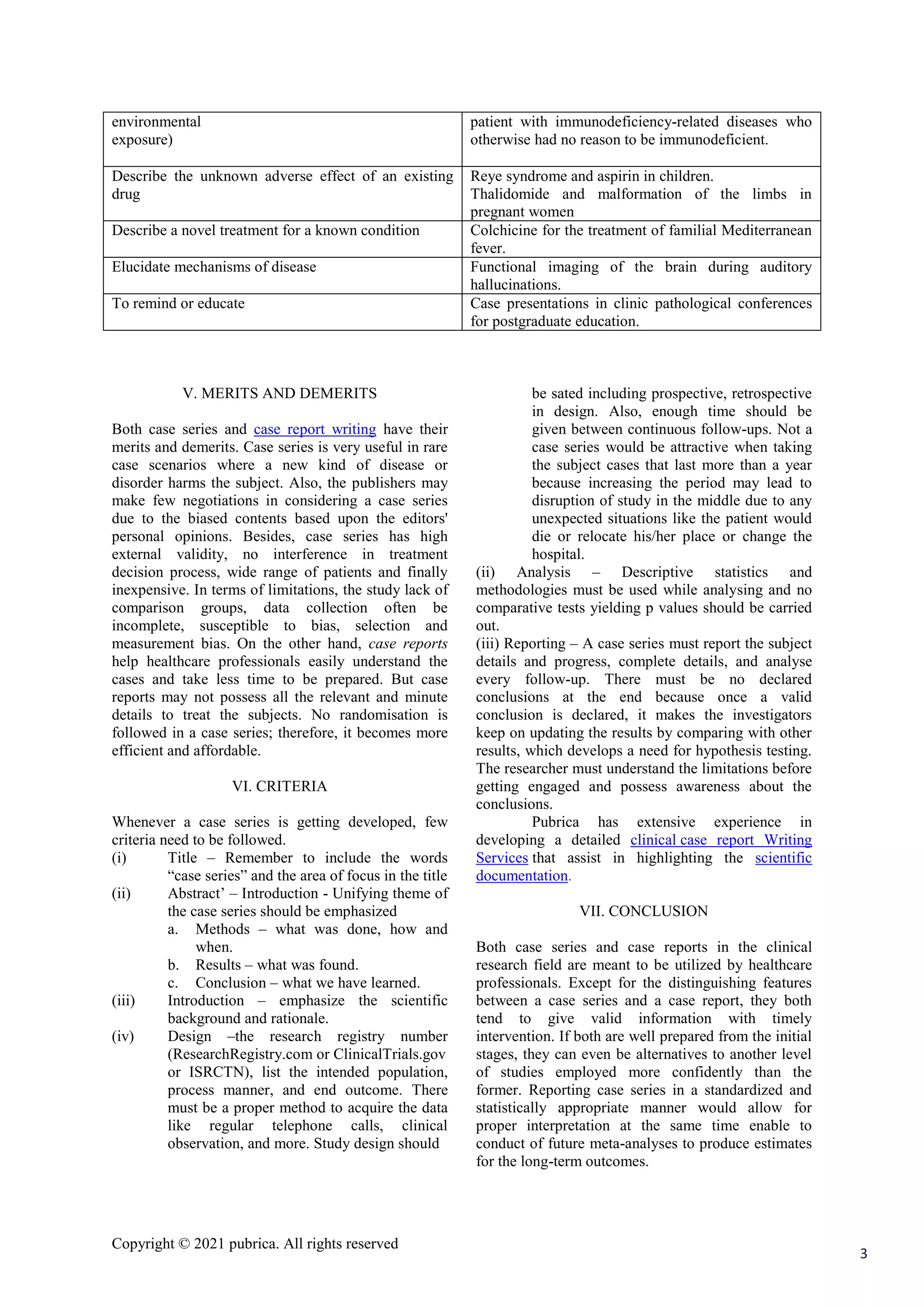
Table 1: Role of case reports/series in the medical literature
Roles Examples
Describe a new phenotype or genotype of the disease The first case report of sickle cell disease.
Recognize a known or common manifestation of a rare
disease
Liver cirrhosis as a result of Sitosterolaemia.
Recognize a rare manifestation of a known or common
disease
Secretory diarrhoea and hypokalemia in colonic
pseudo-obstruction.
Describe a new pathogen (microbe, virus or The Discovery of AIDS was an observation of a
Copyright © 2021 pubrica. All rights reserved
3
environmental
exposure)
patient with immunodeficiency-related diseases who
otherwise had no reason to be immunodeficient.
Describe the unknown adverse effect of an existing
drug
Reye syndrome and aspirin in children.
Thalidomide and malformation of the limbs in
pregnant women
Describe a novel treatment for a known condition Colchicine for the treatment of familial Mediterranean
fever.
Elucidate mechanisms of disease Functional imaging of the brain during auditory
hallucinations.
To remind or educate Case presentations in clinic pathological conferences
for postgraduate education.
V. MERITS AND DEMERITS
Both case series and case report writing have their
merits and demerits. Case series is very useful in rare
case scenarios where a new kind of disease or
disorder harms the subject. Also, the publishers may
make few negotiations in considering a case series
due to the biased contents based upon the editors'
personal opinions. Besides, case series has high
external validity, no interference in treatment
decision process, wide range of patients and finally
inexpensive. In terms of limitations, the study lack of
comparison groups, data collection often be
incomplete, susceptible to bias, selection and
measurement bias. On the other hand, case reports
help healthcare professionals easily understand the
cases and take less time to be prepared. But case
reports may not possess all the relevant and minute
details to treat the subjects. No randomisation is
followed in a case series; therefore, it becomes more
efficient and affordable.
VI. CRITERIA
Whenever a case series is getting developed, few
criteria need to be followed.
(i) Title – Remember to include the words
―case series‖ and the area of focus in the title
(ii) Abstract’ – Introduction - Unifying theme of
the case series should be emphasized
a. Methods – what was done, how and
when.
b. Results – what was found.
c. Conclusion – what we have learned.
(iii) Introduction – emphasize the scientific
background and rationale.
(iv) Design –the research registry number
(ResearchRegistry.com or ClinicalTrials.gov
or ISRCTN), list the intended population,
process manner, and end outcome. There
must be a proper method to acquire the data
like regular telephone calls, clinical
observation, and more. Study design should
be sated including prospective, retrospective
in design. Also, enough time should be
given between continuous follow-ups. Not a
case series would be attractive when taking
the subject cases that last more than a year
because increasing the period may lead to
disruption of study in the middle due to any
unexpected situations like the patient would
die or relocate his/her place or change the
hospital.
(ii) Analysis – Descriptive statistics and
methodologies must be used while analysing and no
comparative tests yielding p values should be carried
out.
(iii) Reporting – A case series must report the subject
details and progress, complete details, and analyse
every follow-up. There must be no declared
conclusions at the end because once a valid
conclusion is declared, it makes the investigators
keep on updating the results by comparing with other
results, which develops a need for hypothesis testing.
The researcher must understand the limitations before
getting engaged and possess awareness about the
conclusions.
Pubrica has extensive experience in
developing a detailed clinical case report Writing
Services that assist in highlighting the scientific
documentation.
VII. CONCLUSION
Both case series and case reports in the clinical
research field are meant to be utilized by healthcare
professionals. Except for the distinguishing features
between a case series and a case report, they both
tend to give valid information with timely
intervention. If both are well prepared from the initial
stages, they can even be alternatives to another level
of studies employed more confidently than the
former. Reporting case series in a standardized and
statistically appropriate manner would allow for
proper interpretation at the same time enable to
conduct of future meta-analyses to produce estimates
for the long-term outcomes.
Copyright © 2021 pubrica. All rights reserved
4
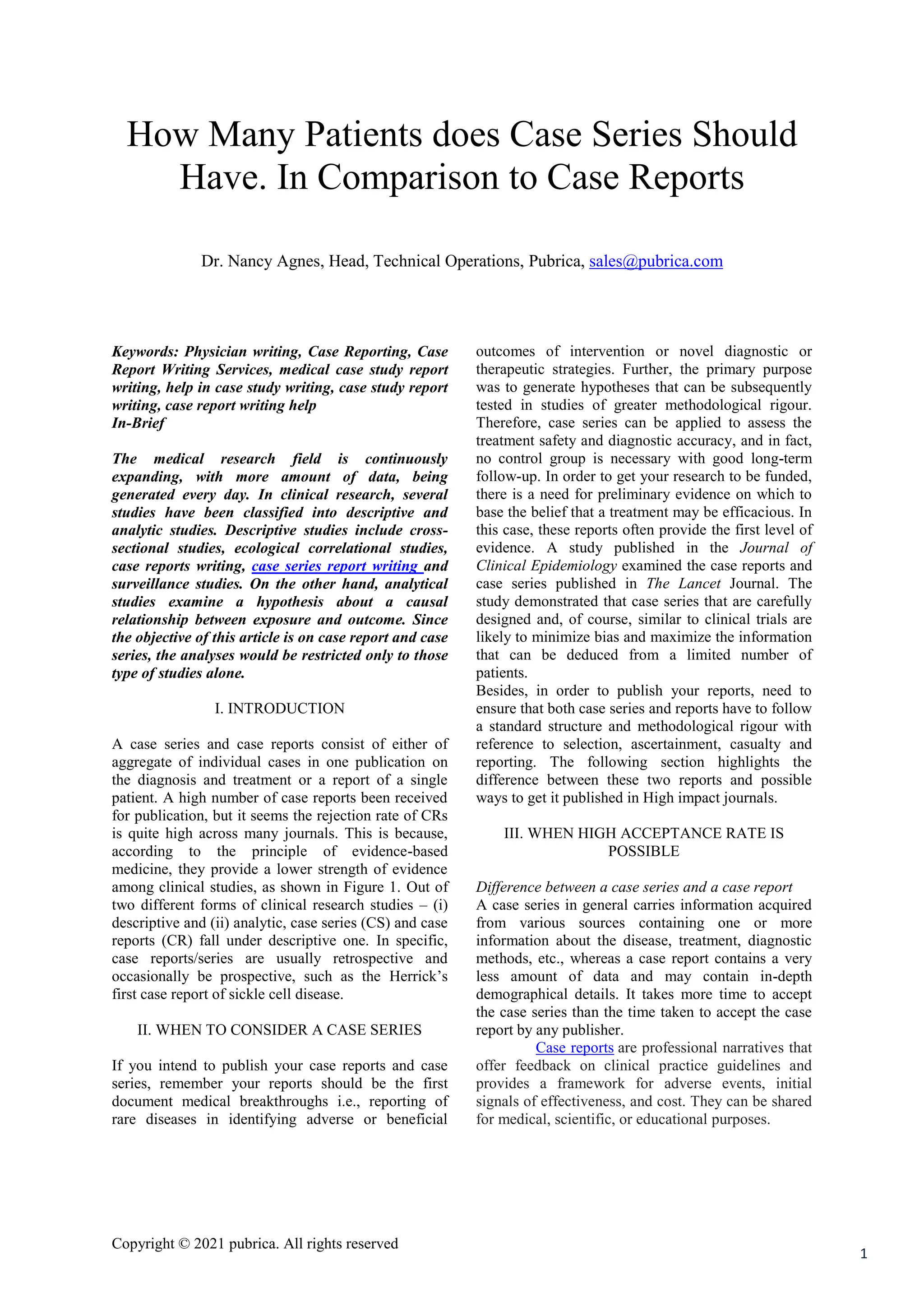
Table 2: Tool for evaluating the methodological quality of case reports and case series[6]
REFERENCES
1. Konala, V. M., Adapa, S., Naramala, S., Chenna,
A., Lamichhane, S., Garlapati, P. R., ... &Gayam,
V. (2020). A case series of patients coinfected
with influenza and COVID-19. Journal of
investigative medicine high impact case
reports, 8, 2324709620934674.
2. Tahvildari, A., Arbabi, M., Farsi, Y., Jamshidi,
P., Hasanzadeh, S., Calcagno, T. M., ...
&Mirsaeidi, M. (2020). Clinical features,
diagnosis, and treatment of COVID-19 in
hospitalised patients: a systematic review of case
reports and case series. Frontiers in medicine, 7,
231.
3. Suhling, H., Welte, T., &Fuehner, T. (2020).
Three Patients With Acute Pulmonary Damage
Following the Use of E-Cigarettes—A Case
Series. DeutschesÄrzteblatt
International, 117(11), 177.
Domains Leading explanatory questions
Selection
1. Does the patient(s) represent(s) the whole experience of the
investigator (centre), or is the selection method unclear to the extent
that other patients with the similar presentation may not have been
reported?
Ascertainment
2. Was the exposure adequately ascertained?
3. Was the outcome adequately ascertained?
Causality
4. Were other alternative causes that may explain the observation
ruled out?
5. Was there a challenge/rechallenge phenomenon?
6. Was there a dose-response effect?
7. Was follow-up long sufficient for outcomes to occur?
Reporting
8. Is the case(s) described with sufficient details to allow other
investigators to replicate the research or to allow practitioners to make
inferences related to their own practice?

How many patients does case series should have .in comparison to case reports - Pubrica

  • 1.
    Copyright © 2021pubrica. All rights reserved 1 How Many Patients does Case Series Should Have. In Comparison to Case Reports Dr. Nancy Agnes, Head, Technical Operations, Pubrica, sales@pubrica.com Keywords: Physician writing, Case Reporting, Case Report Writing Services, medical case study report writing, help in case study writing, case study report writing, case report writing help In-Brief The medical research field is continuously expanding, with more amount of data, being generated every day. In clinical research, several studies have been classified into descriptive and analytic studies. Descriptive studies include cross- sectional studies, ecological correlational studies, case reports writing, case series report writing and surveillance studies. On the other hand, analytical studies examine a hypothesis about a causal relationship between exposure and outcome. Since the objective of this article is on case report and case series, the analyses would be restricted only to those type of studies alone. I. INTRODUCTION A case series and case reports consist of either of aggregate of individual cases in one publication on the diagnosis and treatment or a report of a single patient. A high number of case reports been received for publication, but it seems the rejection rate of CRs is quite high across many journals. This is because, according to the principle of evidence-based medicine, they provide a lower strength of evidence among clinical studies, as shown in Figure 1. Out of two different forms of clinical research studies – (i) descriptive and (ii) analytic, case series (CS) and case reports (CR) fall under descriptive one. In specific, case reports/series are usually retrospective and occasionally be prospective, such as the Herrick’s first case report of sickle cell disease. II. WHEN TO CONSIDER A CASE SERIES If you intend to publish your case reports and case series, remember your reports should be the first document medical breakthroughs i.e., reporting of rare diseases in identifying adverse or beneficial outcomes of intervention or novel diagnostic or therapeutic strategies. Further, the primary purpose was to generate hypotheses that can be subsequently tested in studies of greater methodological rigour. Therefore, case series can be applied to assess the treatment safety and diagnostic accuracy, and in fact, no control group is necessary with good long-term follow-up. In order to get your research to be funded, there is a need for preliminary evidence on which to base the belief that a treatment may be efficacious. In this case, these reports often provide the first level of evidence. A study published in the Journal of Clinical Epidemiology examined the case reports and case series published in The Lancet Journal. The study demonstrated that case series that are carefully designed and, of course, similar to clinical trials are likely to minimize bias and maximize the information that can be deduced from a limited number of patients. Besides, in order to publish your reports, need to ensure that both case series and reports have to follow a standard structure and methodological rigour with reference to selection, ascertainment, casualty and reporting. The following section highlights the difference between these two reports and possible ways to get it published in High impact journals. III. WHEN HIGH ACCEPTANCE RATE IS POSSIBLE Difference between a case series and a case report A case series in general carries information acquired from various sources containing one or more information about the disease, treatment, diagnostic methods, etc., whereas a case report contains a very less amount of data and may contain in-depth demographical details. It takes more time to accept the case series than the time taken to accept the case report by any publisher. Case reports are professional narratives that offer feedback on clinical practice guidelines and provides a framework for adverse events, initial signals of effectiveness, and cost. They can be shared for medical, scientific, or educational purposes.
  • 2.
    Copyright © 2021pubrica. All rights reserved 2 Figure 1. Evidence Pyramid (RCT=randomised controlled trial, SR=Systematic review, MA=metaanalysis) Source: http://www.aub.edu.lb/libraries/medical/ues/cochrane_evidence.htm IV. SUBJECTS IN CASE SERIES AND CASE REPORT Many publishers strongly stick to the count of the patients reported in the study. After the study reports, [1] suggested that a case report contain patients of less than five individuals, whereas a case series can contain four and more patients. Few journals have no upper limit set for the case series; other journals accept nearly 20 patients report as a single case series. Table 1: Role of case reports/series in the medical literature Roles Examples Describe a new phenotype or genotype of the disease The first case report of sickle cell disease. Recognize a known or common manifestation of a rare disease Liver cirrhosis as a result of Sitosterolaemia. Recognize a rare manifestation of a known or common disease Secretory diarrhoea and hypokalemia in colonic pseudo-obstruction. Describe a new pathogen (microbe, virus or The Discovery of AIDS was an observation of a
  • 3.
    Copyright © 2021pubrica. All rights reserved 3 environmental exposure) patient with immunodeficiency-related diseases who otherwise had no reason to be immunodeficient. Describe the unknown adverse effect of an existing drug Reye syndrome and aspirin in children. Thalidomide and malformation of the limbs in pregnant women Describe a novel treatment for a known condition Colchicine for the treatment of familial Mediterranean fever. Elucidate mechanisms of disease Functional imaging of the brain during auditory hallucinations. To remind or educate Case presentations in clinic pathological conferences for postgraduate education. V. MERITS AND DEMERITS Both case series and case report writing have their merits and demerits. Case series is very useful in rare case scenarios where a new kind of disease or disorder harms the subject. Also, the publishers may make few negotiations in considering a case series due to the biased contents based upon the editors' personal opinions. Besides, case series has high external validity, no interference in treatment decision process, wide range of patients and finally inexpensive. In terms of limitations, the study lack of comparison groups, data collection often be incomplete, susceptible to bias, selection and measurement bias. On the other hand, case reports help healthcare professionals easily understand the cases and take less time to be prepared. But case reports may not possess all the relevant and minute details to treat the subjects. No randomisation is followed in a case series; therefore, it becomes more efficient and affordable. VI. CRITERIA Whenever a case series is getting developed, few criteria need to be followed. (i) Title – Remember to include the words ―case series‖ and the area of focus in the title (ii) Abstract’ – Introduction - Unifying theme of the case series should be emphasized a. Methods – what was done, how and when. b. Results – what was found. c. Conclusion – what we have learned. (iii) Introduction – emphasize the scientific background and rationale. (iv) Design –the research registry number (ResearchRegistry.com or ClinicalTrials.gov or ISRCTN), list the intended population, process manner, and end outcome. There must be a proper method to acquire the data like regular telephone calls, clinical observation, and more. Study design should be sated including prospective, retrospective in design. Also, enough time should be given between continuous follow-ups. Not a case series would be attractive when taking the subject cases that last more than a year because increasing the period may lead to disruption of study in the middle due to any unexpected situations like the patient would die or relocate his/her place or change the hospital. (ii) Analysis – Descriptive statistics and methodologies must be used while analysing and no comparative tests yielding p values should be carried out. (iii) Reporting – A case series must report the subject details and progress, complete details, and analyse every follow-up. There must be no declared conclusions at the end because once a valid conclusion is declared, it makes the investigators keep on updating the results by comparing with other results, which develops a need for hypothesis testing. The researcher must understand the limitations before getting engaged and possess awareness about the conclusions. Pubrica has extensive experience in developing a detailed clinical case report Writing Services that assist in highlighting the scientific documentation. VII. CONCLUSION Both case series and case reports in the clinical research field are meant to be utilized by healthcare professionals. Except for the distinguishing features between a case series and a case report, they both tend to give valid information with timely intervention. If both are well prepared from the initial stages, they can even be alternatives to another level of studies employed more confidently than the former. Reporting case series in a standardized and statistically appropriate manner would allow for proper interpretation at the same time enable to conduct of future meta-analyses to produce estimates for the long-term outcomes.
  • 4.
    Copyright © 2021pubrica. All rights reserved 4 Table 2: Tool for evaluating the methodological quality of case reports and case series[6] REFERENCES 1. Konala, V. M., Adapa, S., Naramala, S., Chenna, A., Lamichhane, S., Garlapati, P. R., ... &Gayam, V. (2020). A case series of patients coinfected with influenza and COVID-19. Journal of investigative medicine high impact case reports, 8, 2324709620934674. 2. Tahvildari, A., Arbabi, M., Farsi, Y., Jamshidi, P., Hasanzadeh, S., Calcagno, T. M., ... &Mirsaeidi, M. (2020). Clinical features, diagnosis, and treatment of COVID-19 in hospitalised patients: a systematic review of case reports and case series. Frontiers in medicine, 7, 231. 3. Suhling, H., Welte, T., &Fuehner, T. (2020). Three Patients With Acute Pulmonary Damage Following the Use of E-Cigarettes—A Case Series. DeutschesÄrzteblatt International, 117(11), 177. Domains Leading explanatory questions Selection 1. Does the patient(s) represent(s) the whole experience of the investigator (centre), or is the selection method unclear to the extent that other patients with the similar presentation may not have been reported? Ascertainment 2. Was the exposure adequately ascertained? 3. Was the outcome adequately ascertained? Causality 4. Were other alternative causes that may explain the observation ruled out? 5. Was there a challenge/rechallenge phenomenon? 6. Was there a dose-response effect? 7. Was follow-up long sufficient for outcomes to occur? Reporting 8. Is the case(s) described with sufficient details to allow other investigators to replicate the research or to allow practitioners to make inferences related to their own practice?