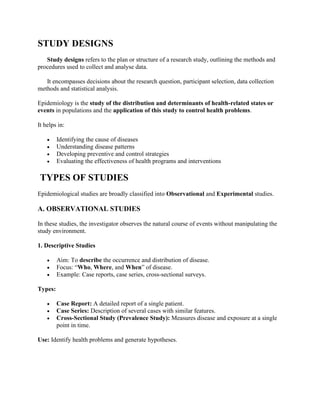
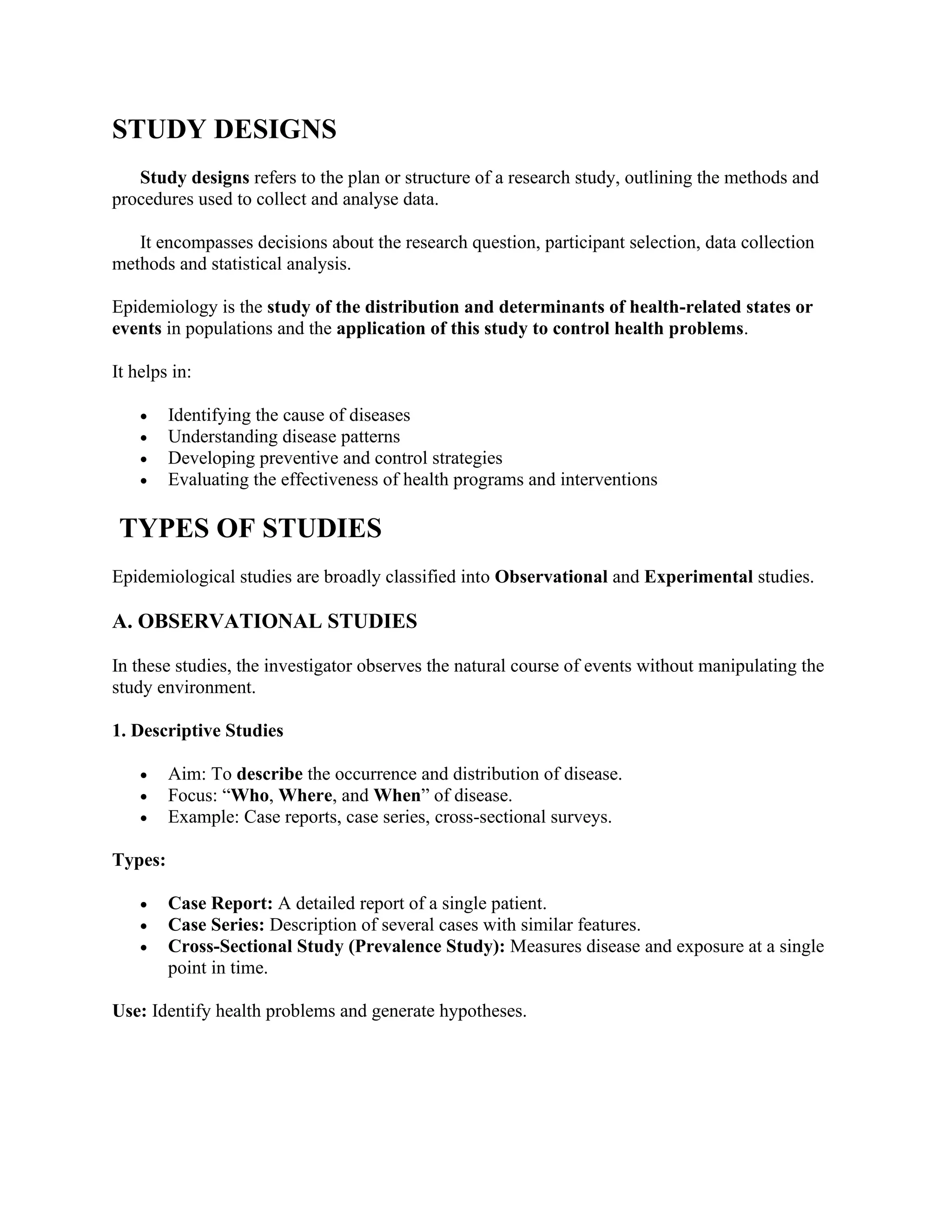
Study designs are fundamental frameworks that guide the planning, execution, and interpretation of research studies in the health sciences. In epidemiology and pharmacy practice, they help investigate disease causes, evaluate therapeutic interventions, assess drug-related problems, measure health outcomes, and inform evidence-based clinical decision-making. The choice of study design shapes data quality, validity, cost, ethical feasibility, and strength of conclusions. Broadly, study designs are classified into observational and experimental (interventional) studies, each serving distinct scientific purposes.
Importance of Study Designs
Appropriate study design allows researchers to:
Identify causes and risk factors of diseases
Understand disease distribution and determinants
Develop and evaluate preventive and therapeutic strategies
Establish association or causation between exposure and outcome
Provide clinical and public health recommendations
Support pharmacovigilance and drug safety monitoring
Generate new scientific hypotheses and evidence for clinical practice
Epidemiology underpins these designs, defined as the study of the distribution and determinants of health-related events in populations and the application of this knowledge to control health problems.
✅ OBSERVATIONAL STUDIES
In observational research, the investigator does not manipulate exposure but monitors events naturally. These studies are essential when experimentation is unethical or impractical. They are of two types: descriptive and analytical.
1. Descriptive Studies
These studies focus on describing health events without determining causality. They answer Who, Where, and When regarding disease occurrence. Descriptive studies are often hypothesis-generating for future analytical research.
Types
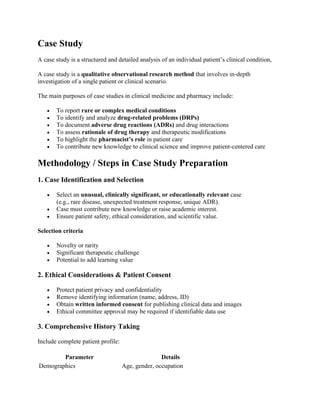
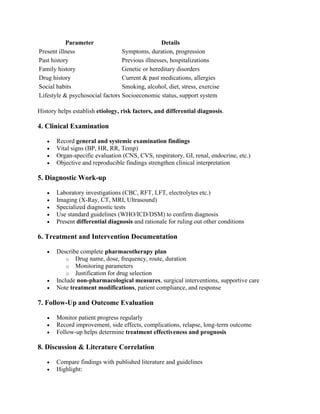
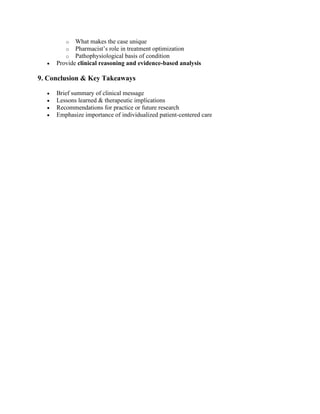
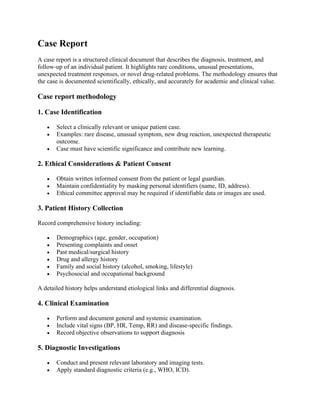
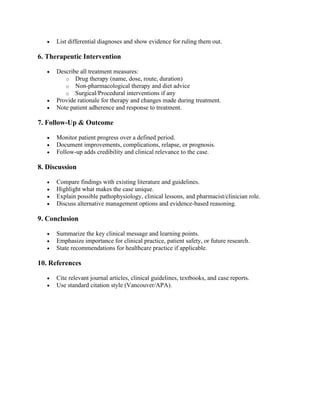
Case Reports
In-depth narrative of a single patient’s symptoms, diagnosis, treatment, and outcome
Useful for reporting novel diseases, unusual ADRs, drug interactions, rare presentations
Method includes patient history, clinical findings, diagnosis, treatment, follow-up, and conclusion
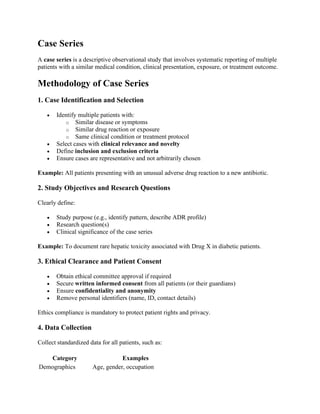
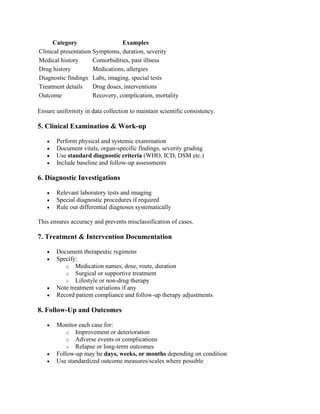
Case Series
Collection of multiple similar cases
Helps identify patterns, risk factors, treatment outcomes, or ADR clusters
Uses systematic data collection, ethical consent, diagnostic work-up, treatment protocols, and outcome tracking
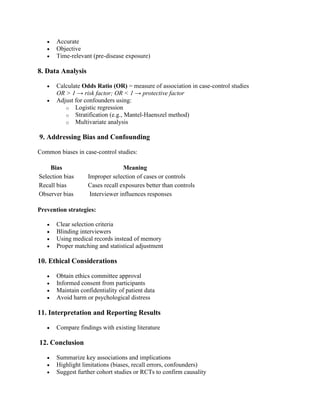
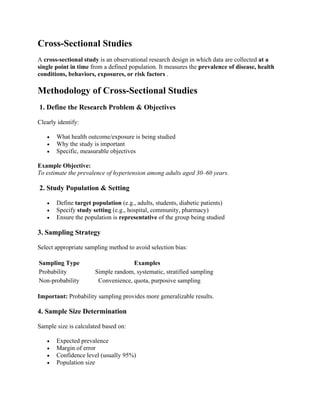
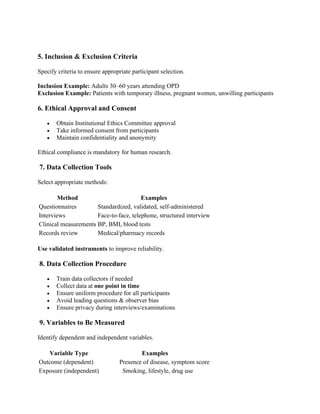
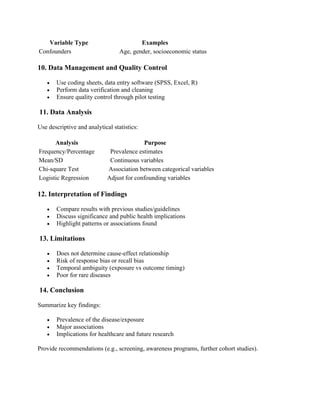
Cross-Sectional (Prevalence) Studies
Snapshot of exposure and disease at one point in time
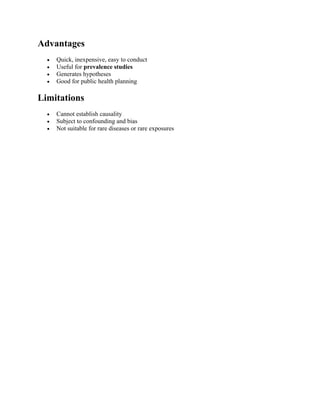
Measures prevalence; useful for public health planning
Cannot infer causality but useful to identify burden and associations
Purpose
Describe unusual clinical conditions
Document medication-related problems
Identify new adverse drug reactions
Provide real-world clinical insights
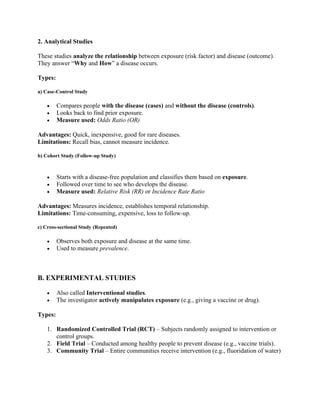
2. Analytical Studies
These investigate associations between exposure and outcome and answer Why and How diseases occur.
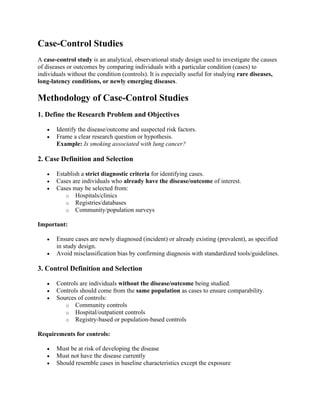
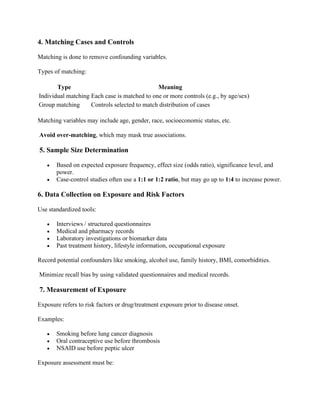
a) Case-Control Studies
Retrospective design comparing individuals with disease (cases) vs without disease (controls)
Looks back to evaluate exposure