


How climate data can help address the
climate challenge
Professor JasonA. Lowe,
OBE
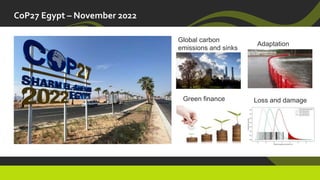
CoP27 Egypt – November 2022
Global carbon
emissions and sinks
Adaptation
Green finance Loss and damage
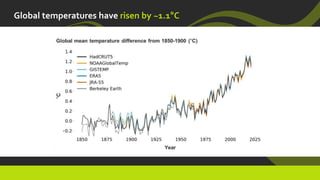
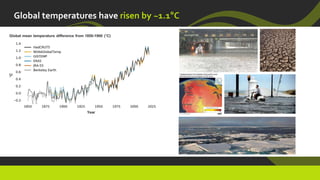
Global temperatures have risen by ~1.1°C
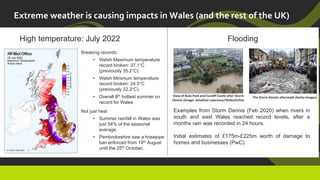
Extreme weather is causing impacts in Wales (and the rest of the UK)
High temperature: July 2022 Flooding
Breaking records:
• Welsh Maximum temperature
record broken: 37.1°C
(previously 35.2°C)
• Welsh Minimum temperature
record broken: 24.5°C
(previously 22.2°C)
• Overall 8th hottest summer on
record for Wales
Not just heat
• Summer rainfall in Wales was
just 54% of the seasonal
average.
• Pembrokeshire saw a hosepipe
ban enforced from 19th August
until the 25th October.
View of Bute Park and Cardiff Castle after Storm
Dennis (Image: Jonathan Lawrance/WalesOnline
The Storm Dennis aftermath (Getty Images)
Examples from Storm Dennis (Feb 2020) when rivers in
south and east Wales reached record levels, after a
months rain was recorded in 24 hours.
Initial estimates of £175m-£225m worth of damage to
homes and businesses (PwC).
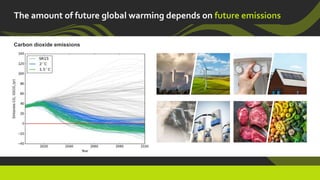
Carbon dioxide emissions
The amount of future global warming depends on future emissions
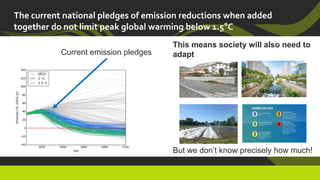
The current national pledges of emission reductions when added
together do not limit peak global warming below 1.5°C
This means society will also need to
adapt
But we don’t know precisely how much!
Current emission pledges
Working together on
UK Climate Projections
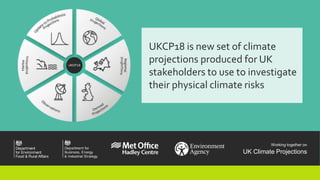
UKCP18 is new set of climate
projections produced for UK
stakeholders to use to investigate
their physical climate risks
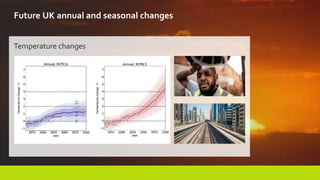
a greater chance
of warmer, wetter
winters and hotter,
drier summers
Temperature changes
Future UK annual and seasonal changes
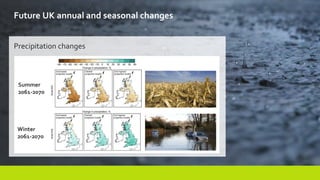
Precipitation changes
Summer
2061-2070
Winter
2061-2070
Future UK annual and seasonal changes
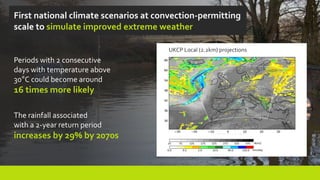
Periods with 2 consecutive
days with temperature above
30°C could become around
16 times more likely
The rainfall associated
with a 2-year return period
increases by 29% by 2070s
First national climate scenarios at convection-permitting
scale to simulate improved extreme weather
UKCP Local (2.2km) projections
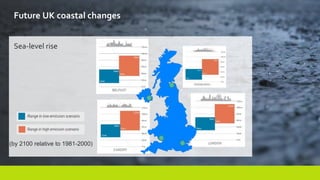
Sea-level rise
Future UK coastal changes
(by 2100 relative to 1981-2000)
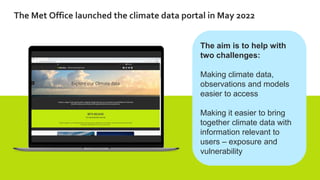
The Met Office launched the climate data portal in May 2022
The aim is to help with
two challenges:
Making climate data,
observations and models
easier to access
Making it easier to bring
together climate data with
information relevant to
users – exposure and
vulnerability
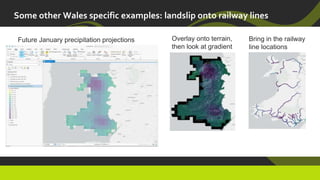
Some other Wales specific examples: landslip onto railway lines
Future January precipitation projections Overlay onto terrain,
then look at gradient
Bring in the railway
line locations
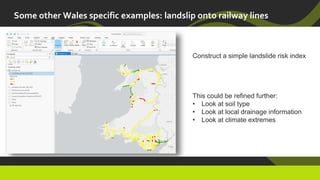
Some other Wales specific examples: landslip onto railway lines
Construct a simple landslide risk index
This could be refined further:
• Look at soil type
• Look at local drainage information
• Look at climate extremes
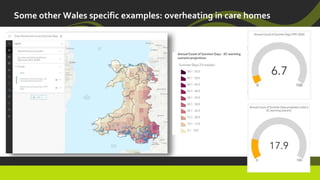
Some other Wales specific examples: overheating in care homes
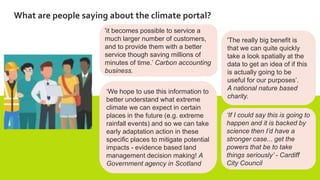
What are people saying about the climate portal?
'it becomes possible to service a
much larger number of customers,
and to provide them with a better
service though saving millions of
minutes of time.’ Carbon accounting
business.
'The really big benefit is
that we can quite quickly
take a look spatially at the
data to get an idea of if this
is actually going to be
useful for our purposes’.
A national nature based
charity.
‘We hope to use this information to
better understand what extreme
climate we can expect in certain
places in the future (e.g. extreme
rainfall events) and so we can take
early adaptation action in these
specific places to mitigate potential
impacts - evidence based land
management decision making! A
Government agency in Scotland
‘If I could say this is going to
happen and it is backed by
science then I’d have a
stronger case... get the
powers that be to take
things seriously’ - Cardiff
City Council
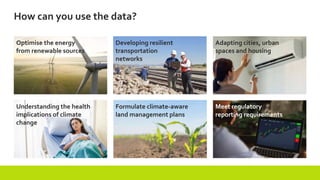
Optimise the energy
from renewable sources
Meet regulatory
reporting requirements
Formulate climate-aware
land management plans
How can you use the data?
Developing resilient
transportation
networks
Understanding the health
implications of climate
change
Adapting cities, urban
spaces and housing
Professor Jason Lowe,
OBE
Scan the QR code to visit the
climate data portal today...
https://climate-themetoffice.hub.arcgis.com/

How climate data can help address the climate challenge

  • 1.
    How climate datacan help address the climate challenge Professor JasonA. Lowe, OBE
  • 2.
    CoP27 Egypt –November 2022 Global carbon emissions and sinks Adaptation Green finance Loss and damage
  • 3.
    Global temperatures haverisen by ~1.1°C
  • 4.
    Global temperatures haverisen by ~1.1°C
  • 5.
    Extreme weather iscausing impacts in Wales (and the rest of the UK) High temperature: July 2022 Flooding Breaking records: • Welsh Maximum temperature record broken: 37.1°C (previously 35.2°C) • Welsh Minimum temperature record broken: 24.5°C (previously 22.2°C) • Overall 8th hottest summer on record for Wales Not just heat • Summer rainfall in Wales was just 54% of the seasonal average. • Pembrokeshire saw a hosepipe ban enforced from 19th August until the 25th October. View of Bute Park and Cardiff Castle after Storm Dennis (Image: Jonathan Lawrance/WalesOnline The Storm Dennis aftermath (Getty Images) Examples from Storm Dennis (Feb 2020) when rivers in south and east Wales reached record levels, after a months rain was recorded in 24 hours. Initial estimates of £175m-£225m worth of damage to homes and businesses (PwC).
  • 6.
    Carbon dioxide emissions Theamount of future global warming depends on future emissions
  • 7.
    The current nationalpledges of emission reductions when added together do not limit peak global warming below 1.5°C This means society will also need to adapt But we don’t know precisely how much! Current emission pledges
  • 8.
    Working together on UKClimate Projections UKCP18 is new set of climate projections produced for UK stakeholders to use to investigate their physical climate risks
  • 9.
    a greater chance ofwarmer, wetter winters and hotter, drier summers
  • 10.
    Temperature changes Future UKannual and seasonal changes
  • 11.
  • 12.
    Periods with 2consecutive days with temperature above 30°C could become around 16 times more likely The rainfall associated with a 2-year return period increases by 29% by 2070s First national climate scenarios at convection-permitting scale to simulate improved extreme weather UKCP Local (2.2km) projections
  • 13.
    Sea-level rise Future UKcoastal changes (by 2100 relative to 1981-2000)
  • 14.
    The Met Officelaunched the climate data portal in May 2022 The aim is to help with two challenges: Making climate data, observations and models easier to access Making it easier to bring together climate data with information relevant to users – exposure and vulnerability
  • 17.
    Some other Walesspecific examples: landslip onto railway lines Future January precipitation projections Overlay onto terrain, then look at gradient Bring in the railway line locations
  • 18.
    Some other Walesspecific examples: landslip onto railway lines Construct a simple landslide risk index This could be refined further: • Look at soil type • Look at local drainage information • Look at climate extremes
  • 19.
    Some other Walesspecific examples: overheating in care homes
  • 20.
    What are peoplesaying about the climate portal? 'it becomes possible to service a much larger number of customers, and to provide them with a better service though saving millions of minutes of time.’ Carbon accounting business. 'The really big benefit is that we can quite quickly take a look spatially at the data to get an idea of if this is actually going to be useful for our purposes’. A national nature based charity. ‘We hope to use this information to better understand what extreme climate we can expect in certain places in the future (e.g. extreme rainfall events) and so we can take early adaptation action in these specific places to mitigate potential impacts - evidence based land management decision making! A Government agency in Scotland ‘If I could say this is going to happen and it is backed by science then I’d have a stronger case... get the powers that be to take things seriously’ - Cardiff City Council
  • 21.
    Optimise the energy fromrenewable sources Meet regulatory reporting requirements Formulate climate-aware land management plans How can you use the data? Developing resilient transportation networks Understanding the health implications of climate change Adapting cities, urban spaces and housing
  • 22.
    Professor Jason Lowe, OBE Scanthe QR code to visit the climate data portal today... https://climate-themetoffice.hub.arcgis.com/