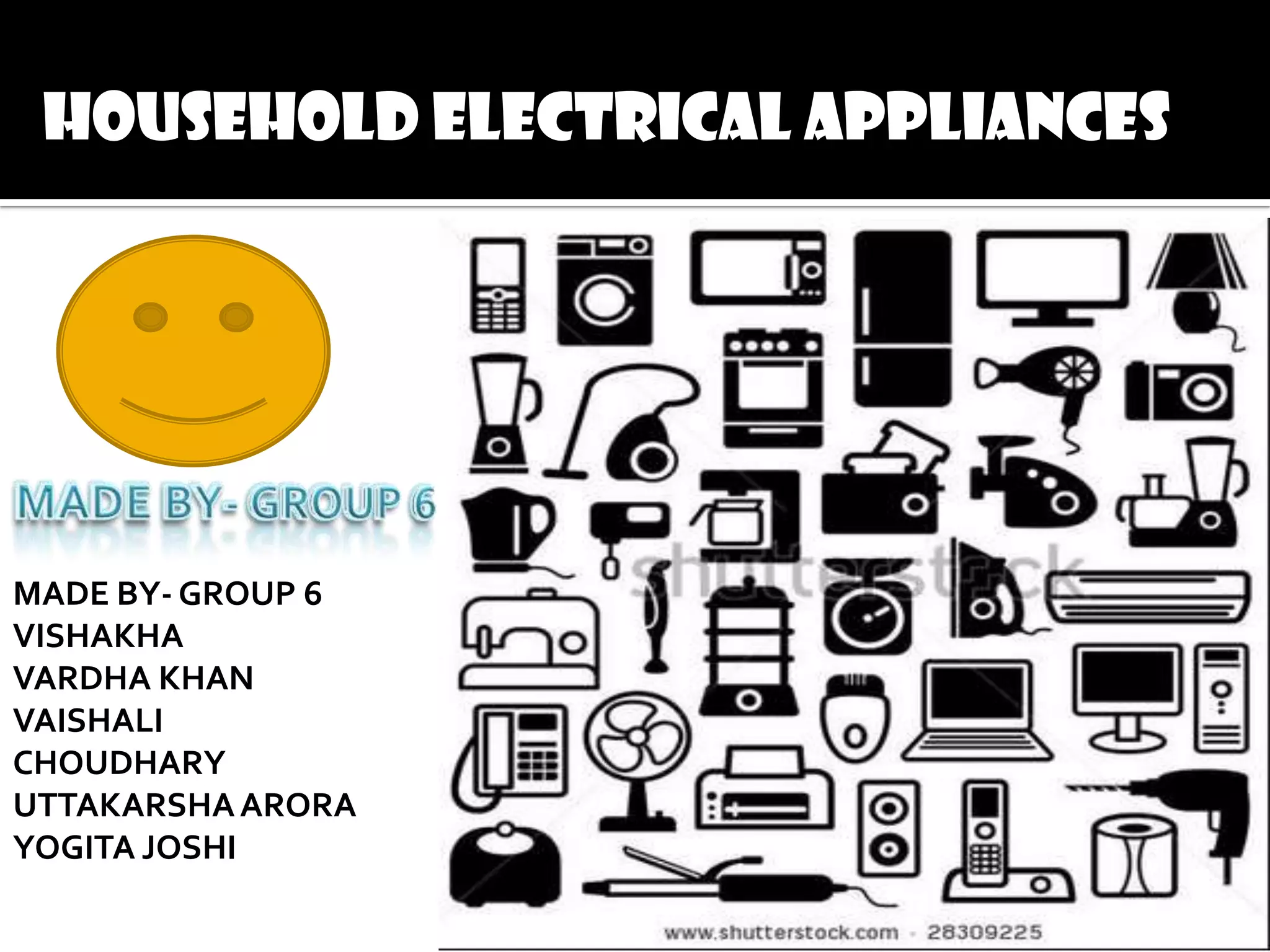
HOUSEHOLD ELECTRICAL APPLIANCES

MADE BY- GROUP 6
VISHAKHA
VARDHA KHAN
VAISHALI
CHOUDHARY
UTTAKARSHA ARORA
YOGITA JOSHI
Appliances-electrical or mechanical-that are
used for household functions are termed as
household appliances.
These can be classified into two categories:
Major appliances
(AC,Refigerators,Washing
Machines)

Minor appliances
(TV,Mixers,Water Pumps Etc)
Energy Efficient Appliances
•High parasitic loads.
•Meter read wrong.
•The addition of major appliance.
•Additional occupants.
•Faulty appliances (pump or thermostat).
•Seasonal appliances (pool pump, heat tape).
•Bad connection causing leakage to ground.
•Duelling thermostats.
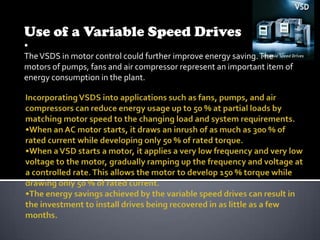
Use of a Variable Speed Drives
•
The VSDS in motor control could further improve energy saving. The
motors of pumps, fans and air compressor represent an important item of
energy consumption in the plant.
•The losses through the conductors (for example, cables, bus
bars) could be reduced by installing slightly larger size
conductors since larger size conductors have lower
impedance.
•Typical conductor losses are 1.5%.
•The losses in the conductor can be calculated as well. For
example, cable resistance is 0.0984 Ω/ km, while the
estimated cable length is 160 m which means that resistance
is 0.0157 Ω.
•Cable losses can be obtained by the I2R formula.
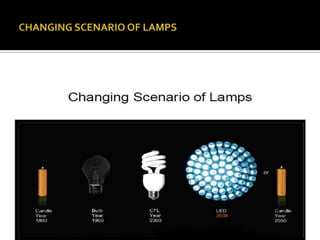
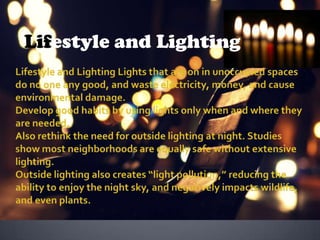
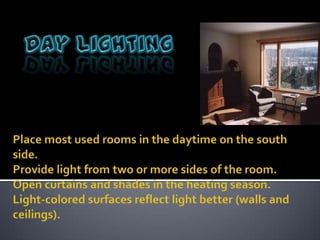
Lighting energy use can be substantially reduced by:
•Day Lighting
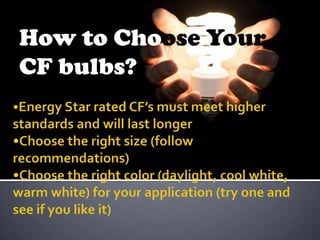
•Installing efficient lighting devices such as LED,
CF, and fluorescent lights).
•Task Lighting
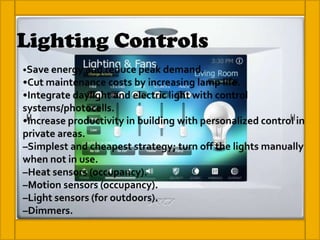
•Controls: Developing habits of turning off lights
when not needed (or using motion, heat or light
sensors to control when lights are on or off).
Lifestyle and Lighting
mm
Lighting Controls
How to Choose Your
CF bulbs?
The Three R’s...
Reduce Reuse Recycle

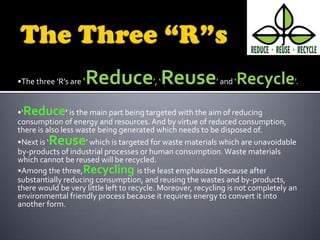
•The three ‘R’s are ‘

’, ‘

’ and ‘

’.

•‘Reduce’ is the main part being targeted with the aim of reducing
consumption of energy and resources. And by virtue of reduced consumption,
there is also less waste being generated which needs to be disposed of.
•Next is ‘
’ which is targeted for waste materials which are unavoidable
by-products of industrial processes or human consumption. Waste materials
which cannot be reused will be recycled.
•Among the three,Recycling is the least emphasized because after
substantially reducing consumption, and reusing the wastes and by-products,
there would be very little left to recycle. Moreover, recycling is not completely an
environmental friendly process because it requires energy to convert it into
another form.

Reuse

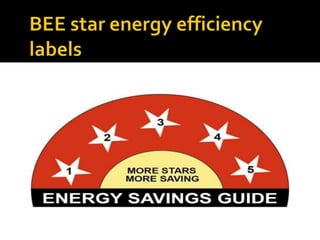
An energy-efficiency rating scheme for Electrical

appliances/Buildings .
 rating will grade Equipments/ Buildings on their
The
energy efficiency, starting from one star for the least
energy-efficient, and going upto five stars, for the
most
energy-efficient.

Star Labels have been created to standardize the
energy efficiency ratings of different electrical
appliances and indicate energy consumption under
standard test conditions.
The Bureau of Energy Efficiency has developed a scheme for energy
efficiency labelingof equipments,in MAY2006.
Under this scheme, the following equipments have been star rated.
1. FrostFree (No-Frost) refrigerator ***
2. Tubular FluorescentLamps ***
3. RoomAirConditioners ***
4. DirectCoolRefrigerator
5. Distribution Transformer ***
6. Induction Motors
7. Pump Sets
8. CeilingFans
9. LPGStoves
10.ElectricGeysers
11.ColourTV
 provide information on energy performance
To
so that consumers can make informed decisions
whilepurchasing appliances
 make aware the consumer about the energy
To
saving potential among the availableproducts
 cost saving potential of the marketed
The
household andother equipments
 create a demand in the market for Energy
To
Efficient equipments.
House hold electrical gadgets/appliances

House hold electrical gadgets/appliances

  • 1.
    HOUSEHOLD ELECTRICAL APPLIANCES MADEBY- GROUP 6 VISHAKHA VARDHA KHAN VAISHALI CHOUDHARY UTTAKARSHA ARORA YOGITA JOSHI
  • 2.
    Appliances-electrical or mechanical-thatare used for household functions are termed as household appliances. These can be classified into two categories: Major appliances (AC,Refigerators,Washing Machines) Minor appliances (TV,Mixers,Water Pumps Etc)
  • 4.
  • 5.
    •High parasitic loads. •Meterread wrong. •The addition of major appliance. •Additional occupants. •Faulty appliances (pump or thermostat). •Seasonal appliances (pool pump, heat tape). •Bad connection causing leakage to ground. •Duelling thermostats.
  • 6.
    Use of aVariable Speed Drives • The VSDS in motor control could further improve energy saving. The motors of pumps, fans and air compressor represent an important item of energy consumption in the plant.
  • 7.
    •The losses throughthe conductors (for example, cables, bus bars) could be reduced by installing slightly larger size conductors since larger size conductors have lower impedance. •Typical conductor losses are 1.5%. •The losses in the conductor can be calculated as well. For example, cable resistance is 0.0984 Ω/ km, while the estimated cable length is 160 m which means that resistance is 0.0157 Ω. •Cable losses can be obtained by the I2R formula.
  • 8.
    Lighting energy usecan be substantially reduced by: •Day Lighting •Installing efficient lighting devices such as LED, CF, and fluorescent lights). •Task Lighting •Controls: Developing habits of turning off lights when not needed (or using motion, heat or light sensors to control when lights are on or off).
  • 9.
  • 10.
  • 11.
  • 12.
    How to ChooseYour CF bulbs?
  • 13.
  • 14.
    Reduce Reuse Recycle •Thethree ‘R’s are ‘ ’, ‘ ’ and ‘ ’. •‘Reduce’ is the main part being targeted with the aim of reducing consumption of energy and resources. And by virtue of reduced consumption, there is also less waste being generated which needs to be disposed of. •Next is ‘ ’ which is targeted for waste materials which are unavoidable by-products of industrial processes or human consumption. Waste materials which cannot be reused will be recycled. •Among the three,Recycling is the least emphasized because after substantially reducing consumption, and reusing the wastes and by-products, there would be very little left to recycle. Moreover, recycling is not completely an environmental friendly process because it requires energy to convert it into another form. Reuse
  • 17.
     An energy-efficiency ratingscheme for Electrical appliances/Buildings .  rating will grade Equipments/ Buildings on their The energy efficiency, starting from one star for the least energy-efficient, and going upto five stars, for the most energy-efficient.  Star Labels have been created to standardize the energy efficiency ratings of different electrical appliances and indicate energy consumption under standard test conditions.
  • 18.
    The Bureau ofEnergy Efficiency has developed a scheme for energy efficiency labelingof equipments,in MAY2006. Under this scheme, the following equipments have been star rated. 1. FrostFree (No-Frost) refrigerator *** 2. Tubular FluorescentLamps *** 3. RoomAirConditioners *** 4. DirectCoolRefrigerator 5. Distribution Transformer *** 6. Induction Motors 7. Pump Sets 8. CeilingFans 9. LPGStoves 10.ElectricGeysers 11.ColourTV
  • 19.
     provide informationon energy performance To so that consumers can make informed decisions whilepurchasing appliances  make aware the consumer about the energy To saving potential among the availableproducts  cost saving potential of the marketed The household andother equipments  create a demand in the market for Energy To Efficient equipments.