16S Amplicons
A primer on metagenomics
Andrea Telatin and Eleonora Sattin
BMR Genomics
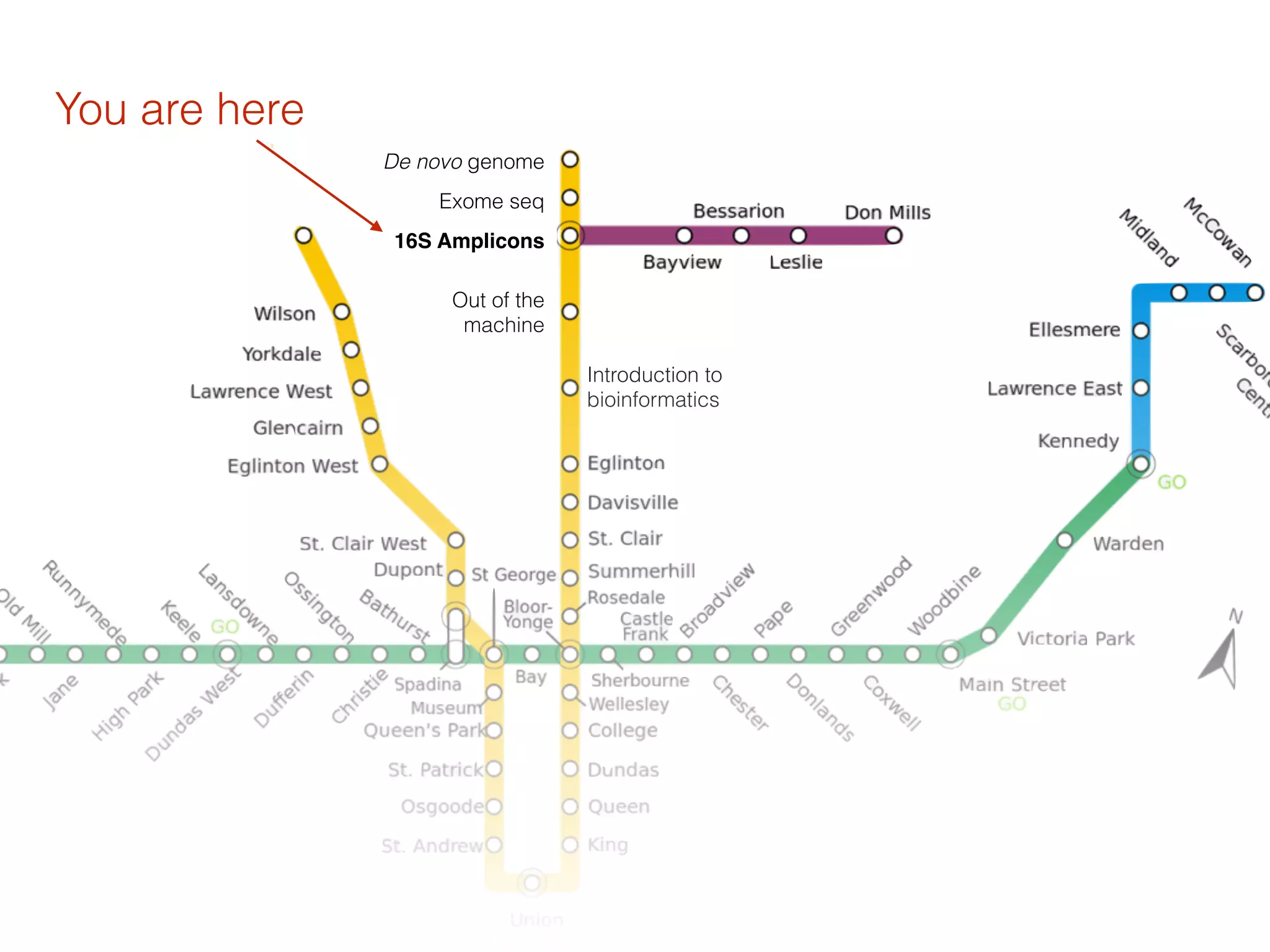
De novo genome
Exome seq
16S Amplicons
Out of the
machine
Introduction to
bioinformatics
You are here
Today’s menu:!
• a biological perspective on 16S-seq
• a short primer on bioinformatic analysis
• introducing two tools:
• MEGAN (GUI)
• Qiime (pipeline)
Why?
– J. C. Venter
“whatever we look at,
we are barely scratching the
surface”
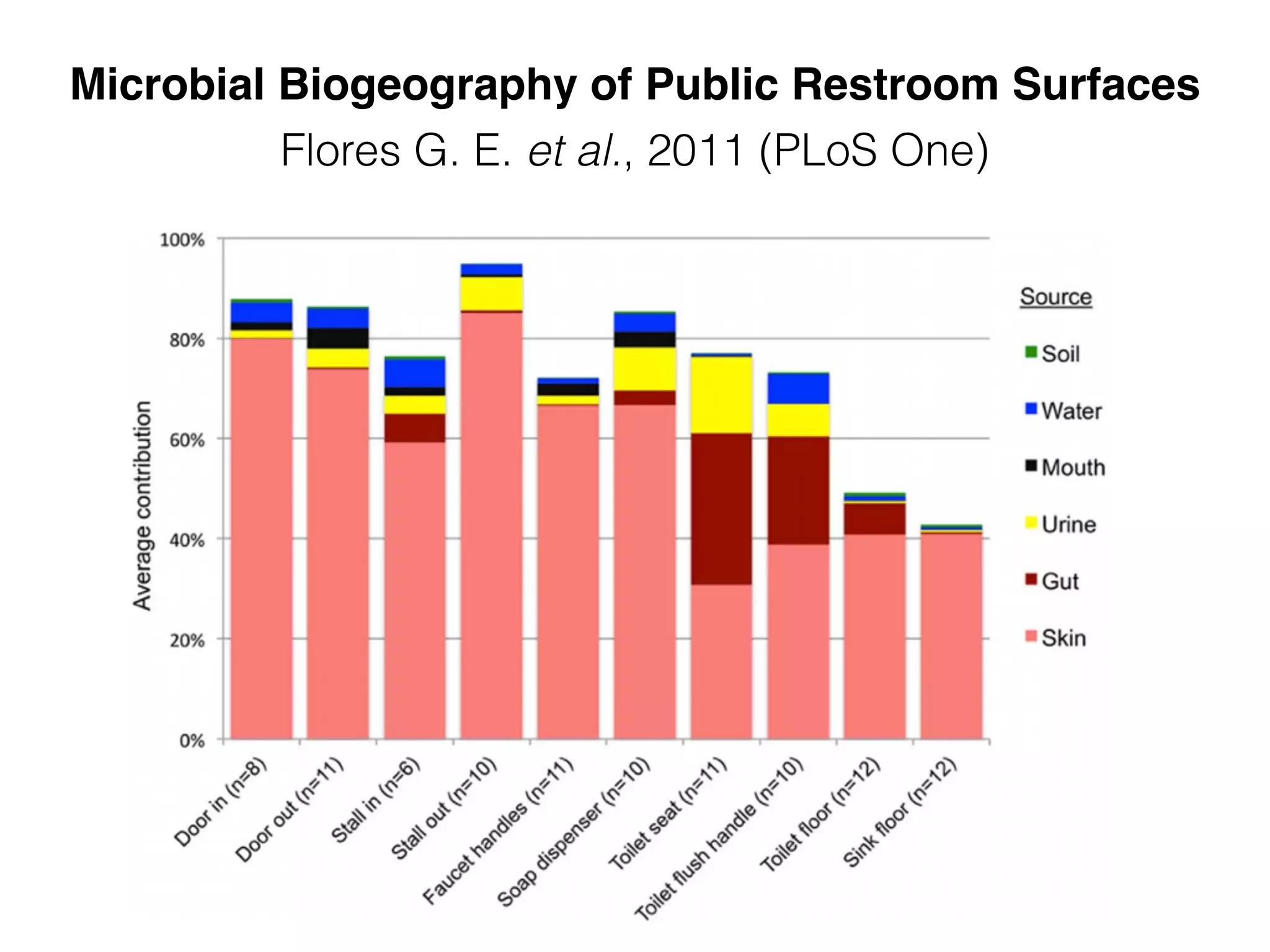
Flores G. E. et al., 2011 (PLoS One)
Microbial Biogeography of Public Restroom Surfaces
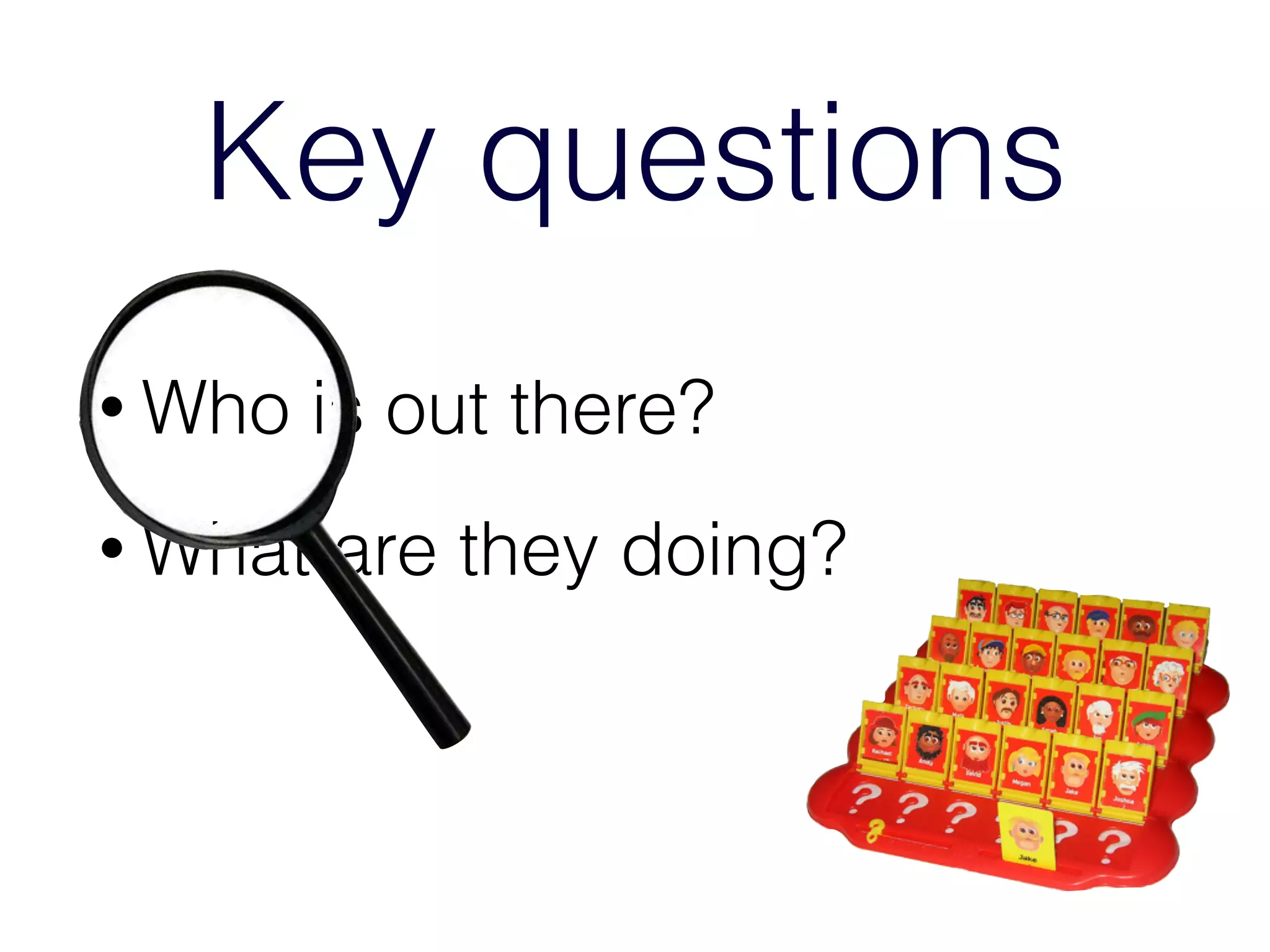
Key questions
• Who is out there?
• What are they doing?
How?
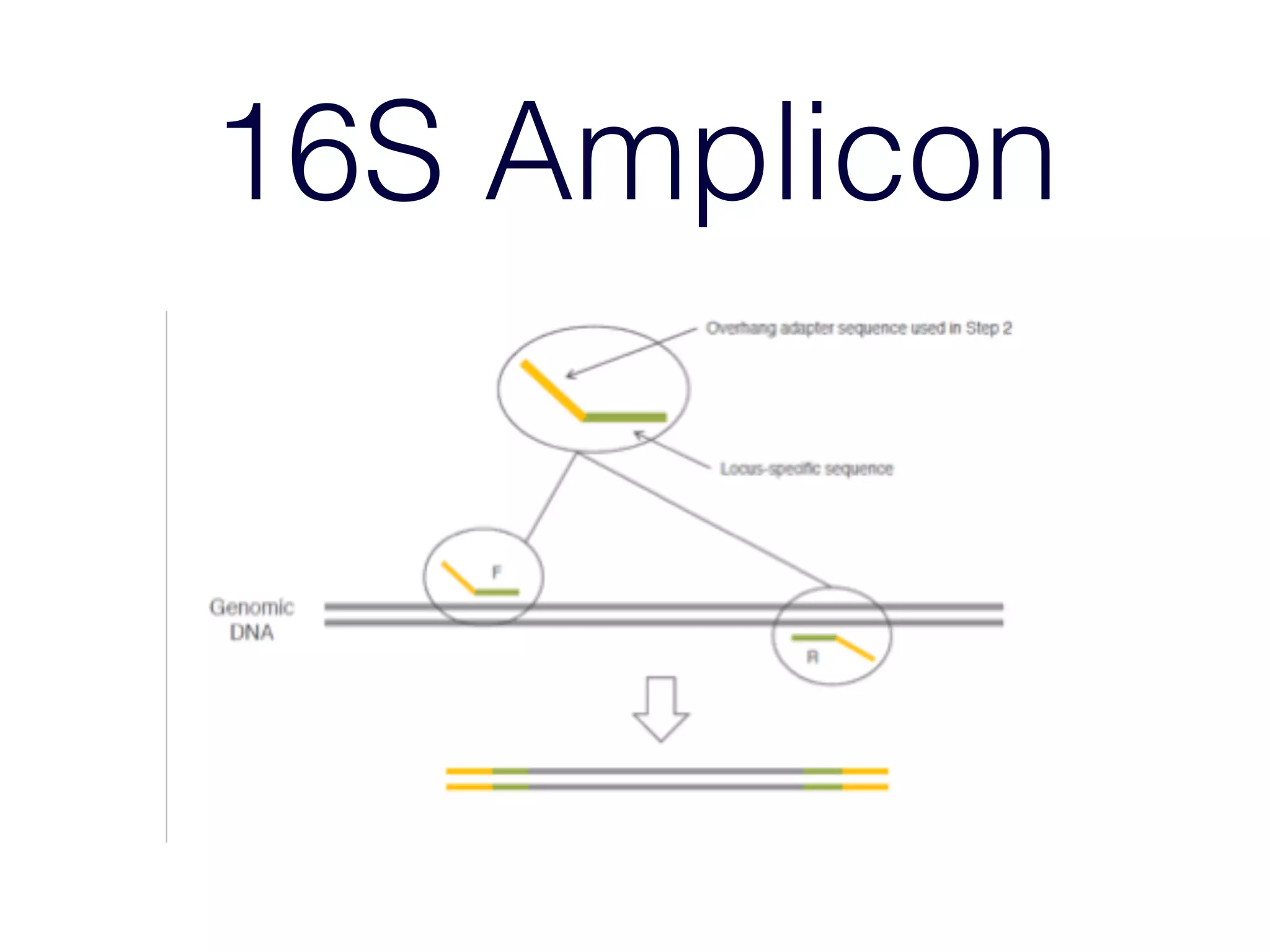
16S Amplicon
16S Amplicon
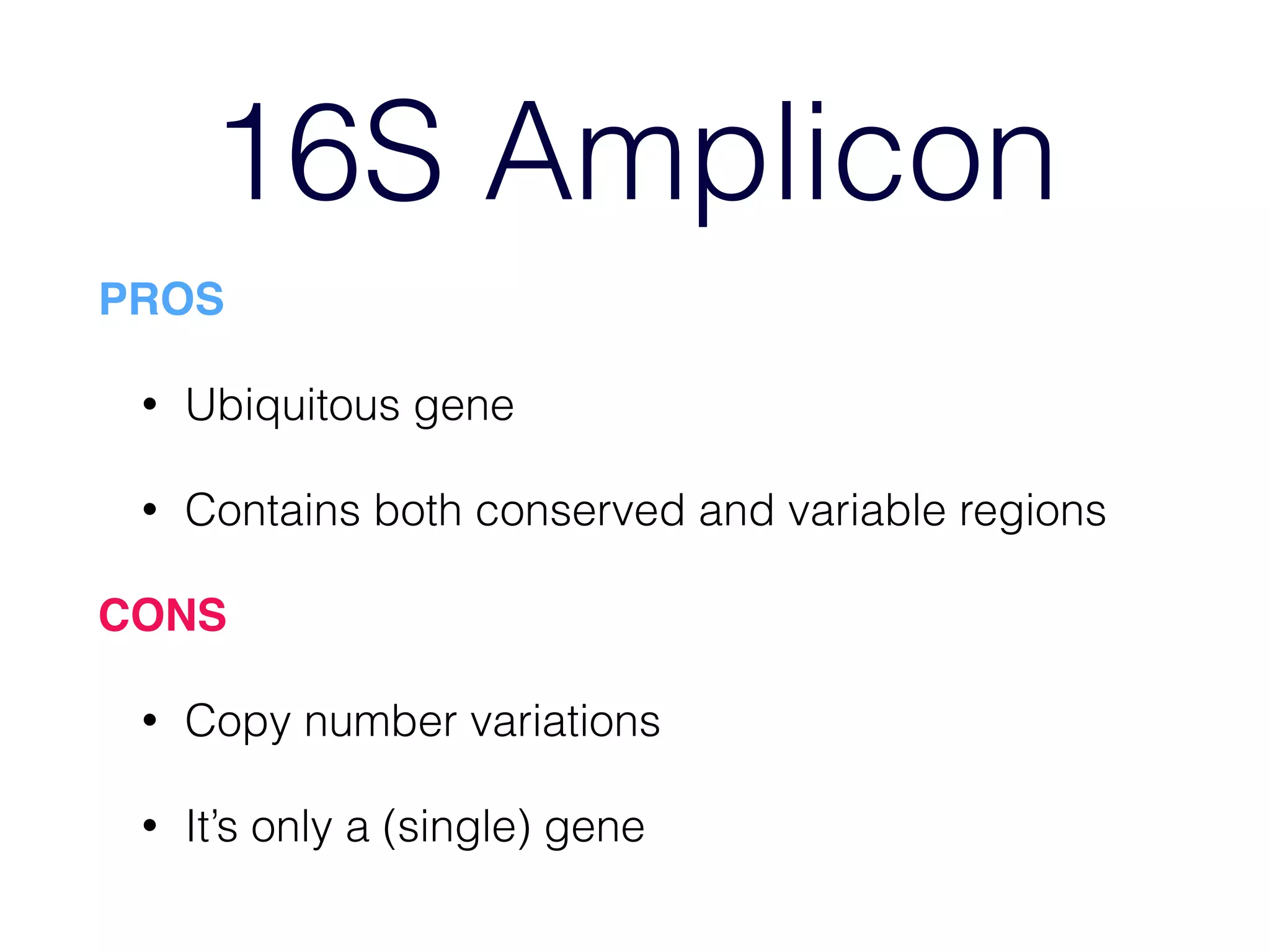
PROS!
• Ubiquitous gene
• Contains both conserved and variable regions
CONS!
• Copy number variations
• It’s only a (single) gene
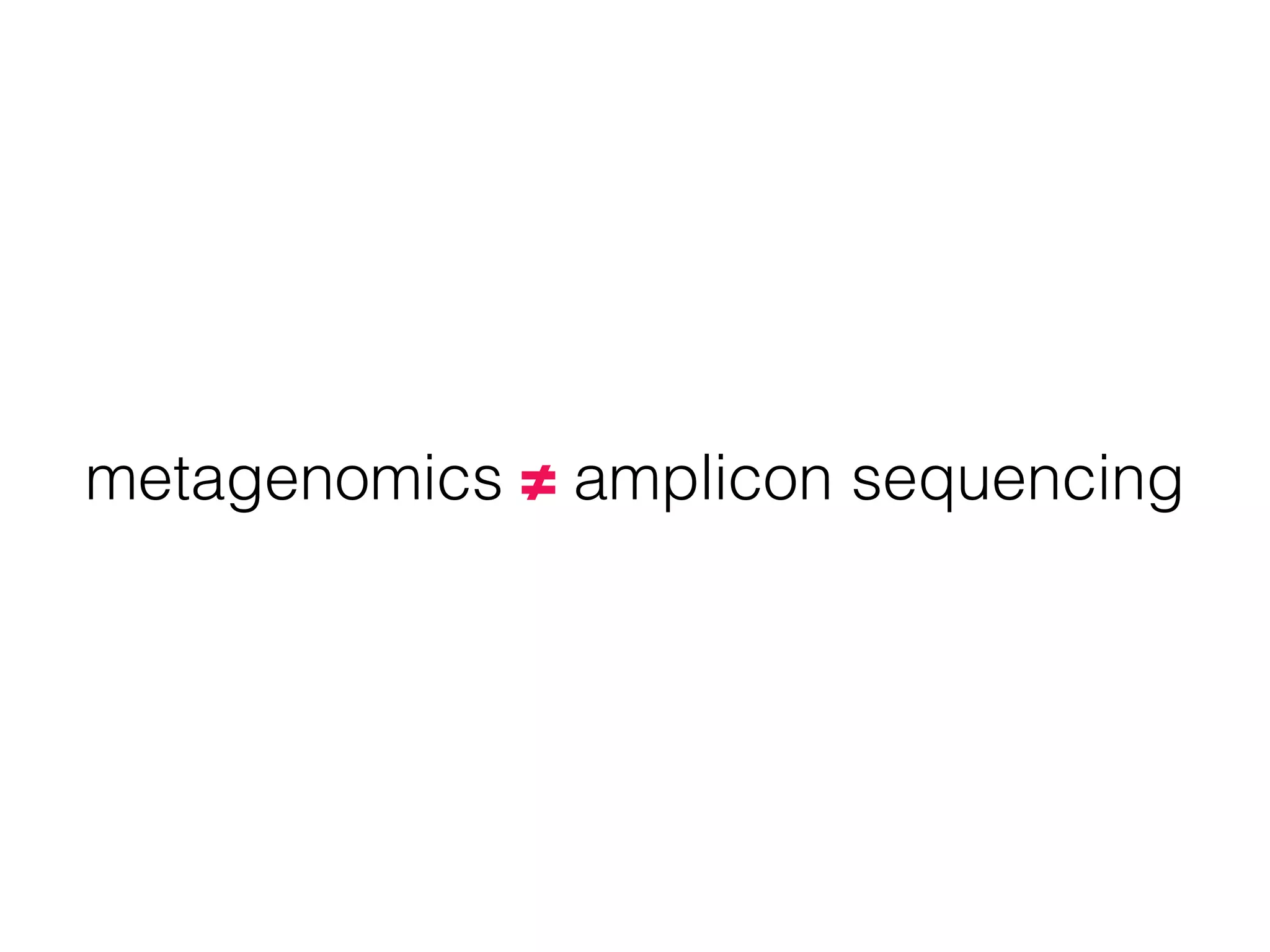
metagenomics ≠ amplicon sequencing
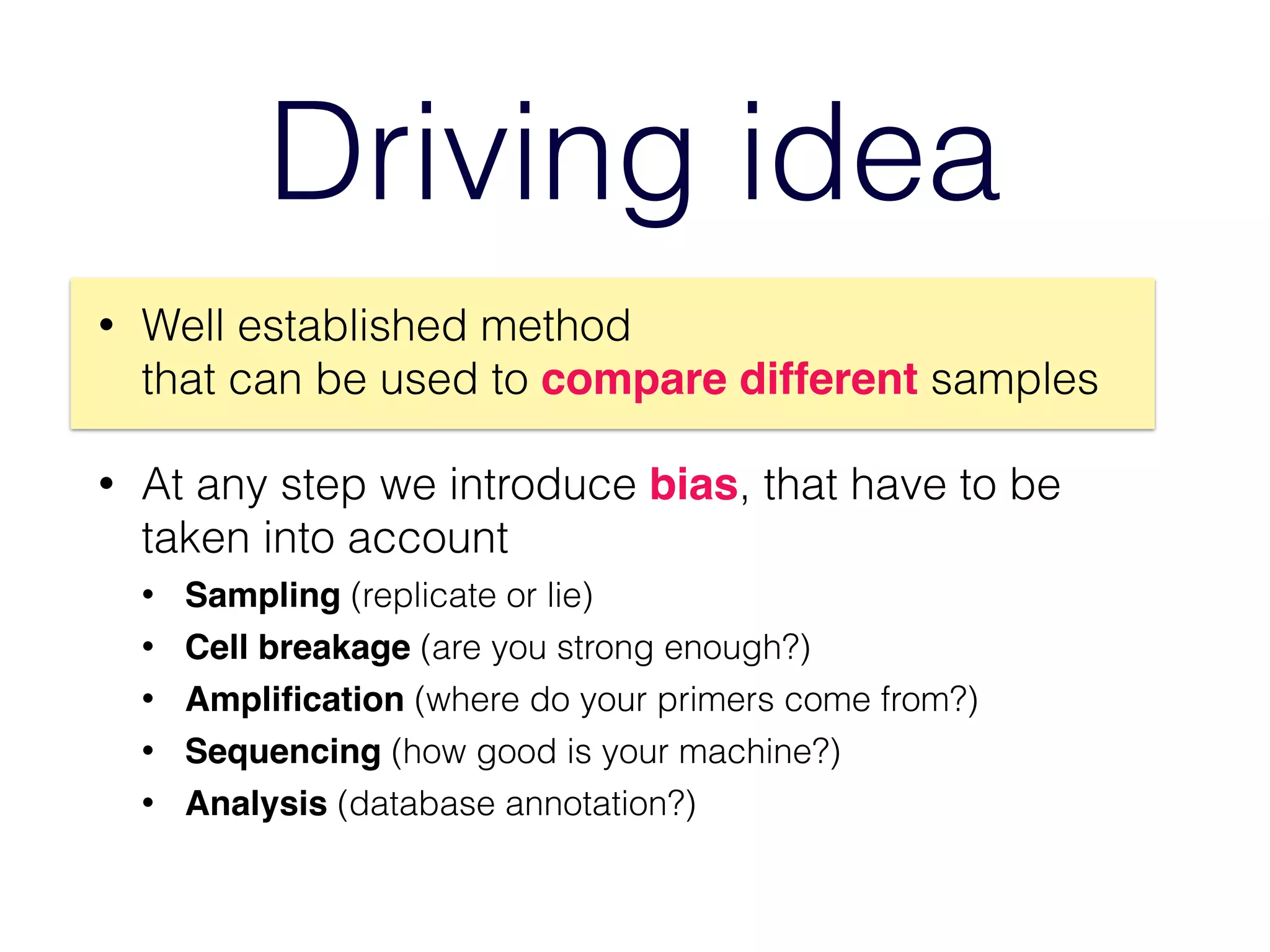
Driving idea
• Well established method 

that can be used to compare different samples
• At any step we introduce bias, that have to be
taken into account
• Sampling (replicate or lie)
• Cell breakage (are you strong enough?)
• Amplification (where do your primers come from?)
• Sequencing (how good is your machine?)
• Analysis (database annotation?)
Sequence alignment
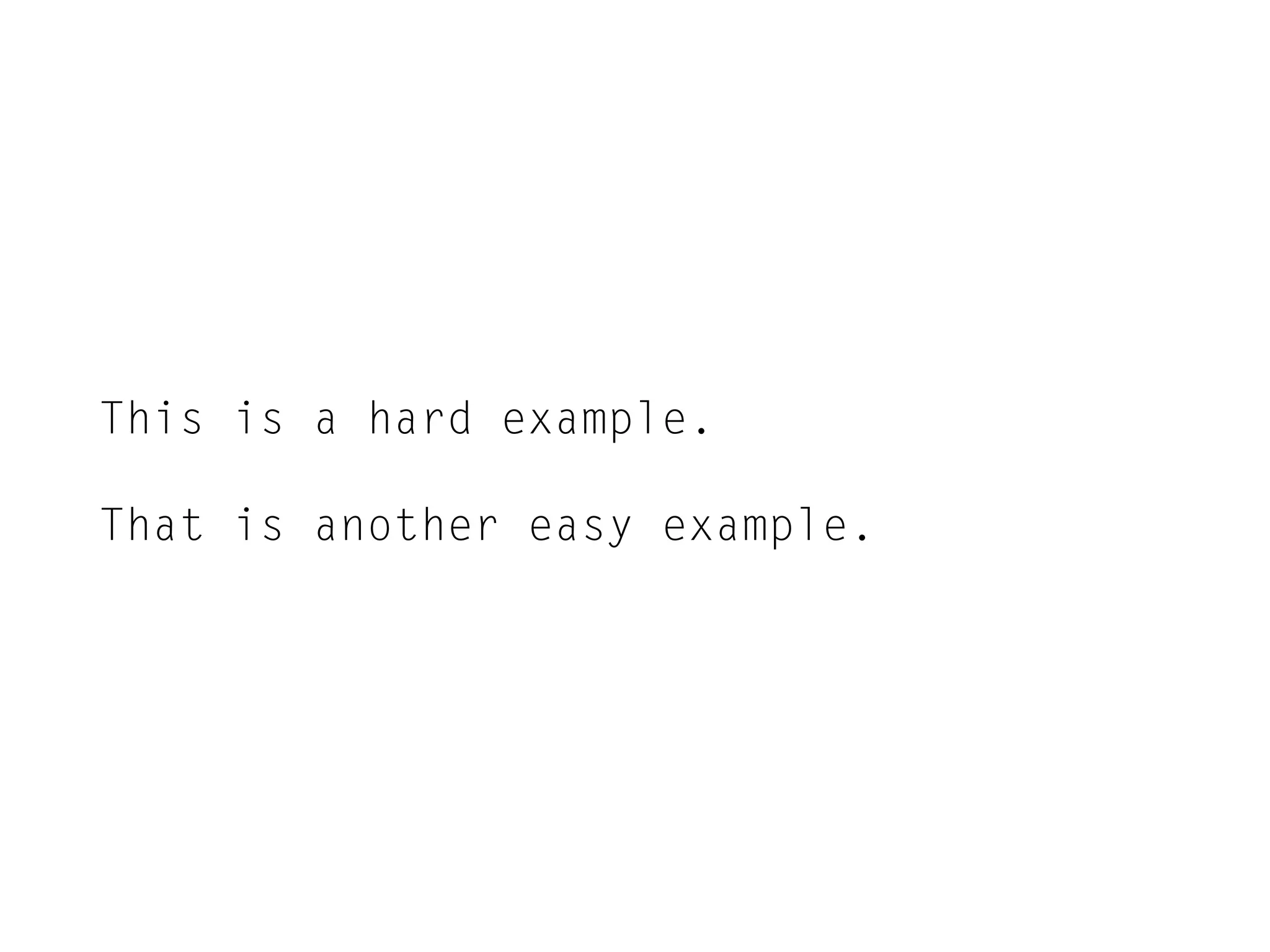
This is a hard example.
!
That is another easy example.
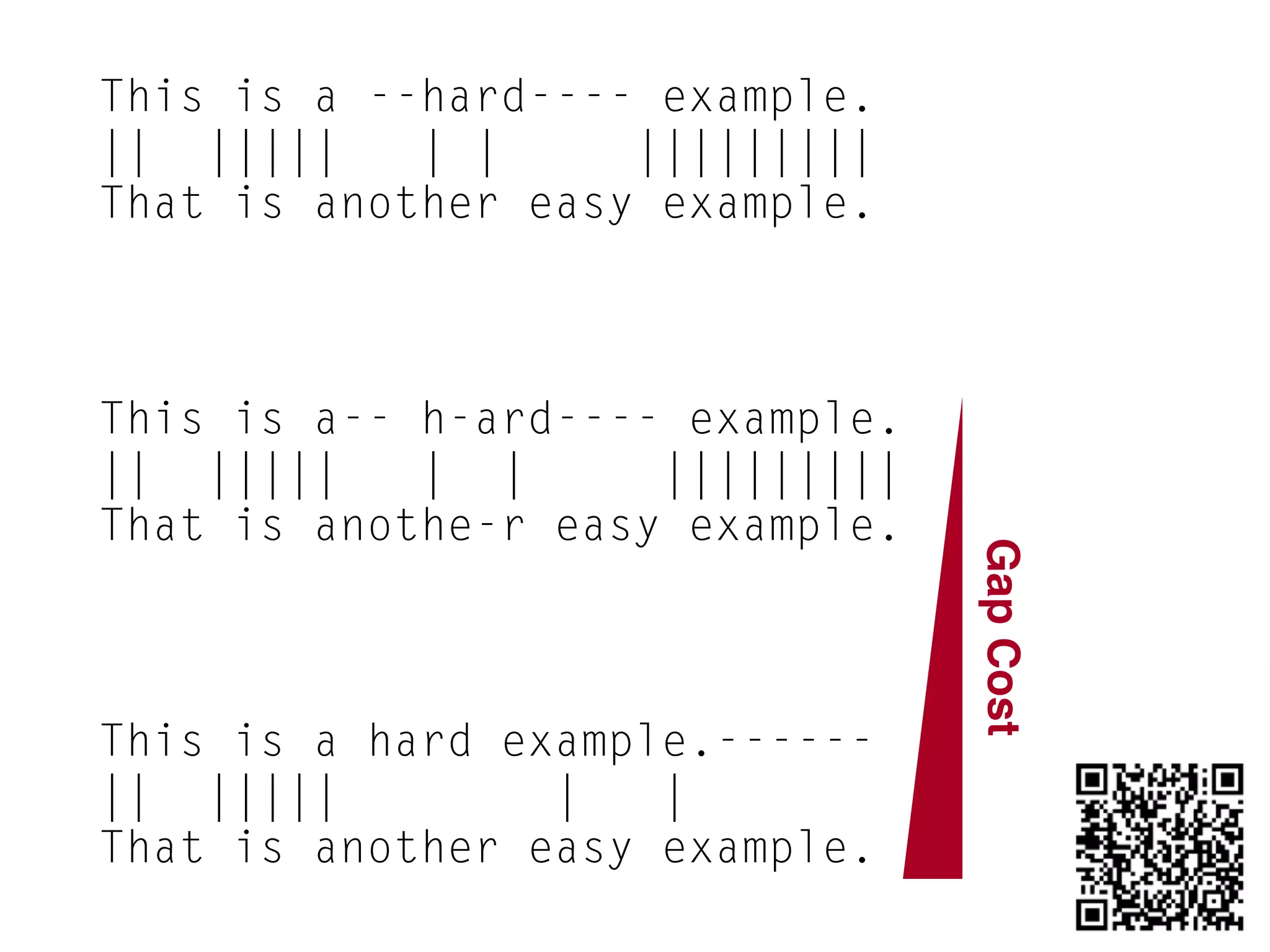
This is a --hard---- example.
|| ||||| | | |||||||||
That is another easy example.
This is a-- h-ard---- example.
|| ||||| | | |||||||||
That is anothe-r easy example.
This is a hard example.------
|| ||||| | |
That is another easy example.
GapCost
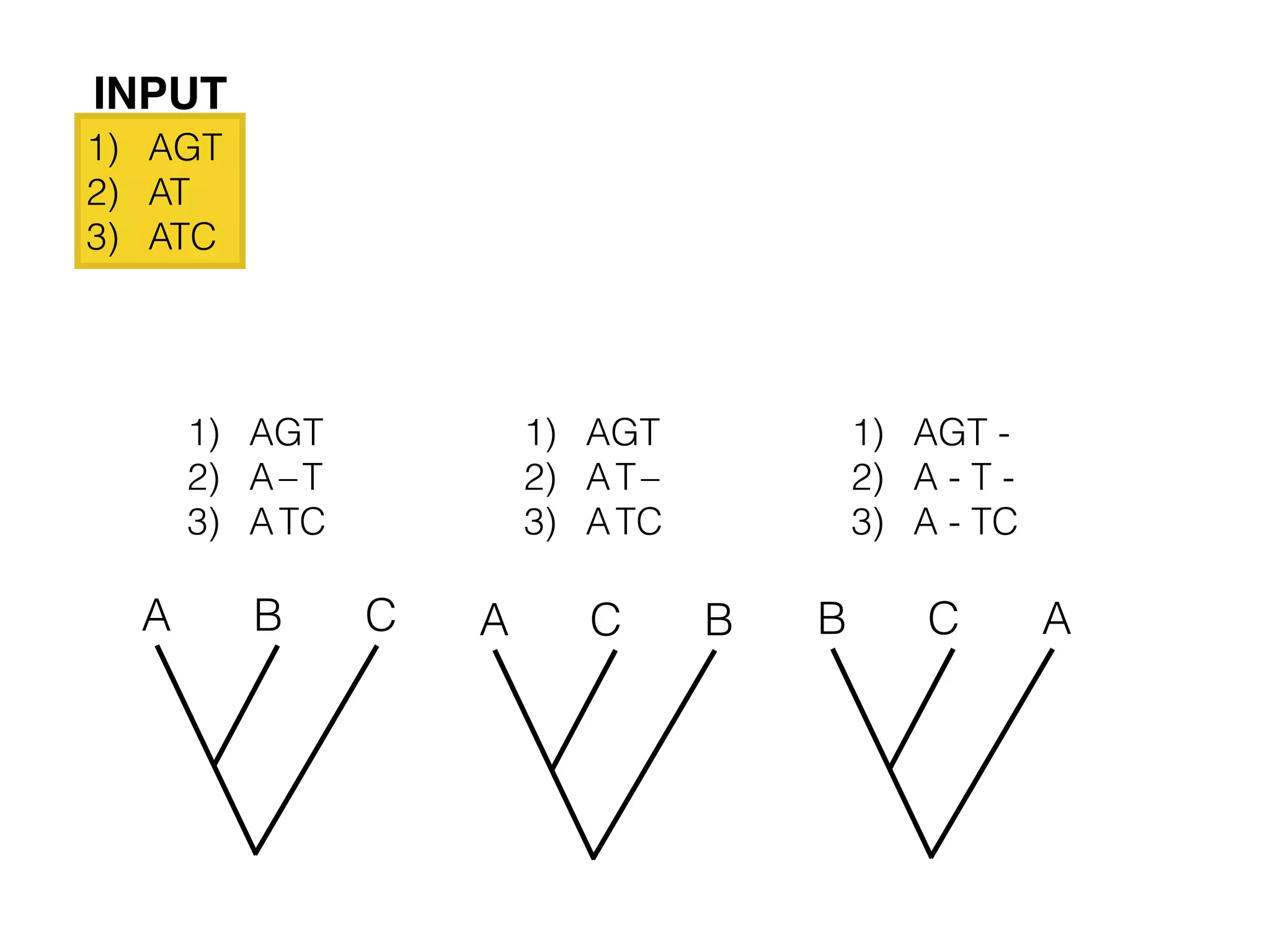
1) AGT
2) AT
3) ATC
1) AGT
2) A–T
3) ATC
1) AGT
2) AT–
3) ATC
1) AGT -
2) A - T -
3) A - TC
A B C A C B B C A
INPUT
Bioinformatics
analysis overview
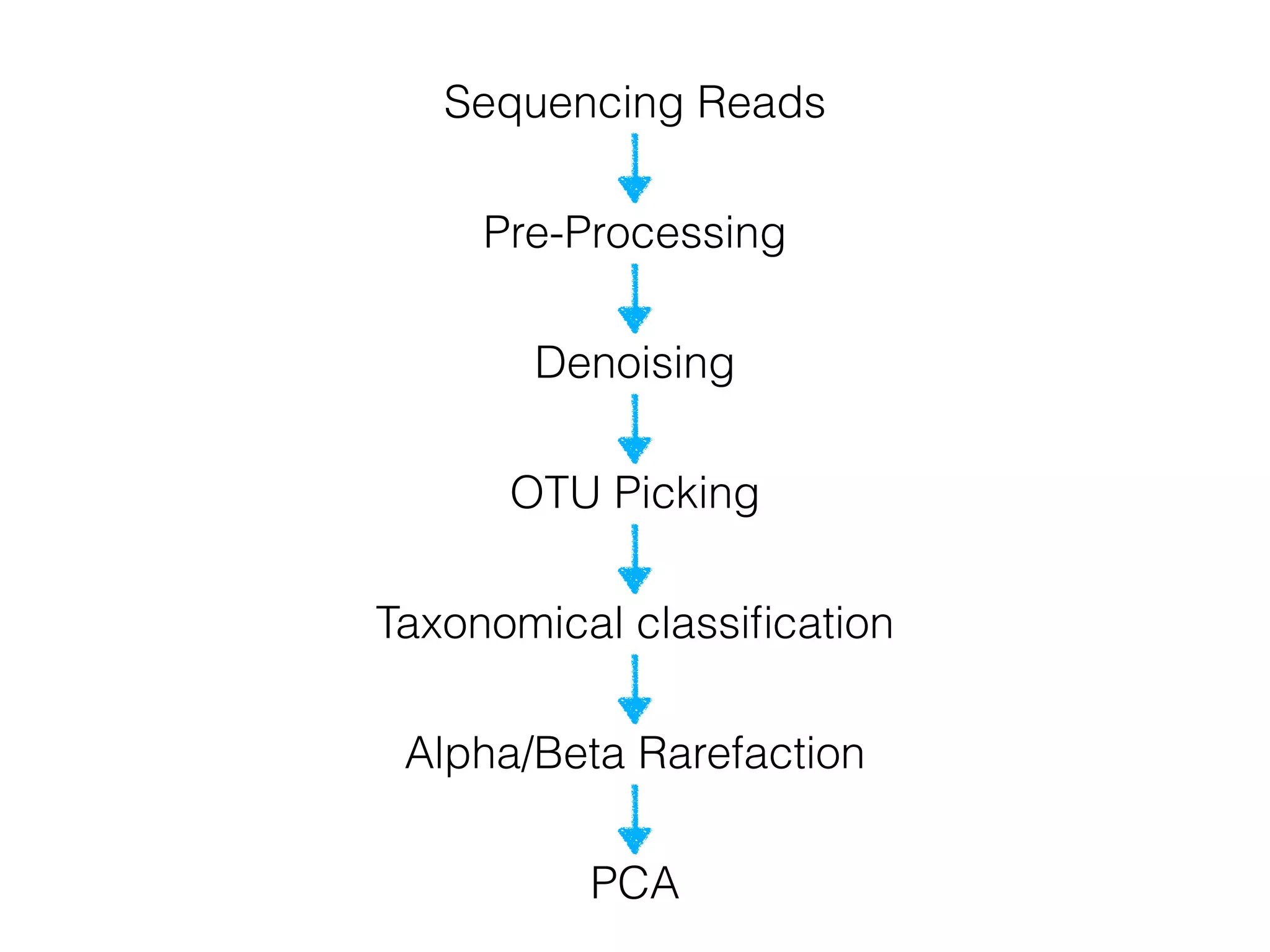
Sequencing Reads
Pre-Processing
Denoising
OTU Picking
Taxonomical classification
Alpha/Beta Rarefaction
PCA
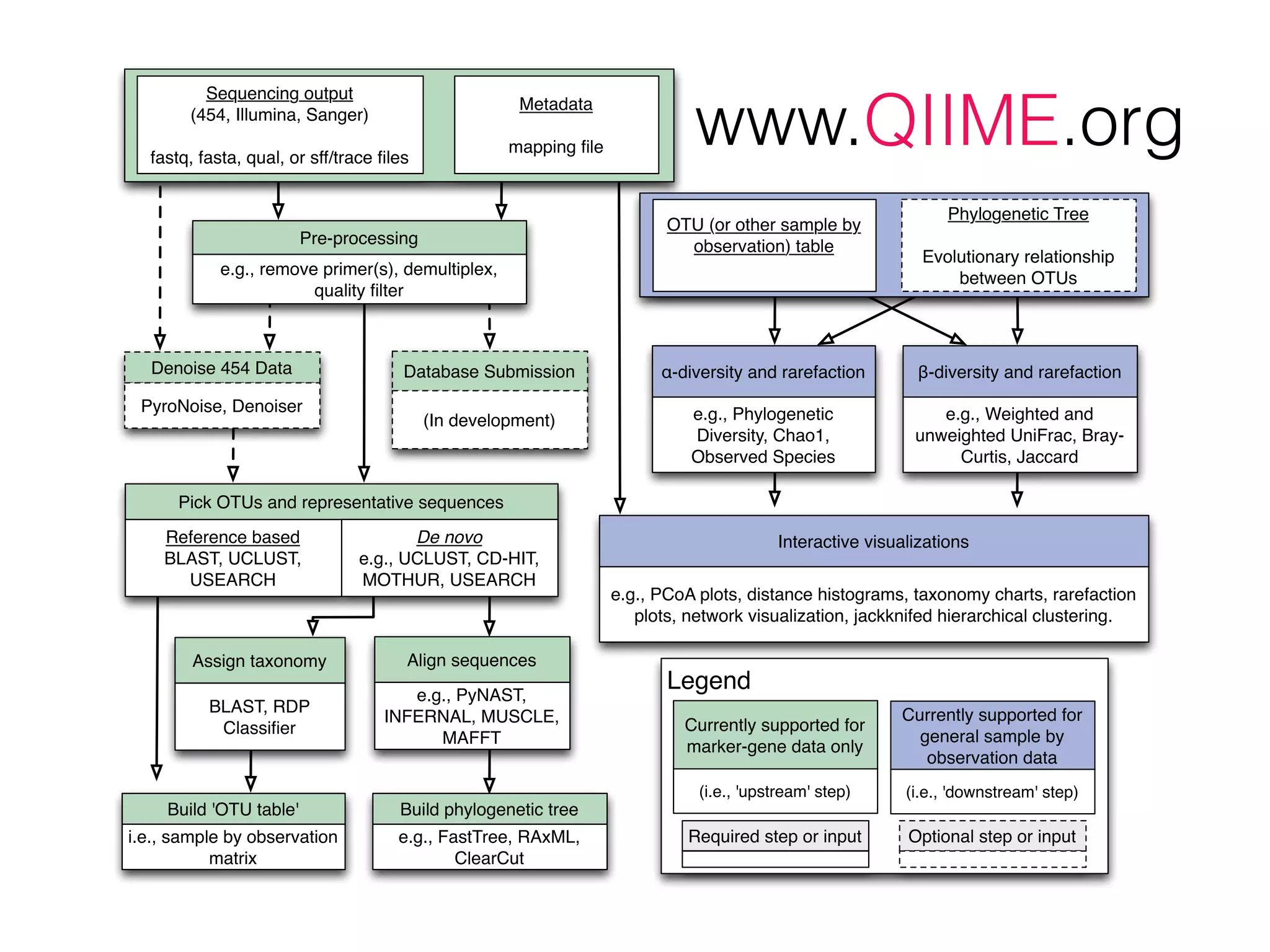
Sequencing output
(454, Illumina, Sanger)
fastq, fasta, qual, or sff/trace files
Metadata
mapping file
Pre-processing
e.g., remove primer(s), demultiplex,
quality filter
Denoise 454 Data
PyroNoise, Denoiser
Reference based
BLAST, UCLUST,
USEARCH
Pick OTUs and representative sequences
De novo
e.g., UCLUST, CD-HIT,
MOTHUR, USEARCH
Assign taxonomy
BLAST, RDP
Classifier
Align sequences
e.g., PyNAST,
INFERNAL, MUSCLE,
MAFFT
Build 'OTU table'
i.e., sample by observation
matrix
Build phylogenetic tree
e.g., FastTree, RAxML,
ClearCut
Database Submission
(In development)
OTU (or other sample by
observation) table
Phylogenetic Tree
Evolutionary relationship
between OTUs
α-diversity and rarefaction
e.g., Phylogenetic
Diversity, Chao1,
Observed Species
β-diversity and rarefaction
e.g., Weighted and
unweighted UniFrac, Bray-
Curtis, Jaccard
Interactive visualizations
e.g., PCoA plots, distance histograms, taxonomy charts, rarefaction
plots, network visualization, jackknifed hierarchical clustering.
Legend
Required step or input Optional step or input
Currently supported for
marker-gene data only
(i.e., 'upstream' step)
Currently supported for
general sample by
observation data
(i.e., 'downstream' step)
www.QIIME.orgwww.QIIME.org
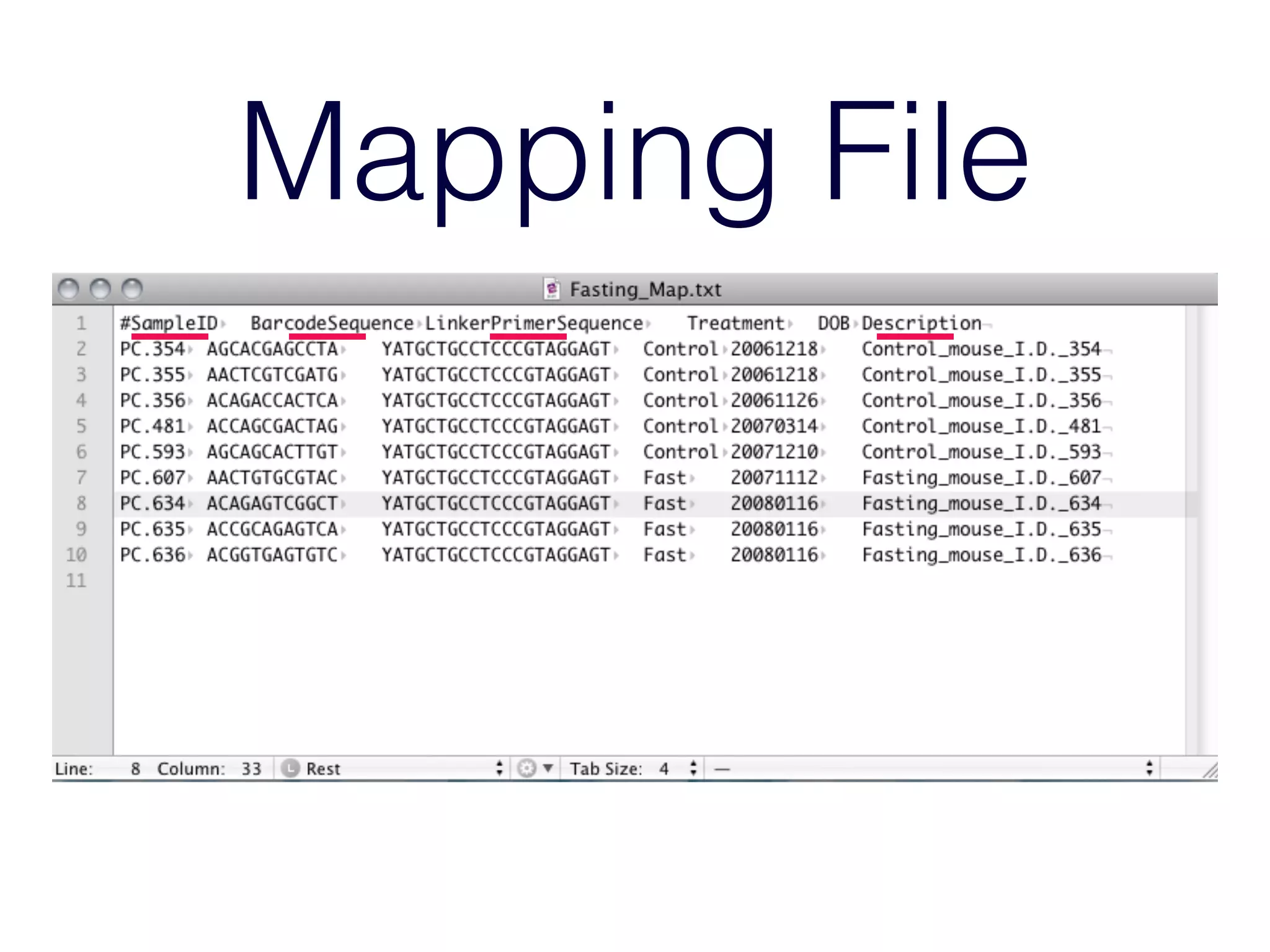
Mapping File
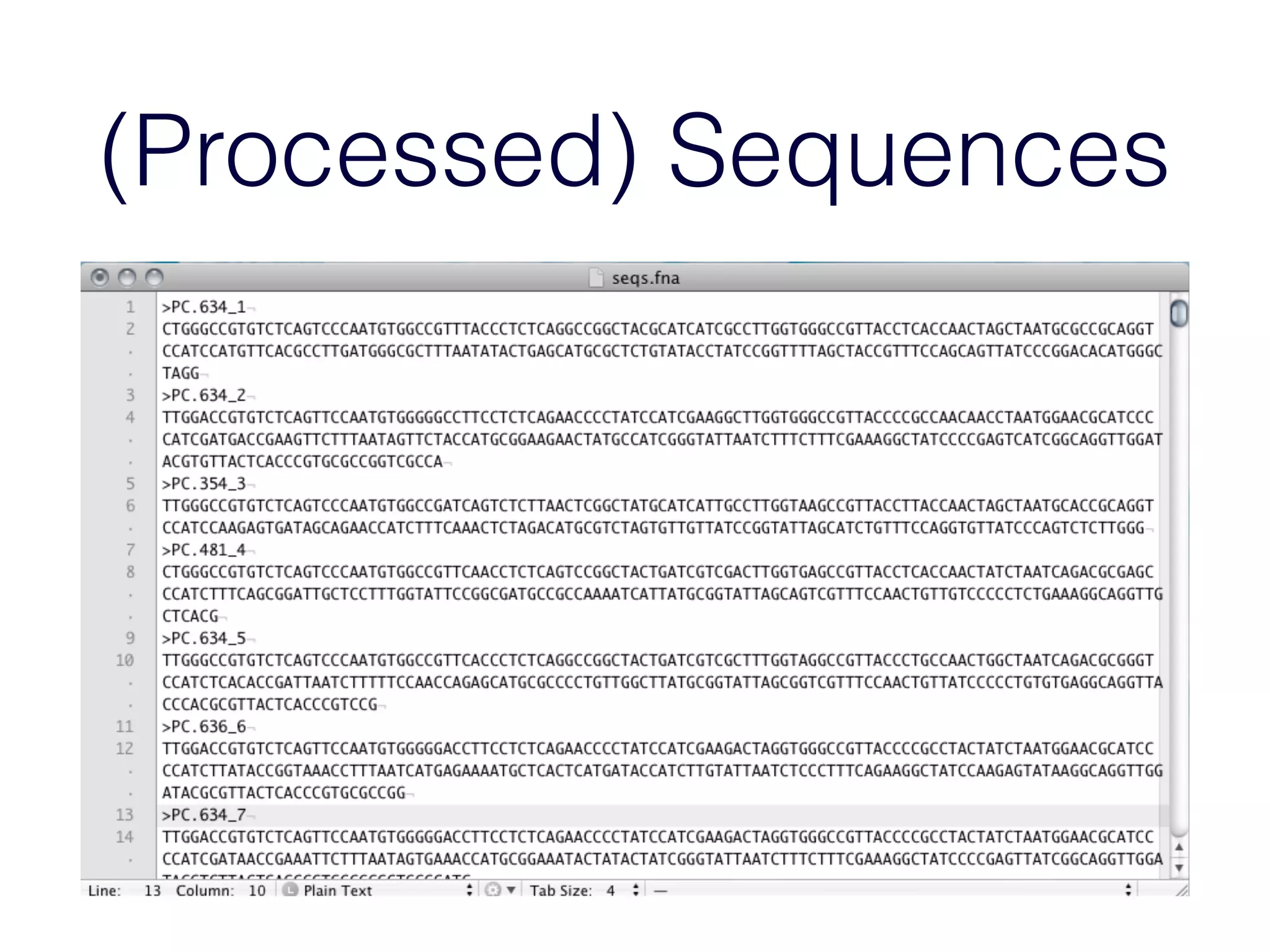
(Processed) Sequences
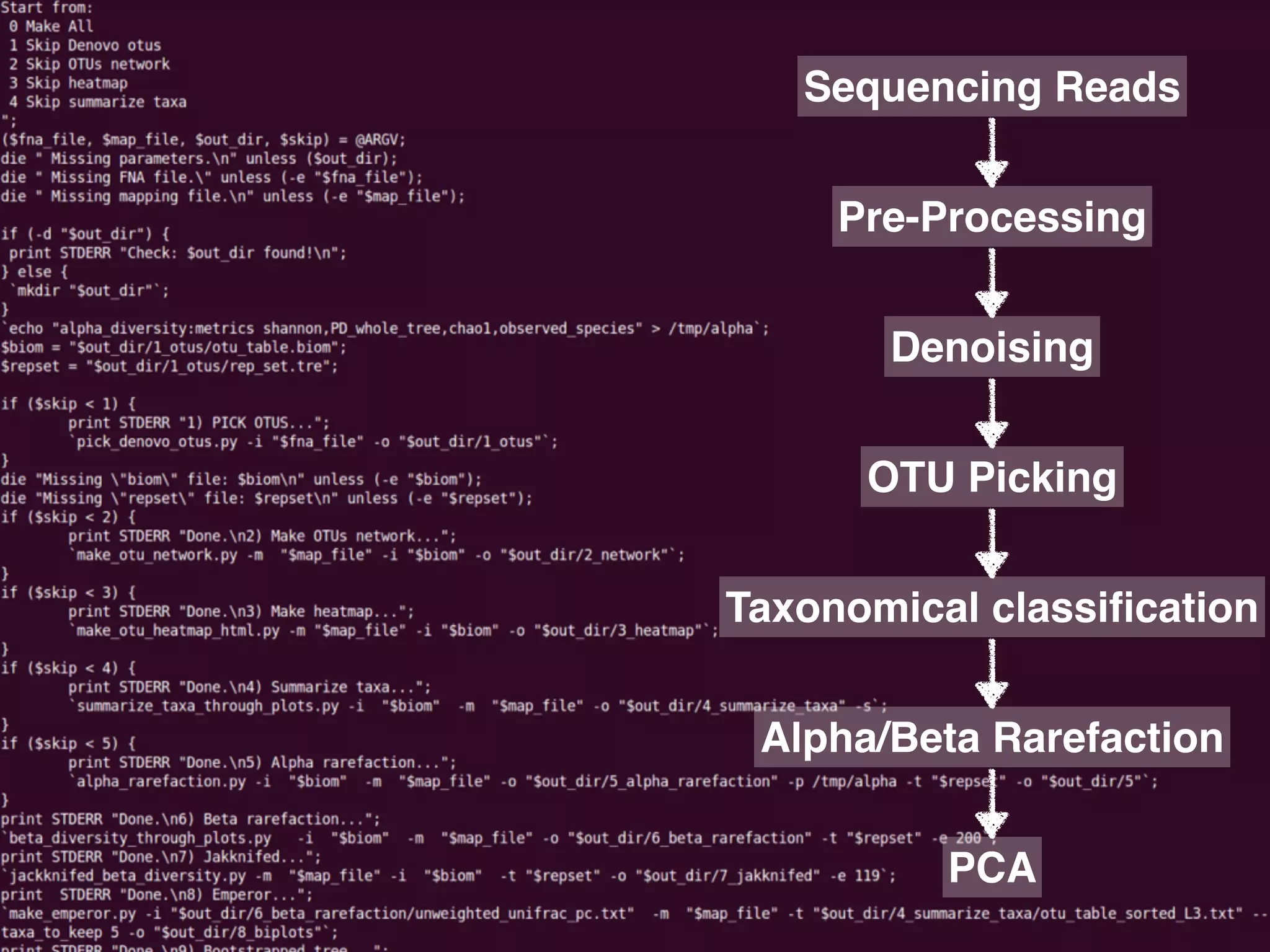
Sequencing Reads
Pre-Processing
Denoising
OTU Picking
Taxonomical classification
Alpha/Beta Rarefaction
PCA
Qiime Output Demo!
http://www.bmr-genomics.it/~telatin/16S
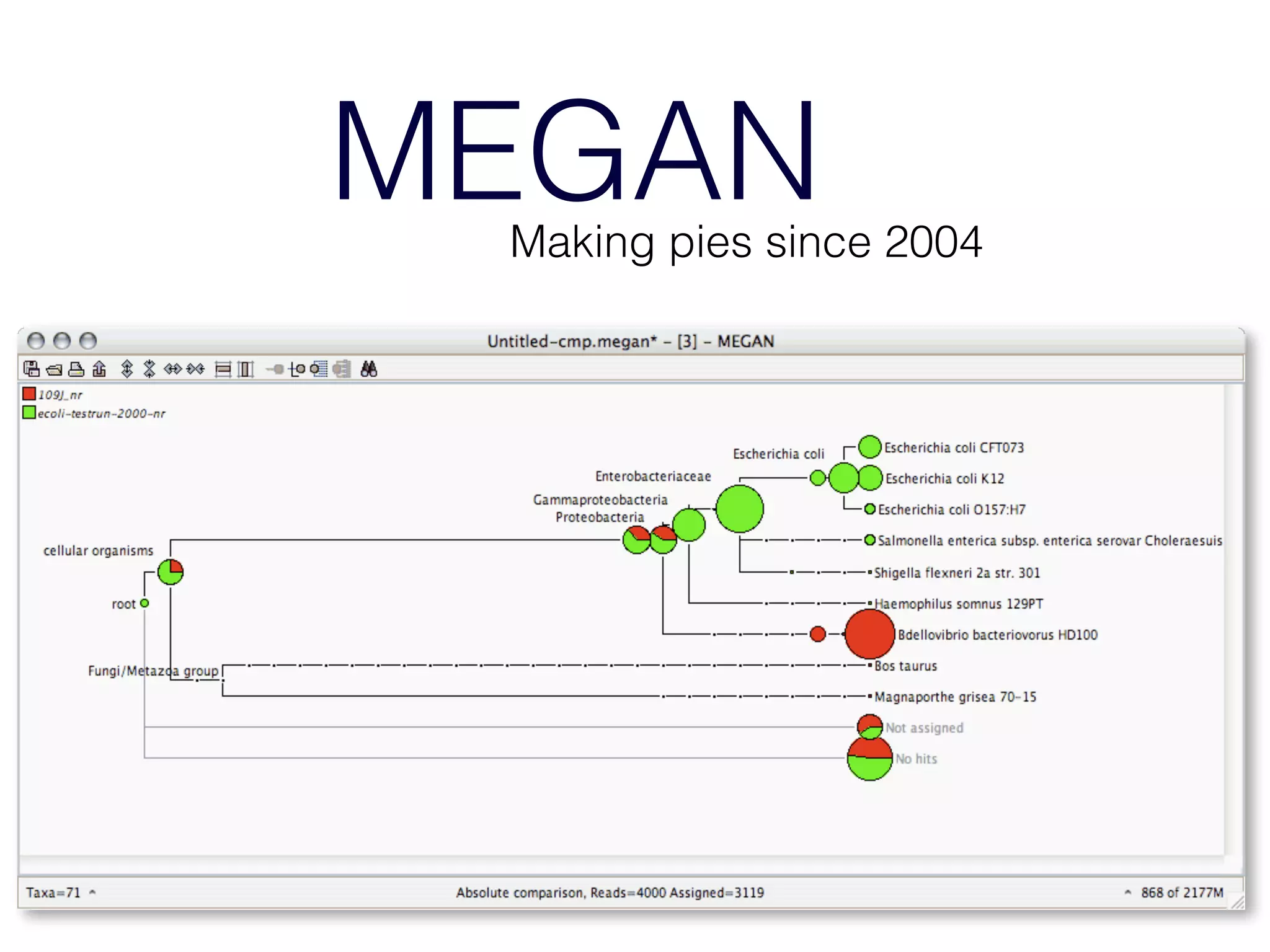
MEGANMaking pies since 2004
Any questions?

Introduction to 16S Analysis with NGS - BMR Genomics

  • 1.
    16S Amplicons A primeron metagenomics Andrea Telatin and Eleonora Sattin BMR Genomics
  • 2.
    De novo genome Exomeseq 16S Amplicons Out of the machine Introduction to bioinformatics You are here
  • 3.
    Today’s menu:! • abiological perspective on 16S-seq • a short primer on bioinformatic analysis • introducing two tools: • MEGAN (GUI) • Qiime (pipeline)
  • 4.
  • 5.
    – J. C.Venter “whatever we look at, we are barely scratching the surface”
  • 7.
    Flores G. E.et al., 2011 (PLoS One) Microbial Biogeography of Public Restroom Surfaces
  • 8.
    Key questions • Whois out there? • What are they doing?
  • 9.
  • 10.
  • 11.
    16S Amplicon PROS! • Ubiquitousgene • Contains both conserved and variable regions CONS! • Copy number variations • It’s only a (single) gene
  • 12.
  • 13.
    Driving idea • Wellestablished method 
 that can be used to compare different samples • At any step we introduce bias, that have to be taken into account • Sampling (replicate or lie) • Cell breakage (are you strong enough?) • Amplification (where do your primers come from?) • Sequencing (how good is your machine?) • Analysis (database annotation?)
  • 14.
  • 15.
    This is ahard example. ! That is another easy example.
  • 16.
    This is a--hard---- example. || ||||| | | ||||||||| That is another easy example. This is a-- h-ard---- example. || ||||| | | ||||||||| That is anothe-r easy example. This is a hard example.------ || ||||| | | That is another easy example. GapCost
  • 17.
    1) AGT 2) AT 3)ATC 1) AGT 2) A–T 3) ATC 1) AGT 2) AT– 3) ATC 1) AGT - 2) A - T - 3) A - TC A B C A C B B C A INPUT
  • 18.
  • 19.
  • 20.
    Sequencing output (454, Illumina,Sanger) fastq, fasta, qual, or sff/trace files Metadata mapping file Pre-processing e.g., remove primer(s), demultiplex, quality filter Denoise 454 Data PyroNoise, Denoiser Reference based BLAST, UCLUST, USEARCH Pick OTUs and representative sequences De novo e.g., UCLUST, CD-HIT, MOTHUR, USEARCH Assign taxonomy BLAST, RDP Classifier Align sequences e.g., PyNAST, INFERNAL, MUSCLE, MAFFT Build 'OTU table' i.e., sample by observation matrix Build phylogenetic tree e.g., FastTree, RAxML, ClearCut Database Submission (In development) OTU (or other sample by observation) table Phylogenetic Tree Evolutionary relationship between OTUs α-diversity and rarefaction e.g., Phylogenetic Diversity, Chao1, Observed Species β-diversity and rarefaction e.g., Weighted and unweighted UniFrac, Bray- Curtis, Jaccard Interactive visualizations e.g., PCoA plots, distance histograms, taxonomy charts, rarefaction plots, network visualization, jackknifed hierarchical clustering. Legend Required step or input Optional step or input Currently supported for marker-gene data only (i.e., 'upstream' step) Currently supported for general sample by observation data (i.e., 'downstream' step) www.QIIME.orgwww.QIIME.org
  • 21.
  • 22.
  • 23.
  • 24.
  • 25.
  • 26.