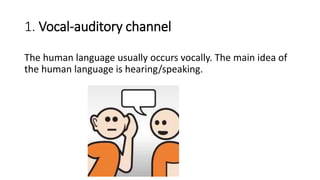
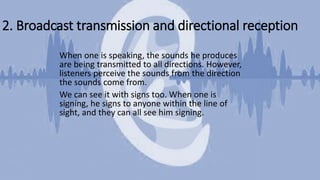
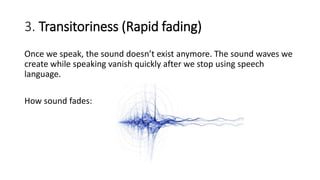
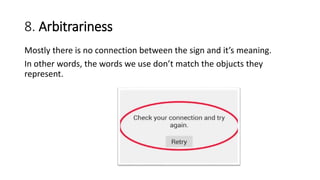
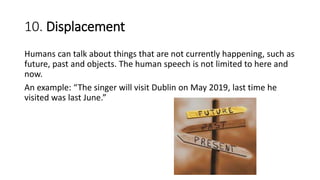
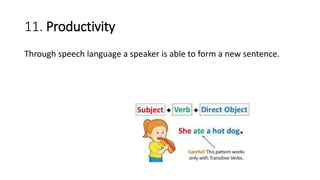
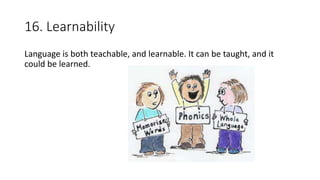
Hockett's language features are a set of 16 properties that define human language and distinguish it from animal communication according to linguist Charles Hockett. The features include using the vocal-auditory channel, being able to broadcast sounds to many listeners but also receive sounds directionally, having words and sounds that rapidly fade, being able to interchange and copy each other's speech, providing total feedback while speaking to monitor oneself, specializing in communication rather than biological functions like animal sounds, having words that relate to specific meanings, being arbitrary with no inherent connection between words and meanings, consisting of discrete words and units, being able to talk about things that are not present, being productive to form new sentences, being learned through social interaction